




Lion’s Mane Mushroom Grow Kit: 5 lb Fruiting Block
Pairs well with
Product Details
Lion’s Mane is our medicinal-grade species, prized for its nootropic profile and its unmistakable white tumbling coral bloom. Two to three flushes per 5 lb pre-colonized block, first pins in 7 to 14 days. The fruiting body forms in slow, dense cascades that make every stage of the grow visible, so you learn what healthy Lion’s Mane looks like without guessing.
Grow fresh Lion's Mane mushrooms at home in 7 to 14 days. The Lykyn gourmet Lion's Mane mushroom grow kit is a 5 lb fully colonized fruiting block of Hericium erinaceus that delivers 2 to 3 harvests of cascading white spines. Pair it with the Lykyn Smart Grow Chamber and skip the daily misting and the contamination guesswork.
Most kits ship a 1 to 1.5 lb block. Ours is roughly 3 to 5 times more substrate, designed for 2 to 3 flushes at about 1 lb fresh each, with the chamber holding 87 to 92 percent humidity at 16 to 21°C (61 to 70°F) automatically.
Read the full growing guide, tips and FAQ
How the Lion's Mane Grow Kit works in 7 to 14 days
From the day you unbox, this Lion's Mane grow kit is built to be the easiest gourmet mushroom grow kit in your kitchen. Slice an X in the bag, mist the cut once, place the block in your Lykyn Smart Grow Chamber, and select "Lion's Mane" in the app. The chamber handles humidity, airflow, and lighting for the full 7 to 14 day fruiting window, so you only show up for the harvest.
- Day 1: Cut an X across the top of the bag and lightly mist the slit.
- Days 2 to 7: Tiny ivory primordia pin and begin forming spines.
- Days 7 to 14: Spines elongate into a full coral-like cluster, ready to harvest.
- Flush 2 and 3: Rest the block 7 days, soak briefly, and repeat for follow-up harvests.
What's inside your Lion's Mane mushroom grow kit
Every gourmet mushroom grow kit ships from our US warehouse with everything needed to fruit a real chef-grade harvest. No extra tools, no sterilization, no guesswork. Just open the box, slice, and let the Lykyn Smart Grow Chamber finish the job.
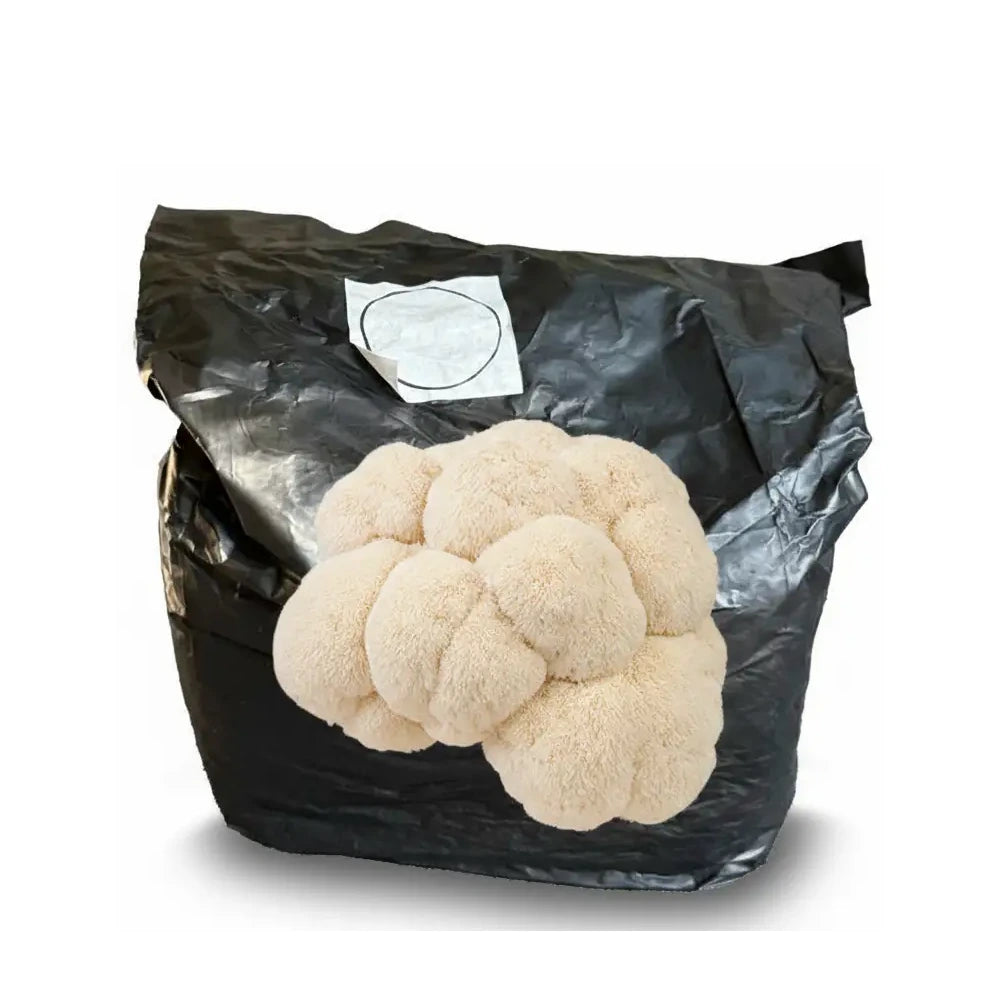
The colonized 5 lb substrate block
A vacuum-sealed 5 lb hardwood substrate block, fully colonized with our lab-verified Hericium erinaceus strain. Three to five times the substrate of standard 1 lb kits, which is why our Lion's Mane Grow Kit delivers 2 to 3 strong flushes instead of one weak fruiting.
The species-tuned fruiting profile
A built-in QR code links the block to its species preset in the Lykyn app, so the chamber locks to 87 to 92 percent humidity at 16 to 21°C (61 to 70°F) the moment you scan it. No charts, no manual settings.
The illustrated growing guide
A short printed quick-start card and an in-app video walk you through the 7 to 14 day cycle, plus how to revive the block for flush two and three.
Lion's Mane nootropic and cognitive benefits
Lion's Mane is the gourmet mushroom most often grown for its nootropic profile. The fruiting body and mycelium contain hericenones and erinacines, compounds studied for nerve growth factor (NGF) support and cognitive performance. A weekly harvest from this Lion's Mane Grow Kit gives you a steady, lab-verified source of fresh nootropic mushroom in your own kitchen, with no powders, capsules, or third-party extracts in the loop.
- Nootropic compounds: hericenones (fruiting body) and erinacines (mycelium).
- Cognitive support: studied for focus, memory, and nerve health.
- Whole food form: fresh mushroom, not a processed cognitive supplement.
How to grow Lion's Mane mushrooms at home
You do not need a grow tent, a humidifier, a fogger, or daily misting to grow Lion's Mane mushroom at home with this kit. The Lykyn Smart Grow Chamber automates the climate, and the colonized substrate block does the biology. Most growers hit their first flush in 10 days flat.
Set up in under five minutes
Place the colonized block inside the chamber, scan the species QR code, close the lid, and let the species preset run. The chamber handles humidity, fresh air exchange, and indirect light for the full cycle.
Care during the fruiting cycle
Open the chamber once per day for a 10 second visual check. No misting, no fans, no humidity meters. The chamber logs every parameter and pings you in the app when the block is ready to harvest.
Restart for flush 2 and 3
After the first harvest, rest the block for 7 days, dunk it in cold water for an hour, and reseat it inside the chamber. The same species preset triggers flush two, and often a smaller flush three.
Lion's Mane mushroom recipes from your harvest
One reason chefs love this gourmet mushroom is the texture. Pan-seared Lion's Mane crisps like seafood, miso broths pull out a sweet umami bottom note, and even a butter-and-garlic skillet turns one harvest into a full plate. Below are three recipe directions to put your first harvest to work right away.
Pan-seared Lion's Mane crab cakes
Tear the harvested cluster, press flat, and sear in butter until golden on both sides. The texture mimics lump crab and pairs with a quick lemon aioli.
Lion's Mane miso broth
Simmer torn pieces in dashi with white miso and scallion. The mushroom carries the broth and turns silky after 10 minutes on low heat.
Garlic-butter Lion's Mane skillet
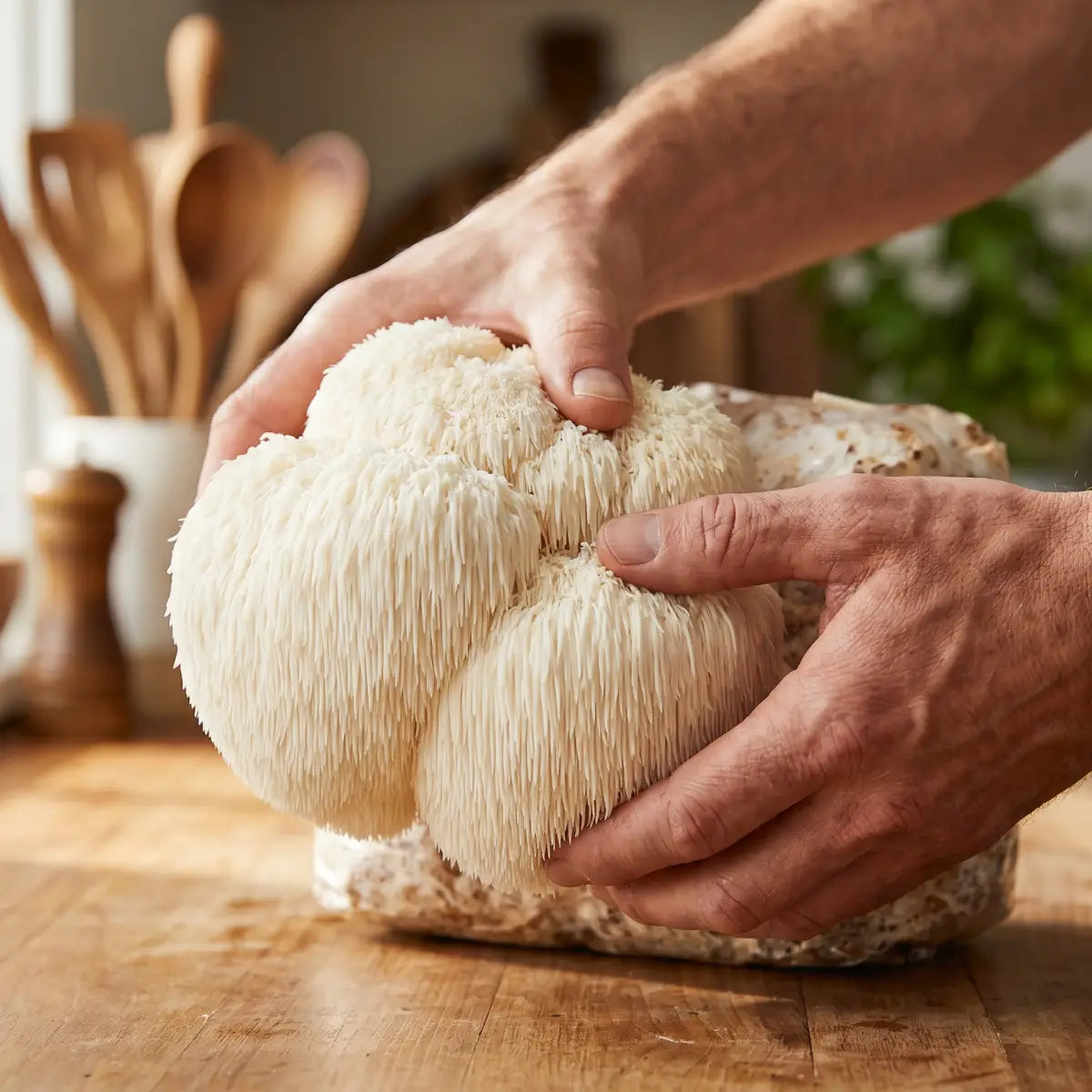
Pull the mushroom into thumb-size pieces, brown in butter, then finish with garlic, sea salt, and fresh thyme. Serve over toast or grain bowls.
Companion kits to pair with your Lion's Mane Grow Kit
Build a rotating gourmet mushroom kitchen by stacking species. Each kit below uses the same Lykyn 5 lb colonized hardwood block, ships from our US warehouse, and works with the Lykyn Smart Grow Chamber.
- Pink Oyster Mushroom Grow Kit: our fastest fruiting species, ready to harvest in as little as 7 days with a salmon-pink color and a meaty, savory bite.
- Black Oyster Mushroom Grow Kit: hearty King-style clusters with a deeper umami flavor, ideal for sautés, ramen toppings, and roasted side dishes.
- Shiitake Mushroom Grow Kit: classic gourmet caps with rich, smoky depth. Slightly slower to fruit but rewards you with restaurant-grade harvests.
- Cinnamon Cap Mushroom Grow Kit: small reddish-brown clusters with a delicate nutty taste, beautiful on plates and easy to grow alongside larger species.
- Lion's Mane Liquid Culture (10ml): for advanced growers ready to inoculate their own substrate, this is the same lab strain we use in our fruiting blocks.
Specifications
- Block: 5 lb fully colonized hardwood, vacuum-sealed
- Time to harvest: 7 to 14 days per flush
- Fruiting climate: 16 to 21°C (61 to 70°F) at 87 to 92% RH
- Difficulty: beginner friendly (slice an X, tap "Lion's Mane" in the app, harvest)
- Best paired with: the Lykyn Smart Grow Chamber (sold separately)
Frequently Asked Questions
How long until my first Lion's Mane harvest?
Roughly 7 to 14 days from the moment you slice the bag open. Small ivory primordia usually appear within the first week, then elongate into the cascading white spines the species is known for. Room temperature and airflow both affect the pace: cooler rooms run closer to 14 days, warmer kitchens closer to 7.
Do the nootropic benefits require any special preparation?
No. Fresh Lion's Mane carries hericenones and erinacines in the fruiting body without any drying, tincturing, or capsule step. Pan-searing is the most common preparation, and it does not appear to degrade the compounds meaningfully. If you want maximum bioavailability, keep the cook time short and finish with a fat like butter or olive oil.
Can I grow this Lion's Mane block without the Lykyn chamber?
Technically yes, though results vary. Open-room cultivation rarely holds the 87 to 92 percent humidity that Lion's Mane needs during fruiting, so pins abort and spines dry at the tips. A shotgun fruiting chamber or a modified tent works. The Lykyn chamber automates the environment because that is the step most home grows fail on.
What temperature does Lion's Mane fruit best at?
Between 16 and 21 degrees Celsius (61 to 70 degrees Fahrenheit). Warmer rooms speed up pinning but can dry the spines; cooler rooms slow the cycle. The chamber locks the range automatically once you scan the block QR code.
How many flushes will one block produce?
Two flushes is typical, sometimes three if the block stays hydrated between cycles. First flush is usually the largest at roughly 1 pound fresh, second flush lands slightly smaller, and any third flush is a bonus. Between flushes, rest the block for 7 days and briefly soak it in cold water.
What does fresh Lion's Mane taste like?
Crab meat, when pan-fried in butter. Torn into thumb-size pieces and browned on both sides, the texture separates into tender fibers with a mild seafood-like sweetness. The flavor is subtle: pair it with garlic, lemon, or a soy-butter finish rather than heavy sauces.
How do I store fresh Lion's Mane after harvest?
Paper bag in the fridge for three to five days. Do not seal in plastic because trapped moisture accelerates spoilage. If you cannot use it within a week, either dry it in a dehydrator or saute and freeze it.
Does the block need refrigeration before use?
No. The vacuum-sealed 5 lb block ships at room temperature and can sit on a shelf for up to two weeks before you start the grow. Once opened and the bag is sliced, the block moves into the chamber immediately.
Lion’s Mane Mushroom Grow Kit: 5 lb Fruiting Block
Meet Your Harvest

Lion's Mane
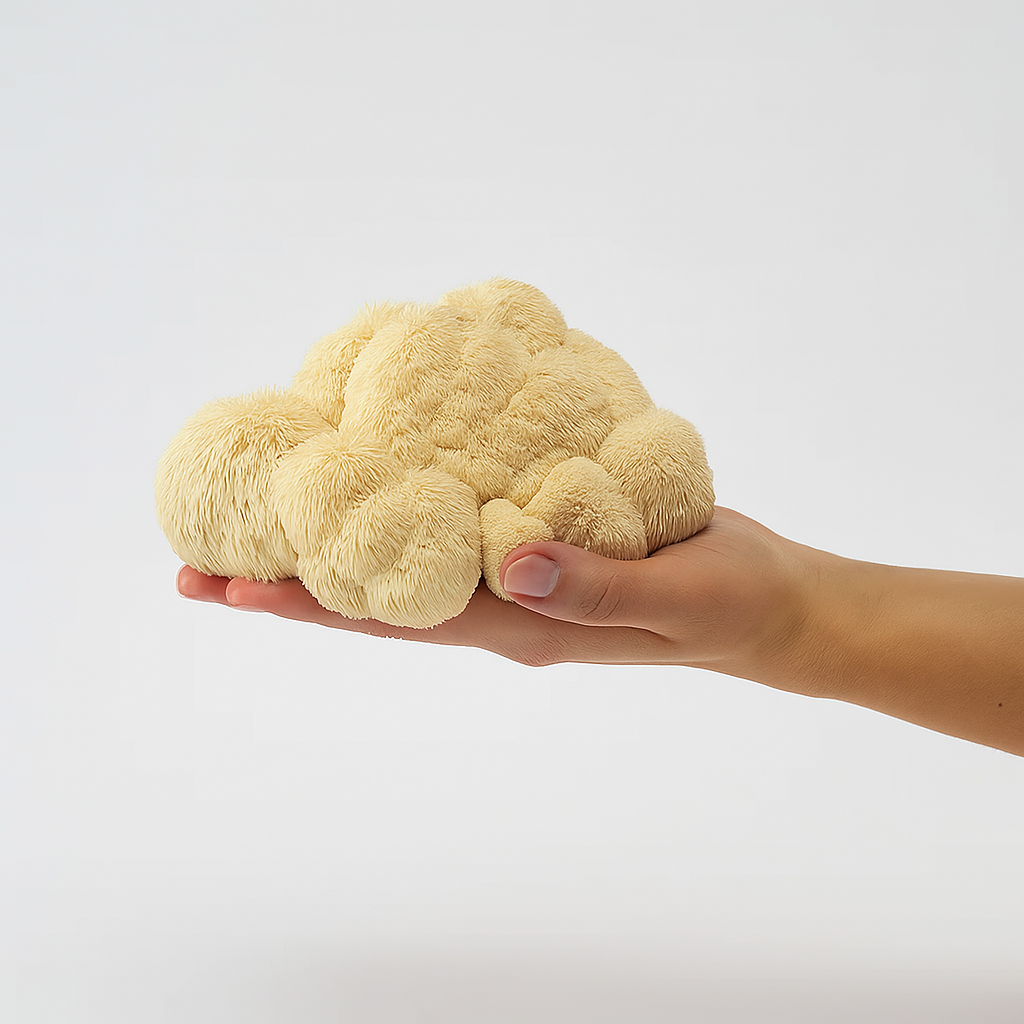
Ivory pins stretch into a soft cluster of white spines that looks more like coral than a mushroom. Pull it into thumb-size pieces, brown them in butter and finish with garlic and thyme.
- To harvest
- 7 to 14 days
- Fruiting temp
- 61 to 70°F
- Per flush
- About 1 lb

Under the grow light
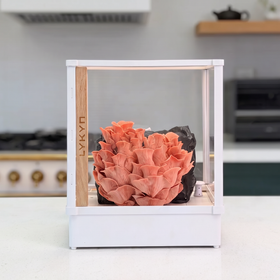
The same species a few days into its flush, inside a running chamber. The blue cast is the grow light. Scan the block and the app holds this one at 87 to 92 percent humidity and 61 to 70°F.
 PAIRS PERFECTLY
Lion's Mane is the easy species the chamber makes effortless
Lion's Mane needs steady high humidity (87 to 92%) and a cool ambient room. The Lykyn Smart Grow Chamber holds the humidity automatically and the species preset runs on-board. Reusable across 100+ grow cycles and all 28 species in the app.
- Auto humidity at 87 to 92% RH, no daily misting
- Fresh air keeps the cluster clean and white
- Lion's Mane preset built in, runs even if Wi-Fi drops
- Reusable across 100+ grow cycles and all 28 species
What Our Customers Are Saying
Real reviews from real mushroom growers, beginners and pros alike.

"I LOVE my Lykyn! It's sitting on my kitchen counter and has become a conversation starter. My friends can't believe I'm actually growing mushrooms!"

"My kids are absolutely obsessed with watching the mushrooms grow in our LYKYN chamber. They check it every morning and get so excited when they see changes. It's become an unexpected family activity!"

"Really impressed with how well this controls humidity. My oyster mushrooms are forming beautiful clusters with none of the elongated stems I used to get with my grow blocks."

"I've been growing mushrooms for years and this is my new favorite grow box. The app works great. No more spraying and fanning :)"

"I wanted to wait until I harvested my first batch of mushrooms. This thing works as advertised. I had amazing results on my first try!"
Successful Harvest = Best Value
A $30 spray-and-grow bag wins on day one. A Lykyn smart grow box wins every month after that. Honest side-by-side.
| Feature | Manual Kit ($30) | Lykyn ($299 + blocks) |
|---|---|---|
| Daily attention required | 15 to 30 minutes | 30 seconds |
| Humidity control | Manual | Sensor-driven |
| Airflow control | Manual | Automatic cycles |
| Beginner success rate | 40 to 60% | 90%+ |
| Species variety | 1 per kit | Any fruiting block |
| Reusable | Single use | 100+ grow cycles |
| App notifications | ||
| Travel-friendly |
Manual kits cost less upfront, but you buy a new one each time. With Lykyn, you invest once and every harvest after is half the cost.
Everything growers ask about lion's mane
Honest answers about growing, cooking, and harvesting lion's mane mushrooms - and what makes the Lykyn block different.
How long does it take to grow Lion's Mane mushrooms?
With the Lykyn smart chamber, expect 7 to 14 days from slicing the bag to first harvest. The block then rests a few days before re-soaking and starting the next flush.
How many flushes do you get from a Lion's Mane block?
Our 5 lb fully colonized block typically produces 2 to 3 flushes at about 1 lb fresh each. Yield drops with each flush as the block consumes its substrate.
What does Lion's Mane mushroom taste like?
Cooked Lion's Mane has a soft, meaty texture often compared to crab or scallops, with a mild buttery flavor. Dry sauté first to release moisture, then finish in butter or olive oil.
Can I grow Lion's Mane without the chamber?
Yes, the block can fruit in any high-humidity environment (87 to 92% RH at 16 to 21°C / 61 to 70°F). However, it needs daily misting and has a higher contamination risk. The Lykyn Smart Grow Chamber automates both.
Does Lion's Mane have nootropic or cognitive benefits?
Lion's Mane (Hericium erinaceus) is one of the most studied functional mushrooms on the wellness market. Research published over the past decade suggests two compound families in the fruiting body, hericenones and erinacines, may support nerve growth factor (NGF) signaling. That is part of why Lion's Mane appears in so many focus, memory, and mood stacks.
We do not make any health or treatment claims. What we can say honestly is that fresh, traceable Lion's Mane from a colonized block is the most direct way to put this mushroom into your weekly meals. Talk to a clinician before adding any new functional food to a medical routine, especially if you are pregnant, nursing, or on prescription medication.
How do I store harvested Lion's Mane in the fridge?
Treat fresh Lion's Mane like a delicate gourmet ingredient. Wrap each cluster loosely in a paper bag or a clean dish towel, then place it in the warmest part of your fridge (top shelf or door, ideally 2 to 4°C / 36 to 40°F). The paper absorbs moisture so the spines stay firm and white instead of going slimy. Plastic bags trap humidity and shorten shelf life.
Stored this way, Lion's Mane holds peak texture for 5 to 7 days. For longer storage, dry sauté slices in a dry pan until the moisture cooks off, cool them, then freeze in a single layer on parchment before bagging. Frozen cooked slices keep for 2 to 3 months and drop straight into stir fries or pasta.
My block isn't pinning after 14 days. What should I do?
First, check fruiting climate. Lion's Mane needs 87 to 92 percent humidity at 16 to 21°C (61 to 70°F) with fresh airflow several times a day. If the room is warmer than 22°C, pinning stalls. If humidity drops below 80 percent, the surface dries and the primordia (baby mushrooms) abort. The Lykyn Smart Grow Chamber automates all of this so you can skip the daily babysitting.
Second, look at the block surface. White fuzzy mycelium is healthy. Tiny white bumps mean pinning has started. If the surface looks dry, mist lightly twice a day with clean water, then re-cover with a fruiting tent or plastic bag with slits. If 14 more days pass with zero pinning activity, email a clear photo to info@lykyn.com and our team will replace the block under our first grow guarantee.
Is the Lion's Mane kit safe around kids and pets?
The fully colonized hardwood block is non-toxic to children and household pets, and Lion's Mane mushrooms themselves are a widely eaten gourmet food in many cuisines. That said, the kit is not a snack. Keep the sealed block out of reach of curious toddlers and dogs while it is fruiting, the same way you would with any kitchen produce.
Two practical notes. One, mushroom spores can occasionally trigger respiratory sensitivity in people with mold allergies, so set the chamber up in a well-ventilated room rather than directly above a crib or pet bed. Two, never let pets chew on the substrate itself. If you have specific health questions, talk to your pediatrician or veterinarian before introducing fresh Lion's Mane into a household feeding routine.
Can I cook Lion's Mane like crab meat?
Yes, and that is exactly why home cooks call it the "lobster of the forest." Cooked Lion's Mane has a tender, almost fibrous texture that pulls apart in soft strands, very similar to crab or scallop meat. Slice the cluster into half-inch thick medallions, dry sauté them in a hot pan with no oil for 3 to 4 minutes per side to release internal moisture, then finish with butter, garlic, and a squeeze of lemon.
From there, treat it like a seafood substitute. Try Lion's Mane crab cakes, vegan lobster rolls, scampi pasta, or a buttery cream sauce over rice. Because the flavor is mild and savory, it carries seasoning beautifully. Avoid boiling, which makes the texture rubbery, and avoid raw, since cooking is what unlocks the digestibility and the umami profile.
Ready to start your first grow? Pair this block with the Lykyn Single-Tier Smart Grow Chamber and harvest your first flush in under two weeks.