



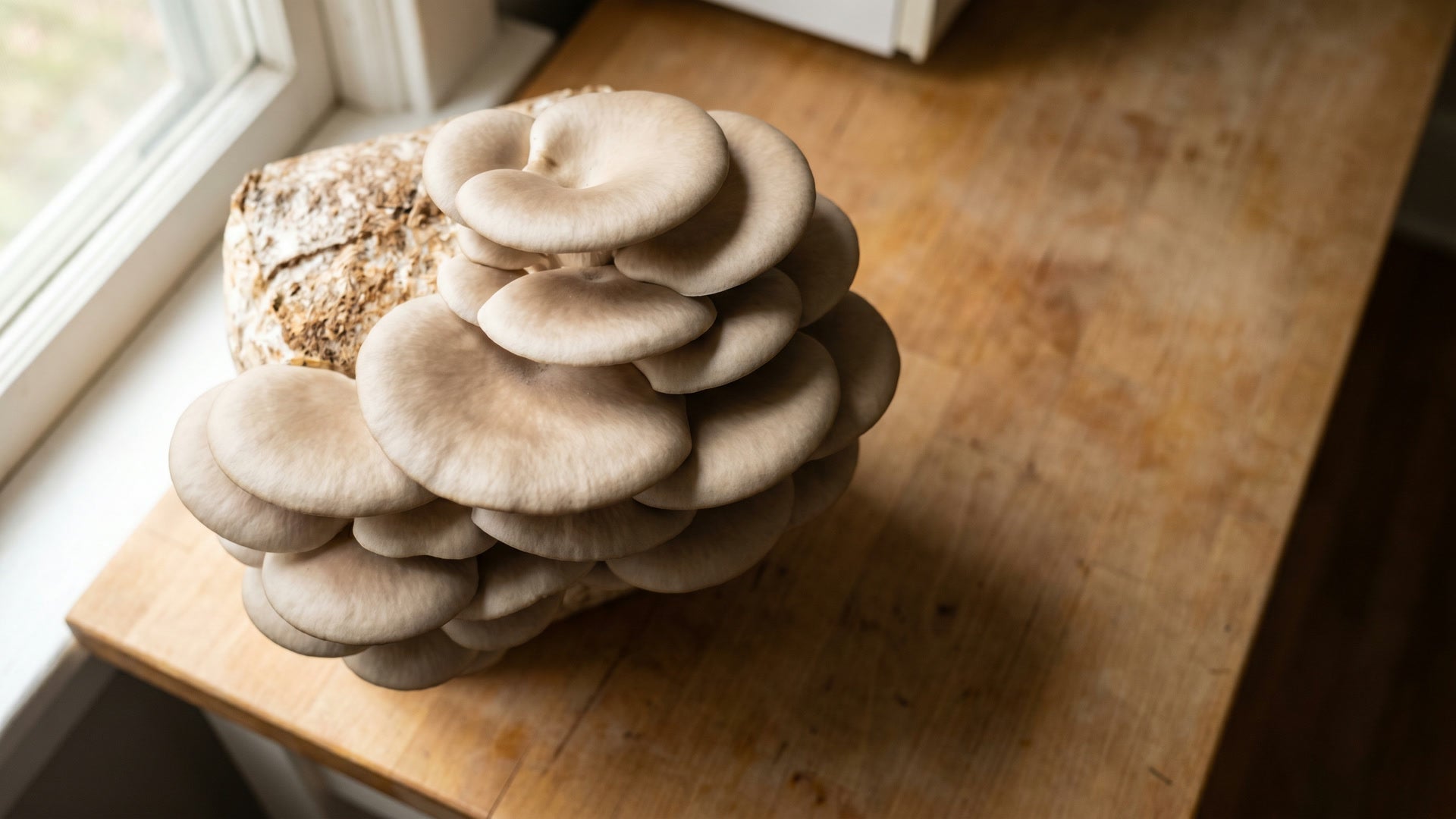
Blue oyster mushrooms are the cool-weather show-off of the oyster family. The caps fan out in shades of slate, dove gray, and storm blue, the flesh cooks fast, browns beautifully, and carries a soft anise note that disappears the moment butter and garlic hit the pan. Below are five blue oyster mushroom recipes you can make tonight, plus the prep tricks that turn a slippery pan of mushrooms into something restaurant worthy.

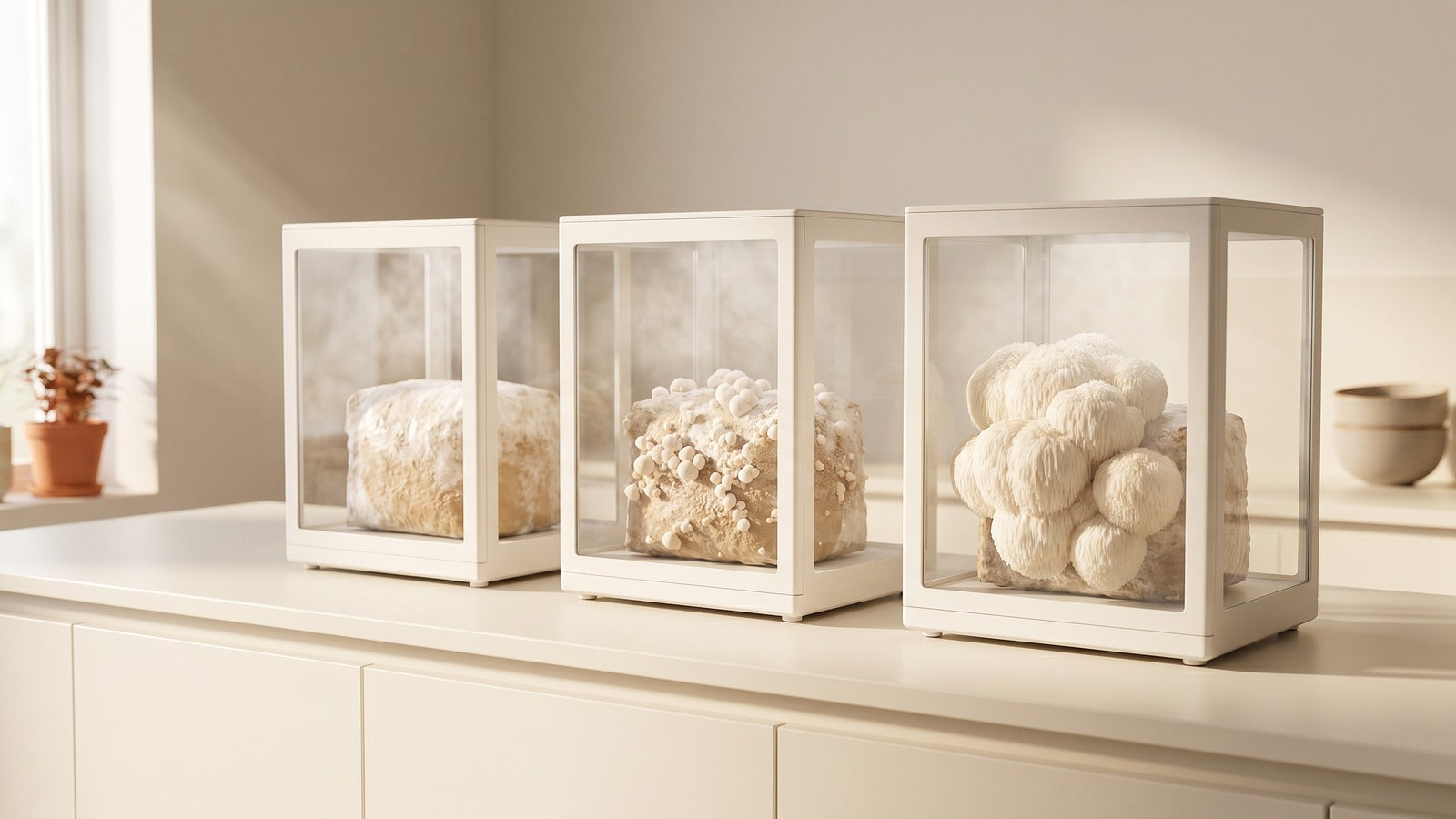
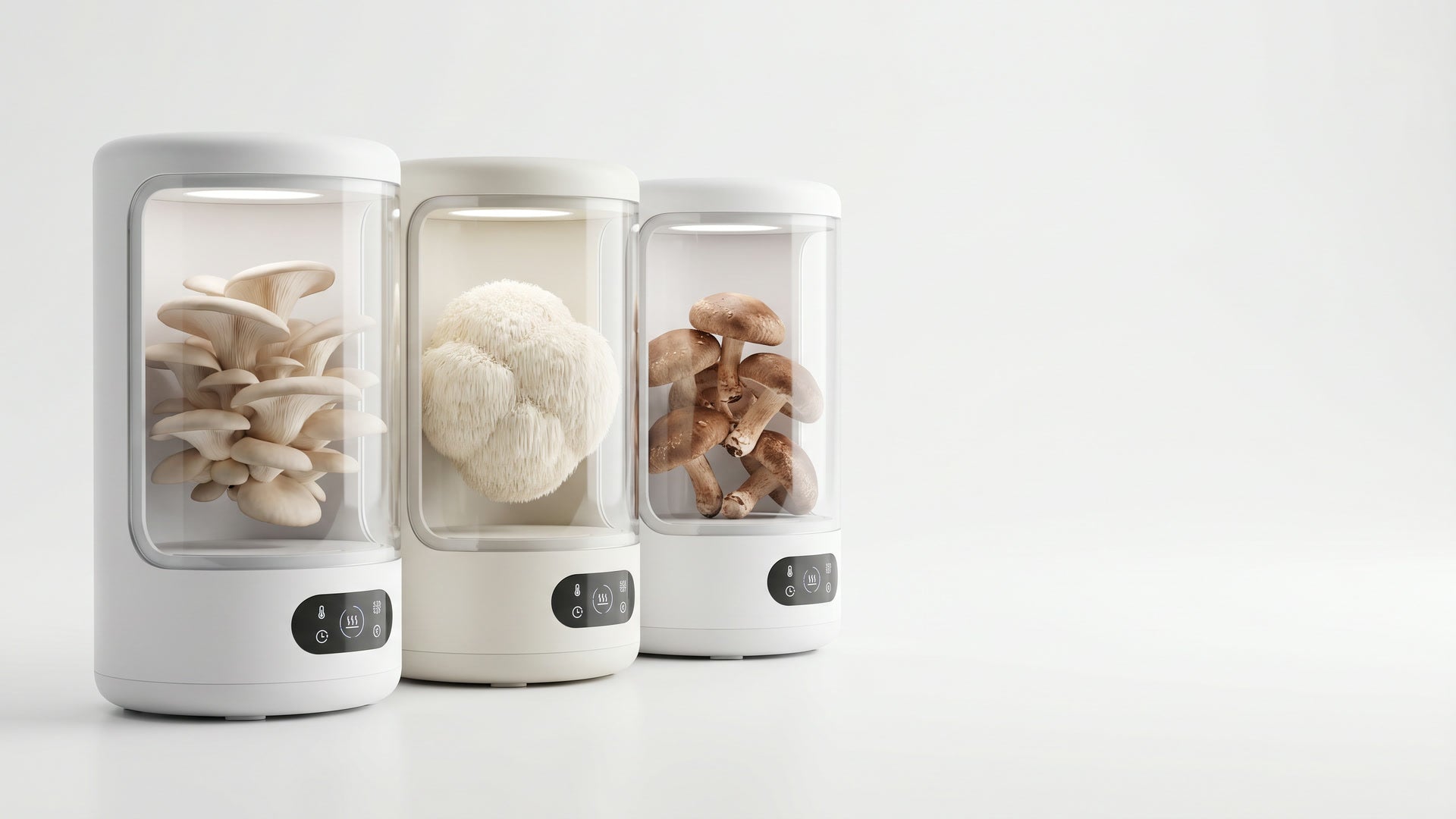
Smart Chamber. Bone White Single
- 2.8L tank, 90% humidity automatic
- App-controlled, plug-and-play
- 6 lb block ceiling, in stock

Smart Chamber. Obsidian Black Single
- Same hardware as Bone White
- Matte black premium finish
- Pairs with any kitchen palette

Three things to know before you start cooking blue oyster mushrooms:
- Cook fast and hot. Blue oyster caps are thin and water-rich. A wide pan, medium-high heat, and four to six minutes total is enough. Crowd the pan and you steam them.
- Tear, don't chop. Pull the cluster apart at the base. The natural fan shape browns better than knife-cut squares and looks gorgeous on the plate.
- Salt at the end. Salt pulls water out, which slows browning. Wait until the mushrooms have caramel edges, then season.
If you want the freshest possible blue oysters, our blue oyster grow guide walks through chamber setup and harvest timing from block to first flush.
What Is a Blue Oyster Mushroom (Pleurotus columbinus)?
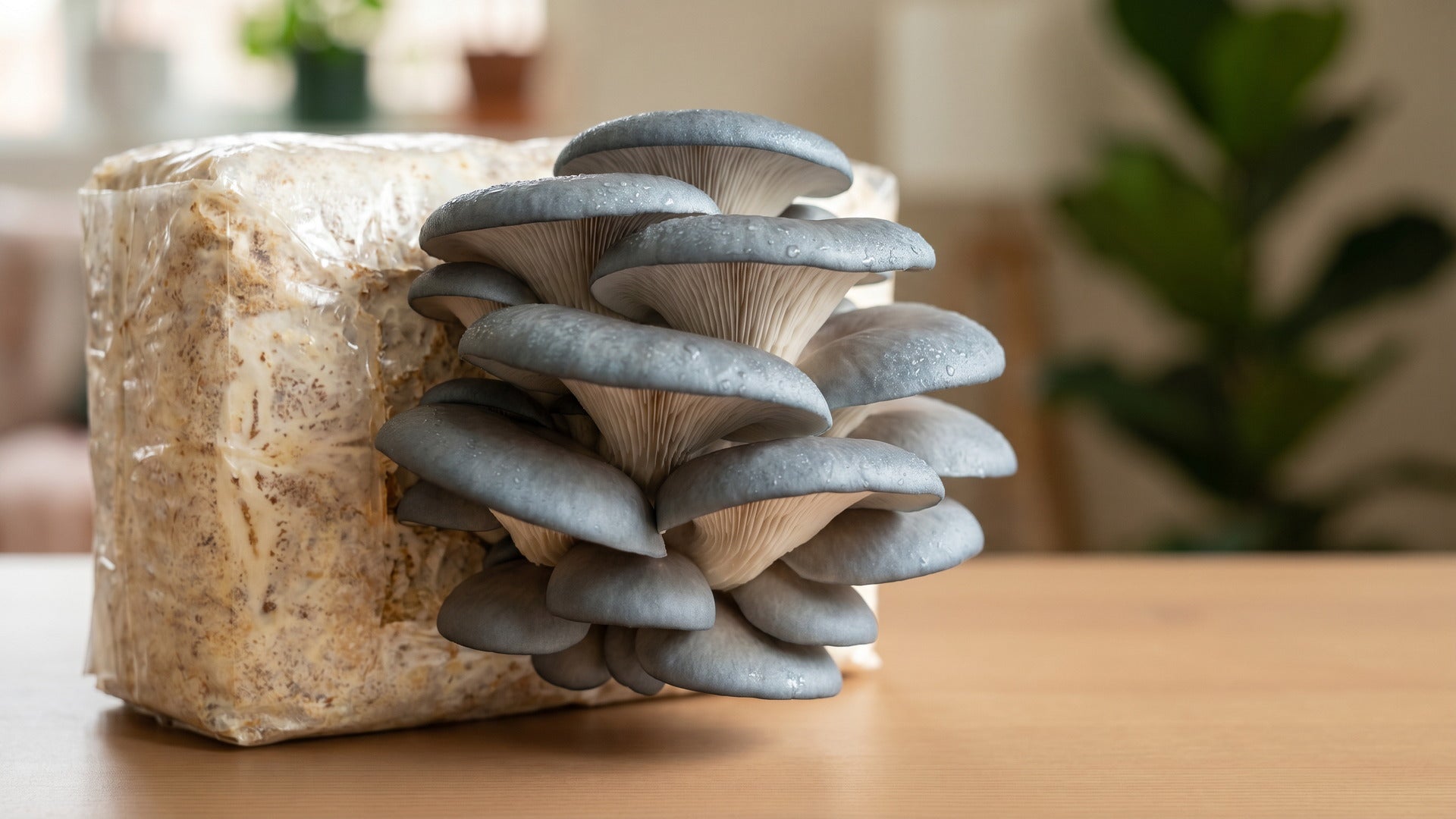
A blue oyster mushroom is a cool-temperature strain of the oyster family that grows in clusters of fan-shaped caps colored anywhere from pale dove gray to deep slate blue. Two species sit behind almost every "blue oyster" label you'll see at a market or in a grow catalog: Pleurotus ostreatus (the standard oyster mushroom, grown cool to draw out the blue pigment) and Pleurotus columbinus (a closely related species sometimes sold as "blue pearl" or "Italian blue"). The two are siblings, not twins. Pleurotus columbinus tends to hold a slightly deeper, more uniform blue, fruits a little smaller, and carries a marginally firmer cap. For the cook, the difference is negligible. Both behave the same in the pan and taste nearly identical: mild, gently sweet, with a faint anise note that fades as they brown.
The blue color is temperature-driven. When the fruiting block lives at 55 to 65°F during pinning, pigments in the cap concentrate and the caps go deep blue. Grow the same strain at 70°F and the color shifts toward gray or beige, though the flavor stays the same. The blue is not a separate species marker, just a sign the mushroom was raised cool, which is why home growers using a temperature-controlled chamber consistently get richer color than warehouse-grown supermarket oysters.
For cooks, three things stand out:
- Texture. Thin, layered caps with a tender bite, similar to chanterelles but more delicate.
- Flavor. Mild umami with a barely-there anise note. Friendly to garlic, butter, cream, lemon, and wine.
- Speed. They cook through in four to six minutes flat. Perfect for weeknights.
How to Prep Blue Oyster Mushrooms
Prep is where most cooks lose the dish. Blue oysters are about 88 percent water. Treat them like delicate seafood, not like button mushrooms.
Step-by-step prep:
- Inspect the cluster. Look for firm caps with crisp edges. Soggy, slimy, or yellowing tips mean the mushroom is past its prime. Skip it.
- Skip the wash. Use a dry pastry brush or a barely damp paper towel to remove any debris. A water soak ruins the sear and turns the caps rubbery.
- Tear at the base. Hold the cluster, find the stem joint, and pull off individual caps or small fans. Trim the very bottom of the stem if it looks dry, but leave most of it on. The stem cooks tender.
- Dry the pan first. Heat your skillet medium-high for two full minutes before any fat goes in. A cold pan is the number-one cause of soggy mushrooms.
- One layer, no crowding. Mushrooms release water as they cook. Crowd the pan and that water has nowhere to go, so the mushrooms steam instead of brown. Two batches beat one crowded batch every time.
- Season last. Salt, fresh herbs, pepper, lemon, all at the end. A splash of white wine or a small knob of cold butter to finish gives them restaurant gloss.
Why Lykyn Growers Get the Best Blue Oysters at Home
You've just read how to handle a blue oyster cluster like it's seafood. There's a reason the analogy holds: freshness drives almost every flavor compound that makes the dish work. Blue oysters fruited at 55 to 65°F and harvested an hour before the pan develop noticeably deeper anise notes, a firmer cap snap, and that signature slate-blue pigment that fades within 24 hours of refrigeration. The supermarket version is grown warm (70°F+, where commercial throughput is cheaper), pre-bagged in plastic, then shipped 3 to 7 days before it reaches your plate. Color, aroma, and texture all peak in the first 12 hours after harvest, and that window is simply unavailable through a grocery supply chain.
A precision-controlled fruiting chamber like Lykyn holds the humidity at 90 percent and the temperature in that cool 55 to 65°F band the entire pinning phase, so the blue pigment concentrates the way it does in foraged specimens. You harvest the cluster the same week you eat it, and the difference at the table is the kind of thing you stop being able to un-taste. If you've ever wondered why your home-cooked oysters land flat next to a restaurant plate, the answer usually isn't your technique. It's the week your mushrooms spent in a truck.
A 2026 firmware update tuned the pinning cycle specifically for oyster strains. Most Lykyn growers now see first pins within 36 hours and a full harvest 4 days after pinning. That is the fastest documented oyster cycle in any home cultivator.
What Sets Lykyn Recipes Apart
A few things we've learned after the Lykyn growing team logged 200+ harvest cycles across blue, gray, pink, golden, and king oyster strains, all from the Smart Chamber test fleet:
- First-flush caps are tender enough to eat raw; second-flush caps need heat. The cell walls thicken on the second harvest. We never recommend raw blue oyster prep past flush one. The texture turns chewy and the anise note hides behind chitin.
- Butter past 60°C kills the soft anise. Hold the pan medium-high. As soon as the butter starts to brown, the volatile aniseed compounds vaporize off and the dish goes generic-mushroom. Sear first, butter last (off the heat is even better).
- Torn caps keep mineral notes that chopped caps lose. Knife edges crush the gill structure and bleed out the iron-and-sea-mineral note that makes blue oysters distinct. Pull the cluster apart with your fingers at the base. The fan shape also browns faster.
These aren't tips you'll find on a generalist recipe site. They come from cooking the same species, from the same chamber, every week, for years.
Recipe 1: Blue Oyster Mushroom Pasta with Garlic and White Wine
This is the flagship blue oyster recipe. Twenty minutes, one pan, and you have a dish that tastes like a small Italian restaurant in October. The anise note in the mushrooms plays beautifully against the white wine and parsley.
Serves 4. Prep 10 min, cook 20 min.

Ingredients:
- 12 oz dried linguine or tagliatelle
- 1 lb fresh blue oyster mushrooms, torn into bite pieces
- 4 tablespoons unsalted butter, divided
- 2 tablespoons olive oil
- 4 garlic cloves, thinly sliced
- 1/2 cup dry white wine (Pinot Grigio or Sauvignon Blanc)
- 1/2 cup reserved pasta water
- 1/4 cup fresh flat-leaf parsley, chopped
- 1/2 teaspoon red pepper flakes (optional)
- Sea salt and freshly cracked black pepper
- 1/2 cup grated Parmigiano-Reggiano
Instructions:
- Bring a large pot of salted water to a boil. Cook the pasta one minute shy of al dente. Reserve 1/2 cup pasta water, drain, and set aside.
- While the pasta cooks, heat 2 tablespoons butter and the olive oil in a large skillet over medium-high. Add the blue oysters in one layer (work in two batches if needed). Let them sit untouched for 3 minutes until the undersides go golden. Toss once and cook 2 more minutes.
- Push the mushrooms to one side. Add the garlic and red pepper flakes to the empty side and stir for 30 seconds until fragrant.
- Pour in the white wine. Scrape the pan bottom and let the wine reduce by half, about 90 seconds.
- Add the drained pasta, 1/4 cup pasta water, the remaining 2 tablespoons butter, and most of the parsley. Toss vigorously for one minute until a silky sauce forms. Add more pasta water if dry.
- Season with salt and pepper. Plate, top with Parmigiano and remaining parsley, and serve immediately.
Lykyn tip: if you grew your own blue oysters, the first harvest off a fresh block is the most flavorful. Save the second flush for the soup or stir-fry below where you cook them harder.
Recipe 2: Creamy Blue Oyster Mushroom Soup
A blue oyster mushroom soup that takes 35 minutes from start to ladle. The mild anise note of the mushrooms meets cream and thyme and turns into something genuinely cozy.
Serves 4. Prep 10 min, cook 25 min.

Ingredients:
- 1 lb blue oyster mushrooms, torn rough
- 1 medium yellow onion, diced
- 3 garlic cloves, minced
- 2 tablespoons butter
- 1 tablespoon olive oil
- 2 sprigs fresh thyme
- 3 cups low-sodium vegetable or chicken broth
- 1 cup heavy cream
- 1 tablespoon dry sherry (optional, brilliant)
- 1 tablespoon fresh lemon juice
- Salt and pepper
Instructions:
- Set aside a small handful of the prettiest mushroom pieces. Heat 1 tablespoon butter in a small pan and sear those caps until crisp. Reserve for garnish.
- In a large pot, melt the remaining butter with the olive oil over medium. Add the onion and cook 5 minutes until soft.
- Add the rest of the mushrooms and the thyme. Cook 8 minutes, stirring occasionally, until the mushrooms release their water and start to brown.
- Add the garlic and cook 30 seconds. Pour in the broth and the sherry (if using). Simmer 10 minutes.
- Discard the thyme stems. Blend the soup until smooth using an immersion blender (or carefully transfer to a stand blender). Return to the pot.
- Stir in the cream and lemon juice. Warm through and taste for salt and pepper.
- Ladle into bowls. Top with the reserved crisp mushrooms and a crack of pepper.
Lykyn tip: this is the recipe to make with second-flush caps. The blending step rescues any minor chew, and the cream rounds out the deeper umami the second harvest develops.
Recipe 3: Blue Oyster Pizza Topping with Mozzarella and Thyme
Blue oyster mushrooms are an underrated pizza topping. Their thin caps crisp at the edges in oven heat, and the mild flavor pairs with smoked cheese as easily as it does with fresh mozzarella.
Serves 4. Prep 10 min, cook 12 min.

Ingredients:
- 1 pizza dough (homemade or store-bought, room temperature)
- 6 oz fresh blue oyster mushrooms, torn small
- 2 tablespoons olive oil
- 2 garlic cloves, very thinly sliced
- 1/2 cup tomato sauce (or skip for a white pizza)
- 8 oz fresh mozzarella, torn
- 2 oz smoked mozzarella or scamorza (optional)
- 1 teaspoon fresh thyme leaves
- Salt, pepper, red pepper flakes
- 1 tablespoon honey for drizzle (optional)
Instructions:
- Preheat the oven to 500°F with a pizza stone or steel for at least 30 minutes.
- Toss the torn blue oysters with 1 tablespoon olive oil and a pinch of salt. This pre-treats them so they crisp instead of steam in the oven.
- Stretch the dough on parchment. Brush with the remaining olive oil. Spread the tomato sauce thinly (or skip it).
- Scatter the cheeses, sliced garlic, and seasoned blue oysters across the surface. Add a few thyme leaves.
- Slide onto the stone. Bake 8 to 10 minutes until the crust is deeply golden and the mushroom edges are crisp.
- Finish with a sprinkle of fresh thyme, a pinch of red pepper, and a small drizzle of honey if you like a sweet contrast.
Lykyn tip: the high-heat bake is the test case for the "butter past 60°C kills the anise" rule. Oil-toss instead of butter-toss before topping; the anise note carries through the crisp.
Recipe 4: Vegan Blue Oyster Stir Fry with Ginger and Soy
A 12-minute vegan blue oyster recipe that works as a side or piled over rice as a main. The thin caps soak up the soy and ginger without going soggy.
Serves 2 as a main, 4 as a side. Prep 8 min, cook 6 min.


Fuel Your Mushroom Journey
Smart Mushroom Grow Chamber
Plug-and-play smart chamber with humidity, light, and airflow dialed in for every species. Beginners harvest their first flush in days, not months.
Add to cart $299Ingredients:
- 12 oz blue oyster mushrooms, torn
- 1 tablespoon avocado or peanut oil
- 1 tablespoon fresh ginger, finely grated
- 3 garlic cloves, minced
- 2 scallions, sliced (whites and greens separated)
- 2 tablespoons soy sauce or tamari
- 1 tablespoon rice vinegar
- 1 teaspoon toasted sesame oil
- 1 teaspoon maple syrup or honey
- 1/2 teaspoon cornstarch dissolved in 2 tablespoons water
- 1 small red chili, sliced (optional)
- 1 tablespoon toasted sesame seeds
Instructions:
- Whisk the soy sauce, rice vinegar, sesame oil, and maple syrup in a small bowl. Set aside.
- Heat a wok or wide skillet over high until smoking. Add the oil.
- Add the blue oysters in one layer. Let them sear 90 seconds without stirring. Toss and cook 90 more seconds.
- Add the ginger, garlic, scallion whites, and chili. Stir-fry 30 seconds.
- Pour in the sauce. Toss to coat, then add the cornstarch slurry. Cook 30 more seconds until glossy.
- Off the heat, scatter the scallion greens and sesame seeds. Serve over jasmine rice or alongside grilled tofu.
Lykyn tip: torn caps (not chopped) keep their mineral note in this dish. The soy is salty enough to mask iron notes from knife-bruised caps. Tear with your fingers and you'll taste the difference.
Recipe 5: Garlic Blue Oyster Mushrooms on Toast
The simplest dish on this list and arguably the best. A 10-minute appetizer that tastes like late summer in a country pub.
Serves 4 as an appetizer. Prep 5 min, cook 7 min.

Ingredients:
- 8 oz blue oyster mushrooms, torn into small fans
- 4 thick slices country bread or sourdough
- 3 tablespoons unsalted butter
- 2 tablespoons olive oil
- 4 garlic cloves, finely chopped
- 1 tablespoon fresh thyme leaves (or 1 teaspoon dried)
- 2 tablespoons fresh parsley, chopped
- 1 teaspoon fresh lemon zest
- Flaky sea salt and cracked pepper
- 1 garlic clove, whole, for rubbing
Instructions:
- Toast the bread under the broiler until deeply golden on both sides. While still hot, rub each piece with the whole garlic clove.
- Heat 1 tablespoon butter and the olive oil in a wide skillet over medium-high. Add the torn blue oysters in one layer. Sear 3 minutes undisturbed.
- Toss the mushrooms once. Add the remaining butter, the chopped garlic, and the thyme. Cook 2 more minutes until the garlic is fragrant and the mushrooms are deeply golden.
- Off the heat, fold in the parsley, lemon zest, salt, and pepper.
- Pile the mushrooms generously onto the toast. Finish with a final pinch of flaky salt. Eat immediately.
Cooking Tips: Get a Restaurant-Quality Sear Every Time
A few habits separate good blue oyster mushrooms from great ones.
Pan choice matters. Stainless steel and cast iron both deliver excellent browning. Nonstick pans run too cool for a proper Maillard reaction on mushroom caps. Use them only for the rare moment you want a soft, silky finish.
Heat the pan empty. Two full minutes over medium-high before any oil hits. A pan that hisses when you flick water on it is ready.
Resist the toss. Tossing every 30 seconds steams the mushrooms in their own water. Let each side go three minutes untouched. You'll hear when they release: a sharp crackle that means the water is gone and the browning has begun.
Finish with cold fat. A small knob of cold butter or a teaspoon of olive oil added off the heat coats the caps with gloss and carries any final seasoning across the dish.
Save the stems. The bottom inch of a blue oyster cluster, the part where the caps fuse, is gold for stock. Trim it, freeze it, and add it to the next vegetable broth you make. It deepens flavor without dominating.
Nutrition: What's in a Blue Oyster?
Blue oysters are nutritionally close to other oyster mushrooms and notably light. Per the USDA FoodData Central entry for oyster mushrooms, a 100 g serving of raw oyster mushrooms contains roughly 33 kcal, 3.3 g of protein, 2.3 g of fiber, and meaningful amounts of B vitamins (B3, B5) and selenium. They also contain beta-glucans, the soluble fibers researchers at Cornell Cooperative Extension and elsewhere have studied for their effects on gut health and immune function.
A peer-reviewed analysis of Pleurotus ostreatus published in the journal Foods (2022) confirmed that the species is rich in ergothioneine, an antioxidant that survives normal cooking temperatures. Translation: blue oysters offer real nutritional value alongside their flavor, and a fast sear preserves most of it.
For more on the oyster family beyond blue, the oyster mushroom grow kit beginner's guide covers pink, golden, and king oysters and how each species' flavor profile differs at the plate.
FAQ: Cooking Blue Oyster Mushrooms
How do I know if my blue oysters are fresh?
Fresh blue oyster caps are firm, with crisp edges and a uniform slate or dove-blue color. The underside gills should be pale cream, not browning. Press a cap gently; it should spring back. If the cluster feels slick, smells sour or fishy, or the cap tips have gone yellow, the mushroom is past prime and the flavor will be flat. Store-bought blue oysters often arrive at the edge of this window, which is why color and snap are the two cues to lean on hardest.
Can I substitute blue oysters with king or pink oysters in these recipes?
Mostly yes, with two adjustments. King oysters have meatier stems and need 30 to 60 seconds longer per side to brown through, so add a minute to the pasta and stir-fry recipes. Pink oysters cook in roughly the same time but lose their pink color within 90 seconds in the pan, and they carry a smokier, more bacon-adjacent flavor that overpowers the delicate white-wine and cream recipes (pasta, soup). Pink works best swapped into the stir-fry or garlic toast.
Why do my blue oysters turn brown when I cook them?
That's the Maillard reaction, and it's what you want. Blue oysters lose their bright slate color the moment heat hits them, but the brown that replaces it is the sear that delivers all the flavor. If the mushrooms are going gray-brown without crisping, the pan isn't hot enough or you've crowded it. Drop to half the mushrooms per batch and let the pan recover heat between rounds.
Do I wash blue oyster mushrooms before cooking?
No. Blue oysters are about 88 percent water already; soaking them adds more, which kills the sear and turns the caps rubbery. Use a dry pastry brush or a barely damp paper towel to wipe off any debris. Home-grown blue oysters from a Lykyn chamber are usually clean enough to skip even that step.
Can I freeze cooked blue oyster dishes?
Yes, with caveats. The soup freezes beautifully for up to 3 months. The pasta sauce (mushrooms, garlic, wine, butter) freezes well separately from the noodles; reheat gently with a splash of pasta water. The stir-fry, pizza, and garlic toast do not freeze well because the high-heat textures (crisp caps, blistered crust, toasted bread) collapse on reheating.
What white wine pairs best with blue oyster pasta?
A crisp dry white with citrus acidity: Pinot Grigio, Sauvignon Blanc, or Vermentino. The acidity cuts through butter and Parmesan while letting the soft anise note of the mushroom lead. Avoid oaked Chardonnay; the toast and butter notes in the wine compete with the same in the pan and the mushroom flavor disappears.
Why are some blue oysters more gray than blue?
Temperature, not species. The blue pigment concentrates when the fruiting block lives at 55 to 65°F during pinning. At 70°F or warmer, the same strain produces gray-to-beige caps. Most commercial grow houses fruit at the warmer end because it's cheaper to maintain, so the deepest blue caps you'll find tend to come from foragers or temperature-controlled home setups.
Wrap Up
Blue oyster mushrooms reward attention. Treat them gently in prep, sear them hard, season them late, and they pay you back with restaurant-quality plates in twenty minutes flat. The pasta is the classic, the soup is the comfort move, the pizza and stir-fry handle weeknights, and the garlic toast is the one you'll bring out at parties.
The next step, if you want them at their fresh, fragrant best, is growing your own. The Lykyn Smart Chamber holds the cool 55 to 65°F window blue oysters need to develop their deepest color and anise note. Once you've cooked with a cluster you harvested an hour earlier, you stop calling it "just a mushroom."
Sources
- USDA FoodData Central - Pleurotus ostreatus nutrition data
- Cornell Cooperative Extension - Mushroom cultivation resources
- Bell, V., Silva, C., Guina, J., Fernandes, T. H. (2022). Mushrooms as future generation healthy foods. Foods, 11(3), 365.
Aktie:
How to Prepare Oyster Mushrooms Like a Pro
How to Cook King Oyster Mushrooms Perfectly