


If you've been reading about lemon tek mushrooms, you've probably seen the claim that adding lemon juice to dried mushrooms changes how fast and how hard the trip hits. The short answer is yes, the acidic environment does begin to convert psilocybin to psilocin before ingestion, which is why users report a faster, more intense, and shorter experience compared to chewing whole mushrooms.
That said, lemon tek refers specifically to psilocybin mushrooms, which are federally illegal in the United States and most other countries. This article is purely educational. We don't sell psychoactive mushrooms, and we don't recommend breaking the law. What we do sell are gourmet and functional mushroom grow kits (Lion's Mane, Reishi, Oyster, and similar legal species), and we get this question often enough that a clear, science-grounded answer is worth writing down.

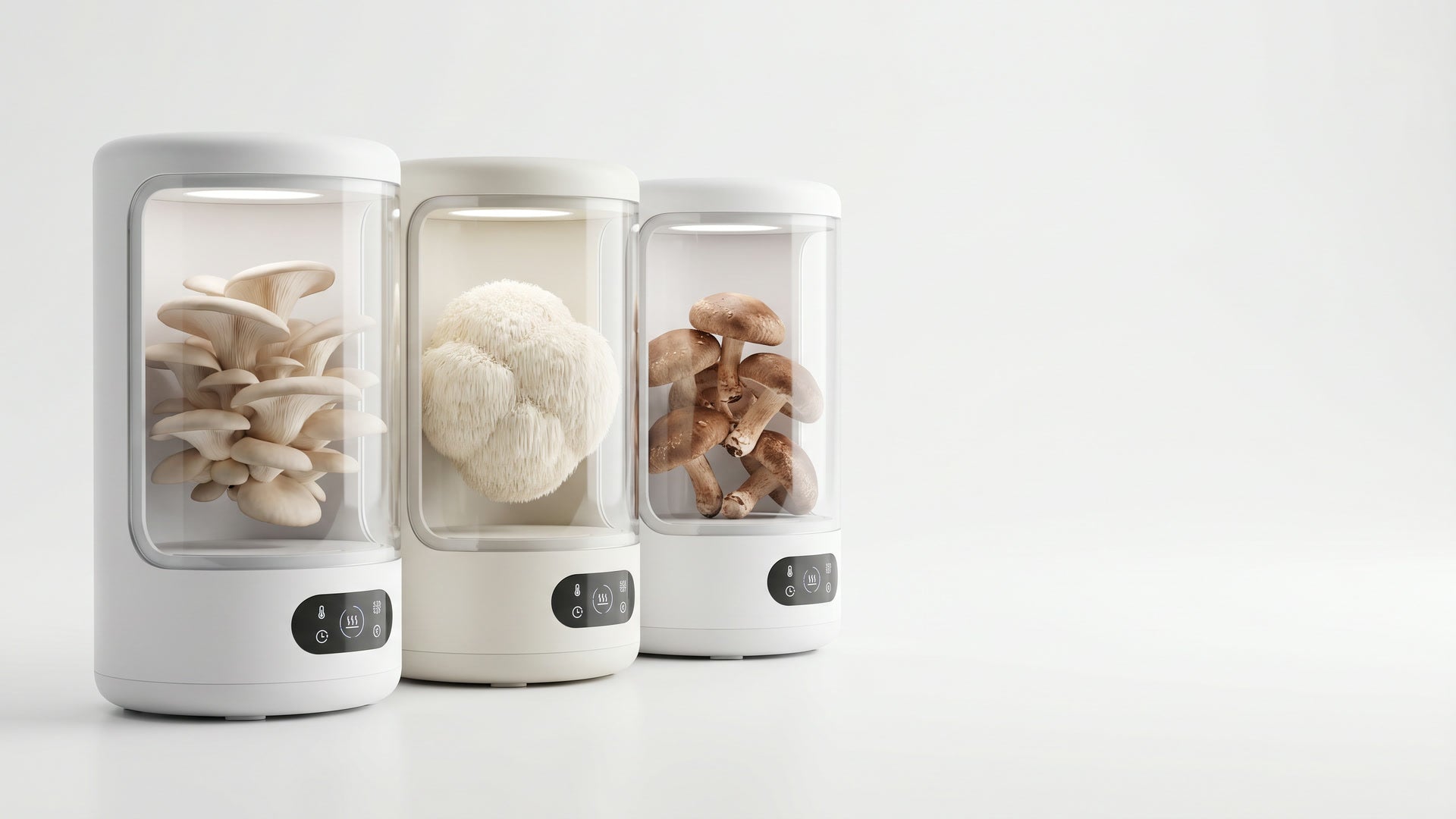
Smart Chamber. Bone White Single
- 2.8L tank, 90% humidity automatic
- App-controlled, plug-and-play
- 6 lb block ceiling, in stock

Smart Chamber. Obsidian Black Single
- Same hardware as Bone White
- Matte black premium finish
- Pairs with any kitchen palette

What "lemon tek" actually describes
The technique is simple in concept. Dried mushrooms are ground into a powder, mixed with citrus juice (usually lemon or lime), left to sit for roughly 15 to 20 minutes, then consumed as a shot. The acidic pH (lemon juice sits around 2.0 to 2.5) is thought to mimic stomach acid, kick-starting the conversion of psilocybin (the prodrug) into psilocin (the active compound that binds to serotonin receptors).
So instead of your stomach doing all the work over 60 to 90 minutes, some of that chemistry happens in the cup. Users describe an onset around 15 to 30 minutes after drinking, peak at 45 to 90 minutes, and a total duration of three to four hours, shorter than the four to six hours of a standard dried-mushroom dose.
The chemistry behind the conversion
Psilocybin is a phosphorylated molecule (4-phosphoryloxy-N,N-dimethyltryptamine). Once it hits an acidic environment, the phosphate group hydrolyzes off, leaving psilocin (4-hydroxy-N,N-dimethyltryptamine). Psilocin is what actually crosses the blood-brain barrier and produces the psychedelic effect. The body does this conversion enzymatically anyway, but acid speeds it up.
This isn't a unique trick. Lemon juice has been used in traditional preparations for centuries with cacao and other compounds. What's new is the prevalence of this technique on online forums, where dose recommendations get passed around without much medical context.
Why people report a stronger experience
Three factors stack on top of each other. First, the pre-conversion means more psilocin is bioavailable faster, so the curve is steeper. Second, ground powder has more surface area than chewed mushroom chunks, which improves absorption. Third, the citrus juice may neutralize some of the chitin in mushroom cell walls, releasing more of the active compounds.
The combined effect is a trip that feels more intense at the peak but tapers off sooner. That doesn't mean more psilocybin is in the system, just that more of it hits the brain at once. The "less nausea" claim is partly true (less mushroom material in the stomach) and partly anecdotal.
The legal status (please read this section)
Psilocybin and psilocin are Schedule I substances under US federal law. Possession, cultivation, and distribution carry serious criminal penalties. A few states and cities (Oregon, Colorado, Denver, Oakland, and a handful of others) have decriminalized possession or set up therapeutic programs, but federal law has not changed.
If you live somewhere lemon tek mushrooms are decriminalized, you're still operating under specific legal frameworks (program access, age limits, registered facilitators). If you live somewhere they aren't, even possessing dried mushrooms is a felony in most jurisdictions.

Fuel Your Mushroom Journey
Smart Mushroom Grow Chamber
Plug-and-play smart chamber with humidity, light, and airflow dialed in for every species. Beginners harvest their first flush in days, not months.
Add to cart $299What we actually grow and sell
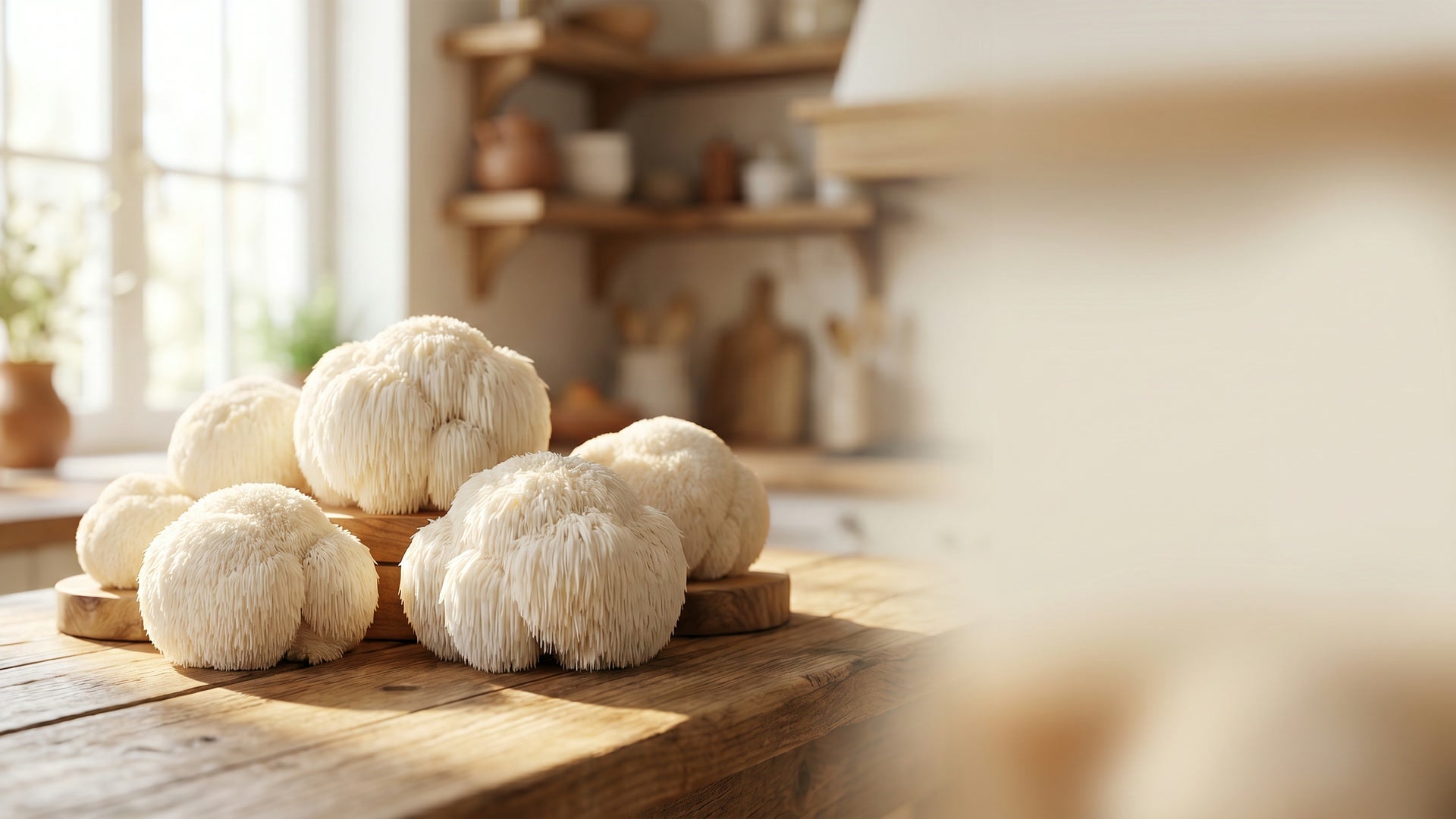
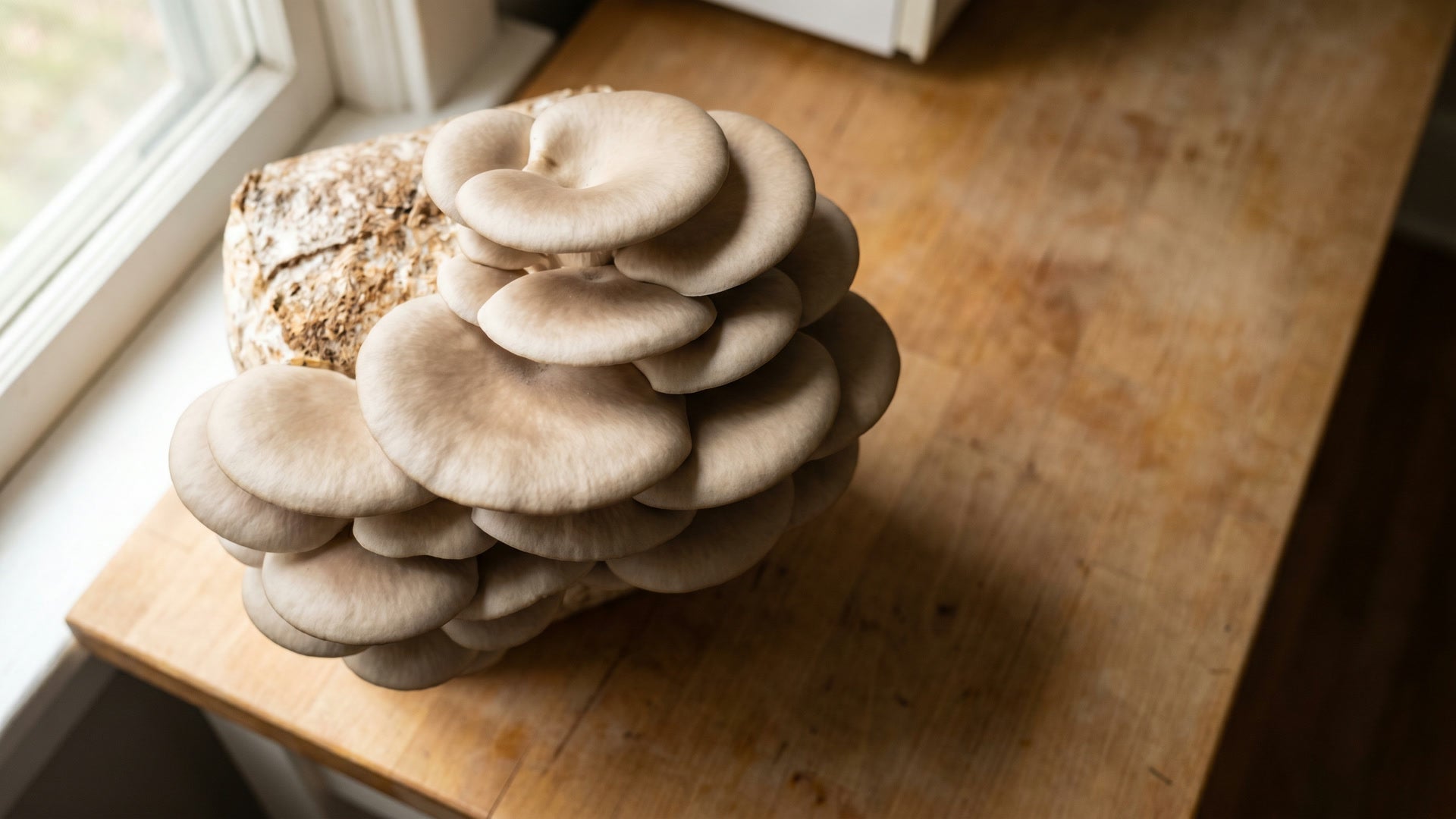
Lykyn is a home mushroom cultivation company. Our mushroom grow kits are for fully legal culinary and functional species: Lion's Mane (cognitive support), Reishi (immune and stress support), Pink Oyster, King Oyster, Pearl Oyster, and others. None of these are psychoactive. Lion's Mane, in particular, gets confused with psilocybin discussions online, but it contains hericenones and erinacines, not tryptamines, and produces no psychedelic effect.
If your interest in mushrooms is about cognitive support, stress reduction, immune function, or just growing your own food, those benefits are well-documented and don't require any legal gray area.
If you're curious about psilocybin specifically
The current research landscape is genuinely interesting. Johns Hopkins, NYU, and Imperial College London have published peer-reviewed studies on psilocybin-assisted therapy for depression, end-of-life anxiety, and addiction. The FDA has granted Breakthrough Therapy designation to psilocybin for treatment-resistant depression. Compass Pathways is in Phase III trials. Oregon's Measure 109 created the first state-licensed psilocybin service framework.
If you want to engage with this medicine, the safe path is through a licensed facilitator in a state where it's permitted, or through a clinical trial. Self-administration with lemon tek (or any other method) carries real risks: bad trips, panic responses, dangerous interactions with SSRIs and MAOIs, and the legal exposure mentioned above.
Common questions we get asked
Does lemon tek work with non-psychoactive mushrooms? No. Lion's Mane, Reishi, and culinary species don't contain psilocybin, so there's no conversion to accelerate. Soaking them in lemon juice just gives you mushroom-lemon water.
Can lemon juice change the taste of dried gourmet mushrooms? Yes, and that's a legitimate culinary use. Squeezing lemon over sautéed Lion's Mane brightens the flavor. That's just cooking, not pharmacology.
Is there a "safer" version of lemon tek? Not really. The intensity is the point of the technique, which means it amplifies whatever's going to happen, including adverse reactions. Lower doses, sober trip sitters, and a screened set and setting matter far more than the preparation method.
The bottom line
Lemon tek is a real chemical phenomenon (acid converts psilocybin to psilocin faster), but it only applies to controlled substances and only in jurisdictions where you can legally possess them. The technique doesn't make anything safer, just faster and more intense.
For everyone else (the cooks, the wellness folks, the curious growers), the world of legal mushrooms is large and rewarding. Functional varieties like Lion's Mane and Reishi have decades of research behind them. Culinary varieties like King Oyster and Pink Oyster taste better than anything at the grocery store. None of them require lemon, lawyers, or a careful read of state statutes.
Share:
How to Slice Mushrooms: Thickness Guide by Variety
How to Slice Mushrooms: Thickness Guide by Variety