



Quick answer: Mushroom green mold trichoderma is a fast-spreading fungal contaminant (Trichoderma harzianum and related species) that turns mushroom substrate from healthy white mycelium into forest green, dusty spores within 48 to 72 hours. It thrives in warm, humid, poorly ventilated conditions and outcompetes most gourmet mushroom mycelium when sterile technique slips. Early-stage rescue is possible if green stays under 10 percent of the block surface and you act within 24 hours. Past that, discard the block and disinfect the chamber.
You opened your fruiting block this morning, and where there was bright white fluff yesterday, there is now a pale green smear. That is almost certainly Trichoderma, the most common contaminant in home mushroom growing. Timing matters, and most growers wait too long. We have grown thousands of blocks in the Lykyn Smart Mushroom Grow Box and seen Trichoderma show up in nearly every way it can. Here is the honest playbook.
What Trichoderma Looks Like

Stage 1: tiny white tufts
The visual progression on a mushroom block follows a predictable sequence:
- Day 0 to 1: A small white patch that looks almost identical to mushroom mycelium. You will not notice it.
- Day 1 to 2: The patch takes on a yellow or pale lime tinge. Texture looks powdery rather than the cottony fuzz of gourmet mycelium.
- Day 2 to 3: Full sporulation. Saturated forest green with a dusty surface. This is when most growers spot it.
- Day 3 onward: Green spreads outward in concentric rings with a thin yellow halo. Surrounding mushroom mycelium yellows, recedes, dies. Pins abort.
Stage 2-4: pale green to dark forest
Smell: Healthy mycelium smells earthy, slightly sweet, sometimes faintly of anise. Trichoderma smells musty, like a damp basement. The smell often hits before you see the color.
Texture: Healthy mycelium is fluffy and three-dimensional. Trichoderma sits flat and dusty, more film than fuzz. When touched, spores release in a visible cloud.
Trichoderma vs Healthy Mycelium and Other Molds

Healthy mycelium vs early Trichoderma. Mushroom mycelium advances slowly over 7 to 14 days and stays bright white well past colonization. Trichoderma grows in dense circular patches, advances visibly in 24 hours, and turns yellow within 2 days. If a patch was not there yesterday but takes up half a square inch today, that is not your mushroom.
Trichoderma vs Penicillium. Penicillium is bluer green (mint or turquoise), grows in fluffier colonies with a halo, and stays on the surface. Trichoderma is darker forest green, lies flat, and colonizes through the substrate.
Trichoderma vs Aspergillus. Aspergillus produces yellower green or grey-green colonies with a grainy texture and is dangerous to inhale. If you are unsure, treat any green mold as Aspergillus and follow the disposal protocol below.
Trichoderma vs cobweb mold. Cobweb mold looks like grey, wispy spider silk. If your patch is grey and stringy rather than green and powdery, that is cobweb mold.
Why Trichoderma Wins in Home Grows

Trichoderma has three biological advantages. It colonizes a square centimeter in 18 to 24 hours, faster than any gourmet mushroom species. It produces chitinases and glucanases that actively dissolve competing mycelium (mycoparasitism, not just competition). And its spores are everywhere: the USDA Agricultural Research Service has documented Trichoderma in soil, plants, indoor air, and untreated wood. You cannot avoid the spores. You can only prevent them from finding a foothold.
The conditions Trichoderma loves (85 to 95 percent humidity, 70 to 80 F, still air) are exactly what a home grow tries to create. The difference between a healthy grow and a green-mold disaster is sterile technique and chamber discipline.
Prevention That Actually Works

Control humidity and FAE
Prevention is 90 percent of the game.
sealed and app-controlled chamber air
Hands and surfaces. Wash hands with soap for 20 seconds. Wipe surfaces with 70 percent isopropyl alcohol (70 percent penetrates cell walls better than 91 percent).
Block handling. Pre-colonized blocks from Lykyn fruiting blocks ship in a sealed bag with a filter patch. Do not cut until you are ready. Make a clean X or slit, not a wide opening.
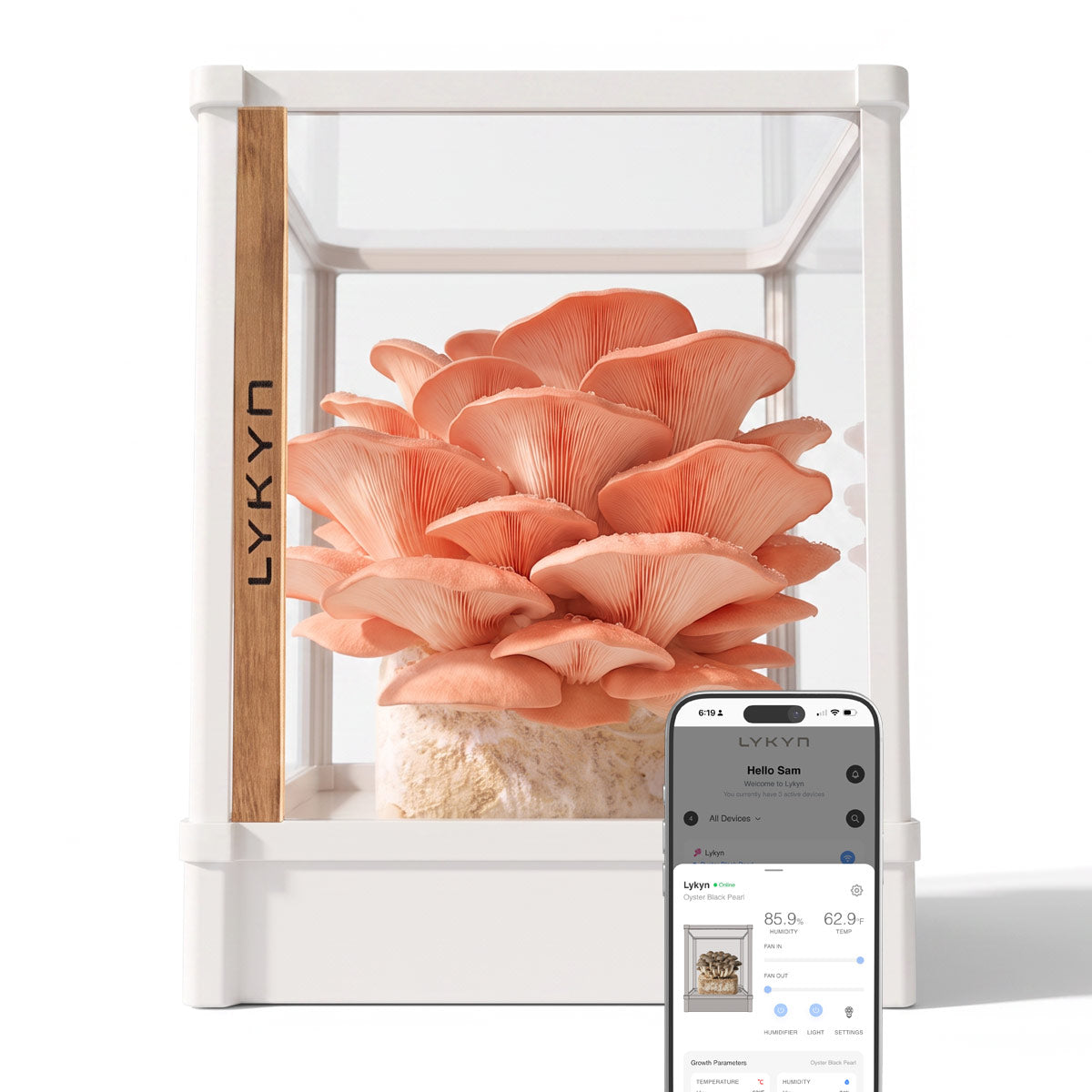
Air quality. Trichoderma spores travel on dust and air currents. Run your grow in a clean room, not next to houseplants, a litter box, or compost. A sealed and app-controlled chamber is the single biggest contamination reducer available to home growers.
Humidity and ventilation balance. The biggest mistake is running 90 percent plus humidity with no fresh air exchange. Standing humid air is a Trichoderma incubator. Run FAE every 30 to 60 minutes. A smart mushroom grow box handles this automatically.

Fuel Your Mushroom Journey
Smart Mushroom Grow Chamber
Plug-and-play smart chamber with humidity, light, and airflow dialed in for every species. Beginners harvest their first flush in days, not months.
Add to cart $299Temperature. Trichoderma loves 75 to 85 F. Most gourmet mushrooms fruit best at 60 to 75 F. Run at the cooler end of your species's range.
Rescue Protocol When You See Green
Under 5 percent surface, edge of block, less than 24 hours old. You may save it. Wearing a respirator and gloves, slice off the affected substrate plus a 1 to 2 inch margin with a clean knife. Sterilize the cut with 3 percent hydrogen peroxide. Move to a separate rescue chamber if you have one, raise FAE, monitor twice a day. Success rate: 30 to 50 percent.
5 to 10 percent surface. Borderline. The chamber is likely already contaminated. Most experienced growers discard at this stage.
Over 10 percent, any green inside the substrate, or green near the pinning zone. Discard.
Disposal. Trichoderma spores aerosolize. Double-bag the block (original grow bag plus sealed outer trash bag), tie tightly, take to an outdoor bin. Wash hands and disinfect surfaces. Do not compost contaminated blocks unless your compost runs over 160 F.
Chamber disinfection after an incident. Empty completely. Wipe every interior surface with 3 percent hydrogen peroxide or a 1:10 bleach solution. Hit corners, the humidifier tank, fan blades, silicone gaskets. Air-dry 24 hours with fans on full. Replace the built-in filter if your chamber has one. Restart with a fresh block.
Substrate Sanitation Recipes
Repeat Trichoderma problems often trace to the substrate.
Lime pasteurization (straw or hay). Mix 0.5 percent hydrated lime (calcium hydroxide) by weight into dry straw. Submerge in cool water for 18 to 24 hours. Drain to field-capacity moisture. Inoculate while pH is raised. Lime drops Trichoderma's competitive edge; oyster mycelium tolerates pH 8 to 9 better than nearly any contaminant.
Hot water pasteurization (universal). Submerge in 160 to 180 F water for 90 minutes. Drain, cool, inoculate. Kills most contaminants but not all spores. Pair with a chamber.
Pressure sterilization (sawdust or supplemented substrates). 90 minutes at 15 PSI in a pressure cooker. Gold standard for high-nitrogen substrates that Trichoderma loves most.
If you want to skip substrate prep, pre-colonized blocks from Lykyn's fruiting block collection arrive sterilized and inoculated.
How a Smart Chamber Reduces Risk
A grow that runs steady 88 percent humidity, FAE every 45 minutes, sealed and app-controlled intake, and a sealed environment sees one Trichoderma incident in 20 grows. A humidity tent on a kitchen counter with manual misting sees one in 4 or 5.
The Lykyn chamber routes fresh air through , holds humidity within a 3-point band, and seals the glass front so spores have fewer entry points than an open tent. The difference between 1 in 4 contamination and 1 in 20 is the difference between mushroom growing as a hobby and a frustration.
Frequently Asked Questions
Can you eat mushrooms from a block that had Trichoderma?
No. Even with a small visible patch, spores have likely spread through the substrate and into mushroom tissue. Some strains produce mycotoxins. Discard any block that showed green mold.
Is green mold dangerous to humans?
Trichoderma is not typically pathogenic to healthy adults, but inhaling concentrated spores can trigger respiratory irritation. The bigger risk is misidentification: a patch you call Trichoderma could be Aspergillus, which produces aflatoxins. Treat all green mold as Aspergillus, wear a mask during disposal, never eat affected mushrooms.
Can hydrogen peroxide kill Trichoderma?
Three percent peroxide kills Trichoderma at the surface. It does not penetrate deep into substrate and can damage your mushroom mycelium. Useful for spot-treating very early infections (under 24 hours, less than 5 percent surface) and for disinfecting chamber surfaces. Not a cure for established contamination.
Why does my block keep getting green mold?
Recurring Trichoderma means one of three things: a contaminated chamber surface, contaminated substrate, or environmental conditions that favor Trichoderma. Run the full chamber disinfection, switch to a fresh block from a different batch, and verify humidity and FAE cycles.
Will a built-in filter prevent Trichoderma?
catches 99.97 percent of particles down to 0.3 microns. Trichoderma spores are 3 to 5 microns, well within range. dramatically reduces but does not eliminate risk: spores can still enter on your hands or from the substrate.
How is Trichoderma different from oyster mycelium turning green?
Some oysters (notably pink and golden) develop a pale yellow tint in late colonization. This is metabolic pigment, and the texture stays fluffy. Trichoderma is darker, flatter, dustier, and grows in distinct circular patches.
Ready to Grow Mushrooms at Home Without Mold Battles?
Trichoderma is the contamination most home growers learn about the hard way: a green smear where there should be white fluff, a wasted block, a confused afternoon of disposal. The conditions that prevent it are entirely controllable, and a well-designed chamber removes most of the variability.
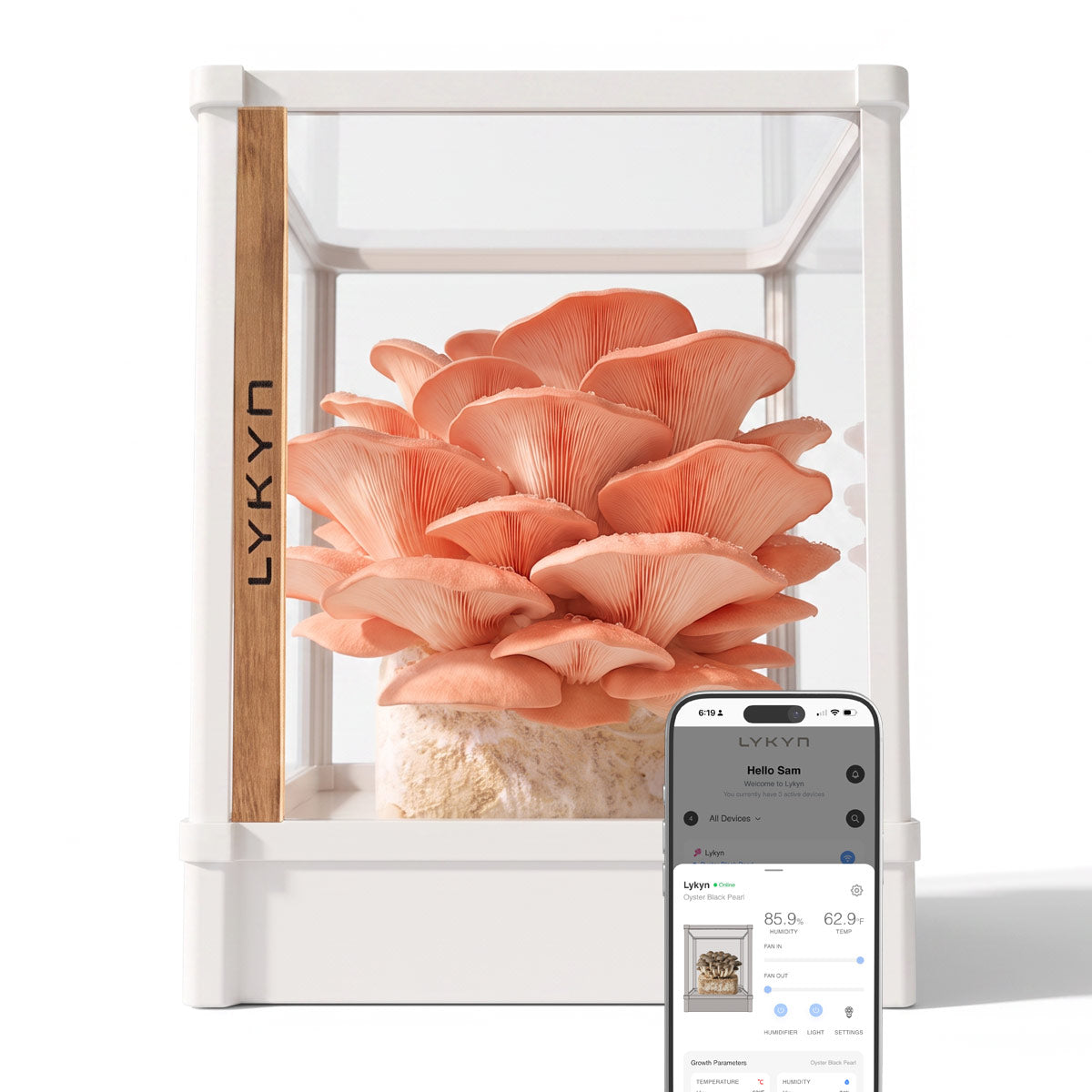
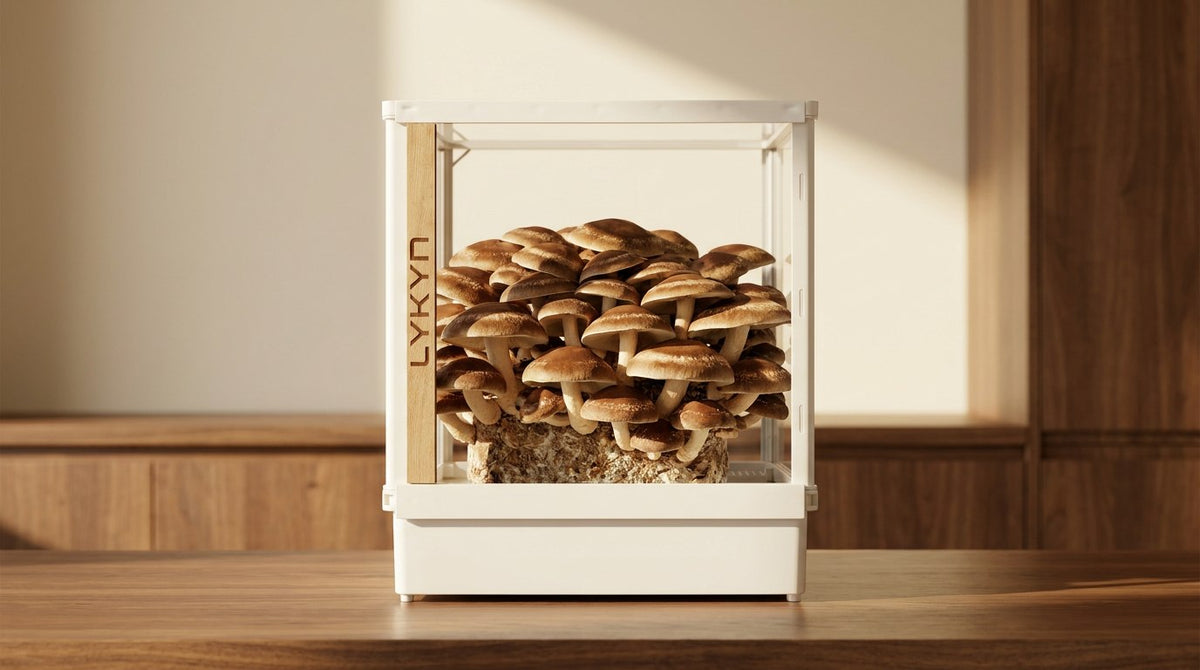
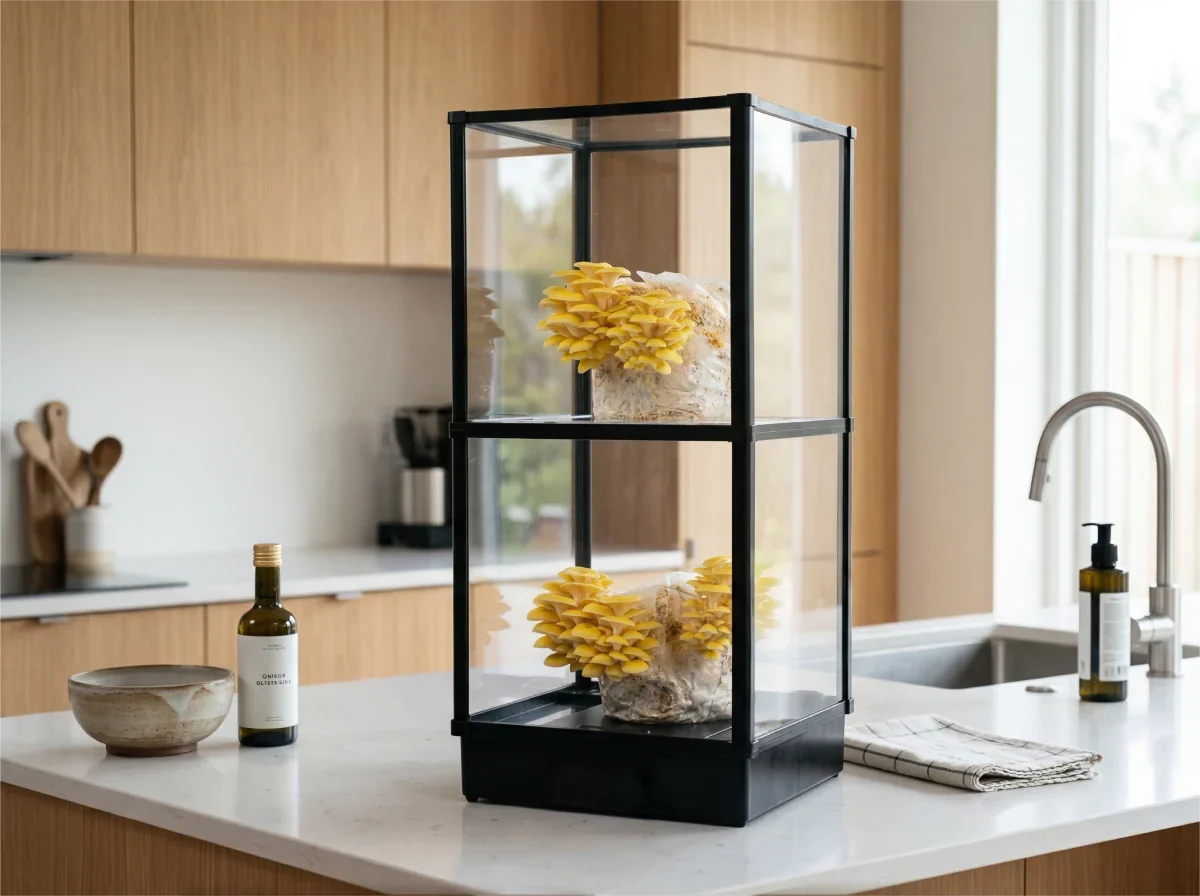
The Lykyn Smart Mushroom Grow Box runs sealed and app-controlled fresh air exchange, closed-loop humidity control, and a sealed glass front that drops contamination risk to a fraction of a manual setup. Pair it with a pre-colonized block from the Lykyn fruiting block collection, plug in USB-C, and you are growing in a contamination-managed environment from minute one. The mushroom grow kits collection bundles chamber and starter blocks for a single-checkout setup.
Fuel Your Mushroom Journey

Smart Chamber. Bone White Single
- 2.8L tank, 90% humidity automatic
- App-controlled, plug-and-play
- 6 lb block ceiling, in stock

Smart Chamber. Obsidian Black Single
- Same hardware as Bone White
- Matte black premium finish
- Pairs with any kitchen palette

Still Air Box (Anti-Contamination)
- Sterile inoculation workspace
- Stops Trichoderma at entry
- -compatible setup



Share:
How to Grow Pink Oyster Mushrooms at Home (2026 Guide)
Lykyn vs North Spore: An Honest Side-by-Side From Someone Who Ships Both