


The Shiitake Grow Kit Guide: Cold Shock, Pin, Flush
Chestnut caps browning on a wooden board by Sunday, from a block you slid into the chamber on Tuesday. That is the shiitake grow kit arc, start to steak.

Shiitake does not fruit on request. The block has to be convinced. A pre-colonized sawdust puck sits dense and cream-coloured, mycelium knitted through hardwood. To flip it from vegetative sleep to fruiting, you drop the temperature hard for a day, then raise humidity and let fresh air do the rest. Everything that follows in this guide, pins, caps, flushes, is a reaction to that first shock.
This guide walks the kit through four stages: cold shock, pin, cap formation, second flush. Each stage has sensory cues and timings that hold inside the Lykyn Smart Mushroom Grow Box. Nothing here needs a lab coat.
Why shiitake needs a cold shock
In the wild, shiitake fruits after a cold rain. Water soaks the log, temperature drops, and the fungus reads it as autumn. The grow kit replicates that signal in a counter-sized box. We hold the block at 10 to 15 Celsius for 18 to 24 hours. In the Lykyn chamber the Shiitake preset handles this on its own: open the app, pick the species, confirm the start.
You will know the shock worked by touch. The surface of the block feels cold through the bag the next morning. There is a faint sweet-earth smell, less bread, more wet forest floor. If the block was room-warm the whole time, no pins come. Shiitake is stubborn that way, and the shock is non-negotiable.
The pin stage: brown dots that mean everything
Three to five days after the shock, small chestnut dots appear across the top of the block. These are primordia, the physical start of a mushroom. They are the size of a lentil, slightly tacky to the touch, and they taste like nothing yet. Humidity sits at 85 to 90 percent. Air exchange runs light but steady so carbon dioxide does not pool.
Pinning is the stage that rewards patience. The temptation is to mist the block directly. Do not. Direct water on a pin bruises it, and bruised pins abort. The chamber keeps humidity in the air itself, which is the only form the pins want. On a counter without a chamber, a loose humidity tent works, but the pin count drops.
Cap formation: when the stem gives up and the cap takes over

By day four of fruiting, the pins become stems with tiny domed caps. The caps swell quickly now, roughly doubling every 24 hours. Shiitake is unusual in that the stem stays short and tough while the cap does most of the growing. If your mushrooms are turning into skinny-stemmed oyster-shaped things, air exchange is too low. The chamber reads that automatically and bumps the fan. Without a chamber, crack the lid of your humidity tent twice a day for a few minutes.
Caps start matte and roll inward at the edge. As they open, the cuticle cracks into pale lines across the chestnut top. In Japan this grade is called donko (thick, closed) or koshin (thinner, open), separated by a day or two of harvest timing. Both are good.
Harvest window: how to know the mushroom is ready
Harvest shiitake when the cap edge has rolled from a tight inward curl to a loose, slightly flared one. Underneath, the gills should be cream to pale tan, not brown. Brown gills mean the cap is dropping spores, which is fine for eating but means you waited a day too long for the texture you want. Twist the stem gently at the base, no knife, so the block surface stays clean for the second flush.
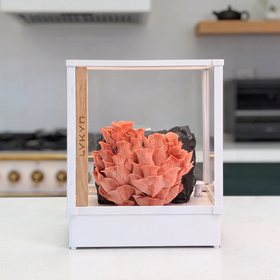
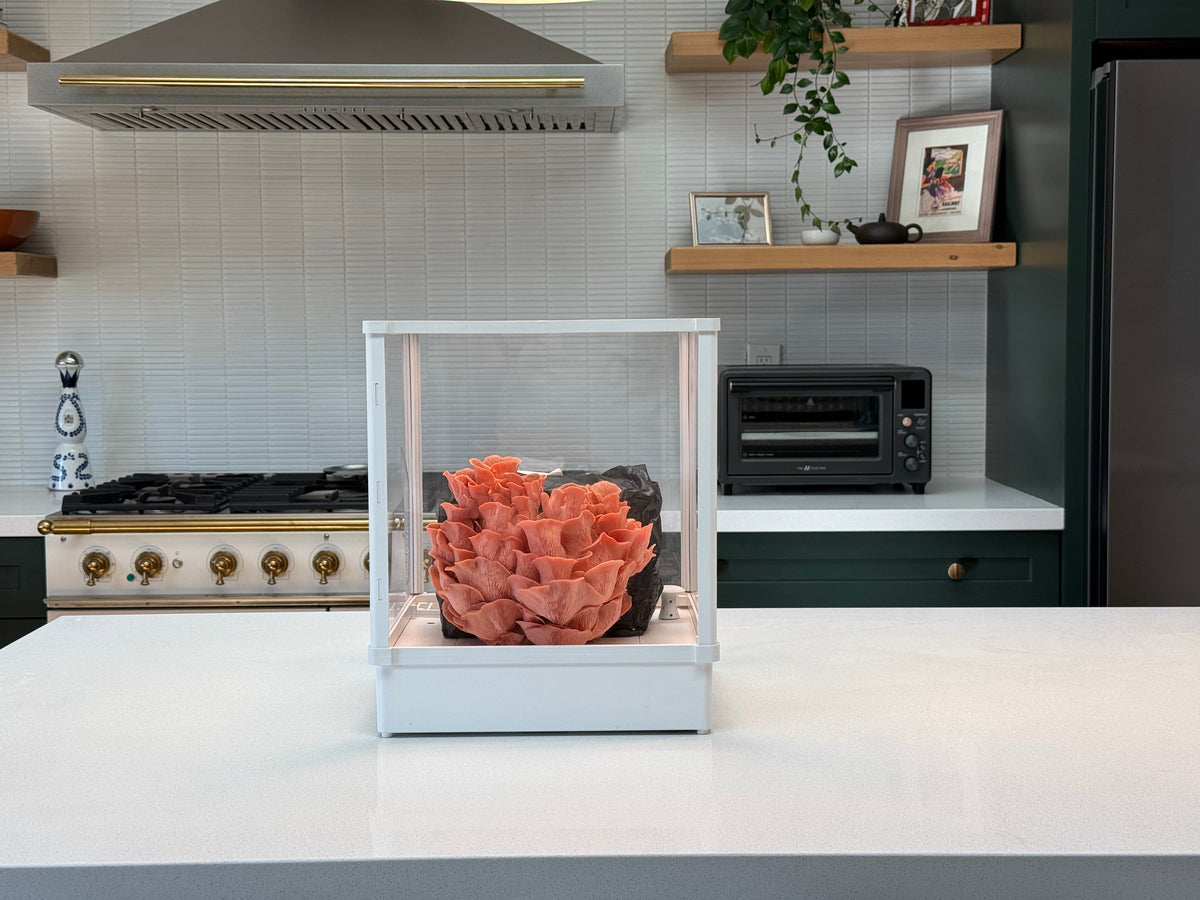
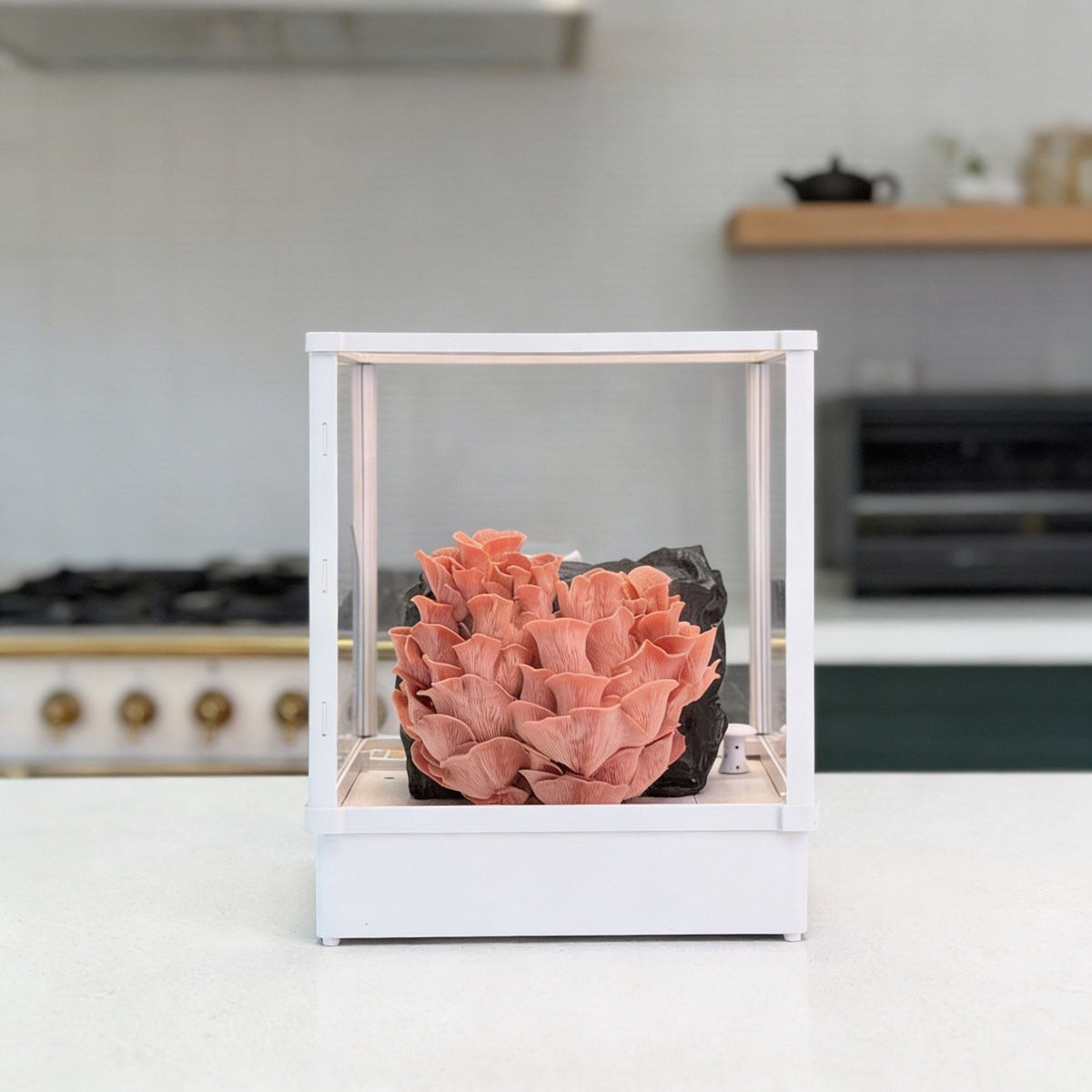
Weigh the first flush if you want to track your kit. A full first flush fills the glass front of the chamber, like a small cobblestone pavement. We do not quote exact gram claims because block variance is real: hardwood density, colonisation depth, kitchen temperature. What matters is that the cluster looks finished before you pick.
In August 2026 we logged a flush where the shiitake caps browned faster than we expected after a 24-hour FAE pause we were running as a test, and we picked two hours earlier the next morning to keep the gills light. That is the kind of small adjustment the kit teaches you to make.

The second flush: rest, re-soak, and ask again
After the first harvest the block looks battered: tan patches where mushrooms came out, white mycelium regrowing underneath. Rest it for seven to ten days at normal fruiting humidity. The block will finish knitting the surface back over. Then soak the block in cold water (around 8 to 10 Celsius) for 12 to 24 hours, drain it, slide it back into the chamber, and run the shiitake preset again. A second flush follows the same arc as the first, usually a smaller harvest, sometimes two thirds of the first, sometimes close to equal if the block was dense.
Shiitake kits often give a third flush, rarely a fourth. The signal that the block is finished is a sweet, slightly fermented smell when you lift the lid, and surface mycelium that looks grey instead of white. At that point the block goes into the compost or the garden, and a new kit goes into the chamber.
Why we grow shiitake at home instead of buying it
Supermarket shiitake is a different mushroom than a shiitake you cut off a block this morning. The grocery version has been in cold storage long enough that the cap is leathery and the smell is faint. A kit shiitake, picked at the right curl, is firm on the tooth, releases a wet savoury steam when you cut into it, and smells like a damp hardwood floor in the best possible way. The texture is the real argument. It stays meaty when seared because it has not spent five days drying out in a plastic clamshell.
Grocery stores rarely carry the species that make this hobby interesting at all: lion's mane, pink oyster, chestnut. A kit opens those doors, and shiitake teaches the ritual first.

Kit on a counter, or kit in a chamber

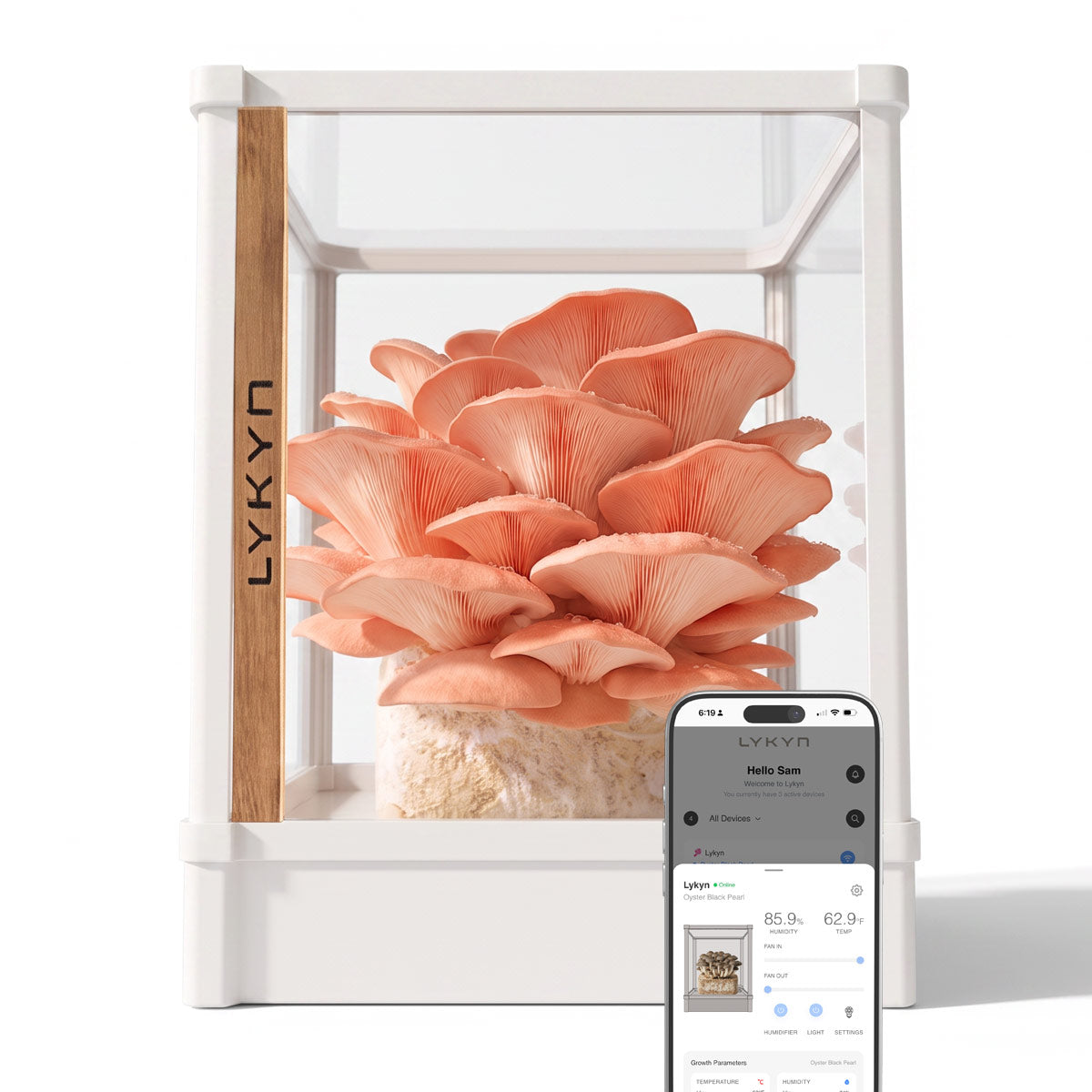
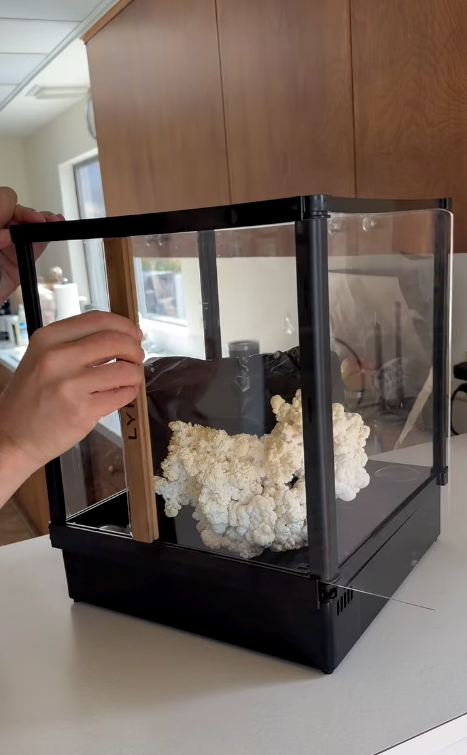
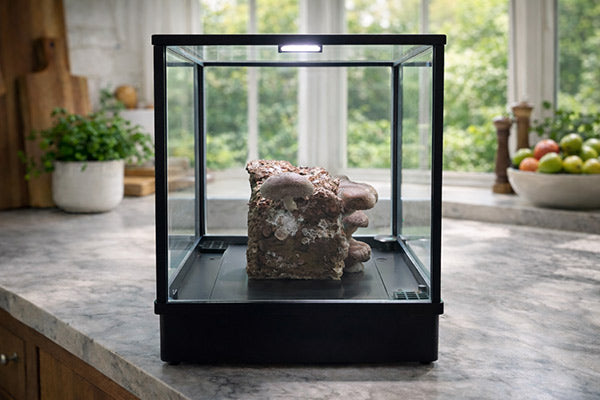
The shiitake grow kit works on an open counter under a loose humidity tent, if you are willing to mist the air around the block two or three times a day and tolerate a lower pin count. It works far more consistently inside the Lykyn Smart Mushroom Grow Box because the chamber holds humidity and runs fresh air exchange on a schedule the species prefers. The app records the cold shock, the pinning window, and the harvest. You open the glass, pick, close it, done.
If you have grown oyster kits and found the misting part exhausting, shiitake is where a chamber earns its space. Longer cycle, narrower signal windows, a mushroom the grocery cannot sell you.
Cooking the first harvest

Trim the base of the stem, slice the caps a quarter inch thick, keep the stems for stock. Sear in a dry hot pan for a minute untouched, then add a small spoon of butter and a pinch of salt. The caps release a small cloud of steam that smells like hardwood and black tea. Finish with soy and a crack of pepper. That is the whole recipe, and it is the one we come back to every time a flush comes down.
For a longer version including a seared whole-cap steak preparation, see the deep dives below.
Frequently asked questions
How long from unboxing to first harvest?
Plan ten to fourteen days from the moment you slide the block into the chamber to the moment you twist a cap off, assuming the Shiitake preset runs. The cold shock takes a day, pinning takes three to five days, cap formation takes another three to five, and you pick when the caps roll flared.
Does the shiitake kit need light?
Low ambient light helps the caps colour evenly. Twelve hours of soft room light is enough. The chamber has a low LED that runs on the species preset, and you do not need to add a lamp. Direct sun on the glass is a bad idea because it heats the block.
Can I grow shiitake and oyster side by side in the same chamber?
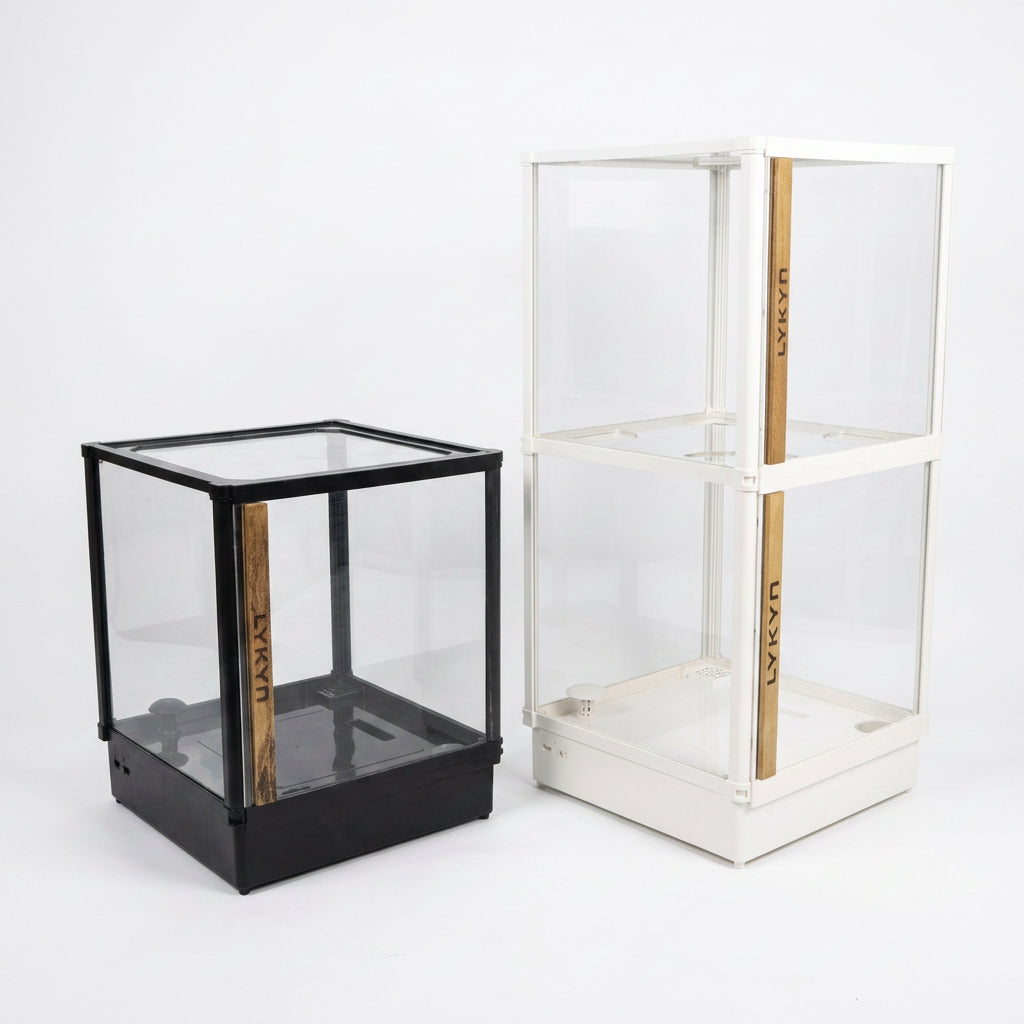
Two species in one chamber works for a flush or two, with one caveat: humidity and air exchange will favour whichever species is older. If both blocks are fresh, pick the shiitake preset, because oyster handles the lower humidity more forgivingly than shiitake handles oyster conditions. For long campaigns, give each species its own tier of a double chamber.
What if no pins appear after a week?
Temperature is the usual culprit. If the room sat warm during the cold-shock window, the block never read autumn, and it stays in vegetative mode. Run a second cold shock: 18 hours at 10 to 15 Celsius, then back to fruiting humidity. If the block was already old on arrival, pinning can take an extra three to five days. The chamber log in the Lykyn app shows what temperature actually ran, which is the fastest way to debug.
Why do my shiitake stems look long and thin?
Carbon dioxide is too high. Shiitake wants fresh air during cap formation, more than oyster does. The chamber handles this on the Shiitake preset. On a counter kit, crack the humidity tent for a few minutes twice a day. If you catch it early, the next flush grows normal.
Is the grow kit reusable, and how many flushes should I expect?
Two to three flushes is standard, four is a good block. Rest the block seven to ten days between flushes and re-soak it in cold water before each new cycle. When the surface mycelium turns grey and the smell goes sour-sweet, the block is done, and it belongs in the compost.
Can I eat shiitake raw from the kit?
Cook them. Raw shiitake can trigger shiitake dermatitis, a short-lived skin rash caused by a heat-sensitive compound in the mushroom. A quick sear in a hot pan is enough to deactivate it. Taste improves cooked anyway: the sear brings out the hardwood smell that makes the species worth growing.
Deep dives: four shiitake pillars
- The best shiitake mushroom grow kit for 2026: how the Lykyn kit compares to the field, and what to look for in a block before you buy.
- How to prepare a shiitake mushroom steak: the long version of the cooking section, including a seared whole-cap preparation.
- Shiitake vs oyster grow kit, which to start with: a head-to-head on timing, difficulty, and what each species teaches you.
- The beginner-friendly shiitake grow kit: a shorter version of this guide for first-time growers who want the minimum viable path.



Share:
Gifts for Mushroom Hunters: What to Gift a Forager Who Already Knows the Woods (2026)
Unique Christmas Gifts for Men Who Cook 2026 | Lykyn