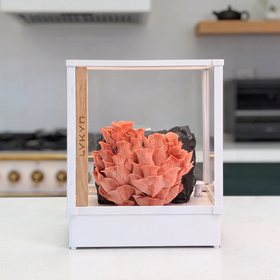



A mushroom fruiting chamber is the enclosed space that keeps humidity above seventy percent, air exchange steady, and light on a mild daily cycle so a colonized fruiting block can actually push mushrooms out. Without one, most gourmet species stall or dry out within hours of the first pin.
What a mushroom fruiting chamber actually does

Mycelium builds itself inside a sealed substrate block during the incubation phase. Fruiting is the second phase, when the fully colonized block reads three environmental signals at once: humidity rises above seventy percent, air stops sitting still, and light hits the block on a soft daily cycle. Only then do pins form on the block surface and grow into the fruiting bodies we harvest.
A fruiting chamber holds those three signals stable for the full ten to fourteen day cycle. Every design tradeoff, from container shape to fan placement, is really a tradeoff between how well those signals hold and how much daily work the grower puts in.
The core specifications a fruiting chamber must hit

Any chamber worth building or buying holds these ranges without drift across a full flush:
- Humidity: 80 to 95 percent, held automatically. A ten percent drop for four hours is enough to abort a pin set.
- Temperature: 18 to 24 celsius for most gourmet species. Cinnamon Cap and Lion's Mane run cooler, Pink Oyster runs warmer.
- Fresh air exchange: Six to twelve full air changes per hour. Stale air produces long spindly stems and weak caps.
- Light: Twelve hours ambient light, twelve hours dark. Fruiting mushrooms orient toward light like plants do.
- Filtration: Incoming air passes through a HEPA-grade or 0.2 micron filter to keep contamination out. Skipping this step is the single most common reason a home chamber fails on the third flush.
DIY chamber vs smart chamber: a real cost breakdown
A shotgun fruiting chamber, the DIY standard from mycology forums, is a clear plastic tub with drilled holes, a perlite bed, and a manual mist bottle. Materials run around forty dollars. Cost hidden inside that setup:
- Two to four misting sessions per day for ten days, roughly forty to eighty minutes of manual work per flush.
- Humidity swings of twenty percent between mist cycles.
- Contamination rate near thirty percent by flush three because filtered airflow is only partial.
- Species range limited to the hardiest oysters.
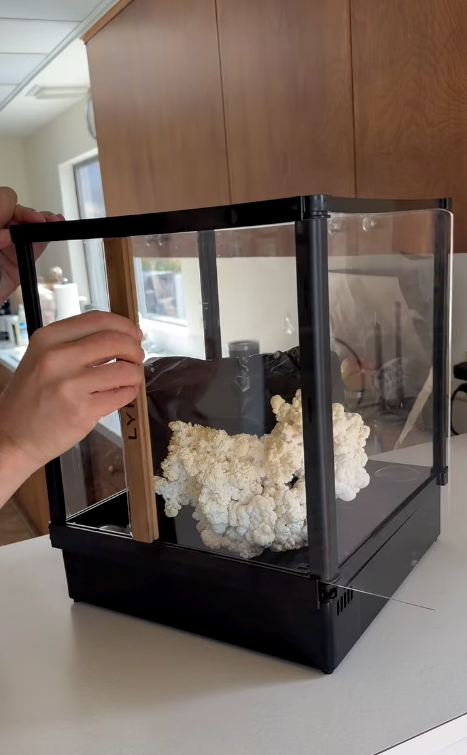
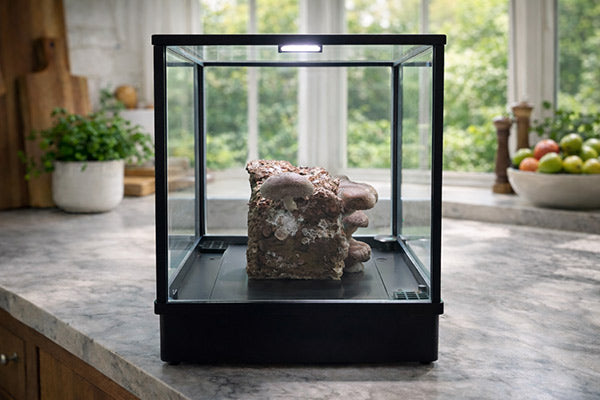
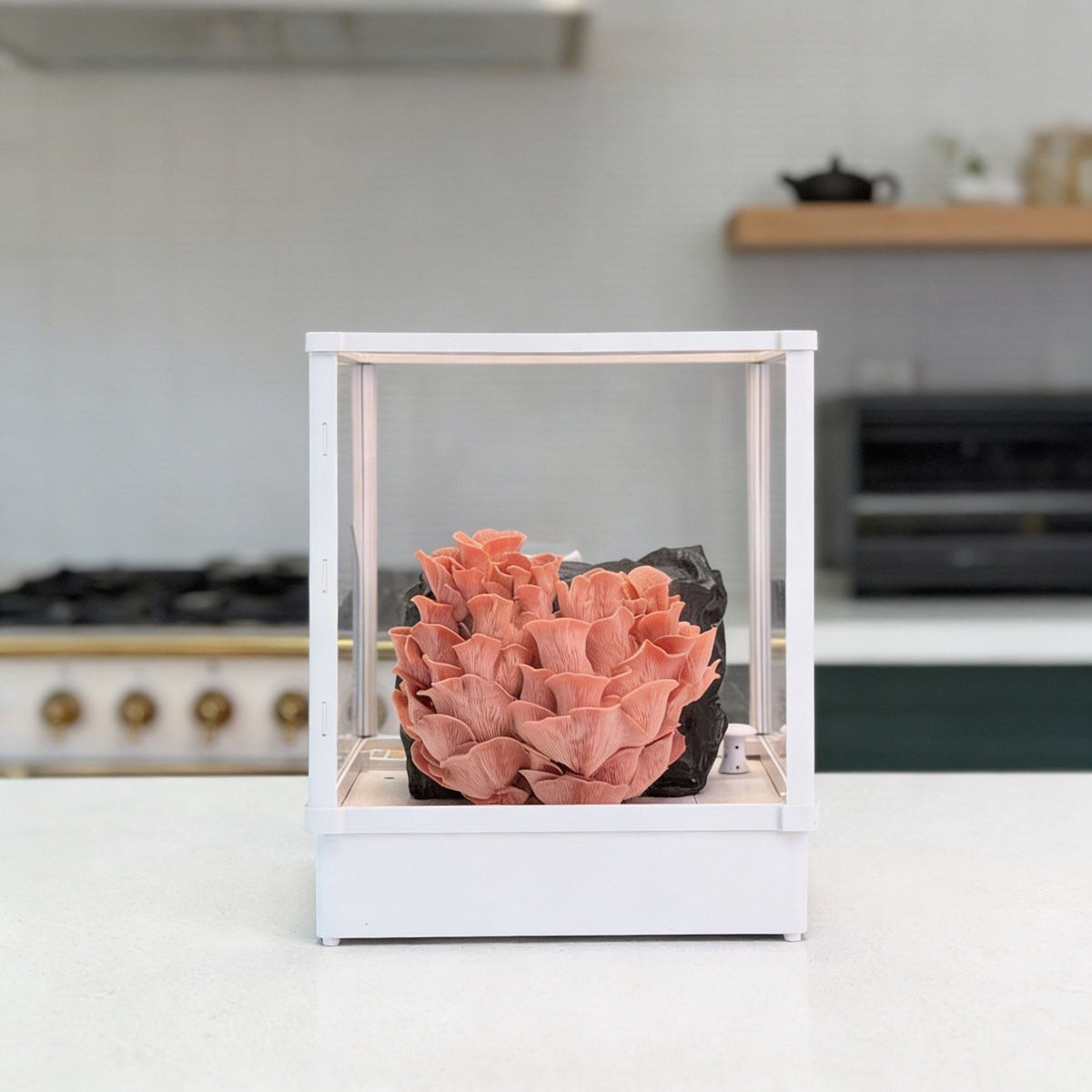
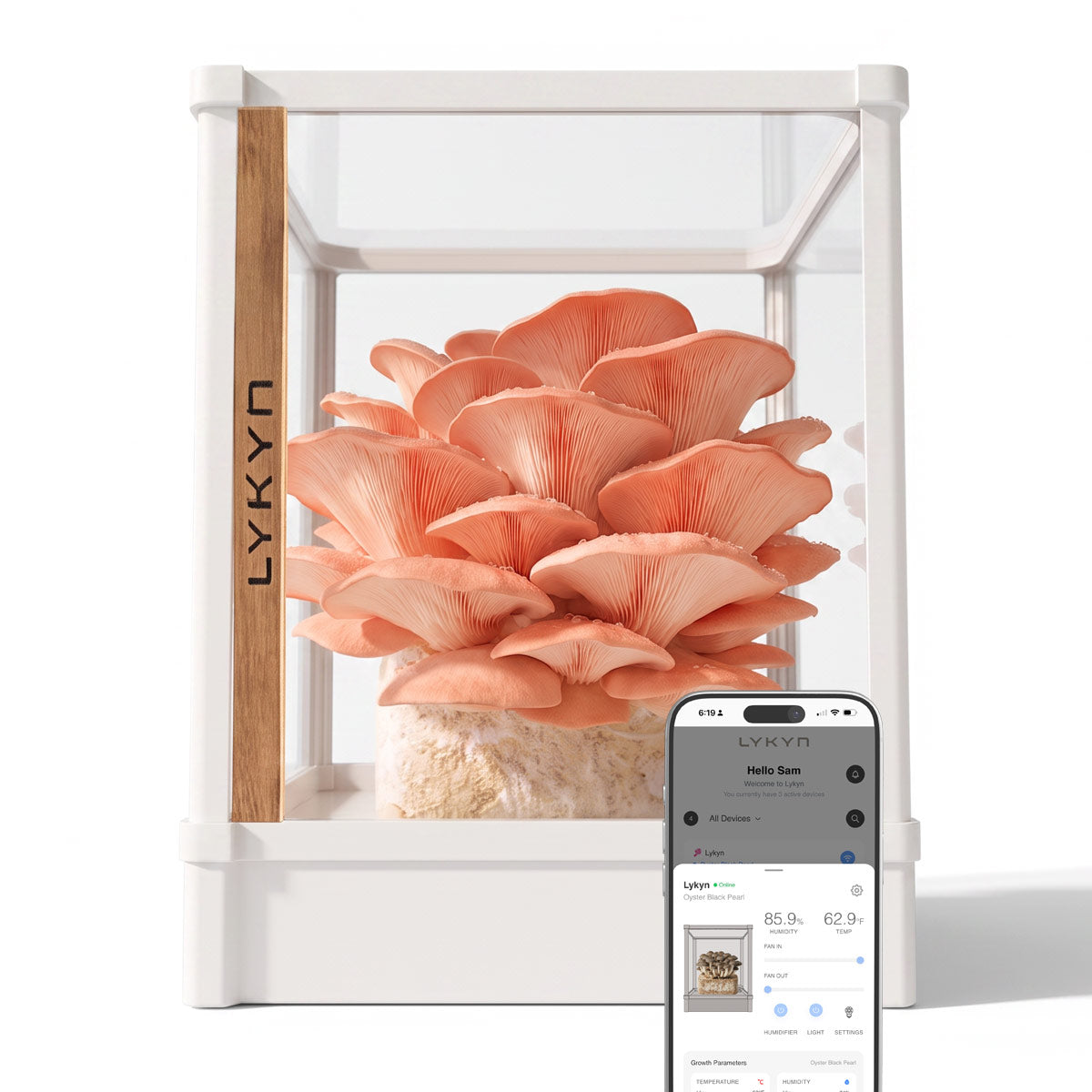
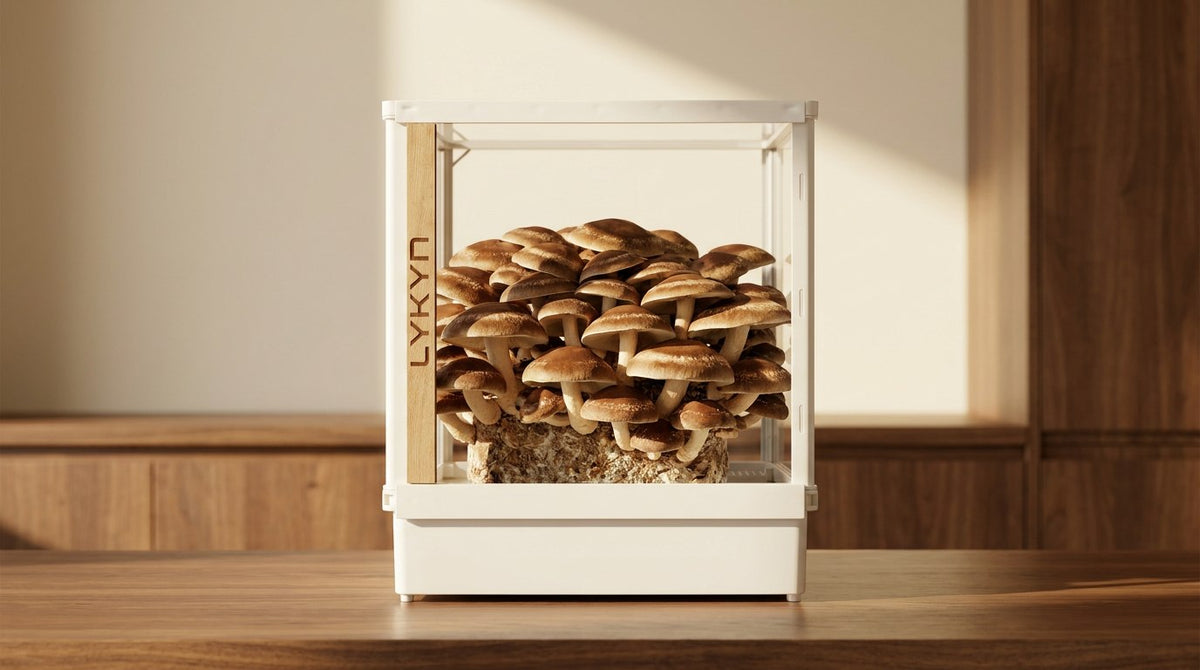
A dedicated smart chamber like the Lykyn Smart Grow Box holds humidity within a three percent band with an automatic ultrasonic humidifier, runs fresh air exchange on a programmed schedule, and filters incoming air to 0.2 micron. Daily grower work drops to zero: check the reservoir once every three days, harvest when pins form.
Fruiting chamber vs grow tent vs monotub
These three terms show up in the same searches for a reason. They solve overlapping problems in different ways.
- Grow tent: A soft-walled cabinet borrowed from cannabis cultivation. Grower fits their own humidifier, fan, and lights. Big footprint, high setup effort, flexible.
- Monotub: A plastic tote with holes and a substrate bed inside. Cheap, popular for psilocybin cultivation, less suited to gourmet species that need vertical space.
- Dedicated fruiting chamber: Purpose-built, sealed, filtered. Least effort, best repeatability. The Lykyn Smart Grow Box is this category, tuned specifically for 5 lb pre-colonized fruiting blocks.
What to look for when buying a mushroom fruiting chamber
Any chamber decision comes down to five questions.
- Does it hold humidity automatically? Manual misting means the chamber is really a container, not a chamber.
- Does it filter incoming air? Without a HEPA or 0.2 micron filter, contamination becomes inevitable by flush three.
- Does it handle a 5 lb fruiting block cleanly? Vertical clearance and internal shape decide which species you can grow.
- Can you monitor it remotely? Smart chambers with app control let you skip travel-day disasters.
- Does it work with any block, or only vendor-locked blocks? Open compatibility protects your grow if a supplier changes.
The Lykyn Smart Grow Box answers yes on all five. It ships tuned for the Lykyn 5 lb fruiting blocks but also fits any standard third-party block within the same footprint.
Species that fruit reliably inside a home chamber

Six species deliver first flush inside the same chamber footprint within a two-week window:
- Pink Oyster Mushroom Grow Kit · fastest, 5 to 7 days to first flush
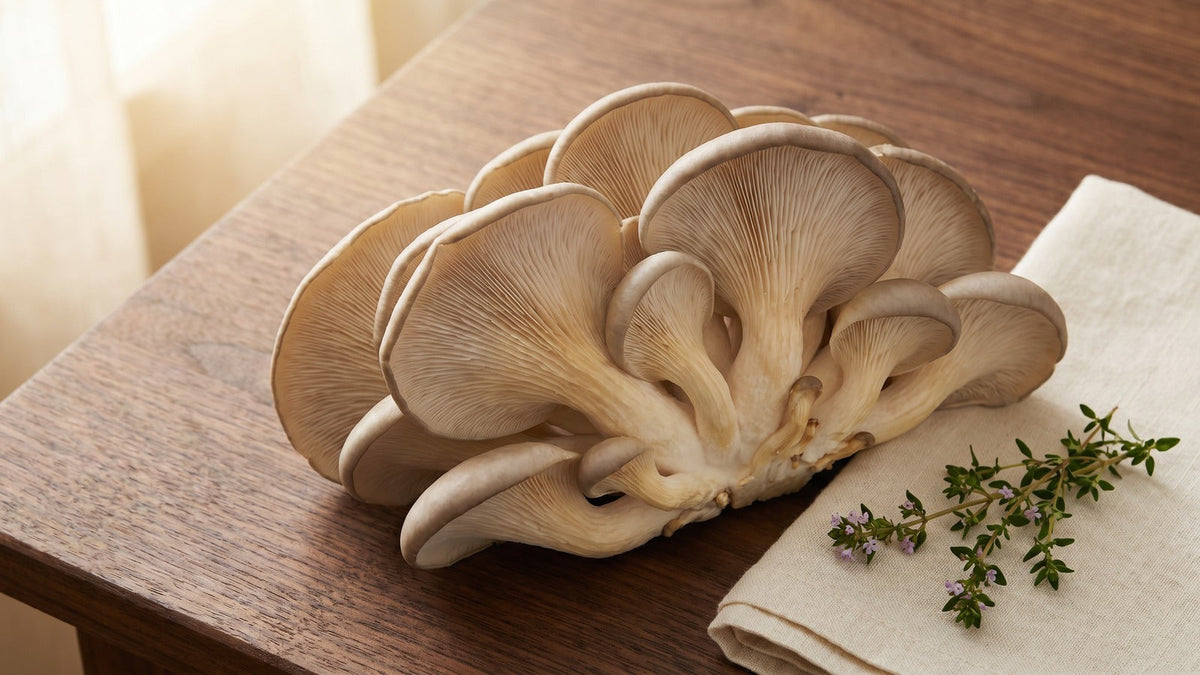
- Blue Oyster Grow Kit · cool-tolerant, 5 to 10 days
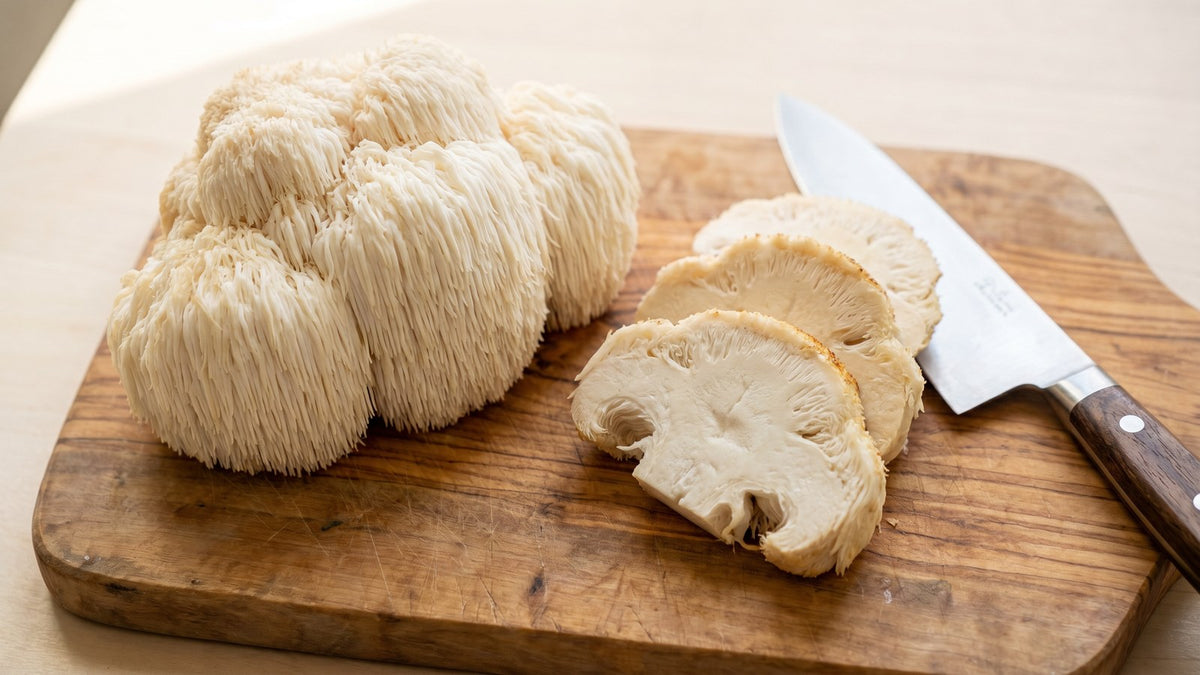
- Lion's Mane Mushroom Grow Kit · nootropic-rich, 7 to 14 days
- Shiitake Mushroom Grow Kit · deeper umami, 10 to 14 days
- Chestnut Mushroom Grow Kit · nutty and crisp, 10 to 14 days
- Cinnamon Cap Mushroom Grow Kit · sweet earthy, 10 to 14 days
Frequently Asked Questions
What is a mushroom fruiting chamber?
A fruiting chamber is the enclosed space that keeps humidity above seventy percent, air exchange steady, and light on a mild daily cycle so a colonized substrate block can push mushrooms. Without one, oyster and lion's mane blocks dry out within hours.
How is a fruiting chamber different from an incubation chamber?
An incubation chamber holds the block at a warm even temperature while mycelium colonizes the substrate. A fruiting chamber then triggers pinning with higher humidity, cooler air, fresh air exchange, and low light. Some grow boxes combine both phases into one device.
Can I fruit mushrooms without a chamber?
Only in a bathroom or a plastic tub with daily misting. Yields drop by half and contamination climbs. Any species that is not a hardy oyster loses reliability. A chamber pays back in yield and time within the second flush.
What conditions should a fruiting chamber hold?
Humidity 80 to 95 percent, temperature 18 to 24 celsius for most gourmet species, fresh air exchange six to twelve times per hour, and low ambient light on a twelve hour cycle. Numbers shift by species, and the Lykyn Smart Grow Box adjusts them automatically.
What is the difference between a fruiting chamber and a grow tent?
A grow tent is a soft-walled cabinet, borrowed from cannabis cultivation, that a grower fits with a humidifier, fan, and lights. A dedicated fruiting chamber is purpose-built for mushrooms: sealed for humidity, filtered for airflow, and shaped to a fruiting block. Setup time drops from a weekend to five minutes.
Does a fruiting chamber work with any mushroom block?
Yes for any colonized 5 lb fruiting block sold by a reputable source. Pink Oyster, Blue Oyster, Lion's Mane, Shiitake, Chestnut, and Cinnamon Cap all fruit inside the same chamber footprint. Only exotics like reishi need a longer cycle and lower flush count.
Summary
A mushroom fruiting chamber is the difference between hoping and harvesting. If you plan to grow more than one flush a year, a dedicated smart chamber like the Lykyn Smart Grow Box removes the two most common failure points, humidity drift and contamination, and turns fruiting from a research project into a routine.



Share:
Oyster Mushroom Grow Kit: A Beginner's Guide
The Gift for an Apartment Gardener with No Yard: What Actually Fits on a Counter