


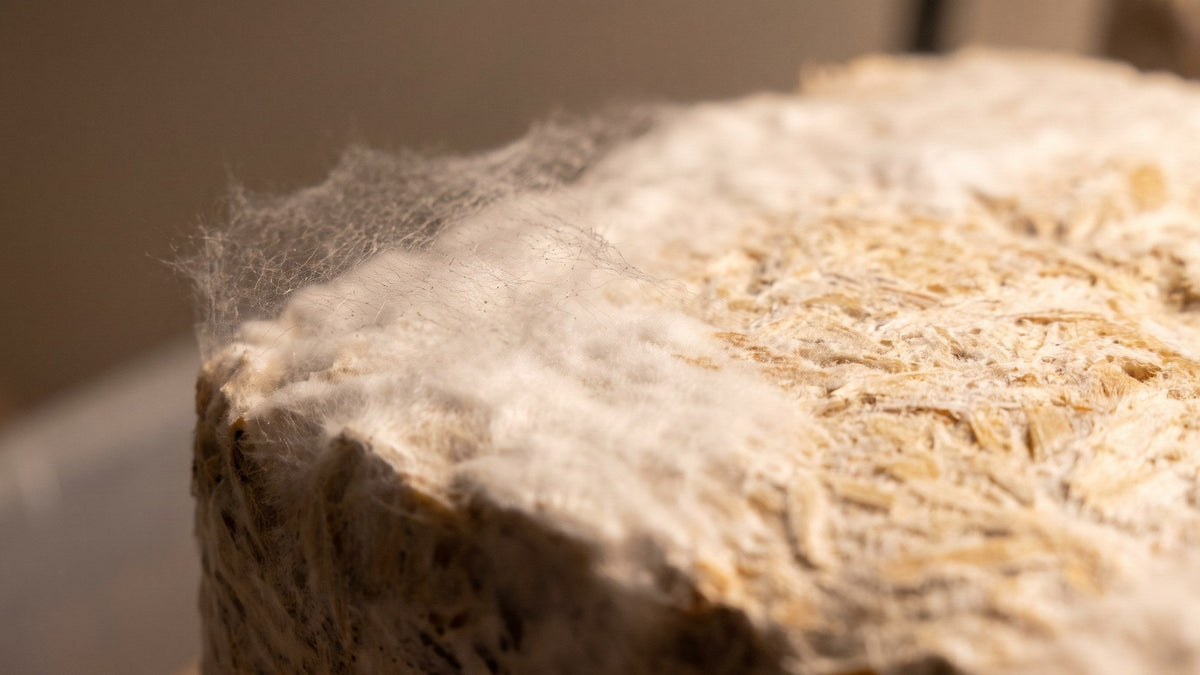
Cobweb mold is a fast, grey, wispy fungus (Cladobotryum) that floats above a mushroom block in loose strands and can grow right over your pins. Healthy mycelium is bright white and clings to the substrate, while cobweb stands up off the surface, often half an inch or more, and a small patch can double in about 12 hours. Catch it while it covers less than about 30% of the exposed surface, and a covered spot treatment with 3% hydrogen peroxide or salt will often save the flush. If it turns powdery or comes back after two treatments, bag the block and start fresh.
Cobweb already gets a section in our guide to the 10 most common types of mushroom contamination. This page goes further, from a two-minute flashlight check to the cover-first treatment that mushroom farms use.
Cobweb mold or healthy mycelium? The two-minute check
Use your eyes and a flashlight for this, not your fingers. Cobweb spores are dry and come loose at the slightest touch, and poking or misting a patch is how one spot turns into three.

Then work through the table below. Any single sign can fool you, because oyster mycelium can be fluffy too. When three or more point the same way, you have your answer.
| Check | Cobweb mold | Healthy mycelium |
|---|---|---|
| Color | Pale grey to dull off-white | Bright, clean white |
| Height | Stands off the surface in loose plumes, often half an inch (1-2 cm) or more | Lies tight to the substrate or forms a short, even fuzz |
| Strands | Very fine single threads, like spider silk, running every which way | A dense mat, or rope-like cords that fan outward |
| Speed | Clearly bigger 12 hours later | Barely changes in a day on a colonized block |
| Where it grows | Drapes over pins and caps | Stays on the substrate, and pins grow out of it |
| Smell | Musty, like a damp basement | Fresh and mushroomy |
The flashlight test
Turn off the room light and hold a flashlight low, almost flat to the block, so the beam skims the surface. Cobweb strands light up well above the substrate, like dust in a sunbeam, while mycelium shows as an even sheen on the surface itself. Our moldy mushrooms guide uses a gentle puff of air for the same check. Side light gets you there without moving a single strand.
The 12-hour marker test
Still not sure? If the patch sits under clear bag plastic, trace its edge with a marker. If it's on the open cut, take a phone photo from a spot you can find again.
Twelve hours later, healthy mycelium on a colonized block looks about the same. Cobweb mold will be well past your line.
Healthy growth that gets mistaken for cobweb mold
Plenty of white fluff on a block is the mushroom itself. You'll see these four in almost every grow, and none of them needs treating.
- Recovery fuzz after a harvest. Where you twisted off a cluster, the scar grows over with soft white mycelium within a few days. That's the block healing before the next flush, and it stops spreading once the scar is covered.
- Fuzzy feet. White fuzz around the base of oyster stems is the mushroom's own mycelium reaching for air. It points to high CO2, so the fix is more fresh air, not peroxide.
- Aerial mycelium. A block that's been chilled or sealed up for a while can push out a tall, cottony layer. It looks dramatic, but it stays bright white and settles within a day or so.
- Fluffy oyster mycelium. Oyster mycelium is often cottony rather than ropey. Color and speed separate it from cobweb: white and steady is fine, grey and racing isn't.
Fluff on harvested mushrooms in the fridge is a different question, and our white fuzzy mushroom guide covers it. For what clean colonization looks like from bag to block, see our mycelium contamination guide.
What cobweb mold is, and why it tends to show up late
Cobweb mold is caused by Cladobotryum species, including C. dendroides and C. mycophilum, fungi that parasitize mushrooms. Older guides call it Dactylium, its former name. Commercial growers know it as cobweb disease on button, oyster, and shiitake farms. Cobweb mold on mushrooms themselves shows up as brown spots on the caps, which then soften and rot.
Its spores are what make it hard to contain. As a patch matures, the wispy strands thicken into a dense, floury white mass that releases huge numbers of dry spores. Watering and picking knock them loose, and a single spore or scrap of mycelium can start a new patch somewhere else. In a 2006 study of commercial growing rooms, published in Applied and Environmental Microbiology, spores disturbed from a patch spread through the room fast and mostly settled within 15 minutes. On a kitchen counter, they land on the chamber walls and on the next block.
Three conditions give it a head start:
- Humidity near saturation. Our contamination guide puts the trigger at above 95% RH with no fresh air exchange.
- Still air. Without gentle air movement, a wet film sits on the surface and caps stay damp for hours.
- Dead mushroom tissue. Aborted pins, stem stubs, and broken caps are soft, wet tissue that's already dying, which suits a mushroom parasite. If your block has a lot of stalled pins, our guide to aborted mushroom pins explains why they happen.
That's also why cobweb shows up more often near the end of a crop cycle. By the second or third flush, a block carries more harvest scars and leftover stems, and it's been handled more. A patch on flush three is common. A patch in a fresh block's first week is rarer, and it's worth asking where the spores came from.
How to treat cobweb mold: cover first, then peroxide or salt
Mushroom farms are told not to water or handle a cobweb patch. They cover it. The same 2006 study found that laying damp paper tissue over a patch before salting it released no detectable spores into the air, and the idea scales down to a single block at home.
You'll need gloves, paper towels, a bottle of 3% hydrogen peroxide from the pharmacy (never the 35% "food grade" kind), fine table salt, a clean knife, and a zip-top bag.
- Move the other blocks, not this one. If anything else is fruiting nearby, carry it out of the area first and treat the affected block where it sits.
- Cut off any pins or caps the cobweb has reached. Cut slowly at the base and drop them straight into the zip bag. They won't recover, and they're feeding the patch.
- Cover the patch with a damp paper towel. Use a single sheet that reaches about an inch (2-3 cm) past the visible edge on every side, and press it down lightly. The two methods below tell you what to dampen it with.
- Check every 12 hours for 3 days. Fresh wisps past the edge of the towel mean the treatment didn't hold. Repeat once. If it comes back a second time, let the block go.
Method 1: 3% hydrogen peroxide
Dampen the towel with 3% peroxide until it's wet but not dripping, then leave it on the patch overnight. Peroxide breaks down into water and oxygen as it works, and established mushroom mycelium usually recovers from a surface dose like this. It's the gentler option for a small, fresh patch, because the treated spot can grow back over and fruit again. In the morning, fold the towel in on itself and drop it into a bag.
Method 2: the salt cover
Dampen the towel with plain water instead. Once it's on the patch, pour fine salt on top until the towel is buried about 3/8 inch (1 cm) deep. Salt pulls water out of everything beneath it, cobweb included, and it's what commercial growing rooms use on cobweb patches. The trade-off is real: don't expect the salted spot to fruit again. Save salt for a patch that's thickening or turning floury, or one that came back after peroxide, on a block you still want to finish.
Leave the salt where it is, and keep it well away from healthy pins. It dries out mushroom tissue just as well as it dries out mold.
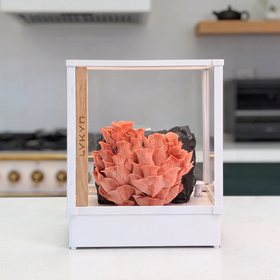
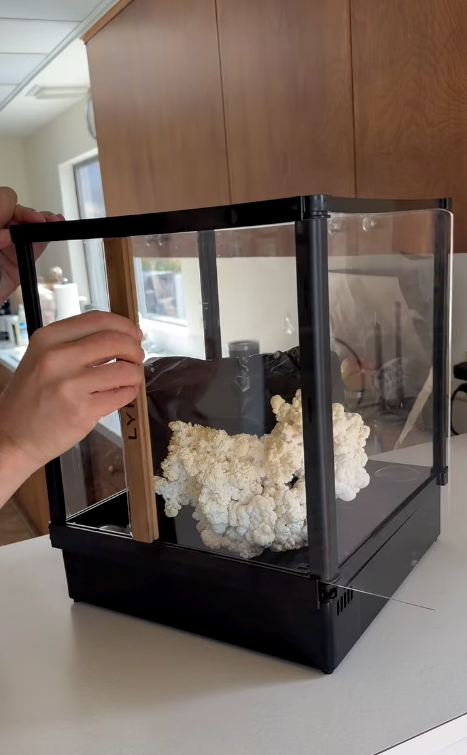
If you grow in a Lykyn chamber, slide the door open only for the minutes you're working. Then close it and let the species profile bring humidity and airflow back to where they belong.

Fuel Your Mushroom Journey
Pink Oyster Grow Kit
If this block is past saving, a fresh 5 lb Pink Oyster block arrives fully colonized and pins in 3-5 days at 85-92% humidity. It's backed by our fruiting guarantee.
Add to cart $29.95When to stop treating and toss the block
A rescue is worth trying when the odds are on your side. These are the lines we'd draw.
| What you see | What to do |
|---|---|
| One small, wispy patch, found the same day, with clean pins around it | Peroxide cover, recheck in 12 hours |
| A thicker or floury patch covering less than about 30% of the exposed surface | Salt cover, and cut away affected pins |
| Cobweb back after two treatments | Toss the block |
| More than about 30% of the exposed surface, or two or more separate patches | Toss the block |
| Cobweb plus green, black, or pink patches, slime, or a sour smell | Toss the block and clean the whole area |
| Cobweb on the last flush of an older block | Toss it and start a fresh one |
Green next to the grey usually means trichoderma has moved in as well. Our trichoderma green mold guide shows how to recognize it at each stage.
How to bag a block without spreading spores
- Cover the patch with a damp paper towel first, the same way you would for a treatment.
- Open a large trash bag right next to the block, lift the block straight in, and tie the bag shut before you carry it anywhere.
- Take it to an outdoor bin rather than a home compost pile.
- Wipe every inside surface of the grow space with 3% hydrogen peroxide, the humidifier tank included, and let everything dry completely before the next block goes in.
That last step matters more than it sounds.
Most cobweb spores don't survive long in dry conditions, so a full dry-out between grows does a lot of the work for you.
How to prevent cobweb mold on your next grow
Cobweb needs wet, still air and something weak to feed on. Take those away and it struggles to get started.
- Hold humidity in the fruiting band, not above it. Pink oyster fruits at 85-92% RH and 75-86°F. Pushing past that doesn't speed anything up. It just keeps surfaces wet. Our temperature and humidity setup guide lists the ranges for other species.
- Keep air moving gently, all day. Steady fresh air exchange lets surface moisture evaporate between cycles and clears out the CO2 your mushrooms exhale.
- Wet the air, not the block. Water sprayed onto the block or caps leaves a film that sits for hours. Drops pooling on the surface, or condensation running down the walls, mean things are too wet.
- Clean up after every harvest. Twist out leftover stem stubs and pick off dead or yellowed pins. Our mushroom pinning guide shows what healthy pins look like, so you know what to leave alone.
- Harvest on time. Overripe caps soften and shed spores of their own. For pink oyster, our pink oyster harvest guide shows when the cap edges are ready.
- Keep spent blocks out of the room. An old block sitting on a shelf next to your grow is an open invitation. Bag it and take it out on its last harvest day.

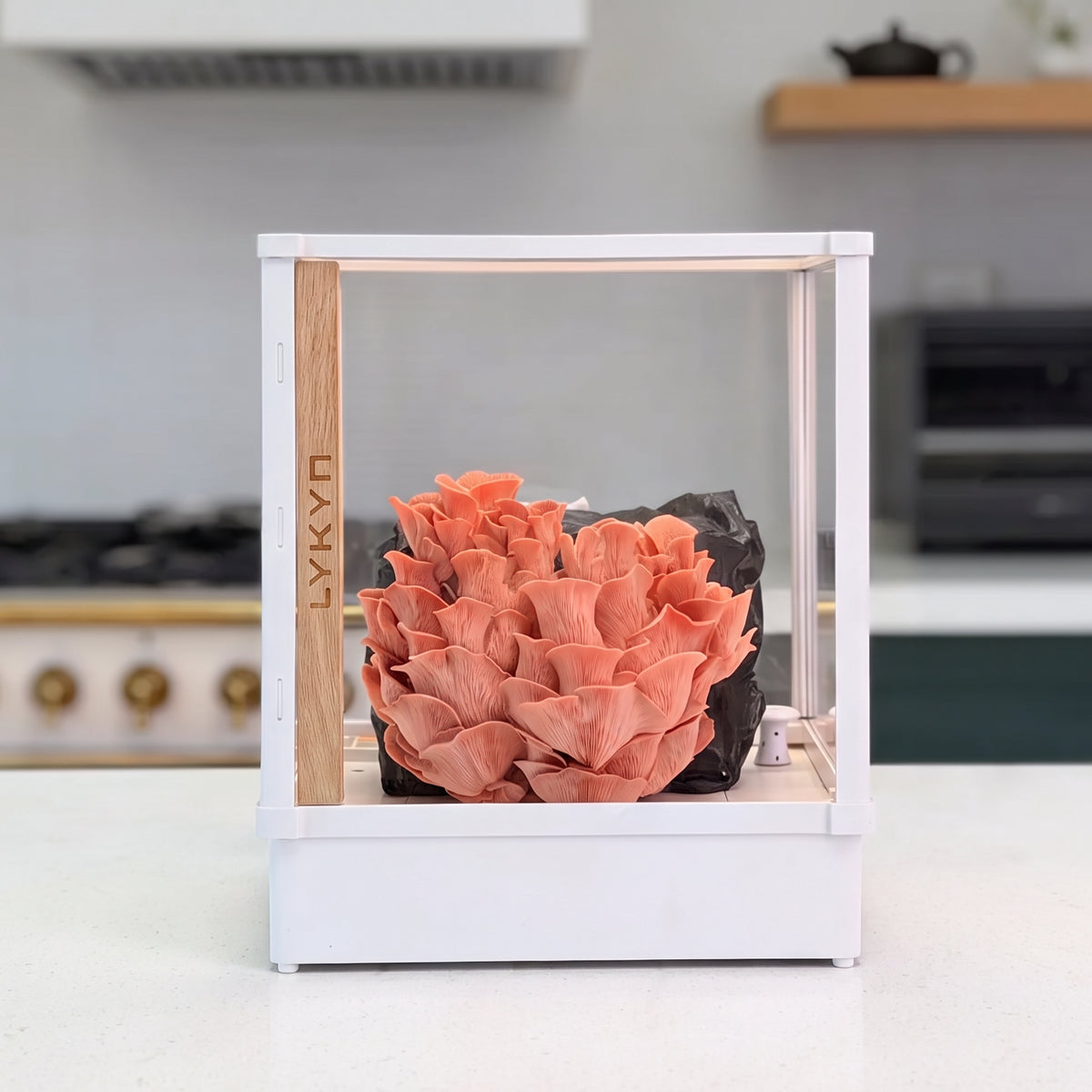
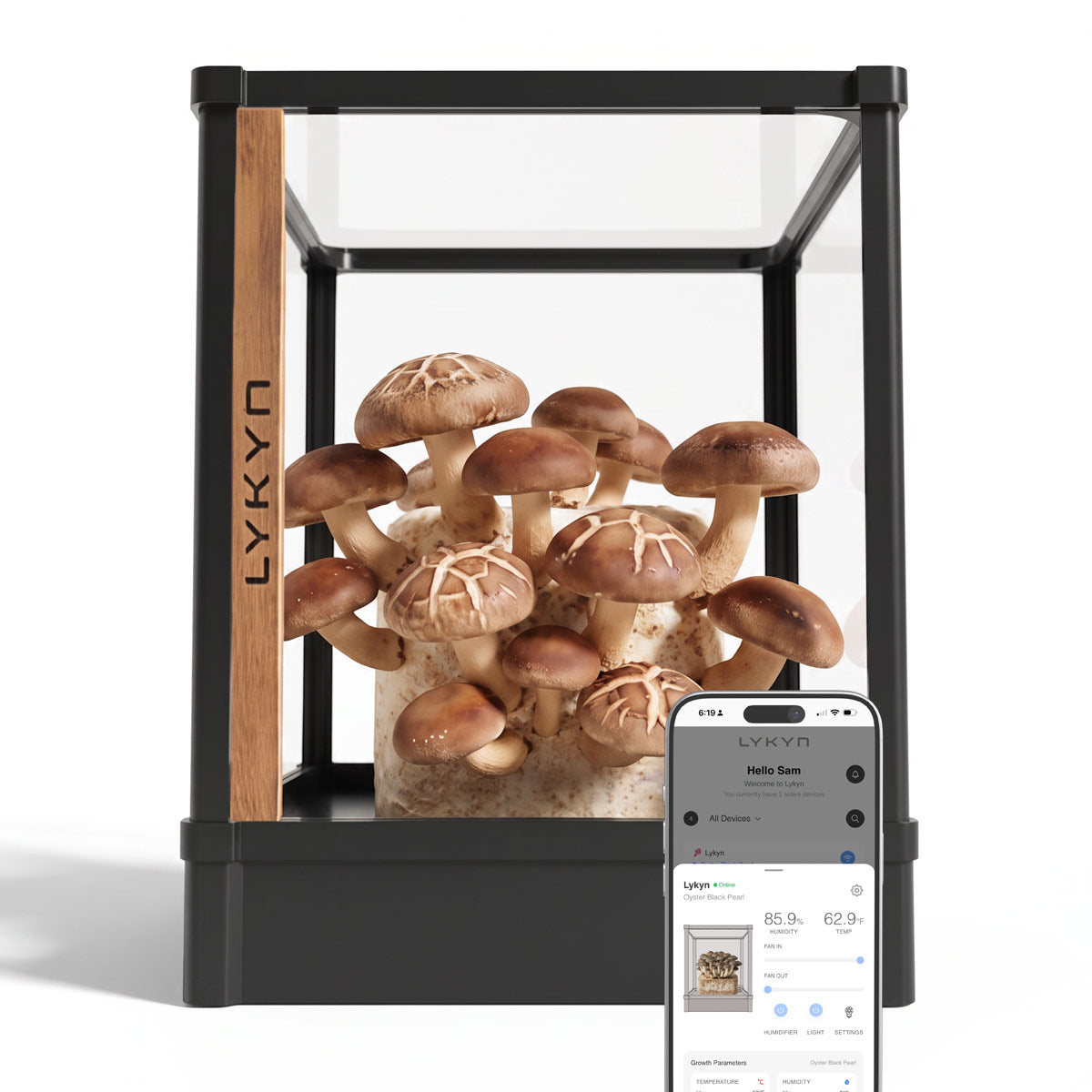
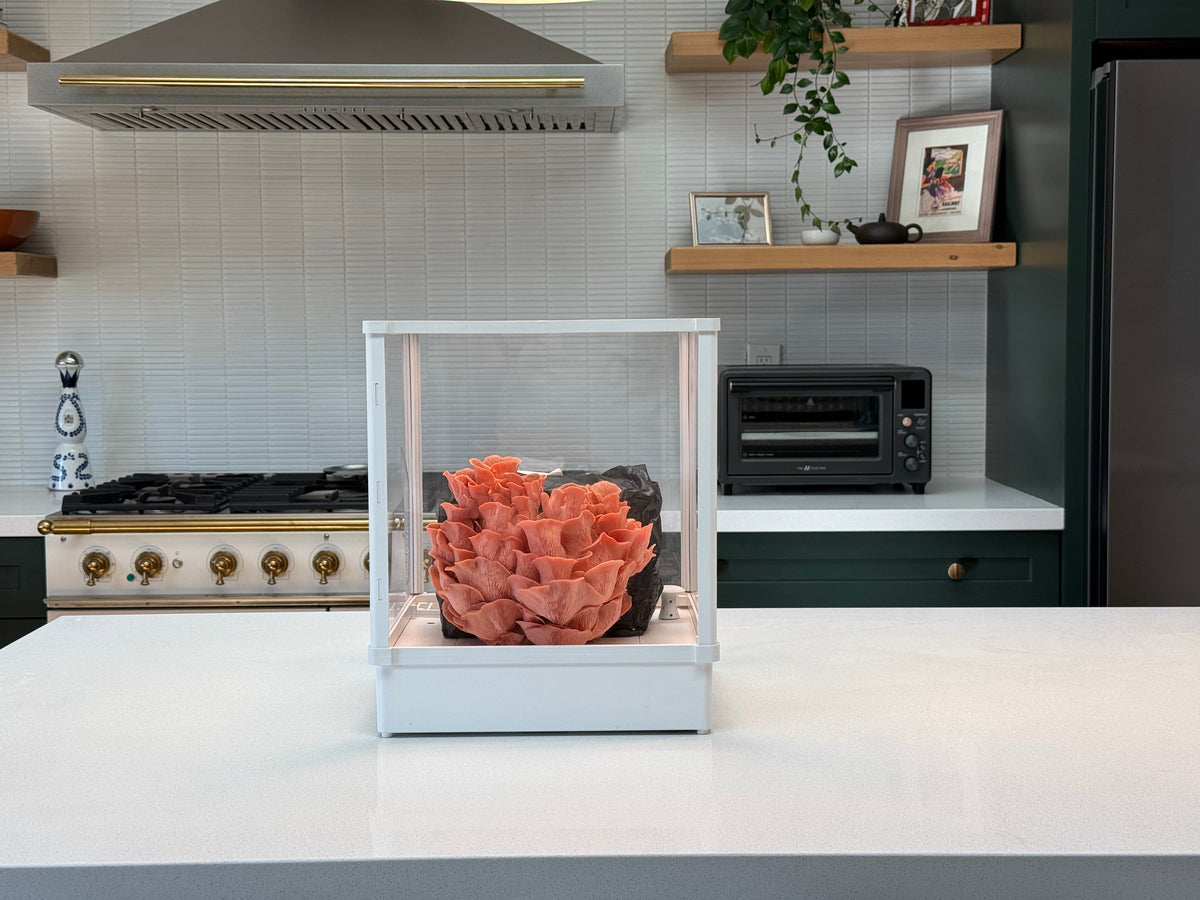
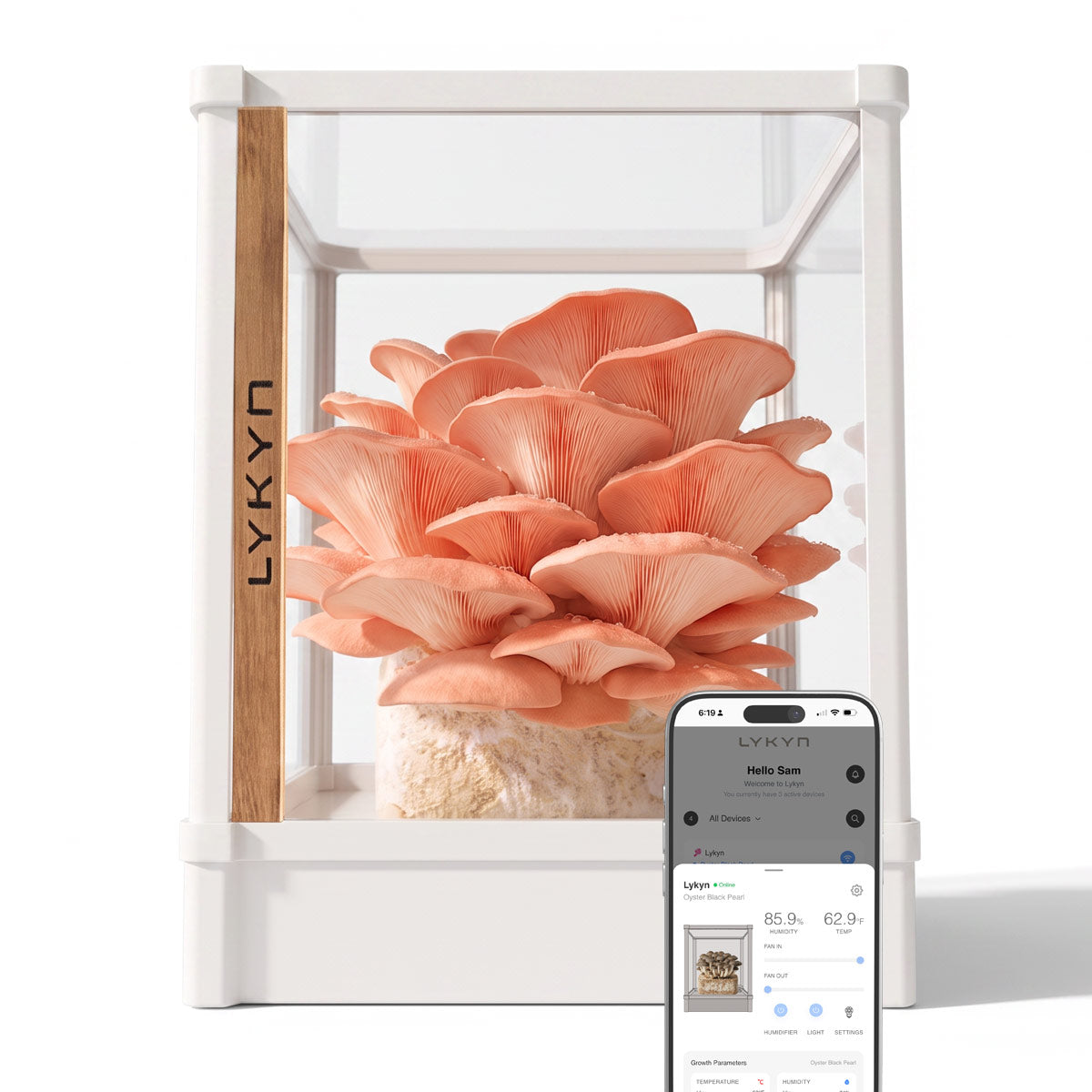
An automated chamber covers the first three habits around the clock. Inside the Lykyn smart mushroom grow box, an ultrasonic humidifier holds the fruiting sweet spot while a paired intake and outtake fan array exchanges fresh air on the schedule each species needs. A sensor loop reports both back to your phone, and nothing gets misted onto the block. It can't make a block immune, and the last three habits are still yours, but it keeps the air from turning wet and still, which is exactly what cobweb needs.
Starting over after a loss? Our mushroom fruiting blocks arrive fully colonized and ready to fruit.
Frequently asked questions
Is cobweb mold dangerous to people?
Its main target is your mushrooms, not you. It does release large numbers of fine spores, though, and mold spores can irritate sensitive airways. Wear gloves and a simple mask while you treat or bag a block, and don't eat any mushroom it has grown on.
Does hydrogen peroxide hurt mushroom mycelium?
A surface dose of 3% peroxide breaks down into water and oxygen within hours, and established mycelium in a colonized block usually recovers. Repeated soaking is harder on it. Treat the patch rather than the whole block, and stop after two rounds.
Why did cobweb mold show up after my first harvest?
Later flushes give it more to work with: harvest scars, leftover stem stubs, dead pins, and more handling. Commercial growers see the same pattern, with cobweb appearing more often near the end of a crop cycle. Clear out stubs and dead pins after every harvest, and don't let surfaces stay wet.
Can cobweb mold spread to my next block?
It can if spores are left behind. Wipe the grow space and the humidifier tank with 3% hydrogen peroxide, then let everything dry completely before you load a new block. Most cobweb spores don't last long in dry conditions, so a full dry-out between grows is one of your best defenses.
Should I soak a block that had cobweb mold before the next flush?
Not while any cobweb is still active. Water knocks the spores loose and carries them across the whole surface. Wait until the treated spot has stayed clean for 3 days, soak only if your block's instructions call for it, and let it drain well before it goes back in.
Can you eat mushrooms from a block that had cobweb mold?
Skip any mushroom the cobweb touched, along with any that have brown or slimy spots. Those go in the bag. Mushrooms that fruit later from a clean part of the block, after a treatment worked, get judged like any harvest: firm, dry to the touch, and fresh-smelling. If a cluster fails any of those checks, throw it out.
Fuel Your Mushroom Journey

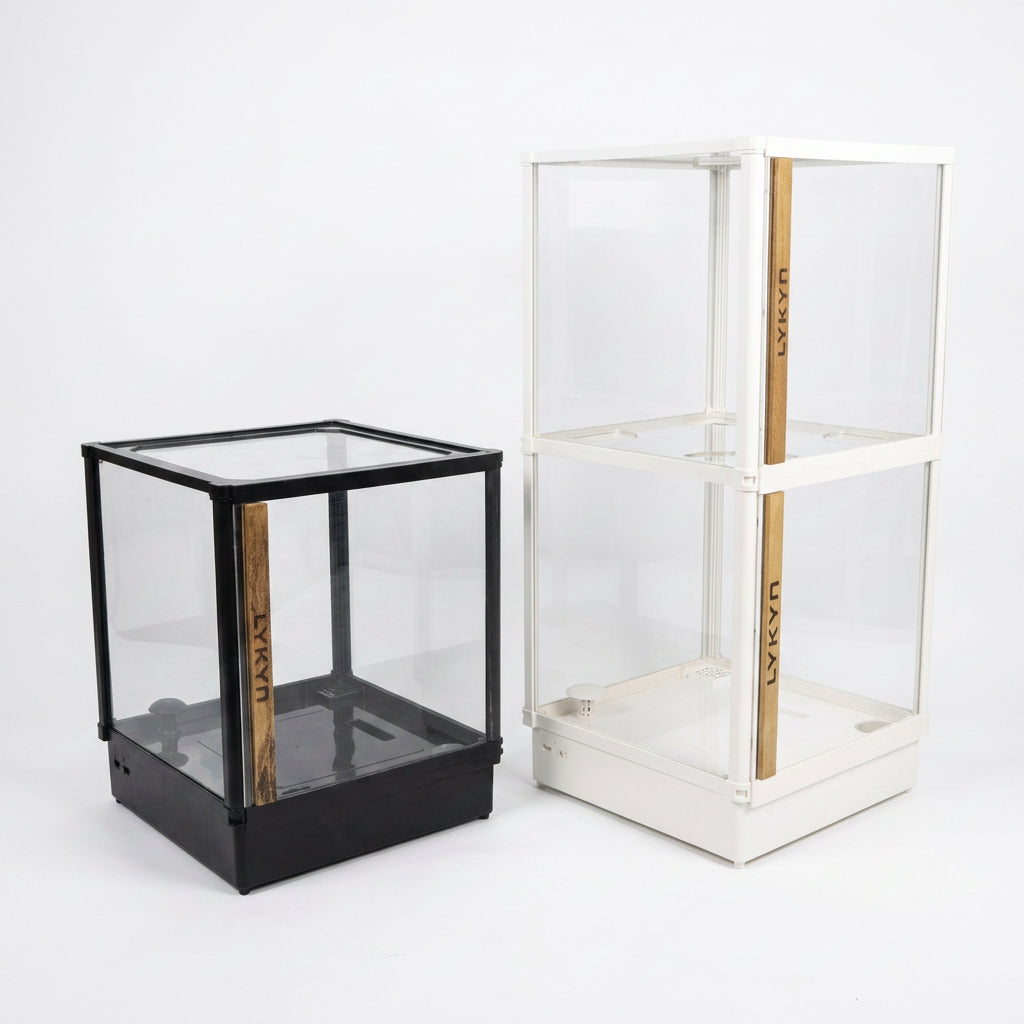
Smart Chamber. Bone White Single Layer
- 2.8L tank, 90% humidity automatic
- App-controlled, plug-and-play
- 6 lb block ceiling, in stock

Smart Chamber. Obsidian Black Single Layer
- Same hardware as Bone White
- Matte black premium finish
- Pairs with any kitchen palette

Share:
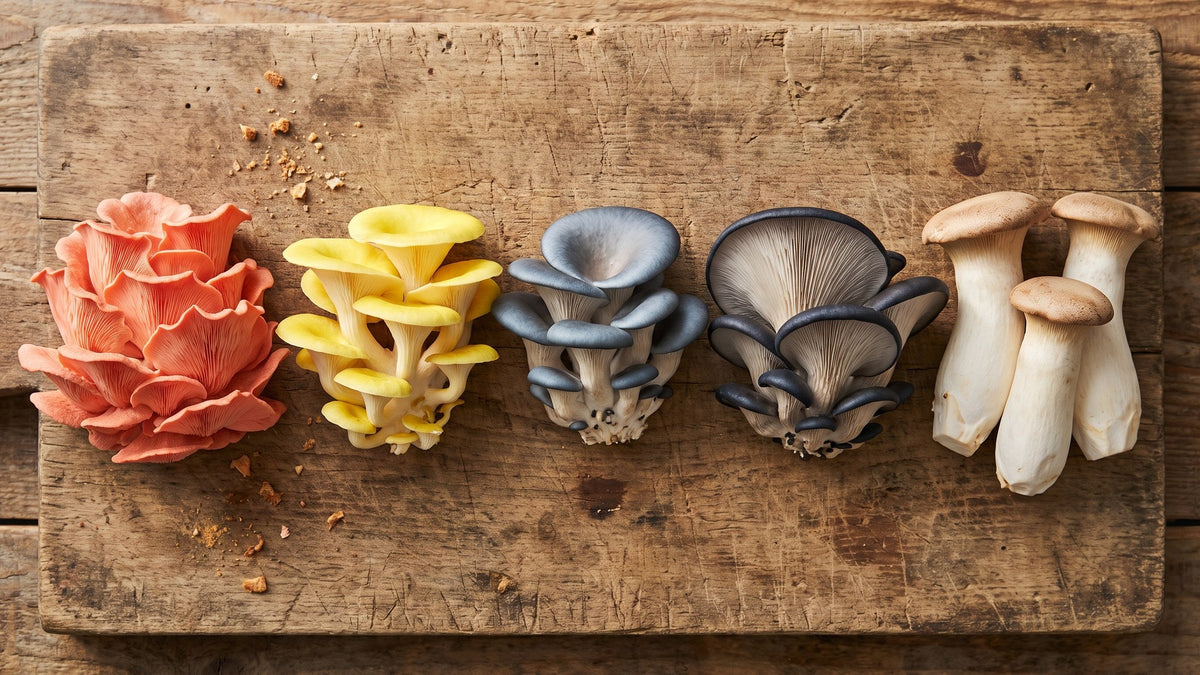
Types of Oyster Mushrooms: 8 Varieties You Can Grow at Home