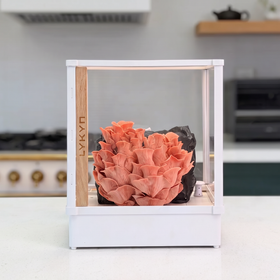




Quick answer: Aborted mushrooms are pins or primordia that started forming on your block and then stopped developing and died. They're a symptom, not spoilage or contamination on their own. In a home grow there are four common causes, and you can narrow it down in two minutes by looking at the pins. Below: what aborts look like by species, the 4-cause diagnostic, how to save the next flush, and the humidity, CO2, and temperature targets that prevent aborts.

Aborted mushrooms in 30 seconds (featured summary)

| What you see | What it means | Likely cause |
|---|---|---|
| Tiny brown shriveled stubs where pins used to be | Pins started, then dried out and died | Humidity crash (most common) |
| Pins formed long thin stems and never grew caps | Stretching, never developed | CO2 too high (FAE problem) |
| Pins formed, then turned wet and black overnight | Sudden collapse | Temperature swing or contamination |
| Black or yellow patches spreading on the block surface | Bacterial or mold takeover preceded the abort | Contamination starting |
Most home-grow aborts come from one of those four. The rest of this guide is how to tell which is hitting your block and what to do next.
What is an aborted mushroom?

In cultivation, an "abort" is a pin or primordium that began to form and then stopped developing before becoming a mature fruiting body. The pin dries out, shrivels, turns brown or black, and stays stuck to the block as a small dead stub.
Three things that sometimes get confused:
- Aborts are a fruiting-stage problem. Block was healthy, pins started, conditions went wrong, pins died.
- Spoilage is a post-harvest problem. The mushroom finished growing and is now breaking down. See our mushrooms turning brown guide.
- Contamination is an organism problem. Bacteria or mold are competing with your mycelium.
Most home-grow aborts are environmental crashes you can fix without throwing the block away. For a refresher on what healthy pinning looks like first, our mushroom pinning guide covers the three stages from hyphal knot to baby mushroom.
The 4 causes of aborted mushroom pins

Run through these four causes in order before you decide your block is finished. The fix is different for each.
1. Humidity crash (the most common cause)
A pin is mostly water. The fruiting surface has almost no protective cuticle, and the water inside is held in place by 85% or higher RH around it. Drop below 80% for a few hours and the pin loses water faster than the mycelium can replace it. Cells collapse, the pin shrivels, and the mycelium gives up on that primordium.
What it looks like: small brown or tan stubs where pins used to be, dry to the touch, no smell. The block underneath is still healthy white mycelium. Lion's Mane and oyster pins go first.
How it happens: humidifier runs dry overnight, tent zipper left open, chamber door opened too often, or a passive setup in a sub-50% RH room.
Fix the current flush: get RH back to 90-95% within an hour. Mist the inside walls (not the block), refill the reservoir, reduce air exchange for 24 hours. About 30% of partially shriveled pins recover.
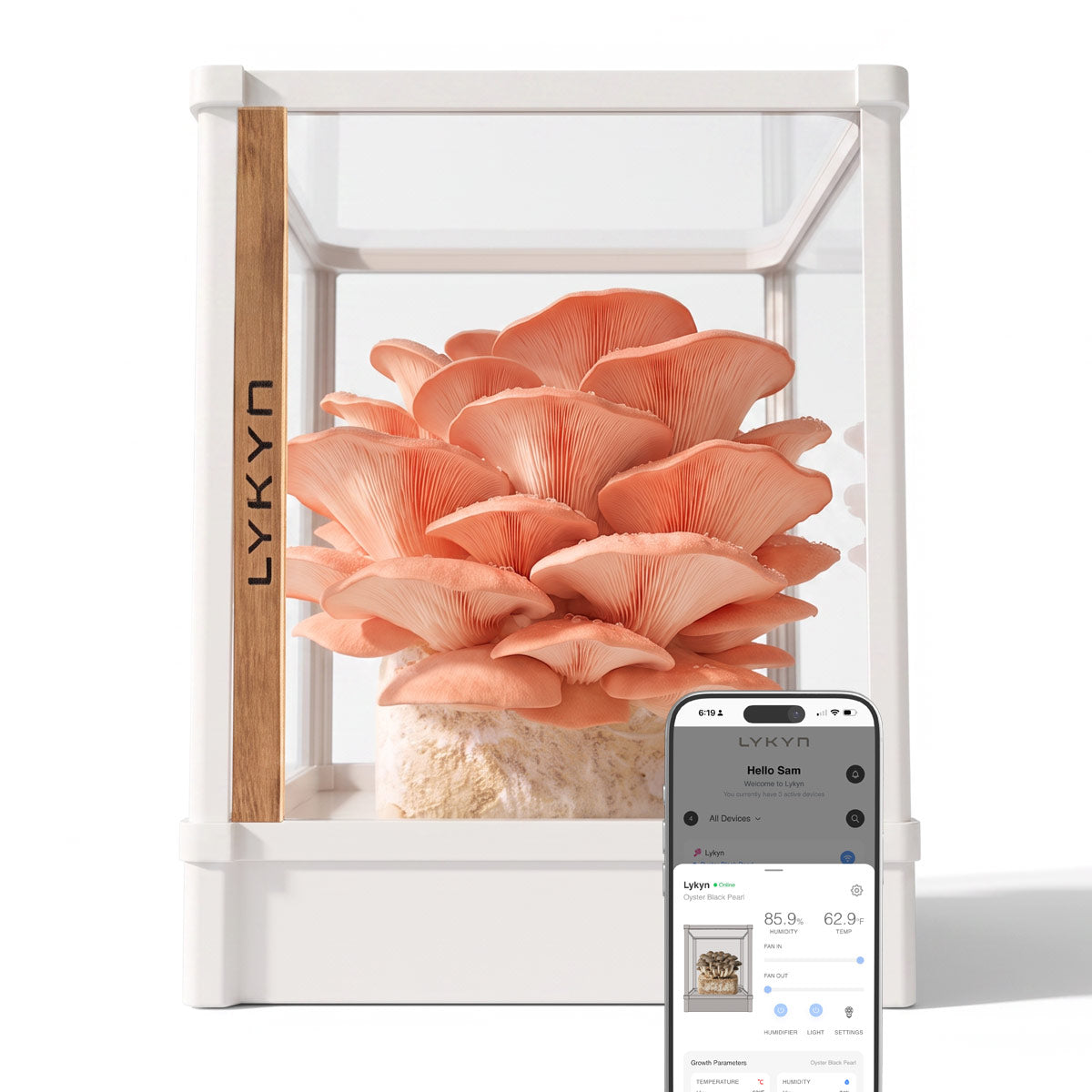
Prevention: hold RH at 85-95% during pinning. Cornell's Hericium guidance puts ideal Lion's Mane humidity at 90-95%. In a smart mushroom grow box the SHT3x sensor reads humidity every few seconds and the 2.8L humidifier adjusts automatically, so a 30-minute crash doesn't happen.
2. CO2 spike (insufficient fresh air exchange)
Fruiting mushrooms breathe: in oxygen, out CO2. If chamber CO2 climbs above 800-1000 ppm during pinning, mushrooms stretch upward looking for fresh air. Stems grow long and thin, caps stay tiny or never form, and the pin runs out of energy and aborts. Penn State Mushroom Research Center notes CO2 above 1500 ppm prevents normal cap development in most cultivated species.
What it looks like: stems 3 to 6 times longer than their caps, often with no real cap. White or grey rice noodles standing up, then wilting.
Fix the current flush: open the chamber 15-30 minutes every few hours for 24 hours. Most stretched pins won't recover, but the next flush off the same block will fruit normally if FAE is corrected.
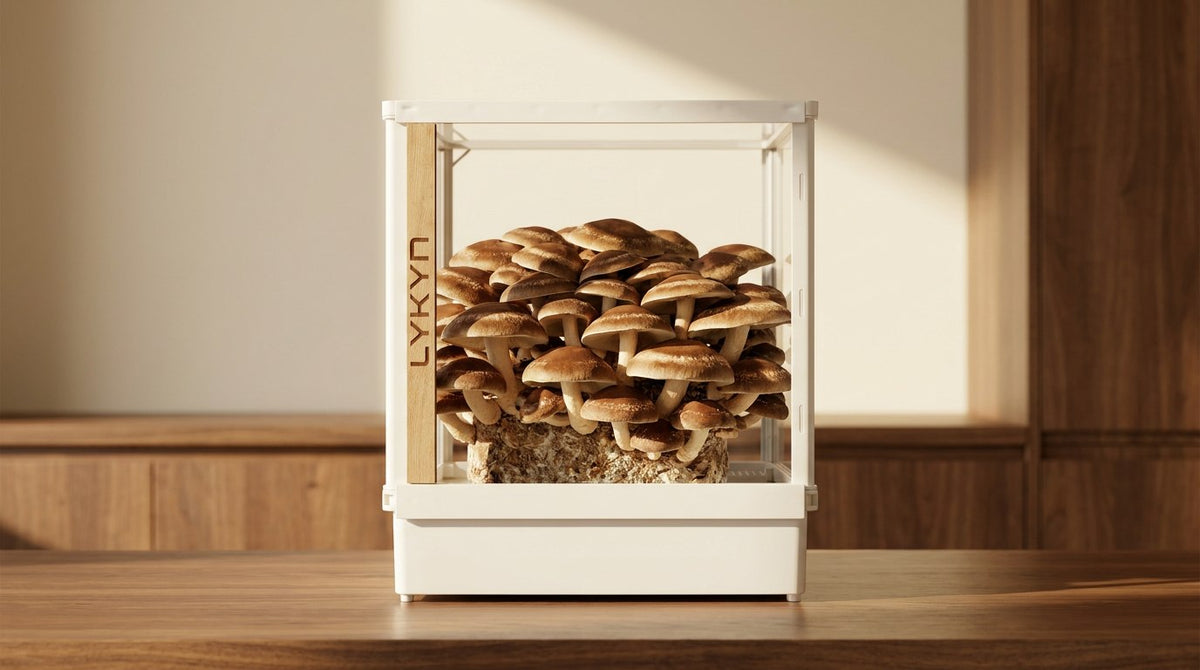
Prevention: 2 to 4 fresh-air exchanges per hour during pinning. In a Lykyn mushroom fruiting chamber the two DFH4010S variable fans (500-6000 RPM) run a programmed FAE cycle automatically.
3. Temperature swing
Most cultivated mushrooms fruit in a window of 15-24 C (60-75 F). A drop of more than 5-7 C in 24 hours, or a spike above 26 C for several hours, stalls pin development and triggers aborts. Cold draft from a winter window or summer sun on the chamber are the usual culprits.
What it looks like: pins darken from pearl-white to deep brown or black overnight, often wet at the base, often the whole cluster aborts together.
Fix the current flush: move the chamber away from windows, doors, and heat sources. In a cold room a seedling heat mat under the chamber pulls ambient up by 4-6 C. Heavily aborted pins won't recover from a cold spike.
Prevention: keep fruiting temperature within a 2 C band. Aim for 18-22 C for Lion's Mane, 18-24 C for oyster, 16-21 C for shiitake. Lykyn chambers don't include active temperature control, so pair with a heat mat for cold rooms. Our indoor mushroom growing kit page lists ranges by species.
4. Contamination starting
Sometimes pins abort because something is eating the block from the inside. Trichoderma (green mold), Bacillus (bacterial blotch), and Cobweb compete with the mushroom mycelium. When they take hold, the block stops sending water and nutrients to primordia and the pins die. Contamination often appears at the surface only after aborts have started.
What it looks like: abort pins plus visible discoloration. Green patches (trichoderma), yellow or wet streaks (bacteria), or grey fuzz (cobweb) alongside dead pins. Sometimes a sour or ammonia smell.
Fix the current flush: if green or yellow patches are visible the block is compromised. Bag it and toss it. Wipe the fruiting environment with 70% isopropyl. Our types of mushroom contamination guide shows each contaminant with photos.
Prevention: start with high-quality pre-colonized blocks, keep room RH between 50-70% (high room humidity invites mold), and don't open the chamber more than necessary. built-in filtration on the air intake catches most airborne spores before they reach the block.
Aborted pins by species

The four causes produce slightly different signatures across the species you're most likely to grow.

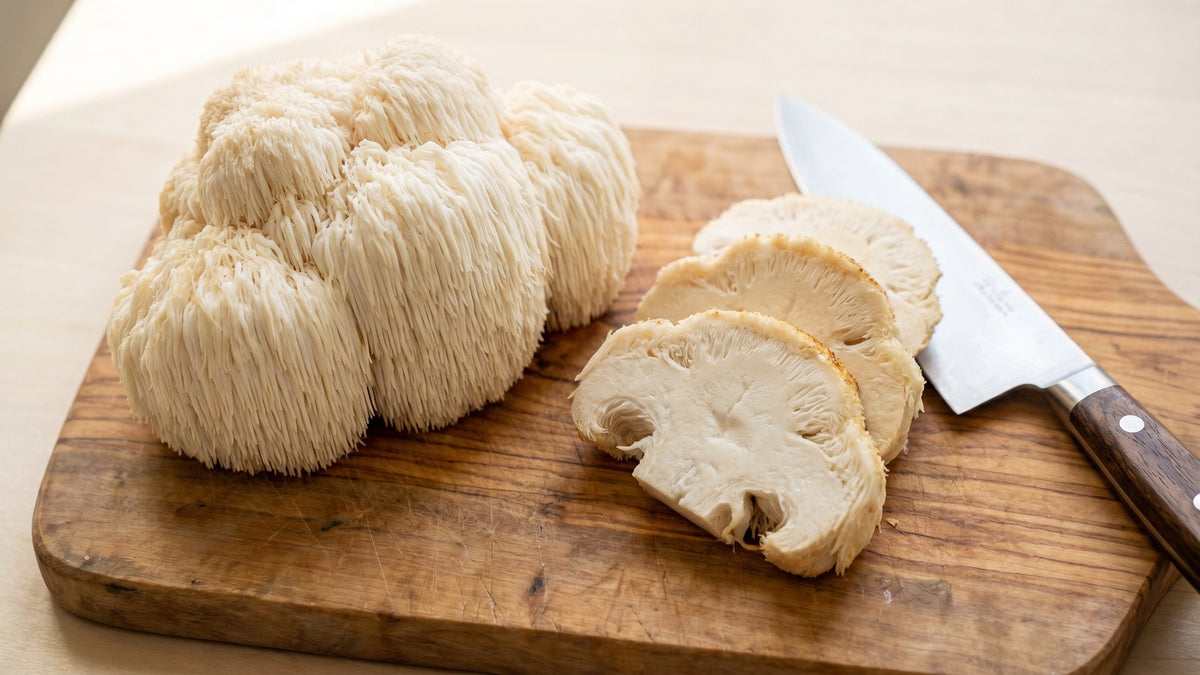
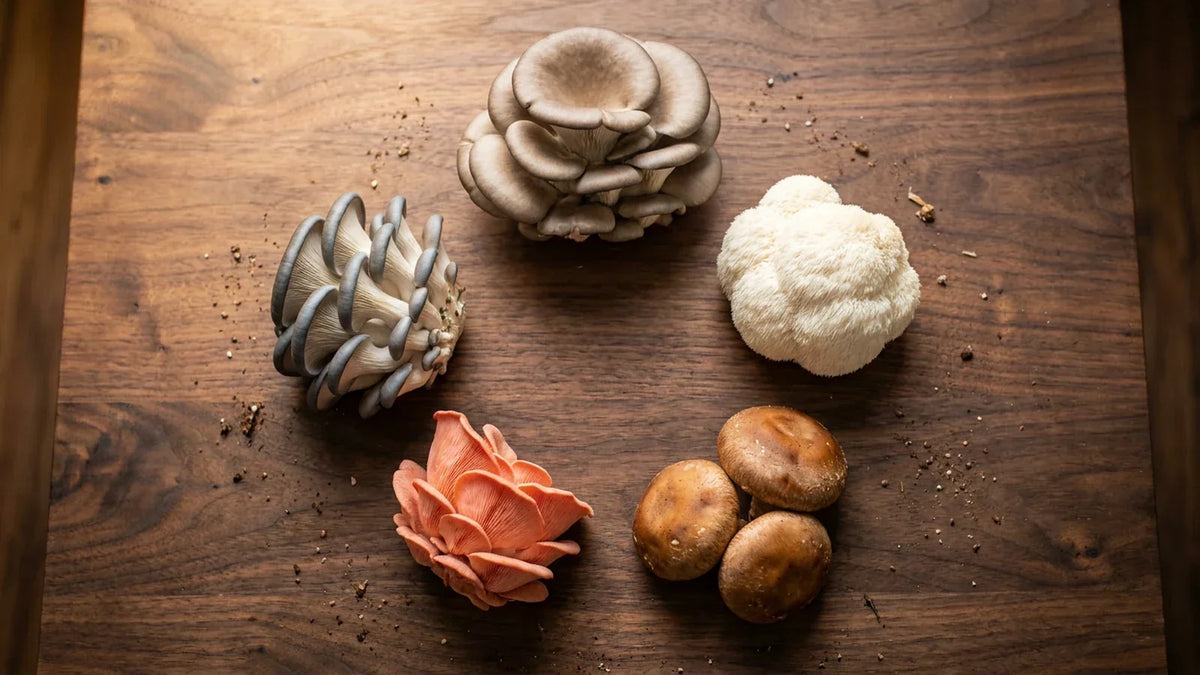
Lion's Mane (Hericium erinaceus) is the most humidity-sensitive. Healthy pins are small bright white globes like cotton balls; aborted pins look like brown crumpled paper in the same spots, teeth never forming. A humidity crash dries the cluster from the outside in. A CO2 spike produces a tight white ball that never differentiates.

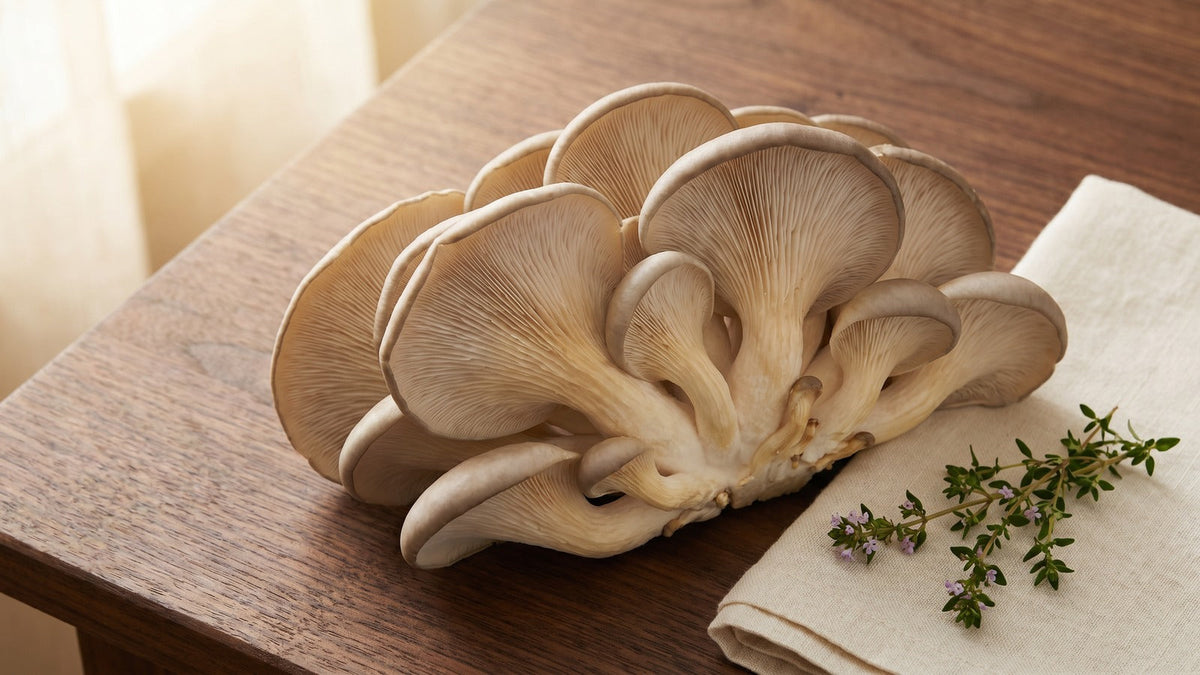
Oyster mushrooms (Pleurotus ostreatus and cultivars) abort in clusters because they pin in clusters. Healthy oyster pins are tiny grey or pearl-white nubs; aborted pins are yellowed at the edges, soft, sometimes weeping. Oyster is the species most prone to CO2 stretching.
Shiitake (Lentinula edodes) is the most forgiving. Aborts usually mean the block needs to rest or a sudden cold drop hit pins below 13 C. Shiitake tolerates higher CO2 (up to 2000 ppm) than oyster.
The decision tree (which cause is killing your pins?)
Use this short order-of-operations the moment you see aborts:
- Block surface. Any green, yellow, pink, or fuzzy patches? Stop here. Contamination. Toss the block.
- The air. Does the chamber feel dry to your fingertips? Below 80% RH is a humidity crash. Most likely.
- Pin shape. Long thin leggy stems with no caps? CO2 spike. Open the chamber for 30 minutes.
- Thermometer. Did temperature swing more than 5 C in 24 hours? Temperature crash. Stabilize and wait for the next flush.
If none of those four match it's usually a slow-acting combo (typically humidity plus FAE during cold months). Dial both back to spec.

Fuel Your Mushroom Journey
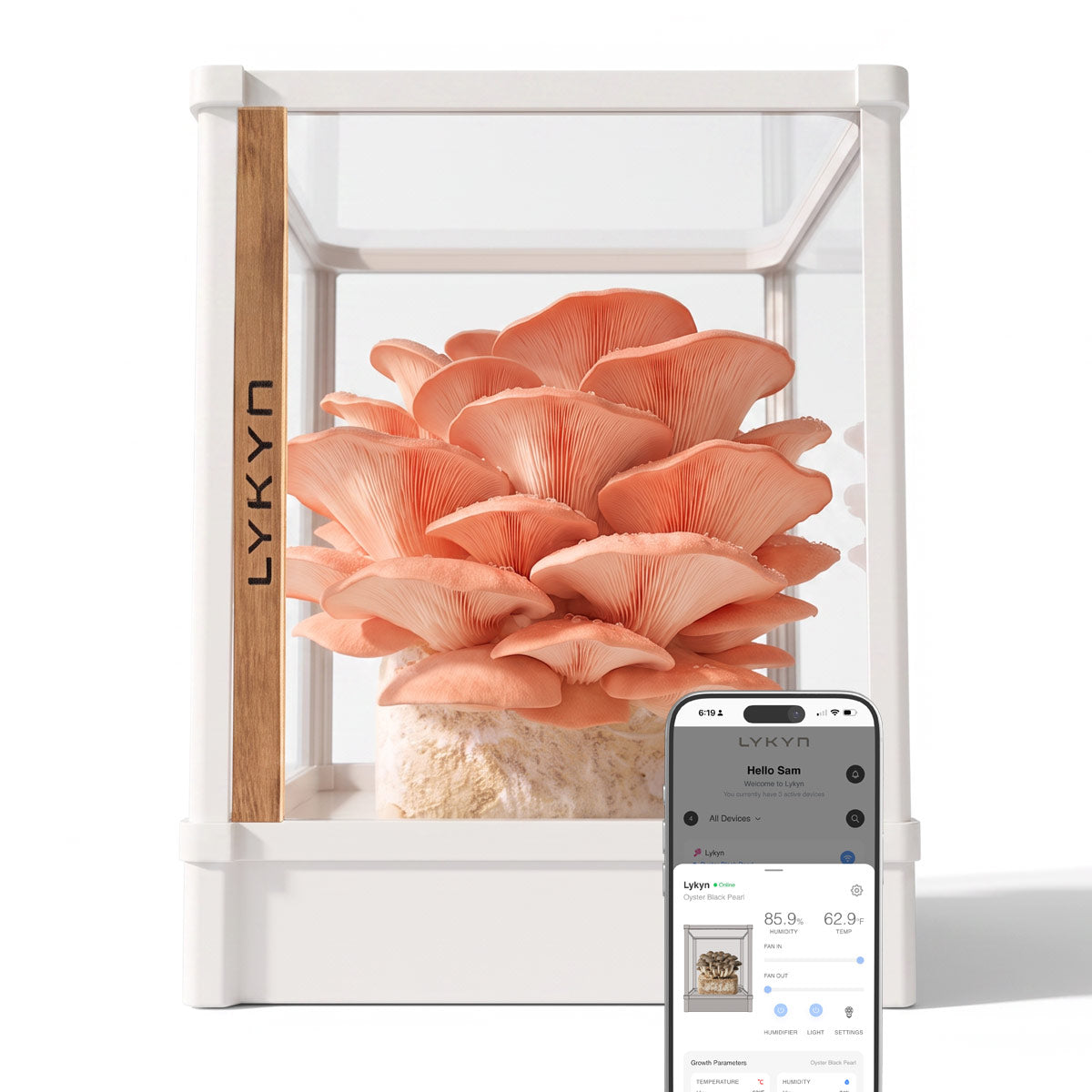
Smart Mushroom Grow Chamber
Plug-and-play smart chamber with humidity, light, and airflow dialed in for every species. Beginners harvest their first flush in days, not months.
Add to cart $299Can you save the next flush?
Yes, almost always. An aborted first flush does NOT mean your block is dead. The recovery protocol:
- Remove all aborted pins with clean fingers or a sterile knife. Leaving them invites bacteria.
- Wipe the chamber walls to remove condensation and spores.
- Reset humidity to 90-95% and FAE to 2-4 exchanges per hour.
- Rest in the dark for 5-10 days. The mycelium reabsorbs nutrients from the aborted pins and starts forming new primordia underneath.
- Re-introduce light (8-12 hours per day) on day 10. New pins appear within 3-5 days.

About 80% of blocks that aborted their first flush push a healthy second flush this way. Lion's Mane often pushes a stronger second flush than first.
How an automated chamber prevents aborts
The four causes share one root: environmental instability. Hand-misted tents crash humidity at 3 AM, spike CO2 between manual FAE windows, and invite spores every time you open the zipper. An automated fruiting chamber stabilizes all four variables continuously: the SHT3x sensor reads RH every few seconds and the 2.8L humidifier holds it within +/- 2%, the two variable fans cycle FAE to keep CO2 in the 600-900 ppm window, the 30 x 30 x 30 cm internal volume buffers room-temperature drift, and the sealed and app-controlled air intake catches most airborne spores.
Frequently asked questions
What causes mushroom aborts?
Mushroom aborts are caused by environmental stress during pinning. The four causes are a humidity crash below 80% RH, a CO2 spike above 1000 ppm, a temperature swing over 5 C in 24 hours, and contamination starting in the block. Humidity crashes account for roughly 60% of aborts in passive tent setups.
Why do mushrooms abort?
Mushrooms abort when the developing pin cannot meet its water, oxygen, or nutrient needs. The mycelium sacrifices an early pin and reabsorbs its resources to try again later if the environment improves. It is a survival response, not a disease.
What do mushroom aborts look like?
Small brown or tan stubs stuck to the surface of an otherwise healthy fruiting block. They are dry, shriveled, and often only 2 to 6 millimeters tall. They may darken to black before falling off. They do not have wet slime or fuzzy mold around them (those signs indicate contamination instead of an environmental abort).
Can you eat mushroom aborts?
Cultivation aborts are not toxic but they are not worth eating. They are dried cell-wall material with very little flavor or nutrition. Compost them and focus on the next flush. (Note: wild "aborted Entoloma" or "shrimp of the woods" is a separate thing, a parasitized wild fungus some foragers eat, but that's foraging, not cultivation.)
How do you prevent aborted mushrooms?
Keep RH at 85 to 95%, keep CO2 between 600 and 900 ppm during pinning, keep temperature in a 2 C band within your species' range, and start with a clean uncontaminated block. An automated fruiting chamber holds all four for you.
Does more fresh air exchange (FAE) prevent mushroom aborts?
Yes for CO2 aborts, up to a point. Above 4 FAE per hour, dry room air dries out the chamber faster than the humidifier can keep up, which causes humidity aborts. The sweet spot is 2 to 4 FAE per hour combined with active humidification.
How do you get a second flush after an aborted first flush?
Pick off the dead pins, wipe down the chamber, reset humidity to 90 to 95%, and rest the block in the dark for 5 to 10 days. Then reintroduce light. About 80% of blocks push a healthy second flush this way, often within 3 to 5 days of light return.
What does it mean when a mushroom turns black or shrivels overnight?
Sudden overnight blackening usually means a temperature crash, a humidity crash, or both. Pins that go from pearl-white to brown or black in 12 hours have lost water rapidly. If the block underneath is still healthy white mycelium, it is an environmental problem and the block will push a new flush after you stabilize the environment.
The bottom line
An aborted flush is information, not a death sentence. The pins are telling you which of the four environmental triggers crossed a line and how it killed them. Diagnose the cause, correct it, and the same block almost always produces a healthy second flush within 2 weeks. If you're fighting the same crash every flush, a smart mushroom grow box holds humidity, CO2, temperature stability, and air filtration automatically so the four causes never get a chance to start.
References: Cornell University Mushroom Blog on Hericium fruiting conditions. Penn State Mushroom Research Center on fresh air exchange in cultivated mushrooms. Beelman et al., Mycologia, on primordium development and abortion in Agaricus and Pleurotus.
Fuel Your Mushroom Journey

Smart Chamber. Bone White Single
- 2.8L tank, 90% humidity automatic
- App-controlled, plug-and-play
- 6 lb block ceiling, in stock

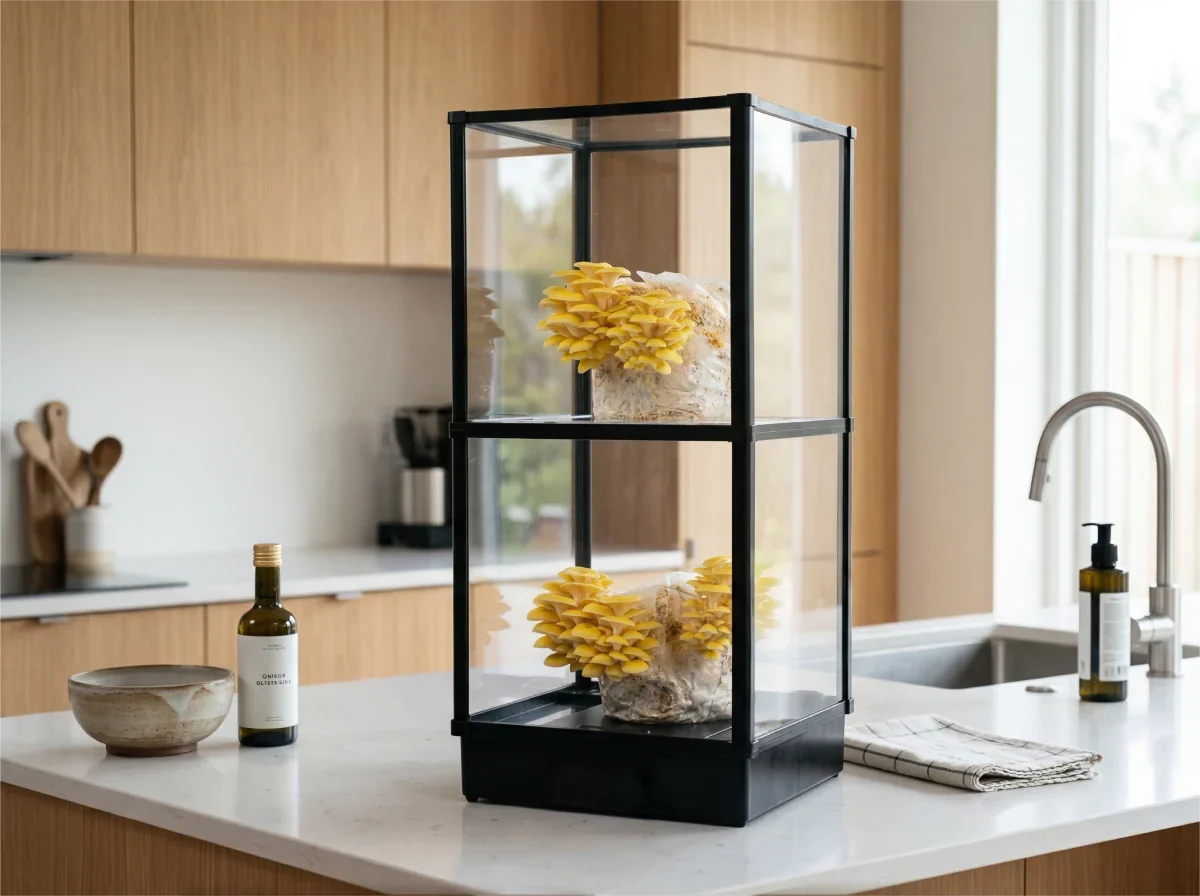
Smart Chamber. Obsidian Black Single
- Same hardware as Bone White
- Matte black premium finish
- Pairs with any kitchen palette



Share:
Shiitake Stir Fry: The 15-Minute Garlic Method That Always Works
Shiitake Stir Fry: The 15-Minute Garlic Method That Always Works