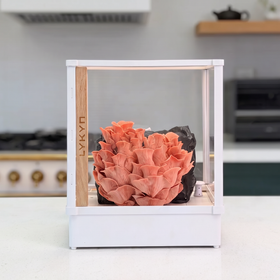



Mushroom mold quick check. Fresh-store mushrooms develop white fuzz from refrigeration spoilage. Growing mushrooms develop green, cobweb, or pink mold from contamination. Both should be discarded. Moldy mushrooms can cause illness because mold hyphae travel deep into the porous flesh long before you see the colored patches on top.
That's the 60-second answer. Below is the longer one: how to tell store-bought white fuzz from real mold, what green mold on a grow block actually means, when it's safe to wipe-and-cook and when it's compost-bin time, and how to keep this from happening on your next grow.

What "moldy mushrooms" actually means (two scenarios)
"Moldy mushrooms" describes one of two situations, and the safety rules differ:
Scenario 1 - Grocery store mushrooms. A pack of buttons or shiitake sits in your fridge for a week, and white fuzz, brown spots, or a slick surface appears. This is usually post-harvest spoilage, not toxic mold. Surface fungi are colonizing the wet skin as the mushroom breaks down. It looks alarming but is the same family of mold you'd find on stale bread.
Scenario 2 - Mushrooms on a grow block. You see green patches, gray cobwebs, or pink slime on the substrate. This is contamination by a competing fungus, almost always trichoderma (green), penicillium (blue-green), or aspergillus (black). These produce spores and mycotoxins. The block goes in the trash.
The visual cue overlap trips up beginners. White fuzz appears in both, and it doesn't mean the same thing.
White fuzz on store-bought mushrooms. Usually OK
Open a 2-day-old container of cremini and you'll often see faint white fuzz at the base of the stems. Before you toss the pack, check three things:
- Color. Pure white, off-white, or cream is the mushroom's own mycelium reactivating in cold storage. Harmless. Green, blue-green, black, or pink means contamination. Discard.
- Texture. Dry, fluffy, hair-like fuzz is mycelium. Slimy, wet, or matted-down fuzz is bacterial spoilage. Wet sliminess is the dealbreaker.
- Smell. Fresh-fungus, slightly woodsy: fine. Sour, ammonia, fishy, or "off" in any way: discard.
If all three pass, the fuzz is harmless reactivated mycelium. The mushroom was alive when picked, cold slowed it down, and a few aerial hyphae sprouted. Wipe with a dry paper towel, trim stem ends, and cook within 24 hours. USDA Food Safety guidance treats fresh mushrooms as a 7-10 day fridge window, and surface mycelium passing the texture-smell test is within that window.
Exception: if the mushrooms are also brown, slimy, AND smell off, or the fuzz is colored, you've crossed from "wipe and use" to "compost." For the brown-but-not-moldy case, our mushrooms turning brown guide covers oxidation vs spoilage separately.
White fuzz vs mycelium vs cobweb mold. The three-way visual check
White fuzz can be three different things:
| Look | Texture | Pattern | What it is | Action |
|---|---|---|---|---|
| Bright white, hair-like, evenly radiating | Dry, springy | Outward halo | Healthy mycelium | Safe. Keep growing. |
| Pure white but extremely fine, spider-web | Cottony, hangs in air | Sparse strands floating above substrate | Cobweb mold (Dactylium) | Discard on a grow block. |
| White fuzz with color creep underneath | Slimy or wet, sour smell | Patchy, colored center | Early-stage mold | Discard. Color shows in 24-48h. |
The most reliable difference: mycelium clings tightly to its food. Cobweb mold floats above the substrate. Gently puff air at the fuzz from a few inches away. Real mycelium barely moves, cobweb mold visibly waves.
For photos side-by-side, see our white fuzzy mushroom guide. For mycelium vs contamination on a colonizing block specifically, the mycelium contamination guide has the macro shots.
Green mold on a grow block. Always discard
Green patches on a grow block are almost always trichoderma, the most aggressive mold a home grower will encounter. The sequence:
- Day 1-2: Small patch of white fuzz, indistinguishable from mycelium at a glance.
- Day 3-4: Center turns yellow-green.
- Day 5+: Green deepens, spreads fast, releases spores. Block compromised.
By the time you see green, the network has infiltrated the substrate. There is no "cut around it" with trichoderma. Hyphae run microscopically through the entire block. Cornell Small Farms and Penn State Extension both treat trichoderma-contaminated blocks as a total loss for home cultivators.
What to do:
- Don't open the block indoors. Spore release contaminates your next grow.
- Bag it sealed, take it outside, dispose in municipal compost or trash.
- Wipe down the chamber with 70% isopropyl alcohol or 10% bleach. Hit fan blades, humidifier surfaces, and any cracks.
- Air the room out for 24 hours before a new grow.
Black mold (aspergillus) and pink mold (neurospora) follow the same rule. Black mold also produces aflatoxins, which the FDA classifies as carcinogenic. Don't handle it without gloves and a mask.
For the full family of contamination types (bacterial blotch, wet rot, sour colonies), our types of mushroom contamination pillar guide breaks each down.
Mold vs natural mushroom aging
Some changes look like mold and aren't. Knowing the difference saves perfectly good mushrooms.
Aging signs that are NOT mold:
- Caps darkening to tan or brown: oxidation. Safe to cook if texture is firm.
- Dry, papery surface: dehydration. Tougher but edible.
- Slight wrinkling at the cap edge: moisture loss. Wipe, trim, cook.
- Caps opening, gills exposed: mature past button stage. Stronger flavor, fully edible.
- A few brown spots on firm caps: bruising or oxidation, not mold. Wipe and use.
Signs that ARE mold or active spoilage:
- Colored fuzz (green, blue-green, black, pink, gray-green).
- Slime layer on cap or stem.
- Soft, mushy spots that indent when pressed.
- Sour, ammonia, or fishy smell.
- Liquid pooling in the package, especially cloudy or yellow.
If the mushroom passes "firm, dry-ish, smells like mushroom," it's fine. Any one mold-or-spoilage sign means the whole pack goes.
Food safety: can you eat moldy mushrooms?
The short answer is no. The rule is stricter for mushrooms than for almost any other food.
Mushrooms are mostly water held in a sponge of fungal tissue. When mold colonizes the surface, hyphae penetrate the porous flesh within hours, long before colored patches show. This is unlike hard cheese, where USDA Food Safety lets you cut off mold with a 1-inch margin. With mushrooms, visible mold means internal spread.
What the mold can produce:
- Mycotoxins: Secondary metabolites from aspergillus and penicillium. Some are heat-stable. Cooking does NOT destroy them.
- Allergens: Non-toxic mold spores still trigger respiratory reactions in sensitive people.
- Bacterial co-contamination: Where mold grows, bacteria grow. Listeria and salmonella have been documented on spoiled mushrooms.
The FDA and USDA both classify visibly molded soft produce (mushrooms, berries, peaches) as "discard immediately, do not eat any portion." For mushrooms, this includes the unmolded sections of the same pack. Cross-contamination is assumed.
The "wipe-and-cook" exception applies only to:
- White fuzz that's pure mycelium (passes the three-way check above).
- Brown spots that are oxidation, not mold (firm, no smell change).
- Mushrooms slightly past peak but firm, dry-surfaced, smelling normal.
When in doubt, throw it out.
Fuel Your Mushroom Journey
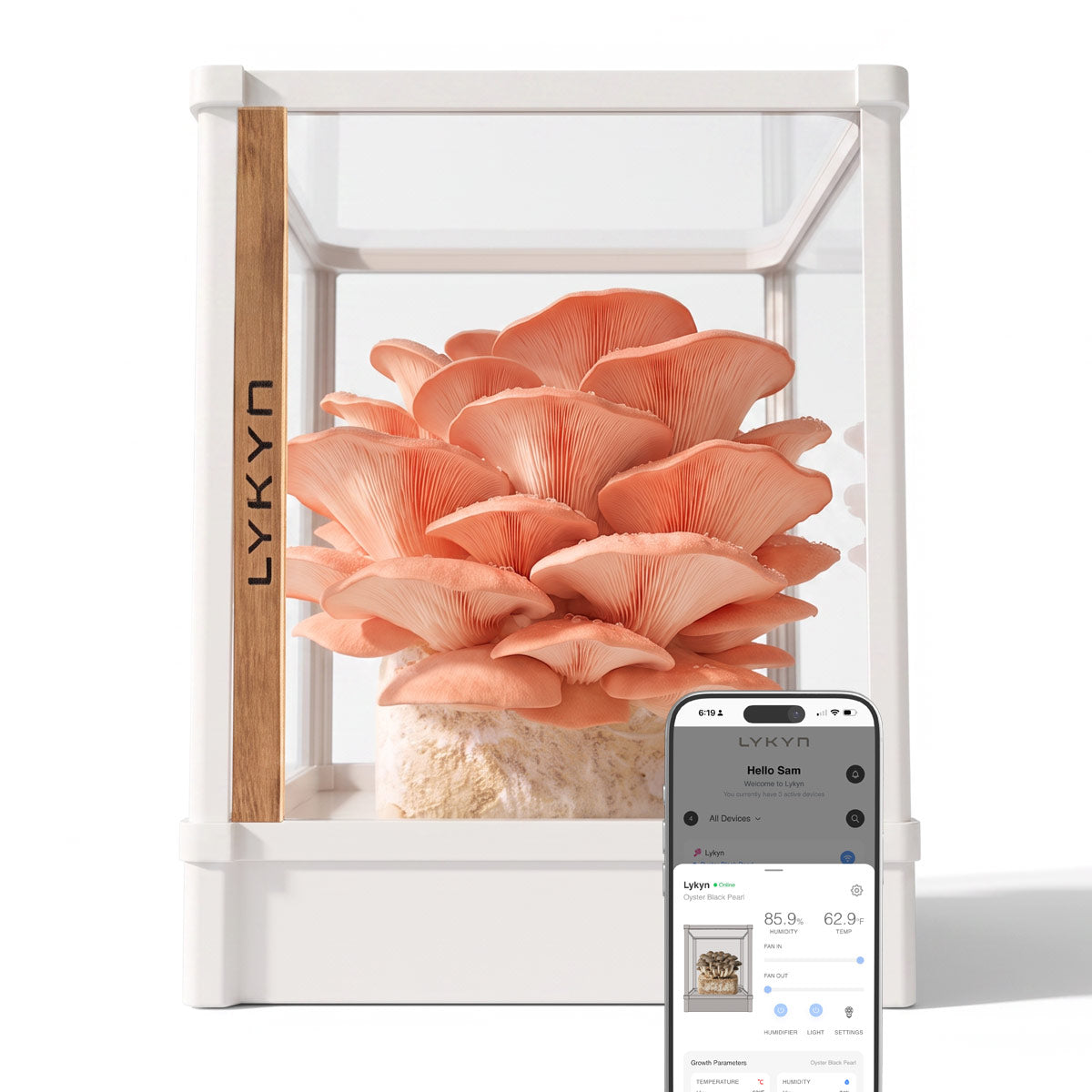
Smart Mushroom Grow Chamber
Plug-and-play smart chamber with humidity, light, and airflow dialed in for every species. Beginners harvest their first flush in days, not months.
Add to cart $299Storage tips to prevent mold
Most mold on store-bought mushrooms is preventable. The common mistake: storing in the original plastic clamshell or a sealed bag. Mushrooms respirate after harvest. In a sealed container, air goes humid, condensation pools, and the surface stays wet enough for mold within 4-5 days.
What works:
- Paper bag, never plastic. A brown paper lunch bag absorbs released moisture while letting them breathe. Roll the top down loosely. Adds 3-5 days to fridge life.
- Crisper, not the door. The crisper sits at the most stable temperature (35-38 F / 1-3 C). The door swings warmer and colder with every open, condensing moisture inside the bag.
- Don't wash before storing. Mushrooms absorb water like a sponge. Wash immediately before cooking. If you must clean ahead, brush dry or wipe with a damp paper towel.
- Trim stem ends every 2-3 days. Stems brown and slime first. A thin slice off the bottom resets the cut surface.
- Cook day 7-8 at the latest. Past 7-10 days, even good storage won't save them.
Oysters spoil faster (5-7 days). Lion's Mane sits in the middle (7-9). For a species-by-species shelf-life table, our do mushrooms expire guide has the breakdown.
How to prevent mold when growing your own

Most home contamination traces back to four causes:
- Stagnant air. Mold loves CO2-rich, still air. A kitchen-counter grow bag with no fan is a contamination magnet.
- Over-misting. Hand-misting pools water on the substrate. Pools are where trichoderma starts.
- Temperature swings. Above 78 F, mold grows faster than mushroom mycelium. Below 60 F, both struggle, but mold recovers better.
- Unfiltered air intake. Every cubic meter of indoor air carries thousands of mold spores. Opening a chamber to mist is the most common contamination vector for home growers.
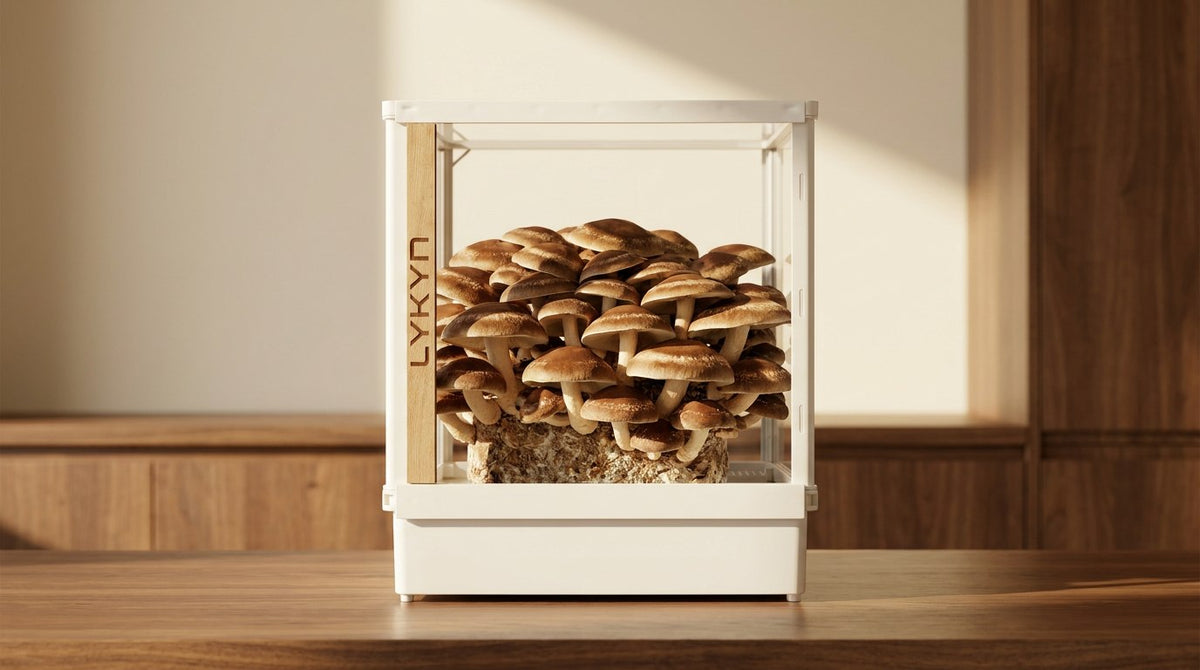
Standard advice (sterile work, dedicated grow room) works but is a lot to set up. A simpler path: an automated chamber that eliminates all four causes at once. The smart mushroom grow box keeps fresh-air exchange constant via filtered intake fans, holds 85-95% humidity without surface pooling, runs on ambient room temperature, and stays sealed between harvests so you're not introducing room-air spores. Most contamination we see in customer grows comes from manual setups. The sealed-chamber rate is dramatically lower.
This isn't a substitute for clean technique. Use pre-inoculated blocks from a reputable supplier, don't reuse contaminated substrate, and wipe down the chamber between grows. For a walkthrough of automated chamber vs manual tent, see our mushroom fruiting chamber page.
When to discard vs when to save
| Situation | Action |
|---|---|
| White fuzz on store mushrooms, dry, no smell | Wipe, cook within 24h |
| White fuzz, slimy or wet | Discard the pack |
| Brown caps, firm, normal smell | Cook within 1-2 days |
| Brown caps, soft or slimy | Discard |
| Green patches on a grow block | Discard, sanitize chamber |
| Black mold on a grow block | Bag sealed outdoors, mask up |
| Pink slime on substrate | Discard, replace humidifier water |
| Cobweb strands floating above substrate | Discard, treat as contamination |
| Healthy radial white growth on a block | Keep growing |
| Caps opened, gills exposed | Eat today, fully edible |
For the brown-only case, our mushrooms turning brown guide covers it separately.
Frequently asked questions
Is white fuzz on mushrooms always mold?
No. Most white fuzz on store-bought mushrooms is the mushroom's own reactivated mycelium. Aerial hyphae sprouted in cold storage. If the fuzz is dry, fluffy, smells normal, and the mushroom is still firm, wipe it off and cook. Danger signs: colored fuzz, slimy texture, sour smell.
What does trichoderma mold look like on a grow block?
Trichoderma starts as a small patch of white fuzz, almost indistinguishable from mycelium. Within 2-3 days, the center turns yellow-green, then bright forest-green as it sporulates. The patch is visibly bigger every 12 hours and looks "dusty" with green spore powder. By the time you see green, the block is unsalvageable. Discard sealed, outdoors.
Can you eat moldy mushrooms if you cook them?
No. Cooking does NOT destroy mycotoxins. Some are heat-stable up to 200 C. Cooking kills live mold cells but leaves toxins behind. Mushrooms have porous flesh, so visible surface mold means hyphae have penetrated internally. The FDA and USDA classify visibly moldy mushrooms as discard-don't-eat regardless of cooking.
Is mold on oyster mushrooms different from mold on button mushrooms?
The contamination types are the same (trichoderma, penicillium, aspergillus, cobweb mold) but oysters show it faster. Their thinner caps slime up almost translucent before a button shows visible mold. Smell is the most reliable test for oysters. They go fishy or ammonia before visible signs. Discard at first off-smell.
How is mushroom mycelium different from mold?
Both are fungi, both can look white and fuzzy. Mycelium is the underground body of the mushroom you're growing. It spreads in tight, organized, radial patterns and clings firmly to its food source. Mold is a competing fungus that spreads in irregular patches, often floats above the substrate (cobweb mold) or shows color (trichoderma, aspergillus). The giveaway: blow gently on the growth. Mycelium barely moves. Mold visibly waves or puffs spores. Our mycelium contamination guide has macro photos.
What's the difference between green mold and just-aging mushrooms?
Aging mushrooms turn tan, brown, or darker shades of their original color. Never green, blue, black, or pink. Green specifically means trichoderma, a contamination not an aging stage. Aging is a uniform color shift; mold is a colored patch with a clear edge. Discard anything green.
Should I throw out a whole pack if one mushroom has mold?
Yes, especially with soft produce. Mold spreads through the package via spores and surface contact. By the time you see mold on one cap, neighbors are likely colonized microscopically. The USDA guidance on visibly moldy soft produce is "discard the entire package."
Does an automated grow chamber actually prevent mold contamination?
It removes the four most common causes: stagnant air, over-misting, temperature swings, and unfiltered intake. The smart mushroom grow box maintains fresh-air exchange via filtered intake fans, runs humidity at the species-correct setpoint without surface pooling, and stays sealed between checks. It doesn't make contamination impossible. A bad starting block or skipped chamber-clean can still fail. But it eliminates the environmental causes behind most home contamination cases.
The bottom line
Moldy mushrooms come in two flavors. The first is post-harvest white fuzz on store mushrooms, usually just mycelium reactivating. Wipe and cook within a day. The second is contamination on a grow block, which is always discarded.
The reliable rules: colored fuzz is mold, slimy texture is spoilage, a sour smell overrides every other signal. On the growing side, the biggest contamination reduction comes from keeping the chamber sealed, the air filtered, and the humidity steady. Which is what an automated smart mushroom grow box does without you misting five times a day.
For more on the spoilage spectrum, see our companion guides on mushrooms turning brown, white fuzzy mushrooms, mycelium vs contamination, and how long mushrooms last. The pillar guide is types of mushroom contamination.
Sources: USDA FoodSafety.gov fresh produce mold guidance, FDA Food Code on mushroom storage, Cornell Small Farms Mushroom Program on substrate contamination, Penn State Extension on trichoderma identification.
Fuel Your Mushroom Journey

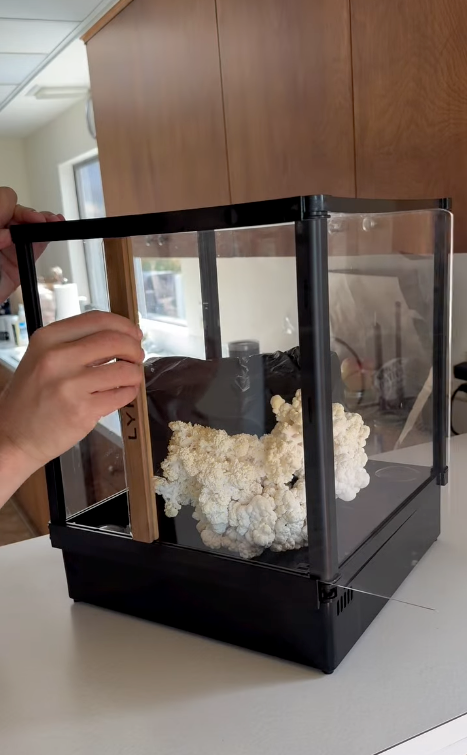
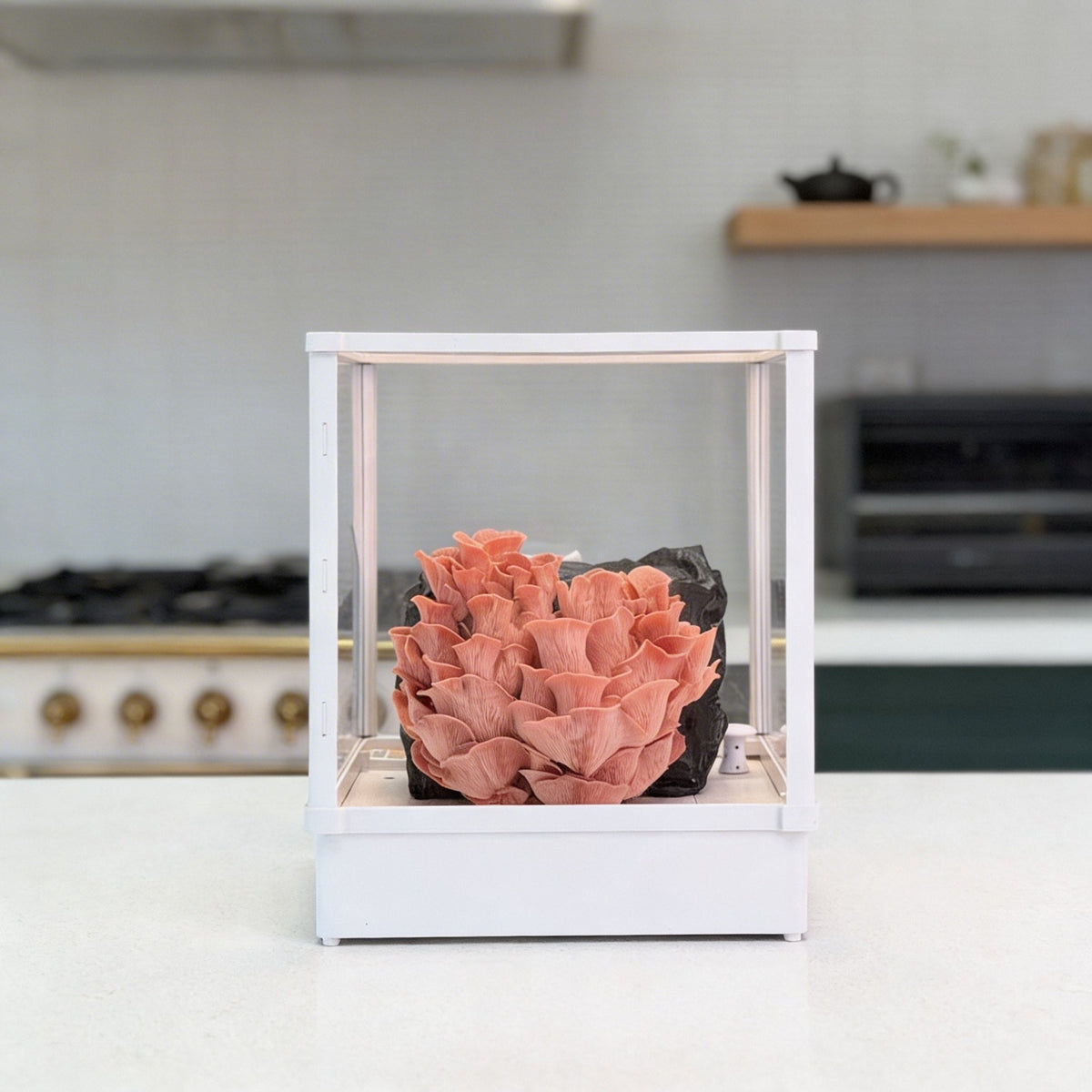
Smart Chamber. Bone White Single
- 2.8L tank, 90% humidity automatic
- App-controlled, plug-and-play
- 6 lb block ceiling, in stock

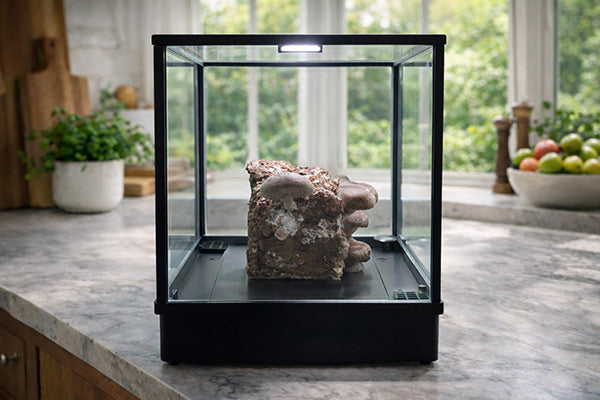
Smart Chamber. Obsidian Black Single
- Same hardware as Bone White
- Matte black premium finish
- Pairs with any kitchen palette




Share:
Mushroom Anatomy: Complete Guide to Parts and Functions
Growing Mushrooms from Mushrooms: Your Ultimate Guide to Endless Free Harvests