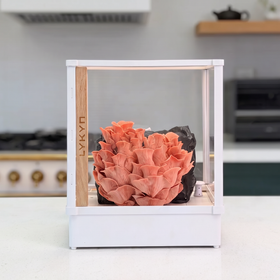



Humid air on the back of your hand feels warm and soft, almost weightless. Dry air pulls at your skin. A fruiting mushroom senses the difference at the cellular level. Below 80% relative humidity, the pins abort mid-formation; above 98%, mold climbs the substrate. The window is tight. This is why most home kits fail on the kitchen counter before the first pin sets. The physics are unforgiving; the solution is measurable.
Why Humidity and Temperature Matter for Mushroom Fruiting
Mushroom fruiting bodies are approximately 90% water. The transformation from compact spawn to fruiting pin to mature mushroom is fundamentally a process of hydration under strict environmental pressure. When humidity drops, the developing pin loses water faster than mycelium can deliver it through the substrate. The pin collapses and aborts. When humidity climbs above 98% relative humidity, condensation pools on every surface, and contaminating molds (often green Trichoderma or black mold) establish themselves in the resulting wet film. Temperature compounds the problem. Below the species minimum, metabolic processes slow; fruiting stalls. Above the maximum, enzymes denature and the flush stops midway.
This is not theoretical. Mushroom kits on a passive countertop fail roughly 30 percent of the time because the grower cannot hold the humidity band for 10 consecutive days. An apartment or Denver, with indoor humidity at 25%, will lose pins every single attempt without intervention. A London flat with 65% baseline humidity and a misting routine can succeed 7 out of 10 times. The difference is measurable and brutal.
The Target Ranges You Must Defend
Humidity during fruiting: 85 to 95 percent relative humidity (RH). Below 80%, pins abort. Above 98%, contamination pressure spikes. This is the working window.
Temperature varies by species:
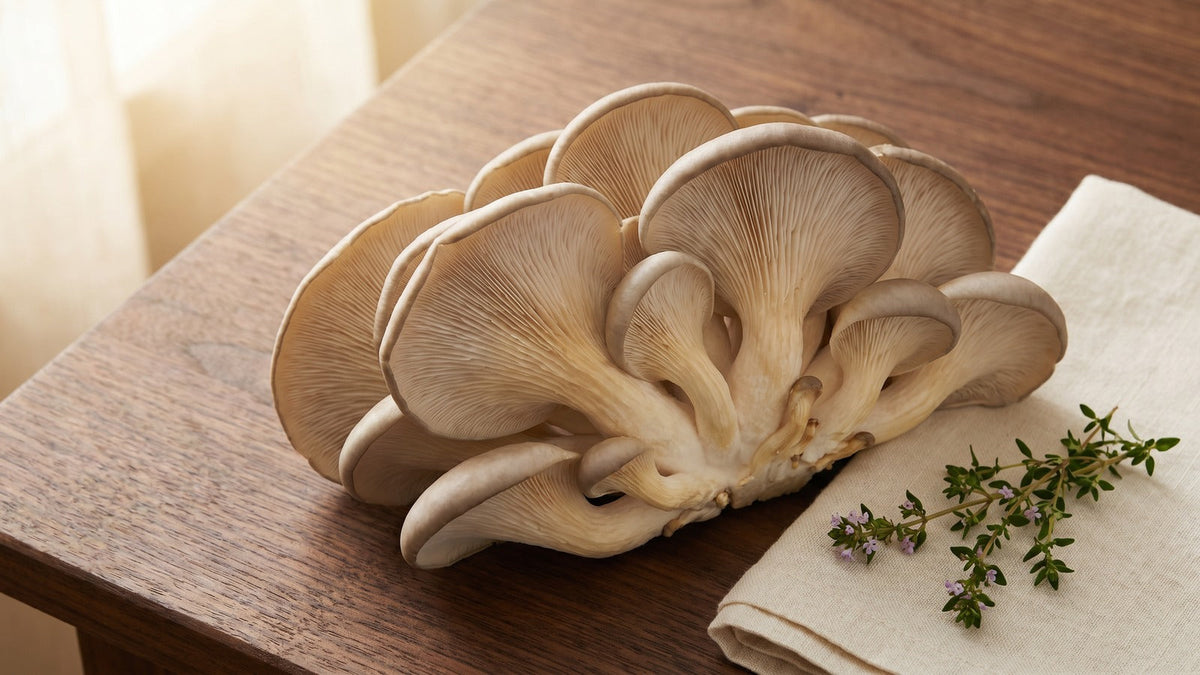
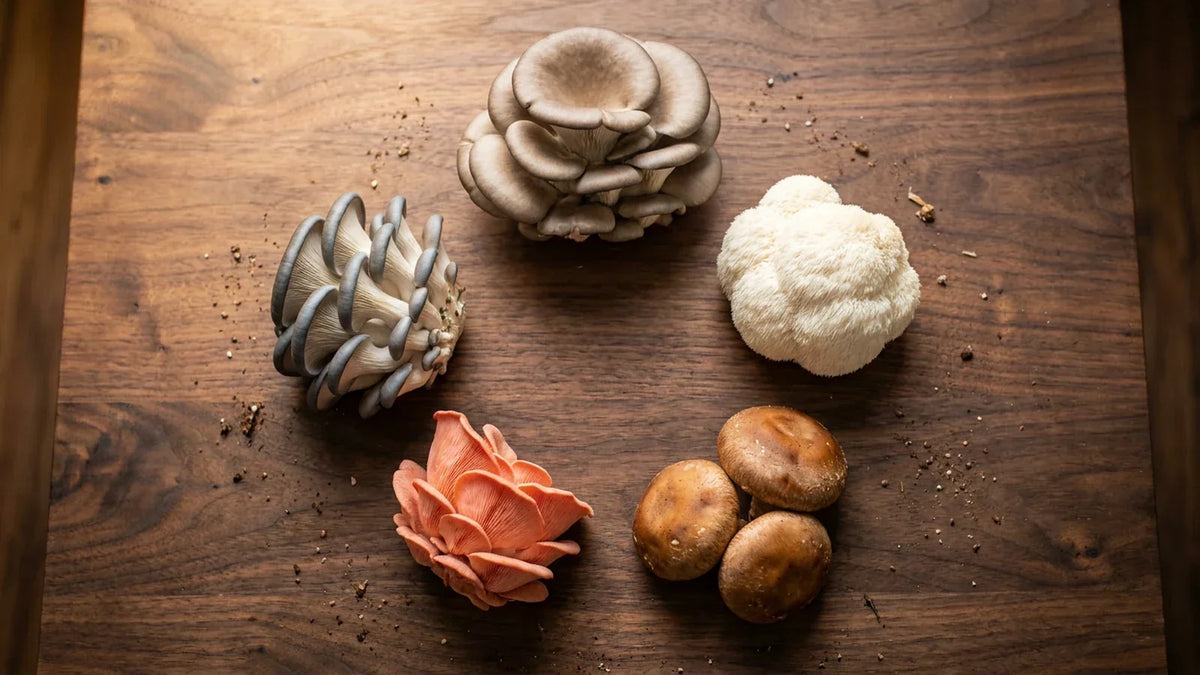
- Oyster mushrooms: 18 to 24 degrees Celsius (64 to 75 degrees Fahrenheit)
- Shiitake: 15 to 21 degrees Celsius (59 to 70 degrees Fahrenheit)
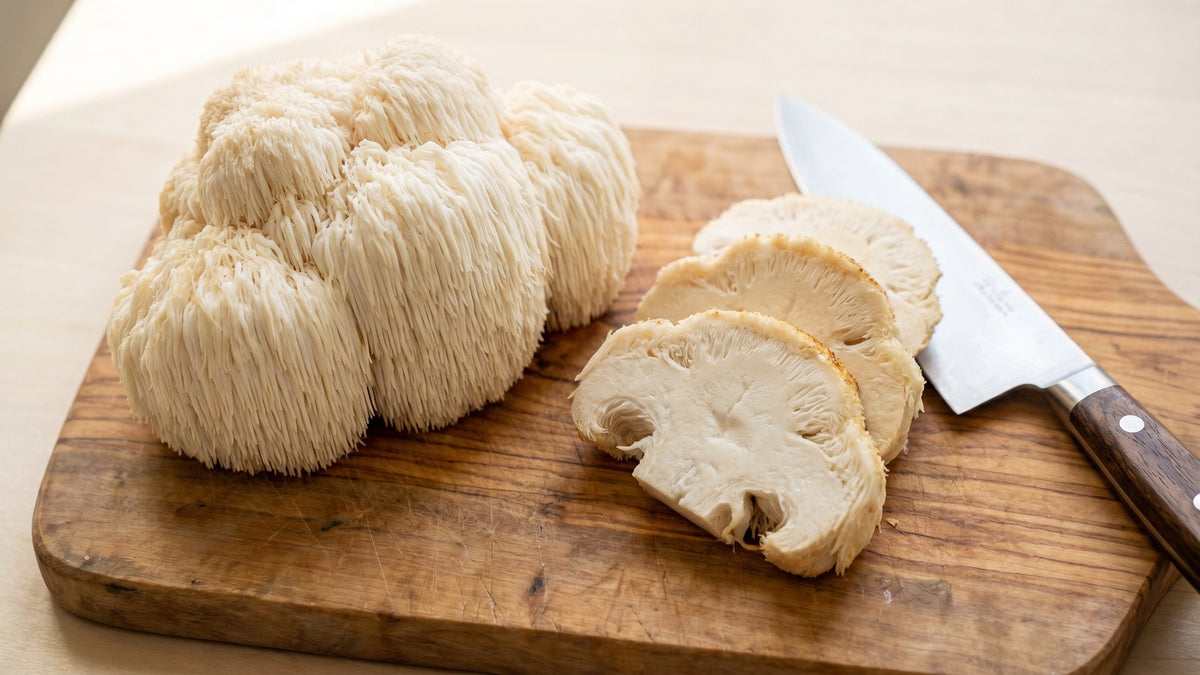
- Lion's mane: 18 to 22 degrees Celsius (64 to 72 degrees Fahrenheit)
- Reishi: 21 to 27 degrees Celsius (70 to 81 degrees Fahrenheit)
- Cordyceps: 18 to 22 degrees Celsius (64 to 72 degrees Fahrenheit)
Fresh air exchange: minimum 4 to 6 air changes per hour inside the growing environment. This removes carbon dioxide, which mushrooms emit steadily as they fruit. CO2 buildup below 400 ppm stalls fruiting; mushrooms become twisted and stubby. Fresh air also prevents stagnant humidity pockets where mold grows.
Light: 400 to 800 lux of ambient illumination. No direct sunlight (heat damage and algae). A desk lamp at 60 centimeters works. Most indoor spaces exceed this threshold naturally.

Manual Setup: How to Do It Without an Automated Chamber
If you choose the manual path, the protocol is straightforward but labor-intensive. You need four tools: a humidifier (ultrasonic or cool-mist, rated for 3 liters per hour), a digital hygrometer with probe (cost 12 to 20 USD), a mechanical timer (8 USD), and a thermometer for the room.
Place the humidifier outside the growing container or inside a sealed plastic tub with the substrate. Run it on a timer for 4 to 6 hours per day initially, then adjust based on hygrometer readings. Mist the substrate directly 3 to 4 times daily during the pinning phase (the first 7 to 10 days after substrate prep). Each misting takes 90 seconds. The air must come from somewhere: cut 6 millimeter holes in the lid of a plastic tub, spaced 10 centimeters apart, or simply prop the lid open 1 centimeter at one edge for passive fresh air exchange.
Room temperature is your responsibility. Keep the growing container away from radiators, direct sunlight, air conditioning vents, and external walls in winter. Basement temperature is more stable than a bedroom.
Labor commitment: 15 to 20 minutes per day. You read the hygrometer, adjust the humidifier timer, mist, check for mold, and record observations. Over a 12-day fruiting cycle, that is 3 to 4 hours of active work per block.
Success rate: 60 to 75 percent, assuming you maintain humidity within the band on at least 80 percent of the fruiting days. If your baseline room humidity is below 40 percent (Phoenix, Denver, winter heating in northern climates), success drops to 40 percent without constant misting.
Automated Setup: The Sealed Chamber Approach
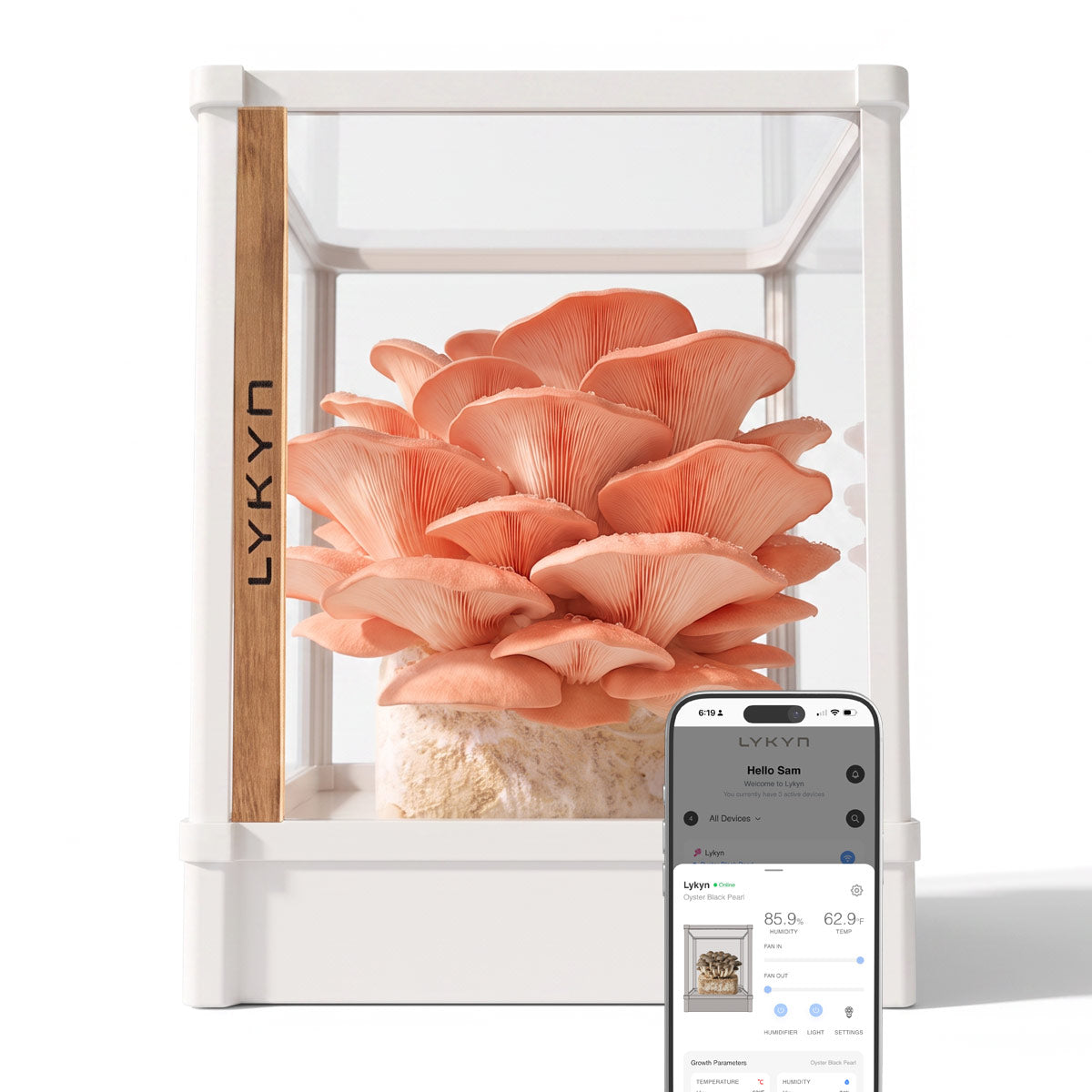
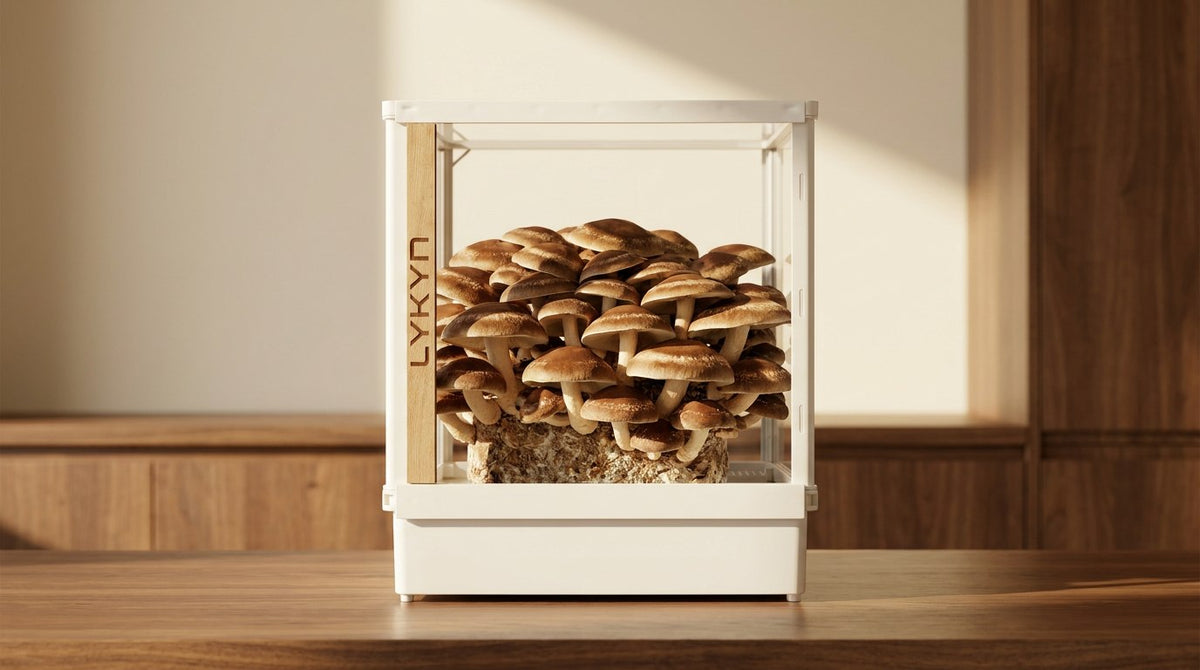
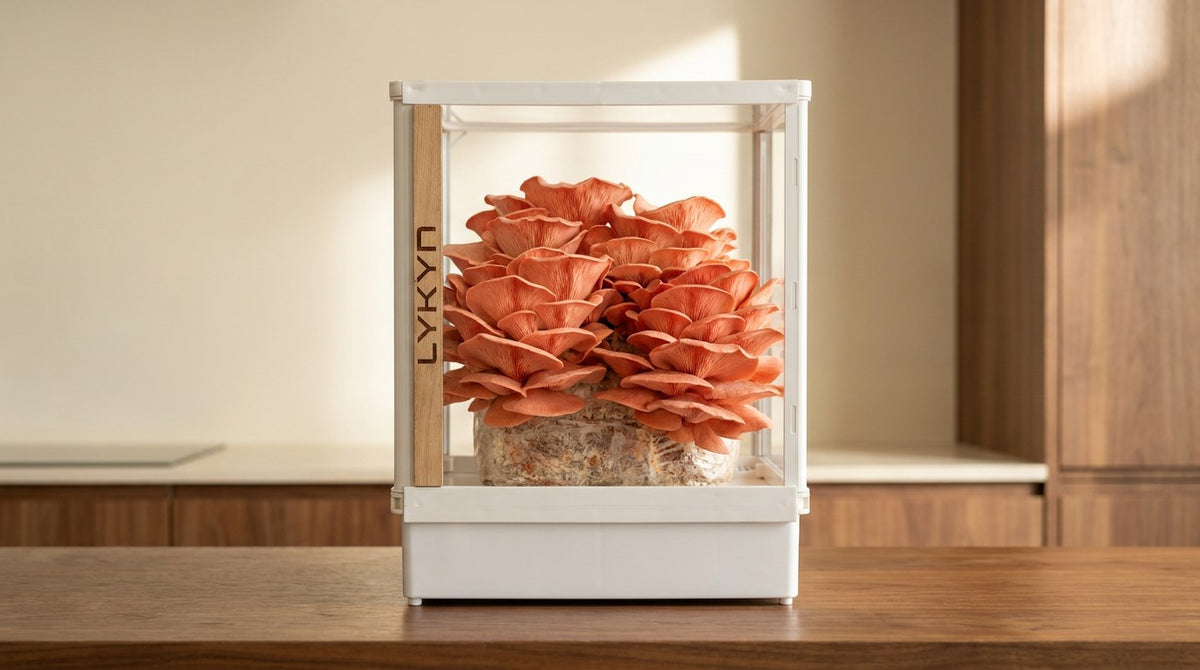
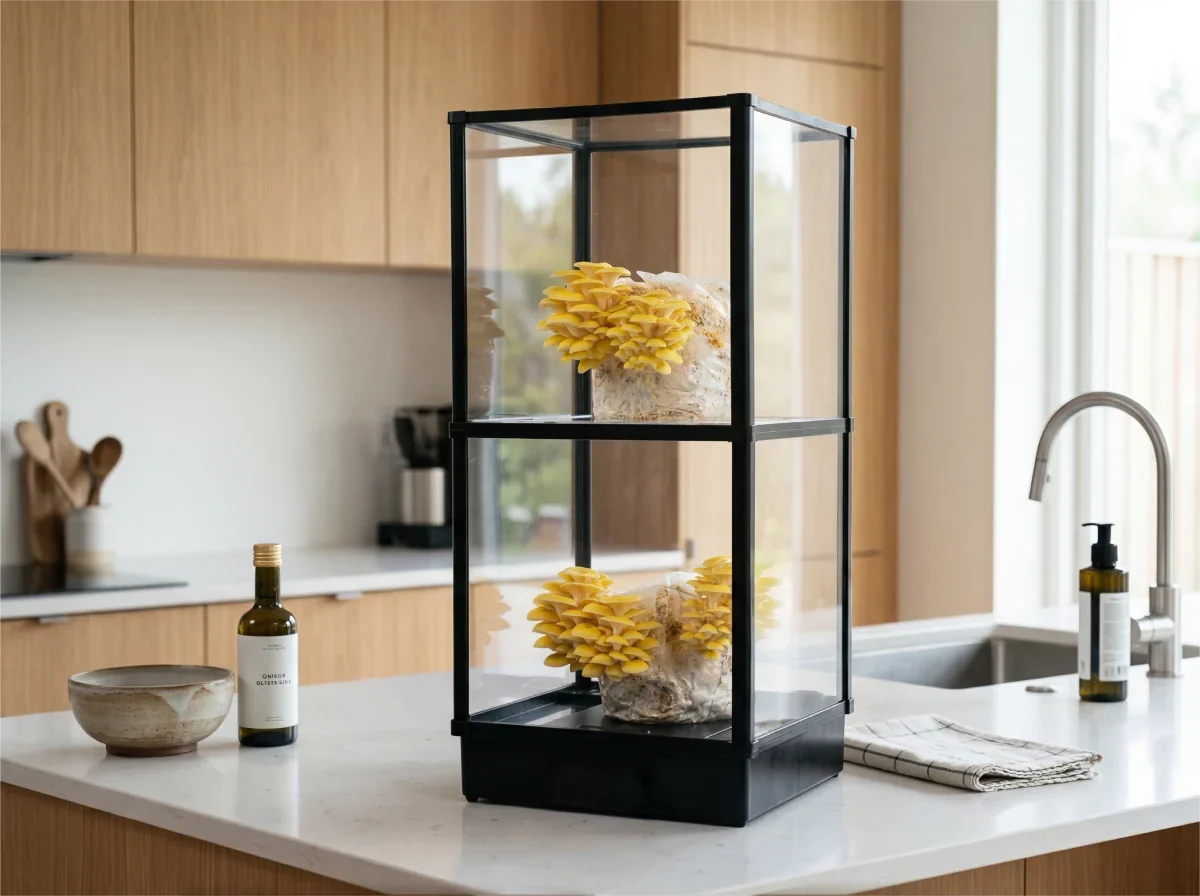
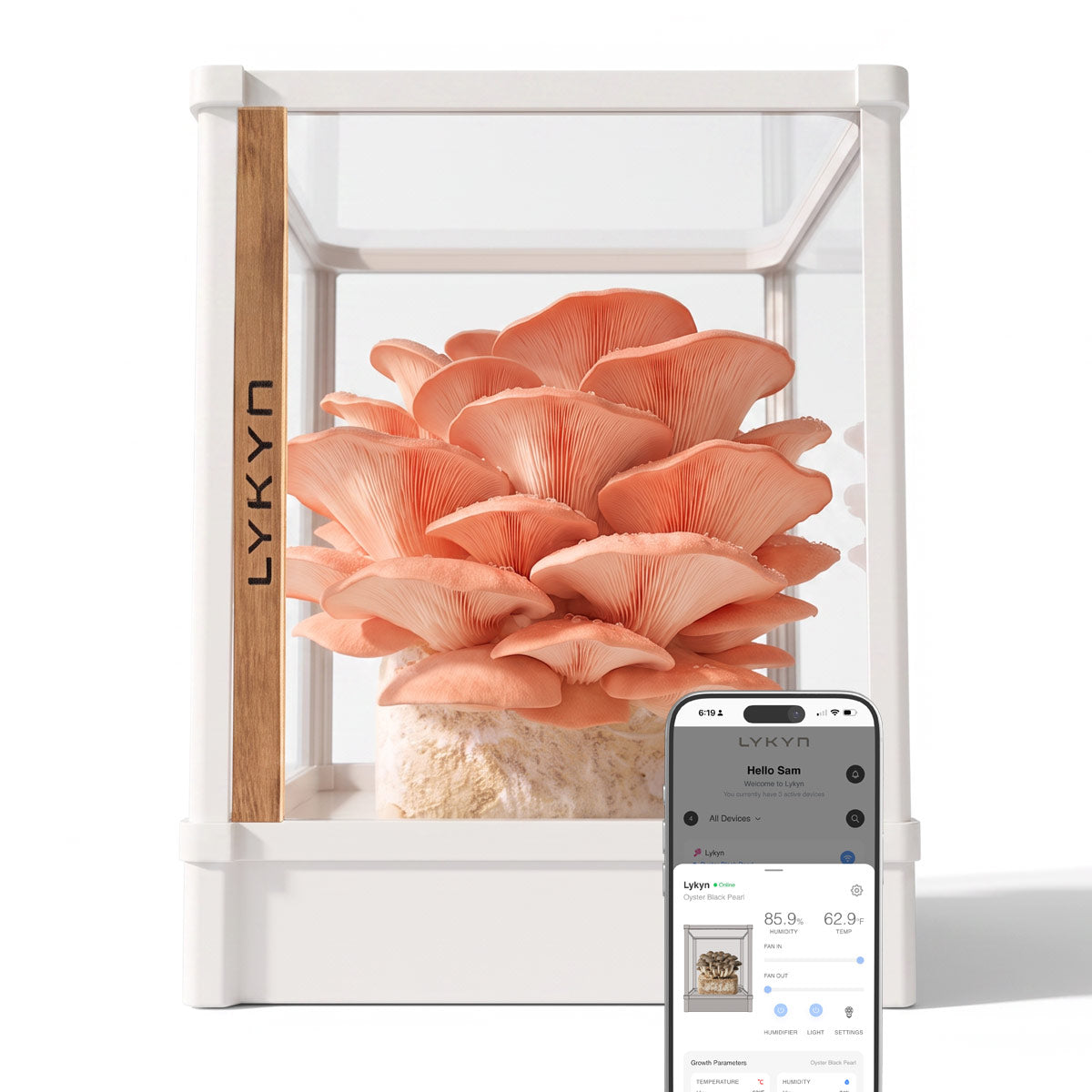
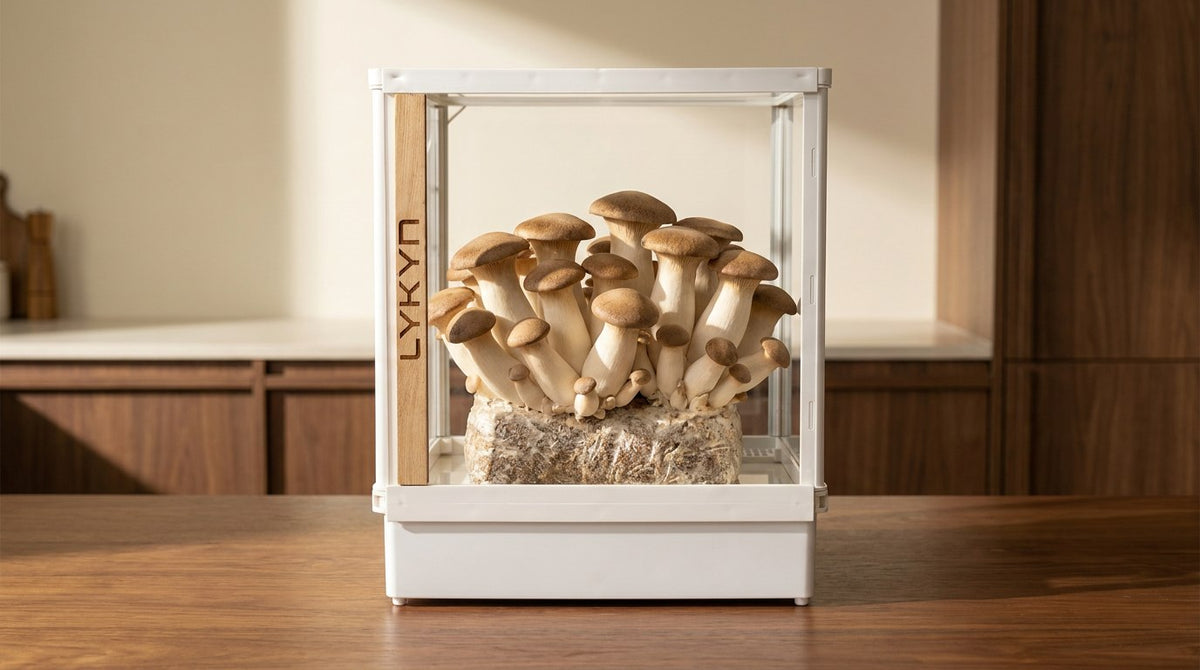
A sealed environmental chamber automates three tasks: humidity, fresh air exchange, and temperature monitoring. The Lykyn Smart Mushroom Grow Box is a stainless steel chamber with a built-in humidifier, circulating fan, and humidity/temperature sensors connected to a mobile app.
How it works: the chamber holds humidity between 85 and 95 percent without your input. The humidifier activates when RH drops below the set point (85%) and stops when it hits 92 percent. A timed fresh air exchange valve opens for 30 seconds every hour, replacing stale air with fresh air from the room, then closes. The sensors log temperature and humidity continuously, and the app notifies you if either drifts outside the species-specific band.
Labor commitment: under 5 minutes per week. You check the app (already there when you wake up or during lunch), confirm the numbers are green, and that is it. When the first flush is ready (10 to 14 days), you open the chamber, harvest, and prepare the next block.
Misting: zero. The humidifier delivers moisture to the air; you do not spray the substrate.
Success rate: 95 percent or higher. Once the block is loaded, the chamber holds the environment. You cannot accidentally open it every 30 minutes and crash the humidity. The physics are locked in.

When Manual Makes Sense and When Automation Wins
Manual works if your baseline room humidity is above 50 percent and you do not travel. A grower (60 to 75% baseline humidity year-round) growing one block every two months can succeed with misting and a simple humidifier. A grower with 25% baseline humidity, attempting two blocks per month, will waste 50 percent of blocks and 8 hours per month on failed attempts before switching to automation.
Automation wins in four scenarios: first, dry-climate homes (Arizona, California, Colorado, the Middle East, dry climates during winter heating). Second, apartments without humidity control; you cannot negotiate with your building's HVAC system. Third, anyone growing more than one block per month; the labor compounds, and one missed misting cycle cancels the entire flush. Fourth, anyone who travels regularly; a 5-day work trip and a manual chamber means a failed flush in week 2 of fruiting. The block sits in the chamber at 60% RH, the pins abort silently, and you come home to nothing.
Cost is secondary. A manual setup (humidifier, timer, hygrometer) costs 40 to 60 USD upfront and 2 to 3 USD per block in electricity (running the humidifier). An automated chamber is a higher capex, but the labor saved is real: 2 blocks per month for 12 months is 24 hours of misting and monitoring. At 40 USD per hour of labor (opportunity cost), that is 960 USD. Most growers recoup the chamber cost in the first 18 months through waste reduction and time savings.
The Mistake First-Time Growers Make With Humidity
Opening the chamber every 30 minutes to check progress crashes humidity by 15 to 20 percentage points every time. A grower props the lid open, looks at the pins, closes it, and the RH drops from 88 to 68 percent in under 2 minutes. The grower waits an hour, opens it again, and the cycle repeats. By day 5, the pins are drying and aborting. The grower thinks the humidity was never right, when in reality, it was the checking that killed the flush.
The fix: trust the numbers on the app (if using an automated chamber) or the hygrometer reading (if using a manual setup). Open the chamber once per day for exactly 30 seconds to harvest pins or observe, then close it immediately. The 30-second pulse will not crash humidity meaningfully. The sensory impulse to look every few hours is human; the actual yield improvement from checking is zero. The damage is measurable.
FAQ: Humidity, Temperature, and Automated Growing
What humidity do mushrooms need to grow?
Fruiting requires 85 to 95 percent RH. Below 80%, pins abort. Above 98%, mold pressure rises. Keep this window constantly. The most common failure is dipping below 80% for more than 2 consecutive days during the first 10 days of fruiting. If you are misting manually, you are almost certainly missing this target on at least 3 days per flush.
What temperature is best for growing mushrooms at home?
Species-specific. Oysters fruit best at 18 to 24 degrees Celsius (64 to 75 Fahrenheit). Shiitake is cooler, 15 to 21 degrees Celsius (59 to 70 Fahrenheit). Most home spaces stay in this range naturally. If your room is colder (basement at 12 degrees Celsius in winter), oysters will fruit slowly but will still fruit. If your room is warmer (25+ degrees Celsius), fruiting stalls completely. Avoid heat.
Can I grow mushrooms without a humidifier?
Only if your baseline room humidity is above 60 percent and you mist 4 times daily without missing a single day. If you live in a dry climate, have heating on in winter, or travel, then no. A humidifier is mandatory. A basic 30 USD ultrasonic humidifier running 4 to 6 hours daily is enough for one block at a time. If you attempt this without one in a dry climate, you will fail 8 out of 10 times and abandon the hobby after the second flush.
How often should I mist a grow kit?
During fruiting, 3 to 4 times daily. Morning (5 to 10 seconds per spray, light mist), midday, late afternoon, and evening. Each misting takes under 2 minutes. The goal is to refresh the air humidity, not to soak the substrate. Oversaturated substrate invites contamination. If you are using an automated chamber, misting is unnecessary; the built-in humidifier handles this automatically.
Is an automated chamber worth the money?
Yes, if you grow more than one block every two months. The cost is recovered in waste reduction (fewer aborted flushes) and time savings (10 to 15 hours annually). If you are growing a single experimental block in a humid apartment, a manual setup is fine. If you are growing as a hobby or exploring a second flush, automation becomes cost-effective. The Lykyn chamber removes the failure mode entirely; almost every block succeeds.
What happens if humidity drops below 80%?
During the first 10 days after pinning, the pins dehydrate and abort within 24 to 48 hours. The block sits in the chamber at 60 to 70% RH, the pins shrivel, and they do not recover. The flush is lost. If humidity drops below 80% after day 10 (when pins are mature and actively expanding), the fruiting slows and yields lower weights, but the flush does not abort completely. The first 10 days are critical. One missed misting in a dry room during this window can kill the entire first flush.
Next Steps
If you are building a manual setup, start with a basic 30 USD ultrasonic humidifier, a digital hygrometer, and a timer. Run the experiment with one block, track your humidity and temperature daily in a notebook, and observe where you fail. Most growers learn their baseline humidity this way and discover whether automation is necessary for their space.
If you want to skip the trial-and-error, a sealed chamber like the Lykyn Smart Mushroom Grow Box holds the environment for you. Set it once, check the app, harvest. No misting, no guessing, no failed flushes.

Related Reading
- Can You Grow Mushrooms in an Apartment or Bedroom? A Small-Space Setup Guide
- Mushroom Grow Kit vs Chamber vs DIY Monotub: Full 2026 Setup Comparison
Ready to dial in humidity and temperature automatically? The Lykyn Smart Mushroom Grow Box holds 85 to 95% RH without misting, monitors temperature continuously, and alerts you via app when conditions drift. No failed flushes from humidity crashes. No more guessing. Start growing today.


Share:
Lion's Mane vs Oyster Mushroom Kit for Beginners 2026
How to Grow Mushrooms in an Apartment: Quiet, Small, Renter-Friendly Setups