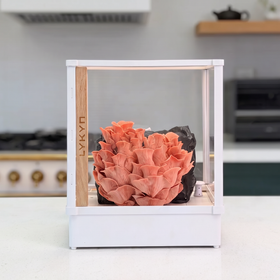



Quick answer: Yes, you can grow fresh gourmet mushrooms in an apartment, even a studio. You need three things: a footprint under 1.5 square feet, a setup that runs under 40 dB so your neighbors and your sleep both stay intact, and a species that tolerates the humidity drift of a typical rental. Most renter-blockers (drilling, ducting, smell, landlord drama) are myths or fixable in ten minutes. Here are four real apartment setups, the species that actually work, and why an automated chamber is the closest thing to a "set it and forget it" answer if you don't want a hobby that doubles as a chore.
What apartment growers are actually worried about
We've answered hundreds of customer emails over the past two years, and the apartment-grower inbox has the same five concerns on repeat. If any of these sound like you, you're in the right place.
1. Noise. A lot of DIY fruiting chamber tutorials end with a humidifier from Amazon and two computer fans wired to a relay. That setup runs at 50-65 dB. In a studio, that's the sound of a small office printer running 24/7 next to your bed. Not workable.
2. Smell. Mushrooms have a smell. Some are very faint (lion's mane, reishi). Some are noticeable during fruiting (pink and yellow oysters). None of them smell like a problem in a one-bedroom, but if you share a wall, the species you pick matters.
3. Space. The average US studio is 500 sq ft. You don't have a "grow room." You have a counter, a closet shelf, or the space under your desk. Anything bigger than a microwave is going to lose the negotiation.
4. Landlord rules. Renters can't drill, can't modify HVAC, and can't add anything that looks like a permanent fixture. If a setup needs a duct cut through drywall or a hose running into your sink, it's not renter-friendly. Period.
5. Contamination in a small space. The honest version: contamination risk is the same in 500 sq ft as it is in 5,000. The difference is that a contaminated bag in a small apartment is much closer to your nose and your couch. Containment matters more in tight quarters, not less.

The apartment grower's footprint and noise checklist
Before you spend a dollar, run any kit or chamber through this:
- Footprint under 1.5 sq ft. That's roughly 18 inches square. If it's bigger, you'll resent it by week two.
- Noise under 40 dB. 40 dB is a quiet library. Above that, you'll hear it across a small apartment, especially at night.
- No drilling or ducting. Plug-and-play only. If it needs a hole in your wall, it's not a renter setup.
- Self-contained humidity. A built-in water reservoir beats anything that has to connect to plumbing or sit in a tub of water.
- USB-C or standard outlet. No 240V, no special circuits.
- Spill containment. If it can leak water onto a wood floor, you'll be paying a security deposit lesson.
Those six bullets are what separate "apartment-friendly" marketing copy from a kit that actually fits your life.
4 real apartment setups that work
Setup 1 - The kitchen counter beginner
Best for: total beginners, gift recipients, anyone who wants their first harvest in under two weeks.
What it is: a ready-to-fruit grow bag or block on the counter, misted twice a day. Cost: $20-40. Footprint: roughly the size of a loaf of bread. Total commitment: about ten days of attention before harvest.
What you trade: yield is on the lower end (about half a pound per bag), the bag dries out fast in a heated apartment, and you have to be home to mist it. If you travel or work long days, the bag will stall by day four.
The verdict: a great way to find out if you actually enjoy this. A bad way to do it as a habit.
Setup 2 - The closet shelf grower
Best for: people with one spare closet shelf and a willingness to do a tiny bit of DIY.
What it is: a small fruiting chamber (a clear plastic tote with holes, or a tabletop chamber) placed on a closet shelf. Closet humidity is naturally a few points higher than your living room, which helps. Add a small clip fan for fresh air exchange (FAE) and you have a real grow.
What you trade: closet temps in winter can drop into the 50s, which slows oysters and stalls lion's mane. You also can't see your grow without opening the closet, so the "I get to watch it grow" appeal is reduced.
Setup 3 - The under-desk grow
Best for: home-office workers who want their mushrooms in their eye line.
What it is: a compact automated chamber tucked under your desk on a side caddy or low cart. The chamber runs on its own schedule, and you check on it between meetings. Most office spaces sit at the temperature mushrooms actually want (65-72 F), and the white noise of a quiet chamber masks neatly into ambient HVAC.
What you trade: a foot of legroom. That's about it.
Setup 4 - The integrated kitchen counter
Best for: people who cook with what they grow.
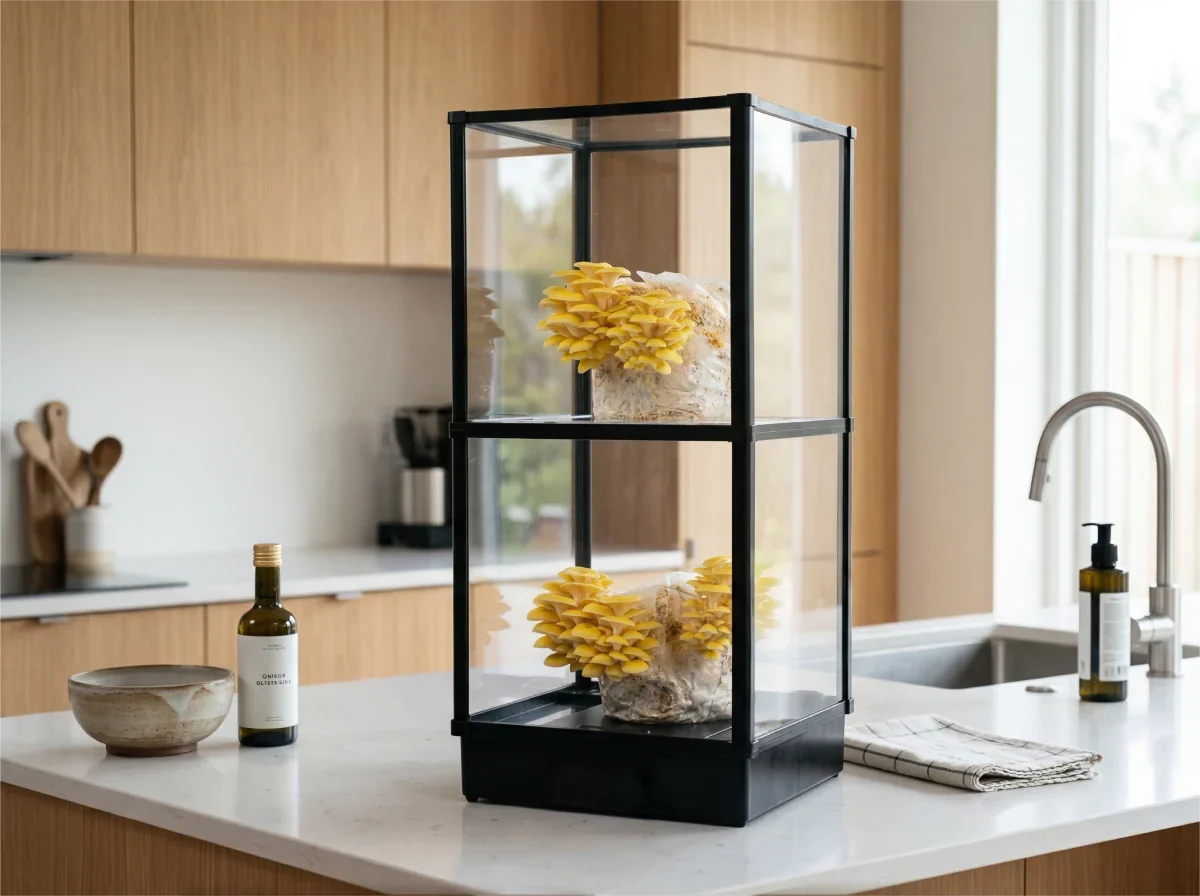
What it is: a smart chamber sitting permanently on the kitchen counter, next to your coffee setup or where a stand mixer would live. Pull a block, watch it pin in 3-5 days, harvest into the pan that same week. The "fridge-to-pan" radius is six inches.
What you trade: counter space, which in an apartment kitchen is currency. The chamber needs to earn its square foot by actually replacing things you buy. If you eat gourmet mushrooms more than once a month, the math gets favorable fast.
The smell question. An honest answer
We get this question a lot, so here's the unvarnished version.
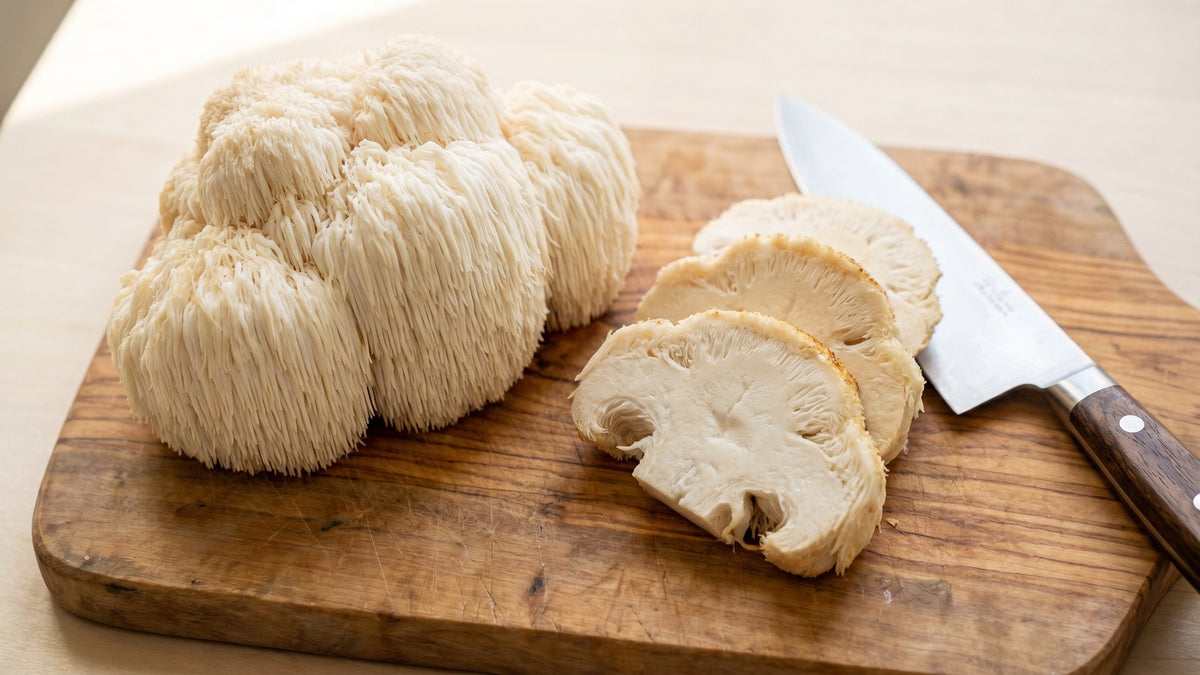
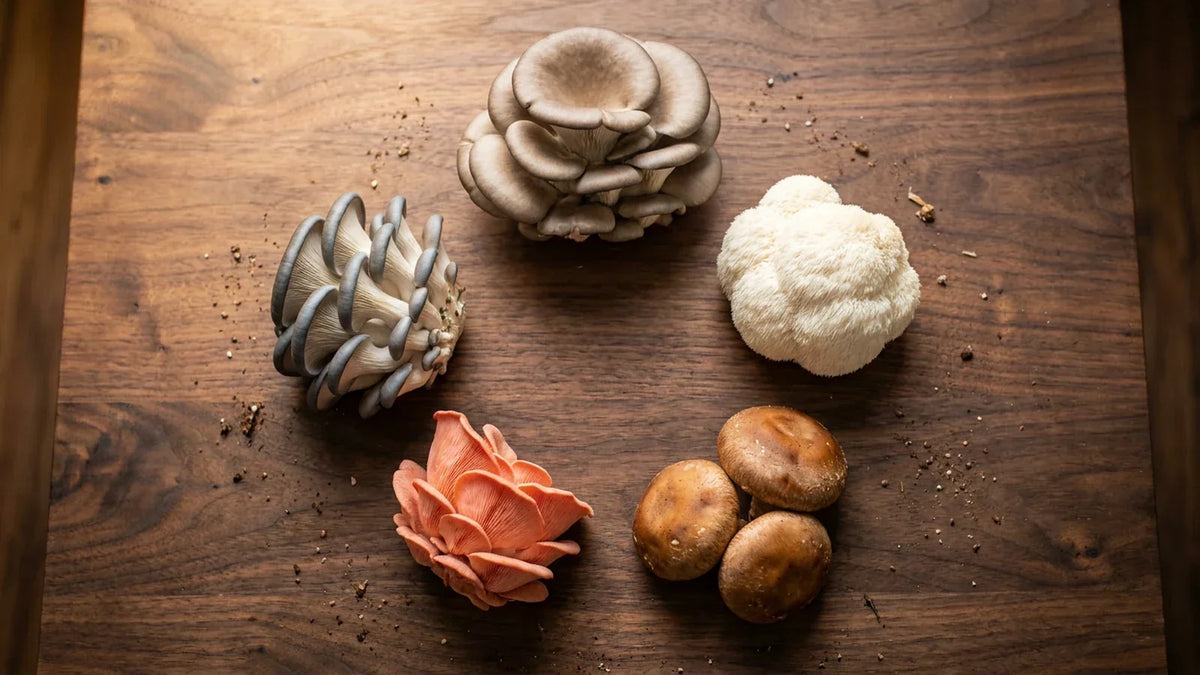
Lion's mane: very mild. Slight earthy note when fruiting, basically zero when colonizing or resting. Apartment-safe even in a studio.
Reishi: essentially no smell. The reishi conks just sit there looking beautiful.
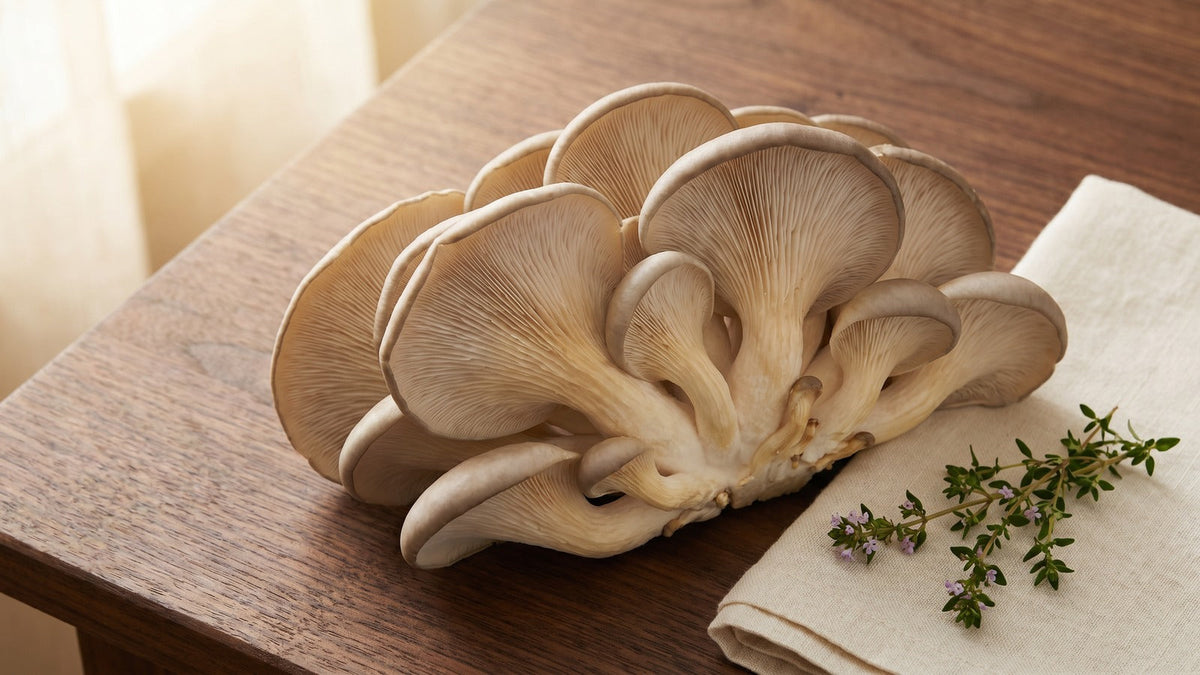
Pink oyster, yellow oyster, blue oyster: noticeable during fruiting. Most people describe it as a clean, savory, almost seafood-like aroma during the 3-4 days the cluster is mature. It's not bad. It's not invisible either. If you share a wall and your neighbors are sensitive, do oysters in a closet with the door cracked rather than the open kitchen.
King trumpet: mild, slightly nutty. Apartment-safe.
Shiitake: mild during fruiting, but the harvest day smells distinctly mushroomy in a "fresh sushi restaurant" way. Most people like it.
Two practical notes: the smell is strongest in the last 48 hours before harvest, and it dissipates the moment you harvest. It does not linger in fabric, walls, or carpet. We have never had a customer report a deposit issue tied to mushroom smell in two years of shipping.
Best species for apartment dwellers
If you're picking one species for apartment life, pick from these three.
Lion's mane. The apartment-grower's species. Mild smell, beautiful to watch, harvests in 10-14 days from a fruiting block, and the cooking applications are wide (crab cake substitute, "lobster" tail, even tea). Lion's mane is also forgiving on humidity drift, which a typical apartment will throw at it.
Blue oyster. Fast (11-15 days), high yield (1 to 1.5 lbs on a 5 lb block first flush), and visually dramatic. The clusters fan out and double in size overnight. Some smell during fruiting, but most apartment growers consider it a feature, not a bug. Read our blue oyster mushroom growing kit guide for the full picture.
King trumpet. Slower (12-16 days) but the lowest-smell, most "meaty" mushroom you can grow at home. King trumpet stems sear in a pan like scallops. If you cook a lot, this is the species that will pay for itself.
Skip shiitake as your first apartment grow. The cycle is longer (21-28 days), and shiitake blocks like a temperature swing during initiation that's hard to engineer in a steady-state apartment. Once you have a setup that works, shiitake is a great second species. Just not first.
Fuel Your Mushroom Journey
Smart Mushroom Grow Chamber
Plug-and-play smart chamber with humidity, light, and airflow dialed in for every species. Beginners harvest their first flush in days, not months.
Add to cart $299Why an automated chamber is a renter's best friend
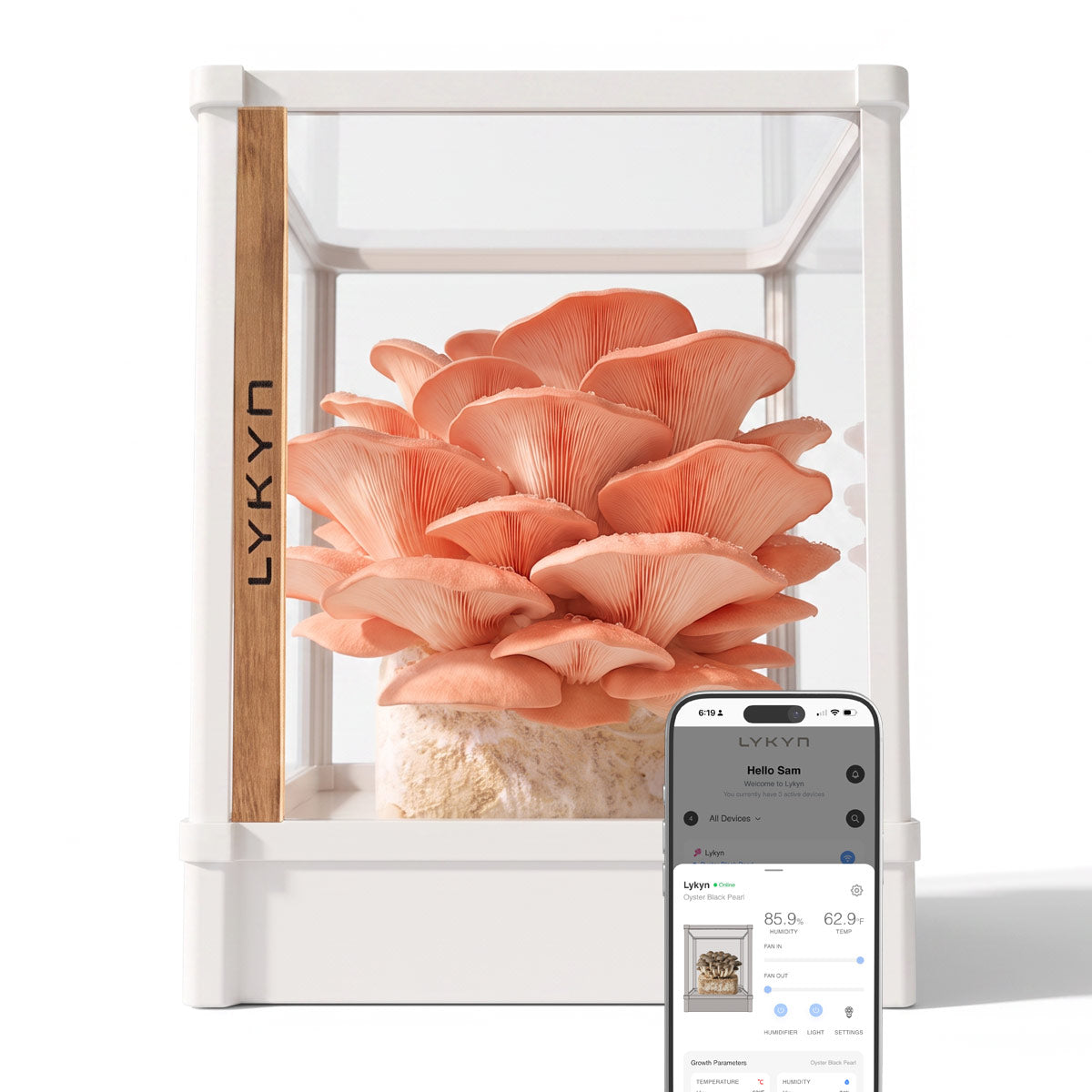
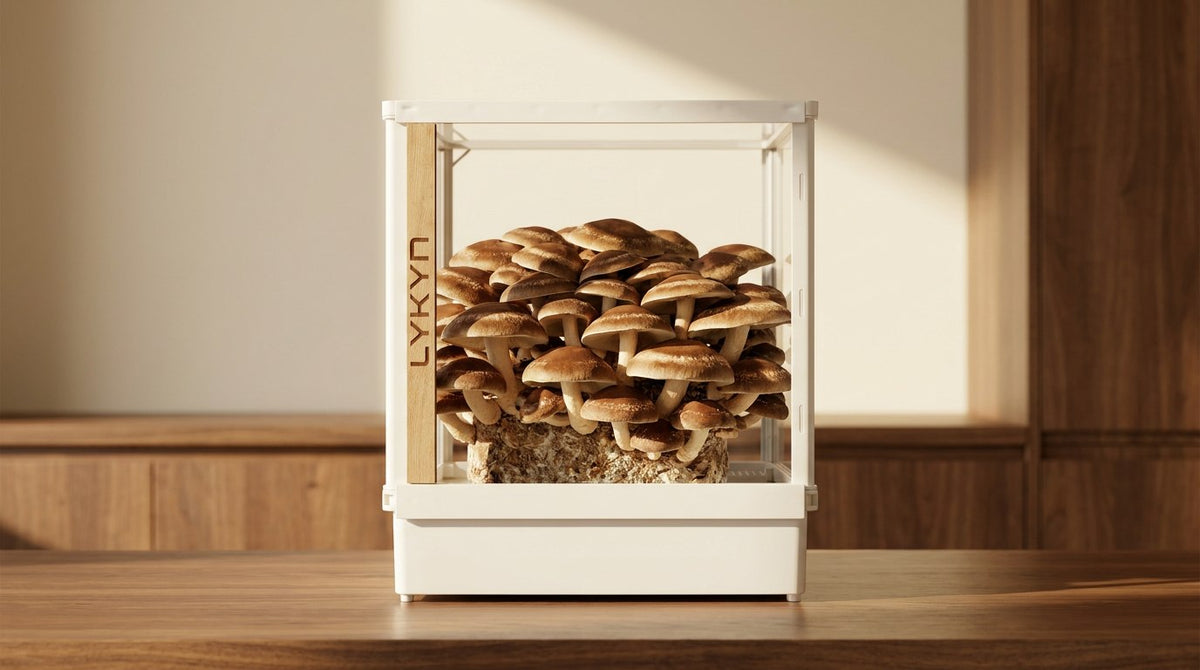
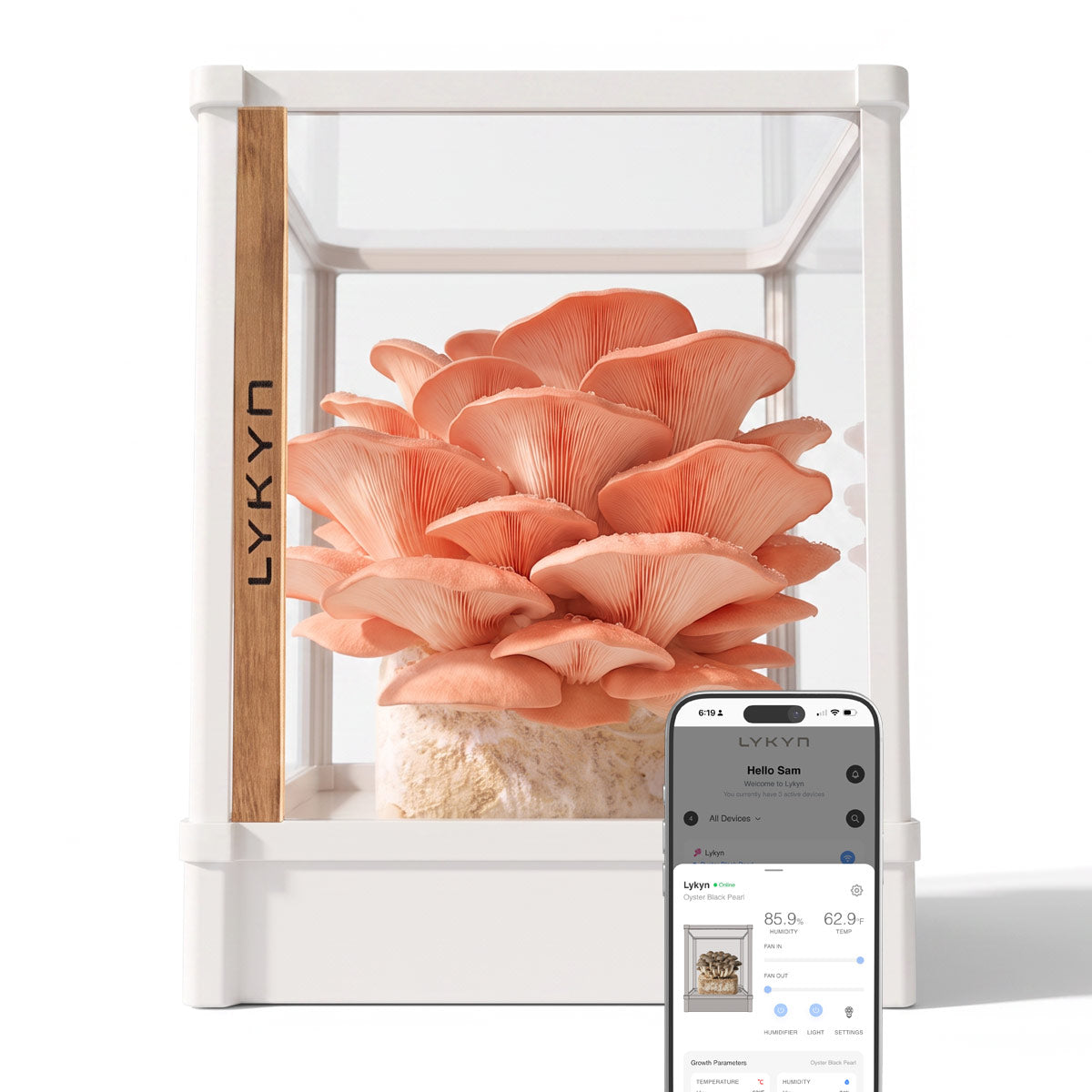
Here's the part where we're honest about what we sell. The Lykyn Smart Chamber was designed by two engineers who lived in apartments and were tired of the trade-offs above. Specifically:
- Under 35 dB. Quieter than a refrigerator hum. We measured it because we had to live with it.
- USB-C, 5W typical draw. Plugs into the same brick your laptop charges from. No 240V, no surge strip required. About 2.2 kWh per month. Roughly 30 cents on most apartment electric bills.
- 30 x 30 x 30 cm internal, footprint about the size of a microwave. It fits where you'd put a stand mixer.
- 2.8 L sealed water tank, ultrasonic humidifier. No daily misting, no condensation puddles on the counter, no hose to a sink.
- App-controlled, but offline-capable. Once it's set up, no cloud dependency. Wi-Fi can drop and it keeps running.
- Foldable shipping form. The chamber ships flat. If you move apartments, it packs back down without disassembly tools.
None of those are marketing points. They are the literal differences between a chamber that works in a 500 sq ft studio and one that doesn't.
The honest counter-argument: if you just want to grow one block and see what happens, a $30 spray-and-grow bag is the right choice. The chamber is for the second grow, the fifth grow, the people who realize this isn't a hobby. It's a small kitchen appliance that pays for itself in 12-15 cycles of fresh gourmet mushrooms.
Renter-safe tips (no drilling, no drama)
- Spill mat first. Put any chamber or kit on a silicone baking mat or a cheap bamboo cutting board. Wood floor + accidental humidifier spill = unhappy landlord. Two-dollar mat solves it.
- Don't tape anything to walls. If you need to mount a temperature/humidity sensor, use a 3M Command strip. They come off cleanly at move-out.
- Filtered air is non-negotiable in small spaces. A sealed and app-controlled FAE intake (built into chambers like ours) keeps spore release contained. Old DIY chambers used unfiltered fans, which in a 500 sq ft apartment means visible spore prints on every surface within 6 weeks. Not a deal-breaker. Clean with a damp cloth. But a built-in filter prevents the problem entirely.
- Empty the humidifier when you travel. Mushrooms can pause a flush by going dormant. Standing water cannot. Drain it if you're gone more than 5 days.
- Pick a corner with airflow. Don't shove a chamber against the back wall behind a couch. Mushrooms need fresh air exchange, and so does your nose. A counter with at least 4 inches behind the unit is plenty.
- Compost the spent block. A 5 lb spent fruiting block goes to compost or, in a pinch, into a houseplant pot as mulch. Don't trash it. Your downstairs neighbor will smell it. (Yes, this is a real customer email we got once.)
Frequently asked questions
Can I grow mushrooms in a studio apartment?
Yes. The setups that work best in studios are kitchen counter (Setup 1 or 4) or under-desk (Setup 3). Closet (Setup 2) works only if your closet has airflow. Sealed closets get too humid and contaminate fast.
Will my landlord care that I'm growing mushrooms?
Almost certainly not. Mushroom growing in a sealed chamber or bag has zero impact on the unit, no fixtures, no plumbing, no electrical draw worth noticing. If your lease has a "no commercial operations" clause, growing for personal use is hobby cultivation, the same category as a herb garden on your windowsill.
Do mushrooms make my apartment humid?
A sealed chamber contains its own humidity. The apartment itself stays within 1-2% of normal. An open spray-and-grow bag releases a small amount of humidity locally, similar to having a few houseplants. Neither will make your apartment feel damp.
What's the quietest mushroom grow setup?
A passive grow bag is silent. Among active chambers, the Lykyn Smart Chamber measures under 35 dB. Quieter than a refrigerator. Older DIY shotgun fruiting chambers with computer fans run 45-55 dB, which is audible in any quiet room.
How small can a mushroom growing setup be?
The smallest practical fruiting chamber is about 12 inches square. Below that, the airflow geometry breaks down (CO2 builds up, pins get spindly). A dedicated smart chamber lives in roughly a microwave-sized footprint. A grow bag lives in a breadbox.
Ready to start your first apartment grow? The Lykyn Smart Chamber ships next-day with a starter mushroom block. Quiet under 35 dB, USB-C powered, and small enough to live on a counter without earning a side-eye from your roommate. If you'd rather start smaller, our blue oyster fruiting block is the ten-dollar, two-week version of the same idea.
Fuel Your Mushroom Journey

Smart Chamber. Bone White Single
- 2.8L tank, 90% humidity automatic
- App-controlled, plug-and-play
- 6 lb block ceiling, in stock

Smart Chamber. Obsidian Black Single
- Same hardware as Bone White
- Matte black premium finish
- Pairs with any kitchen palette




Share:
Mushroom Grow Kit Temperature & Humidity: Full Setup Guide 2026
The Seven Stages of Automated Mushroom Cultivation (Complete Guide 2026)