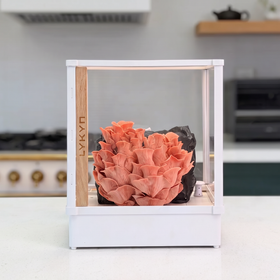



Mushroom cultivation follows a repeatable biological cycle. Each stage triggers the next, from dormancy to active fruiting to harvest. Understanding these stages transforms growing from guesswork into sequences you can observe, measure, and eventually automate. The seven-stage framework gives growers a mental model for what happens inside the block, what to watch for, and when intervention is needed or unnecessary.
The Seven-Stage Cultivation Framework
Every mushroom crop, whether grown manually or inside an automated chamber, moves through the same biological sequence. Below is a high-level summary of each stage:
- Stage 1: Substrate Preparation: Creating the nutrient-rich base (sawdust, straw, grain) that mushroom mycelium will colonize.
- Stage 2: Inoculation with Spawn: Introducing mushroom mycelium to the substrate in a sterile environment.
- Stage 3: Colonization: Mycelium spreads throughout the substrate, digesting nutrients and building strength.
- Stage 4: Consolidation: Post-colonization rest period where the mycelium binds the substrate together.
- Stage 5: Pinning (Shock): Environmental trigger (temperature, light, humidity, fresh air) signals mycelium to switch into fruiting mode.
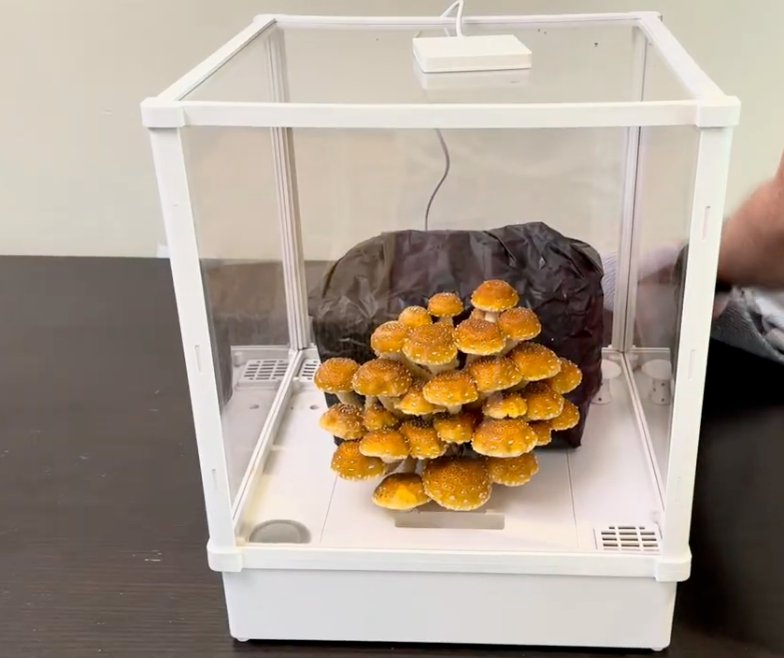
- Stage 6: Fruiting: Rapid cluster growth. Mushrooms emerge, expand, and mature over days.
- Stage 7: Harvest and Recycling: Harvesting mature fruit bodies and reusing or composting the spent block.
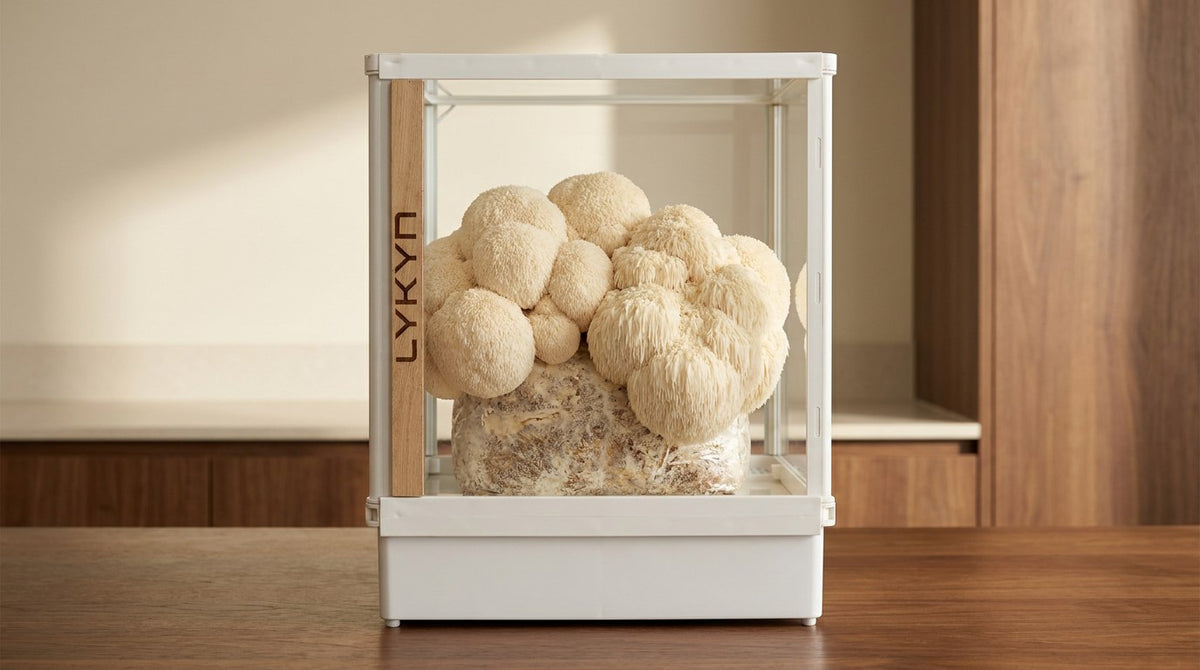
These seven stages can be condensed into four operational anchors: Colonize (stages 1-4), Shock (stage 5), Fruit (stage 6), Recycle (stage 7). The Lykyn Smart Mushroom Grow Box handles colonization, shock, and fruiting automatically. You manage preparation and recycling.
Stage 1: Substrate Preparation
Substrate is the food. Mushroom mycelium cannot digest wood fiber directly. It requires substrate that has been heat-sterilized and, depending on the species, supplemented with nutrients.
Hardwood species like shiitake and oyster grow on sawdust supplemented with wheat bran (1-5% by weight) and water. Oyster mushrooms also thrive on straw. Reishi prefers sawdust. Lion's mane grows on hardwood sawdust with added bran.
Sterilization kills competing molds and bacteria. Home growers use pressure cookers or steam-in-bags methods. Pressure-cooked substrate reaches 15 PSI for 90 minutes. Mistakes in this stage lead to contamination before colonization even begins.
Most home growers skip substrate preparation entirely. Pre-inoculated blocks arrive sterile, colonized, and ready for the next stage. Lykyn refill blocks eliminate this preparation step, removing the single largest source of contamination and failure in home cultivation.
Stage 2: Inoculation with Spawn
Spawn is mycelium propagated on grain or sawdust. Inoculation is the transfer of spawn into sterilized substrate. This is where sterile technique matters most. Mold and bacteria compete for the same space. Mycelium grows faster than most competitors, but in the first 72 hours after inoculation, the risk of contamination is highest.
Manual inoculation requires laminar flow hoods or still-air boxes, flame-sterilized needles, and 30 minutes of focused aseptic work per batch. Even with best practices, first-time growers see contamination rates around 30%. Experienced cultivators reduce this to 5-10%.
Lykyn refill blocks arrive pre-inoculated. The spawn is already established inside the substrate. Your role is to provide the right environment for mycelium to grow. No aseptic work. No contamination risk at this stage.
Stage 3: Colonization
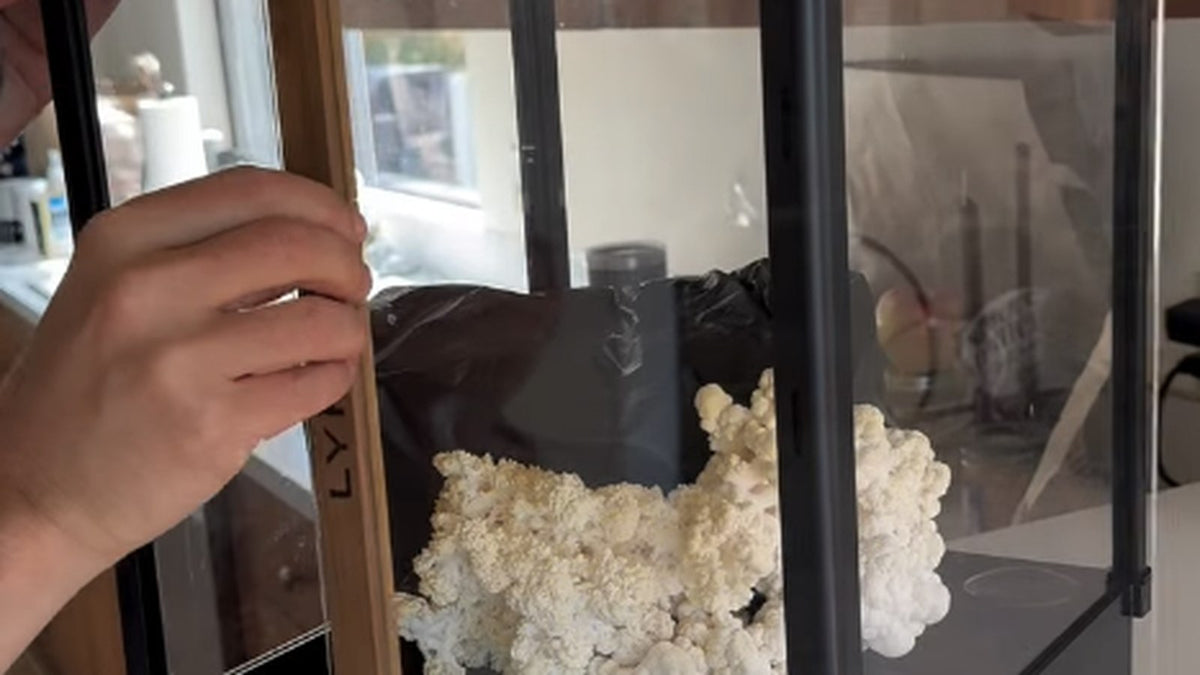
Colonization is mycelium spreading. Bright white mycelium threads (hyphae) branch through the substrate, breaking down nutrients and building the fungal network. A healthy colonizing block looks like it is covered in white cotton. The process is audible under magnification: enzymatic breakdown produces soft cracking sounds as substrate breaks apart.
Colonization time depends on species, temperature, and substrate recipe. Pre-inoculated blocks colonize in 10-21 days at 68-75 degrees Fahrenheit. Oyster mushrooms colonize faster (10-14 days). Shiitake takes longer (18-25 days). Lion's mane is moderate (14-18 days).
Manual growers store blocks in dark closets or tents. Light is unnecessary during colonization and can slow progress. Lykyn chambers keep blocks dark during this stage, maintaining stable temperatures and humidity. The chamber display shows colonization progress via visual inspection.
Sensory signal for complete colonization: the block face is uniformly white. Run your fingers across it lightly. You may feel slight condensation, a sign the mycelium is producing moisture as it digests. The block may smell faintly earthy or like fresh mushrooms. No foul smell indicates no contamination.
Stage 4: Consolidation
After colonization is visually complete, the block needs a rest period. Consolidation is the phase where mycelium finishes binding the substrate into a cohesive mass. This stage lasts 3-7 days. It is invisible. Nothing appears to change.
Skipping consolidation is a common first-time mistake. Growers see full colonization and immediately trigger fruiting. The result is weak flushes, small clusters, and premature abort rates around 15-25%. Allowing consolidation produces stronger, larger first flushes.
Lykyn chambers automatically enforce this rest period. After colonization is detected, the chamber pauses environmental triggers for 5 days, allowing the mycelium to set before shock is applied.
Stage 5: Pinning (Shock)
Pinning is the moment mycelium switches from growth mode into reproduction mode. It happens when environmental conditions signal reproductive urgency: cooler temperature, increased humidity, fresh air circulation, and light exposure.
Manual growers trigger pinning by hand. They move the block from a closet (dark, stable temperature) to a fruiting chamber or windowsill (light, temperature fluctuation, fresh air). They mist the block 2-3 times daily to spike humidity. They monitor the block for pin emergence over 3-7 days.
Lykyn chambers automate this transition. Once consolidation is complete, the chamber reduces temperature by 5-8 degrees, increases humidity to 85-95%, introduces fresh air cycles, and activates the light. The app notifies you when the first pins emerge.
Species respond differently to shock. Oyster mushrooms pin in 2-4 days. Shiitake takes 5-10 days. Lion's mane can take 7-14 days. Reishi is slowest at 14-21 days from shock to visible primordia.
Stage 6: Fruiting
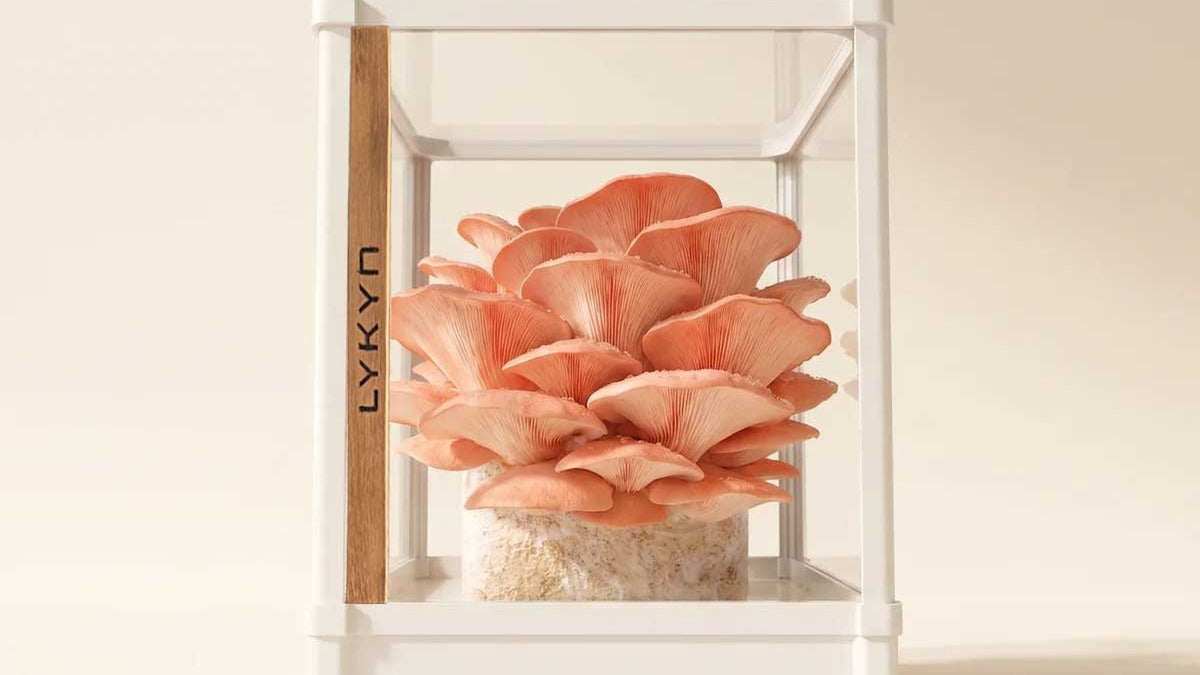
Fruiting is rapid expansion. Pins absorb water and elongate into mature mushroom bodies. On oyster mushrooms, pins double in size every 24 hours for 3-5 days. Shiitake growth is slower: 5-8 days from pin to harvest size. Reishi and lion's mane are intermediate at 4-7 days.
Species smell distinct at fruiting. Oyster mushrooms release an anise and seafood note. Lion's mane smells fresh, like raw shellfish or ocean spray. Shiitake has a deep umami earth smell, almost like beef broth. Reishi produces a dry wood and resin aroma, less perfumed than the others.
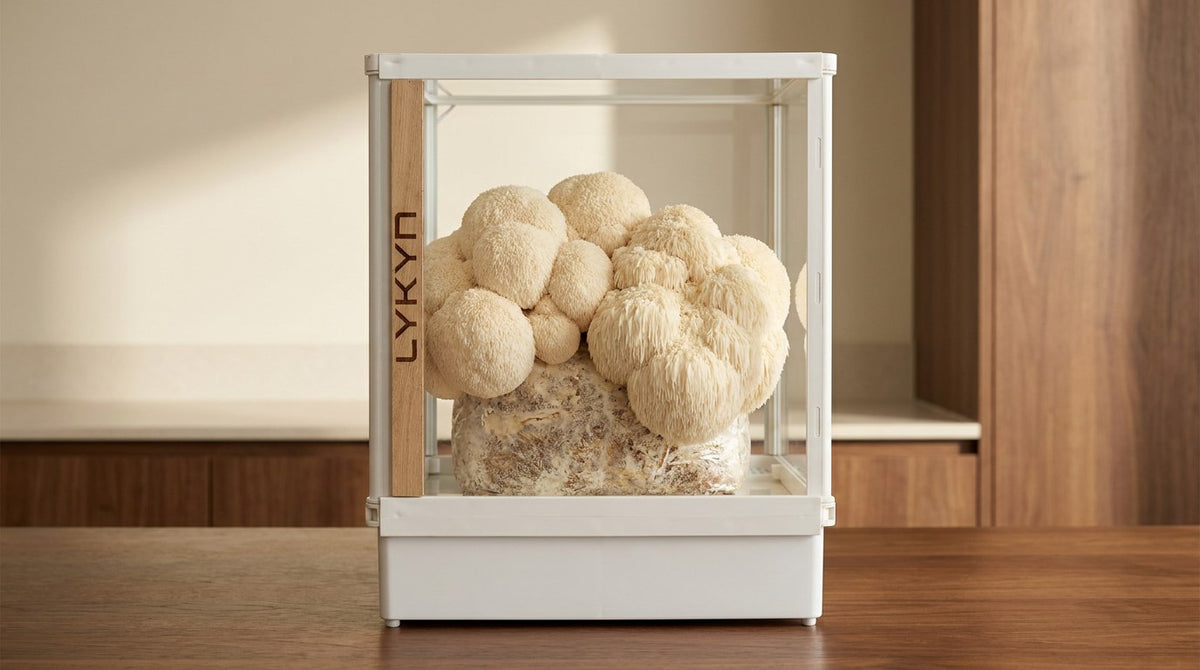
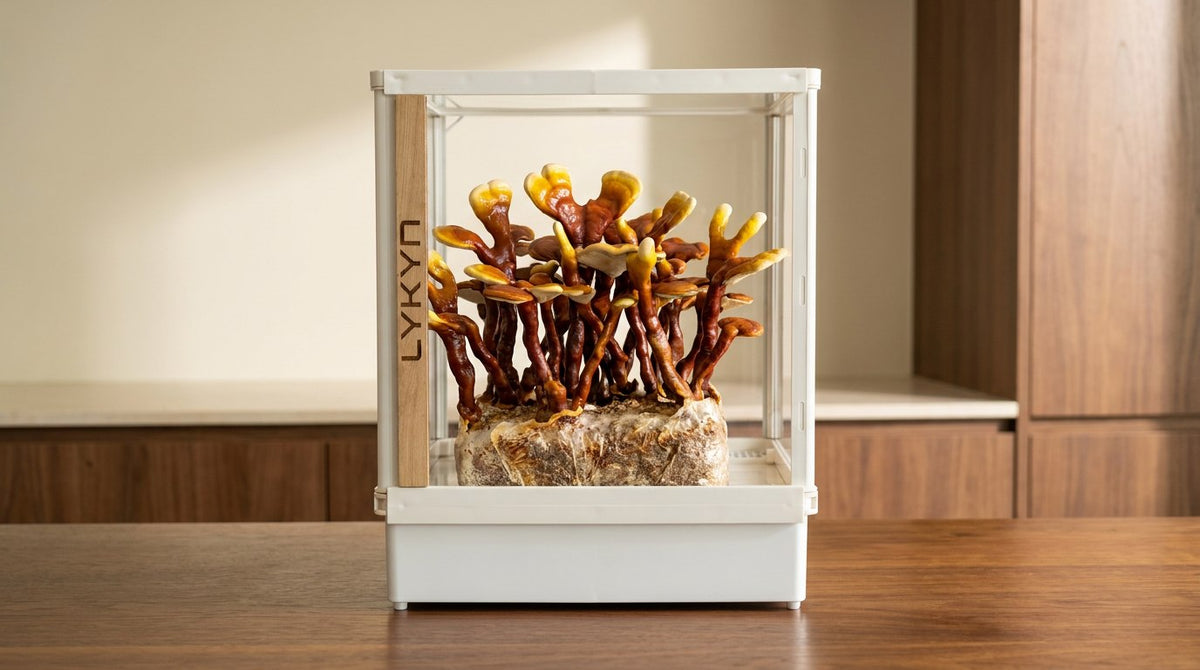
Visual cues signal harvest readiness. Oyster caps flatten and the gills darken from pale to tan. The veil at the cap edge thins. Shiitake caps curl up at the edges and the gills darken to brown. Lion's mane color shifts from pale white to cream; the tips begin to tan slightly. Reishi hardens and may crack at edges when fully mature.
Humidity and fresh air during fruiting matter. Clusters abort (turn brown and stop growing) if humidity drops below 80% or fresh air exchange is less than 4 times daily. Lykyn chambers monitor both and notify you if humidity dips. The automated fan cycles fresh air without you checking a gauge.
Touching or spraying clusters directly can introduce bacterial spot, a light-brown lesion on the caps. Lykyn's indirect ultrasonic humidifier maintains humidity without wetting the fruit bodies directly, reducing disease risk.
Stage 7: Harvest and Recycling
Harvest timing depends on intended use. Oyster and shiitake are best at full maturity when caps are fully open. Lion's mane is harvested young, before the tips turn dark brown, if you prefer tender texture, or at full tan color for nuttier flavor. Reishi is dried fresh off the block, crack and fracture patterns visible.
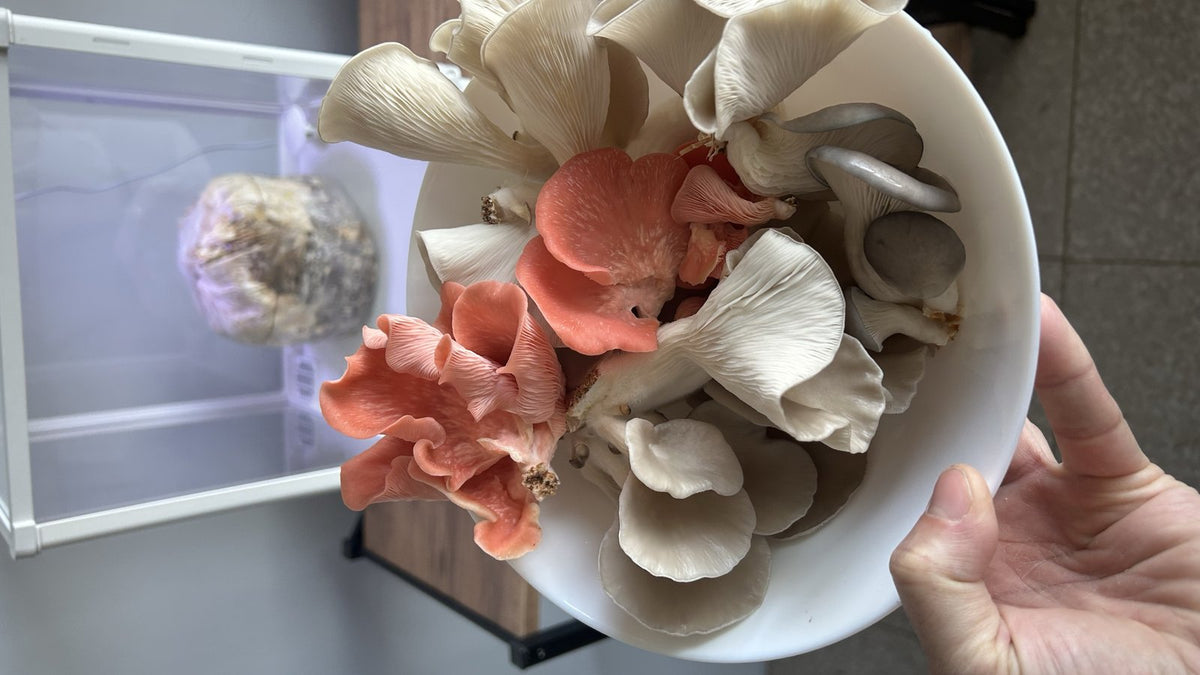
Oyster mushrooms twist off at the base. A firm quarter-turn and they release from the mycelium. Shiitake and lion's mane cut with a knife at the base. Reishi is pruned or carefully twisted off.
After harvest, the spent block has value. Most growers compost it. Garden beds enriched with spent blocks grow larger vegetables and stronger plants due to residual nutrients and beneficial fungal biology. Spent blocks can also be rehydrated and forced into a second flush. Soak the block in cold water for 12-24 hours, apply shock again, and wait 7-10 days for smaller second flushes.
The Lykyn app tracks flushes and notifies you when the block is spent (no growth after 2-3 successive shock attempts). At that point, the block enters the recycling step: compost or garden amendment.
How Lykyn Handles All Seven Stages
Stage 1 (Preparation): Lykyn refill blocks arrive sterile and ready. No substrate preparation required.
Stage 2 (Inoculation): Blocks are pre-inoculated. You unbox and place them in the chamber. No inoculation work on your end.
Stage 3 (Colonization): The chamber maintains 70-72 degrees and 65% humidity. The LED is off. You receive app notifications at day 5, day 10, and day 15 showing colonization progress via visual recognition. By day 21, colonization is typically complete.
Stage 4 (Consolidation): The chamber holds stable conditions for 5 days after colonization is marked complete. Temperature and humidity remain constant. No environmental changes trigger premature fruiting.
Stage 5 (Pinning/Shock): On day 26 (day 21 colonization plus 5 consolidation), the chamber reduces temperature to 65 degrees, increases humidity to 90%, activates the LED, and starts fan cycles every 6 hours. The app sends a push notification: "Pinning phase started. Expect first mushroom pins in 3-7 days."
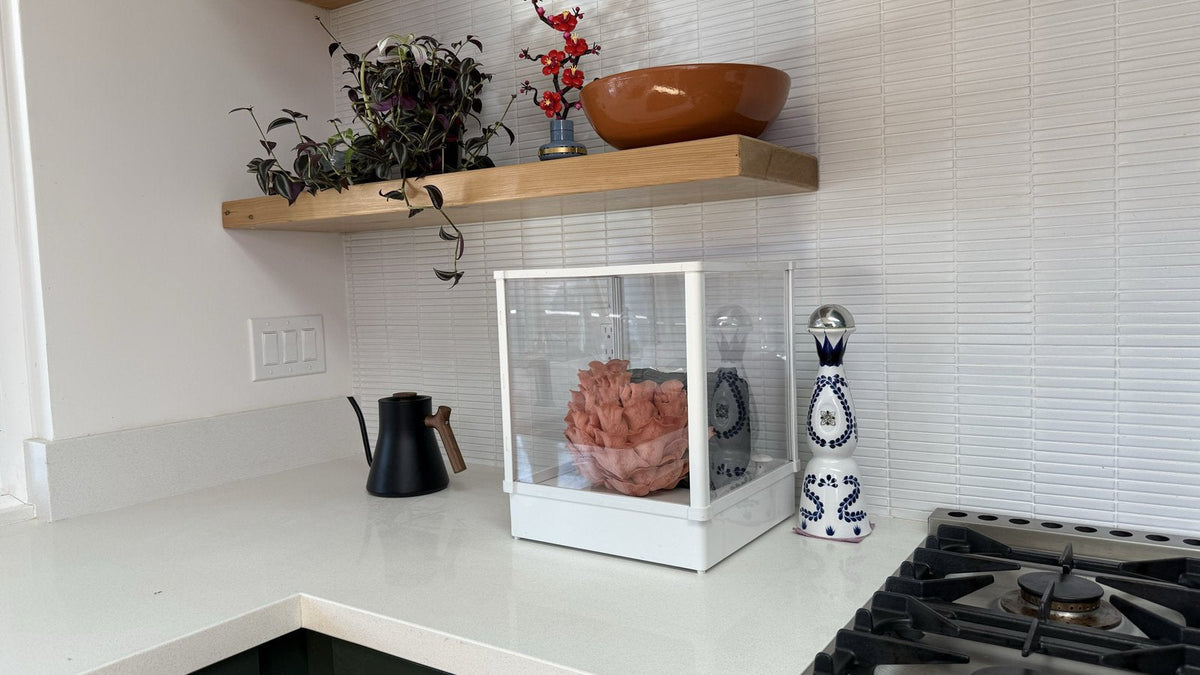
Stage 6 (Fruiting): The chamber maintains fruiting conditions: 65-68 degrees, 90-95% humidity, 12-hour light cycle, and fresh air exchange 4 times daily. You monitor visually in the clear chamber or via daily photos pushed to the app. The app sends a harvest reminder when color and cap formation patterns match the selected species profile.
Stage 7 (Harvest and Recycling): After you harvest, you either compost the block (remove it) or replace it into the chamber for rehydration and a second flush attempt. The app asks if you want to force a second flush or retire the block.
Common First-Time Mistakes Across the Stages
Mistake 1: Triggering fruiting too early. Growers see white mycelium and assume colonization is complete, then immediately apply shock. Result: weak first flush, small clusters, high abort rate. Consolidation requires patience. Lykyn enforces the wait automatically.
Mistake 2: Insufficient fresh air during fruiting. Manual growers fan their blocks by hand once or twice daily. The result is clusters that abort mid-growth, yellowing at the caps, or dense clusters instead of full-sized fruit bodies. Lykyn's fan cycles provide consistent fresh air exchange without user intervention.
Mistake 3: Humidity swings. Manual misting creates wet patches and dry patches. Inconsistent humidity stresses mycelium and invites bacterial spot. Lykyn's ultrasonic humidifier maintains stable 90-95% humidity without wetting the clusters directly.
Frequently Asked Questions
What are the stages of mushroom cultivation?
Seven distinct phases define the cycle. Substrate preparation, inoculation with spawn, colonization by mycelium, consolidation of the mycelium network, pinning triggered by environmental shift, fruiting as clusters expand, and harvest with block recycling complete the sequence.
How long does colonization take?
Pre-inoculated blocks colonize in 10-21 days at 68-75 degrees Fahrenheit, depending on species. Oyster is fastest at 10-14 days. Shiitake and reishi are slower at 18-25 days. The Lykyn chamber maintains optimal temperature and darkness, reducing variables and producing consistent timelines.
What is pinning and how do I trigger it?
Pinning is the switch from mycelium growth to fruiting. Environmental triggers cause the shift: temperature drop of 5-8 degrees, humidity spike to 90%+, fresh air introduction, and light exposure. Manual growers move blocks to fruiting chambers and mist by hand. Lykyn applies all signals automatically through the app-controlled chamber.
Do I need to sterilize substrate at home?
Manual growers must pressure-cook or steam-sterilize substrate before inoculation to prevent contamination. Lykyn refill blocks skip this step entirely. Blocks are sterile, inoculated, and ready to place in the chamber. No sterilization equipment required.
Can I skip stages with a pre-inoculated block?
You skip preparation and inoculation. Consolidation cannot be skipped without consequences: weak first flush and low yields. Lykyn automates consolidation, enforcing the rest period to ensure robust fruiting.
How do I recycle a spent mushroom block?
Spent blocks are compostable amendments or garden soil enrichments. They contain residual nutrients and beneficial fungal biomass. Garden beds amended with spent blocks produce larger vegetables and stronger plants. Blocks can also be rehydrated (soak 12-24 hours in cold water) and forced into a second flush if energy remains in the mycelium network.
Does an automated chamber handle all seven stages?
Lykyn chambers automate stages 3-7. You provide the block (stages 1-2 handled by Lykyn refill production), place it in the chamber, and receive app notifications as each stage completes. The chamber removes guesswork from temperature, humidity, light, and fresh air. You observe the block, harvest when ready, and decide whether to reflush or retire the spent substrate.
From Manual Guesswork to Automated Precision
Manual mushroom growing demands daily attention. Checking humidity, adjusting fans, monitoring colonization progress, watching for contamination, and timing the transition from growth to fruiting each introduce opportunities for error. Most first-time growers experience at least one failed batch due to humidity imbalance, premature fruiting trigger, or contamination.
An automated chamber eliminates environmental guesswork. The seven stages still happen. The biology is unchanged. But temperature, humidity, light, and fresh air are controlled to species-specific setpoints, removing the human error that derails manual growing.
The framework of seven stages remains your mental model. Learn what each looks like, what sensory cues signal completion, and what Lykyn does automatically at each point. From there, growing becomes observational. Watch colonization progress. Note the smell when fruiting begins. Harvest at the right moment. That is the difference between guesswork and precision growing.
For a deeper comparison of chamber-based growing versus traditional manual methods, see the full chamber versus kit versus DIY setup guide. For block selection and refill quality details, check the refill block comparison guide. And if you're weighing the ROI of chamber automation, the chamber ROI analysis breaks down cost and yield mathematics.
Ready to Start Your Seven-Stage Journey?
The seven stages are biology. Understanding each one transforms growing from trial-and-error into a repeatable, predictable process. An automated grow chamber gives you precision at each stage, removing the contamination risk, environmental guesswork, and daily monitoring that make manual growing challenging.
Start with oyster mushrooms (fastest colonization, most forgiving to environmental variation), place a refill block in your Lykyn chamber, and observe the seven stages unfold. By the time your first cluster is ready to harvest, the framework will be clear, and the work will feel less like cultivation and more like gardening: observation, patience, and harvest.


Share:
How to Grow Mushrooms in an Apartment: Quiet, Small, Renter-Friendly Setups