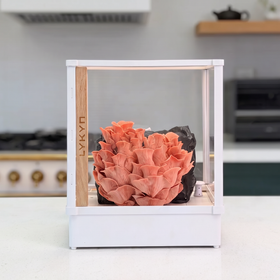



Best Mushroom Grow Boxes for Beginners in 2026

You open the chamber door. Warm humid air escapes. Condensation drips from the interior walls. The pins are there, pushing through the substrate surface. You grew that.
This is what a grow box does. It creates an enclosed ecosystem. The sealed chamber holds humidity at 85-95% relative humidity while the fan cycles air. No babysitting. No guessing. No pretending a paper bag on your shelf is going to match the climate a mushroom actually needs to fruit.
This article is about grow boxes. Not grow kits. Not bags. Boxes: chamber-shaped enclosures with controlled environment. The distinction matters. If you search "best mushroom grow boxes for beginners," you want enclosed automation, not passive paper.
What Makes a Grow Box Different From a Grow Kit
A grow kit is a paper bag or a plastic pouch containing inoculated substrate. You open it, mist it, pray the room humidity happens to stay in the 85-95% range. Most first-timers kill their pins this way. The pins start, the room air dips to 50% humidity, and they abort. The kit fails. The grower assumes they did something wrong. They order a second kit. It fails the same way. They quit.
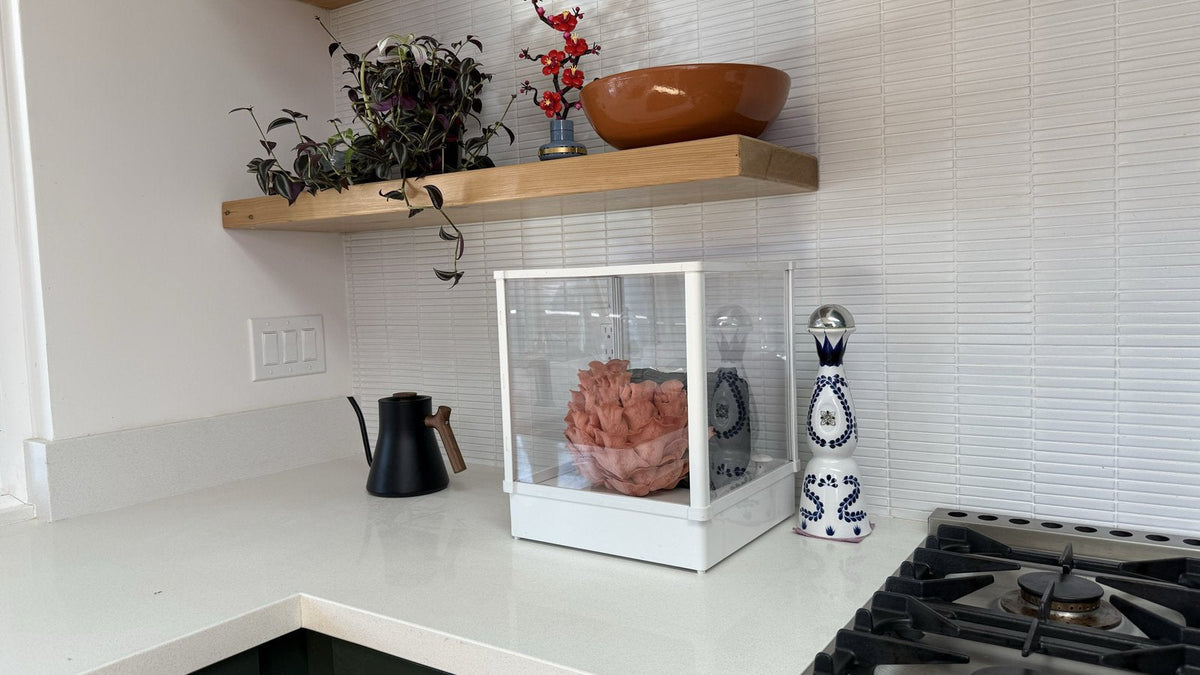
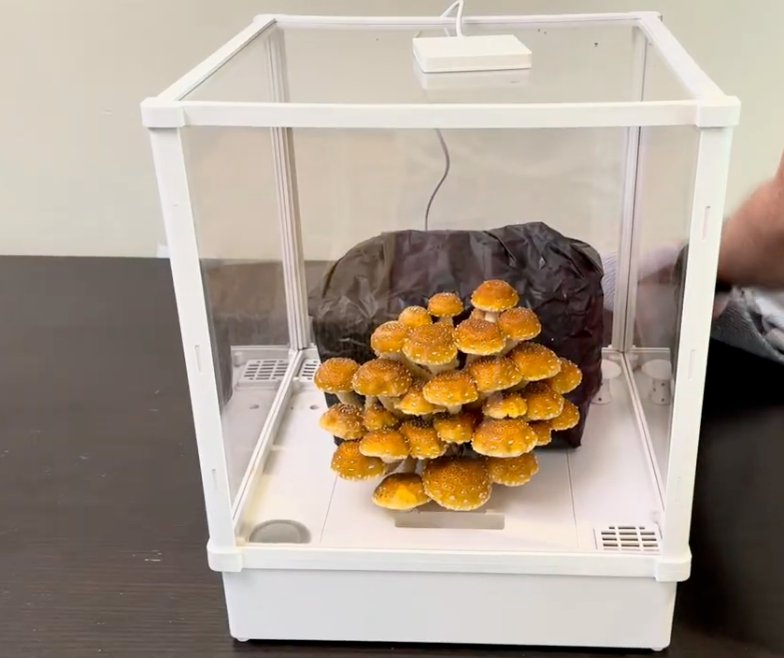
A grow box is a sealed chamber. It works like an incubator, but for fruiting instead of colonization. The walls are insulated or plastic. The floor has a network of small air vents. The top has an exhaust port controlled by a fan. Some models add active humidification. Some measure humidity with a sensor. The best models automate the entire cycle: humidity stays steady at 85-95%. Air circulates every few minutes. Pins form. You harvest.
The physics is simple. A mushroom at fruiting stage breathes CO2 out. If CO2 accumulates, pins abort. If humidity crashes, pins dry up. A sealed box solves both problems at once. The fan moves stale air out. Fresh air (and humidity) come back in. The pressure stays neutral. The pins keep growing.
The difference between a kit and a box is this: Kits work if your ambient humidity cooperates. Boxes work despite your ambient humidity. When you first load an inoculated block into an automated chamber, you see the pins form on a predictable schedule regardless of whether your house air is at 35% or 70% RH. That consistency is why most beginners who start with a kit switch to a box after one failed flush.
5 Mushroom Grow Boxes Ranked for Beginners in 2026
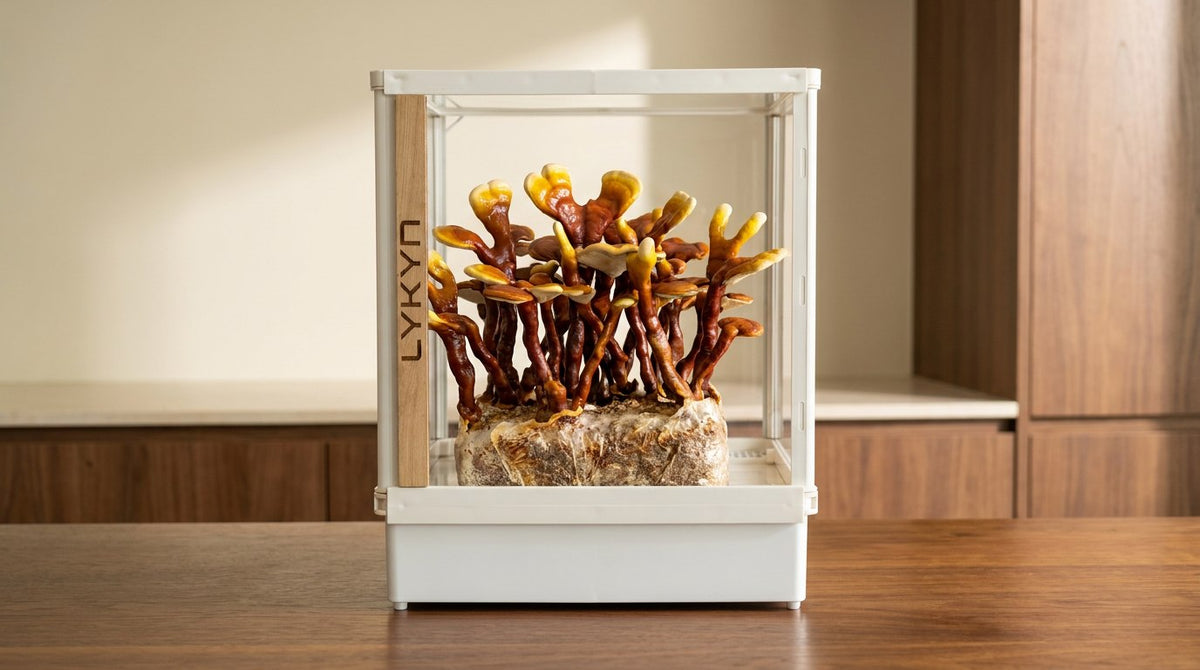
1. Lykyn Smart Mushroom Grow Box — $299
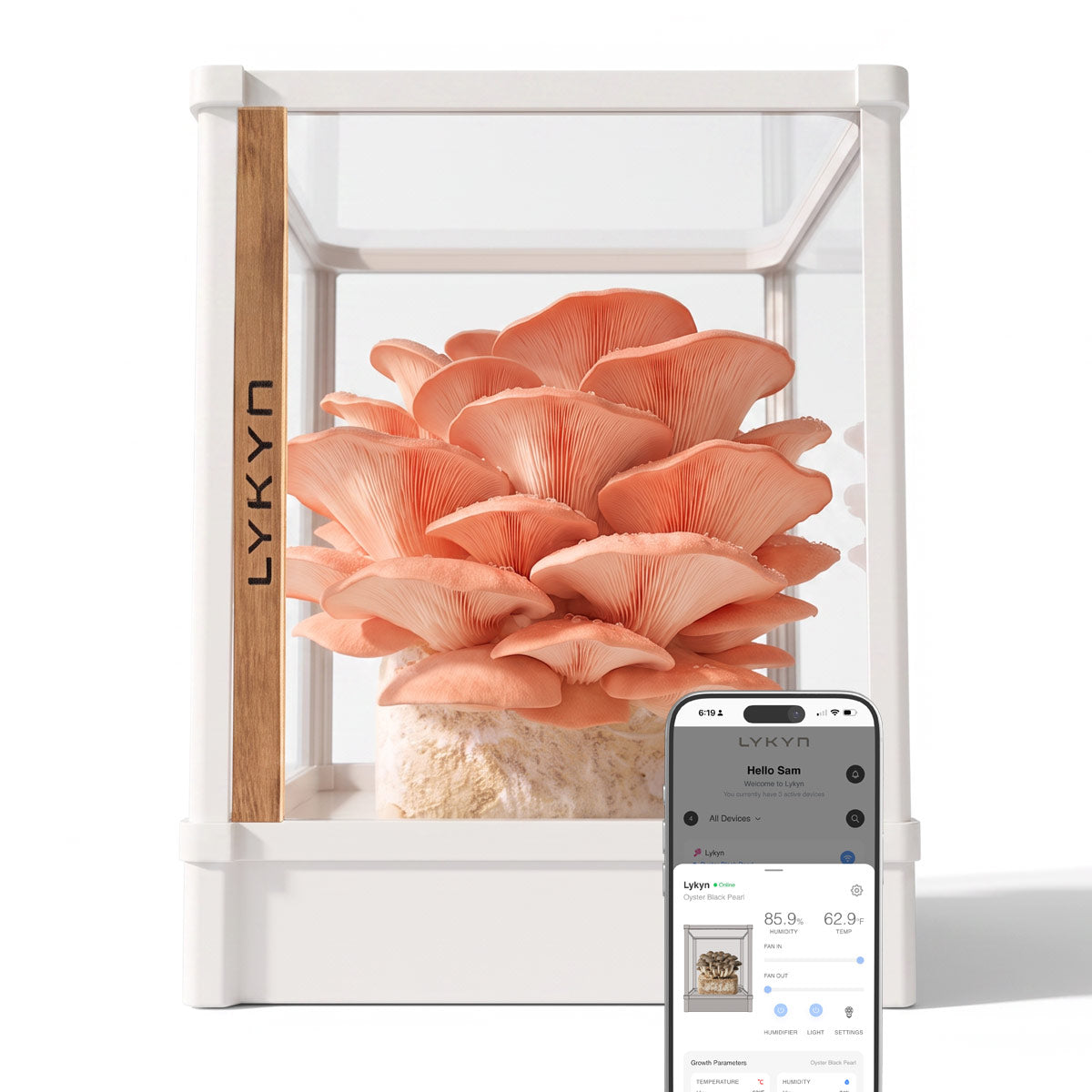
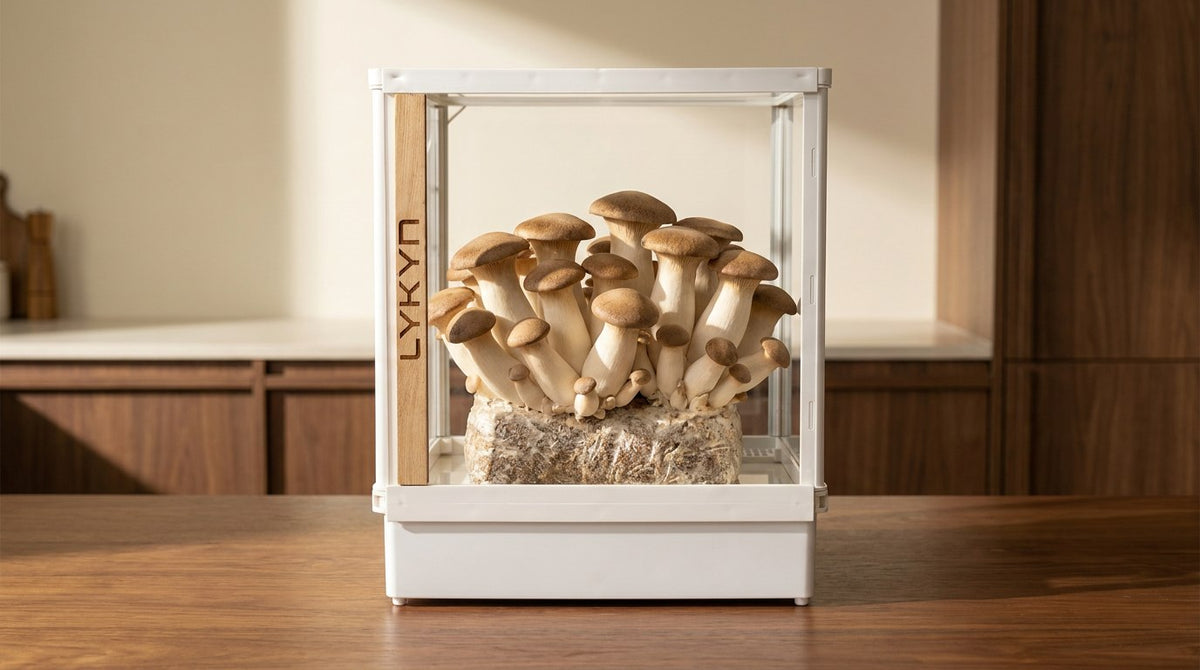
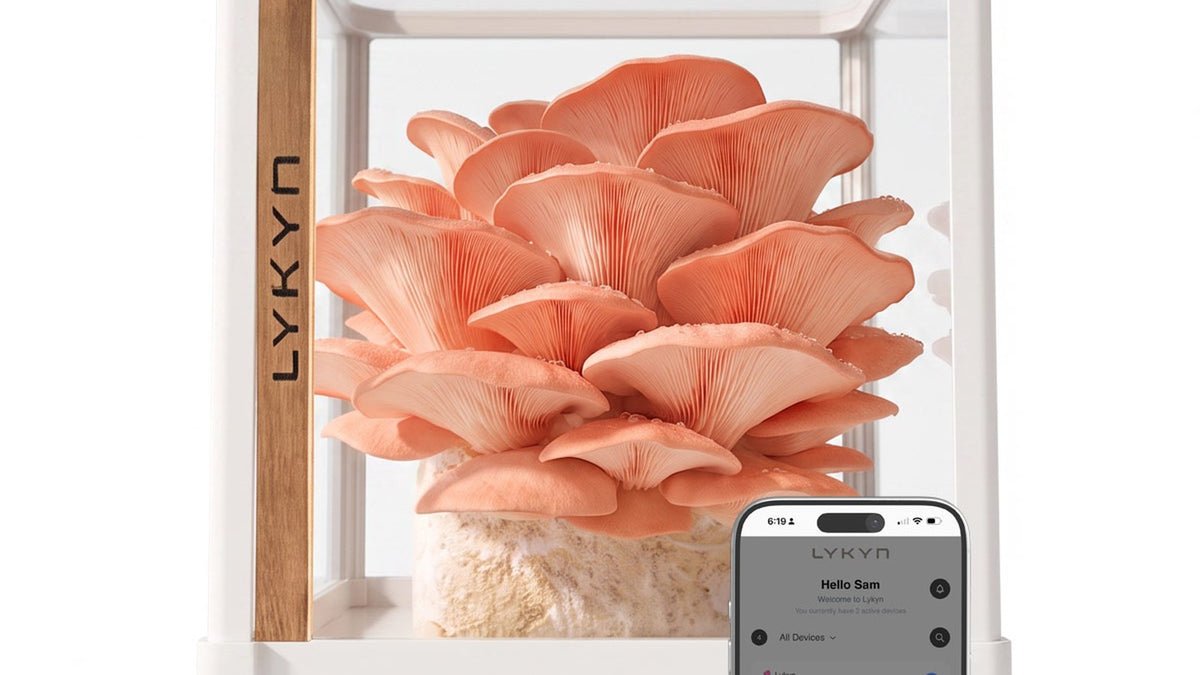
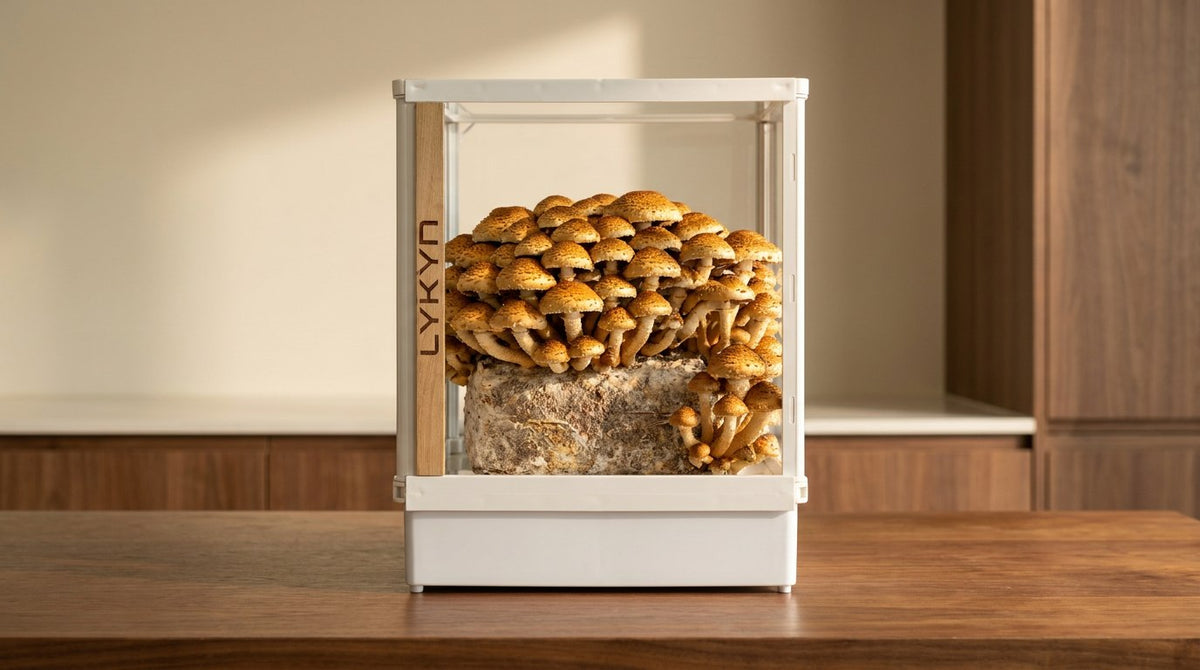
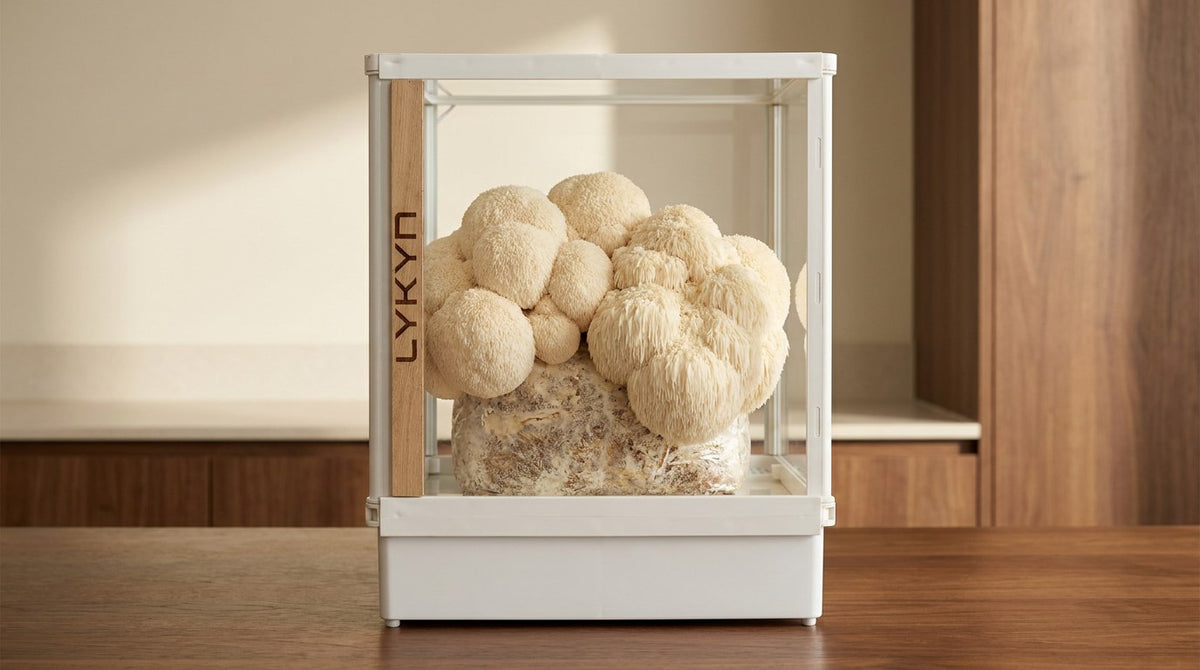
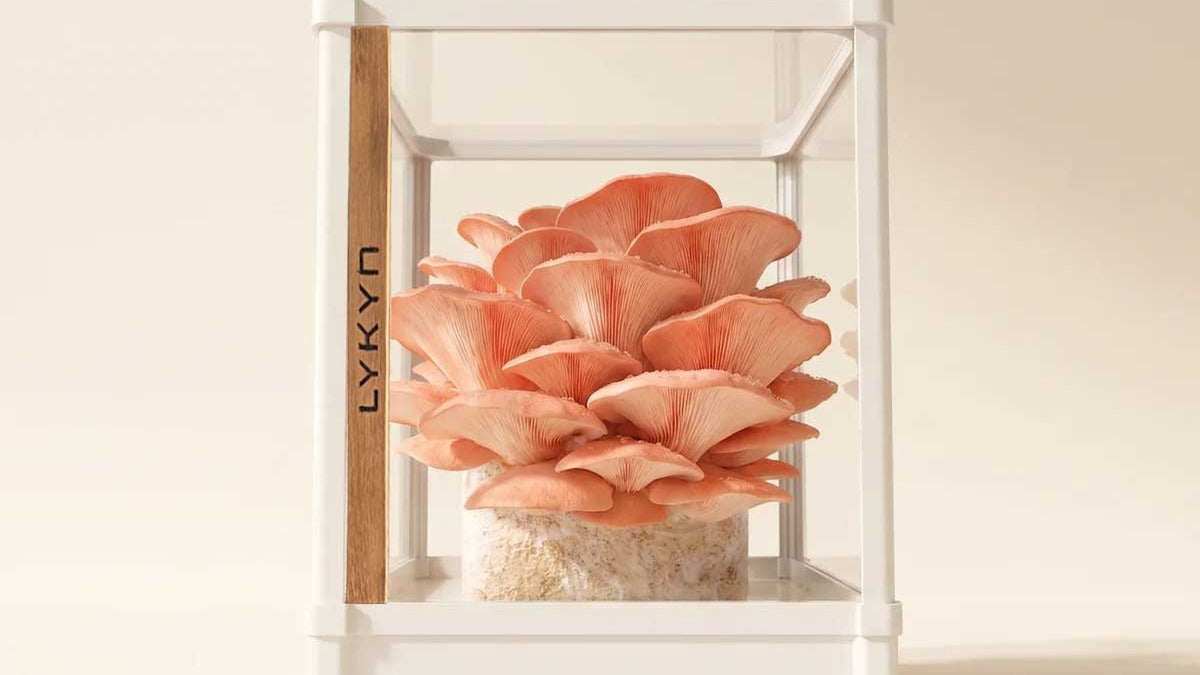
The Lykyn starts with automation as the core feature, not an add-on. Built-in fan. Built-in humidity management. App notifications that tell you the exact day to harvest. Sliding door design (no flipping the whole box) means less contamination risk. Works with single-tier or double-tier configurations depending on your counter space. The substrate blocks are refillable and arrive monthly via subscription at $29.95 if you want continuous harvests. First-time growers choose this box for one reason: it removes the biggest failure point, which is humidity management. The learning curve is a gentle slope, not a cliff.

2. Shrooly — $299 to $399
Shrooly is a solid automated chamber with a small footprint. The humidity control works. The design is clean. The trade-off: species variety is limited compared to Lykyn. Refill options exist but the ecosystem is smaller. If you want a single-species workhorse and you don't plan to experiment, Shrooly does the job. For a beginner in 2026 who might want to try Lion's Mane next month and Shiitake after that, it lacks the flexibility.
3. Sproushi — $200 to $300
Sproushi offers semi-automated chambers with decent reviews. Humidity control is partial, not full. You'll do more manual adjustment than with a fully automated model. The price point attracts price-sensitive buyers, but the learning curve is steeper. You're closer to babysitting than Lykyn or Shrooly. Worth considering if your budget is firm at $200 and you don't mind the extra maintenance.
4. MycoHabitat — $150 to $250
MycoHabitat sits between DIY and fully commercial. Assembly is required. Humidity control is optional depending on which kit you buy. The cost is lower, the flexibility is higher, and the complexity is higher. This is a grower's box, not a beginner's box. If you're on your third flush and you want to optimize humidity precisely for a specific species, it's excellent. First time? Use a fully automated box first.
5. DIY Martha Stewart Builds — Free to $40 in Materials
A plastic storage tote, some holes drilled in the lid, a towel on the bottom for moisture. No fan. No sensors. No automation. Zero reliability for beginners. The humidity crashes overnight. The pins abort. You have now spent $40 and two weeks for a lesson in why grow boxes exist. It's a story we hear a lot. Don't start here. Start with an automated box, learn what humidity stability feels like, then experiment with DIY if you want.
4 Things Every Beginner Should Look For When Choosing a Grow Box

Does it maintain 85-95% humidity without daily babysitting? This is not optional. If you have to mist the box every morning and evening, it's not a grow box, it's a furniture piece. Look for automated humidity control: sensors, fans, or humidification systems that work while you sleep.
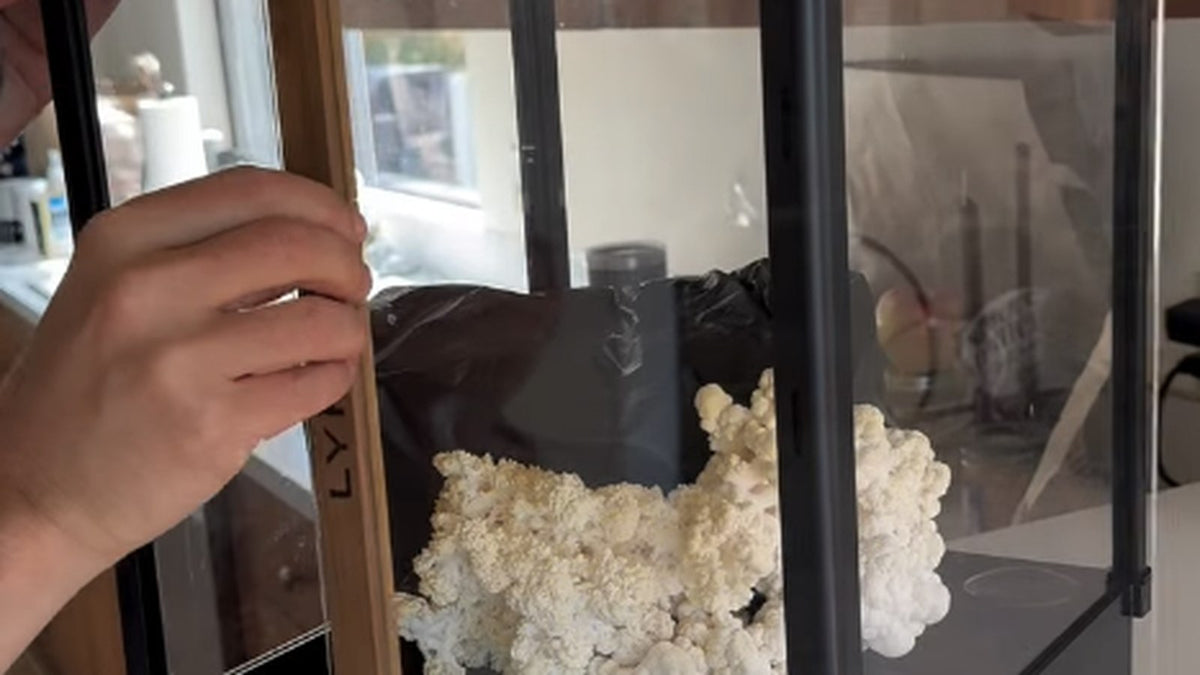
How easy is it to load a new fruiting block? A sliding door is better than a hinged lid. Hinged means you risk tipping the entire box, exposing the whole flush, introducing contamination. Sliding means you swap substrate in and out without disturbing what's already fruiting. It's a small detail that compounds over a season of harvests.
Does the manufacturer have a refill subscription so you don't source blocks yourself? After your first flush, you're standing in your kitchen with an empty chamber and a question: where do I get the next inoculated block? If you have to hunt, email small suppliers, wait two weeks, or buy in bulk, the friction kills momentum. The best beginner grow boxes come with a subscription refill path. Monthly blocks arrive. You unbox. You grow. No sourcing.
Does the manufacturer have real customer support in the US? If something breaks, if the app glitches, if you have a contamination question at 10 PM on a Saturday, can you reach someone? A US-based team matters. Chat support, email response within 24 hours, and someone who knows the product inside and out. Lykyn offers exactly this. Other manufacturers do not always prioritize it.
Why a Smart Chamber Wins for Beginners
Three reasons, each one concrete.
Automated humidity means no 2 AM misting ritual. You are not spraying a box every time you think about it. You are not waking up to check the walls. The chamber maintains the RH band on its own. You check the app once a day. The pins form. You harvest. The time investment is measured in minutes, not hours.
App notifications tell you exactly when to expect pins. The chamber logs temperature, humidity, and timing. The app sends a notification: "Pins should form in 2 days." You prepare. You plan. You don't miss the pin set and come back to a stalled flush. You know what's happening inside at all times.
A refill subscription removes sourcing friction. Blocks arrive on schedule. You load. You grow. You're not researching suppliers or negotiating MOQs. The entire second flush is as easy as the first. Momentum compounds. Growers who have this path keep growing. Growers who have to hunt for blocks often stop.
Day-by-Day Timeline: What to Expect in Your First Two Weeks
After your first flush follows the expected timeline, you trust the next one will too. The predictability is the real win. You stop checking constantly. You grow.
Day 0: Unbox and Place The box arrives. You unbox it. You place it on a counter with a nearby outlet. Ideally, it's not in direct sunlight and not next to a heat source. Room temperature between 60-75 degrees F is fine. Power it on. The fans cycle once. You're done for the day.
Day 1: Load the Block and Start You receive your first inoculated fruiting block. The substrate inside is fully colonized (the mycelium has taken over). You open the box using the sliding door, place the block on the chamber floor, and close the door. You open the app. You tap "Start Flush." The chamber begins its humidity cycle. You are now growing mushrooms.
Days 2-3: Consolidation The mycelium adjusts to the new environment. You see no visible change, but internal activity is high. The humidity is steady at 88-92%. The fan cycles every few minutes. Patience.
Days 4-6: Pinning Begins Small white dots appear on the surface. Pins. The hyphal knots are forming into fruiting bodies. This is the moment. Your app sends a notification. You know it's coming because the timeline is predictable inside the sealed chamber.
Days 7-12: Maturation The pins double in size every two days. They form a cluster. They grow stems and caps. The substrate shrinks slightly as the water moves into the fruiting bodies. The chamber humidity stays steady. Nothing else is needed.
Day 13-14: Harvest** The app tells you the caps have spread. Gently twist the cluster at the base and pull. The entire flush comes away as a unit. You place it on a towel. You cut the mushrooms from the stem. You weigh what you grew. You load a new block or take a break. The chamber waits.
The Mistake First-Time Grow Box Buyers Make
The mistake is choosing the cheapest chamber, assuming all boxes are equal. A $150 box with partial humidity control seems like a win. You set it up. Day 5 arrives. The humidity drops to 70%. The pins that were forming start to wither. They never reach harvest size. The pins abort. Flush fails. You assume you did something wrong. You order a $50 bag of substrate and try again. It fails the same way. You quit.
The fix: Start with a box that automates humidity completely. Lykyn at $299 is not expensive for a piece of equipment you'll use for years. The investment pays for itself in your first flush because you actually get a harvest instead of an aborted attempt. Buy a full-featured box first. Once you understand what a successful flush looks like inside a sealed, controlled chamber, you can experiment with cheaper options or DIY solutions. But the first box should not be an experiment. It should be a tool that works.
FAQ: What Beginners Ask About Grow Boxes
What is the best mushroom grow box for beginners? A sealed chamber with automated humidity control is the best. The Lykyn Smart Mushroom Grow Box maintains 85-95% RH without daily misting, includes app notifications, has a sliding door design to prevent contamination, and comes with a refill subscription path so you're not sourcing blocks yourself. It removes the two biggest beginner failure points: humidity management and sourcing frustration.
How much should I spend on a first grow box? Budget $250-$400. A box under $200 usually skips automation, which means you'll spend more time babysitting humidity than growing mushrooms. A box over $500 is often aimed at commercial growers or advanced hobbyists. The $250-$400 range gives you automation, reliability, and a path to scaled production if you want it.
Do grow boxes really beat paper bag kits? Sealed chambers beat passive bags by the metrics that matter to beginners: humidity stability, failure rate, and time investment. A bag is cheaper upfront. A chamber wins on success rate. After your first successful flush in a chamber, the cost difference disappears because the bag would have failed anyway.
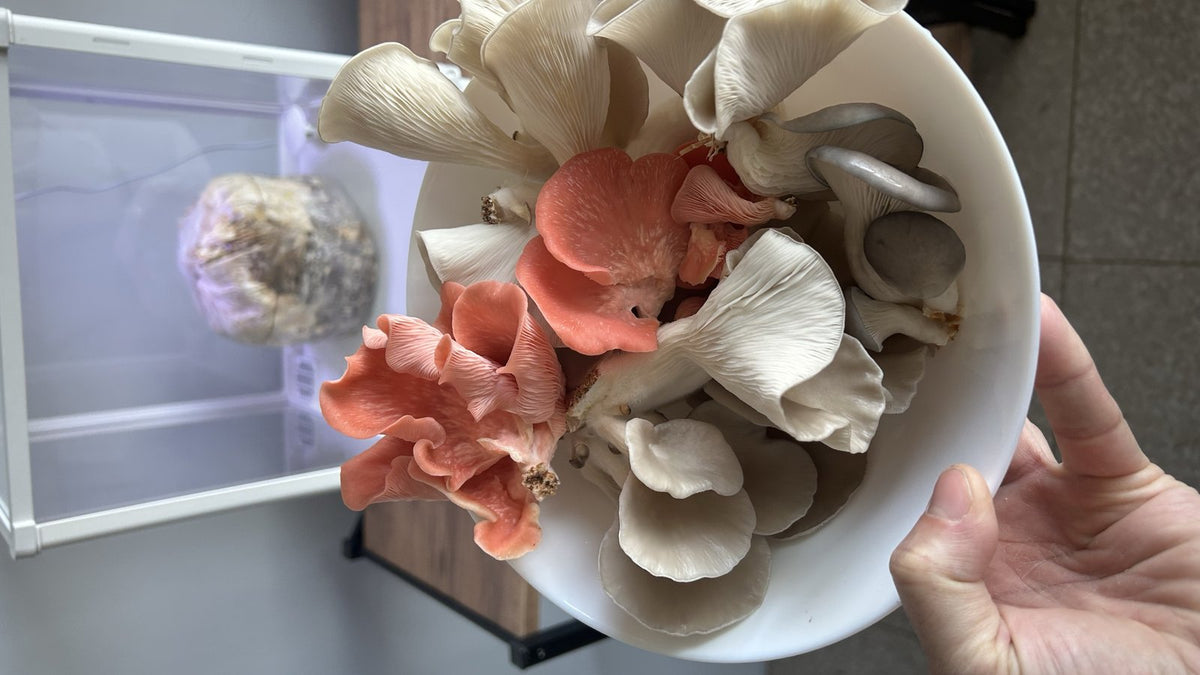
Can I refill the grow box with different species? Yes. The chamber works with any species sold as a pre-inoculated fruiting block. This month it's Pink Oyster. Next month it's Lion's Mane. The month after, Shiitake. The chamber adjusts humidity for each species automatically. Load the block, start the cycle, harvest. The chamber itself is species-agnostic.
How long does a grow box last? A quality chamber lasts 3-5 years with normal use. The plastic degrades slowly. The electronics (fan, sensors) typically outlast the housing. Some growers retire a chamber after it takes minor cosmetic damage, but the unit still functions. Parts are often replaceable if the manufacturer supports repair.
Is $299 worth it for a first-time grower? Yes, if you want to succeed. The cost is justified by your first successful flush. A beginner who gets one harvest from an automated chamber has proved the concept. Most commercial mushroom growers started by spending $300-$500 on their first box because it changed what was possible in a home environment. After your first harvest, you understand why farmers invest in sealed chambers instead of bags. The $299 is not a sunk cost. It's an investment in a tool that pays for itself through knowledge and harvest.
Which grow box has the best customer support in the US? Lykyn. The team is US-based, responds to support requests within 24 hours, and they know the product because they built it. They also know growing because the founders grow. Customer support is part of the product when you're a beginner. You need someone to answer your questions, and Lykyn makes that part of their standard offering.
Next: Your First Box
The difference between a beginner who grows and a beginner who quits is often just one decision: sealed chamber or passive bag. Humidity is everything in mushroom cultivation. Automate it from day one, and the path to a first successful flush is straightforward. Skip automation, and you're fighting the climate inside your house the entire time.
Start with the Lykyn Smart Mushroom Grow Box. It removes the guesswork. It gives you the conditions that every species on Earth needs to fruit: stable humidity, fresh air, and predictable timing. Your first flush is waiting.
Share:
The Seven Stages of Automated Mushroom Cultivation (Complete Guide 2026)