


Reishi is not the easiest species to grow at home. But if you're serious about building a wellness practice, it's the most rewarding.
Unlike oyster or shiitake, which fruit in 2 to 3 weeks and give you fresh mushrooms for the pan, reishi works on a different timeline and a different purpose. You're not harvesting to eat fresh. You're growing medicinal caps that you'll dry, store, and brew as tea or extract into tincture.
This guide walks you through what makes reishi different, what to look for in a beginner kit, and how to move from first pins to your first dried harvest. We'll cover the cold shock protocol that reishi needs, the 4 to 6 week fruiting cycle, and the harvest window where you have a choice: antler stage for a milder brew, or conk stage for a deeper extraction.
If you've grown oyster or shiitake before, reishi will test your patience. If this is your first grow, reishi is entirely possible, but it rewards the growers who plan for a longer cycle and pay attention to humidity and temperature. Let's get into it.
What Reishi Actually Is
Reishi is Ganoderma lucidum, a shelf fungus with a woody, bitter taste and a long history in East Asian medicine. It's not a culinary mushroom. You won't sauté it or add it to soup. The caps are too dense, too fibrous, and too astringent for the plate.
What you do with reishi is dry it whole and steep it. A single cap can infuse a pot of water for 30 to 45 minutes, releasing compounds that traditional medicine associates with stress recovery, sleep support, and immune function. The result is a dark amber tea that tastes earthy and faintly bitter. Not something you'll drink for pleasure, but something you drink for a ritual and for the belief that it works.
The scientific picture is incomplete. Studies exist. Eastern medicine has 2000 years of use behind it. But the specifics of how reishi works, and what dose matters, remain areas where growers choose to trust the tradition or wait for more data. What's not in dispute is that the compound you're after (beta-glucans and polysaccharides) concentrates in the fruiting body, and that fresh or recently dried reishi delivers a stronger infusion than a tincture made from powder.
For a grower, this means your reishi kit becomes part of a health ritual: something you tend, harvest with your hands, dry in your own space, and brew yourself. That sense of control and freshness is hard to get from a bottle bought online.
Why Grow at Home vs Buy a Tincture
A reishi tincture costs between $30 and $60 per bottle, depending on the brand and the extraction method. A bottle lasts 3 to 4 weeks if you take a standard dose. That's $360 to $720 per year for tincture alone.
A reishi grow kit costs $29.95 to $45. Your first flush gives you 2 to 4 dried caps, depending on the block and your conditions. A single dried cap makes 2 to 3 infusions. That's roughly 8 to 10 brews from one kit, which covers 2 to 3 months of daily drinking at a material cost of $3 to $5 per month once the kit is bought.
But the math is not the only reason to grow. When you grow reishi, you see it at every stage. You watch the block colonize. You watch the pins form and the caps expand. You dry the mushrooms yourself and store them in your kitchen. You know exactly how fresh your supply is. You have a choice in when to harvest, which affects the flavor and the potency. You own the process.
And there's a psychological effect that nobody talks about. The act of tending the kit, harvesting by hand, drying the caps, and brewing them yourself creates a ritual around the reishi. It shifts the experience from a supplement you take to a practice you do. That shift, whether or not it changes the chemistry, changes how you relate to the plant and to your own health.
What to Look for in a Beginner Reishi Kit
Not all reishi kits are the same. Here's what matters:
Colonization status. You want a fully colonized block. A colonized block is white throughout, with no visible grains or brown spots. It's ready to fruit immediately. Uncolonized or partially colonized blocks save money upfront but add a week or two to the timeline and introduce contamination risk. For a beginner, a fully colonized block removes that risk.
Block size. A 5-pound reishi block is standard. It's heavy, it colonizes predictably, and it produces a reasonable flush. Smaller blocks (2 to 3 pounds) fruit faster but give fewer caps. Larger blocks (8+ pounds) take longer to colonize and are harder to manage humidity around.
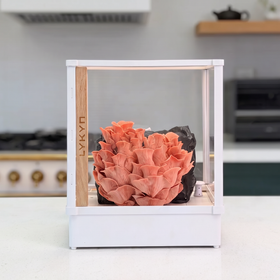
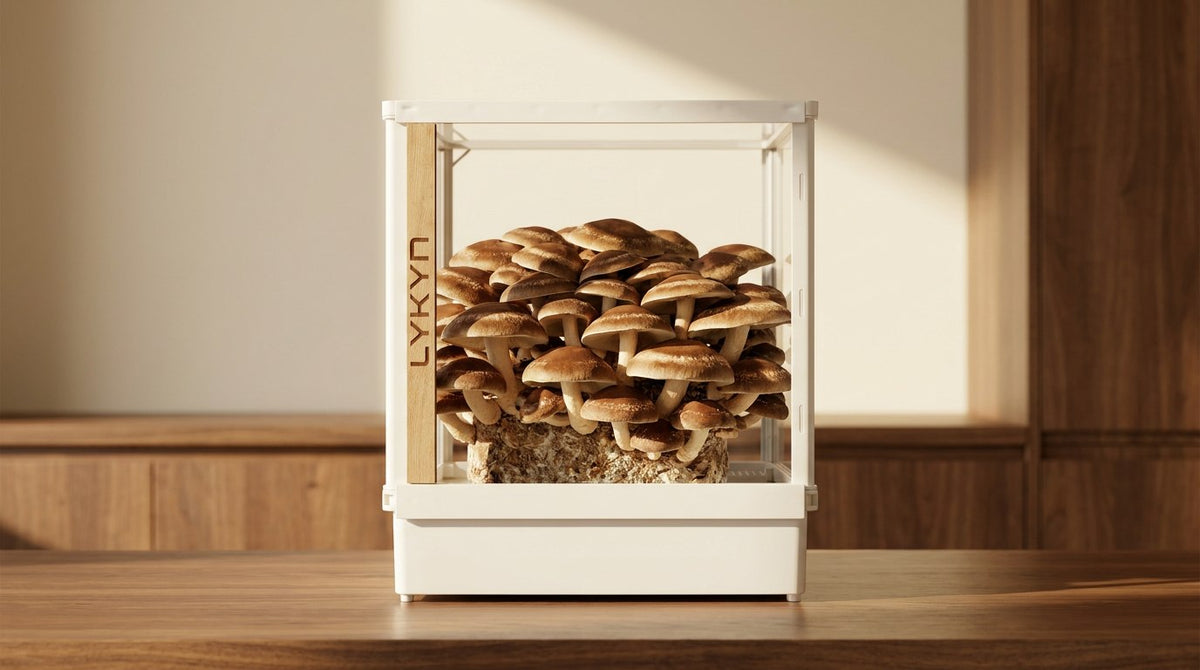
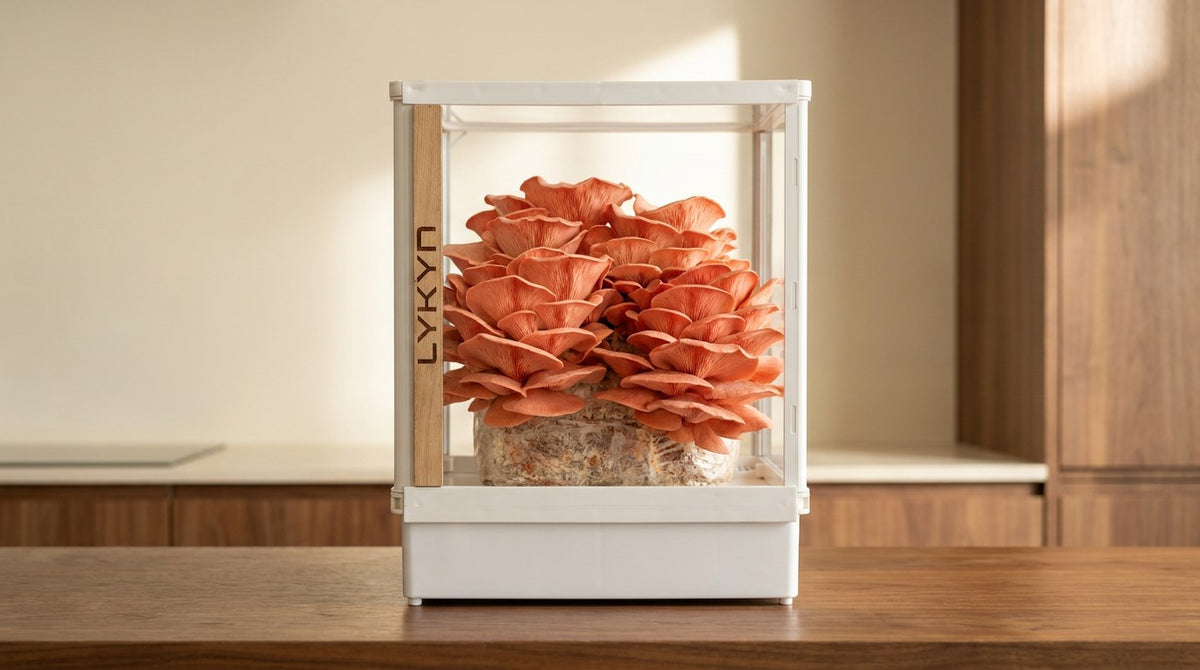
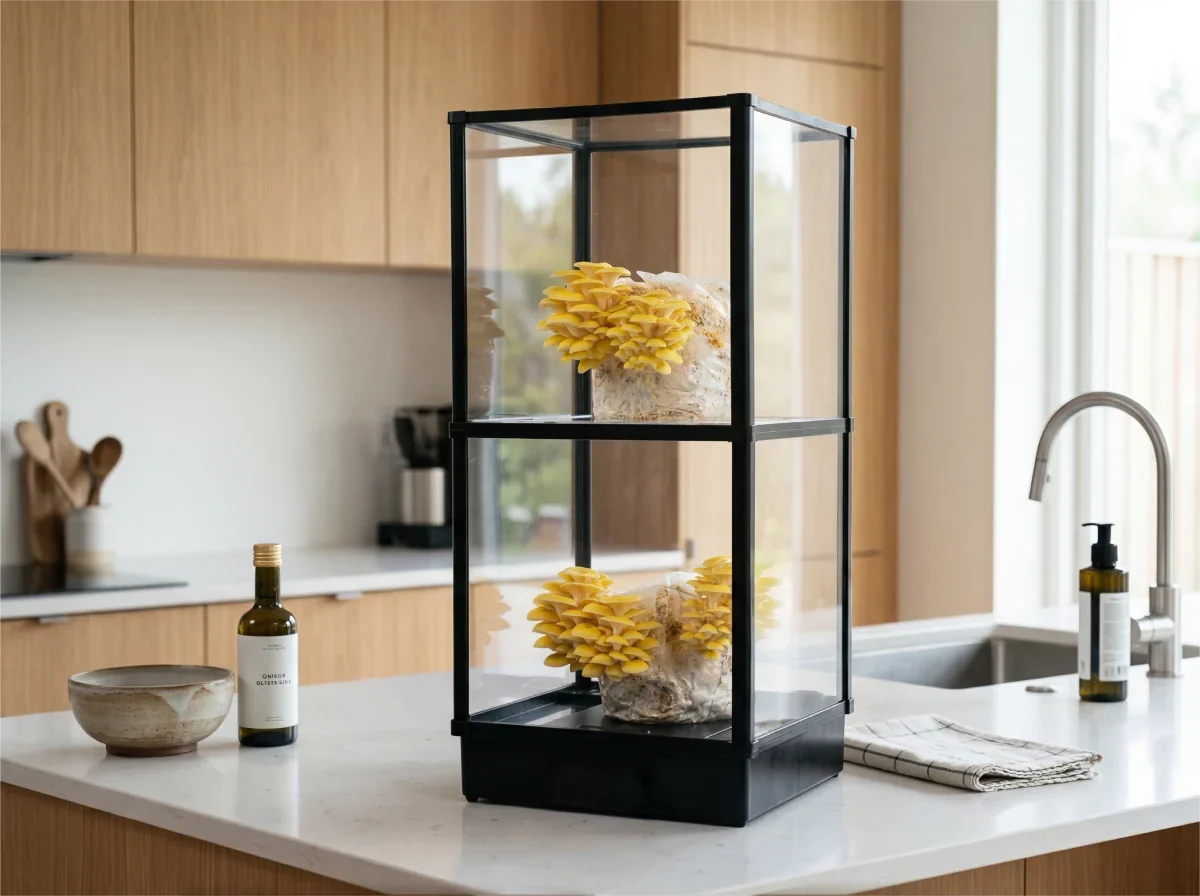
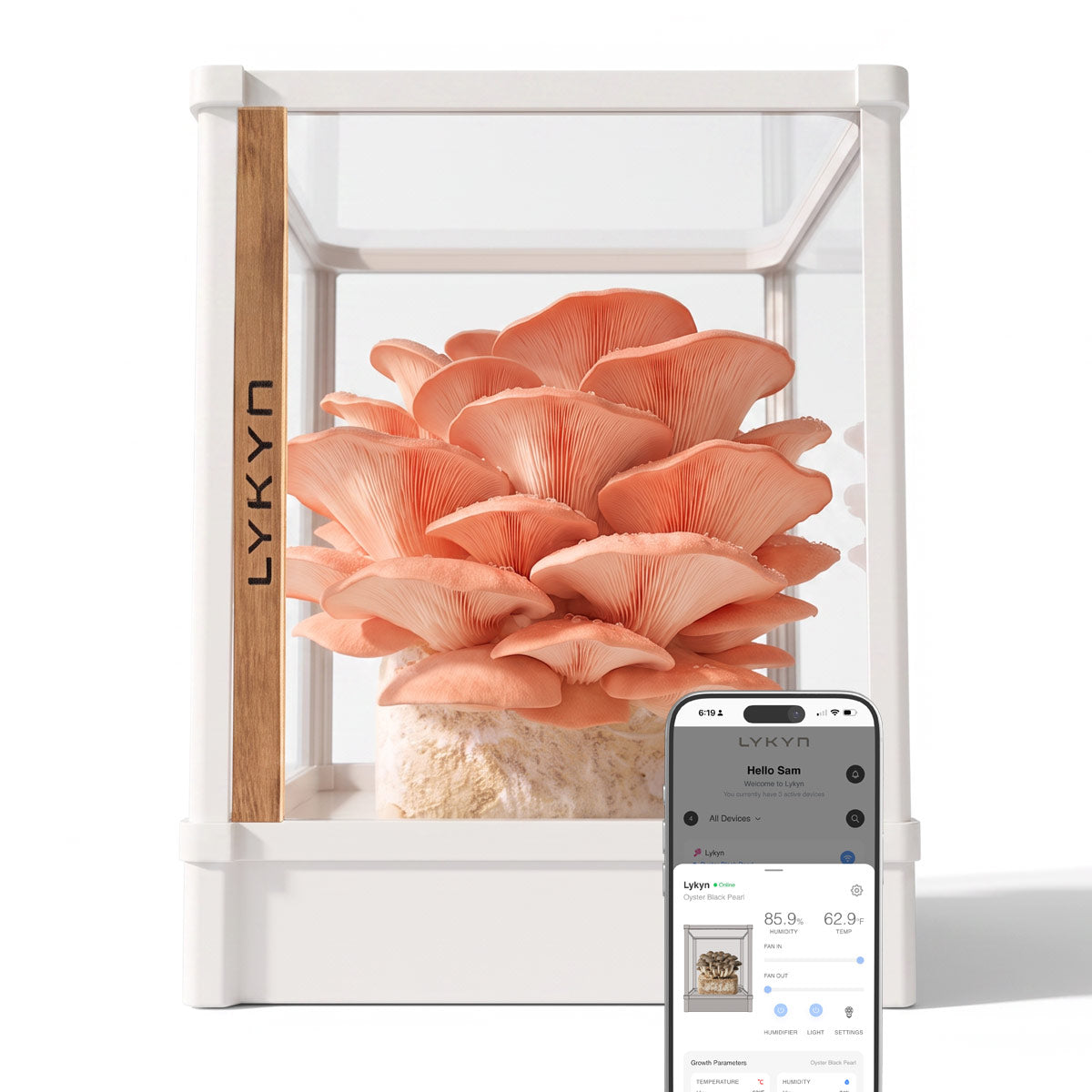
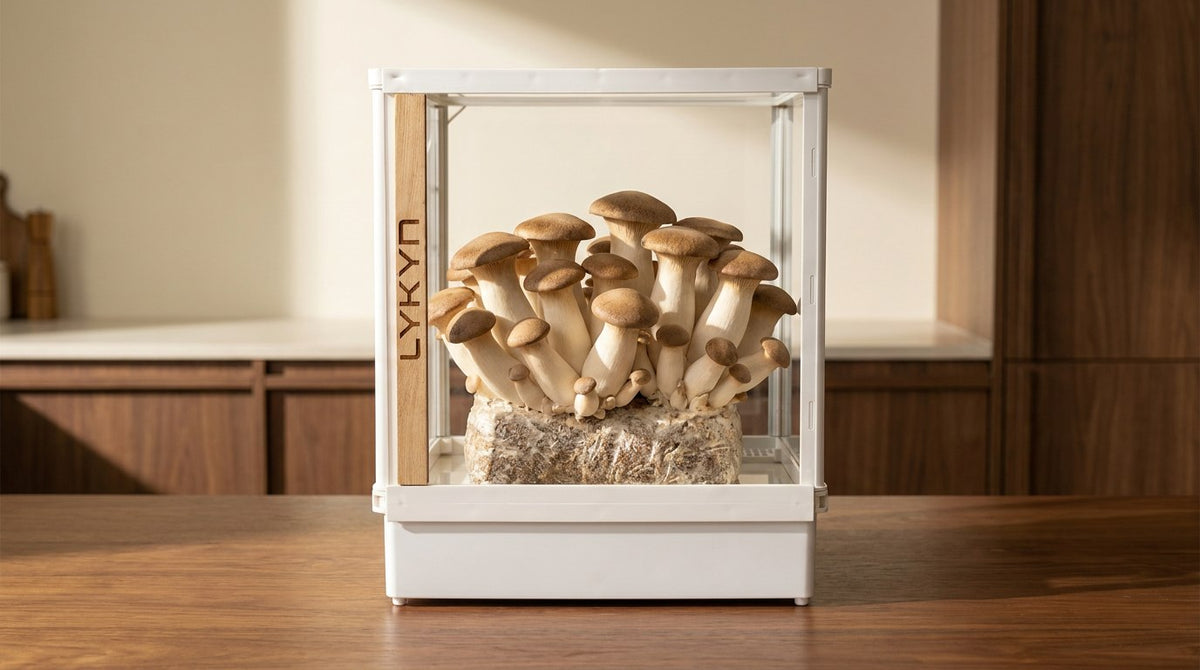
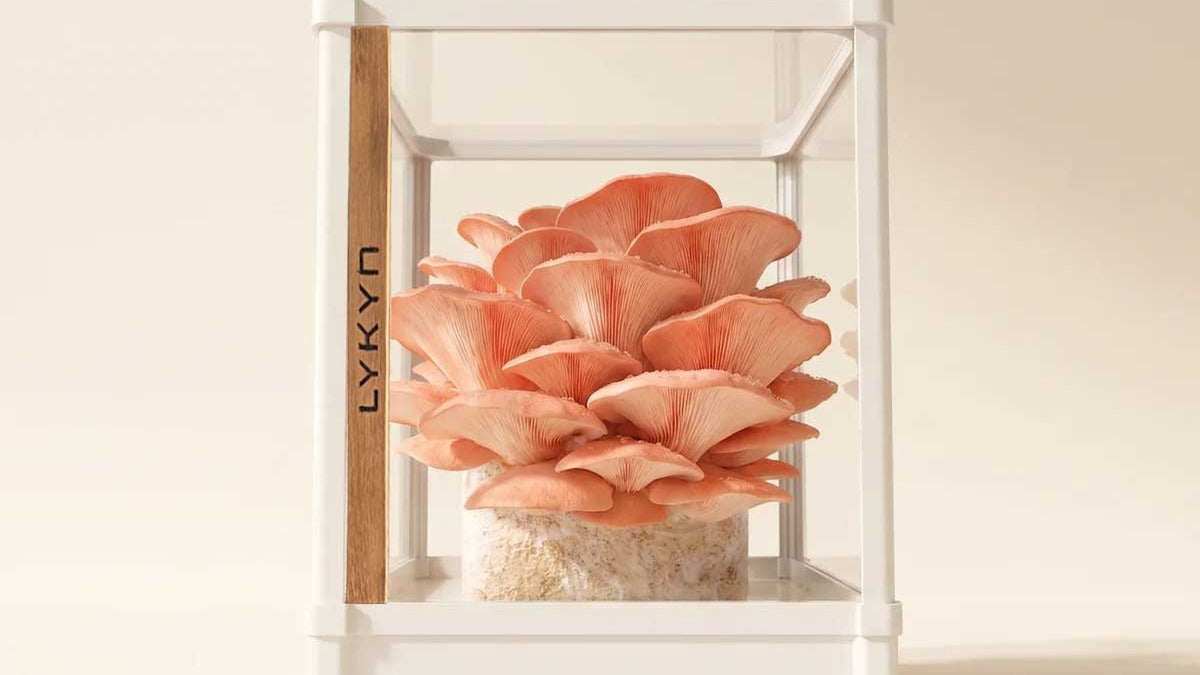
Humidity control. Reishi needs 85 to 95 percent relative humidity during fruiting. If you're growing in an open room, you'll struggle. If you have a humidity controller, a fan, and a space you can seal off, you can hit those numbers. If you have a climate-controlled chamber with built-in humidity sensors, the problem is almost solved. This is where a dedicated chamber like the Lykyn Smart Mushroom Grow Box becomes valuable, not because it's magic, but because it holds humidity steady.
Temperature range. Reishi fruits best between 60 and 75 degrees Fahrenheit. Below 55 degrees, colonization slows or stops. Above 80 degrees, the risk of contamination rises. Most home environments drift in this range, but if you live in a hot climate or a very cold one, climate control is not optional.
Light. Reishi does not need much light, but it needs some. 12 hours a day of indirect light, or even low LED light, is enough. A sunny window works. A chamber with a simple LED strip works better because the light is consistent.
First-flush timeline. Expect 5 to 7 days from the start of pinning to harvestable caps. Pins form 10 to 14 days after you trigger fruiting with a cold shock. That puts your first harvest 2 to 3 weeks out from starting the fruiting phase. Total cycle from block arrival to dried caps: 4 to 6 weeks if conditions are dialed, longer if they're not.
Best Reishi Grow Kits for Beginners in 2026
The reishi kit market is smaller than the oyster and shiitake market, which means fewer options and fewer reviews to go on. Here's an honest picture:
Lykyn Reishi Kit + Smart Mushroom Grow Box ($299 + $29.95)
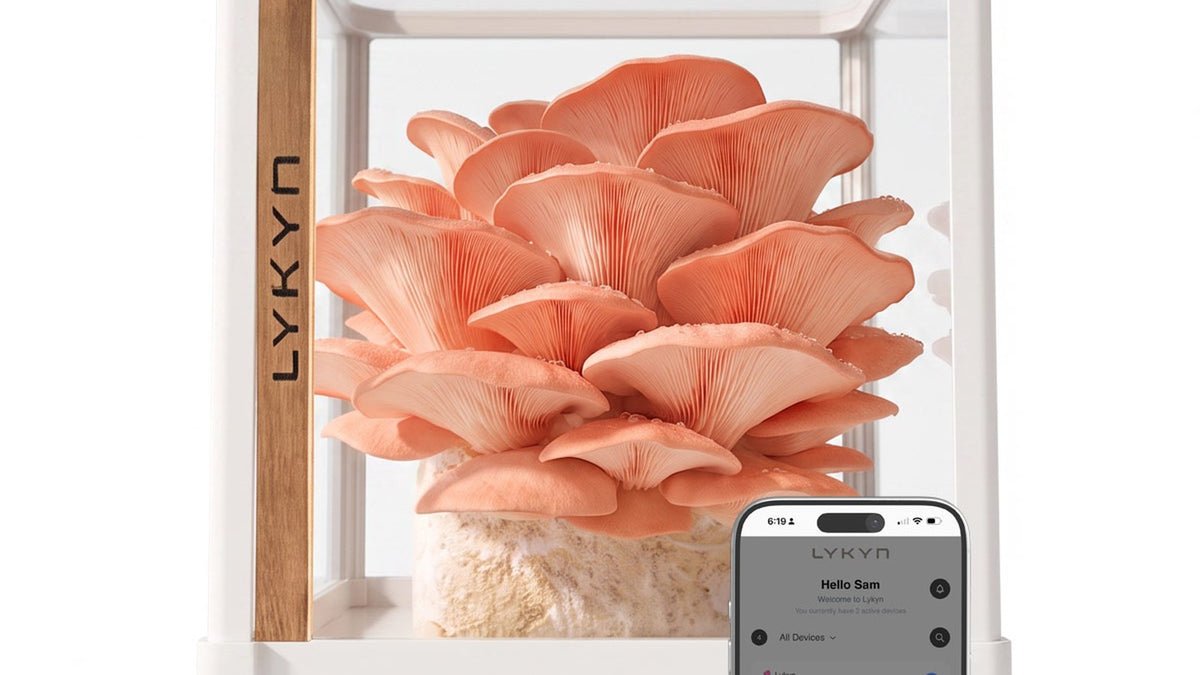
The Lykyn Reishi Kit is a fully colonized 5-pound block. The Lykyn Smart Mushroom Grow Box is a climate-controlled chamber with humidity and temperature sensors, an app-based interface, and a misting system. Together, they take the guesswork out of reishi growing. You place the block in the chamber, the chamber handles humidity at 85 to 95 percent, you monitor progress on your phone, and when pins form, you harvest on time. The upfront cost is higher than a kit alone, but the success rate and the learning curve are both in your favor. This combination is built for growers who want reishi to work the first time.
Bag-only kits ($25 to $45)
You can buy reishi blocks in a simple microclimate bag with a filter patch. You mist by hand 2 to 3 times per day, manage humidity with a humidity meter and some trial-and-error, and harvest when the caps look ready. Cost is low. Learning curve is steep. Success depends entirely on your space, your discipline, and your humidity control. If you live in a humid climate or have a greenhouse, this works. If you live in a dry climate or a heated home in winter, hand-misting is frustrating and failure is likely.
For a beginner, the Lykyn + chamber combination removes friction. For a grower on a budget who has some experience with humidity management, a bag kit is viable. For most people starting out, the chamber is worth the investment.
Setup and Cold Shock Protocol


When your reishi block arrives, it will look fully colonized. It will be white, firm, and ready. Do not fruit it immediately. Reishi needs a cold shock to trigger fruiting, and that trigger matters.
The cold shock. Place your block in a cool space (55 to 65 degrees Fahrenheit) for 24 to 36 hours. A basement, a cold closet, or a refrigerator works. The cold signals to the mycelium that winter is coming, and it's time to reproduce. After 24 to 36 hours, move the block to your fruiting space and begin misting or trigger the chamber's humidifier.
Humidity after the shock. Once the block is back in your fruiting space, aim for 85 to 95 percent relative humidity. If you're hand-misting, spray the block 2 to 3 times per day, keeping the surface moist but not waterlogged. If you have a chamber, set the humidity target and let it work. Within a few days, you'll see tiny white nodules forming on the surface of the block. These are pins.
Pins to caps. From the first visible pins, expect 5 to 7 days before the caps are ready to harvest. During this time, the pins swell into umbrella-shaped or branching antler-shaped caps. The texture changes from soft to firm. The color shifts from cream to light tan or gray, depending on the reishi strain.
The block feels warm to the touch when it's actively fruiting. The smell is earthy and mushroomy, with faint woody notes. If you run your hand over the surface during pinning, the pins feel like tiny nubs. These sensory cues tell you the block is on track.
The Reishi Fruiting Cycle, Day by Day

After the cold shock, the timeline is predictable if conditions stay stable.
Days 1 to 3: The block settles into fruiting conditions. The surface feels moist. You won't see visible pins yet, but the mycelium is responding. Maintain humidity at 85 to 95 percent. If you're hand-misting, spray twice a day. Air exchange matters: if the block is in a sealed bag or chamber, make sure there's a light fan or air circulation to prevent CO2 buildup.
Days 4 to 10: Pins appear, usually as tiny cream-colored dots on the block surface. They form in clusters. A single block might produce 5 to 15 pins depending on conditions and the reishi variety. During this phase, humidity is critical. If it drops below 80 percent, pins will abort. Keep misting or keep the chamber running. The smell becomes more pronounced. The air around the block smells like mushroom spores. Dry and earthy.
Days 10 to 14: Pins expand into small caps, 0.5 to 1 inch across. They begin to form their characteristic shapes. Some will grow into flat, disc-like conks. Others will branch into antler-like formations. Color shifts from pure white to pale tan. If you look closely, you'll see fine texture appearing on the surface. The texture feels slightly bumpy, like fine sandpaper.
Days 14 to 21: Caps continue to grow. They may double in size. The edges may curl slightly. Some caps may begin to show darker coloring on the underside. At this point, you have a decision to make: let them continue to mature into the full conk stage, or harvest them now in the antler stage. The choice affects flavor and use.
Days 21 to 42: If you allow the caps to continue, they harden significantly. The texture becomes woody and dense. The color deepens to tan, gray, or dark brown. The caps may form a waxy or varnished appearance. This is the conk stage. A conk-stage reishi is harder to break or powder and delivers a more concentrated extraction when brewed.
When to Harvest: Antler Stage vs Conk Stage
Reishi gives you a harvest window, not a single harvest day. The choice of when to pick changes the final product.
Antler stage (days 12 to 16): At this point, the caps are soft, pale, and branch into multiple arms. They look delicate. They feel somewhat tender when you bend them. If you harvest now, the dried caps will be lighter in weight and milder in flavor. A dried antler-stage cap brews a tea that tastes fresher and slightly less bitter. Many wellness practitioners prefer antler-stage reishi for everyday use because the mild flavor is easier to take daily. The downside: antler-stage caps are more fragile during drying and storage.
Conk stage (days 21 to 42): At this stage, the caps are hard, dense, and flattened or curved like brackets. They feel woody. The color is darker. If you harvest now, the dried caps are dense and stable. They store longer without flavor degradation. When brewed, the tea is darker and more bitter. It's a more intense experience. Practitioners often use conk-stage reishi for targeted health support rather than daily wellness.
There's no wrong choice. Antler stage is gentler. Conk stage is stronger. Many growers harvest a mix: some antler for daily tea, some conk for deeper extracts. Most blocks produce a second or even third flush, so you can experiment both ways on a single kit.
To harvest, cut the reishi caps at the base where they meet the block. Use a clean knife. The block will stay firm. In most cases, the same block will send up a new flush of pins within 1 to 2 weeks if you keep humidity steady.
Drying, Storing, and Brewing Reishi
Fresh reishi caps are about 80 percent water. Drying reduces them to brittle, stable pieces that store for months or years.
Drying. Use a food dehydrator set to 100 to 115 degrees Fahrenheit. Spread the caps on the trays in a single layer, not touching. They'll take 12 to 24 hours to dry completely, depending on cap size and thickness. You know they're done when they're brittle and snap cleanly when you bend them. The smell while drying is intense: woody, earthy, slightly medicinal. When they're fully dry, the smell becomes concentrated and the caps feel very light.
If you don't have a dehydrator, an oven on the lowest setting with the door cracked open works. Alternatively, air-dry them in a warm, dry room with a fan. This takes 3 to 7 days, depending on humidity.
Storage. Place dried reishi caps in an airtight glass jar. Add a silica packet if you live in a humid climate. Store in a dark, cool place. Properly stored reishi stays stable for 1 to 2 years. The potency gradually fades after that, but the caps don't spoil or become unsafe.
Brewing. A single dried cap makes 2 to 3 pots of tea. Place the cap in a pot of water and bring to a simmer. Steep for 30 to 45 minutes. The water will turn amber to dark brown. Remove the cap, pour the tea, and drink it warm. You can re-steep the same cap multiple times before discarding it. The flavor is earthy and bitter. Some people add honey or ginger to improve the taste. Others drink it straight.
Growers who steep reishi longer (45 to 60 minutes) get a smoother, less astringent tea because the extended steep pulls more of the volatile bitter compounds out of solution. This was unexpected and points to a simple practice shift that might improve consistency.
Reishi growing is not a race. It's a practice. The block takes 4 to 6 weeks from setup to harvest. That timeline is slower than oyster mushrooms, and it's intentional. Reishi is a medicinal crop, not a meal crop, and the pace reflects that.
The growers who succeed with reishi are the ones who plan for the full cycle and build humidity and temperature control into their setup. If you have a chamber like the Lykyn Smart Mushroom Grow Box, you can dial this in on day one. If you're hand-misting in a bag, you'll succeed, but you'll also learn humility.
Is reishi for beginners? Yes, but it requires patience and attention. If you want fast mushrooms and fresh harvests for the kitchen, start with oyster or shiitake. If you want to build a wellness ritual and you're willing to tend a slower cycle, reishi is exactly the species to grow.
Pro Tip
Reishi blocks produce multiple flushes. After you harvest your first flush, let the block rest for 1 to 2 weeks, mist it lightly to keep it alive, and then trigger a second cold shock. You can get 2 to 3 good flushes from a single 5-pound block.
Learn More
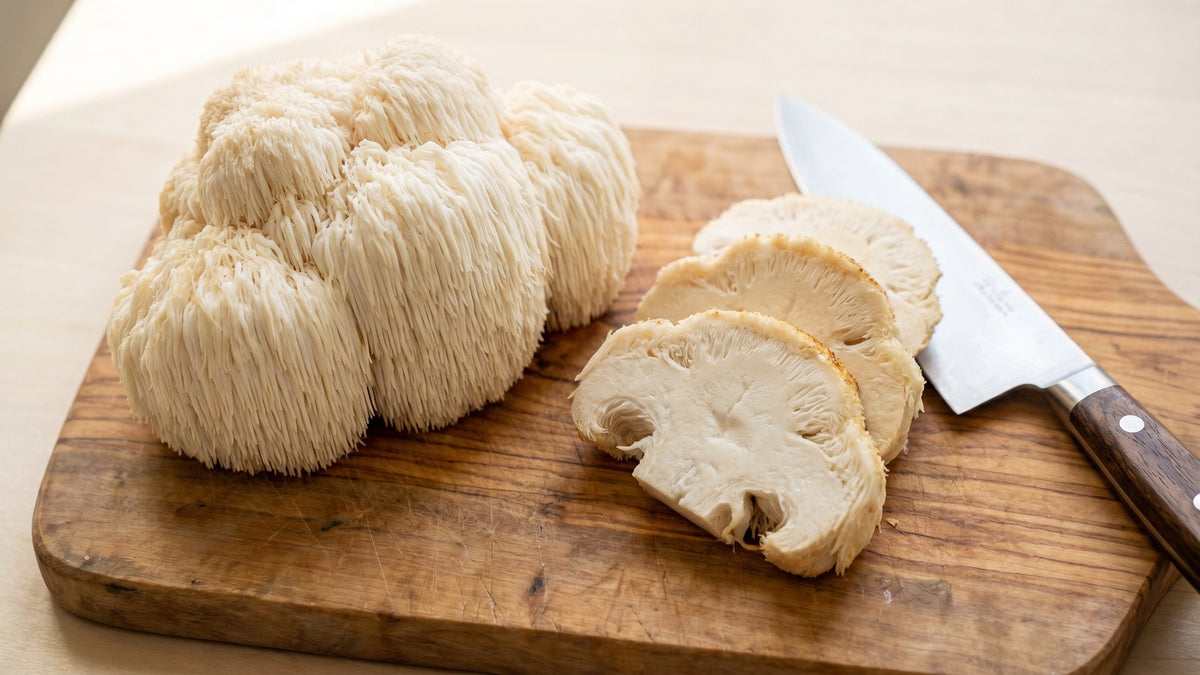
Interested in growing other species? Check out our Lion's Mane guide. And if you want to explore the full range of mushroom growing, our beginner's guide covers the basics.
Ready to start? The Lykyn Smart Mushroom Grow Box gives you the chamber and app control you need for reishi success.
Reishi Is Not for Everyone
Reishi is for growers who value a longer cycle, a medicinal outcome, and a ritual around health. If you want fast results and fresh mushrooms on the table, oyster and shiitake are easier starts. Reishi rewards patience and precision.
Share:
Where to Buy Lion's Mane Fruiting Block Online in the US 2026
Best Pink Oyster Grow Kit for Beginners 2026