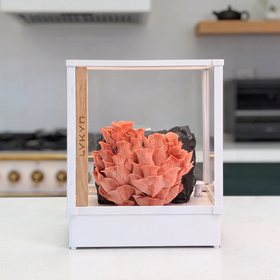



A Pink Oyster cluster on your counter by the second Tuesday. That is the whole promise of this weekend. You carve out one Saturday morning, you let the kit do the slow work, and on Monday evening you watch the first pins stand up.

Saturday 10am. The box lands on your counter.
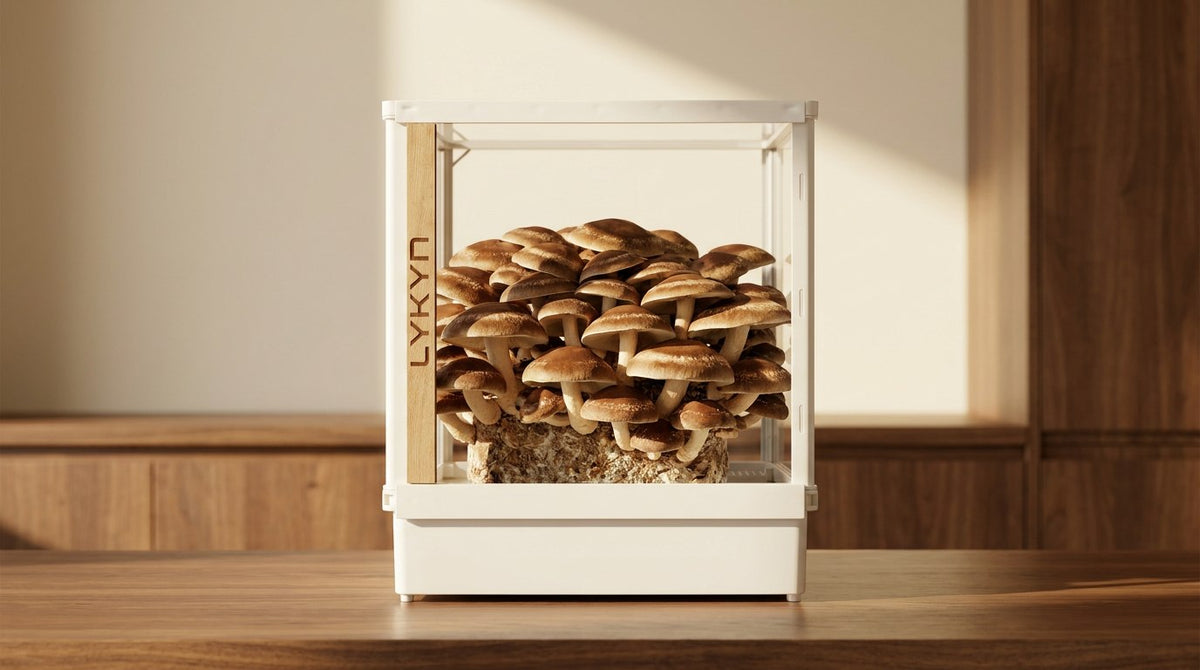
You have a kit on the counter and a weekend. That is all the planning this needs. The Lykyn Smart Mushroom Grow Box ships in one carton with the chamber, a pre-colonized 5 lb fruiting block in a sealed bag, a short HDMI-sized power brick, and a one-page quick start card. No tools. No sterile gloves. No HEPA filter in a closet somewhere.
Pull everything out slowly. The chamber feels heavier than it looks because the glass door is real glass, not acrylic, and it is seated into a steel chassis. Set it on a stable surface at eye level: a kitchen island, a bookshelf, a desk corner by a window that does not get direct afternoon sun. The hum of the fan at idle is quieter than a modern fridge. You will stop hearing it inside an hour.
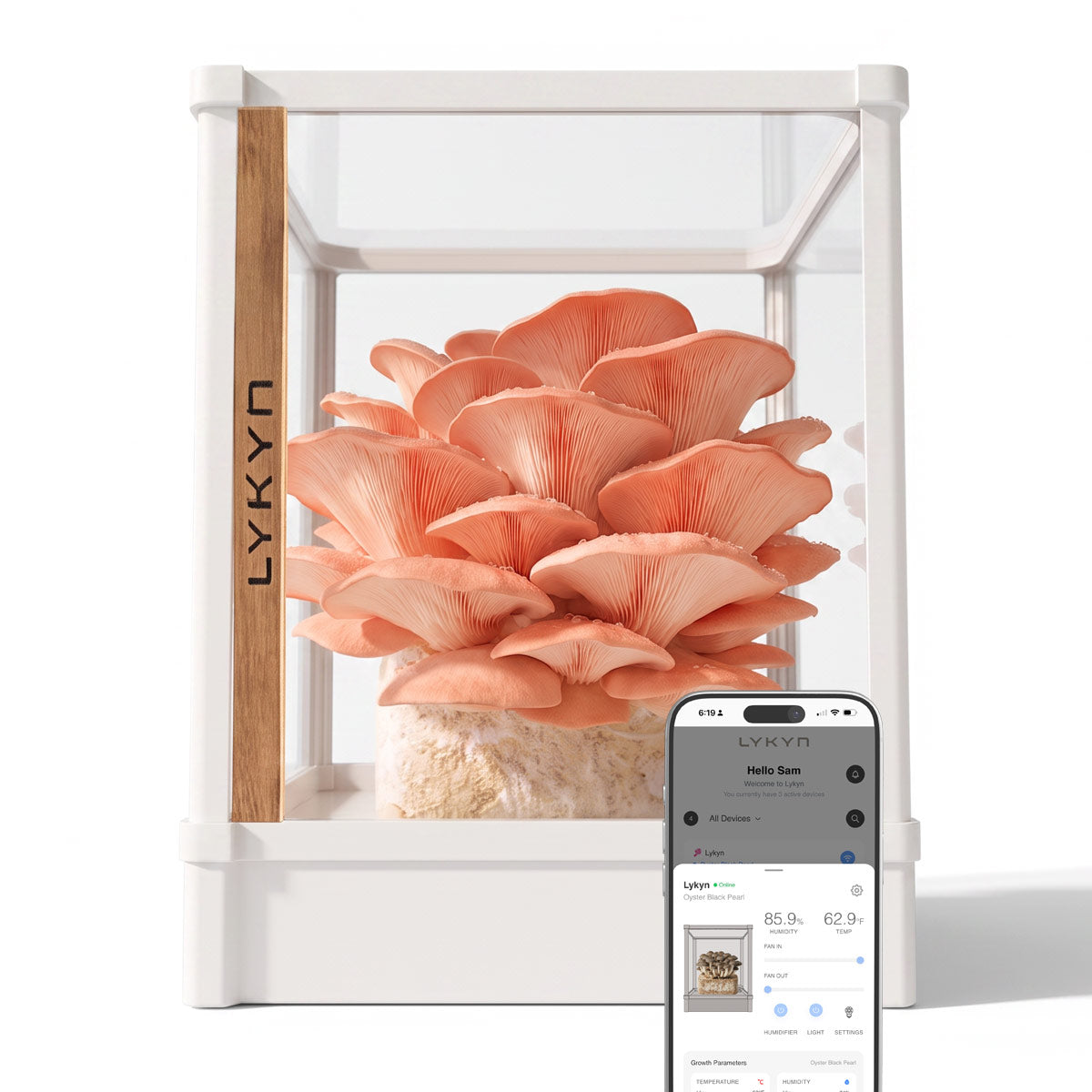
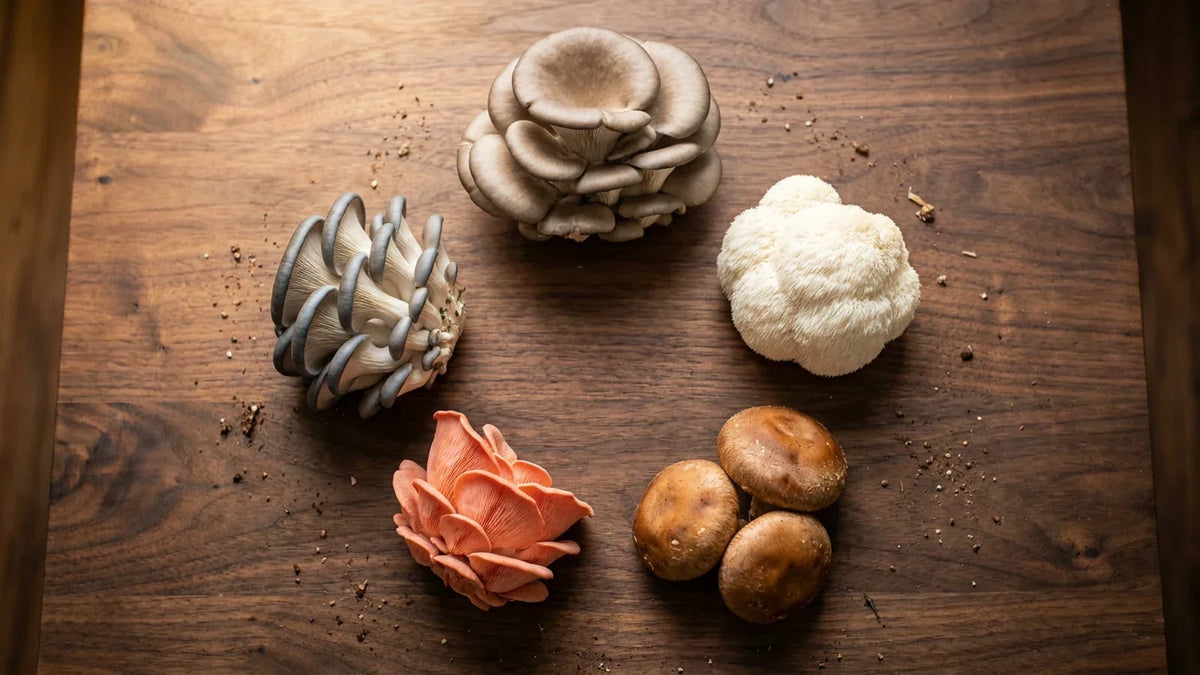
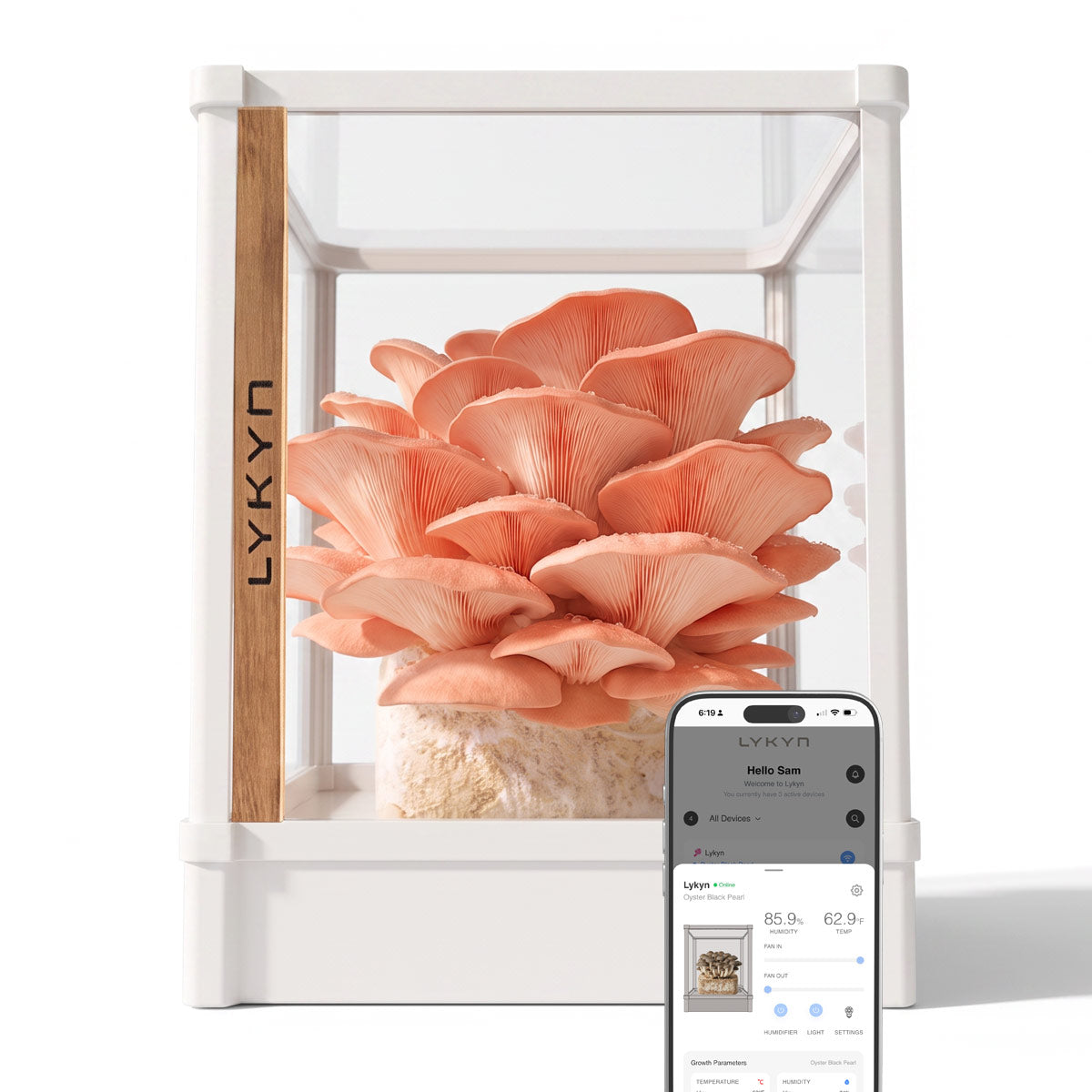
Peel the clear film off the glass. Wipe the inside with a dry paper towel. Plug it in. The chamber runs a thirty-second self-check that sips through its sensors and then rests at ambient. On the app, pair over Wi-Fi: scan the QR on the back panel, name the chamber something you will not regret in six weeks, and pick your species profile from the dropdown. Pink Oyster, Lion's Mane, Shiitake, Blue Oyster, Chestnut. The chamber reads the profile and loads the right humidity ceiling, the right FAE cadence, the right pin-stage trigger.
Saturday 2pm. Hydrate and seat the block.
Four hours in, the chamber has stabilised at your kitchen's baseline. Now the biology arrives. Take the sealed fruiting block out of its bag. Pink Oyster blocks weigh exactly five pounds and feel firm, like a loaf of dense bread wrapped in a thin plastic skin. The surface is a solid cream white where the mycelium has run through the sawdust. Lift the block to your nose for a second. The smell is faint: sweet hardwood, a trace of fresh bread, nothing sour, nothing sharp. If it smells sour, stop and call us. It will not.
Cut a shallow cross on the top face of the block with a clean kitchen knife. Two cuts, one inch deep, about three inches long. These are the fruiting pores: the two spots where mushrooms will push through first. Peel back the plastic along the cuts so the mycelium can breathe through them. Soak the whole block in cool tap water for twelve minutes, cuts facing down, weighted with a plate so it does not float. Twelve minutes. Not two hours. The block holds water the way a kitchen sponge does, and you only want the first inch wet.
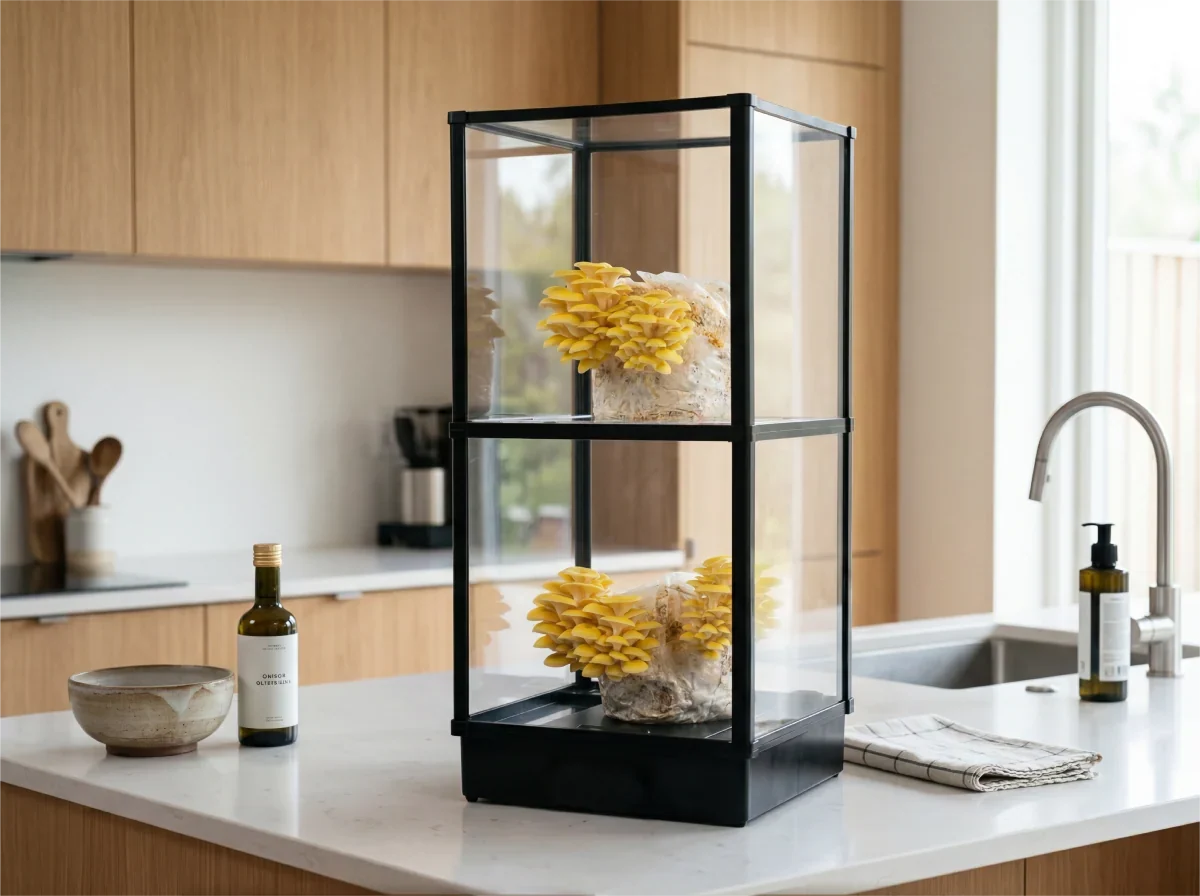
Drain it. Pat the plastic dry. Slide the block into the chamber on the lower tier, cuts facing out through the glass. Close the door. In the app, hit Start Grow and pick the matching species. The chamber takes over.
Saturday 6pm. Lid down. The first fresh-air exchange hums.
By early evening the chamber has climbed into fruiting range. Pink Oyster likes it humid and warm: 80 to 90 percent relative humidity, 70 to 75 Fahrenheit. The ultrasonic mister pulses in short bursts every few minutes, and you will see a soft fog settle on the inside of the glass and then clear as the fan runs its FAE cycle. Fresh-Air Exchange is the whole trick to clean fruiting bodies at home: the fan pulls stale CO2 out and pulls room air in through the carbon filter so the mushrooms grow with short, firm stems and wide caps instead of stretching long and spindly for oxygen.
You do nothing. The chamber runs the schedule. On the app you can watch three live numbers: humidity, temperature, CO2. Humidity should ride between 82 and 88 overnight. Temperature should hold inside a two-degree band. CO2 cycles up and then drops with each FAE pulse. If any value drifts outside its lane for more than ninety minutes the app sends a push. We built the alarm to be quiet. In August 2026 we logged a flush where a Pink Oyster block pinned a day early because the kitchen stayed warmer than the chamber expected after a late-afternoon oven bake, and the only alert we got was a single banner at 9pm.
Eat dinner. Watch something. The chamber works through the night.
Sunday morning. Reading the fog.
You will wake up to a chamber that looks like a quiet aquarium. The glass is misted on the inside. The block sits dark and glossy where the water went in. On the top face, right along the two cuts you made yesterday, the mycelium has rebloomed. It looks like a thin layer of fresh snow laid on top of a sleeping cat: that cottony, slightly reflective fuzz is the first visible sign that fruiting is about to start.
Open the app. Scroll to the timeline. You will see the first eighteen hours charted out: the humidity line steady, the temperature line almost flat, the CO2 saw-toothing with every fresh-air pulse. This is the shape of a healthy weekend. Nothing dramatic. The whole project is quiet.
Open the chamber door for ten seconds, no longer, and press the back of your hand against the inside of the glass. The air is warm and damp, like the air inside a greenhouse in April. Close the door. If you resist the urge to peek more than twice a day, pins will arrive sooner.
Monday evening. First pins.
Fifty-two hours after you first plugged in the chamber, you will see them. The cuts on the block have broken. Small coral-pink nubs push through the sawdust in clusters of four to twelve. They are the size of pencil erasers at 6pm and the size of marbles by 10pm. Pink Oyster races ahead of every other species we sell for a reason: in a steady chamber the species can double in size overnight.
Do nothing. Resist every instinct to mist by hand, to open the door, to rearrange. The pins want a stable chamber. By Tuesday evening the pins have become tiny trumpets. By Wednesday they are oyster shells. By Thursday morning the caps have flattened out and the edges have started to curl upward: that is the harvest signal. You twist a cluster off at the base with a clean hand. A full first flush from one 5 lb Pink Oyster block fits in a shallow mixing bowl.
Weigh it out of curiosity, not accounting. The point of growing at home is not grams per dollar. The point is that the mushroom on your pan on Thursday night was a spore in a bag on Saturday morning, and you were the quiet infrastructure in between.
What to grow for your first weekend
Pick a species the grocery does not carry. That is the real reason to grow at home. Supermarket shelves run on white button, cremini, and a lonely tray of shiitake with the stems trimmed off. Pink Oyster, Lion's Mane, and Chestnut live outside that supply chain. They taste nothing like the button mushroom you grew up with, and they cost double at a farmers' market when you can find them at all.
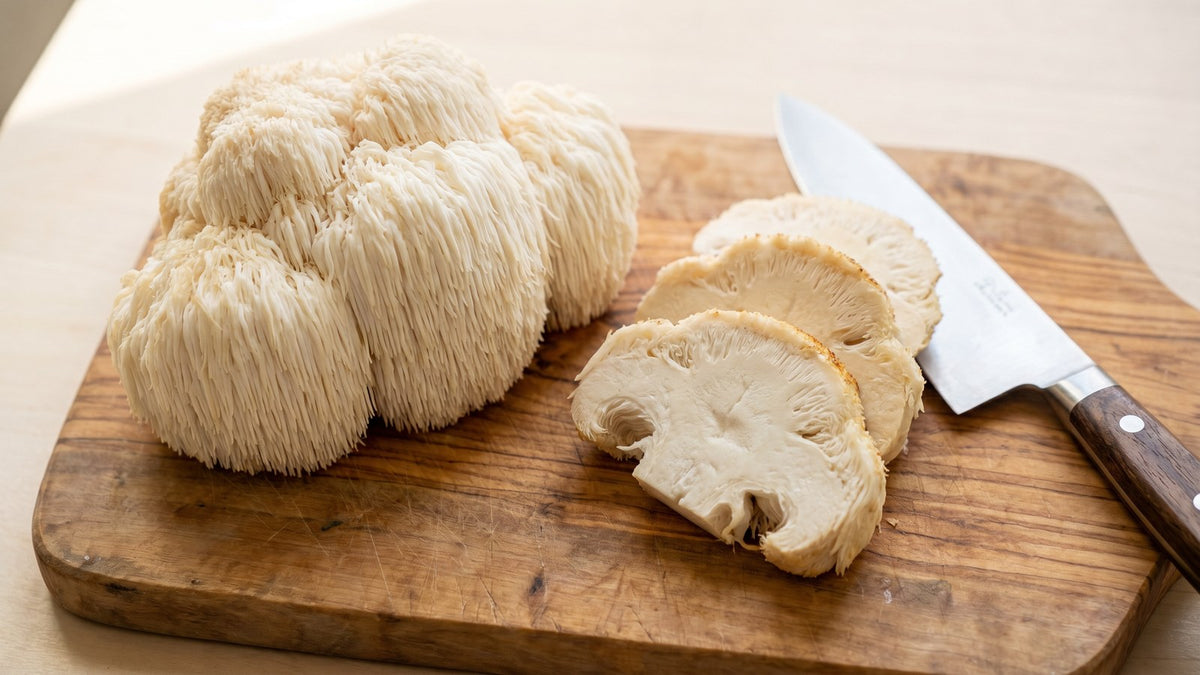
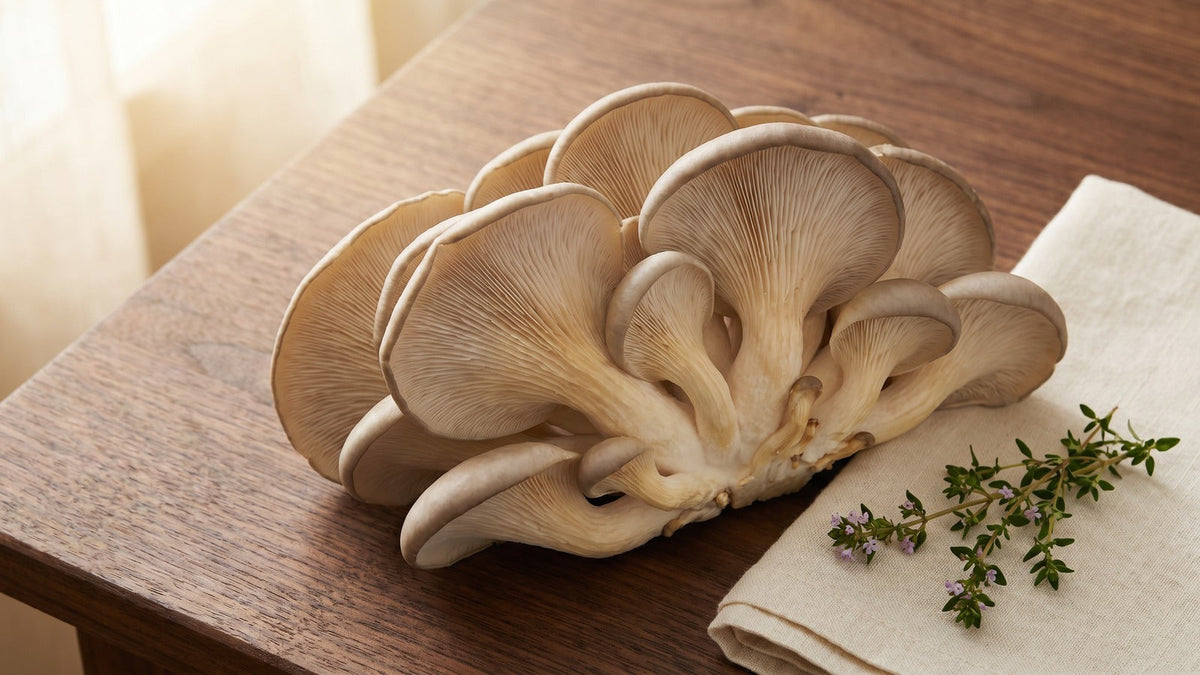
For a first weekend we point beginners at Pink Oyster or Lion's Mane. Both species fruit on the same temperature and humidity curve the chamber ships with, both tolerate one missed FAE pulse without aborting a flush, and both forgive small timing errors. Pink Oyster runs quicker and more theatrical: coral clusters that look like reef in a tank. Lion's Mane is slower and stranger: white pom-poms that smell like crab when you sear them in butter.


What we got wrong the first time
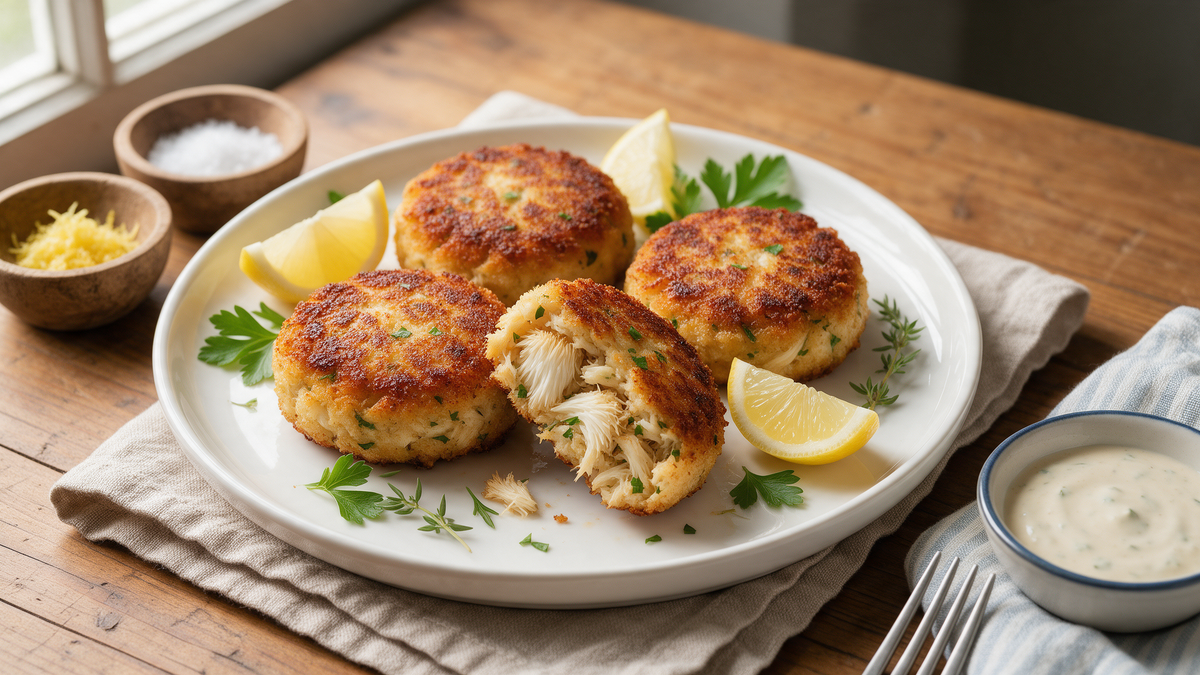
Our first in-house weekend run on a Pink Oyster block went long because we hydrated the block for forty minutes instead of twelve. The bottom of the substrate turned waterlogged, the first flush came in sparse, and a corner of the block went sour-smelling by day six. We threw that block out and started a second one with a kitchen timer. Twelve minutes. The second block flushed on schedule and finished with a full bowl of coral clusters that we sliced the long way and seared in brown butter with lemon zest and black pepper. Set a timer. The chamber will not save you from a thirty-minute soak.
Frequently asked questions
Do I need to sterilise anything, or wear gloves?
Clean hands and a clean kitchen knife carry you through the whole weekend. The fruiting block arrives sealed and pre-colonized, so the mycelium has already outrun the common contaminants that a home grower would worry about. Wash your hands, wipe your blade with alcohol if you have it, and work on a clean counter.
What happens if I miss the Saturday afternoon soak window?
Nothing bad. Blocks hold their fruiting potential for up to three weeks in the sealed bag at room temperature. Start the soak on Sunday morning if the week got away from you and shift every milestone a day. Pink Oyster will still land pins on day two of the chamber clock, Lion's Mane on day three.
Can the chamber run in a bedroom or a studio apartment?
Yes, with one caveat. The fan is quiet at idle and audible but not disruptive during an FAE pulse, roughly the volume of a laptop fan under light load. Keep the chamber three feet from a bed if you are a light sleeper. The ultrasonic mister is silent to human ears.
How much power does the box pull on a full weekend run?
Average draw sits near 25 watts across a 24-hour cycle, with brief peaks when the mister and the heater run together. A full first flush, counter to harvest, costs roughly the same as leaving a laptop open for five days. Your fridge works harder.
What if the first flush comes in sparse or stretched?
Stretched stems and small caps usually point at one of two things: too little fresh air, or the chamber sitting too close to a cold window. Open the app, scroll to the FAE log, and check the CO2 curve. If the saw-tooth is flat instead of pulsing, raise the FAE frequency one step for the second flush. Move the chamber eighteen inches off the glass if the window reads below 65 Fahrenheit.
Will I get a second flush from the same block?
Most Pink Oyster and Lion's Mane blocks give two flushes, and a healthy block will give three. After the first harvest, re-soak the block for ten minutes, drain, and put it back in the chamber. The second flush lands five to seven days later and runs about 60 percent of the first flush in volume.
Can I grow two species in the same chamber on the same weekend?
Yes, inside a narrow window. Pink Oyster and Lion's Mane share a fruiting profile close enough that both will produce in the same chamber when you run the Pink Oyster schedule. Shiitake needs a colder cycle and belongs in its own run. The app flags species conflicts before you start.



Share:
Growable Mushrooms: The Complete Guide to Home Cultivation Varieties
Best Mushroom Growing Kits 2026: 6 Kits Compared for Home Growers