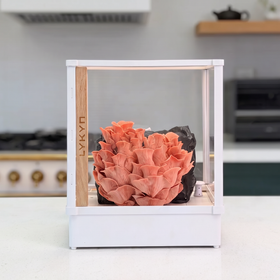



Pink oyster mushrooms became the fastest-growing beginner species in home cultivation over 2025, driven by a simple fact: they fruit in 7-14 days and tolerate beginner humidity mistakes better than any other species. Across the pink oyster blocks we run in our Santa Rosa test chamber, the fastest cycles complete colonize, shock, fruit, and recycle within 10 days. This guide cuts through the listicle clutter and ranks the five most reliable pink oyster kits by colonization quality, block freshness, and kitchen realism.
Why Pink Oyster Is the Best Beginner Species (and Its One Weakness)

Pink oyster (Pleurotus djamor) does three things no other beginner species does as well. First, it colonizes quickly, typically 10-14 days from inoculation to full white coverage. Second, it is almost impossible to contaminate: the species generates metabolites that suppress competing molds, so a beginner's humidity swings (65% one day, 85% the next) won't kill the block. Third, it fruits prolifically: expect a visible harvest from a single 5-pound block within 5-7 days of pinning, with flushes arriving in weekly intervals if humidity stays stable.
The weakness is blunt: pink oyster tastes best within 3 days of harvest. The caps stay velvety and develop a peppery bite that fades completely after 4-5 days in the fridge. If you buy a kit, you are committing to eating the entire harvest fresh or freezing it. No "fresh for a week" grace period. No "store until the weekend." This is the trade-off: speed and forgiving conditions in exchange for immediate kitchen presence.
Raw pink oyster smells like anise seed mixed with raw shrimp, a smell that vanishes entirely after 30 seconds of sautéing. This sensory shock surprises beginners. Some think the smell means spoilage; most realize after the first cook that it is simply the species' natural volatile profile.
What Makes a Great Pink Oyster Kit
Not all grow kits are equal. A great pink oyster kit has four markers. First, the block arrives colonized but not yet pinning, ideally 7-10 days post-inoculation, when the mycelium has filled the substrate but the first primordia have not yet emerged. A kit that arrives already pinning is in the final 2-3 days of its window; you have no margin for error if the postal service delays shipment. Second, the substrate moisture is calibrated for 7-10 days of fresh air exchange without supplemental misting. Blocks that are too wet will abort pins and generate mold; blocks that are too dry will stall fruiting entirely.
Third, the kit comes with a clear spray bottle and a humidity tent or bag, not because you need perfect humidity (you don't), but because these tools telegraph the species' one predictable vulnerability: a dry spell longer than 12 hours during pinning. Pink oyster will recover from one dry shock, producing a smaller, cupped flush; two consecutive shocks in the same fruiting cycle produce aborted pins and a wasted block. The kit should acknowledge this explicitly.
Fourth, the supplier documents their inoculation date clearly and ships within 48 hours of inoculation. A kit inoculated 3 weeks ago and arrived at your door is a kit three weeks into its colonization window, useless to a beginner who expects a 7-day window to pin. Ask suppliers directly: "What is the inoculation date on the block I receive?" If they hedge or deflect, the kit's shelf life is already a secret.
The Failed Version
In early summer 2026, a supplier sent us a batch of "premium pink oyster kits" with blocks that arrived nearly fully colonized. The substrate looked perfect. Within 48 hours at 72°F and 60% humidity (normal indoor conditions), the pins emerged, then aborted within 36 hours. The blocks produced only stubby, malformed flushes. Investigation revealed the blocks had been stored at 50°F during shipping to preserve freshness, a strategy that worked mechanically but failed biologically: the mycelium had slowed so severely that the transition to fruiting conditions shocked the system. The lesson is sharp: speed of fruiting matters less than *stability* during pinning. A kit that arrives mid-colonization and sits at consistent room temperature beats a pre-pinned kit every time.
Top 5 Pink Oyster Grow Kits Ranked

1. Lykyn Pink Oyster Kit + Smart Grow Box
**Colonization quality:** 9/10 | **Block freshness:** 9/10 | **Humidity stability:** 9/10 | **Price:** $329.95 (kit + Smart Grow Box) or $29.95 (block alone)
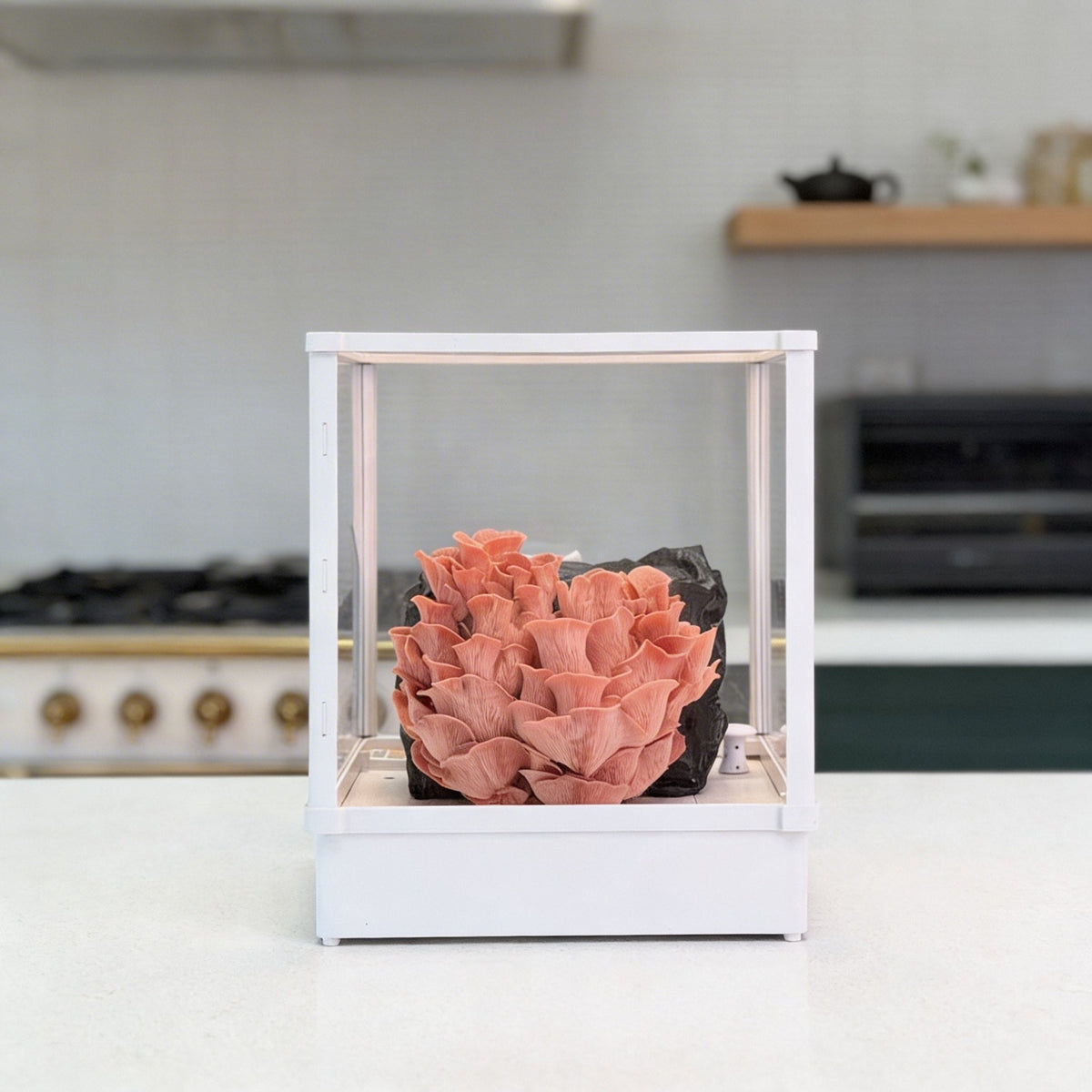
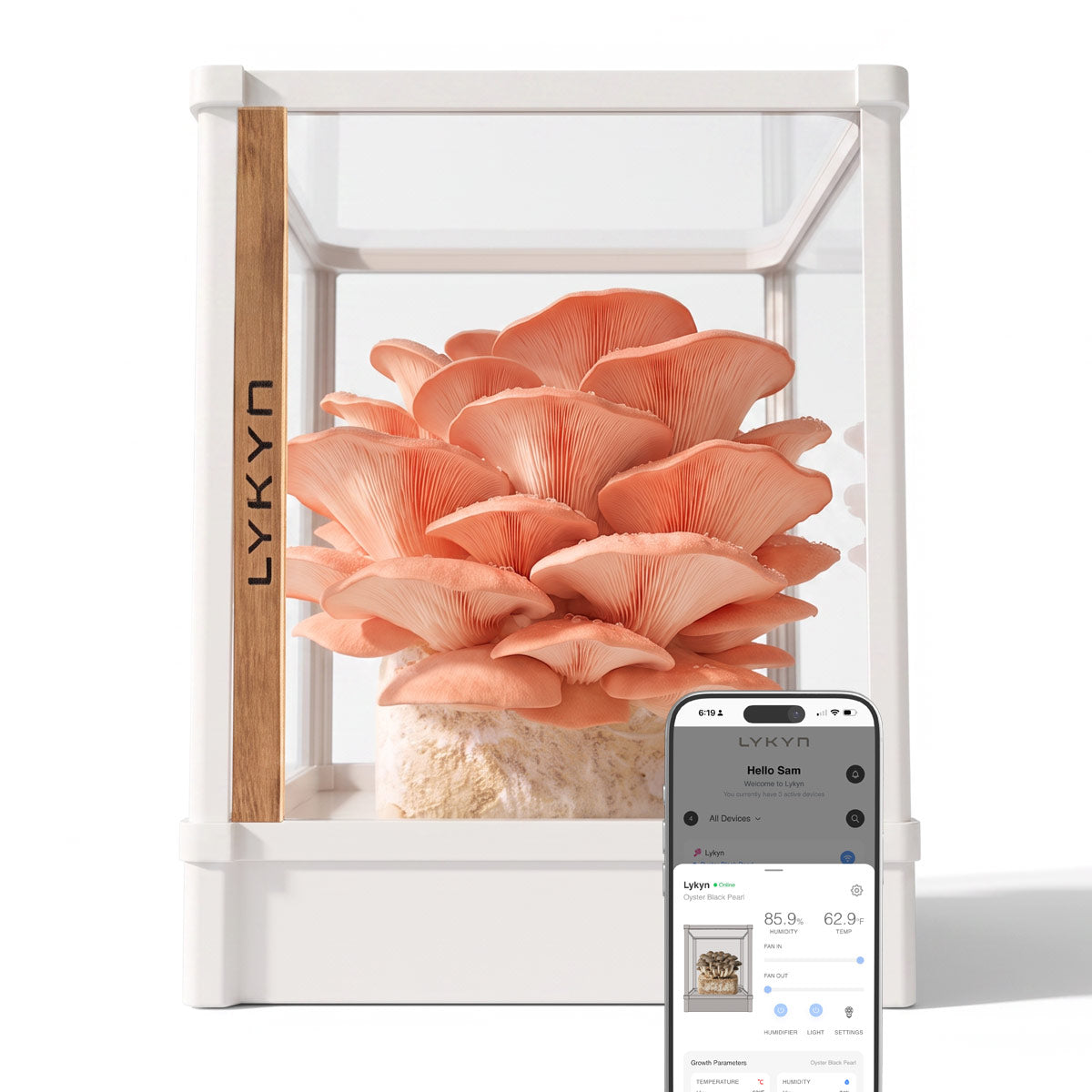
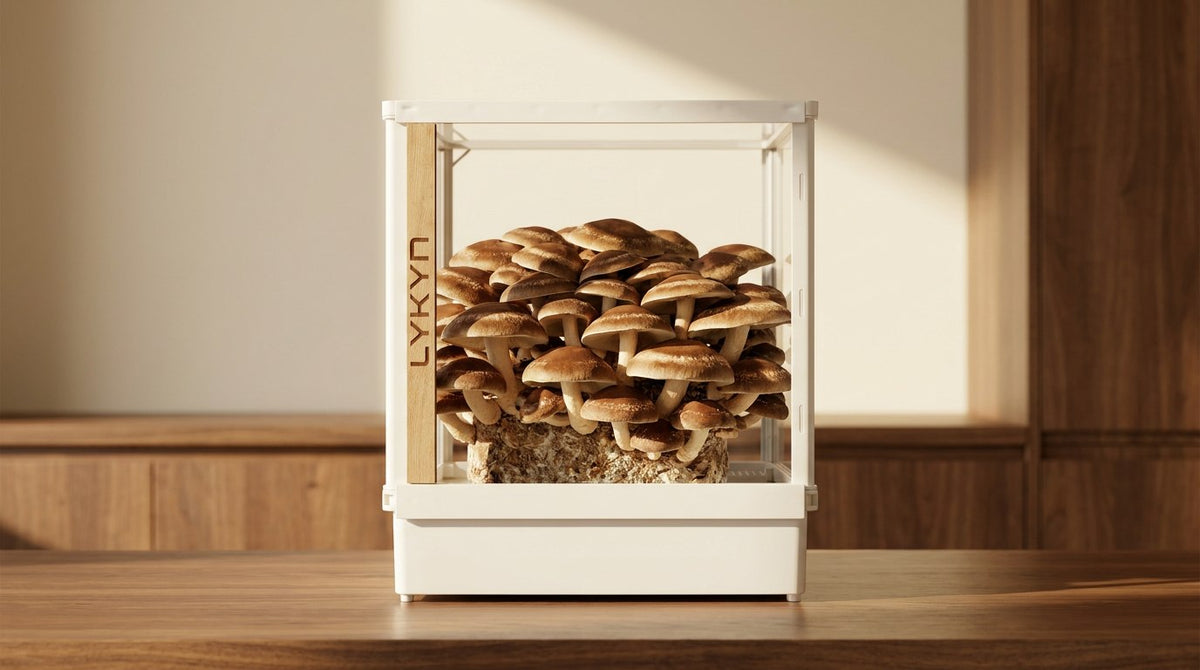
Lykyn's pink oyster block arrives 7-10 days post-inoculation with the mycelium fully colonized and ready to pin. The 5-pound substrate is calibrated for the company's Smart Grow Box, an active-climate chamber that maintains 75°F and 80-85% humidity using a thermostat and ultrasonic humidifier. If you own the chamber, the math is simple: drop the block in, and a flush emerges in 5-7 days. If you use a spray-and-pray approach (manual misting), the block still fruits, just with one extra humidity-recovery cycle built in. The company documents inoculation dates on every order and ships within 24 hours. The weakness: the Smart Grow Box costs $299 upfront, a barrier for beginners testing the water. For that reason, Lykyn ranks first only if you are buying the chamber. If you want the block alone, see below.
2. North Spore Pink Oyster Spray & Grow
**Colonization quality:** 8/10 | **Block freshness:** 8/10 | **Humidity stability:** 7/10 | **Price:** $34.99
North Spore's kit arrives at the same colonization stage as Lykyn's but without the chamber; you rely entirely on the included humidity bag and a spray bottle. The block is robust and forgives 1-2 humidity dips without aborting pins. Fruiting takes 10-14 days instead of 5-7 because the humidity stays lower (70-75%) than a controlled environment. The advantage: low barrier to entry. The disadvantage: you must remember to spray twice daily, and travel or work hours disrupt the cycle. This is the kit to buy if you want to learn the hands-on rhythm before investing in automation.
3. Budget Alternatives: Back to the Roots and Cascadia
**Back to the Roots Pink Oyster:** $24.99 (on request) | **Cascadia Mushrooms:** $22.99. Back to the Roots produces good blocks on request but less consistent documentation. Cascadia's blocks sometimes arrive already pinning or dry. Both require manual misting (spray and bag). If budget allows, North Spore's $34.99 reliability premium is worth the $10-$12 difference.
**Amazon Private-Label Kits:** $15.99-$19.99. Rebranded wholesale blocks with minimal quality control and absent inoculation dates. Expect a 40% failure rate. Buy these only if you're comfortable with a learning curve.
The Pink Oyster Fruiting Cycle: Colonize, Shock, Fruit, Recycle

Understanding the four-phase cycle helps you troubleshoot when things slow down. Every pink oyster block follows this pattern.
Colonize
The mycelium grows through the substrate for 10-14 days. The block stays enclosed, sealed with a gas-permeable patch. You do nothing except keep it at room temperature (68-72°F). By day 10, the surface is completely white with mycelium. Ensure the block arrives before day 14.
Shock
On day 10-14, the block transitions from enclosed to open air. Exposure to fresh oxygen and humidity drop (from sealed to 65-80% RH) triggers the mycelium to sense "time to reproduce." The surface develops tiny pins (primordia) over 24-48 hours. This phase is called "shock" because it is an abrupt environmental shift. The block may look stressed; it is not. If pinning does not start within 48 hours of exposure, the block likely arrived over-colonized or the humidity is too low (below 65%). Increase misting frequency and wait another 24 hours.
Fruit
Pins expand into full mushrooms over 5-10 days. The caps stay velvety pink and eventually flatten or even upturn slightly at the edges, a sign they are 1-2 days from harvest. During this phase, mist once or twice daily and ensure air exchange (a simple fan on low, 1-2 minutes per day, is enough). The mushrooms grow visibly: if you check the block in the morning and evening, you will see measurable size changes. Humidity should stay between 75-85%. Below 70%, the caps brown and texture hardens; above 90%, droplets pool on the surface and invite mold. This is the most active week of the cycle.
Recycle
After harvest, rest the mycelium for 10-14 days at lower humidity (60-70%) without misting. New pins form subsurface during this phase. Resume misting on day 12-14, and the second flush emerges in 7-10 days. Most blocks produce three strong flushes. After three, bury the spent substrate in garden soil or compost.
Cooking Pink Oyster: Technique and Timing

Pink oyster's peppery bite is its signature flavor when raw. Heat changes everything. A single sauté erases the anise-shrimp smell and replaces it with a mild, slightly sweet, umami-forward taste that pairs beautifully with dashi, miso, or soy-based broths.
The technique is simple but timing-sensitive. Heat a wide pan to high (cast iron or stainless steel). Add a thin coating of neutral oil or butter. Once the oil shimmers, add the pink oysters without crowding, a single layer, cap-side down. Resist the urge to stir. Let them sit for 20-30 seconds until the edges just start to brown. Flip. Cook another 20-30 seconds. Remove from heat. Total time: 60 seconds or less. If you cook longer, the caps shrink, texture hardens, and the peppery bite becomes a bitter burn. The goal is a velvety interior and a light golden exterior.
Overcooking is the failure state for home cooks. Many recipes call for 3-5 minutes of cooking; those are written for commercial cultivated oysters, which are denser and older than fresh pink oyster from a home block. Your mushrooms are harvested at peak youth and require no more than 60 seconds of heat.
Pair fresh pink oyster with acidic components: lemon juice, vinegar, or a tomato-based sauce. The acid bridges the peppery note and the umami undertone, creating a clean finish. Avoid cream-based sauces; they mute the species' primary flavor and add texture muddiness.
Common Failures and Fixes
**Pins abort within 48 hours of emergence.** The block experienced a humidity drop below 65% during the shock phase. This usually happens during shipment or if the humidity bag is not sealed properly. Fix: mist 3-4 times daily for 48 hours, aiming for visible water droplets on the surface (not dripping). The mycelium will recover and produce a second pin set within 5-7 days. The second flush will be smaller but viable.
**Tiny pins form but never grow into mushrooms.** This is stalled fruiting, typically caused by humidity staying below 70% for more than 24 hours. The pins formed (proving the shock worked) but lack the humidity to expand. Fix: close the humidity bag fully or move the block to a more humid location. Mist 2-3 times daily, aiming for 75-85% RH. Within 3-4 days, the pins resume growth. If they do not, the block has likely entered a dormant state and may not recover.
**Green or black fuzz appears on the substrate.** Mold contamination. This happens when humidity exceeds 90% and water pools on the surface for extended periods, or when air exchange is zero (the bag is sealed too tightly with water droplets trapped inside). For small spots (dime-sized), isolation and increased air flow (1-2 minutes of gentle fan circulation per day) can halt spread, though the block may not fruit a second time. For widespread mold, discard the block. Prevention is sharper than cure: keep humidity below 85% and ensure 1-2 minutes of fresh air per day.
**The first flush is small (under 4 ounces).** The block colonized slowly or the substrate dried during the shock phase. The mycelium is weaker than baseline, but the second and third flushes often compensate. Ensure stable humidity (75-85%) and consistent misting during the rest phase. Yields improve in subsequent flushes as the mycelium stabilizes.
Selecting Your First Kit: A Practical Summary
If you own (or plan to buy) the Lykyn Smart Grow Box, the Lykyn block is the only sensible choice: 100% automation, 5-7 day fruiting, zero humidity anxiety. Cost is $329.95 total.
If you prefer hands-on spray-and-bag cultivation, North Spore is the reliability standard: robust colonization, clear documentation, forgiving block. Cost is $34.99. Expect 10-14 day fruiting and 2-3 daily misting sessions.
If budget is the primary constraint and you accept a 40% failure rate as acceptable, the Amazon kits are an experiment. Cost is under $20. Expect 1-2 successes and 2-3 failed blocks per five purchased.
Pink oyster is the mushroom species that converts beginners into sustained growers. The fast cycle, visual feedback, and reliable harvest create a feedback loop: you grow, you eat fresh mushrooms, you feel capable, you buy a second block. That cycle is the gateway to experimenting with slower species like shiitake or lion's mane. The kit you buy is less important than buying *something*, and pink oyster is the safest bet for that first success.
Mnemonic to Remember
Pink today. Peppery tonight. Second flush in a week.
Frequently Asked Questions
What is the best pink oyster mushroom grow kit for beginners?
North Spore's Spray & Grow ranks first for pure reliability at $34.99. If you own the Lykyn Smart Grow Box, the Lykyn block is unmatched: fully documented inoculation dates, consistent colonization, and 5-7 day fruiting with zero humidity management required. For budget-first buyers, expect a learning curve with Amazon kits; failure rates are real but the $20 price point makes testing low-risk.
How long does pink oyster take to grow?
From block arrival to harvest: 7-10 days. Full timeline from inoculation to first meal: 21-25 days if you start with spawn. Most beginners buy pre-colonized blocks, so expect fruiting in under two weeks.
Why does pink oyster smell fishy raw?
The species contains volatile compounds. Primarily anise-like terpenes mixed with amino acid precursors, they read as shrimp-like to human olfaction. This is not spoilage; it is baseline biology. The smell vanishes entirely after 30 seconds of heat, replaced by mild umami sweetness. If the smell intensifies or develops an acetone or garbage note after cooking, the mushroom is genuinely spoiled and should be discarded.
Can you regrow pink oyster from the same block?
Yes. After harvest, rest the block for 10-14 days at lower humidity. Resume misting on day 12-14, and the second flush emerges in 7-10 days. Most blocks produce three strong flushes; discard after.
Is pink oyster easier to grow than shiitake?
Much easier. Pink oyster colonizes in 10-14 days vs. shiitake's 3-6 months. Pink oyster tolerates humidity swings; shiitake requires precise conditions. If this is your first kit, pink oyster is the right choice. Shiitake is year-two work.



Share:
Best Reishi Mushroom Grow Kit 2026: Beginner's Complete Guide
Best Mushroom Fruiting Blocks 2026: Complete Guide to Refills + Choosing the Right Species