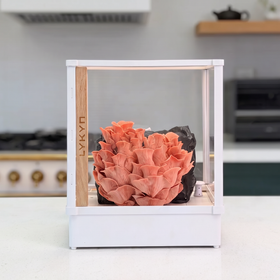



Yes. Most apartment dwellers can grow mushrooms on a countertop, bookshelf, or dresser top without installing anything permanent or disturbing a neighbor. The real constraints are humidity drift, contamination smell, and noise. These are real but manageable with realistic expectations.
This guide covers what happens inside a modern home mushroom chamber: how much space you need, where in your apartment to place it, whether your landlord will care, and what species forgive the tight quarters.
The Exact Space Your Chamber Needs
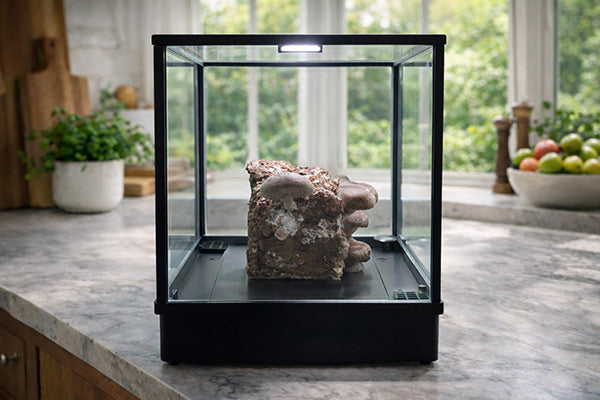
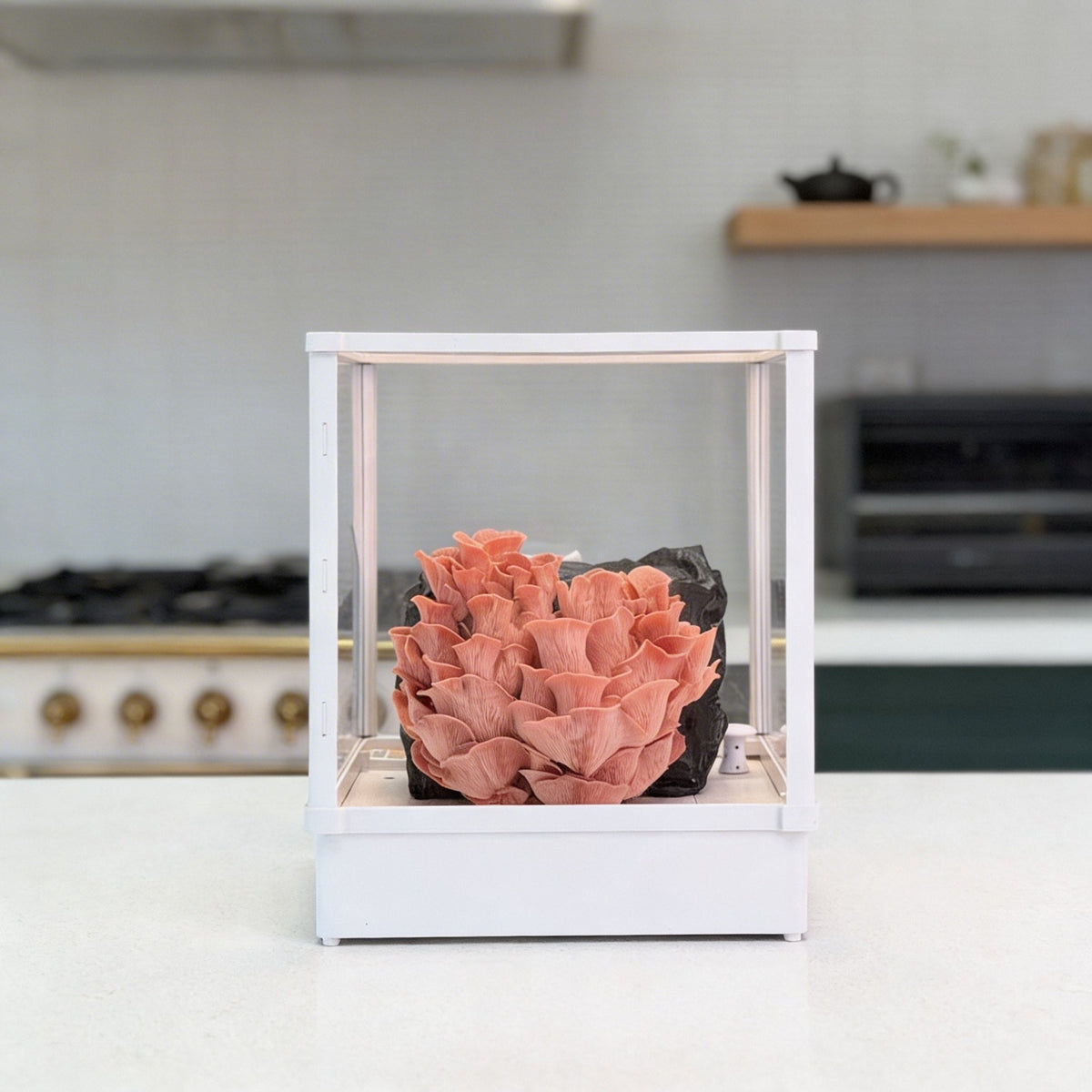
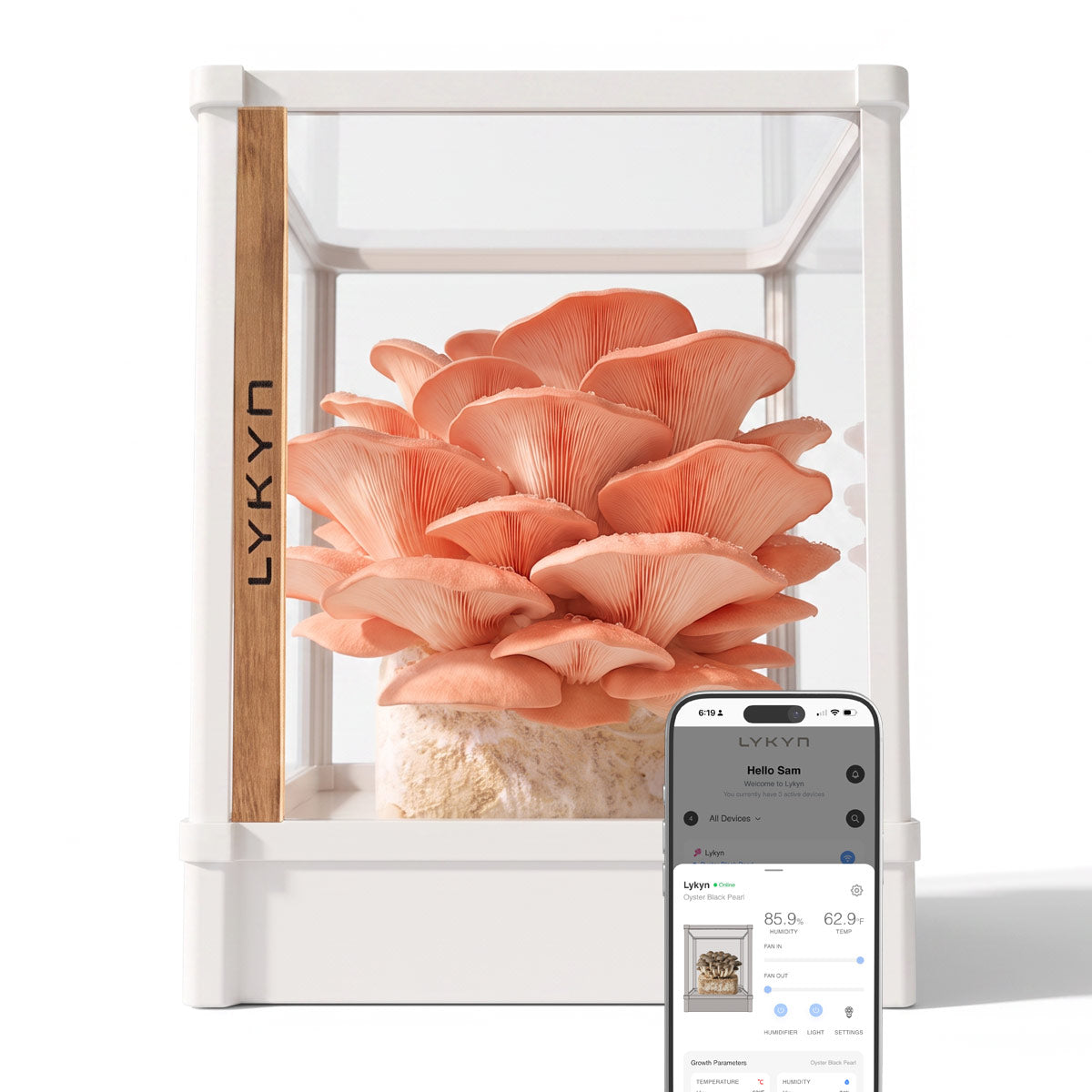
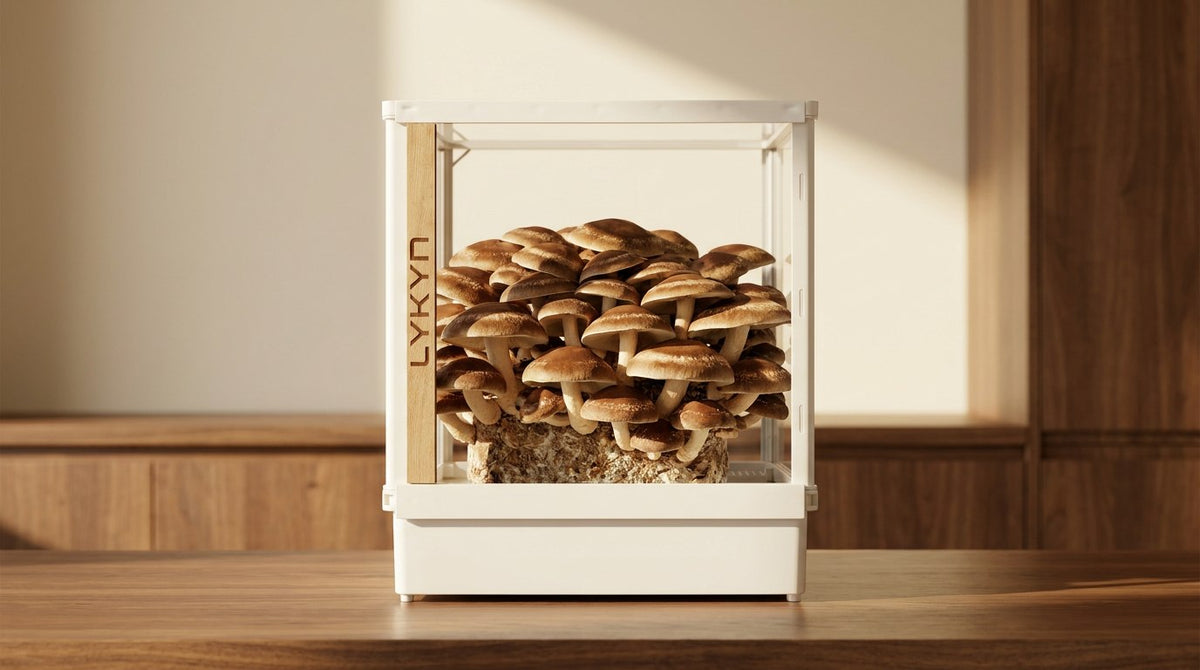
A single-tier home mushroom chamber occupies 12 to 14 inches on each side, with a height of 14 to 16 inches. Picture a toaster oven footprint. Two stacked tiers double the height but keep the same counter space.
In a small apartment, that footprint fits:
- A kitchen counter next to a coffee maker
- A bookshelf gap (if your shelves accommodate height)
- The top of a dresser or nightstand
- A corner of a desk
- A small side table or plant stand
The hidden constraint is airflow. Your chamber needs about 3 to 6 inches of clear space on all sides. Don't let it touch walls or wedge into a corner. This prevents humid air from pooling around the unit. In practice, placing it 6 inches from a wall and centered on a surface takes 10 seconds and costs nothing.
If your apartment has a kitchen island or peninsula, that's ideal: the chamber draws fresh air from all directions and sits visibly in the space, like a small appliance. Looks intentional, operates efficiently.
Real Placement Options in Your Home

Kitchen counter: The default. Natural light (avoid direct sun on the chamber itself; it can overheat in a south-facing window), easy access to water for misting, heat from nearby appliances is neutral. Position it away from a stove or oven if you can; heat spikes above 75°F slow fruiting.
Bookshelf niche: Works if shelves are adjustable. Remove one shelf, set the chamber on the shelf below, and you've created a grow station. Looks like a decorative object. Dust collects less than on open counters. Airflow is slightly restricted, but modern chambers self-regulate; the fan cycles ensure air exchange.
Bedroom dresser or nightstand: Viable. The chamber vents air every 3 to 5 minutes for 90 seconds per cycle. That's brief enough that bedroom humidity stays stable. Noise is minimal (see "Noise Reality" below).
Closet corner: Doable if the closet has a door that stays open or a louvered vent. Enclosed spaces trap humidity. A sealed closet will spike to 80-90% RH, which is fine for the first 2-3 flushes but risks stagnation. Leave the door cracked or install a simple vent if you're in a humid climate.
Window sill or under a wall-mounted TV: Avoid. Direct sunlight (even filtered) overheats the chamber. Wall-mounted shelves above a couch or bed collect dust and create awkward sightlines.
Top of a fridge: Not ideal. Vibration from the compressor transfers to the chamber and can disturb developing pins. Temperature fluctuation is also larger there.
Humidity: What Leaves the Chamber
This is the objection that stops most renters: "Won't this make my apartment wet?"
No. A well-sealed chamber vents air in brief pulses: 90 seconds every 3 to 5 minutes. Each pulse releases humidity-saturated air (we're talking 95%+ RH inside the chamber) into your room. That air immediately mixes with the ambient air in your apartment, which is 40-60% RH. The result: negligible room humidity change, well within what modern drywall and paint tolerate.
Two safeguards if you're paranoid:
- Open a window slightly during fruiting cycles (misting time). A 2-inch crack suffices.
- Run a bathroom exhaust fan or open the kitchen exhaust if you have one. This is overkill for most apartments but costs nothing to do.
The risk you should watch for: a windowsill placement in a cold climate during winter. If the outside temperature is below 40°F and you mist frequently, condensation can form on the interior window frame. Move the chamber 2 feet away from the window, or accept minor condensation and wipe the frame weekly.
Smell: When the Chamber Smells, and When It Doesn't
Healthy mushrooms smell earthy and subtle. Picture what you'd smell walking past a forest floor after rain. Most apartment dwellers report the smell is not noticeable beyond 3 feet from the chamber.
The bad smell happens only during contamination. A colonized block infected with mold, bacteria, or competing fungi produces a sour or ammonia-like odor. This is your signal: compost the block immediately and investigate why it happened (usually humidity too high, or poor inoculation).
Importantly: once you compost the contaminated block, the smell vanishes. It doesn't linger in the room or the chamber. A well-sealed, well-ventilated chamber clears odors completely because it cycles fresh air every 3 to 5 minutes.
In a studio or 1-bedroom, a contaminated block is inconvenient but not a lease violation. You compost it, start fresh, and move on. Neighbors won't notice or complain.
Noise: What You'll Actually Hear
The humidifier inside the chamber produces an ultrasonic frequency (40+ kHz). You won't hear it at all. The fan is the audible component: it's a small axial or centrifugal fan that runs in brief cycles (seconds at a time) and then stops. Over a day, it cycles 200+ times, but each cycle is so short and quiet that you won't notice it from across the room.
For reference: a mini fridge produces a steady 35-40 decibels when compressor runs. A home mushroom chamber is quieter. If you can tolerate a mini fridge on a shelf, you can tolerate a chamber on your nightstand.
A dorm room? Absolutely fine. A shared wall apartment where you're worried about bothering neighbors? Also fine. The chamber is quieter than most kitchen appliances and much quieter than a TV or music system.
Best Mushroom Species for Apartment Growers

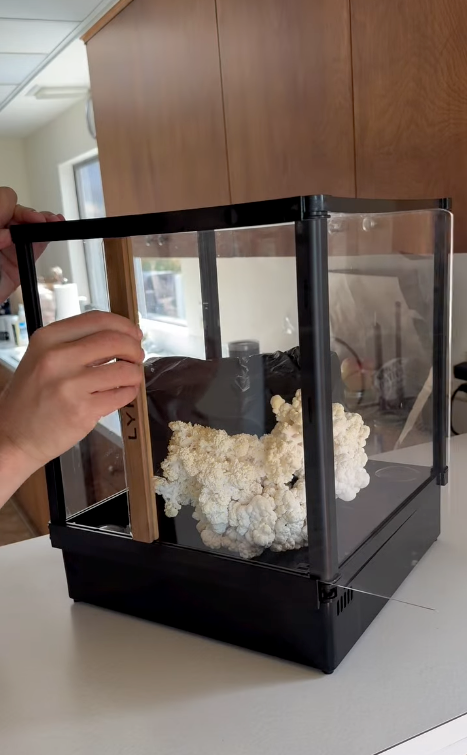
Lion's Mane: The apartment favorite. Forgiving of temperature swings, tolerates low humidity cycles without stalling, and produces a visually striking harvest. Fruiting takes 12-16 days from full colonization. Smell is mild. Flushes are 3-4 clusters per block, modest yields, low density so fruit hang neatly and don't tangle.
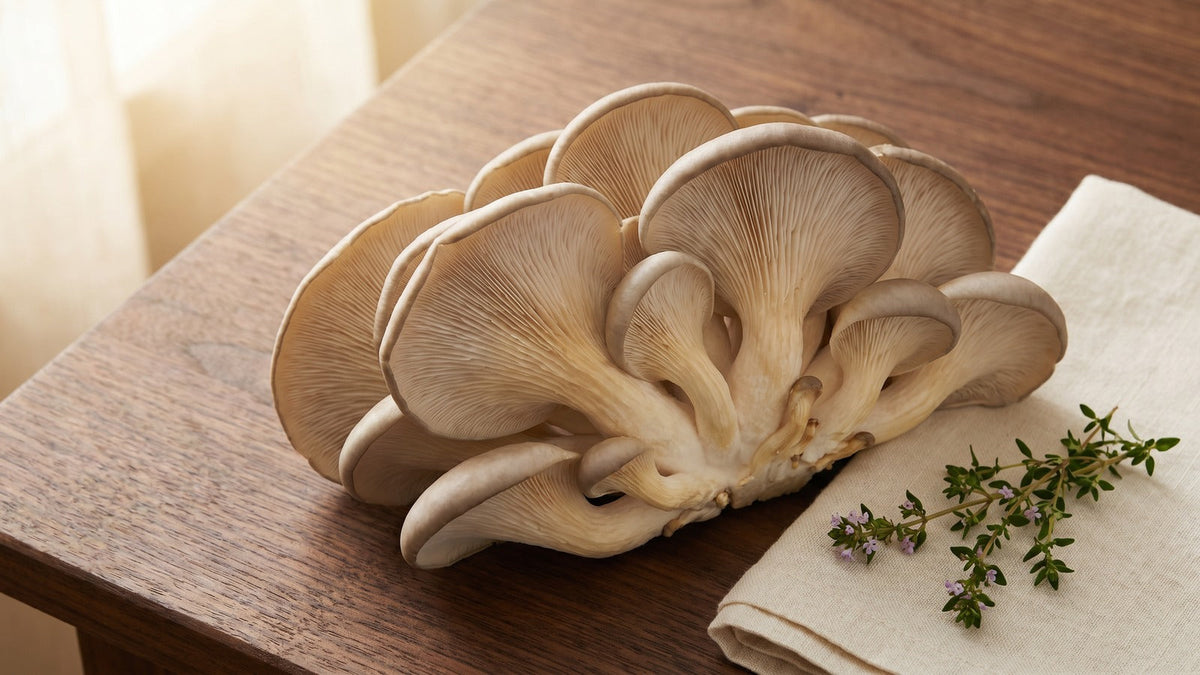
Pink Oyster: Fast and colorful. Colonization takes 7-10 days, fruiting starts within 4-5 days of pinning. In a small space, the speed is a feature: you see results quickly and cycle blocks through faster. Smell is earthy but slightly pronounced. Still apartment-appropriate, and gone within 2 hours of harvest. Clusters are dense and upright, so they fit neatly in the chamber without crowding.
Cinnamon Cap: Compact fruiting and forgiving of low light. If your apartment has a dimmer corner, Cinnamon Cap thrives. Fruiting is slower than Pink Oyster (10-14 days), but the reward is a dense, multiple-flush yield from a single block. Smell is subtle.
Landlord and Lease Considerations
A mushroom chamber is a countertop appliance. No installation. No plumbing. No drywall modifications, no hardware. You plug it in, sit it down, and remove it whenever you leave. It's legally the same category as a toaster or coffee maker.
Most landlords and lease agreements have no clause against "countertop mushroom growing." If you're uncertain, a quick email to your landlord is free and usually clears it immediately: "I'm setting up a small electric device on my kitchen counter to grow mushrooms. It's like a humidified grow box, about the size of a toaster. Is that OK?"
Most replies are yes, with zero follow-up. A few ask what it does; you explain. Practically none say no. If they do, you own the device; you can bring it to a future apartment or share it with a friend.
Damage risk is near-zero. The chamber is sealed; water stays inside. Your counter sees no liquid. Your walls, flooring, and electrical system are untouched. A chamber that runs for 6 months and produces 12 harvests leaves zero trace when you move out.
The Dorm Room Special Case
Dorms are tighter than apartments. A dorm room is often 150-200 square feet, shared with another person, and furnished with fixed furniture. But a mushroom chamber still works.
The footprint is the issue: two desks, two beds, two dressers. A chamber on your personal desk occupies maybe 10% of the surface. Stacked tiers save even more space. It's visible but not intrusive. No more visually dominating than a desk lamp or speaker.
The roommate factor matters most. You need agreement from your roommate. A 30-second conversation works: "I'm growing mushrooms in a small electric box on my desk. It's quiet, doesn't smell unless something goes wrong, and I harvest every 2 weeks." Most roommates think it's cool and ask questions.
If your dorm has a communal kitchen, that's a better placement: neutral territory, better airflow, no roommate negotiation. Walk your chamber down at fruiting time, check it daily, and bring it back to your room for colonization (no misting needed during colonization).
RAs (Resident Advisors) have no reason to object. It's not prohibited under any standard dorm conduct code. It's not a fire hazard, not a drug paraphernalia claim (mushroom kits are legal everywhere in the US). You're just growing food, quietly, in your dorm room.
Is Your Space Ready? A Honest Checklist

Your apartment is suitable for mushroom growing if:
- You have a countertop, shelf, or dresser surface at least 15 inches wide
- The surface is not directly under hot lights or in a hot oven blast zone
- Your ambient temperature stays between 55°F and 80°F (most modern apartments do)
- You have access to clean water for misting (any tap or filtered water works)
You should probably not grow mushrooms in your apartment if:
- Your lease explicitly forbids it (rare, but read yours if concerned)
- You have a severe mold allergy or respiratory sensitivity to spore release (mushroom spores are airborne in tiny amounts during fruiting; talk to a doctor if you're borderline)
- Your apartment temperature swings below 50°F or above 80°F regularly (fungus tolerates this but growth slows; not ideal)
- You travel frequently and can't check the chamber for more than a week at a time
Beyond those constraints, small-space mushroom growing is practical, legal, and quiet enough not to bother anyone. The "I don't have room" objection is solved once you see the actual footprint. The "it will smell up my apartment" fear disappears after your first harvest. The "my landlord will never allow it" concern dissolves with a one-line email.
FAQ
Can you grow mushrooms in a bedroom?
Yes. Set the chamber on a dresser or nightstand, keep it 6 inches from walls for airflow, and it will run quietly through the night. Noise is minimal (fan cycles are brief and quiet), humidity impact is negligible (air vents in 90-second pulses every 3-5 minutes), and smell only occurs if contamination happens. In that case, you compost the block and the smell vanishes immediately. A bedroom is a perfectly suitable grow space.
Do mushroom kits smell in an apartment?
Healthy fruiting mushrooms smell earthy and subtle, noticeable only within a few feet of the chamber. A contaminated block smells sour or ammonia-like, but that's your cue to compost it immediately; the smell clears once the block is removed. A sealed chamber with proper airflow cycles clears odors completely in minutes. Over a 6-month apartment grow cycle, smell is not a neighbor concern.
How much space do you need to grow mushrooms at home?
A modern single-tier chamber occupies roughly 12 to 14 inches on each side and 14 to 16 inches tall. Picture a toaster oven footprint. It fits on a kitchen counter, bookshelf, dresser, or desk. The only other requirement is 3 to 6 inches of clear space on all sides for airflow. Most apartments have multiple surfaces that work.
Are mushroom grow kits noisy?
The fan is the only audible component, and it runs in brief cycles (seconds at a time) spaced throughout the day. Each cycle is quieter than a mini fridge compressor or a kitchen exhaust fan. You won't notice it from across a room, and certainly not if the chamber is in another room or a separate closet. Dorm rooms and shared apartments are fine.
Can you grow mushrooms in a dorm room?
Yes, if your roommate agrees (usually a quick conversation). Place the chamber on your desk or in a communal kitchen, and it takes up a small footprint. RAs have no reason to object; it's a countertop appliance, not a prohibited item. The main constraint is getting agreement from your roommate, not physics or space.
The Bottom Line
Apartment living used to mean skipping home mushroom growing. The footprint objection, the smell worry, the landlord concern. Each felt like a blocker. In practice, none of them are. A modern chamber is compact, quiet, and sealed. It fits on a countertop, produces an earthy smell during harvest, vents air in brief cycles that don't noticeably change room humidity, and leaves no trace when you move out.
In November 2025, we shipped the first small-scale chamber designed specifically for this: countertop footprint, sealed ventilation, simple controls. What we learned from early users was consistent: the constraint that stopped them from trying wasn't space. It was doubt about whether the space they had was enough. Here's the proof: it is.
For deeper species guides, see How to Grow Mushrooms at Home, Pink Oyster Growing Guide, and Is a Mushroom Growing Kit Worth It: Cost, Yield & ROI.





Share:
Best Gifts for Mushroom Lovers 2026: Complete Gift Guide
Best Shiitake Mushroom Grow Kit 2026: Beginner's Buyer Guide