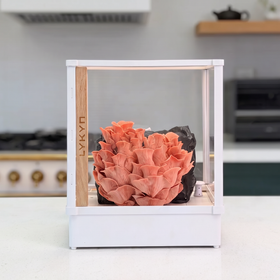



You've decided to grow mushrooms at home. You have a growing space, a growing medium (whether that's a chamber, a shelf, or a corner in your kitchen), and you're ready to source your first fruiting blocks. This guide maps 5 major US suppliers of pre-colonized mushroom blocks, what to expect from each, and how to pick one for your specific species, geography, and timeline.
A fruiting block is ready to produce mushrooms immediately. No colonization wait, no sterile technique required beyond basic cleanliness. You unbox it, mist it, and within 7-14 days (depending on species) you'll see pins. That speed is why online blocks are the entry point for most home growers. The challenge: not all suppliers ship at the same pace, carry the same species, or price their blocks the same way. We'll break down each one.
What to Look for in an Online Fruiting Block Supplier

Colonization status. A colonization certificate (or the supplier's explicit claim that blocks are "100% colonized" or "ready to fruit") tells you the block has fully consumed the substrate and is dormant, waiting only for fresh air and humidity to trigger fruiting. Without that assurance, you're buying a partially-colonized block or a kit that still needs weeks of colonization in a sealed bag, not what "ready to fruit" means.
Ship-fresh window. Once colonized, a block stays viable in the refrigerator for 2-6 months, and at room temperature for 2-4 weeks. A supplier that ships within 3-5 business days of your order keeps the block at its peak. If shipping takes 2 weeks, you'll receive a block that's losing vigor or has begun to abort (produce smaller flushes).
Species range. Pink oyster, blue oyster, lion's mane, shiitake, wine cap: each has different humidity needs, fruiting timelines, and flavor profiles. A supplier that stocks only 1-2 species limits your options. The top suppliers offer 4-7 species.
Shipping speed. Cross-country transit is 2-4 days via UPS Ground or FedEx. Regional suppliers ship faster (overnight or 2-day options). Check if the supplier publishes transit times or offers expedited shipping at checkout.
Refund and contamination policy. Blocks can arrive contaminated (visible green or black mold). A supplier should offer a refund or replacement if the block is contaminated on arrival. Some offer 10-14 day money-back guarantees; others replace only if you photo-document the contamination. Read the terms before ordering.
Top US Suppliers Ranked

Lykyn (lykyn.com)
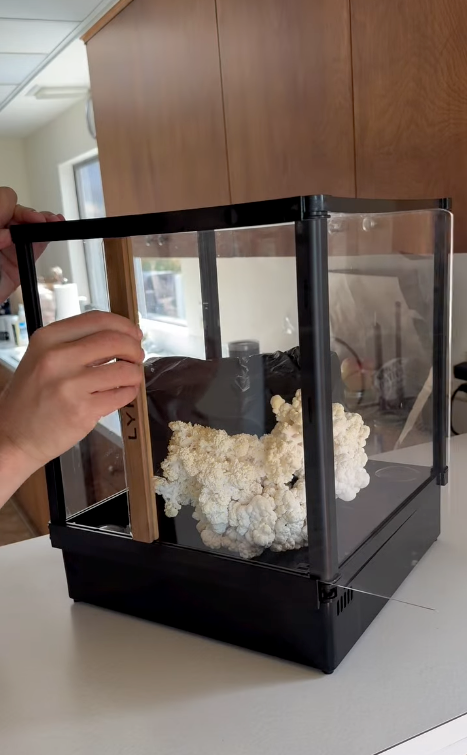
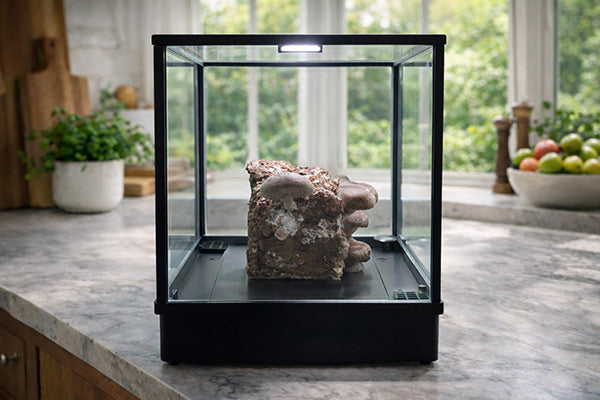
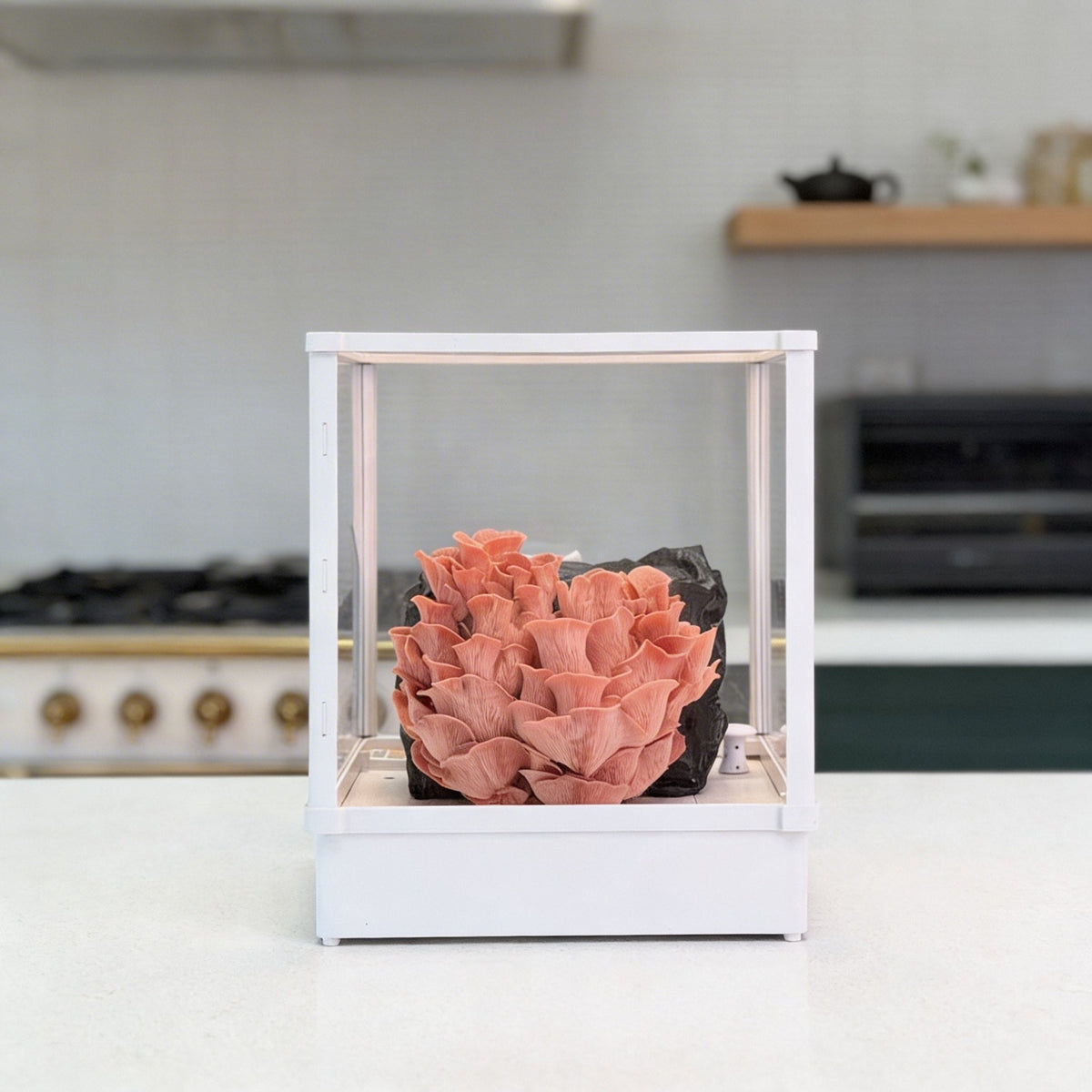
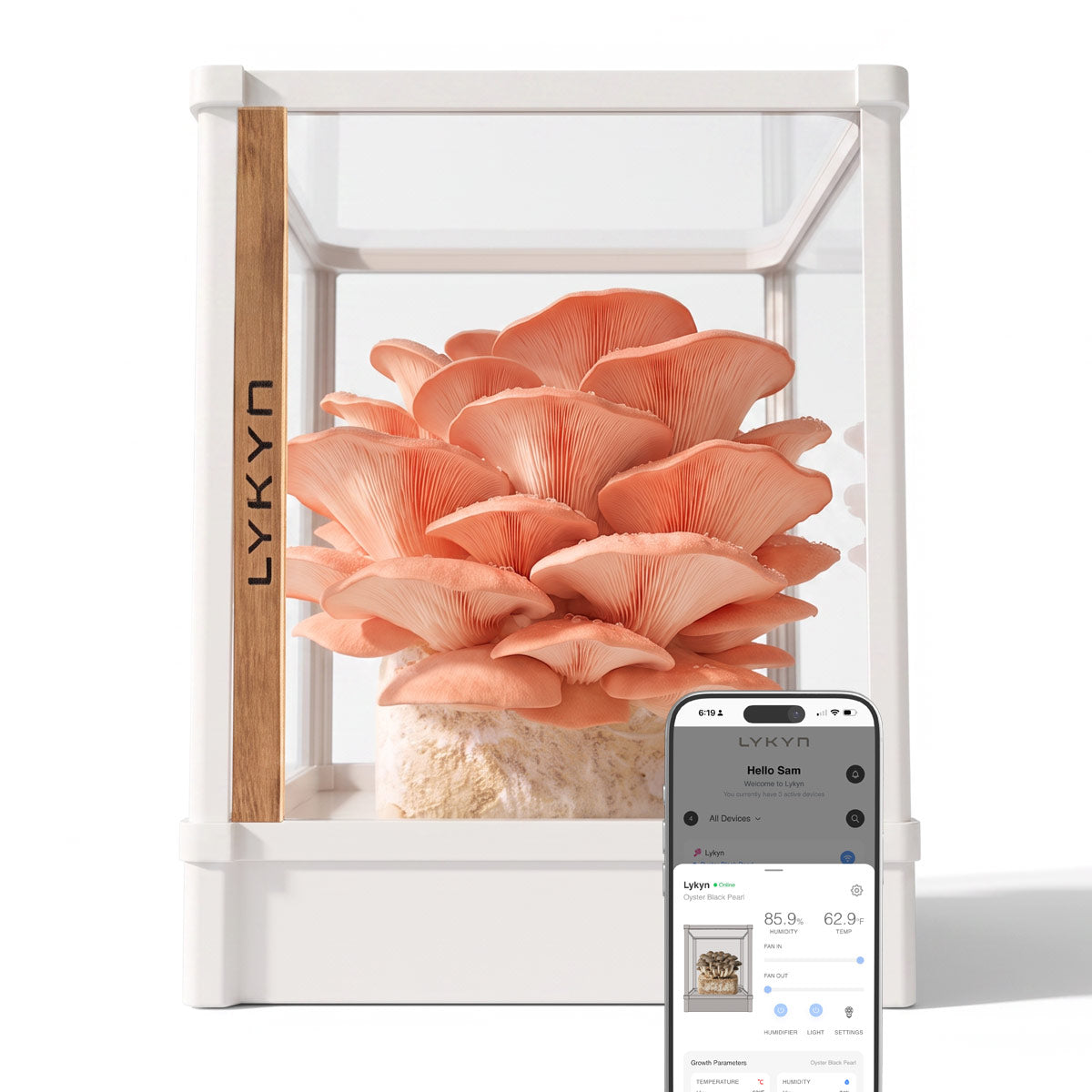
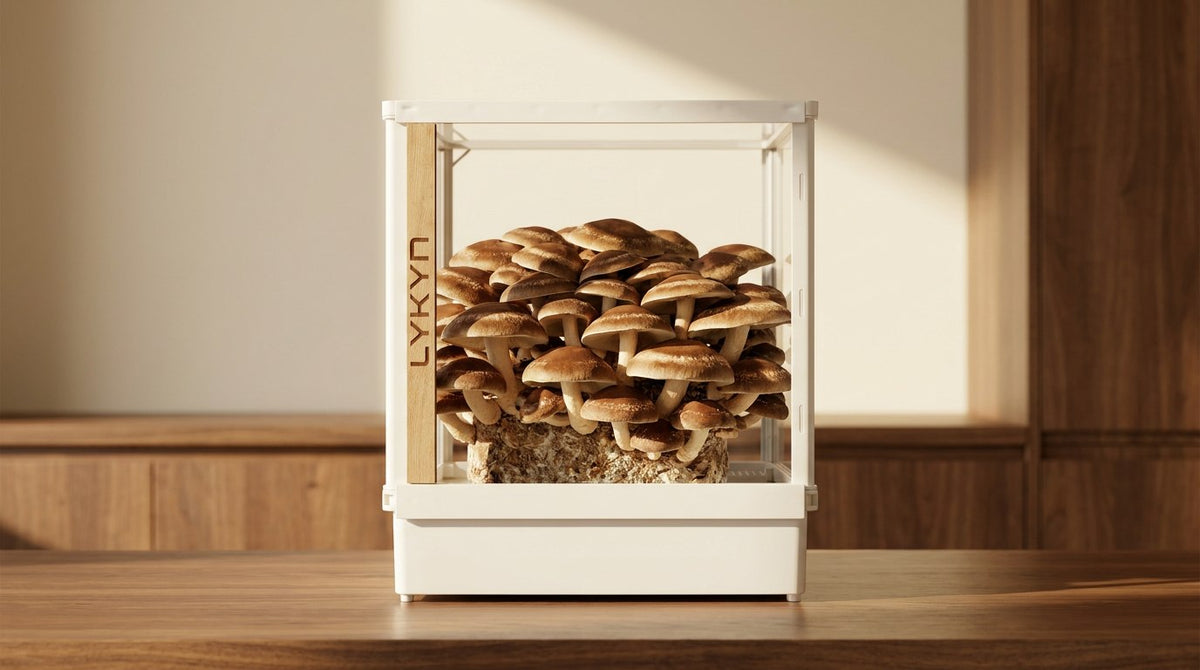
Based in Santa Rosa, California. Lykyn sells fruiting blocks as part of a subscription or one-time purchase. Species: pink oyster, blue oyster, lion's mane, shiitake, wine cap (5 total). Block cost: $29.95 each. Ships from California within 5 business days. Blocks arrive vacuum-sealed, colonized and ready to fruit. Refund policy available on the product page; Lykyn also sells a smart chamber (the Grow Box) that automates humidity and air exchange, so you can pair blocks with hardware. Best for growers wanting blocks + chamber integration or subscription convenience.
North Spore (northspore.com)
Portland, Maine. North Spore grows mushrooms commercially and sells their own blocks and kits. Species range: 6-8 species depending on season (oyster varieties, lion's mane, shiitake, wine cap). Block cost ranges $25-45 per block. Ships from Maine within 2-3 business days for US orders. Blocks are vacuum-sealed and ready to fruit. Refund policy available at checkout. Known for responsive customer service. Best for growers seeking variety and fast Maine-to-anywhere shipping.
Cascadia Mushrooms (cascadiamushrooms.com, if operational)
Bellingham, Washington (PNW focus). Cascadia supplies organic substrates and locally-grown blocks. Species: primarily oyster varieties and lion's mane. Block cost: $30-40. Ships from Washington state. Ship times: 2-3 days to West Coast, 4-5 to East Coast. Refund policy varies; contact them directly. Best for growers in the Pacific Northwest supporting local suppliers.
Smallhold (smallhold.com)
Brooklyn, New York. Smallhold focuses on commercial and semi-commercial growers, but they sell to consumers. Species: oyster, lion's mane. Block cost: $20-35. Ships from New York. Emphasis is on efficiency and bulk orders; single blocks are available but their model leans subscription-heavy. Best for growers considering a semi-commercial side project or who want to scale up quickly.
Amazon (private-label mushroom blocks)
Various third-party sellers on Amazon offer "ready-to-fruit" mushroom blocks. Price: $15-30 per block (often cheaper than direct suppliers). Ship times: depends on your Prime eligibility and the seller's location. Quality is variable: some blocks arrive contaminated, some are not fully colonized despite the listing. Refund policy: Amazon's standard return policy (30 days), but you're dealing with third-party sellers, not the cultivators. Best for price-conscious growers willing to accept higher contamination risk or who want to test before committing to a premium supplier.
Comparison Table: 5 US Suppliers
Shipping Speed Comparison
Coast-to-coast shipping via standard UPS Ground or FedEx takes 3-4 business days. West Coast suppliers (Lykyn, Cascadia) ship faster to California and the Southwest, arriving in 1-2 days. East Coast suppliers (North Spore, Smallhold) ship faster to the Northeast and Mid-Atlantic.
If speed is critical (e.g., you want your block to fruit before a specific event), consider upgrading to 2-day or overnight shipping at checkout. Most suppliers offer this option for an additional $10-25 fee. Amazon Prime shipping (1-2 days in most metro areas) is fastest, but quality variance is higher.
One detail: blocks ship in insulated boxes with coolant packs to maintain temperature during transit. Summer shipping to hot climates (Arizona, Texas, Florida) is slower to avoid heat stress. If you're in the South or Southwest and ordering in July-August, ask the supplier about heat-tolerant transit options or place your order for fall delivery.
Species Availability Matrix

Not all suppliers stock all species year-round. Pink oyster, the most forgiving for beginners, is available from all 5 suppliers. Blue oyster is available from 4 of 5 (Amazon private-label may vary). Lion's mane, shiitake, and wine cap are where availability drops.
Pink oyster: Lykyn, North Spore, Cascadia, Smallhold, Amazon. Fruiting time: 7-10 days. Humidity: moderate. Flavor: mild, tender. Best for first-time growers.
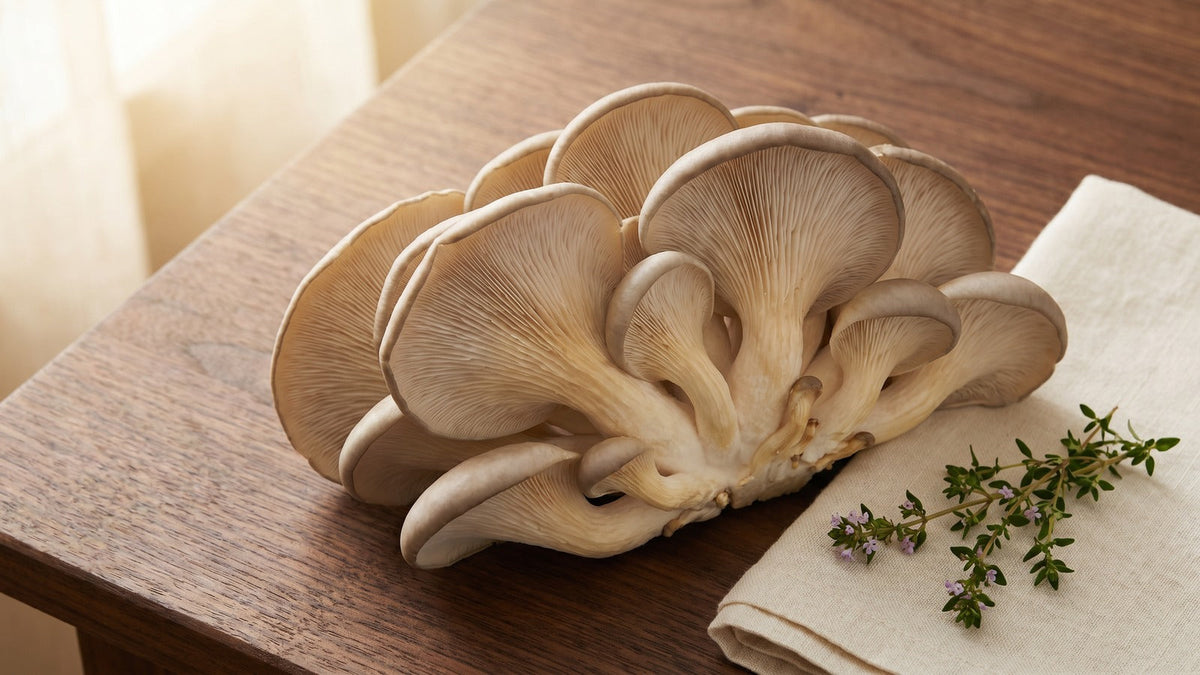
Blue oyster: Lykyn, North Spore, Cascadia, Smallhold, sometimes Amazon. Fruiting time: 10-14 days. Humidity: moderate. Flavor: nutty, meaty. Forgiving but slower than pink oyster.
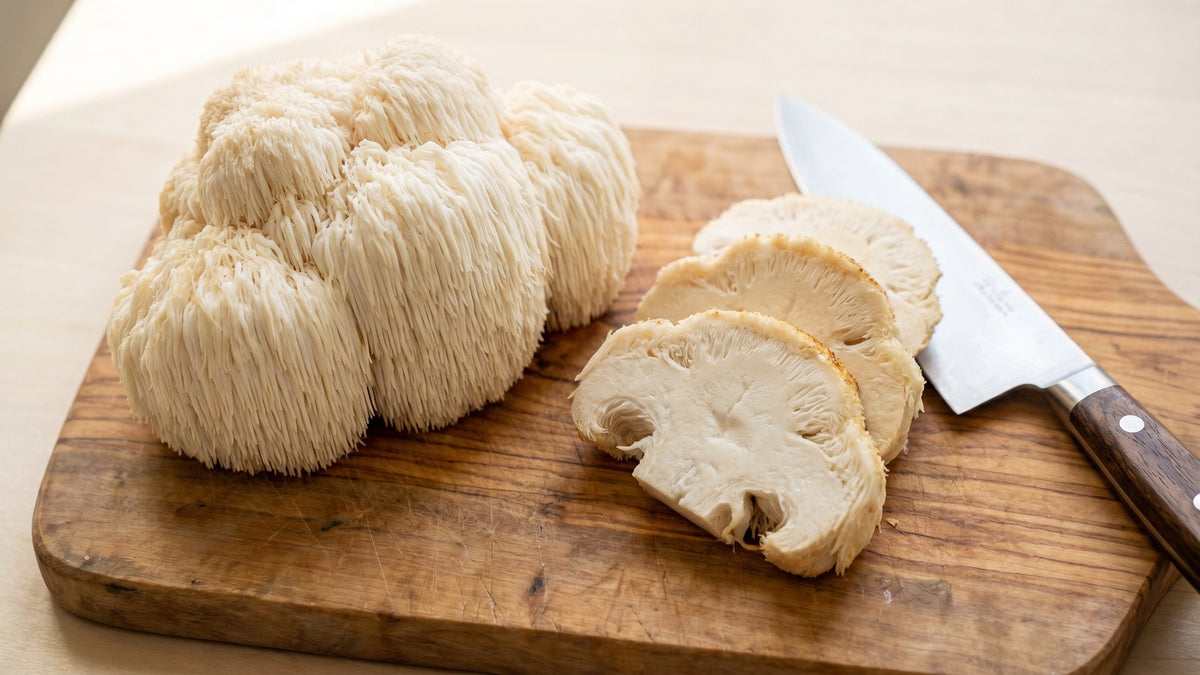
Lion's mane: Lykyn, North Spore, Smallhold. Fruiting time: 10-14 days. Humidity: high. Flavor: seafood-like, delicate. Requires consistent moisture.
Shiitake: Lykyn, North Spore. Fruiting time: 14-21 days. Humidity: high. Flavor: deep, umami-forward. Takes longer; best for patient growers.
Wine cap: Lykyn, North Spore. Fruiting time: 14-21 days. Humidity: moderate-high. Flavor: nutty, firm. Less common; specialty order.
If your target species is not in stock, most suppliers will add you to a waitlist or allow you to choose an alternative. Don't assume a species is permanently unavailable; seasonal demand and substrate availability shift throughout the year.
Regional Considerations
Pacific Northwest (WA, OR, CA, ID): Cascadia and Lykyn ship fastest. Temperature is cool year-round, so blocks remain stable in transit. Summer heat is minimal. Order anytime without concern for heat damage.
Southwest (AZ, NM, NV, UT, CO): Heat is the challenge. Blocks shipped in July-August arrive stressed (reduced vigor, smaller first flush, potential for early abort). Order in spring or fall, or negotiate heat-resistant packaging with the supplier. Lykyn and North Spore accommodate heat-shipping requests.
South and Southeast (TX, FL, GA, SC, LA): Humidity is high, but summer heat and transit temps damage blocks. Order in spring or fall. Blocks arriving in heat should be refrigerated immediately to slow metabolism and extend viability.
Northeast (NY, MA, PA, NJ, MD): North Spore in Maine and Smallhold in New York are local. East Coast transit is fast (1-3 days). Winter freezing is rare but possible if blocks sit in an unheated shipping hub. Request insulation and heat packs for winter orders.
Midwest (OH, IL, MN, MI, IA): Equidistant from East and West suppliers. Choose by species preference or cost. Transit is typically 3 days. Temperature swings in spring and fall are normal; blocks handle them well.
What to Do When Your Block Arrives

Your block will arrive vacuum-sealed, usually in a cardboard box with a layer of bubble wrap and a coolant pack. Don't open the vacuum seal until you're ready to fruit it (this can be 1-2 days or up to 2 weeks after arrival, depending on your schedule).
Inspect immediately. Open the box and check the exterior of the sealed block. Look for visible green or black mold on the surface. Mold appears as distinct patches, not as the gray or white fuzz that's normal mycelium. If you see green or black mold, photograph it and contact the supplier within 24 hours for a refund or replacement. Don't open the seal; a photo of the exterior is sufficient proof.
Refrigerate if you're not fruiting yet. If your fruiting chamber or space isn't ready, refrigerate the unopened block at 35-45 degrees Fahrenheit. Blocks stay viable for 2-4 months at this temperature. The cold slows the mycelium's metabolism, preserving its energy for pinning when you're ready. Blocks stored at room temperature (70 degrees) have 2-3 weeks of viability before they lose vigor.
Open the seal when you're ready to fruit. Bring the block to room temperature (20-30 minutes on a counter), then carefully cut or peel open the vacuum seal. You'll smell an earthy, mushroom-like aroma. That smell (not unpleasant, closer to forest floor than rotting) is the mycelium's volatile compounds and a sign of health. A sour or ammonia smell would indicate anaerobic stress and is cause for concern; if you detect that, contact the supplier.
Set it up for misting. Place the opened block on a shelf, in a chamber, or in a humidity tent. Mist it twice daily with water from a spray bottle, aiming to keep the surface wet but not pooling. Within 3-5 days you'll see tiny white pins forming. This is the start of the fruiting cycle. From pins to harvestable mushrooms takes 5-7 days more, depending on species and humidity.
First flush yield. Your first flush will yield enough mushrooms to fill a large dinner plate. Pink oyster growers report multiple smaller flushes from a single block; shiitake growers see fewer flushes but larger individual caps. After you harvest, the block produces 1-2 additional flushes over the next 4-8 weeks if you rest it between fruiting cycles and keep misting consistent.
Quick Pick by Geography and Species
West Coast + want speed: Lykyn (5 species, 2-day transit to CA).
Northeast + want variety: North Spore (7 species, 2-day transit to NY).
Budget-conscious + accepting quality variance: Amazon (cheapest, fastest with Prime).
Organic + local ethos + Pacific Northwest: Cascadia.
Commercial-scale or semi-commercial ambitions: Smallhold (subscription model, bulk pricing).
No matter which supplier you choose, the order-to-first-harvest timeline is 10-30 days. The bottleneck is never the delivery; it's the fruiting cycle itself. Once your block arrives and you've set it up, the mushrooms follow their own timeline. You can't rush them, but you also can't mess them up with much effort. Mist twice daily, keep the temperature between 55-75 degrees, and avoid direct sunlight. Your first harvest will arrive on schedule.
Frequently Asked Questions
Q: Where can I buy mushroom fruiting blocks online?
A: Five major US suppliers are Lykyn (Santa Rosa, CA), North Spore (Portland, ME), Cascadia Mushrooms (Bellingham, WA), Smallhold (Brooklyn, NY), and Amazon (various third-party sellers). All ship ready-to-fruit blocks nationwide. Start with Lykyn or North Spore if you want species variety and customer support; choose Amazon if price is your priority.
Q: How fast can mushroom blocks ship to my house?
A: Direct suppliers ship within 2-5 business days of your order, with transit taking 2-4 additional days depending on distance. West Coast to West Coast shipping arrives in 1-2 days. Amazon Prime speeds this to 1-2 days total if available in your area. Plan for 5-7 days from order to doorstep.
Q: Are online mushroom blocks safe?
A: Yes, if sourced from reputable suppliers. All five listed suppliers are established, with customer reviews and refund policies backing their quality. Blocks arrive vacuum-sealed and pre-colonized, minimizing contamination risk during storage and transit. Inspect your block on arrival; most suppliers replace contaminated blocks. Amazon private-label carries higher risk due to varying seller standards.
Q: What is the average cost of a mushroom fruiting block?
A: Single blocks range from $15-45 depending on supplier and species. Lykyn and North Spore average $25-40. Subscription models offer per-block discounts (sometimes $20-28) for monthly recurring orders. Budget $30-35 per block as a baseline; cheaper options on Amazon exist but quality is variable.
Q: Can you return a mushroom fruiting block?
A: Most suppliers offer refunds or replacements if your block arrives contaminated or is dead on arrival. Lykyn, North Spore, and Smallhold all have explicit policies (read at checkout). Amazon's standard 30-day return applies. Refunds typically require proof (a photo of visible contamination); some suppliers may ask you to return the block at their expense for inspection. Check the supplier's policy before ordering to know your options.
Further reading: Once your blocks arrive, learn how to maximize yield and manage multiple flushes in our guide "How to Grow Mushrooms". For a cost and timeline breakdown, see "Is a Mushroom Growing Kit Worth It? Cost, Yield, and ROI". Explore mushroom fruiting blocks and the Lykyn smart grow chamber to automate humidity and air exchange.



Share:
Best Mushroom Variety Subscription for Home Growers 2026
Top-Rated Lion's Mane Grow Kits 2026: Honest Reviews and Buyer's Guide