


How you slice mushrooms changes how they cook, how they taste, and how they look on the plate. A quarter-inch slice cooked in a hot pan for five minutes gives you tender, browned mushrooms with concentrated flavor. A half-inch slice for ten minutes gives you meatier bites that hold their shape better in stews. Whole-cap or quarter cuts work best for grilling, while thin shavings are ideal for raw garnish on a finished dish. The simple act of choosing a thickness is the difference between mushrooms that disappear into a dish and mushrooms that anchor it.
This guide walks through how to slice mushrooms cleanly, the right slice for each cooking method, and the small techniques that elevate the final result.

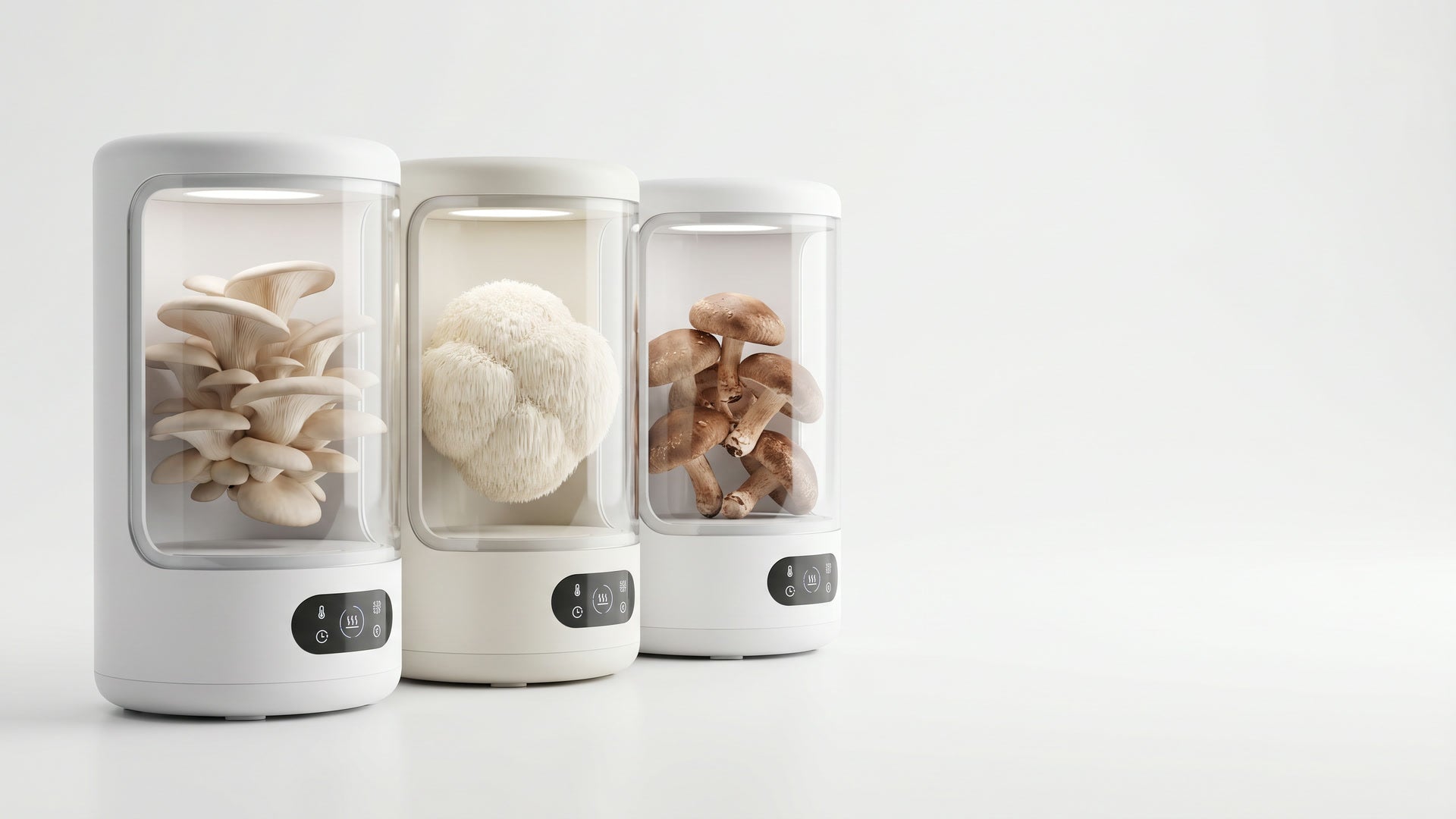
Smart Chamber. Bone White Single
- 2.8L tank, 90% humidity automatic
- App-controlled, plug-and-play
- 6 lb block ceiling, in stock

Smart Chamber. Obsidian Black Single
- Same hardware as Bone White
- Matte black premium finish
- Pairs with any kitchen palette

How to clean mushrooms before slicing
Mushrooms are about 90% water and act like sponges, so soaking them in water is the wrong approach. The right method:
- Brush off any visible dirt with a soft mushroom brush or a dry paper towel
- For stubborn debris, wipe with a damp paper towel
- For very dirty foraged mushrooms, do a quick rinse under cold water and pat dry immediately
- Trim away the dry or damaged end of the stem
Mushrooms should be sliced just before cooking, not in advance, since cut surfaces oxidize and turn brown within an hour.
The right knife for slicing mushrooms
A sharp chef's knife (8 to 10 inches) is the most versatile tool. For smaller varieties, a paring knife works fine. The single most important factor is sharpness. Dull knives crush the mushroom cells, which releases water and ruins the texture. If your knife squeezes the mushroom rather than slicing through it, sharpen it before continuing.
An egg slicer is a fun alternative for white button or cremini mushrooms. Place a whole mushroom in the wire frame and press down for instant uniform slices. The slices are thinner than knife cuts and ideal for salads or quick sautes.
Slice thickness guide
The thickness you choose should match the cooking method:
- Paper-thin shavings (1 to 2 mm): raw garnish, mushroom carpaccio, finishing on top of risotto or pasta
- Thin slices (3 to 5 mm): quick sautes, pizza toppings, salads, stir-fries
- Medium slices (5 to 8 mm): standard cooking thickness for most dishes, holds shape and browns well
- Thick slices (10 to 15 mm): grilling, broiling, stuffing, mushroom steaks
- Quartered or halved: roasting whole on a sheet pan, mushroom kebabs
- Whole caps: stuffed portabellas, mushroom burger patties, grilled mushroom caps
For most weeknight cooking, the 5 to 8 mm medium slice is the workhorse. It is thick enough to hold its shape and thin enough to brown evenly in five to seven minutes.
How to slice white button and cremini mushrooms
The standard slice for button and cremini mushrooms:
- Place the mushroom on its side with the stem horizontal
- Cut perpendicular to the stem, starting at the cap edge
- Move the knife straight down through cap and stem in one motion
- Continue across the whole mushroom in your chosen thickness
This gives you slices with a uniform cross-section that shows the cap silhouette and includes a piece of the stem in each slice. The result is what you see in most professional dishes.
How to slice portabella mushrooms
Portabellas can be sliced or left whole depending on the dish. For sliced preparations:
- Remove the stem completely (it can be tough and woody in mature portabellas)
- Optionally scrape out the dark gills with a spoon if the dish needs lighter color, though the gills are perfectly edible
- Cut the cap into 8 to 10 mm wedges or strips
For grilled or stuffed portabellas, leave the cap whole and clean off the stem. The whole cap holds its shape on the grill and creates a satisfying steak-like presentation.
How to slice shiitake mushrooms
Shiitake stems are tough and woody, even when the cap is tender. The standard approach:
- Cut off the stem at its base, where it meets the cap
- Save the stems for making stock (simmer with chicken or vegetable broth for added depth)
- Slice the cap into thin (3 to 5 mm) strips for stir-fries, soups, and quick sautes
- For larger caps, quarter them first, then slice
Always cook shiitake fully. Undercooked shiitake can cause shiitake dermatitis, a temporary itchy rash.

Fuel Your Mushroom Journey
Smart Mushroom Grow Chamber
Plug-and-play smart chamber with humidity, light, and airflow dialed in for every species. Beginners harvest their first flush in days, not months.
Add to cart $299How to slice oyster mushrooms
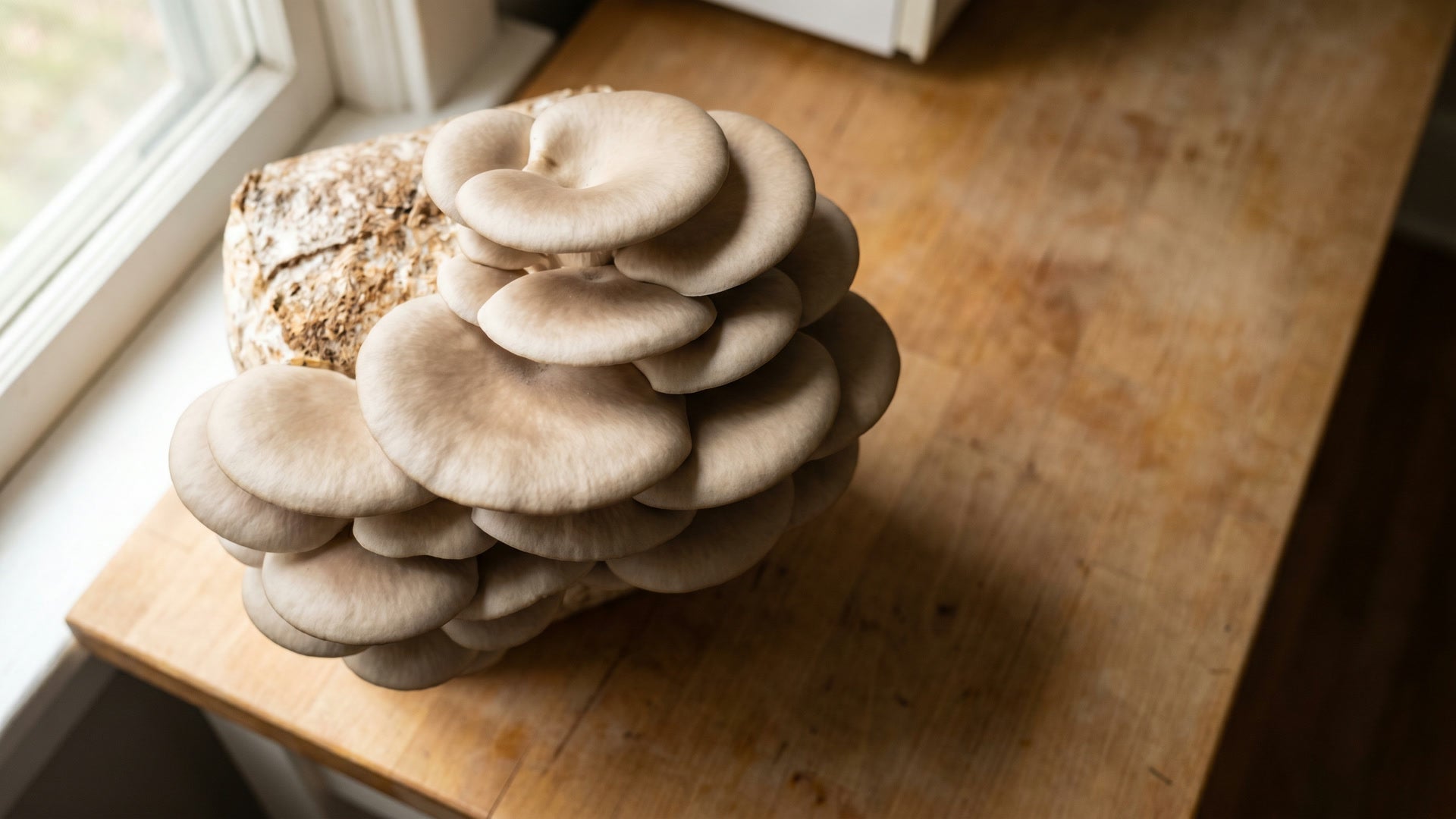
Oyster mushrooms grow in clustered shelves on a single base. The fastest method is to tear them rather than slice:
- Cut off the dense base where the clusters connect
- Pull the mushrooms apart by hand along the natural fan lines
- Tear larger fronds into bite-sized pieces, or leave whole for visual impact
For uniform slicing, lay the oyster flat and cut into 5 to 8 mm strips along the gill direction. Pre-sliced oyster mushrooms often cook unevenly because the cap and stem absorb heat differently. Tearing keeps the texture lively.
How to slice maitake (hen of the woods)
Maitake is a clustered mushroom with overlapping fronds. The texture comes from preserving the natural shape:
- Trim away the woody base
- Pull apart by hand into 1 to 2 inch clusters along the natural divisions
- Avoid over-handling, since maitake can compact when squeezed
Sliced maitake loses much of its appeal. Hand-torn pieces brown beautifully in a hot pan with butter.
How to slice king trumpet (eringi)
King trumpet has a thick white stem and a small cap. The stem is the prized part. Common cuts:
- Rounds: slice the stem into 1 cm thick rounds, which look like scallops when seared
- Lengthwise strips: slice down the long axis into 5 mm strips, used in stir-fries and pasta
- Diced: cut into 1 cm cubes for risotto or grain bowls
The rounds in particular take well to butter, salt, and a quick sear in a hot pan, becoming a vegetarian substitute for seafood.
How to slice enoki mushrooms
Enoki are sold in tight clusters with a fibrous base. To prepare:
- Cut off the bottom 2 to 3 cm of the base where the cluster connects
- Rinse briefly under cold water
- Separate gently into smaller bunches, or leave whole for soups
Enoki are not sliced in the traditional sense. The long thin stems are used whole or in small bundles.
Common slicing mistakes to avoid
A few mistakes that ruin mushroom texture:
- Slicing too thin for high-heat cooking. Thin slices burn or shrivel before they brown.
- Slicing in advance and storing. Cut mushrooms oxidize, lose moisture, and absorb refrigerator odors.
- Soaking sliced mushrooms in water. They absorb water and become impossible to brown properly.
- Slicing through tough stems on shiitake or maitake. The stems stay woody no matter how long you cook them.
- Crowding the cutting board. Slice one mushroom at a time for clean uniform cuts.
Using sliced mushrooms in cooking
Once sliced, mushrooms cook best in a hot pan with minimal liquid. The standard saute:
- Heat a wide pan over medium-high heat with a small amount of oil
- Add mushrooms in a single layer, not crowded
- Let them sit undisturbed for two to three minutes to develop a sear
- Stir or flip and cook another two to three minutes
- Add butter, garlic, herbs, and seasoning at the end
The result is browned, concentrated, deeply flavored mushrooms in well under ten minutes. For ultra-fresh flavor, harvest mushrooms the day you cook them. Home-grown mushrooms beat anything that has been in a cooler for a week. You can explore home mushroom grow kits for a steady same-day supply.
The bottom line
Slicing mushrooms is more about thickness and timing than technique. Match the slice to the cooking method, keep your knife sharp, slice just before cooking, and avoid crowding the pan. These small moves are what separate the soggy gray mushrooms most home cooks produce from the deeply browned, flavor-packed mushrooms in restaurant dishes.
Aktie:
Lemon Tek Mushrooms: What the Technique Does and Why
Lemon Tek Mushrooms: What the Technique Does and Why