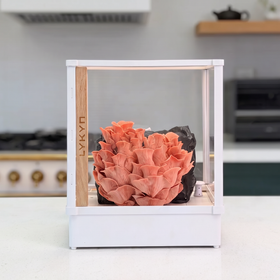



Shiitake gehören zu den anspruchsvolleren Pilzen für den Anbau zu Hause. Sie verzeihen weniger als Austernpilze und sind schwieriger anzubauen als Igelstachelbart. Wenn die Bedingungen nicht stimmen (die Luftfeuchtigkeit sinkt, die Temperatur schwankt oder es nicht hell genug ist), verkümmern die Primordien, die Hüte bekommen Risse oder der Block stellt das Wachstum ein. Wir haben Tausende von Blöcken in unseren Kammern kultiviert. Die Muster wiederholen sich. Die meisten Fälle, in denen „mein Shiitake nicht geklappt hat“, gehen auf drei oder vier grundlegende Ursachen zurück. Wenn du sie kennst, kannst du den Block retten. Dieser Ratgeber behandelt 12 der häufigsten Probleme beim Shiitake-Anbau, erklärt, was im Block passiert, und zeigt konkrete Schritte zur Behebung.

1. Der Block wird grün
Was du siehst: Grüner Flaum breitet sich über den Block aus. Das ist Trichoderma, ein Konkurrenzschimmel, der das Shiitake-Myzel verdrängt.
Warum: Trichoderma liebt hohe Feuchtigkeit und wenig Luftzirkulation. Der Block war wahrscheinlich bereits bei der Herstellung kontaminiert, oder Sporen haben sich während der frühen Fruchtungsphase abgesetzt, als die Oberfläche feucht war.
Die Lösung: Stelle das Besprühen sofort ein. Lass die Oberfläche 2–3 Stunden trocknen. Kratze den sichtbaren Flaum mit einer sauberen Klinge ab. Besprühe die Stelle mit einer Lösung aus 1 Teil weißem Essig und 3 Teilen Wasser. Lass sie an der Luft trocknen. Besprühe 5 Tage lang nur noch die Seiten und die Unterseite. Wenn das Grün zurückkommt, kompostiere den Block.
2. Primordien verkümmern, bevor sich die Hüte öffnen

Was du siehst: Es bilden sich winzige weiße Knubbel. Dann werden sie braun und schrumpelig, bevor sich Hüte entwickeln.
Warum: Die Luftfeuchtigkeit ist stark abgefallen. Primordien bestehen zu 95 % aus Wasser. Sinkt die relative Luftfeuchtigkeit von 85 % auf 60 %, kollabieren die Zellwände innerhalb weniger Stunden, manchmal über Nacht.
Die Lösung: Besprühe den Block 3–4 Mal täglich. Die Oberfläche sollte sichtbar feucht sein (nicht tropfnass, aber feucht). Stelle den Block nicht in die Nähe von Heizungsöffnungen, direkter Sonne oder Ventilatoren. Verwende einen Luftbefeuchter oder stelle eine Schale mit Wasser in die Nähe. Während der Fruchtung sollte die relative Luftfeuchtigkeit bei 85–90 % liegen.
3. Die Hüte bekommen oben Risse
Was du siehst: Die Hüte wachsen, doch vor der Ernte bilden sich tiefe Risse auf ihrer Oberfläche.
Warum: Die Haut des Huts trocknet schneller, als sich das Innere mit Wasser versorgen kann. Das passiert bei mäßiger Luftfeuchtigkeit (70–75 % relative Luftfeuchtigkeit) und starker Luftzirkulation.
Die Lösung: Verringere die Luftzirkulation. Besprühe die Hüte während des Wachstums direkt 2–3 Mal täglich. Sie sollten sich fest und wachsig anfühlen, nicht papierartig. Erhöhe die Luftfeuchtigkeit im Raum, wenn sie unter 70 % liegt.
4. Die Stiele sind lang und dünn, die Hüte winzig
Was du siehst: Die Shiitake wachsen hoch und dünn, als würden sie nach etwas greifen.
Warum: Zu wenig Licht. Pilze strecken ihre Stiele in Richtung Licht; die Energie fließt ins Höhenwachstum statt in die Größe der Hüte.
Die Lösung: Stelle den Block an einen Platz mit 12 Stunden indirektem Licht täglich bei 150–200 Lux. Ein nach Norden ausgerichtetes Winterfenster reicht nicht aus. Ergänze das Licht durch eine Pflanzenlampe oder eine warmweiße LED (3000 K) im Abstand von 30–45 cm. Nach 3–4 Tagen solltest du Ergebnisse sehen.
5. Nach 10 Tagen tut sich nichts

Was du siehst: Der Block bleibt weiß, auch nach 2–3 Wochen Besprühen bilden sich keine Primordien.
Warum: Entweder hat der Block keinen Kältereiz bekommen oder die Raumtemperatur liegt über 72 °F (22 °C), sodass das Myzel weiterwächst, statt in die Fruchtungsphase überzugehen.
Die Lösung: Setze den Block einem Kältereiz aus. Stelle ihn für 12–24 Stunden in einen Kühlschrank oder einen kalten Raum (10–13 °C). Nimm ihn dann heraus, lass ihn auf Raumtemperatur kommen, besprühe ihn gründlich und stelle ihn an den Fruchtungsplatz. Warte nach dem Kältereiz 7 Tage, bevor du mit Primordien rechnest. Liegt die Temperatur am Fruchtungsplatz über 22 °C, stelle den Block an einen kühleren Ort (Keller, Garage oder Fenster nach Norden).
6. Druckstellen und gelbe Flecken auf dem Block
Was du siehst: Braune oder gelbe, schmierige Stellen, die sich über die Oberfläche ausbreiten.
Warum: Bakterienflecken. Wasser ist zu lange auf dem Block stehen geblieben. Das Gewebe oxidiert und Bakterienkolonien breiten sich aus.
Die Lösung: Nimm den Block sofort aus jeder geschlossenen Umgebung. Besprühe ihn seltener und feiner mit einer Sprühflasche. Lass kein Wasser in Vertiefungen stehen. Ist die Stelle klein (< 2,5 cm), lässt sich die Ausbreitung oft durch bessere Luftzirkulation stoppen. Breitet sie sich auf mehr als 5 cm aus, kompostiere den Block.
7. Der Block riecht sauer oder nach Ammoniak
Was du siehst: Ein stechender, beißender Geruch. Nicht erdig, sondern nach saurem Essig oder Ammoniak.
Warum: Anaerobe Bakterien haben den Block besiedelt. Das passiert, wenn er zu nass und zu warm ist und keine Luftzirkulation bekommt. Bei der anaeroben Gärung entsteht Ammoniak.
Die Lösung: Stelle das Besprühen ein. Nimm den Block aus jedem Raum mit kontrollierter Luftfeuchtigkeit. Lass ihn 24 Stunden an einem kühlen Ort (16–21 °C) an der frischen Luft stehen. Lässt der Geruch nach, kannst du wieder sparsam sprühen. Bleibt er bestehen, kompostiere den Block. Er wird keine essbaren Pilze hervorbringen.
8. Die Pilze wachsen nur auf einer Seite des Blocks
Was du siehst: Alle Primordien sitzen auf einer Seite oder oben. Rückseite und Seiten bleiben kahl.
Warum: Das Licht ist ungleichmäßig oder der Block steht direkt an einer Wand. Primordien richten sich nach dem Licht aus. Die Luftzirkulation ist ebenfalls ungleichmäßig.
Die Lösung: Drehe den Block alle 2–3 Tage um 90 Grad, während sich die Primordien bilden. Achte darauf, dass das Licht aus mehreren Richtungen kommt und nicht nur von einem Fenster. Stelle den Block frei und mit Abstand zu Wänden auf.
9. Der zweite Schub bleibt aus

Was du siehst: Der erste Schub war gut. Wochen später bilden sich trotz Besprühen keine neuen Primordien.
Warum: Der Block ist zwischen den Schüben ausgetrocknet. Nach einem üppigen ersten Schub sinkt der Feuchtigkeitsgehalt auf 40–50 %. Ohne erneute Wasseraufnahme fällt das Myzel in einen Ruhezustand.
Die Lösung: Weiche den Block direkt nach der Ernte 4–8 Stunden in sauberem, kaltem Wasser ein. Tauche ihn nach Möglichkeit in einen Eimer. So steigt sein Feuchtigkeitsgehalt wieder auf 80–85 %. Nimm ihn heraus, lass das überschüssige Wasser 5 Minuten abtropfen und stelle ihn zurück an den Fruchtungsplatz. Nach 7–10 Tagen bilden sich neue Primordien. Zwischen den Schüben fühlt sich der Block beim Austrocknen deutlich leichter an. Sein Gewicht zeigt dir also, wann er rehydriert werden muss.
10. Flaumiges weißes Wachstum, das kein Shiitake ist
Was du siehst: Flaumiger, haariger weißer Bewuchs bedeckt den Block. Darunter sind keine Pilzhüte zu sehen.
Warum: Meist handelt es sich um Luftmyzel (harmlos), verursacht durch hohe Luftfeuchtigkeit und wenig Luftzirkulation, oder um konkurrierende Schimmelpilze (Kontamination).
Die Lösung: Bei Luftmyzel: Verbessere die Luftzirkulation mit einem kleinen Ventilator. Sprühe 25 % weniger. Das Wachstum kommt innerhalb von 5 Tagen zum Stillstand und es bilden sich Primordien. Bei konkurrierendem Schimmel: Kratze den Flaum ab, besprühe die Stelle mit einer Essiglösung im Verhältnis 1:3 und lass sie trocknen. Kommt der Bewuchs nach 3 Tagen zurück, ist der Block beeinträchtigt; kompostiere ihn. Luftmyzel riecht normal (erdig). Konkurrierender Schimmel riecht süßlich, fruchtig oder beißend.
11. Der erste Schub war riesig, der zweite ist winzig
Was du siehst: Die zweite Ernte bringt nur halb so viele Hüte hervor oder nur 5 Primordien statt 20.
Warum: Das ist normal. Der erste Schub zehrt von der Energie, die während der Besiedelung gespeichert wurde. Die Schübe werden über 3–4 Zyklen hinweg kleiner, bis der Block erschöpft ist.
Die Lösung: Es gibt keine. So wächst Shiitake. Wenn du gleichbleibende Erträge möchtest, verwende für jeden Durchgang frische Blöcke. Wenn du die Lebensdauer eines Blocks verlängern möchtest, gönne ihm zwischen den Ernten jeweils eine volle zweiwöchige Ruhepause und rehydriere ihn.
12. Wann du einen Block aufgeben solltest

Kompostiere den Block, wenn: Nach der Behandlung erneut sichtbare Kontamination auftritt. Seit dem Kältereiz mehr als 4 Wochen vergangen sind, ohne dass sich Primordien gebildet haben, obwohl die relative Luftfeuchtigkeit über 80 % liegt. Der Block 2 volle Schübe hervorgebracht hat. Er sich weich anfühlt oder in sich zusammenfällt. Das Substrat zerfallen ist.
Betrachte gescheiterte Blöcke als Datenquelle. Welche Bedingungen haben zum Erfolg oder Misserfolg geführt? Hast du zwei Blöcke nebeneinander kultiviert? Jeder gescheiterte Block lehrt dich etwas über deinen Anbauort. Dieses Wissen summiert sich.
Wann du dir Hilfe holen solltest
Die meisten Probleme beim Shiitake-Anbau lassen sich einer dieser 12 Kategorien zuordnen. Passt dein Problem nicht dazu oder stagniert der Block 7 Tage nach der Behandlung weiterhin, schreib uns eine E-Mail mit einem Foto und einer Beschreibung dessen, was du bereits versucht hast.
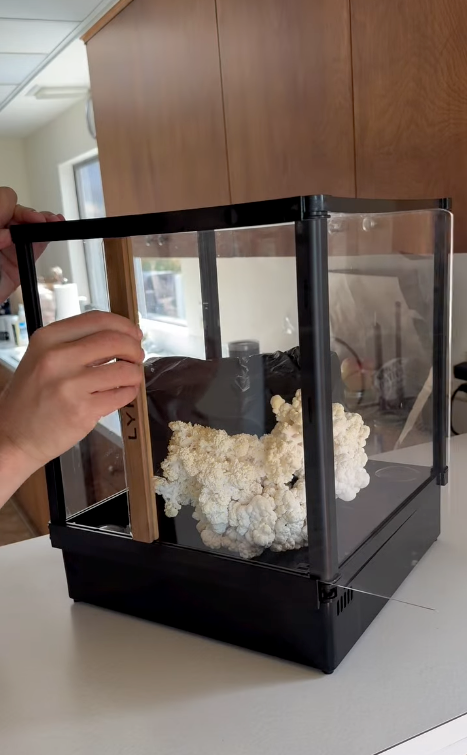
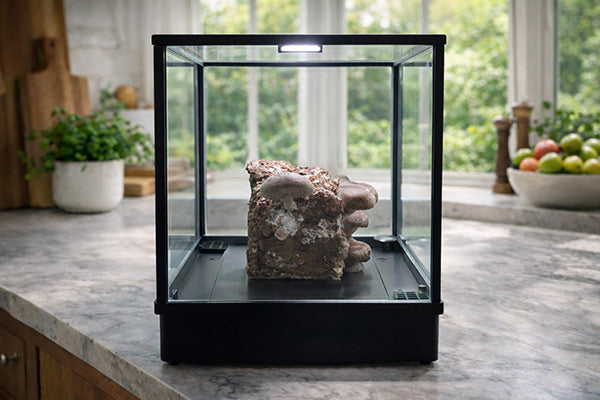
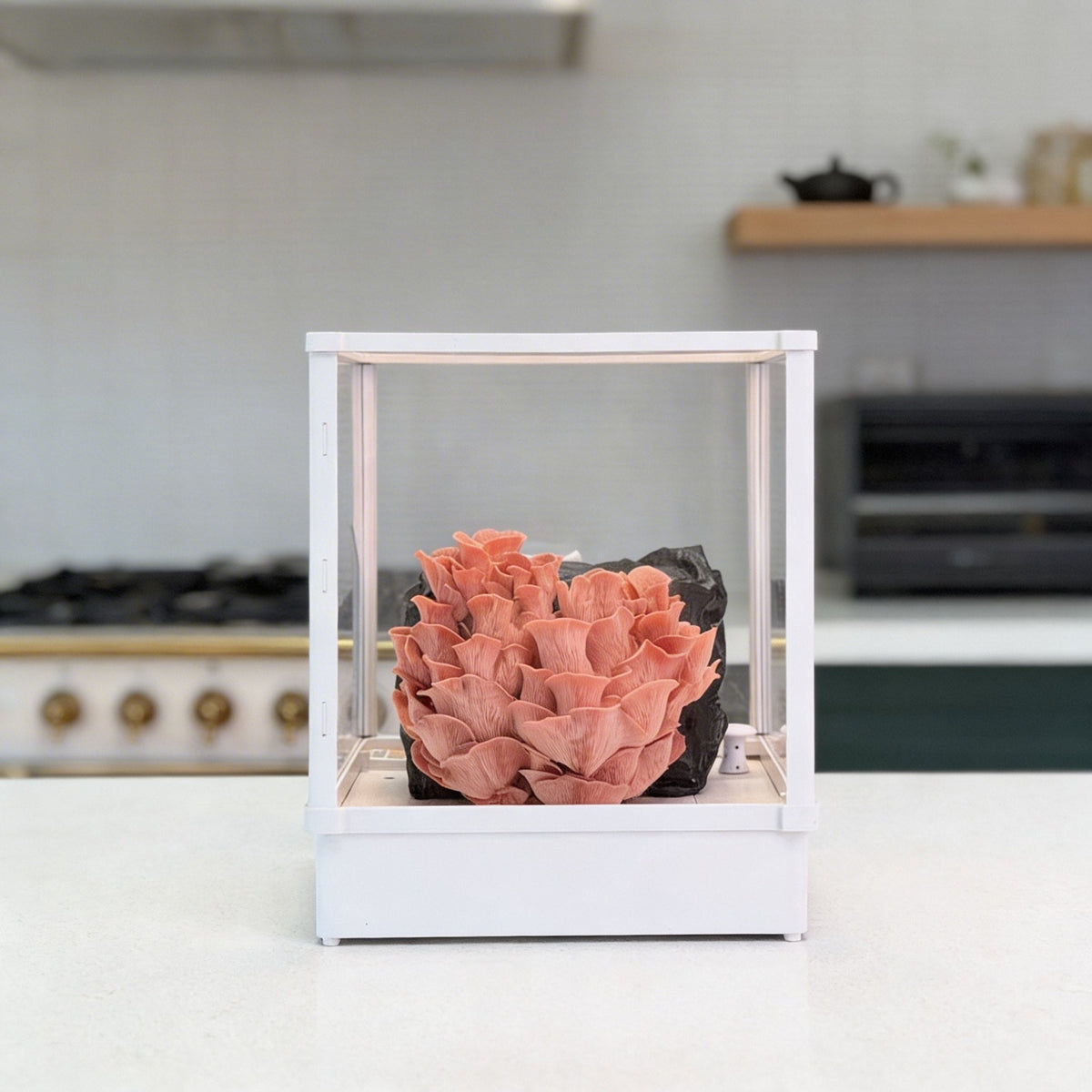
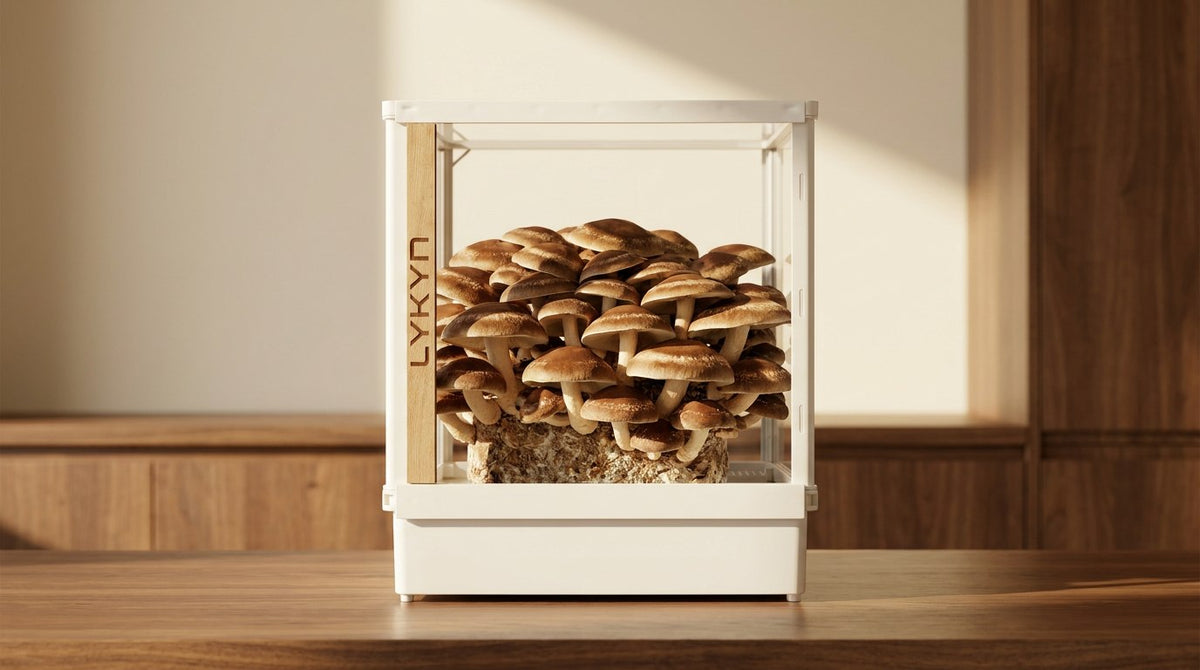
Gut zu wissen: Unser Shiitake-Kit wird mit unserer Lykyn-Kammer geliefert, die Luftfeuchtigkeit, Luftzirkulation und Beleuchtung automatisch reguliert. Damit werden die Probleme Nr. 2 (verkümmernde Primordien), Nr. 3 (Risse in den Hüten) und Nr. 4 (verlängerte Stiele) automatisch behoben. Die übrigen 9 Probleme (Kontamination, Temperatur, Austrocknung, bakterielle Probleme) sind auf das Substrat und die häusliche Umgebung zurückzuführen, nicht auf die Technik. Wenn du sie verstehst, wirst du zu einem besseren Pilzzüchter – mit oder ohne Kammer.
Wenn du gerade erst anfängst, lies unseren Ratgeber für Einsteiger zum Pilzanbau zu Hause. Möchtest du deine eigenen Blöcke kultivieren? Unsere Smart Mushroom Grow Box hält Luftfeuchtigkeit und Luftzirkulation in den Bereichen, die Shiitake bevorzugt. Shiitake belohnt Geduld und Genauigkeit.
FAQ
Wie lange dauert es, Shiitake zu Hause anzubauen?
Vom Auspacken des Blocks bis zur Ernte dauert es bei optimalen Bedingungen 10–14 Tage, bei Bedarf einer Anpassung der Luftfeuchtigkeit oder Temperatur 3–4 Wochen. Wird der Block zwischen den Zyklen rehydriert, kann er über 8–12 Wochen 3–4 Schübe hervorbringen.
Welche Luftfeuchtigkeit ist ideal für Shiitake?
Während der Fruchtung sollte die relative Luftfeuchtigkeit 85–90 % betragen. Unter 80 % verkümmern die Primordien. Über 95 % steigt das Risiko für Schimmel oder Bakterienflecken. Ein digitales Hygrometer (10 $) zeigt dir, ob du im richtigen Bereich liegst. Liegt die Luftfeuchtigkeit dauerhaft unter 80 %, besprühe den Block häufiger oder stelle eine Schale mit Wasser in seine Nähe.
Benötigen Shiitake zum Wachsen Licht?
Ja. Mindestens 12 Stunden täglich bei 150–200 Lux (indirektes Licht, keine direkte Sonne). Zu wenig Licht führt dazu, dass sich die Stiele verlängern und die Hüte klein bleiben. Ein Fenster nach Norden oder eine handelsübliche LED-Lampe im Abstand von 30–45 cm reicht aus. Unsere Kammer verfügt über eine integrierte Beleuchtung, die auf die Fruchtung abgestimmt ist.
Kann man einen kontaminierten Shiitake-Block retten?
Bei Trichoderma (grünem Flaum): manchmal. Kratze den Schimmel ab, besprühe die Stelle mit Essig und isoliere den Block 5 Tage lang. Kommt das Grün zurück, kompostiere ihn. Bei Bakterienflecken oder Ammoniakgeruch: nein. Die Kontamination sitzt im Substrat, nicht nur an der Oberfläche. Kompostiere den Block und reinige die Kammer, bevor du sie wiederverwendest.
Warum bekommen meine Shiitake-Hüte Risse?
Geringe Luftfeuchtigkeit in Verbindung mit starker Luftzirkulation lässt die Haut des Huts austrocknen, bevor das Innere vollständig mit Wasser versorgt ist. Die Oberfläche zieht sich zusammen und reißt. Besprühe die Hüte während des Wachstums 3–4 Mal täglich, vermeide direkte Luftströmung und besprühe die Hüte vorsichtig direkt.





Aktie:
Löwenmähnenpilz-Zucht-Kit: Einfache Ernte für zu Hause
Zimt-Haarkäppchen: Der vollständige Leitfaden zum Anbau zu Hause