



You've probably found yourself staring at a package of mushrooms in your fridge, wondering: "Are these still good?" It's a common question that every mushroom lover faces. Unlike packaged foods with clear "best by" dates, fresh mushrooms can be a bit mysterious when it comes to their shelf life.
The short answer is yes. Mushrooms do have an expiration, though it's not always printed on the package. Whether you're cooking with fresh button mushrooms, exploring the health benefits of lion's mane mushroom supplements, or experimenting with gourmet varieties, understanding mushroom freshness is essential for both safety and flavor. In this comprehensive guide, we'll walk you through everything you need to know about mushroom expiration, proper storage techniques, and how to tell when your fungi friends have gone bad.
How Long Do Fresh Mushrooms Last?
Fresh mushrooms are delicate organisms with a relatively short shelf life compared to many other vegetables. Their longevity depends on several factors including the variety, how they were stored at the grocery store, and how you handle them at home.
Typical Shelf Life for Common Mushroom Types
Whole fresh mushrooms stored properly in your refrigerator typically last 7-10 days. This applies to common varieties like white button mushrooms, cremini, and portobello. If you purchase pre-sliced mushrooms, expect a shorter window of 5-7 days since the exposed surfaces deteriorate more quickly.
Exotic and wild mushrooms such as shiitake, oyster, and maitake mushrooms often have a slightly shorter shelf life of 5-7 days. These varieties tend to have more moisture content and delicate structures that break down faster.
Dried mushrooms, on the other hand, can last for 2-3 years when stored in an airtight container in a cool, dark place. The dehydration process significantly extends their usability, making them a pantry staple for many home cooks.

Factors That Affect Mushroom Freshness
Several variables influence how long your mushrooms will remain fresh and safe to eat:
Moisture levels play the biggest role. Mushrooms are about 90% water, and excess moisture accelerates bacterial growth and slime formation. Conversely, if they dry out completely, they become shriveled and lose their culinary value.
Temperature control is critical. Mushrooms should be stored at 34-38°F (1-3°C). Temperatures above 40°F promote faster decomposition, while freezing temperatures can damage their cellular structure.
Air circulation matters too. Mushrooms need to breathe. Storing them in completely sealed plastic bags traps moisture and speeds up spoilage. The original packaging or a paper bag in the refrigerator works best.
Handling and contamination also impact shelf life. Each time you touch mushrooms, you potentially introduce bacteria. It's best to only wash and slice what you plan to use immediately.
If you're interested in extending the benefits of mushrooms beyond their fresh form, many people turn to mushroom supplement products that offer consistent potency without worrying about expiration dates.
How to Tell If Mushrooms Have Gone Bad
Determining whether mushrooms are still safe to eat requires using multiple senses. Here's a detailed breakdown of the warning signs.
Visual Signs of Spoilage
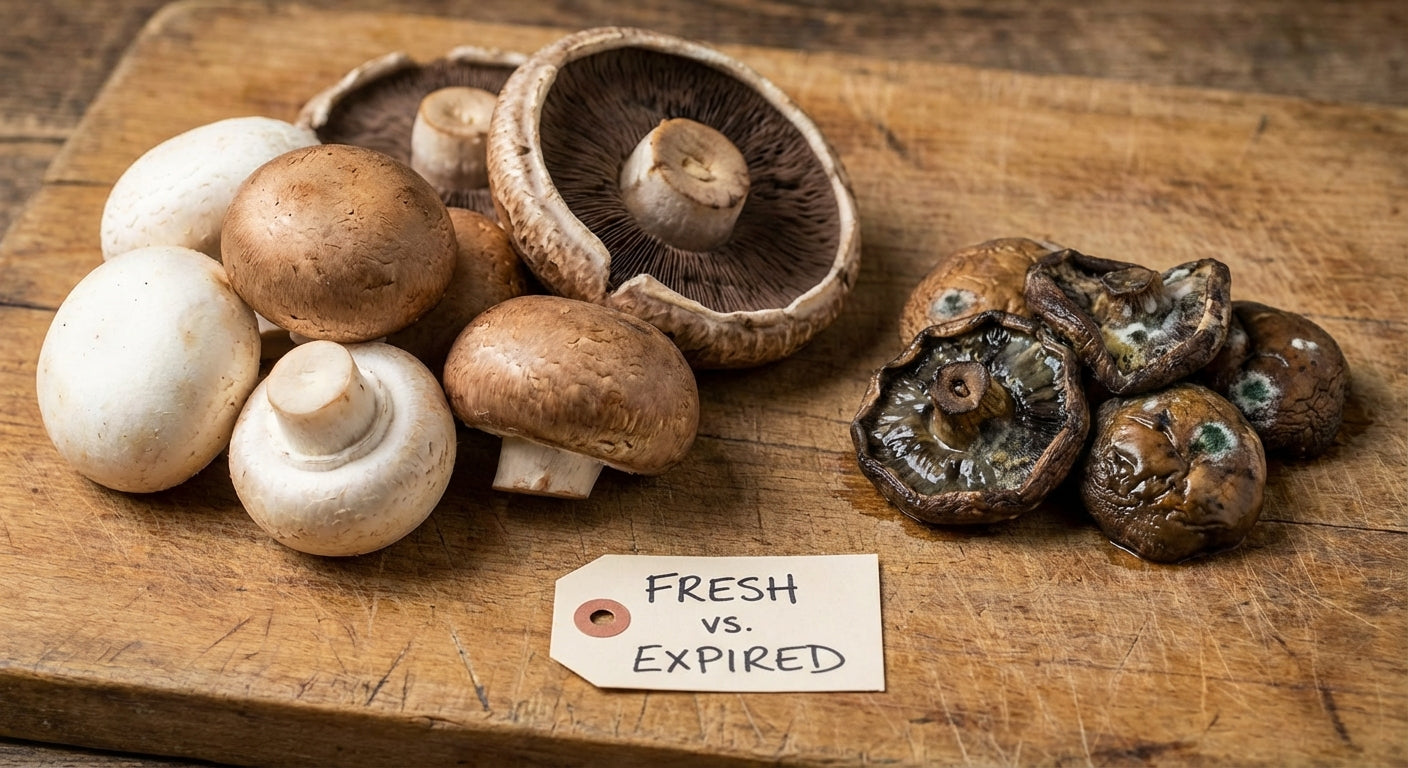
Dark spots and discoloration are among the first indicators. Fresh mushrooms should be relatively uniform in color. White mushrooms should be creamy white to light tan, while cremini should be light brown. Dark brown or black spots indicate the beginning of decay.
Sliminess is a major red flag. If your mushrooms feel slimy or have a slick coating, bacteria has likely taken hold. This slippery texture is unmistakable and means the mushrooms should be discarded immediately.
Wrinkles and shriveling indicate dehydration. While slightly dried mushrooms can sometimes be rehydrated for cooking, extensively shriveled specimens have lost too much moisture and nutritional value to be worthwhile.
Mold growth appears as fuzzy white, green, or black patches. Any visible mold means the entire batch should be thrown out, as mold spores can spread to mushrooms that appear unaffected.
Smell and Texture Tests
Fresh mushrooms have a mild, earthy aroma that is pleasant and slightly woodsy. If your mushrooms emit a sour, fishy, or ammonia-like smell, they've definitely expired and should not be consumed.
Texture changes are equally telling. Fresh mushrooms should be firm with a slight give when gently pressed. If they feel mushy, collapse easily, or leave moisture on your fingers, they've passed their prime.

When Slight Imperfections Are Still Okay
Not every blemish means you need to toss the entire package. Small dry spots or minor discoloration on one or two mushrooms can simply be trimmed away. If the majority of the mushroom remains firm and fresh-smelling, it's safe to use after removing the affected areas.
Slightly opened caps on mature mushrooms aren't necessarily a sign of spoilage. Some varieties naturally open as they mature. As long as the gills underneath aren't slimy or darkened beyond their natural color, these are fine to cook.
If you're exploring the therapeutic potential of mushrooms, mushroom supplements like reishi or cordyceps eliminate concerns about freshness while delivering concentrated beneficial compounds.
Proper Storage Methods to Extend Mushroom Shelf Life
How you store mushrooms makes an enormous difference in how long they'll last. Follow these expert-backed techniques to maximize freshness.
Refrigerator Storage Best Practices
Keep mushrooms in their original packaging if possible. Commercial mushroom packages are designed to balance moisture retention and air circulation. If you've discarded the original container, transfer mushrooms to a paper bag.
Paper bags are your best friend for loose mushrooms. Unlike plastic, paper absorbs excess moisture while still allowing mushrooms to breathe. Place the paper bag in the main compartment of your refrigerator, not the crisper drawer where humidity is higher.
Avoid washing before storage. Water accelerates decomposition, so only rinse mushrooms immediately before you plan to cook them. If they're visibly dirty, gently brush off debris with a dry cloth or mushroom brush.
Store away from strong-smelling foods. Mushrooms are like sponges and will absorb odors from nearby garlic, onions, or fish, altering their flavor profile.
Freezing Mushrooms for Long-Term Storage
If you can't use fresh mushrooms within their shelf life, freezing is an excellent option. However, raw mushrooms don't freeze well due to their high water content.
Cook mushrooms before freezing for best results. Sauté them in a little butter or oil until they release their moisture, then cool completely before transferring to freezer-safe containers or bags. Properly cooked and frozen mushrooms last 10-12 months.
Alternatively, blanch then freeze. Blanching mushrooms in boiling water for 1-2 minutes, then plunging them into ice water, helps preserve texture. Pat them dry, spread on a baking sheet to freeze individually, then transfer to freezer bags.

Drying Mushrooms at Home
Dehydrating mushrooms removes moisture and creates a shelf-stable product that lasts for years. You can use a food dehydrator, your oven on the lowest setting, or even air-dry them in warm, well-ventilated areas.
Slice mushrooms evenly (about ¼-inch thick) for consistent drying. Arrange them in a single layer with space between pieces for air circulation. Depending on your method, drying takes 4-8 hours.
Store dried mushrooms in airtight containers away from light and heat. Properly dried mushrooms should snap cleanly rather than bend. Before using, rehydrate them in warm water or broth for 20-30 minutes.
For those who want fresh mushrooms whenever they need them without worrying about a 7-day shelf life, growing at home is the most direct answer. The Lykyn Smart Mushroom Grow Box lets you harvest exactly what you need, exactly when you need it, with no expiration anxiety and no spoilage in the back of the fridge.
Understanding Packaged and Processed Mushroom Products
Different mushroom products have vastly different shelf lives and storage requirements. Let's break down what you need to know about each type.
Canned and Jarred Mushrooms
Unopened canned mushrooms last 2-5 years when stored in a cool, dry pantry. Always check the "best by" date, though they're often safe to consume well beyond that date if the can shows no signs of damage, bulging, or rust.
Once opened, transfer canned mushrooms to an airtight container and refrigerate. They'll stay fresh for 3-4 days. Never store opened mushrooms in the original can, as metal exposure can affect flavor.
Jarred mushrooms in oil or vinegar have varying shelf lives depending on their preparation method. Check manufacturer guidelines, but most last 1-2 years unopened and 2-3 weeks refrigerated after opening.
Mushroom Powders and Extracts
Mushroom powders made from dried and ground mushrooms typically last 1-2 years when stored in airtight containers away from moisture and light. These concentrated forms are popular for adding to smoothies, coffee, or recipes.
Mushroom extracts and tinctures often contain alcohol or other preservatives that extend shelf life to 2-4 years. Always check product labels for specific expiration dates and storage instructions.
Why Fresh Beats Processed for Mushroom Benefits
Capsules, gummies, and tablets that contain mushroom extracts come with clearly marked expiration dates, typically 2-3 years from manufacture, and they offer standardized dosing. The trade-off is processing: heat extraction, drying, and binding agents can degrade the most fragile compounds, especially the beta-glucans and hericenones that fresh lion's mane is celebrated for.
Fresh mushrooms harvested 24 hours before eating skip every one of those processing steps. The Lykyn Smart Mushroom Grow Box lets you grow lion's mane, oyster, shiitake, and 25 other species at home, harvest at peak freshness, and skip the expiration math entirely.
Health and Safety Considerations
Understanding mushroom safety goes beyond just checking expiration dates. It is about protecting your health and getting the most nutritional value from these incredible fungi.
Risks of Consuming Expired Mushrooms
Food poisoning is the primary concern with spoiled mushrooms. Bacteria such as E. coli, Salmonella, and Listeria can multiply rapidly on deteriorating mushrooms, causing symptoms like nausea, vomiting, diarrhea, stomach cramps, and fever.
Mold toxins present additional risks. Some molds produce mycotoxins that can cause allergic reactions or, in rare cases, more serious health issues. This is why moldy mushrooms should never be consumed, even if you remove the visible mold.
Nutrient degradation occurs as mushrooms age. Even if they're technically still safe to eat, old mushrooms have significantly reduced levels of vitamins, minerals, and beneficial compounds compared to fresh specimens.
When to Definitely Throw Mushrooms Away
Don't take chances with questionable mushrooms. Discard them immediately if they exhibit:
- Slimy or sticky coating
- Strong unpleasant odor
- Visible mold growth
- Very dark discoloration throughout
- Mushiness or complete loss of structure
- Any signs of liquid pooling in the container
"When in doubt, throw it out" is the safest approach with mushrooms. The small cost of replacing them is far less than the potential health consequences.
Maximizing Nutritional Value
Use mushrooms at peak freshness to get maximum nutritional benefits. Fresh mushrooms are excellent sources of B vitamins, selenium, potassium, and vitamin D (especially when exposed to sunlight or UV light).
Cooking methods matter for nutrient retention. Brief sautéing or grilling preserves more nutrients than prolonged boiling. Mushrooms release their beneficial compounds more readily when cooked, making them more bioavailable than raw.
For consistent access to specific mushroom compounds like beta-glucans, hericenones (from lion's mane), or triterpenoids (from reishi), nothing beats freshly harvested mushrooms eaten within 24 hours. If you want to grow these species at home year-round, see our guide to the best mushroom grow box for home use 2026, which compares the Lykyn chamber against traditional substrate kits.
FAQ: Common Questions About Mushroom Expiration
How long do mushrooms last in the fridge?
Fresh whole mushrooms typically last 7-10 days in the fridge when stored properly in their original packaging or a paper bag. So when someone asks how long do mushrooms last in fridge after they buy them, the honest answer is one to one and a half weeks. Pre-sliced mushrooms have a shorter shelf life of 5-7 days because the cut surfaces speed deterioration. Cooked mushrooms should be consumed within 3 to 4 days when refrigerated in an airtight container, and how long do sauteed mushrooms last in the fridge follows the same rule: 3 to 4 days max.
Can you eat mushrooms past their expiration date?
If mushrooms are past the printed "best by" date but still appear firm, smell earthy (not sour), and show no slime or dark spots, they're likely still safe to eat. However, trust your senses. If they look, smell, or feel off, discard them regardless of the date. The "best by" date indicates peak quality rather than absolute safety cutoff.
What happens if you eat expired mushrooms?
Consuming spoiled mushrooms can lead to food poisoning with symptoms including nausea, vomiting, diarrhea, stomach cramps, and fever appearing within hours to a day after consumption. The severity depends on the type and amount of bacteria present. In most cases, symptoms resolve within 24-48 hours, but severe cases may require medical attention.
Do dried mushrooms expire?
Dried mushrooms have a significantly longer shelf life than fresh ones, typically 2-3 years when stored in airtight containers in a cool, dark, dry place. They don't truly "expire" but gradually lose flavor and nutritional potency over time. Signs of expired dried mushrooms include musty odor, visible mold, or insects.
How can you make mushrooms last longer?
To extend mushroom shelf life: (1) Store them in a paper bag rather than plastic to control moisture, (2) Keep them in the main refrigerator compartment at 34-38°F, (3) Don't wash them until ready to use, (4) Remove any spoiled specimens immediately to prevent spread, and (5) Consider cooking and freezing excess mushrooms for future use. Purchasing whole mushrooms instead of pre-sliced also extends freshness.
How long do shiitake mushrooms last in the fridge?
How long do shiitake mushrooms last is a slightly different answer than common button mushrooms. Fresh shiitake last 5 to 7 days in the refrigerator, which is shorter than the 7 to 10 days for button mushrooms because shiitake have a higher moisture content and a more delicate gill structure. Dried shiitake, on the other hand, hold up for 1 to 2 years in an airtight container in a cool dark place.
How long do portabella mushrooms last?
Portabella mushrooms last 7 to 10 days in the fridge when stored whole and unwashed in a paper bag. How long do portabella mushrooms last once sliced is closer to 4 to 5 days, since the exposed surfaces oxidize and dry out faster. If your portabella caps have started to feel slimy or developed dark wet spots, discard them.
How long can dried mushrooms last and how long do dried mushrooms last once opened?
How long can dried mushrooms last is one of the easier shelf-life questions: properly dried mushrooms keep for 2 to 3 years sealed, with most of the flavor intact. How long do dried mushrooms last once opened depends entirely on storage. In an airtight container away from light and moisture, the answer is 6 to 12 months before the flavor noticeably fades. Stored loose in a paper bag, the window drops to 1 to 2 months.
When does a mushroom go bad and what do mushrooms look like when they go bad?
When does a mushroom go bad is best answered by your senses, not by a calendar. Mushrooms go bad when they show one of three signs: a slimy or sticky surface, a sour or ammonia-like smell, or visible mold growth. What do mushrooms look like when they go bad in the fridge typically follows this sequence: caps darken into brown patches, the surface develops a wet shine, then a slick film, and finally either a fuzzy mold patch or a mushy collapse. Any one of those steps means the mushroom is past safe.
How long are mushrooms good in the fridge if I bought them sliced?
How long are mushrooms good in fridge when bought pre-sliced is roughly half the whole-mushroom window: 4 to 6 days at most. The cut surfaces oxidize quickly and the mushrooms start to weep liquid, which speeds bacterial growth. If you cannot use sliced mushrooms within 4 days, sauté and freeze them.
Summary
Fresh mushrooms typically last 7-10 days when properly stored in the refrigerator, though this varies by variety and storage conditions. You can identify expired mushrooms by checking for sliminess, dark spots, wrinkled texture, mold growth, and unpleasant odors. Proper storage in paper bags, avoiding excess moisture, and maintaining refrigerator temperatures between 34-38°F significantly extends mushroom shelf life. For long-term storage, cooking before freezing or dehydrating mushrooms are excellent options that preserve their culinary value.
Your Own Fresh Mushrooms Never Expire
Why buy refrigerated mushrooms with a 7 to 10 day shelf life when you can grow them at home? Mushrooms harvested 30 minutes before dinner do not need an expiration date because they go straight from chamber to skillet. Lykyn turns the whole expiration question into a non-issue: load a fruiting block, pick a species in the app, and harvest fresh mushrooms exactly when your recipe calls for them.
The Lykyn Smart Mushroom Grow Box automatically maintains the 85 to 95 percent humidity, fresh air exchange, and lighting cycle that gourmet mushrooms need. Each fruiting block produces 1 to 1.5 pounds of fresh mushrooms across 2 to 3 flushes, with no daily misting and no fridge waste. For people who keep ending up with slimy mushrooms in the back of the fridge, growing your own pays for itself in a single month of use.
Fresh, when you want them. No more expiration anxiety, no more compost bin guilt, no more substitute math.
Related reading
Ready to grow?
Skip the substrate guesswork. Start with the smart fruiting chamber that handles humidity, airflow, and lighting for you.
Start with the Lykyn Grow Box →


Share:
Growing Mushrooms from Mushrooms: Your Ultimate Guide to Endless Free Harvests
How to Grow Mushrooms Using Block Mushroom Kits: Your Complete Guide