


Quick Answer: Growing lion's mane mushrooms at home takes 14 to 21 days from setup to first harvest. The fastest path is a pre-colonized 5-pound lion's mane fruiting block placed in a controlled-humidity environment at 85 to 95 percent RH and 60 to 70°F. The Lykyn Smart Mushroom Grow Box handles humidity, airflow, and lighting automatically, which is the reason it consistently outperforms manual misting setups for lion's mane.
Lion's mane (Hericium erinaceus) is the most-Googled functional mushroom in the United States, and for good reason. It is the only edible mushroom in the world that genuinely tastes like seafood, it has decades of clinical research behind its cognitive and nerve-growth benefits, and at $30 to $60 per pound at specialty grocers, fresh lion's mane is one of the most expensive mushrooms you can buy. All three reasons make it the ideal candidate for home cultivation.
This guide walks through exactly how to grow lion's mane mushrooms at home in 2026: what equipment you need, the setup process step by step, the most common failures, and how long the whole cycle takes. Whether you choose a manual setup or an automated chamber, the biology is the same. The difference is how much of the daily work you handle yourself.
If you would rather skip substrate prep and jump straight to fruiting, our ready-to-fruit Gourmet Lion's Mane Mushroom Growing Kit arrives already colonized, so the first pins usually appear within a week of opening the box.
What You Need to Grow Lion's Mane at Home

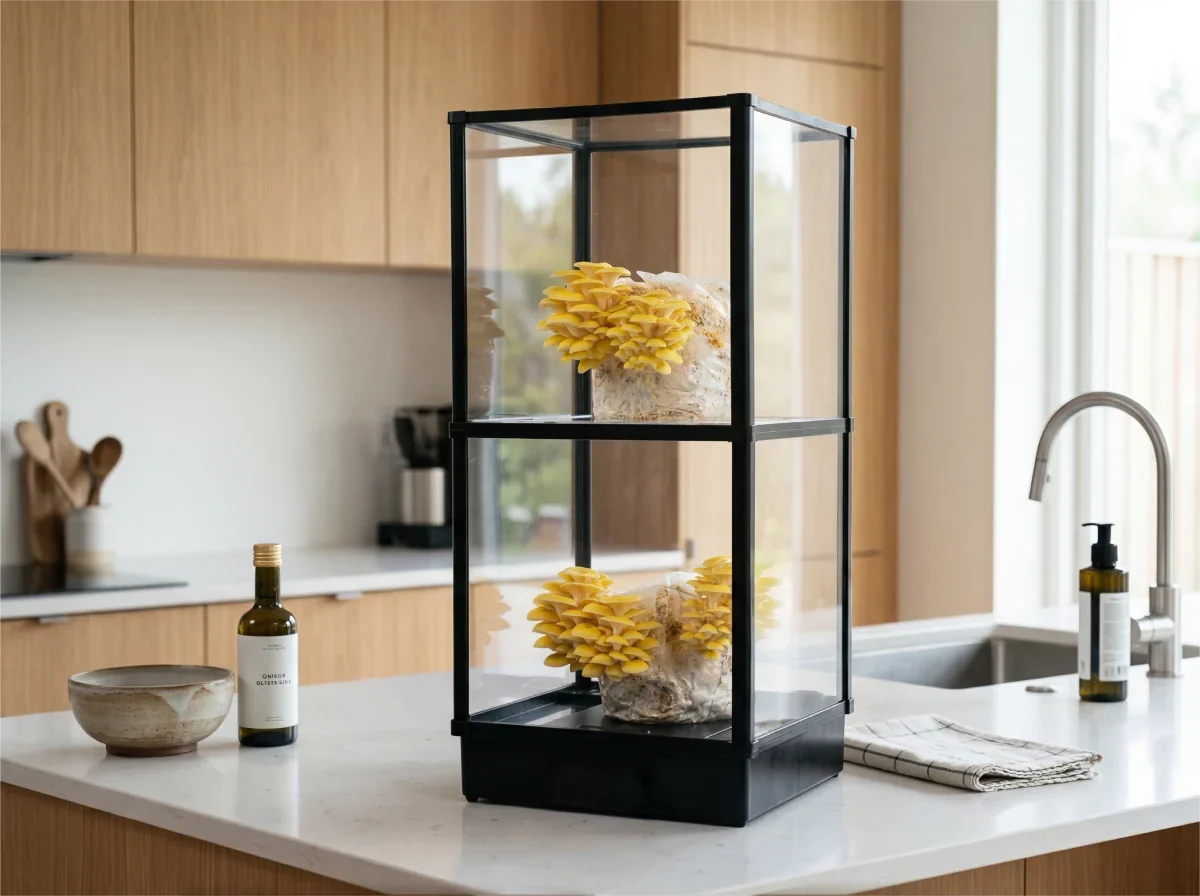
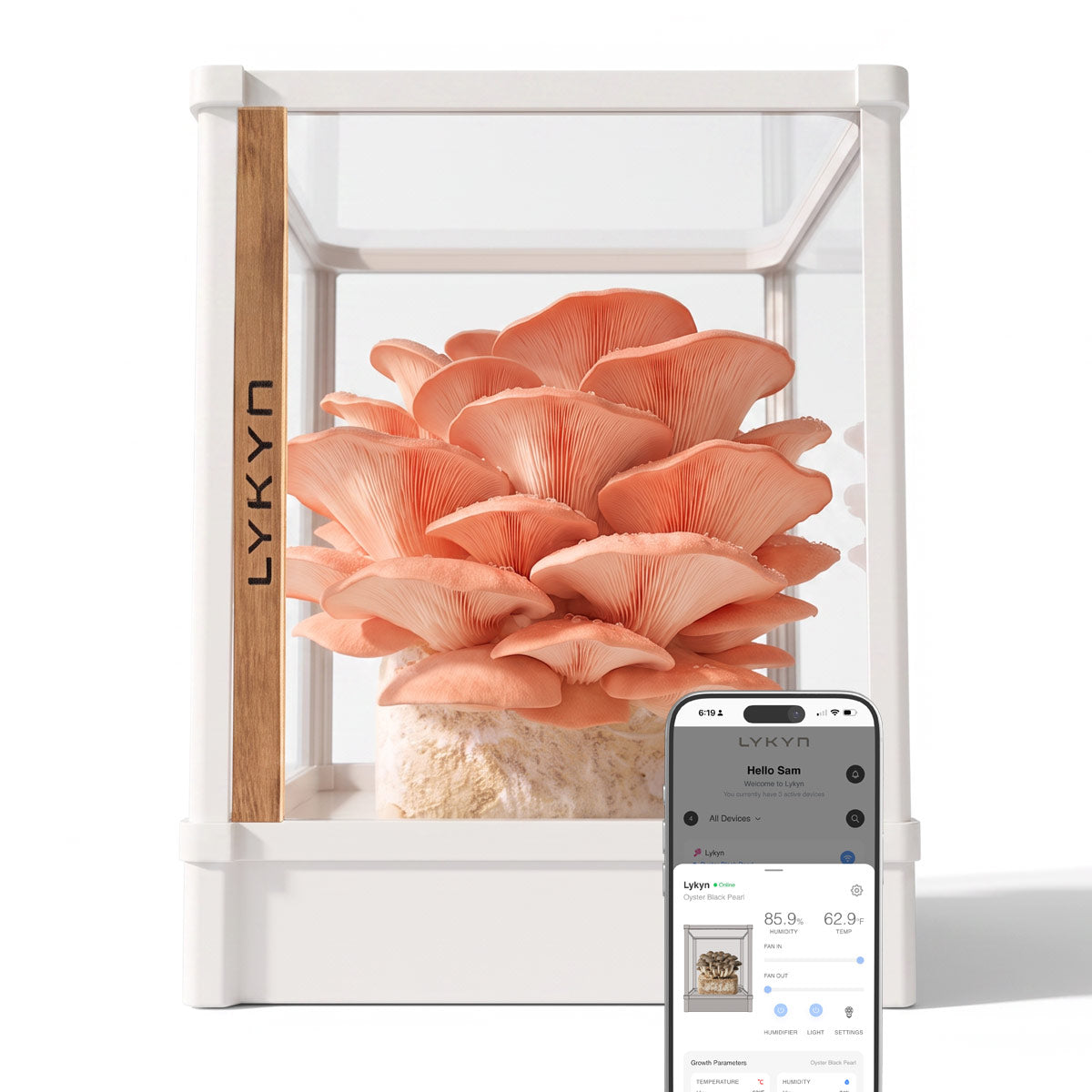
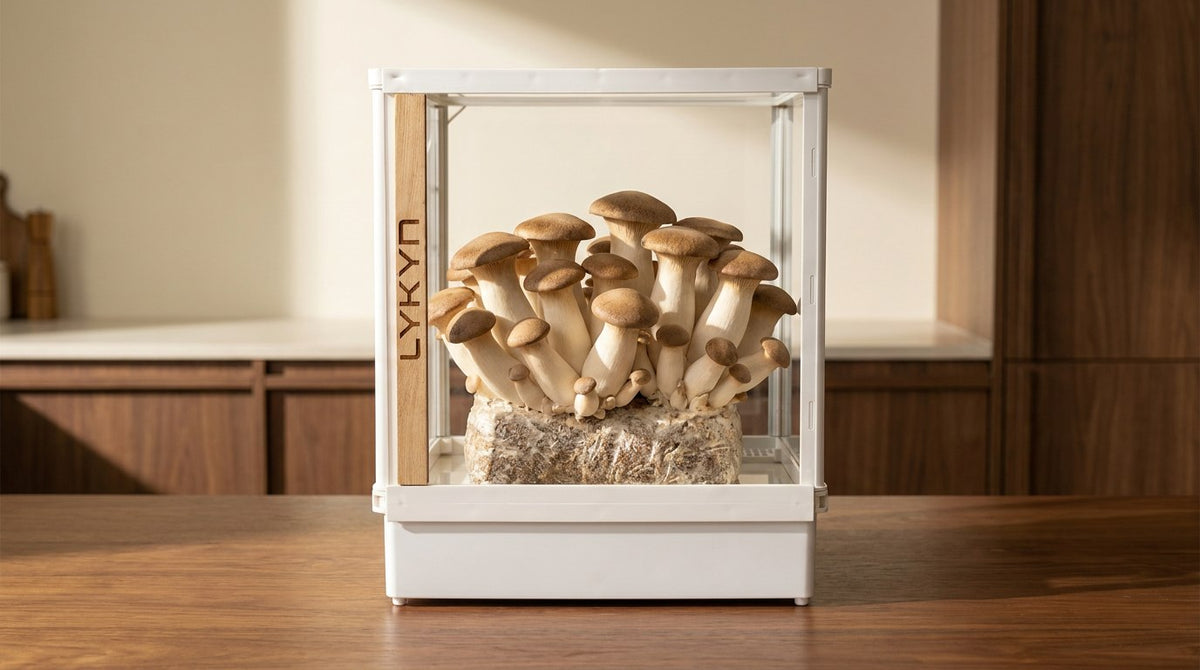
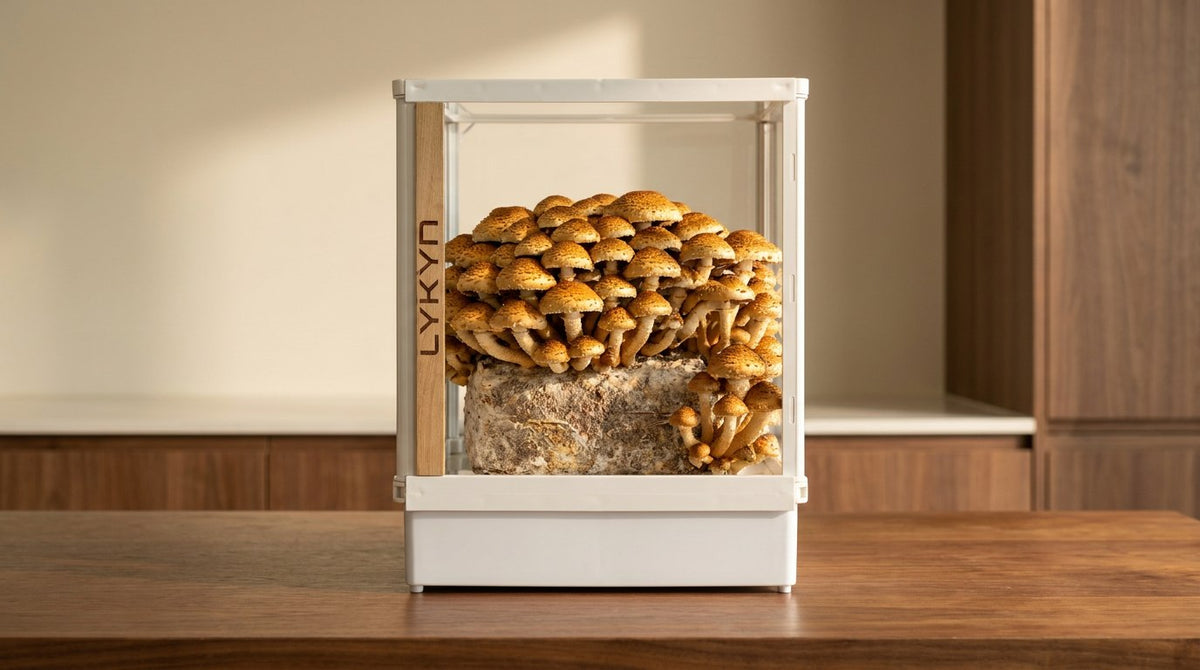
Smart Chamber. Bone White Single
- 2.8L tank, 90% humidity automatic
- App-controlled, plug-and-play
- 6 lb block ceiling, in stock

Smart Chamber. Obsidian Black Single
- Same hardware as Bone White
- Matte black premium finish
- Pairs with any kitchen palette

Three components matter. Skip any of them and your lion's mane grow will struggle.
1. A Pre-Colonized Lion's Mane Fruiting Block
This is the substrate (typically hardwood sawdust or supplemented sawdust) that has already been inoculated with lion's mane mycelium and fully colonized in a sterile lab. A pre-colonized block skips the riskiest part of mushroom cultivation and is the only sensible starting point for a home grower. Block prices in 2026 range from $25 to $45 for 5-pound blocks, available from North Spore, FreshCap, Field and Forest, and most regional mushroom suppliers. Lion's mane fruiting blocks ship pre-colonized and ready to fruit; you do not inoculate them yourself.
2. A Climate-Controlled Fruiting Chamber or Humidity Tent
Lion's mane requires 85 to 95 percent relative humidity and consistent temperature in the 60 to 70°F range. Outside the chamber, indoor humidity in a typical home is 30 to 50 percent (sometimes lower in winter), which is fatal to lion's mane fruiting. You have two options:
- Manual humidity tent: A clear plastic tent over the block. Required twice-daily misting with a spray bottle. The cheapest option ($0 to $20) but the most demanding.
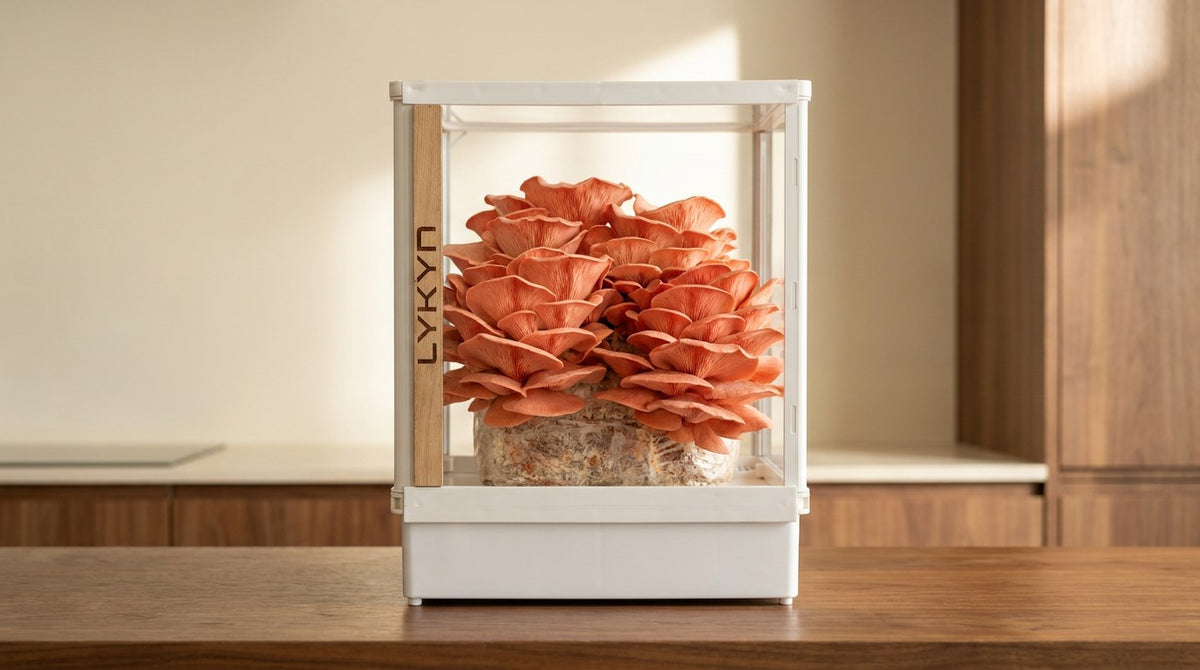
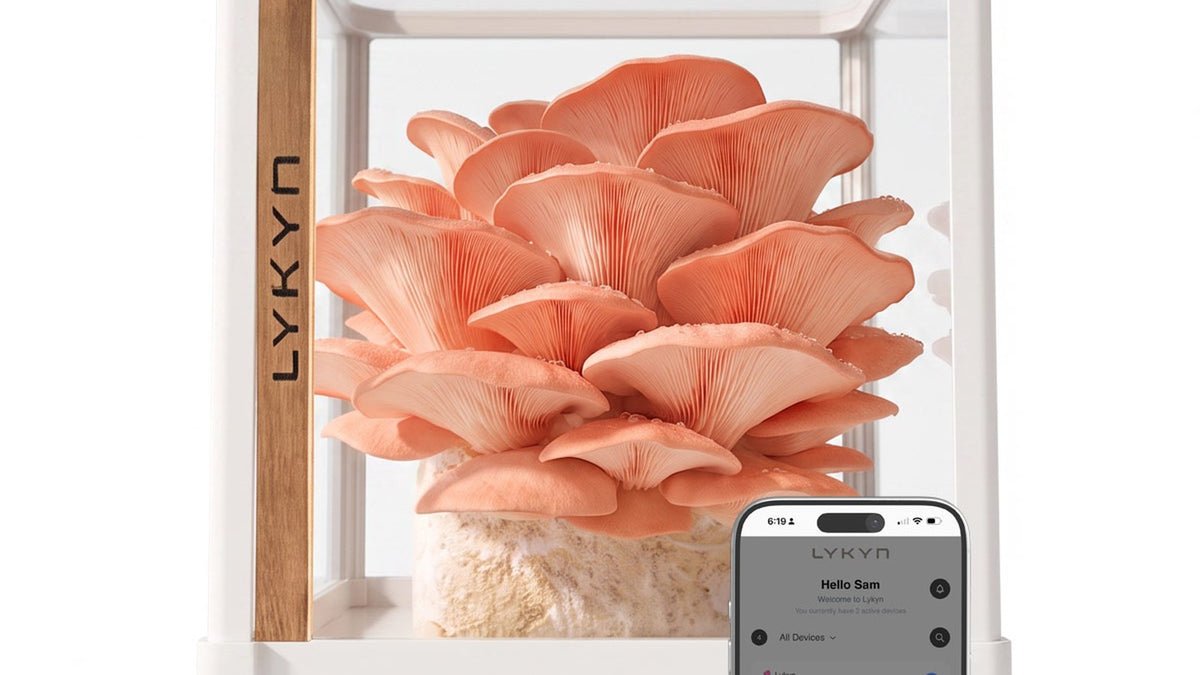
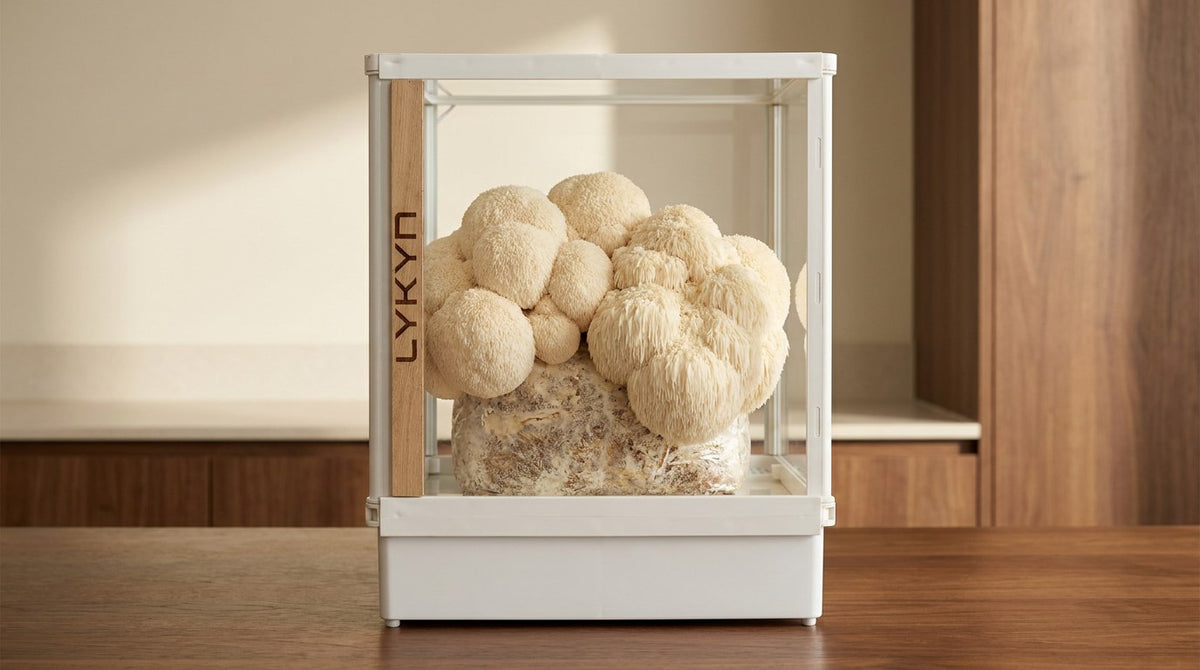
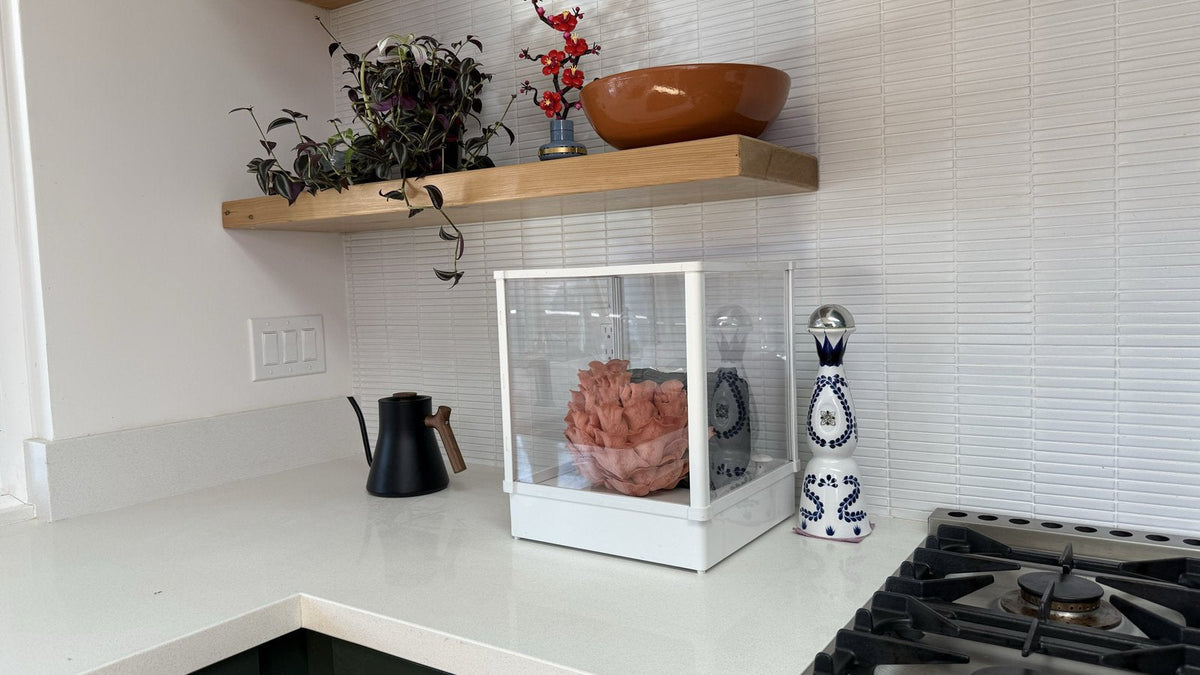
- Automated grow chamber: A sealed enclosure with built-in humidifier, fresh air exchange, and lighting. The Lykyn Smart Mushroom Grow Box is purpose-built for the 85 to 95 percent humidity range lion's mane needs. The chamber pays for itself across 4 to 6 cycles compared to buying $30/lb fresh lion's mane.
3. Fresh Air Exchange and Indirect Light
Lion's mane is sensitive to CO2. If air does not circulate, fruiting bodies form long spindly stems instead of the classic shaggy lion's mane shape. Plan on 3 to 6 air exchanges per hour for the chamber or open the humidity tent twice a day. Indirect light (a kitchen counter, not direct sun) is enough , lion's mane does not need a full grow light, but pure darkness will reduce yields.
How to Grow Lion's Mane: Step-by-Step Setup
Step 1: Acclimate the Block (24 to 48 Hours)
When the lion's mane fruiting block arrives, do not cut it or open it immediately. Place the sealed block on a kitchen counter for 24 to 48 hours so the mycelium recovers from shipping stress. This single step prevents the most common pinning failure new growers face.
Step 2: Cut the Fruiting Slits
Lion's mane fruits from sealed blocks through small slits, not from a single large cut. Use a clean knife to make two or three small X-shaped cuts on opposite faces of the block (each X about 1 inch wide). This gives the lion's mane multiple fruiting points and produces multiple smaller heads instead of one large head that may bracket against the substrate.
Step 3: Place the Block in the Chamber
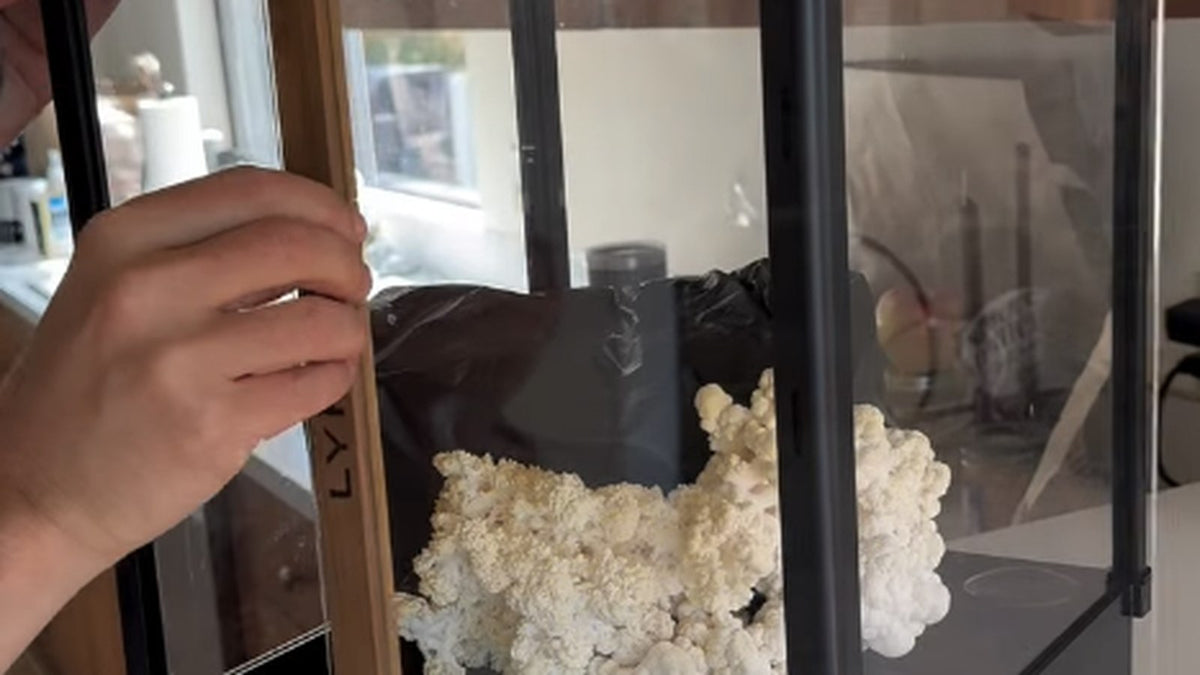
If you are using the Lykyn chamber: place the block on the chamber base, close the lid, open the Lykyn app, select "Lion's Mane" as the species, and the chamber automatically sets humidity to 92 percent, light cycle to 12 hours on / 12 hours off, and fresh air exchange to once per hour. The chamber takes care of every variable from this point.
If you are using a manual humidity tent: drape clear plastic over the block with a small support so it does not touch the surface. Mist the inside walls of the tent (not the block itself) twice daily with room-temperature distilled water. Do not soak the block.
Step 4: Wait for Pinning (5 to 10 Days)
Lion's mane mycelium responds to the increased humidity and fresh air by initiating fruiting bodies (called pins). The first pins appear as tiny white nubs at the slits between days 5 and 10. If pinning is delayed past day 14, your humidity is probably too low. Increase misting frequency or close the chamber lid more tightly.
Step 5: Watch the Lion's Mane Grow (10 to 18 Days)
From the moment the first pin forms, lion's mane grows quickly. The shaggy white spines that give the species its name elongate over 7 to 14 days. Mature heads can reach 4 to 8 inches across on a healthy 5-pound block.
Step 6: Harvest Before the Spines Drop
Harvest lion's mane when the spines reach 1 to 2 cm in length and the cluster is firm but not yet starting to brown. Use a clean knife to cut at the base where the head meets the substrate. Harvested at peak maturity, lion's mane stays fresh for 7 to 10 days in the fridge in a paper bag.
Step 7: Trigger a Second Flush
After the first harvest, lion's mane blocks typically produce a second smaller flush 10 to 14 days later. Soak the block in cold water for 6 to 8 hours, drain, and place it back in the chamber. Yields drop 40 to 60 percent on the second flush, which is normal. Some growers get a third flush; most do not.
Lion's Mane Cultivation Timeline (Realistic)
| Phase | Days from Setup | What You See |
|---|---|---|
| Acclimation | Day 0 to 2 | Sealed block resting on counter |
| Slit cut and chamber loaded | Day 2 | Cut faces visible, mycelium exposed |
| First pinning | Day 5 to 10 | Tiny white pins at the slits |
| Spine elongation | Day 10 to 18 | Shaggy heads forming |
| First harvest | Day 14 to 21 | Mature 4 to 8 inch heads ready to cut |
| Second flush | Day 28 to 42 | Smaller heads, 40 to 60 percent yield drop |
Common Lion's Mane Grow Problems and Fixes
"My Block Is Not Pinning After 14 Days"
Almost always a humidity problem. Pure indoor air at 30 to 50 percent humidity is too dry for lion's mane. Increase misting to 3 times per day, or use a sealed chamber. Check for cold drafts. Move the block away from heating vents and direct sun. If the cut surface looks dried out, mist the surrounding tent walls (never the cut face directly) until you see condensation form on the inside of the tent.
"My Lion's Mane Has Long Stems Instead of Round Heads"
This is CO2 buildup. Lion's mane that does not get fresh air forms long white stalks (called "antlers") instead of the classic shaggy round head. Open the humidity tent twice a day for 30 seconds to exchange air, or use a chamber with built-in fresh air exchange. The Lykyn chamber runs an automatic fresh air cycle every 60 minutes for exactly this reason.
"My Block Has Pink or Green Mold"
Discard the entire block. Pink (Trichoderma) and green (Penicillium) molds are common contaminants and they release spores that infect the rest of your kitchen if left in place. Most fruiting block suppliers offer a 30-day contamination guarantee for shipped blocks; check yours.
"My Lion's Mane Smells Sour or Fishy"
Bacterial contamination. Throw it out. Fresh lion's mane has a mild seafood-like aroma that is faintly sweet. A sour, ammonia, or rotting smell means bacteria has taken hold. Do not eat, do not wash and try to save it.

Fuel Your Mushroom Journey
Smart Mushroom Grow Chamber
Plug-and-play smart chamber with humidity, light, and airflow dialed in for every species. Beginners harvest their first flush in days, not months.
Add to cart $299"My First Harvest Was Tiny"
Yield depends on block freshness, climate consistency, and species genetics. A healthy 5-pound block should produce 1 to 1.5 pounds of fresh lion's mane on the first flush. If you got less, the most likely cause is humidity drops during pinning. An automated chamber holds humidity steady around the clock, which typically delivers 30 to 50 percent higher yields than manual misting.
Manual Setup vs. Smart Chamber: Which Is Right for You?
Both setups can grow lion's mane successfully. The choice comes down to consistency.
Manual humidity tent: $0 to $20 upfront, requires 2 to 3 misting sessions per day, and yields vary 30 to 50 percent block to block based on whether you nailed the misting routine. Best for one-time experiments, gift kits, or growers who genuinely enjoy the daily ritual.
Lykyn Smart Mushroom Grow Box: $299 to $389 upfront, no daily misting, app-controlled humidity and fresh air exchange, supports 28+ species (so you grow lion's mane this month and king trumpet next month on the same hardware). Best for serious growers, anyone who travels, and households where missing 24 hours of misting would kill the cycle.
For lion's mane specifically, the chamber is the easier path because lion's mane is more humidity-sensitive than oyster or shiitake species. If you have ever tried to grow lion's mane manually and ended up with antler-shaped stalks instead of shaggy heads, the chamber solves the problem in one purchase.
Frequently Asked Questions
How long does it take to grow lion's mane mushrooms at home?
From setup to first harvest, lion's mane takes 14 to 21 days. Pinning starts at day 5 to 10, and the spines elongate over the next 7 to 14 days. A second flush appears 10 to 14 days after the first harvest, at roughly half the yield.
Can I grow lion's mane from spores or do I need a fruiting block?
For home growers, a pre-colonized lion's mane fruiting block is the only realistic starting point. Spore-based cultivation requires a sterile lab environment, agar plates, grain spawn, and weeks of waiting before fruiting even starts. The success rate of home spore-to-harvest is under 30 percent. Pre-colonized blocks ship from a sterile lab already 100 percent colonized, which is why they consistently produce harvests for first-time growers.
What is the best species for a beginner: lion's mane or oyster?
Pearl oyster is forgiving on humidity (75 to 90 percent works) and pins in 5 to 7 days. Lion's mane needs 85 to 95 percent humidity and pins in 5 to 10 days. Oyster is the easier first species for any beginner mushroom grower. Most growers do oyster first, then move to lion's mane on cycle 2 or 3 once they have the humidity routine down.
How much lion's mane will one block produce?
A healthy 5-pound block produces 1 to 1.5 pounds of fresh lion's mane on the first flush, plus a smaller second flush of 0.5 to 0.8 pounds. At $30 to $60 per pound retail, a single $35 block delivers $50 to $130 of fresh lion's mane.
Can lion's mane mushrooms regrow on the same block?
Yes, blocks typically produce 2 to 3 flushes before they exhaust. Soak the block in cold water for 6 to 8 hours after each harvest, drain, and place it back in the chamber. Each successive flush is smaller than the last by 30 to 50 percent.
What does fresh lion's mane taste like?
Lion's mane is famous for tasting like seafood, specifically lobster or crab. The texture is similar to scallop or chicken depending on how you cook it. A simple butter sauté with a pinch of salt brings out the sweetness. Lion's mane does not need long cooking; 3 to 5 minutes per side until golden is enough.
Do I need a grow tent or grow box for lion's mane?
You do not need a grow tent (the kind cannabis growers use), but you do need a sealed humidity environment. A grow tent is overkill for a single block. The right tools are either a small humidity tent that fits over the block (the cheapest option) or a purpose-built smart chamber like the Lykyn that holds the climate steady automatically.
Next Steps After Your First Lion's Mane Harvest
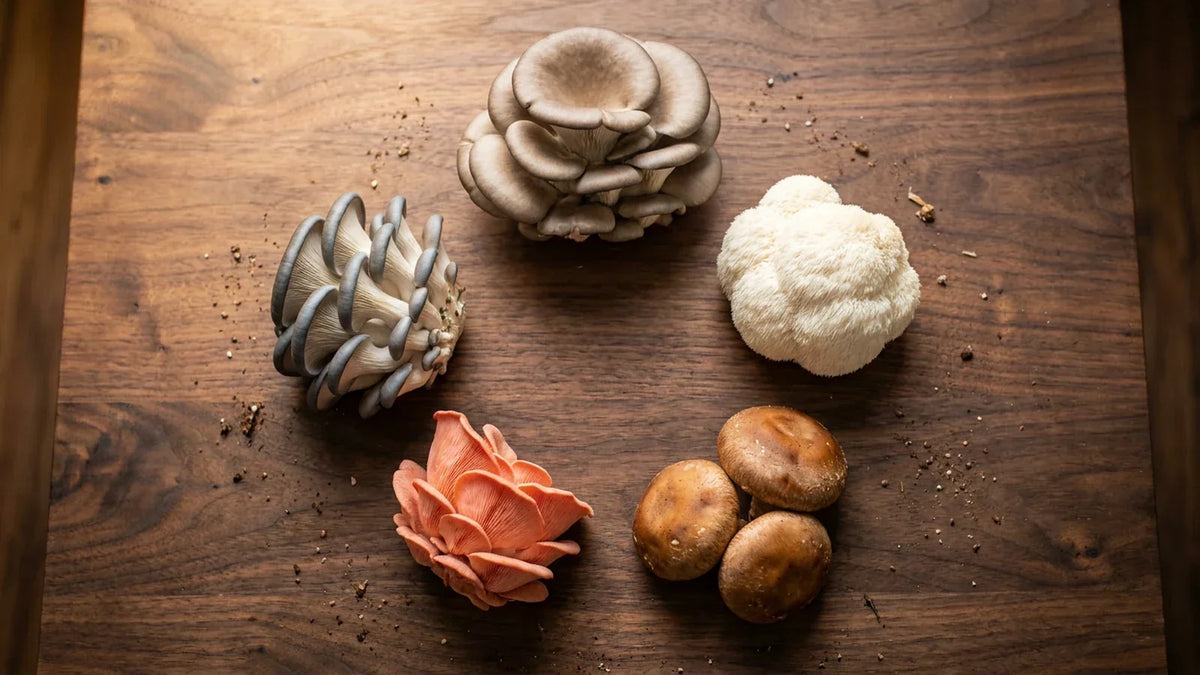
Once you nail your first lion's mane cycle, the natural next step is variety. The same fruiting chamber and the same general process work for oyster, shiitake, king trumpet, pioppino, chestnut, and 25+ other gourmet species. Each species has small humidity and timing tweaks, but the fundamentals are identical: pre-colonized block, controlled climate, fresh air, harvest at peak.
For people who plan to grow more than 3 cycles total, the Lykyn Smart Mushroom Grow Box handles every species the same way: load the block, pick the species in the app, harvest 2 to 3 weeks later. No daily misting, no humidity guesswork, no antler-shaped lion's mane disasters.
Ready to grow?
Skip the substrate guesswork. Start with the smart fruiting chamber that handles humidity, airflow, and lighting for you.
Start with the Lykyn Grow Box →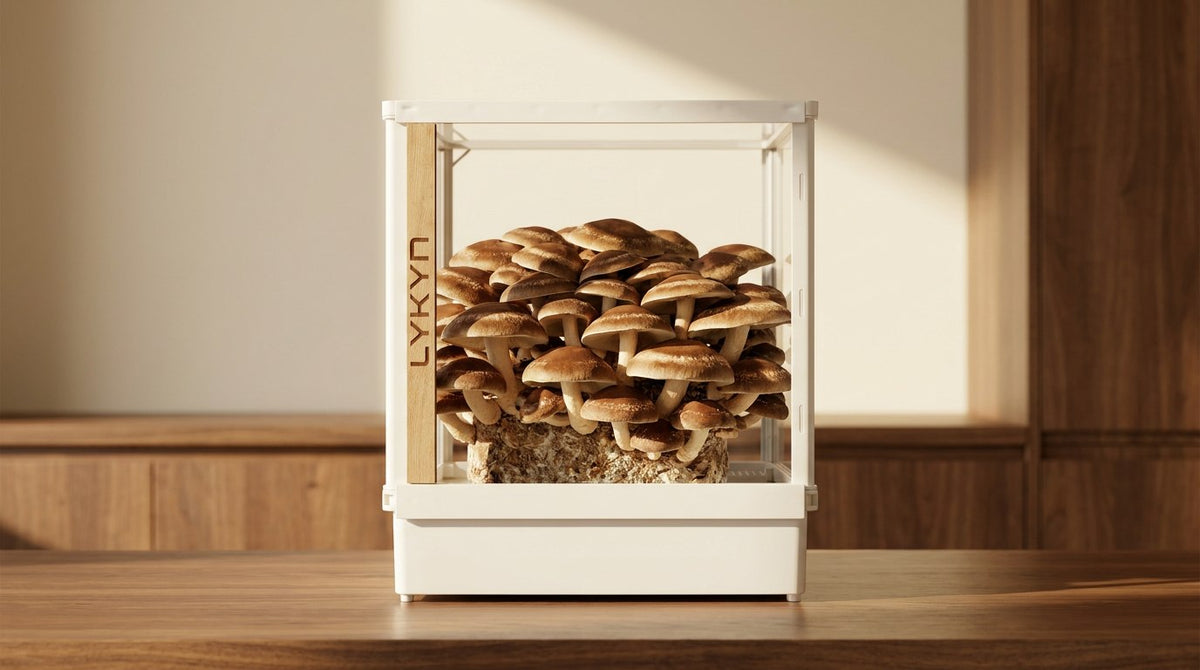
Share:
Best Mushroom Grow Kits for Beginners (2026 Buyer's Guide)
Grow Box and Fruiting Block: The Complete Mushroom Setup (2026)