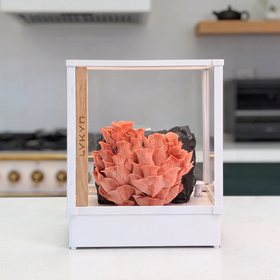




You open a chamber door, pull out a cluster of mushrooms you grew in your kitchen, and start dinner twenty minutes later. That is the whole promise of growing edible mushrooms at home. The question is which species gets you there with the least fuss, and which ones ask for the kind of attention you actually want to give.
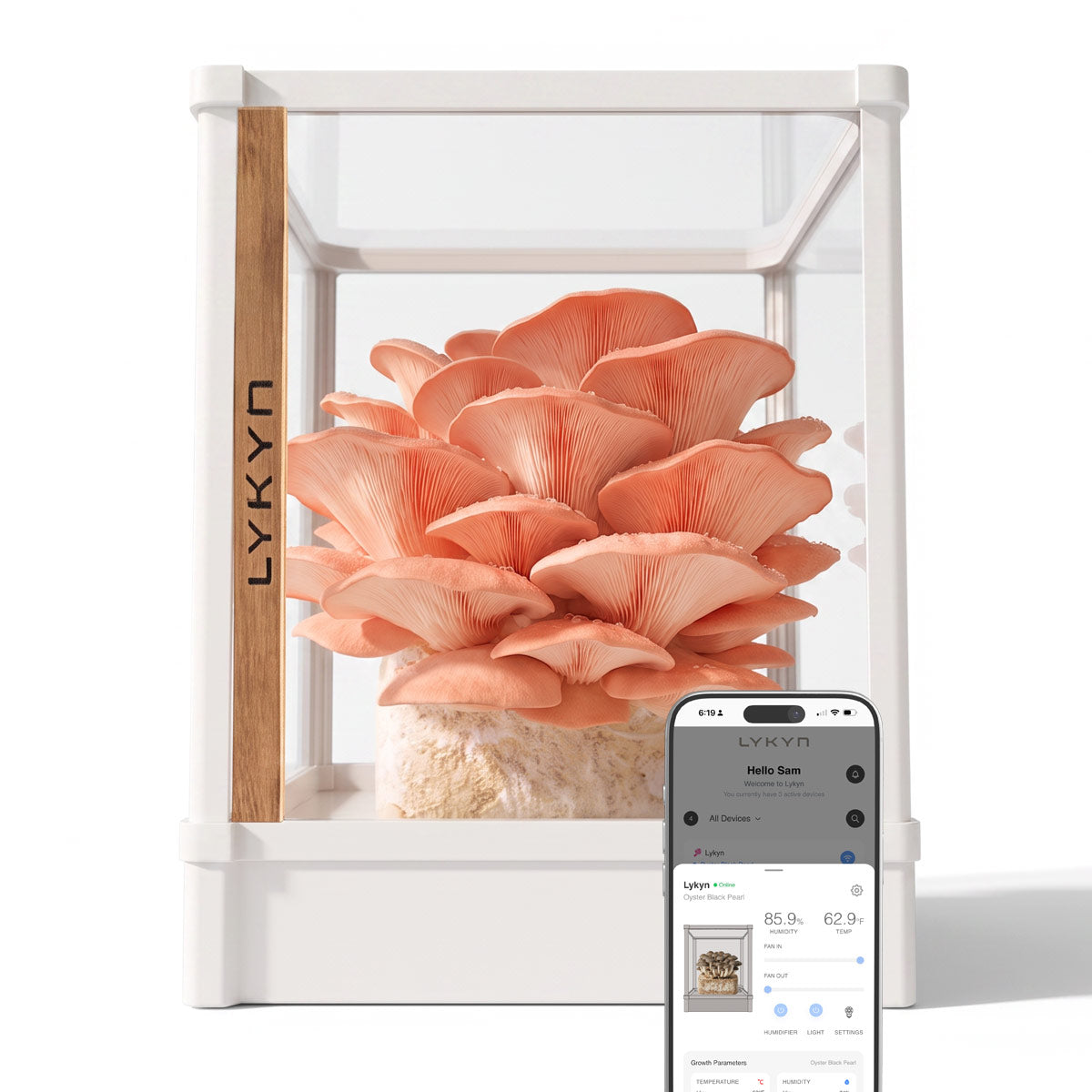
This guide picks twelve species that fruit cleanly indoors, groups them by how much patience they ask for, and tells you exactly how each one behaves inside a Lykyn Smart Mushroom Grow Box. No forage warnings, no field keys. You buy a pre-colonized fruiting block, you set the chamber, you harvest.
Why grow edible mushrooms at home
The grocery mushroom aisle holds two things reliably: white button and brown cremini. Portabella shows up in half of stores. Shiitake and oyster rotate in and out, often arriving three days past their good day. Lion's Mane, pink oyster, nameko and chestnut rarely appear outside specialty markets.
Growing at home does not solve a freshness problem, since store oysters picked that morning are already fine. It solves an access problem. The species a mushroom cook actually wants are the ones nobody stocks, and the chamber makes those species boring to grow.
The three difficulty groups
Species in this guide fall into three groups:
- Easy: Oysters. Four of them. First harvest in one to two weeks. Forgiving of a missed misting.
- Moderate: Species with a specific humidity, temperature or airflow preference. King oyster, chestnut, black pearl king, phoenix oyster. First harvest in two to three weeks.
- Patient: Lion's Mane, shiitake, nameko, pioppino. Three to four weeks to first flush, sometimes longer, but the flavor pays for the wait.
If this is your first time, start in the Easy group, finish two flushes, then move to Moderate. Save Patient for once you trust your rhythm with the chamber.
Easy: four oysters that fruit inside two weeks
Pleurotus is the forgiving genus. Pins break fast, cycles finish in two weeks, and a missed day of misting rarely kills a flush. Start here.
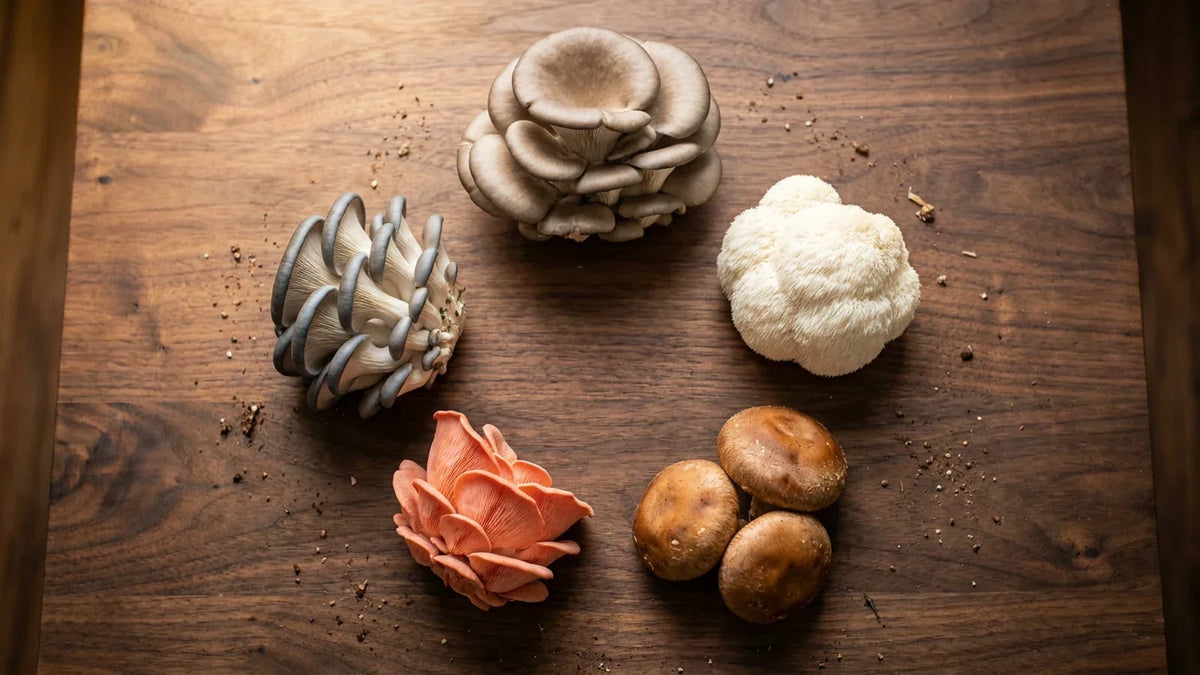
Blue Oyster (Pleurotus columbinus)
Slate-blue bonnets stack like roof tiles and give off a brisk anise note that reaches you before you open the door. The gills run pure white, cool to the touch, slightly damp.
Time to harvest: 10-14 days from pinning. Expect: 3-4 flushes over 6-8 weeks.
Inside the chamber: At 20C and 85% RH the pins break within 48 hours of a cold shock. The chamber's cycled fresh-air fan keeps CO2 under 900 ppm, so caps flatten out properly instead of forming long stems.
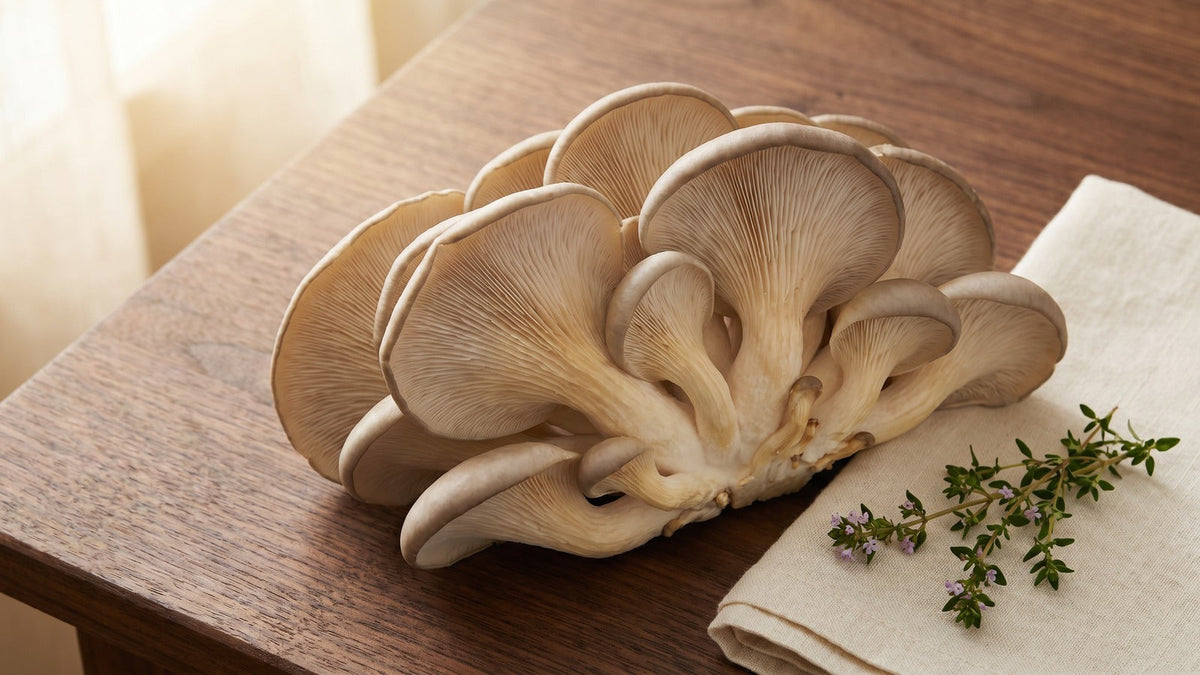
Pearl Oyster (Pleurotus ostreatus)
Cream caps with a faint sheen, almost like wet silk. Fresh pearl smells like roasted almonds and clean laundry.
Time to harvest: 10-14 days. Expect: 3 flushes typically.
Inside the chamber: The forgiving one. Pearl oysters tolerate 18-24C and keep fruiting through small humidity swings, which makes them the species to start with before you trust your sensors.
Pink Oyster (Pleurotus djamor)
Coral-pink clusters that look painted. The scent is sharper, closer to crushed basil stems, and they bruise cherry-red at the slightest touch.
Time to harvest: 7-10 days (fastest in this guide). Expect: 2-3 flushes.
Inside the chamber: Pink oysters want heat. Set the chamber to 24-27C and 85% RH, run the lights 12 hours, and expect first harvest in a single week. They do not keep well once picked, so plan dinner the day you harvest.
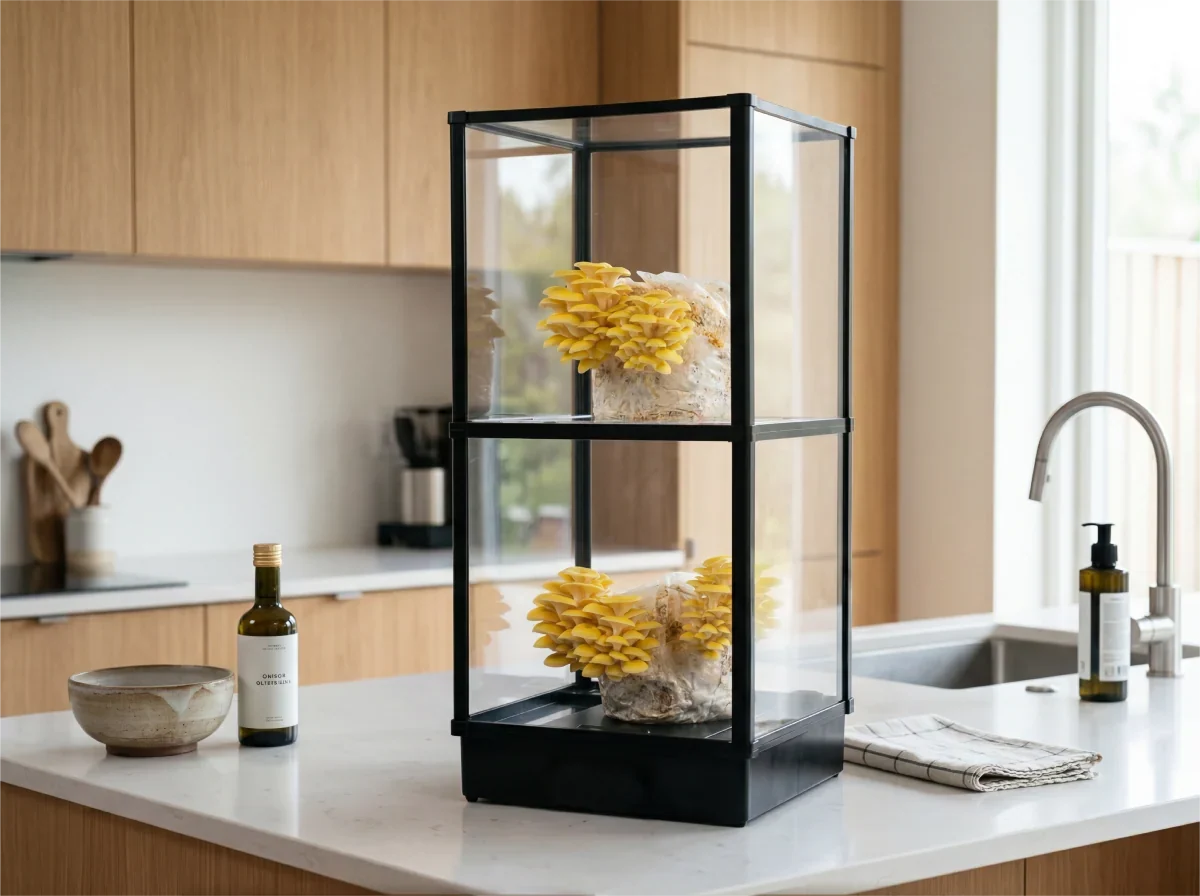
Yellow Oyster (Pleurotus citrinopileatus)
Butter-yellow fans the color of fresh egg yolk. A dense cluster can hold a cup of water in its folds after a mist. Faintly nutty, slightly cashew.
Time to harvest: 10-12 days. Expect: 2-3 flushes.
Inside the chamber: Yellow oysters pin heavily. The chamber's bottom tray fills first because warm air rises past the fruiting block and condenses low, so rotate the kit 180 degrees after the first pins appear.
Moderate: four species that reward a steady hand
These species ask for one specific condition most grow tents cannot hold: lower humidity for king oyster, steady warmth for phoenix, controlled airflow for chestnut. The chamber takes care of it, which is why they belong here rather than in the Patient group.
King Oyster (Pleurotus eryngii)
Thick white stems, small tan caps, meaty and dense. Raw, they smell like damp stone. Seared, they come out tasting close to scallop.
Time to harvest: 14-18 days. Expect: 2 flushes.
Inside the chamber: Kings need lower humidity (80-82% RH) and more oxygen than oysters. The Lykyn chamber's dial lets you drop RH 5 points without changing temperature, which is why kings pin cleanly here where a shoebox tent fails them.
Chestnut (Pholiota adiposa)
Deep tawny caps with a wet, varnished look. Dense little clusters that squeak between your fingers. Cooked, they turn almost buttery.
Time to harvest: 14-21 days. Expect: 2 flushes.
Inside the chamber: Chestnuts fruit through small holes, so leave the fruiting block's bag mostly intact and cut only three or four crosses. The chamber's gentle airflow pulls humidity through those openings instead of drying the exposed top.
Black Pearl King (Pleurotus ostreatus x eryngii)
Charcoal-dark caps, dense white stem. Smells of toasted bread when you break one off. Holds its shape in a hot pan longer than most oysters.
Time to harvest: 12-16 days. Expect: 2-3 flushes.
Inside the chamber: The hybrid tolerates the same conditions as pearl oyster but rewards slightly higher light. Push the chamber's LED to its brightest preset once pins form, and the caps darken from grey to near-black.
Phoenix Oyster (Pleurotus pulmonarius)
Pale tan caps on a lacier stem than pearl oyster. Mild, almost sweet in the raw break. In August 2026 we noticed a phoenix cluster scenting the kitchen with something close to fresh wheat flour for two days.
Time to harvest: 10-14 days. Expect: 3 flushes.
Inside the chamber: Phoenix oysters fruit warmer than pearls (22-27C) and tolerate the summer kitchen without complaint. Good second kit once pearl oyster has run its course.
Patient: four species worth the wait
Lion's Mane, shiitake, nameko and pioppino move slowly. First flush can take three to four weeks. Flavor and texture, however, land in a different league. Start one in the chamber while an Easy kit is still running, and the harvests overlap.
Lion's Mane (Hericium erinaceus)
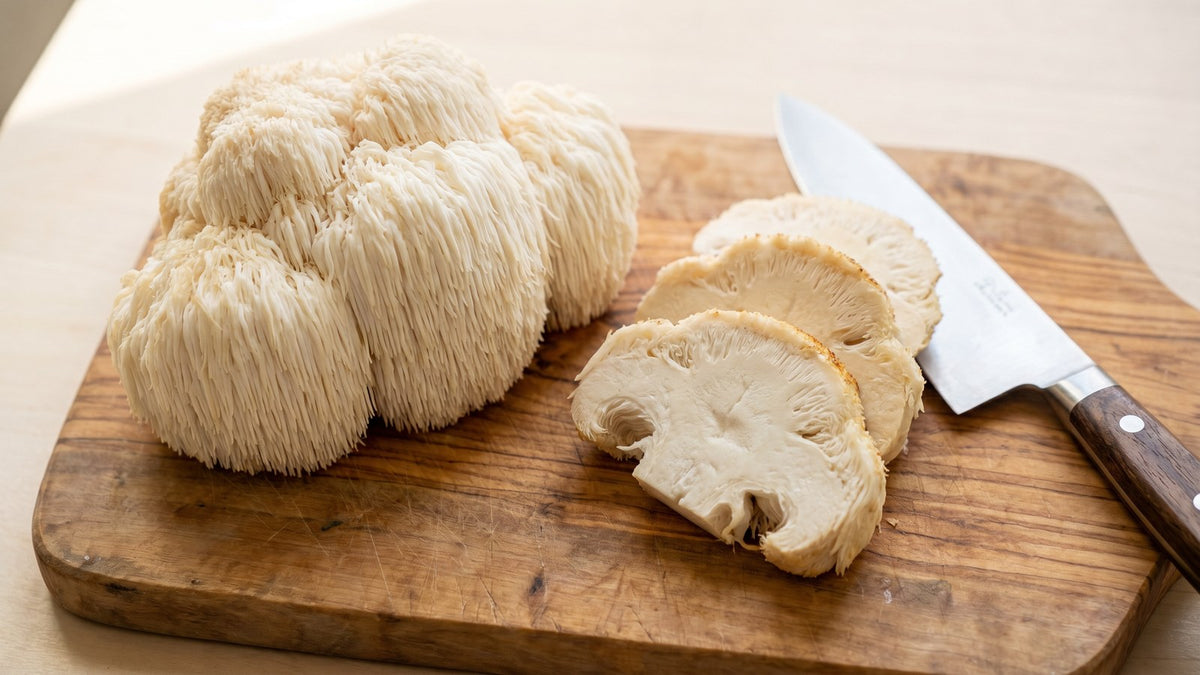
White pom-poms, soft as a cat's paw at first touch, then springy. The flesh squeaks a little when you cut it. Cooked in butter, it reads as crab meat.
Time to harvest: 18-24 days. Expect: 2 flushes.
Inside the chamber: Lion's Mane sulks in dry air. Keep the chamber at 90% RH and mist the inside of the glass once a day. The LED cycle matters less than for oysters, since this one responds mostly to humidity and CO2.
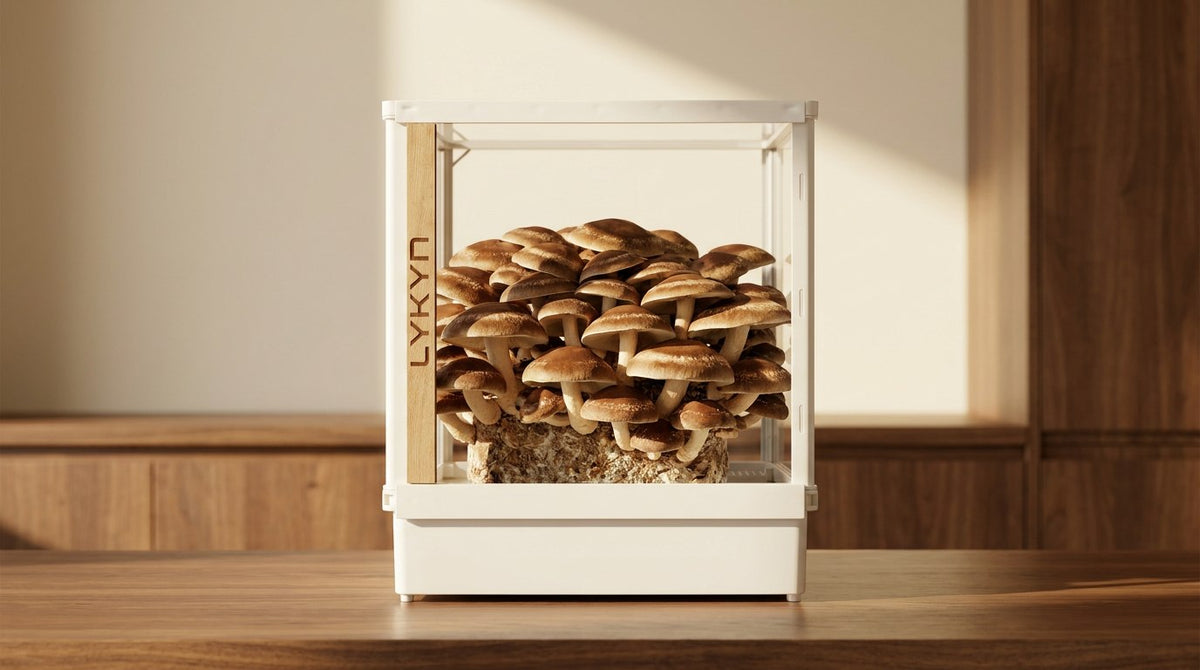
Shiitake (Lentinula edodes)
Chestnut caps that crack like dry mud as they expand. The gills stay cream. Dried, they concentrate into something close to a cured ham on the nose.
Time to harvest: 21-28 days. Expect: 2-3 flushes over 3-4 months.
Inside the chamber: Shiitake wants a cold shock to pin. Open the chamber door for 30 minutes at night when the kit arrives, close it, and set the chamber to 16-20C. The onboard temperature probe keeps the swing tight, which pins the block in one coordinated wave instead of straggling flushes.
Nameko (Pholiota microspora)
Glossy amber caps with a sticky film the Japanese call nuru. Smells faintly of chestnut and wet leaves. Slips into miso soup with a soft, almost gelatinous bite.
Time to harvest: 21-28 days. Expect: 2 flushes.
Inside the chamber: Nameko fruits cool. Set the chamber to 14-18C and 90% RH. The sticky surface loves still, humid air, so run the fan only on its lowest preset.
Pioppino (Agrocybe aegerita)
Walnut-brown caps on long cream stems that bunch like a bouquet. The scent on the break is of damp wine cellar.
Time to harvest: 21-28 days. Expect: 2 flushes.
Inside the chamber: Pioppino likes a slow pin set. Give the fruiting block a week in the chamber at 20-22C before you expect any movement. Patience here is a feature, not a flaw.
What the chamber actually changes
Any of these species will fruit in a well-run shoebox tent with a daily misting schedule, if you remember the misting and you catch the pins at the right hour. Most beginners do not, and the first flush ends with long-stemmed, hooded caps that look nothing like the pictures.
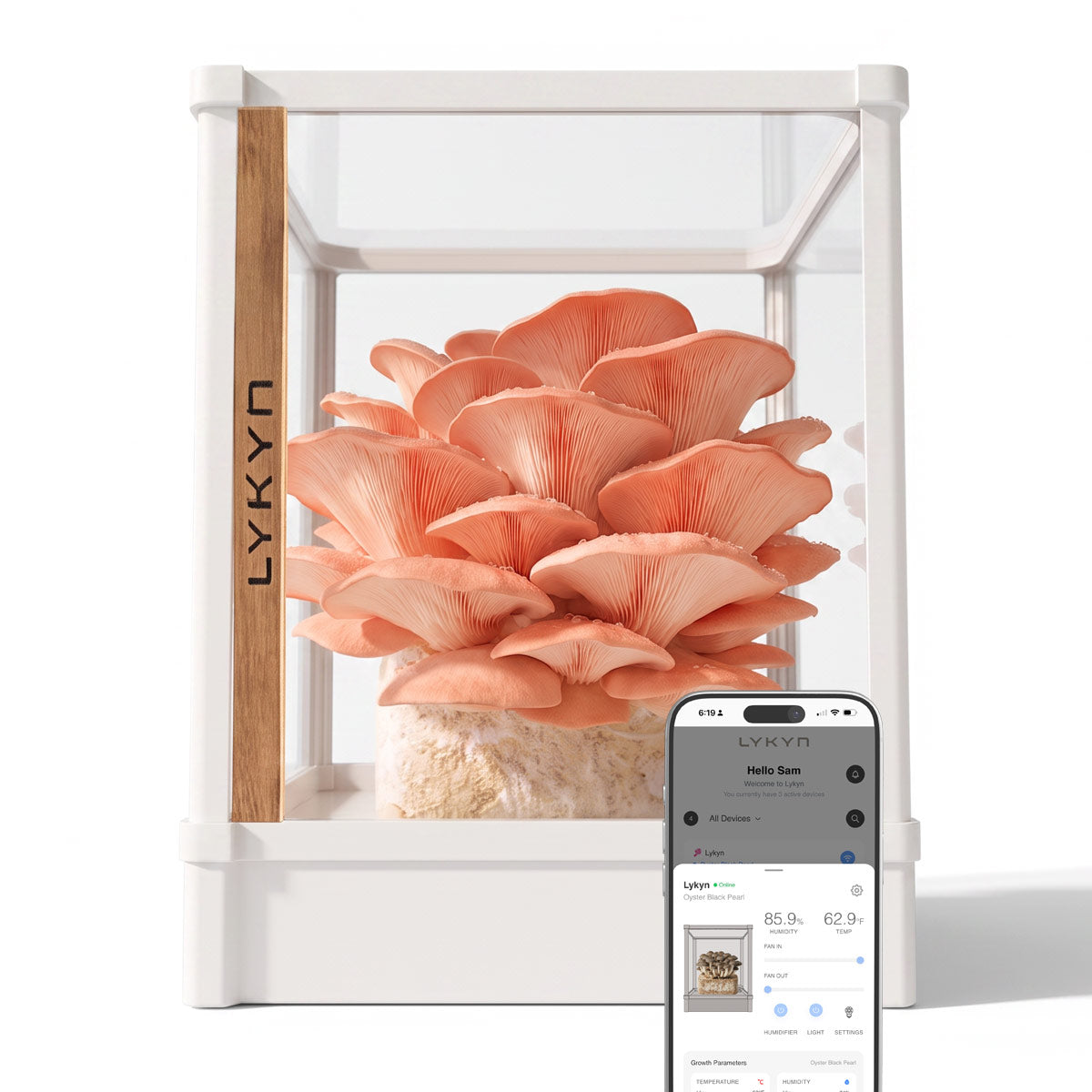
The Lykyn Smart Mushroom Grow Box runs the three variables that decide shape: humidity, fresh air exchange, and a daylight cycle. Species-specific presets ship from the factory, so pink oyster and shiitake get different climates without you reading a chart. The sensors keep humidity swings under three points, which is the difference between a cluster that opens flat and a cluster that stretches toward the lid looking for oxygen.
A six-week starter flow
- Week 1: Pearl Oyster. The forgiving one. Learn to read pins and read moisture.
- Week 2: Pink Oyster, started while pearl is still finishing its first flush. Two harvests in one chamber, two cooking nights.
- Week 3-4: King Oyster. Switch the chamber to lower humidity. Scallop-dense stems for the first sear.
- Week 4-6: Lion's Mane in parallel. The slowest of the group, but you cook something new while it builds.
- Week 6: Pick which species belongs in your rotation. Shiitake, chestnut and nameko are the strongest arguments for a second chamber.
At the end of six weeks you have grown four species, cooked four dinners from them, and learned the chamber's rhythm. That is the whole learning curve.
Lion's Mane and shiitake deserve their own kits once you reach them:
FAQ
- What is the easiest edible mushroom to grow at home?
- Pearl oyster is the forgiving pick for a first indoor grow. It tolerates humidity swings, pins in ten to fourteen days, and finishes three flushes before the fruiting block runs out of substrate. Pink oyster is faster but needs more heat, so pearl stays the easier starting point for most kitchens.
- How long until I can harvest the first flush?
- Pink oyster can give you dinner in seven days from the moment the kit lands on the counter. Pearl, blue and yellow oyster land between ten and fourteen days. King oyster, chestnut and phoenix sit around two weeks. Lion's Mane, shiitake, nameko and pioppino take three to four weeks to the first flush and reward you with a flavor the oysters cannot touch.
- Do I need a grow tent?
- A tent works for oysters if you can mist it two or three times a day and you are home enough to catch the first pin set. For shiitake, Lion's Mane, nameko and chestnut, humidity and airflow matter enough that a sealed chamber running presets gives a cleaner result than a tent. The Lykyn Smart Mushroom Grow Box is one chamber that handles every species in this guide.
- Can one chamber fruit different species at the same time?
- Each species has its own climate, so running two at once means picking species that want the same preset. Pearl and yellow oyster share a preset, so do fine side by side. Pink oyster at 26C and shiitake at 18C do not, so the chamber runs one at a time. A second chamber solves this if the first one is already in rotation.
- Which species keeps longest after harvest?
- Shiitake holds a week in the fridge and dries beautifully for long storage. King oyster keeps four to five days and improves in flavor on day two. Oysters sit for two to three days before the edges start to curl. Pink oyster is the one exception; eat it the day you pick it.
- Do I need to sterilize anything?
- The fruiting block arrives pre-colonized and sealed. Opening the top for pinning is the only intervention most species ask for. The chamber's interior gets a wipe-down with isopropyl between kits, which is thirty seconds of work. Nothing in this guide asks for a pressure cooker, laminar flow hood or spore syringe.
- Are any of these species psychoactive or dangerous?
- Every species on this list is a food mushroom, cultivated indoors, with no toxic lookalikes to worry about because you are not foraging. The whole point of a kit is that identification is already done. If a species on the list causes digestive upset for a particular person, which can happen with any food, discontinue and try another.
Start with the species you want to cook
The best edible mushroom to grow at home is the one you will actually cook that week. Pick two from the Easy group, start one in the chamber, keep the second kit in the fridge, and the rhythm sets itself. The Patient species come later, when you want flavors the grocery store cannot sell you at any price.



Share:
What Is Mushroom Cocoa and Why Are People Obsessed With It?
What Is Mushroom Cocoa and Why Are People Obsessed With It?