



The white button mushroom built grocery store produce aisles. The gourmet mushroom built restaurant menus. Lion's mane reads like crab. Shiitake carries umami the way miso does. Pink oyster turns deep saffron orange when seared. Blue oyster fans out in fragile silver clusters that crisp at the edges and stay tender in the middle. This guide walks through four gourmet varieties you can actually grow at home, the five multi-mushroom recipes worth cooking this month, and the pairing and seasoning rules that move dinner from good to memorable.
Three rules that work across every gourmet mushroom recipe in this guide:
- Dry-sear first. Hot pan, no fat, 2 to 3 minutes per side until water releases. Then add butter or oil. Skip this step and you steam the mushrooms instead of caramelizing them.
- Tear, do not slice. Gourmet mushrooms have natural ridges and pleats. Pulling them by hand into rough pieces creates more surface area for browning and traps more fat and aromatics.
- Season at the end. Salt pulls moisture out. Wait until the mushrooms are golden brown before salting, or you will fight a wet pan the whole way through.
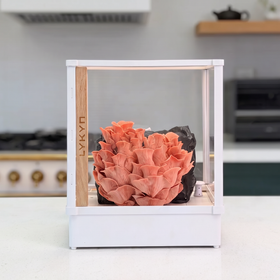
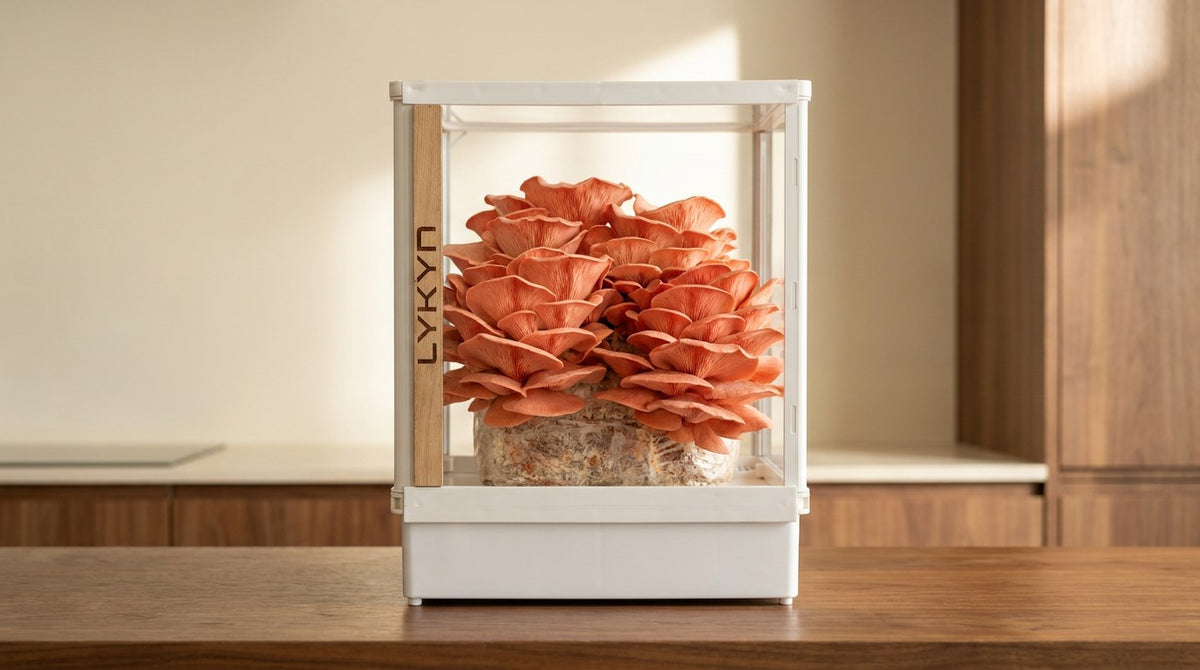
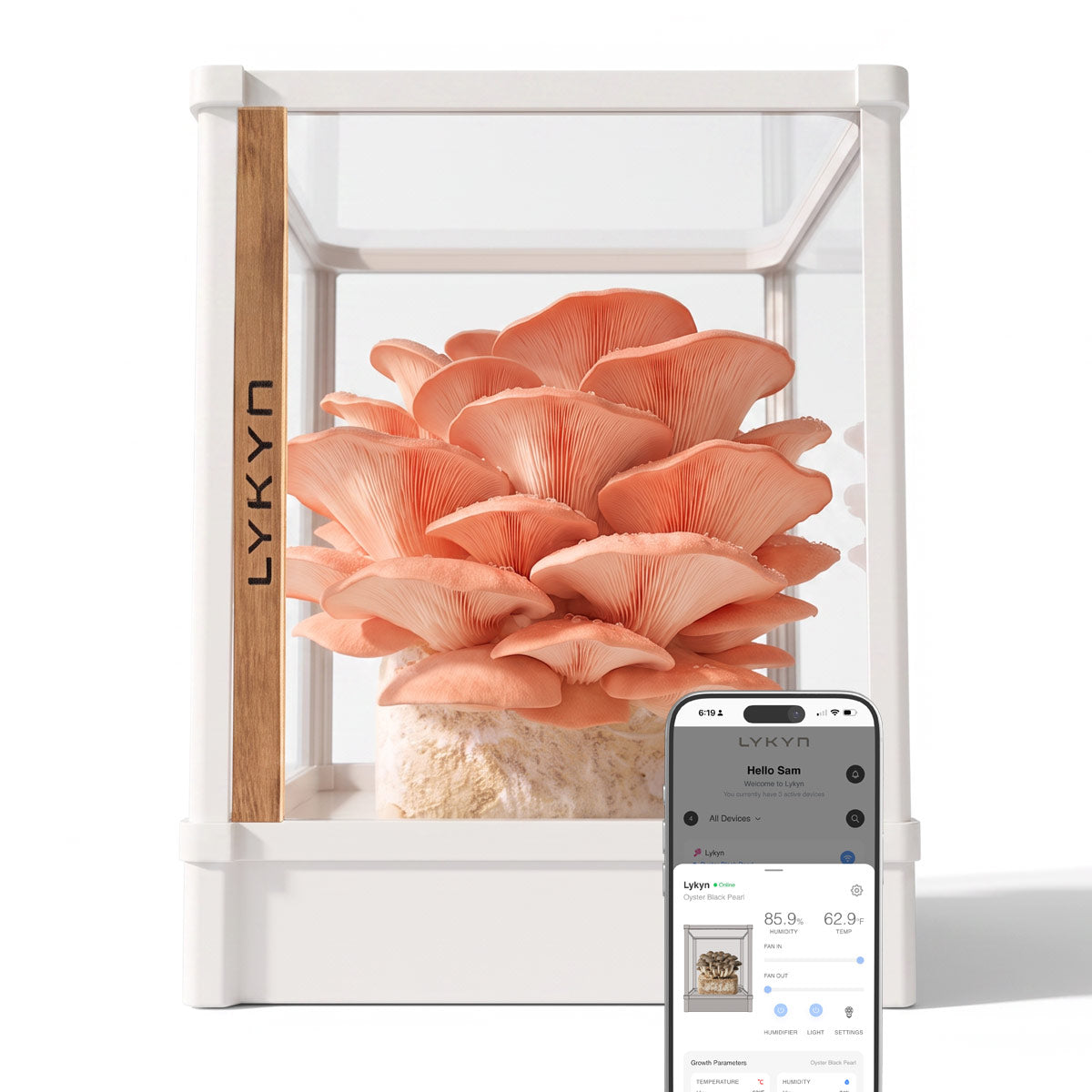
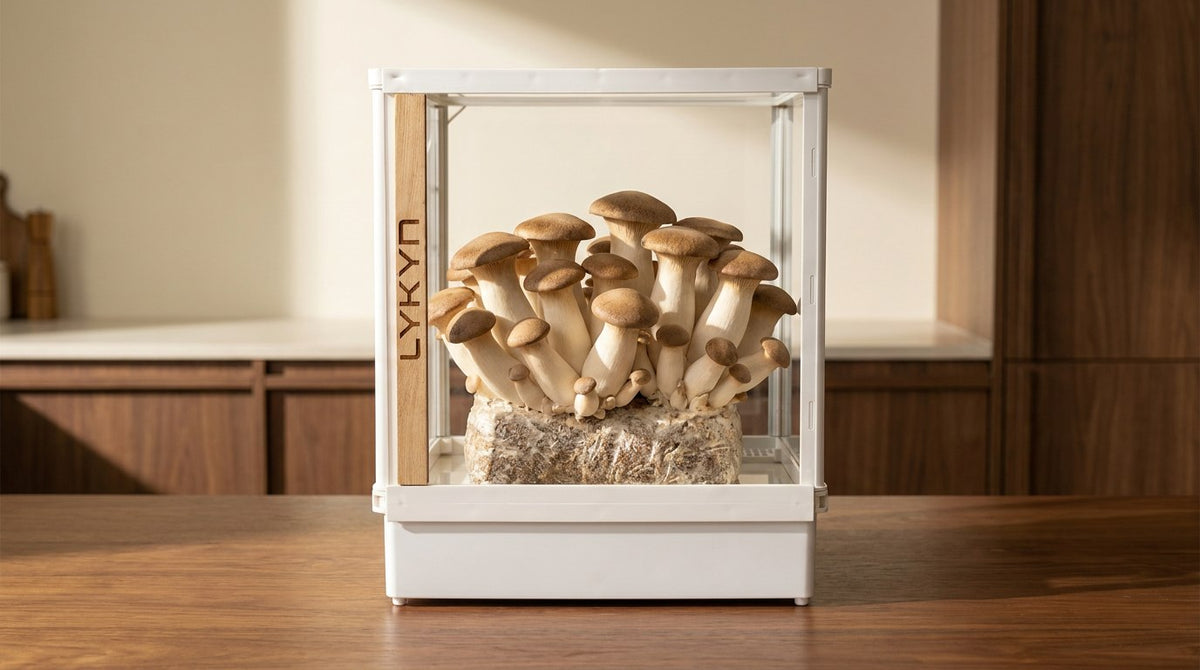
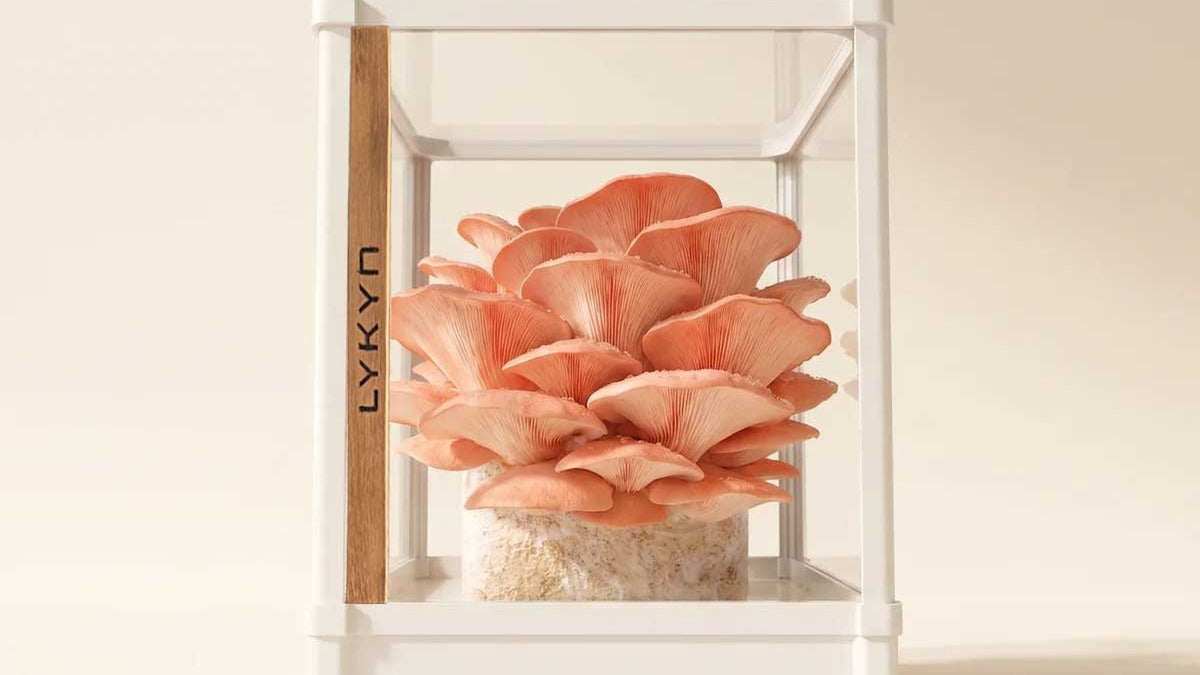
If you want the freshest possible gourmet mushrooms for these recipes, growing your own takes 5 to 14 days from block to harvest. The Lykyn smart mushroom grow box handles humidity and airflow on its own, so a fresh harvest is two hours away whenever you need it.
What Makes a Mushroom "Gourmet"

Smart Chamber. Bone White Single
- 2.8L tank, 90% humidity automatic
- App-controlled, plug-and-play
- 6 lb block ceiling, in stock

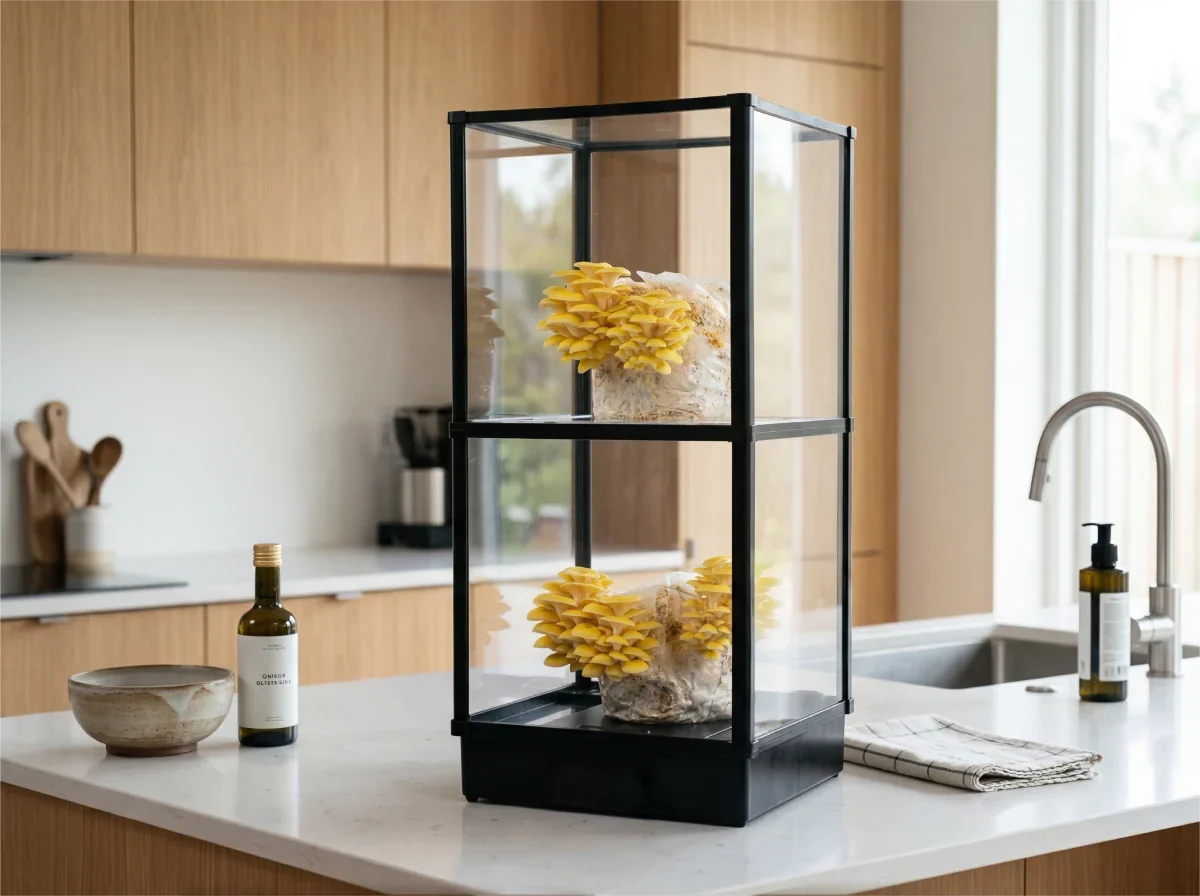
Smart Chamber. Obsidian Black Single
- Same hardware as Bone White
- Matte black premium finish
- Pairs with any kitchen palette

The label "gourmet" is a culinary distinction, not a botanical one. It separates the dense, flavor-rich species that hold up to high-heat cooking from the generic white button (Agaricus bisporus) that dominates grocery stores.
Three properties define a gourmet mushroom:
- Texture. Gourmet varieties have dense, fibrous fruiting bodies that retain shape under heat. Button mushrooms collapse and weep water. Lion's mane, shiitake, and oyster species brown, crisp, and stay structured even after eight minutes in butter.
- Flavor depth. Gourmet mushrooms carry savory glutamates and natural sugars that caramelize on contact with a hot pan. Shiitake is the umami benchmark. Lion's mane reads sweet and nutty. Pink oyster has a faint smoke and a meaty pull.
- Versatility. A button mushroom is a side dish. A gourmet mushroom is a centerpiece. The same pound of lion's mane can become crab cakes, a steakhouse plate, or a lobster roll, depending on technique.
The USDA FoodData Central database also notes that gourmet species like shiitake and lion's mane carry roughly 2 to 3 times the beta-glucan content of button mushrooms, which is why they show up in both Michelin kitchens and functional nutrition research. The Cornell Cooperative Extension culinary mushroom guides classify lion's mane, shiitake, oyster, and maitake as the four foundational gourmet families a home cook should learn.
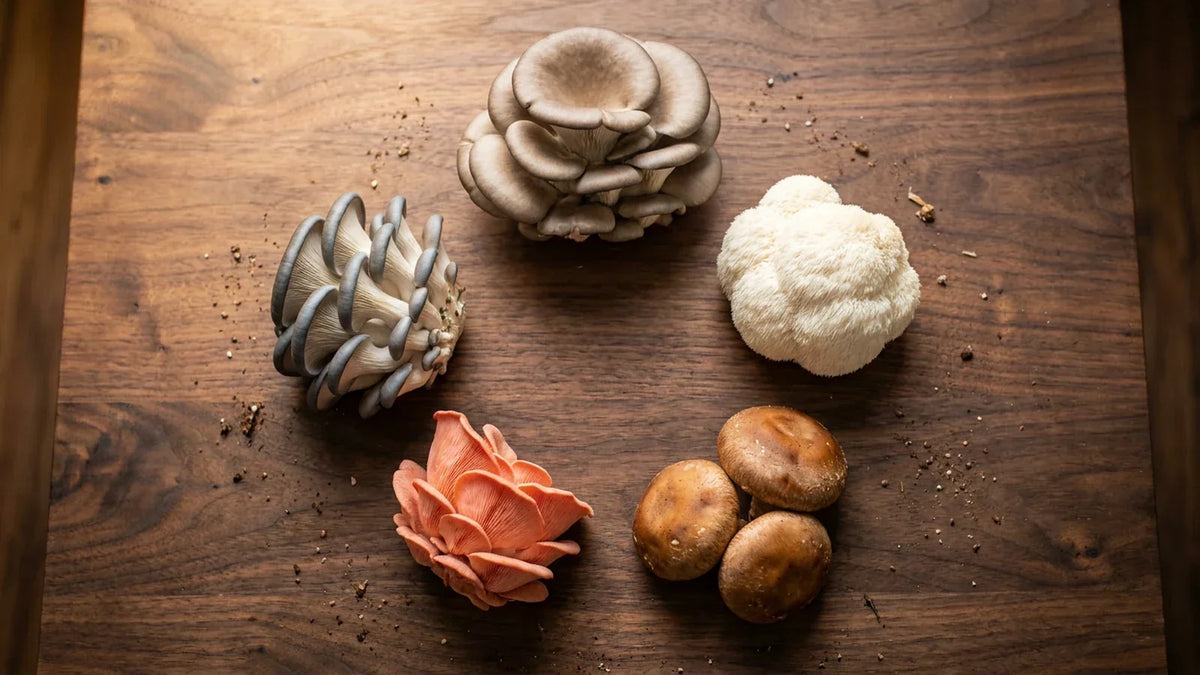
4 Gourmet Varieties You Can Grow at Home
Each of these species fruits readily in a controlled chamber, harvests in under two weeks, and lifts a basic recipe into restaurant territory.
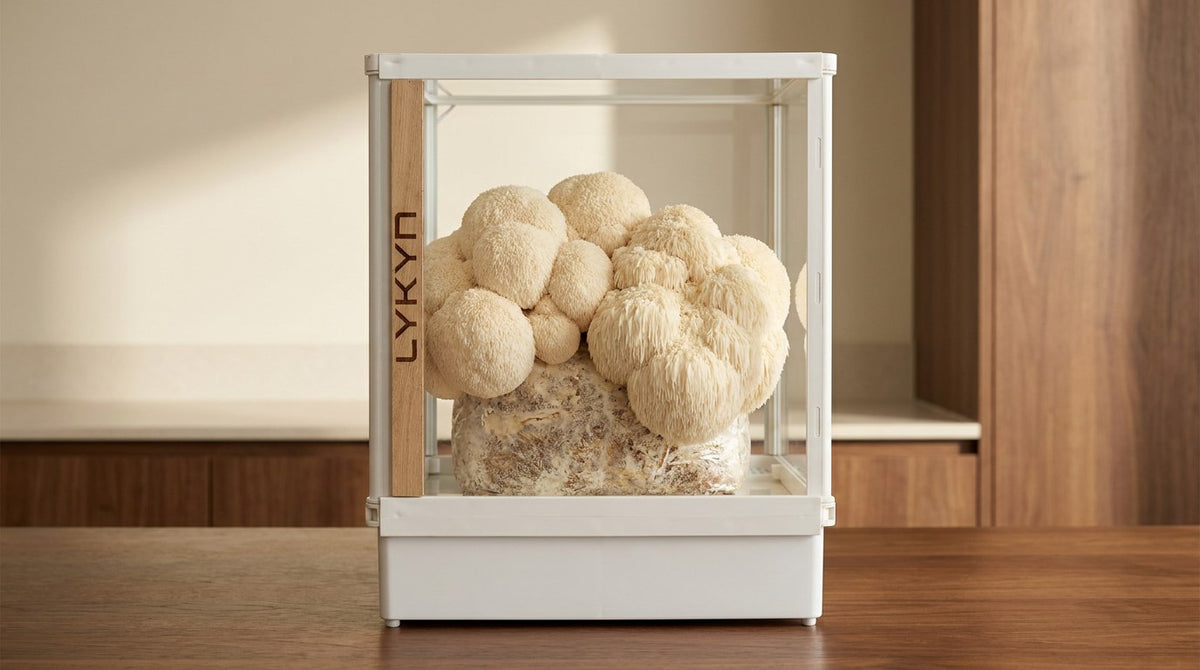
1. Lion's Mane (Hericium erinaceus)
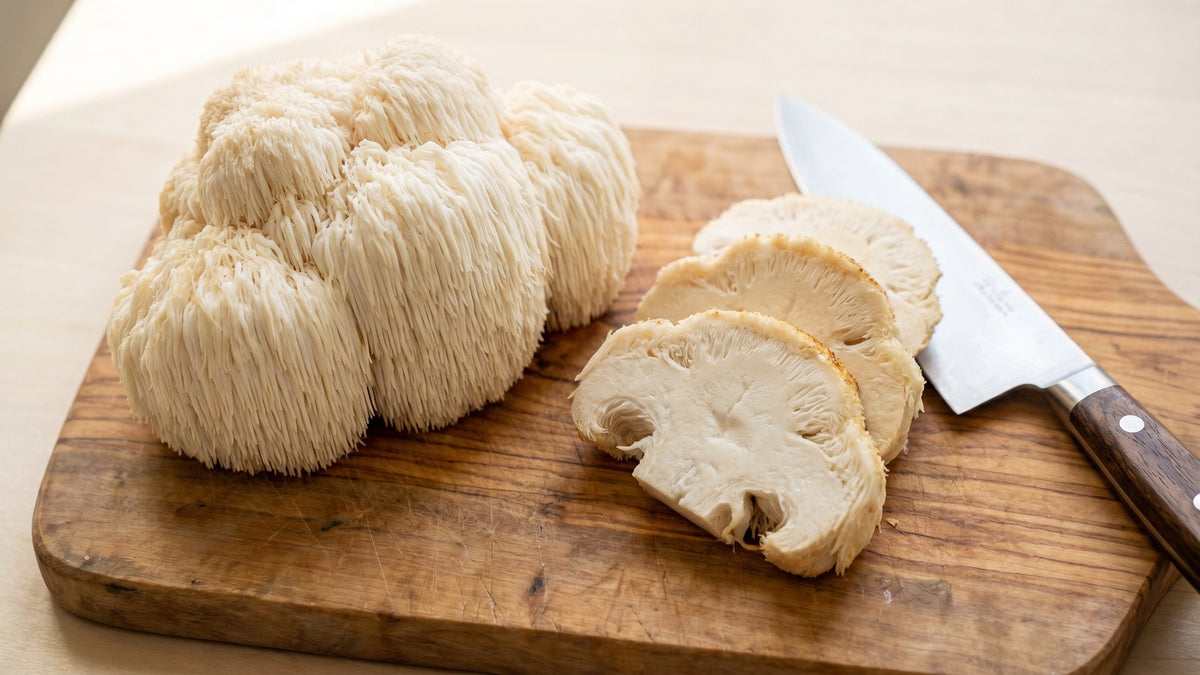
A white, shaggy cluster with cascading teeth. Cooks like seafood. Tastes like a quiet revelation.
- Signature dish: Lion's mane crab cakes. Tear, dry-sear, bind with panko, egg, mayo, Dijon, and Old Bay, then pan-fry until golden.
- Cooking note: Resist the urge to slice. Tearing lion's mane preserves the long shaggy strands that mimic lump crab. Dry-sear for at least 3 minutes per side before adding butter.
- Pair with: Lemon, brown butter, parsley, Old Bay, Cajun spice blends.
- Grow your own: A lion's mane grow kit yields about 1.25 lb in 10 to 14 days. For a complete deep dive on lion's mane preparations, see our Lion's Mane mushroom recipes guide.
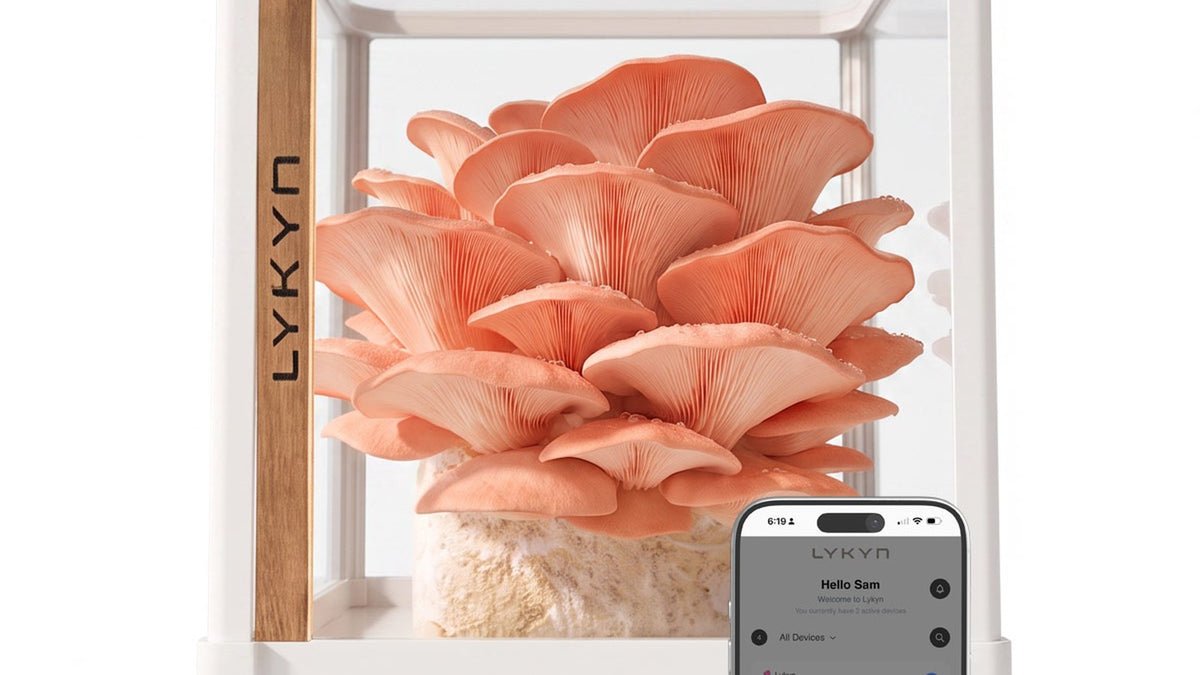
2. Pink Oyster (Pleurotus djamor)
Magenta clusters that turn a deeper coral when cooked. Visually the most striking mushroom on this list.
- Signature dish: Pink oyster bacon. Tear into strips, dry-sear until crisp, finish with maple and tamari. Reads as a smoky, salty, plant-based bacon over biscuits or salad.
- Cooking note: Pink oysters need high heat and minimum time. They go from caramelized to slimy in 60 seconds if you crowd the pan. Cook in two batches if your skillet is small.
- Pair with: Maple, tamari, soy, sesame oil, scallion, smoked paprika, citrus.
- Grow your own: The pink oyster grow kit fruits in 5 to 7 days, the fastest mushroom in this guide.
3. Shiitake (Lentinula edodes)
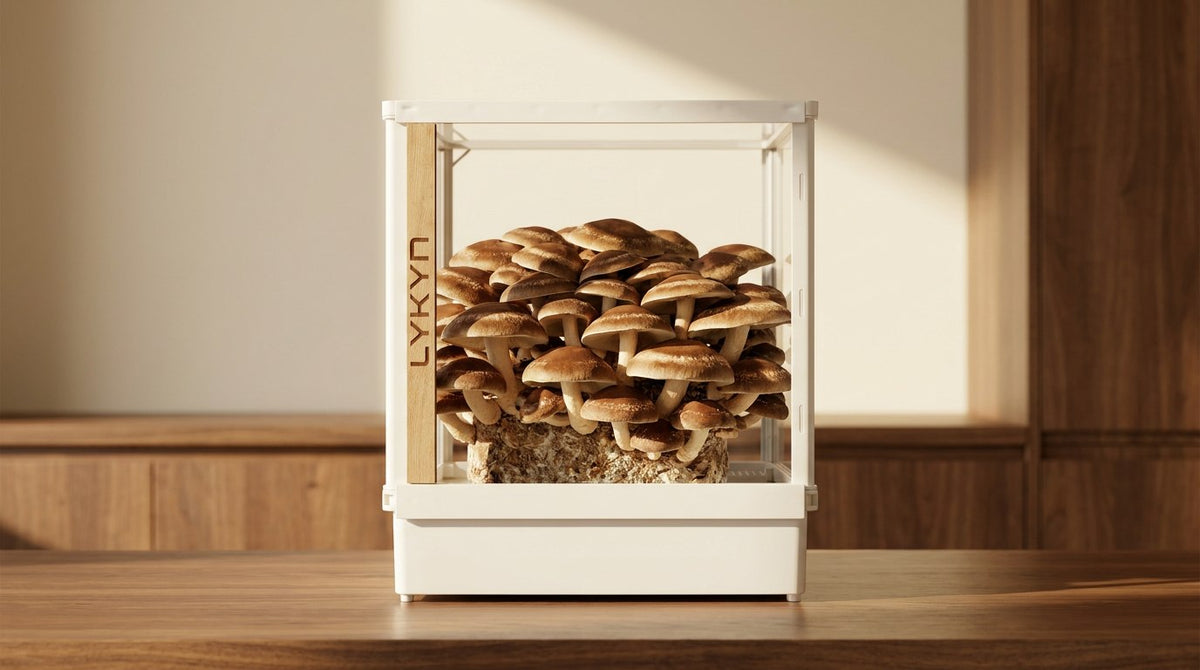
Brown caps with curled edges and a meaty, smoky aroma. The umami benchmark of the gourmet mushroom world.
- Signature dish: Shiitake stir-fry with garlic, ginger, scallion, and a splash of black vinegar. The cap edges crisp, the centers stay tender, and the soy carries the aroma into every bite.
- Cooking note: Discard the woody stems, or save them for stock. The caps are the prize. Slice the caps thick for stir-fry, leave them whole for grilling.
- Pair with: Soy sauce, mirin, sesame, ginger, garlic, scallion, miso, dashi.
- Grow your own: A shiitake grow kit fruits in 10 to 14 days and produces meaty, full-cap mushrooms with a smoky aroma.
4. Blue Oyster (Pleurotus ostreatus var. columbinus)
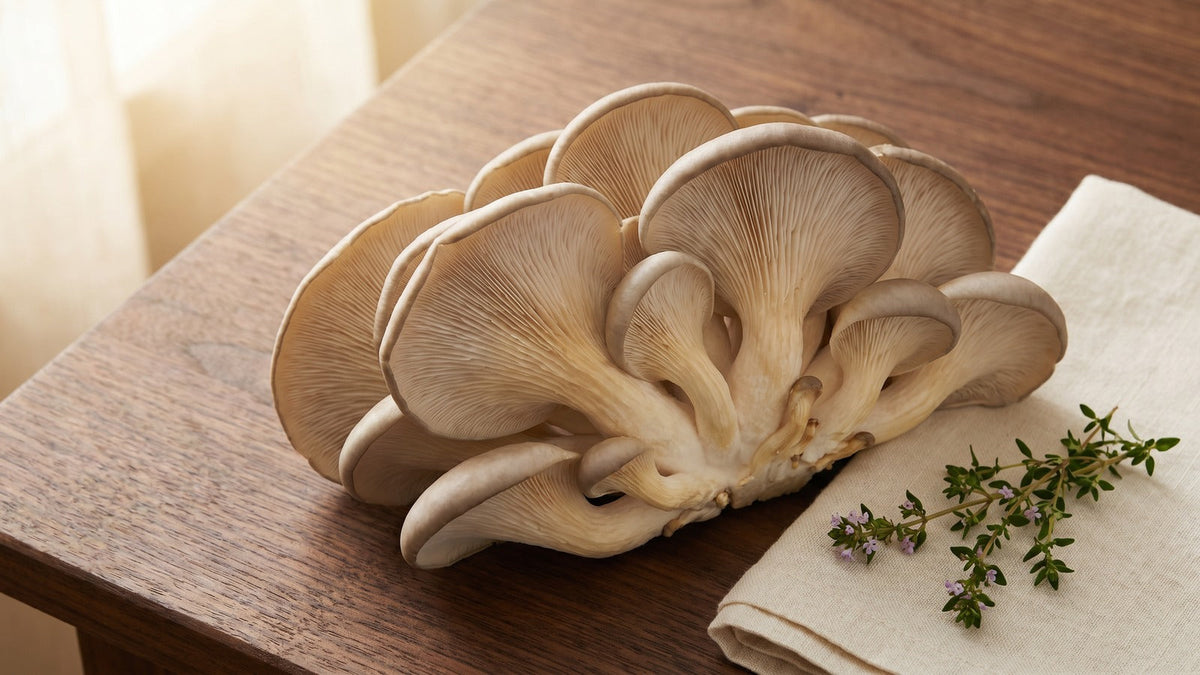
Silver-blue clusters that mature to a soft grey. Fragile pleats that crisp like potato chips on high heat.
- Signature dish: Blue oyster tempura. Hand-tear into bite-sized clusters, dip in cold rice flour batter, fry at 360 F for 90 seconds. Serve with a soy-citrus dipping sauce.
- Cooking note: Blue oysters love butter, but they also love a quick, dry sear. Press them in a hot cast-iron pan for 2 minutes before adding any fat. The crisped edges are the best part.
- Pair with: Brown butter, thyme, shallot, sherry, lemon, parsley.
- Grow your own: The black oyster grow kit (blue oyster variety) fruits in 7 to 10 days and yields fragile clusters with the most delicate texture of the group.
Top 5 Multi-Mushroom Recipes
These five recipes use multiple gourmet species in a single dish. The flavor and texture variation is what separates a great mushroom recipe from a one-note one.
1. Wild Mushroom Medley Risotto (the flagship recipe)

A creamy arborio risotto folded with three gourmet species, finished with parmesan and fresh parsley. This is the recipe that turns a Wednesday into a dinner party.
Yield: 4 servings
Prep time: 10 minutes
Cook time: 30 minutes
Total time: 40 minutes
Ingredients:
- 6 oz mixed gourmet mushrooms (2 oz each lion's mane, shiitake, blue oyster), torn into bite pieces
- 1 1/2 cups arborio rice
- 5 cups warm vegetable or mushroom stock
- 1 small yellow onion, finely diced
- 3 garlic cloves, minced
- 1/2 cup dry white wine
- 1/2 cup grated parmesan
- 3 tbsp unsalted butter, divided
- 2 tbsp olive oil
- 1 sprig fresh thyme
- 2 tbsp chopped fresh parsley
- Salt and cracked black pepper
Instructions:
- Heat a wide, dry skillet over medium-high. Add the torn mushrooms in a single layer and dry-sear 3 minutes per side until water releases and edges crisp. Add 1 tbsp butter and cook 2 more minutes until deeply golden. Transfer to a plate.
- In a heavy-bottomed pot, melt 1 tbsp butter with the olive oil over medium. Add the onion and cook 4 minutes until translucent. Add the garlic and thyme, cook 1 minute.
- Stir in the arborio rice and toast for 2 minutes, until the edges go translucent. Pour in the white wine and stir until fully absorbed.
- Add the warm stock one ladle at a time, stirring frequently. Wait until each ladle is absorbed before adding the next. Continue for 20 to 22 minutes until the rice is creamy with a slight bite.
- Fold in the seared mushrooms, parmesan, and remaining 1 tbsp butter. Stir vigorously for 30 seconds to release the starch and bring the risotto to a glossy texture.
- Taste and season with salt and pepper. Top with fresh parsley and a final shaving of parmesan. Serve immediately in wide bowls.
Cook's tip: Save 1/4 cup of the warm stock for finishing. If the risotto tightens on the plate, a final splash brings the texture back.
2. Mushroom Wellington
A vegetarian centerpiece that holds up against a beef Wellington for richness. A dense mushroom duxelles wrapped in puff pastry, sliced at the table.
Yield: 6 servings
Prep: 25 minutes
Cook: 35 minutes
Finely chop 1 lb mixed gourmet mushrooms (lion's mane, shiitake, oyster). Dry-sear in batches, then sweat with shallot, garlic, thyme, and a splash of sherry until the pan is dry. Cool. Spread a layer of grainy mustard on a sheet of puff pastry, mound the duxelles down the center, wrap, and chill 30 minutes. Score the top, brush with egg wash, and bake at 400 F for 35 minutes until deep golden. Slice thick and serve with a red wine reduction.
3. Mushroom-Stuffed Pasta
Hand-folded ravioli filled with a ricotta and dried mushroom mixture, finished in a brown butter and sage sauce.
Yield: 4 servings
Prep: 30 minutes
Cook: 12 minutes
Finely chop 4 oz mixed gourmet mushrooms (shiitake and oyster work best) and saute in butter until the pan is dry. Cool and combine with 1 cup ricotta, 1/4 cup grated parmesan, 1 egg yolk, salt, and cracked pepper. Stuff into fresh or store-bought ravioli wrappers. Boil 3 minutes, then toss in a pan of foaming brown butter with 8 sage leaves until the butter smells nutty. Plate and top with extra parmesan and a crack of black pepper.
4. Multi-Mushroom Toast


Fuel Your Mushroom Journey
Smart Mushroom Grow Chamber
Plug-and-play smart chamber with humidity, light, and airflow dialed in for every species. Beginners harvest their first flush in days, not months.
Add to cart $299The fastest gourmet mushroom recipe in this guide. Five gourmet mushroom species crowded onto a slab of rustic toast with herb butter.
Yield: 2 servings
Prep: 5 minutes
Cook: 10 minutes
Tear 6 oz mixed gourmet mushrooms (any combination of lion's mane, oyster, shiitake) and dry-sear in a hot cast-iron pan. Once golden, add 2 tbsp butter, 1 minced garlic clove, and a sprig of fresh thyme. Cook 3 more minutes. Toast 2 thick slices of sourdough, rub with a peeled garlic clove, and brush with olive oil. Pile the mushrooms on top, drizzle with the pan butter, and finish with flaky salt, fresh thyme, and a squeeze of lemon. Eat immediately.
5. Wild Mushroom Soup
A silky, full-flavored soup built on a dried mushroom broth and finished with cream and sherry. The most elegant of the five recipes here.
Yield: 4 servings
Prep: 10 minutes
Cook: 30 minutes
Soak 1/2 oz dried shiitake in 4 cups hot water for 20 minutes. Strain and reserve the broth. Saute 1 diced onion and 2 minced garlic cloves in butter until soft. Add 12 oz torn fresh mushrooms (mixed) and cook until golden. Pour in 1/4 cup dry sherry and the strained broth. Simmer 15 minutes. Blend half the soup until silky, return to the pot, and stir in 1/2 cup heavy cream and the rehydrated shiitake. Season with salt, pepper, and fresh thyme. Serve with crusty bread.
For five more single-species ideas, our lion's mane mushroom recipes guide drills into crab cakes, steaks, and a 15-minute weeknight saute.
Pairing and Cooking Tips by Species

The flavor profile of each gourmet mushroom dictates the aromatics, fats, and finishes that work best. A short cheat sheet:
| Species | Best fats | Best aromatics | Best acid | Avoid |
|---|---|---|---|---|
| Lion's Mane | Butter, ghee | Garlic, thyme, Old Bay | Lemon | Vinegar (too sharp) |
| Pink Oyster | Sesame oil, tamari | Ginger, scallion, smoked paprika | Lime, rice vinegar | Heavy cream (clashes) |
| Shiitake | Toasted sesame, neutral oil | Soy, mirin, miso, ginger | Black vinegar, yuzu | Butter (mutes umami) |
| Blue Oyster | Brown butter, olive oil | Shallot, sage, thyme | Sherry vinegar, lemon | High-heat charring |
Three universal rules:
- Heat first, fat second. Always preheat a dry pan and dry-sear before adding butter or oil. This applies to every species above.
- Crowding is the enemy. A crowded pan steams. If your skillet is small, cook in two batches and finish in one bowl.
- Finish with acid. A squeeze of lemon, a splash of sherry vinegar, or a few drops of rice vinegar lifts mushroom flavor the same way salt does.
If you want to go deeper on cooking technique, the Lykyn smart mushroom grow box ships with a quick-start cooking guide for each species, including ideal pan temperatures and a 5-minute prep template.
Where to Source Fresh Gourmet Mushrooms
Outside of major cities, fresh gourmet mushrooms are hard to find, and when you do find them, the price runs $20 to $35 per pound. Three reliable paths:
- Specialty grocers. Whole Foods, H Mart, and well-stocked farmers markets carry shiitake, oyster, and lion's mane most of the year. Quality is hit or miss, and the mushrooms may already be 5 to 7 days old by the time you buy them.
- Local mycology farms. Search for small mushroom farms within 50 miles of your home. Many sell directly through CSA boxes or weekend markets. The freshness is unmatched, but availability is seasonal.
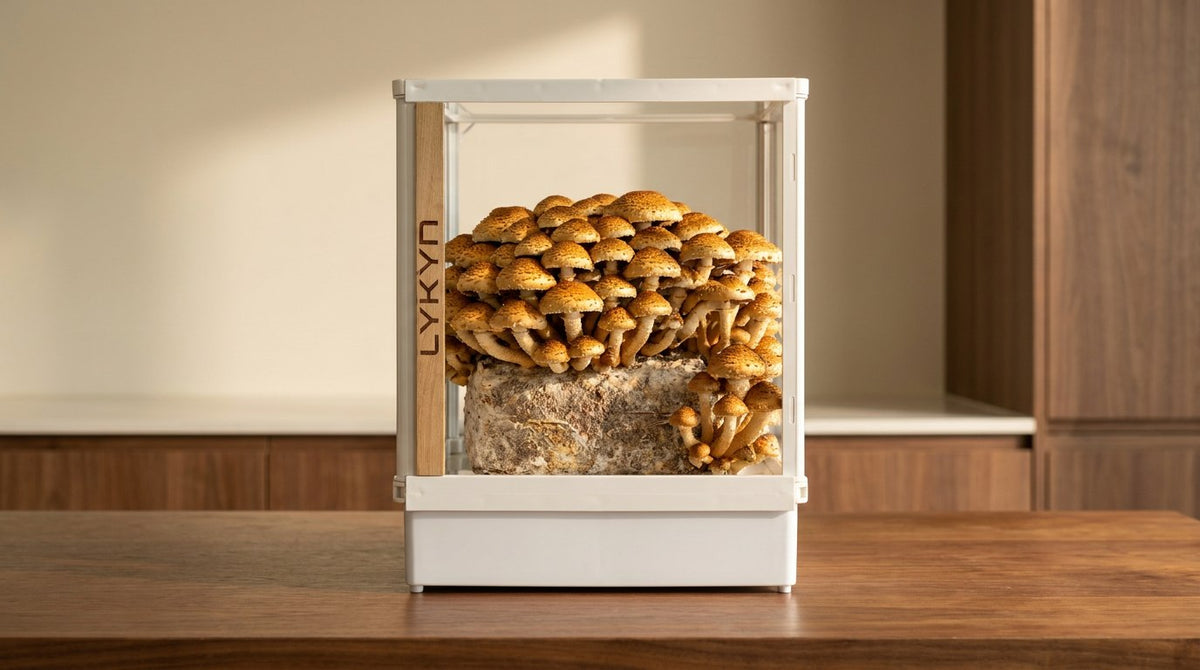
- Growing your own. The freshest possible gourmet mushrooms come from your own kitchen counter. The Lykyn automated fruiting chamber handles humidity, airflow, and lighting for you. A new mushroom block goes in, and 5 to 14 days later you harvest a full cluster. No daily misting. No daily worry.
For a deeper dive on each species' growing cycle, the chamber product page links to species-specific guides for lion's mane, pink oyster, shiitake, and blue oyster.
Frequently Asked Questions
What are the best gourmet mushrooms for cooking?
Lion's mane, shiitake, pink oyster, blue oyster, maitake, and king trumpet are the six gourmet species most commonly used by chefs. Lion's mane is the most versatile for seafood substitutes. Shiitake delivers the deepest umami. Oyster varieties brown beautifully and pair with a wide range of cuisines. For a home cook, start with shiitake and lion's mane and add oyster varieties once you are comfortable with the dry-sear technique.
How do you cook gourmet mushrooms without making them soggy?
Dry-sear them first. Heat a stainless or cast-iron pan to medium-high, add the torn or sliced mushrooms in a single layer with no fat, and press them in for 2 to 3 minutes per side. The mushrooms release water, the pan goes dry, and only then do you add butter or oil. Skipping this step traps moisture and gives you steamed, rubbery mushrooms instead of caramelized ones. This rule applies to every gourmet species.
What is the difference between gourmet mushrooms and regular mushrooms?
Gourmet mushrooms are dense, flavor-rich species with structured fruiting bodies that hold up to high-heat cooking. Regular (button) mushrooms are mild, water-heavy, and collapse under heat. Gourmet species also carry more umami glutamates, more beta-glucan fiber, and a wider flavor range. The trade-off is price. Gourmet varieties cost 3 to 4 times more in stores, which is one reason home growers cultivate them.
Can you mix different gourmet mushrooms in the same dish?
Yes, and you should. The medley risotto, mushroom toast, and wild mushroom soup recipes above all use 3 or more species in a single dish. Mixing varieties adds texture variation (shaggy lion's mane plus crisp oyster plus meaty shiitake) and layered flavor depth. The only rule is cook each species in its preferred technique. Shiitake handles longer cooking, oyster needs a fast sear, lion's mane wants the dry-sear treatment.
Are gourmet mushrooms healthy?
Yes. Gourmet mushrooms are low in calories (about 35 to 45 kcal per 100 g cooked), high in fiber, and rich in beta-glucans, the soluble fibers linked to immune and metabolic health. Shiitake and lion's mane in particular have been studied for cognitive and gut health benefits in peer-reviewed nutrition research. According to the USDA FoodData Central database, a 100 g serving of fresh gourmet mushroom delivers 2 to 3 g of dietary fiber and notable amounts of selenium, copper, and B vitamins.
How do you store fresh gourmet mushrooms?
Wrap loosely in a paper bag or paper towel and store in the refrigerator vegetable drawer. Never use plastic, which traps moisture and accelerates spoilage. Fresh gourmet mushrooms last 5 to 7 days this way. For longer storage, dry-sear and freeze the cooked mushrooms in a sealed container for up to 3 months. Reheat in a hot pan with butter to revive the texture before serving.
Can you eat gourmet mushrooms raw?
Technically yes, but you should not. Raw gourmet mushrooms have a chalky, bitter taste and are difficult for the digestive system to break down. Heat unlocks the sweet, savory, and umami flavors and softens the cell wall structure. Always cook gourmet mushrooms for at least 8 to 10 minutes total. Raw consumption can also cause mild stomach upset in sensitive eaters, so the cooking step is both a flavor and a digestion improvement.
What is the easiest gourmet mushroom to grow at home?
Pink oyster fruits in 5 to 7 days, the fastest of any common gourmet variety. Blue oyster and shiitake follow at 7 to 10 days. Lion's mane is the slowest of the four covered here at 10 to 14 days, but also the most forgiving for a first-time grower. If you want a quick win, start with pink oyster. If you want a longer, more rewarding grow with a higher-value mushroom, start with lion's mane. The Lykyn smart mushroom grow box runs all four species without setting changes.
Final Thoughts
Gourmet mushrooms are one of the rare ingredients that turn a weeknight dinner into a memorable plate, and they cost less than steak. Master the dry-sear, learn the pairing rules above, and you can run through every recipe in this guide in a single month. Start with the multi-mushroom toast for a low-effort win. Build up to the medley risotto for a dinner party. Stretch into the Wellington when you want to show off.
If you want to cook with mushrooms harvested two hours before dinner, the freshness gap closes when you grow your own. The Lykyn smart mushroom grow box ships with a starter block in your choice of species, and the four single-species guides linked above walk through the full grow cycle for each variety.
Sources
- USDA FoodData Central - gourmet mushroom nutrition profiles (shiitake, oyster, lion's mane)
- Cornell Cooperative Extension - culinary mushroom identification and home cooking guides
- Frontiers in Nutrition - peer-reviewed research on gourmet mushroom beta-glucan content and culinary applications
Share:
Mushroom Pinning Explained: Hyphal Knots, Primordia, Stalled Pins
Mushroom Pinning Explained: Hyphal Knots, Primordia, Stalled Pins