



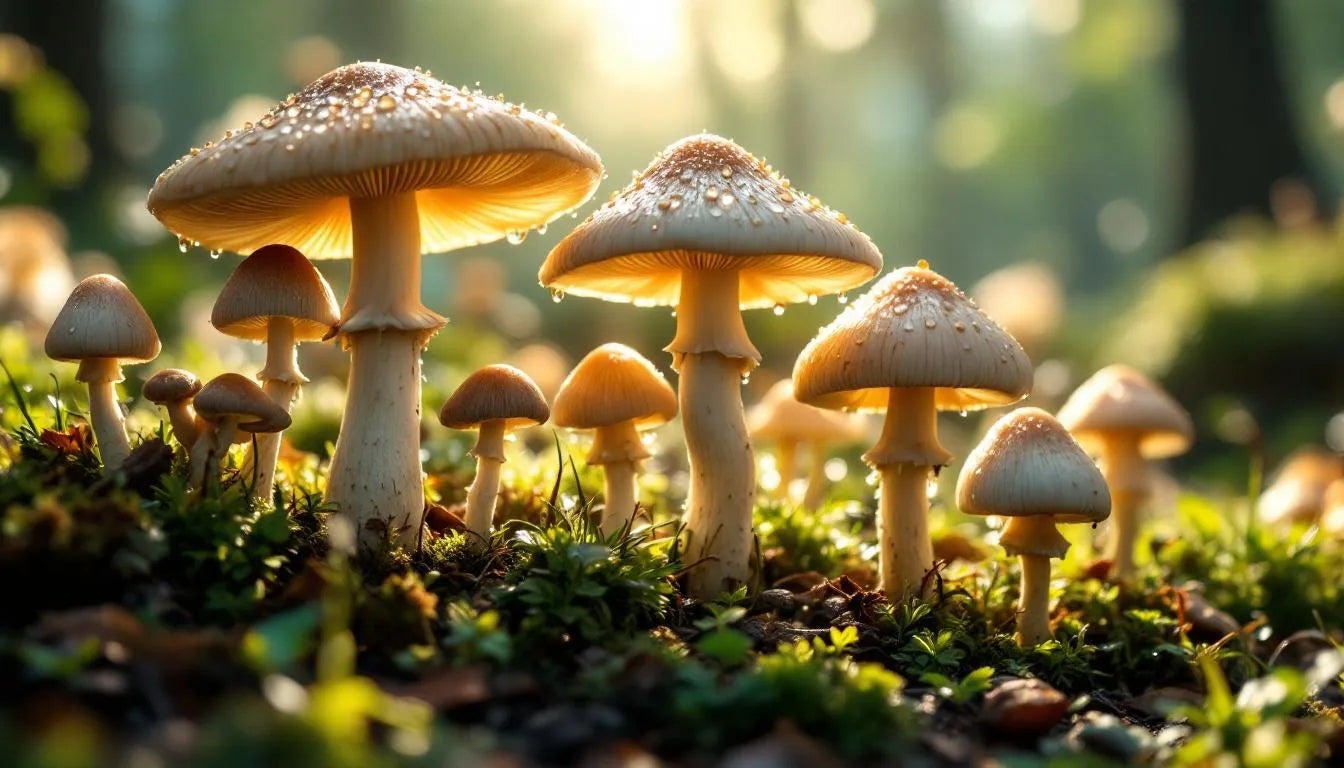
Have you ever wondered how mushrooms can seemingly appear overnight after rain? One day your yard is clear, and the next morning you discover clusters of mushrooms that weren't there before. This remarkable speed of growth is one of nature's most fascinating phenomena, and understanding it can help you become a more successful mushroom cultivator.
Mushrooms grow so fast because they don't build their structure from scratch like plants. Instead, they rapidly inflate pre-formed cellular structures with water, allowing them to expand at incredible rates—sometimes growing several inches in just 24 hours. This unique growth mechanism, combined with their efficient nutrient absorption system, makes mushrooms the speed champions of the natural world.

The Fascinating Science Behind Rapid Mushroom Growth
Pre-Formed Cellular Architecture
Unlike plants that must synthesize new cellular material as they grow, mushrooms have a remarkable advantage. The mushroom mycelium (the underground fungal network) creates tiny, pre-formed mushroom structures called primordia. These miniature mushrooms contain all the necessary cellular framework but remain compressed and dormant until conditions are perfect.
When environmental triggers align—typically involving moisture, temperature, and humidity changes—these primordia rapidly absorb water and expand like tiny biological balloons. This process, called "fruiting," can transform a microscopic primordium into a full-sized mushroom in just days or even hours.

Efficient Water Absorption System
Mushrooms are composed of 80-95% water, making water absorption crucial to their rapid growth. Their cellular structure includes specialized transport systems that can rapidly move water throughout the developing fruiting body.
The mycelial network acts like a sophisticated plumbing system, efficiently delivering nutrients and water from the substrate directly to the growing mushroom. This direct delivery system eliminates the need for complex internal transport mechanisms that slow down plant growth.
Cellular Expansion vs. Cell Division
While plants grow through both cell division and expansion, mushrooms primarily rely on cellular expansion during their visible growth phase. The cells have already been created within the primordia—they simply need to be inflated with water and nutrients.
This mechanism allows mushrooms to achieve growth rates that would be impossible for plants. Some species can grow up to 6 inches in a single day, with oyster mushrooms doubling in size every 24 hours under optimal conditions.
Environmental Triggers That Accelerate Growth
Temperature Fluctuations
Most mushroom species respond to temperature changes as growth signals. A sudden drop in temperature, often occurring after rain or during seasonal transitions, triggers the mycelium to begin fruiting. This is why mushrooms often appear after storms or during specific weather patterns.
Different mushroom varieties have specific temperature preferences:
-
Oyster mushrooms: 55-75°F (13-24°C)
-
Shiitake: 55-65°F (13-18°C)
-
Lion's Mane: 65-75°F (18-24°C)
Humidity and Moisture
High humidity levels (80-95%) are essential for rapid mushroom growth. The mushroom's surface must remain moist to facilitate the cellular expansion process. This is why mushrooms often appear after rainfall or in naturally humid environments.
Professional growers use Lykyn Smart Mushroom Grow Chambers to maintain precise humidity levels automatically, ensuring optimal growing conditions for maximum growth speed.
Light Exposure
While mushrooms don't photosynthesize, they are sensitive to light changes. Many species use light as a directional cue, growing toward light sources to ensure their spores are released in optimal locations for dispersal.

Species-Specific Growth Rates
Fast-Growing Champions
Oyster Mushrooms hold the record for rapid growth among commonly cultivated varieties. Under ideal conditions, they can complete their growth cycle in just 7-14 days from primordia formation to harvest.
Shiitake Mushrooms typically take 10-21 days to fully develop, but their initial growth phase can be remarkably fast, with visible mushrooms appearing within 3-5 days of optimal conditions.
Lion's Mane Mushrooms have unique growth patterns, often growing as single large masses rather than clusters. They can double in size daily once fruiting begins.
Growth Rate Comparison
The growth rates of different mushroom species vary significantly:
-
Wild mushrooms: 1-4 inches per day
-
Oyster mushrooms: 2-6 inches per day
-
Shiitake: 1-3 inches per day
-
Lion's Mane: 1-2 inches per day (but grows as a single mass)
How to Optimize Growth Speed in Home Cultivation
Creating Perfect Conditions
To maximize mushroom growth speed in your home cultivation setup, focus on these key factors:
Maintain Optimal Humidity: Use automated humidity control systems like the Lykyn Smart Mushroom Grow Kit to keep humidity levels between 85-95% during fruiting.
Temperature Management: Maintain consistent temperatures within each species' preferred range. Sudden temperature drops can trigger faster fruiting.
Air Exchange: Provide adequate fresh air exchange to prevent carbon dioxide buildup, which can slow growth and cause malformed mushrooms.
Substrate Quality Impact
The quality of your growing medium directly affects growth speed. High-quality substrates provide:
-
Readily available nutrients
-
Proper moisture retention
-
Adequate drainage
-
Balanced pH levels
Premium substrates allow mushrooms to access nutrients more efficiently, resulting in faster growth rates and higher yields.

Timing Your Harvest
Understanding when mushrooms reach peak growth speed helps optimize harvest timing. Most varieties show their fastest growth during the first 2-3 days of visible development. Harvesting at the right moment ensures maximum flavor and texture while preparing the substrate for additional flushes.
Common Factors That Slow Mushroom Growth
Environmental Stress
Inconsistent environmental conditions can significantly slow mushroom growth:
-
Fluctuating humidity levels
-
Temperature extremes
-
Poor air circulation
-
Inadequate lighting
Nutrient Depletion
As mushrooms extract nutrients from their substrate, growth rates naturally slow. This is why many growers see faster growth in first flushes compared to subsequent harvests from the same substrate.
Contamination Issues
Bacterial or mold contamination forces mushrooms to compete for resources, dramatically slowing their growth. Maintaining sterile growing conditions is crucial for optimal growth rates.
The Future of Fast-Growing Mushrooms
Genetic Research
Scientists are studying the genetic mechanisms behind rapid mushroom growth to develop even faster-growing varieties. This research focuses on understanding the cellular expansion process and identifying genes responsible for growth rate regulation.
Controlled Environment Agriculture
Advanced growing systems like the Lykyn Smart Mushroom Grow Chamber represent the future of mushroom cultivation, offering precise environmental control that maximizes growth speed while minimizing resource waste.
Interested in learning more about mushroom cultivation techniques? Check out our comprehensive guides on edible mushrooms and mushroom grow kits for beginners.
Frequently Asked Questions
Q: How fast can mushrooms actually grow? A: The fastest-growing mushrooms can grow 2-6 inches in a single day under optimal conditions. Some species like oyster mushrooms can double in size every 24 hours during their peak growth phase.
Q: Why do mushrooms grow faster than plants? A: Mushrooms grow faster because they inflate pre-formed cellular structures with water rather than building new cells from scratch. This allows them to achieve rapid expansion that would be impossible for plants.
Q: What environmental conditions make mushrooms grow fastest? A: Mushrooms grow fastest with 85-95% humidity, temperatures in their preferred range (varies by species), adequate fresh air exchange, and sufficient indirect light. Consistent conditions are more important than extreme conditions.
Q: Can I make my home-grown mushrooms grow faster? A: Yes, by maintaining optimal environmental conditions using automated systems like the Lykyn Smart Mushroom Grow Kit, providing high-quality substrates, and ensuring proper nutrition and moisture levels.
Q: Do all mushroom species grow at the same rate? A: No, growth rates vary significantly between species. Oyster mushrooms are among the fastest, while specialty varieties like shiitake or lion's mane may grow more slowly but offer unique flavors and benefits.
Summary
Mushrooms grow so fast because they use a unique biological mechanism of rapidly inflating pre-formed cellular structures with water, rather than building new cells like plants. Combined with their efficient nutrient absorption system and response to environmental triggers, this allows them to achieve remarkable growth rates of several inches per day. Understanding these principles helps home cultivators optimize their growing conditions for maximum speed and yield.
Ready to experience the magic of rapid mushroom growth firsthand? The Lykyn Smart Mushroom Grow Kit makes it easy to create optimal growing conditions that maximize mushroom growth speed while eliminating guesswork. With automated humidity control, precise temperature management, and smart sensors, you can watch your mushrooms grow at their natural incredible pace. Start your mushroom growing journey today and discover why thousands of home cultivators choose Lykyn for consistently fast, successful harvests.







Share:
How to Make Mushroom Extract: Your Complete DIY Guide to Medicinal Mushroom Tinctures
How to Cook Reishi Mushroom: Your Complete Guide to Preparing Nature's "Mushroom of Immortality"