



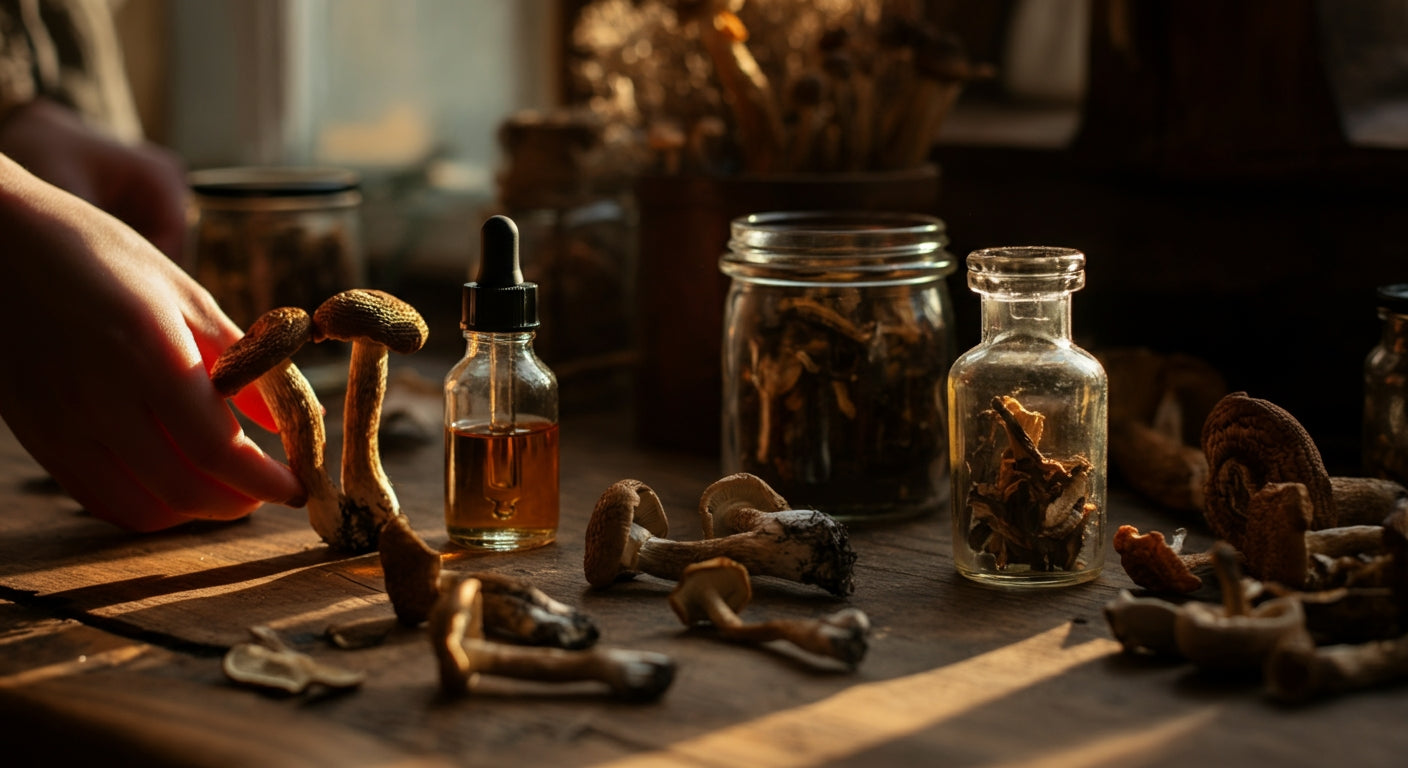
Creating your own mushroom tincture at home is one of the most rewarding ways to harness the powerful medicinal properties of fungi. This concentrated liquid extract allows you to preserve mushroom benefits in a shelf-stable form that's easy to dose and incredibly potent.
Whether you're interested in reishi for stress relief, lion's mane for cognitive support, or turkey tail for immune health, making mushroom tinctures gives you complete control over quality and potency. This comprehensive guide will walk you through everything you need to know about creating professional-grade tinctures in your own kitchen.
What Is a Mushroom Tincture?
A mushroom tincture is a potent liquid extract from soaking mushrooms in solvents (alcohol and water). Unlike simple teas or powders, tinctures use a dual extraction process that captures both water-soluble and alcohol-soluble compounds from the mushroom.
This double extraction method ensures you get the maximum therapeutic benefits from your mushrooms. The alcohol extracts triterpenes, sterols, and other fat-soluble compounds, while hot water extraction pulls out beta-glucans, polysaccharides, and water-soluble nutrients.

The Double Extraction Method: Why It Matters
The process of making this tincture involves two main steps: alcohol extraction and hot water extraction, known as double extraction. This technique is crucial because different beneficial compounds in mushrooms dissolve in different solvents.
Professional mushroom cultivators and herbalists prefer this method because it creates a more complete and therapeutically effective product. We use a double extraction technique to make all of our tinctures. To begin our tincture process, we dehydrate the mushroom fruiting bodies and soak them in 200 proof local organic alcohol for one month.
The double extraction process maximizes bioavailability and ensures you're getting the full spectrum of mushroom compounds that contribute to their health benefits.
Essential Equipment and Ingredients
What You'll Need:
-
High-proof alcohol (80-95% ethanol or vodka 80 proof minimum)
-
Dried mushrooms (10-20% of fresh weight)
-
Distilled water
-
Glass jars with tight-fitting lids
-
Fine mesh strainer or cheesecloth
-
Coffee filter or paper towels
-
Dark glass bottles for storage
-
Labels for dating and identification
-
Kitchen scale for precise measurements
Choosing Your Mushrooms
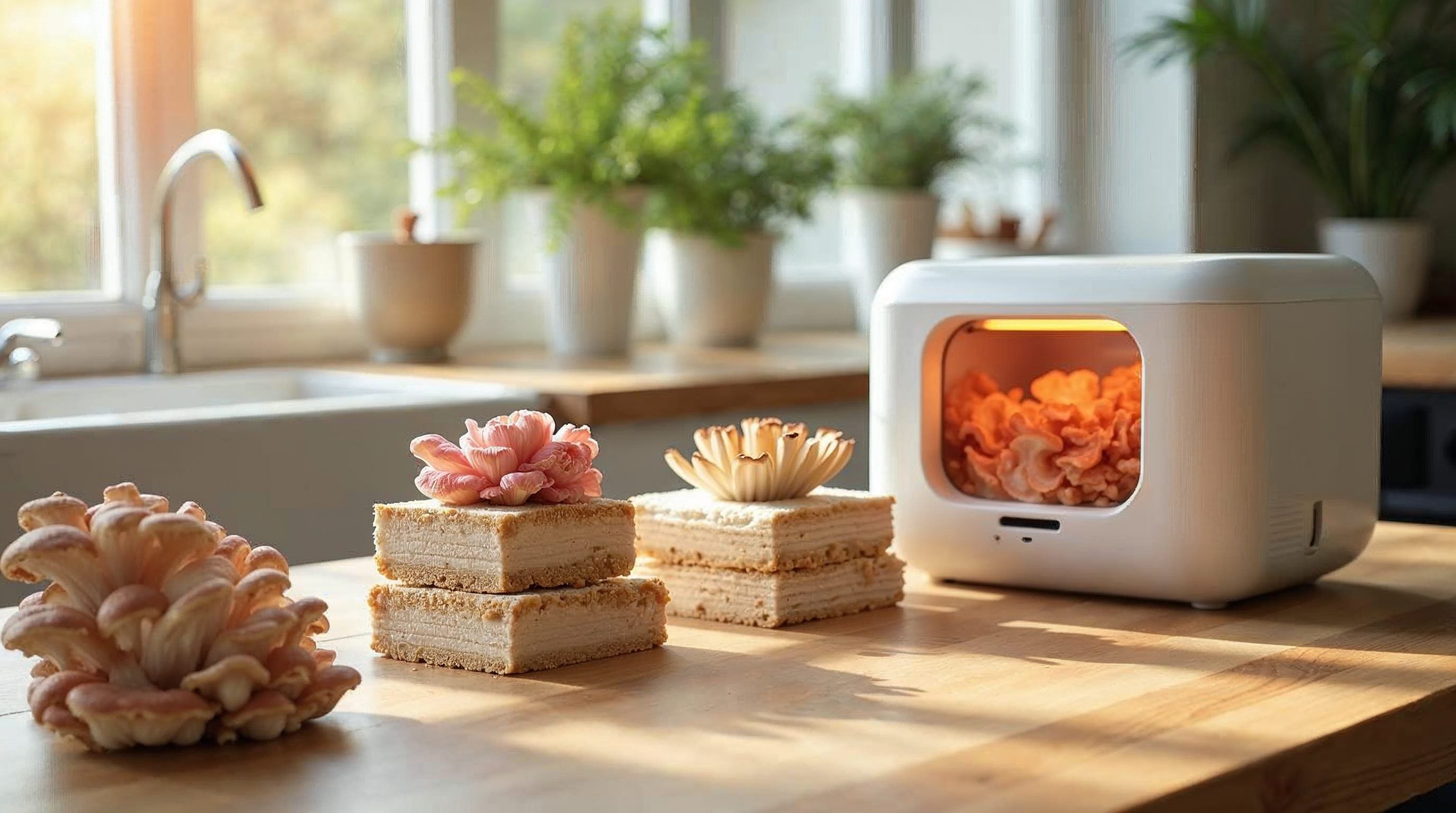
The quality of your starting material determines the potency of your final tincture. You can use mushrooms you've grown yourself with a Lykyn Smart Mushroom Grow Kit, which provides the perfect controlled environment for cultivating high-quality medicinal mushrooms at home.
Popular mushrooms for tincture making include:
-
Reishi (Ganoderma lucidum) - stress relief and immune support
-
Lion's Mane (Hericium erinaceus) - cognitive enhancement
-
Turkey Tail (Trametes versicolor) - immune system support
-
Chaga (Inonotus obliquus) - antioxidant properties
-
Cordyceps (Cordyceps militaris) - energy and athletic performance
Step-by-Step Tincture Making Process
Phase 1: Alcohol Extraction (4-6 weeks)
-
Prepare your mushrooms: If using fresh mushrooms, dehydrate them completely using a food dehydrator or oven at the lowest temperature. Properly dried mushrooms should be brittle and snap easily.
-
Weigh and grind: Use a 1:5 ratio (1 part mushroom to 5 parts alcohol by weight). Grind dried mushrooms into a coarse powder using a coffee grinder or food processor.
-
Combine with alcohol: Place ground mushrooms in a clean glass jar and cover with high-proof alcohol. The liquid should cover the mushroom material by at least 2 inches.
-
Seal and store: Close the jar tightly and store in a cool, dark place. Shake vigorously daily for 4-6 weeks.
-
Strain: After the extraction period, strain the liquid through cheesecloth, then filter through coffee filters for clarity. Reserve the mushroom solids for the next phase.
Phase 2: Water Extraction (4-6 hours)
-
Prepare mushroom marc: Take the strained mushroom solids from the alcohol extraction and place them in a pot.
-
Add water: Cover the mushroom material with distilled water (about 3-4 times the volume of mushroom solids).
-
Simmer gently: Bring to a gentle simmer and maintain for 4-6 hours, stirring occasionally. The liquid should reduce by about half.
-
Strain and cool: Strain the hot liquid through cheesecloth and allow to cool completely.
Phase 3: Combining Extracts
-
Measure ratios: Combine the alcohol and water extracts in a 1:1 ratio by volume.
-
Final filtration: Filter the combined tincture through coffee filters for a clear, professional appearance.
-
Bottle and label: Store in dark glass bottles with droppers. Label with mushroom type, extraction date, and ratio.

Dosage and Usage Guidelines
Standard Dosing
Most mushroom tinctures are taken in doses of 1-3 milliliters (about 1/4 to 3/4 teaspoon) taken 1-3 times daily. For daily health benefits, you can take 1 to 2 teaspoons of Turkey Tail tincture, though this can vary by mushroom type and individual needs.
How to Take Your Tincture
-
Sublingual: Hold under the tongue for 30-60 seconds before swallowing for faster absorption
-
Mixed with liquid: Add to water, juice, or herbal tea
-
Direct consumption: Take straight from the dropper if you don't mind the taste
Storage and Shelf Life
Store the final tincture mix in dark glass bottles to keep it safe from light and heat. Properly made tinctures can last 3-5 years when stored in a cool, dark place.
Benefits of Making Your Own Tinctures
Quality Control
When you make your own tinctures, you know exactly what goes into them. You can control the mushroom quality, extraction time, and alcohol content to create a product that meets your specific needs.
Cost Effectiveness
Commercial mushroom tinctures can be expensive, often costing $20-50 per bottle. Making your own can reduce costs by 70-80% while creating a more potent product.
Customization
You can create custom blends combining multiple mushroom types or adjust the alcohol content based on your preferences and intended use.

Safety Considerations and Best Practices
Mushroom Identification
Never use wild mushrooms unless you're 100% certain of their identification. Stick to cultivated mushrooms or those purchased from reputable suppliers. Growing your own with a Lykyn Smart Grow Chamber eliminates identification concerns while ensuring maximum freshness.
Alcohol Safety
Always use food-grade alcohol. Avoid isopropyl alcohol or other toxic substances. If you're sensitive to alcohol, you can create alcohol-free glycerin-based tinctures, though they may be less potent.
Contamination Prevention
Maintain sterile conditions throughout the process. Use clean equipment and filtered water to prevent bacterial contamination that could spoil your tincture.
Troubleshooting Common Issues
Cloudy Tincture
Cloudiness usually indicates incomplete filtering. Re-filter through coffee filters or let the tincture settle and decant the clear liquid.
Weak Potency
If your tincture seems weak, you may have used too much liquid or not enough mushroom material. Stick to the 1:5 ratio for optimal potency.
Mold Growth
Mold during extraction indicates contamination. Discard the batch and start over with properly sterilized equipment.
FAQ Section
How long does it take to make a mushroom tincture?
The complete process takes 6-8 weeks total - 4-6 weeks for alcohol extraction, plus 4-6 hours for water extraction and combining phases.
Can I use fresh mushrooms instead of dried?
While possible, dried mushrooms are preferred because they concentrate the active compounds and prevent dilution of your tincture. Fresh mushrooms contain 80-90% water.
What's the difference between single and double extraction?
Single extraction uses only alcohol or water, missing compounds that dissolve in the other solvent. Double extraction captures both water-soluble and alcohol-soluble compounds for maximum potency.
How do I know if my tincture is working?
Effects vary by mushroom type and individual response. Some people notice benefits within days, while others may need weeks of consistent use. Keep a journal to track your experience.
Can I make tinctures from mushroom powders?
Yes, but whole dried mushrooms typically produce better results. If using powder, reduce the grinding step and proceed with the same ratios.
Summary
Making mushroom tinctures at home is a rewarding process that gives you access to potent, high-quality medicinal mushroom extracts. The double extraction method ensures you capture the full spectrum of beneficial compounds, creating a shelf-stable product that's easy to dose and use daily. With proper technique and quality starting materials, you can create professional-grade tinctures that rival commercial products at a fraction of the cost.
Ready to Start Your Mushroom Journey?
Creating your own mushroom tinctures begins with high-quality mushrooms. Whether you're interested in growing your own or learning more about mushroom cultivation, explore our comprehensive guides on edible mushrooms and mushroom grow kits for beginners. With the right tools and knowledge, you'll be creating potent, therapeutic tinctures that support your health and wellness goals.
Start your mushroom cultivation journey today and discover the incredible world of homemade herbal medicine. Your body will thank you for the pure, potent nutrition that only fresh, properly extracted mushroom tinctures can provide.



Share:
When to Harvest Oyster Mushrooms: Your Complete Timing Guide
Antler Reishi Mushroom: The Rare "Deer Horn" Form of the Immortality Mushroom