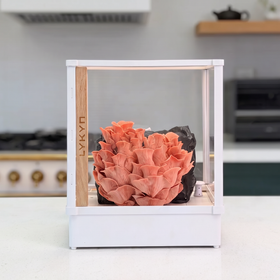



Diese Frage hören wir von gesundheitsbewussten Käuferinnen und Käufern mindestens zweimal pro Woche: „Mit welchem Heilpilz-Zuchtset sollte ich anfangen? Reishi, Schmetterlingstramete oder doch etwas ganz anderes?“ Hier ist unsere unverblümte Antwort – und die Orientierungshilfe, mit der wir allen bei der Entscheidung helfen.
Heilpilze zu Hause anzubauen ist einfacher, als die meisten denken. Du brauchst weder ein Gewächshaus noch ein steriles Labor oder jahrelange Erfahrung. Du brauchst einen 5-Pfund-Block, eine relative Luftfeuchtigkeit von 55–75 %, einen Ort mit einer Temperatur zwischen 55 und 75 °F und etwas Geduld. Das ist schon alles. Anders als Speisepilze gedeihen Heilpilze in einem langsameren Rhythmus: einem, der ihrem Lebenszyklus in der Natur ähnelt, sich aber vollständig auf deinem Küchenregal oder im Schlafzimmerschrank abspielt.
Diese Frage hören wir von gesundheitsbewussten Käuferinnen und Käufern mindestens zweimal pro Woche: „Wirkt ein selbst gezogener Reishi oder eine Schmetterlingstramete?“ Die ehrliche Antwort lautet: ja – aber nicht, weil selbst gezogene Blöcke auf magische Weise wirksamer wären als kommerzielle Tinkturen. Sondern weil du die Quelle, das Trocknen und die Extraktion selbst kontrollierst. Du weißt genau, was in deinem Tee steckt. Dieses gute Gefühl kostet nichts. Und wenn du deinen eigenen Heilpilz-Block erntest, sparst du dir den Aufschlag des Zwischenhandels komplett.
Dieser Leitfaden erklärt, was „Heilpilz“ bedeutet, warum sich der Anbau zu Hause gerade bei dieser Kategorie lohnt, welche Arten in deinem Klima zuverlässig fruchten, wie du ein zu deinen Gegebenheiten passendes Set auswählst und wie du nach der Ernte einen richtigen Doppelauszug zubereitest. Außerdem verraten wir, woran wir als Nächstes bei Heilpilzsorten arbeiten.
Was „Heilpilz“ bedeutet

Ein Heilpilz ist eine Art, deren traditionelle Verwendung in Kulturen dokumentiert ist, die sie seit Jahrhunderten erforschen. Dazu zählen vor allem die ostasiatische Medizin (chinesische, koreanische, japanische und thailändische), Ayurveda und die westliche Kräuterkunde. Das unterscheidet ihn von einem Speisepilz, den wir in erster Linie wegen seines Geschmacks und seiner Konsistenz anbauen – auch wenn sich die Heilwirkungen vieler Speisepilze (Shiitake, Maitake, Igelstachelbart) mit denen von Heilpilzen überschneiden.
Der Unterschied ist nicht mystisch. Die meisten Heilpilze enthalten bestimmte Polysaccharide (insbesondere Beta-Glucane und andere Zellwandverbindungen), die dein Verdauungssystem anders wahrnimmt als das Chitin eines Champignons. Diese Verbindungen lösen sich nicht allein in heißem Wasser. Für eine geeignete Extraktion braucht es Alkohol, Zeit oder beides. Deshalb unterscheidet sich die Zubereitung von Heilpilzen davon, einen Speisepilz einfach in die Brühe zu geben.
Arten wie Reishi (Ganoderma lucidum) und Schmetterlingstramete (Trametes versicolor) werden in der modernen Wellness-Sprache als „adaptogen“ bezeichnet. In der traditionellen Verwendung sollen sie die Stressreaktion und das Immungleichgewicht des Körpers unterstützen. Sie wirken nicht anregend wie Koffein und haben auch nicht die spezifische Wirkung eines Arzneimittels. Vielmehr sind sie konzentrierte Nährstoffquellen, die bei regelmäßiger Verwendung die Körperfunktionen unterstützen. Der Igelstachelbart (Hericium erinaceus) verbindet beide Welten: Er schmeckt und fühlt sich wie ein Speisepilz an, wird aber auch im Hinblick auf die kognitive Unterstützung erforscht. Damit ist er der einfachste Einstieg für alle, die neu im Heilpilzanbau sind.
Die wichtigste Leitlinie: Eine Art gilt aufgrund dokumentierter traditioneller Verwendung und ihres Forschungsinteresses als „Heilpilz“, nicht aufgrund von Marketingversprechen. Wir vermeiden von der FDA regulierte Formulierungen wie „behandelt“, „heilt“ oder „beugt vor“, da diese unter das Arzneimittelrecht fallen. Stattdessen bezeichnen wir Heilpilze als traditionelle Stärkungsmittel – seit Jahrhunderten von Kulturen erprobt, die sie domestiziert haben, und heute von modernen Kräuterkundigen und Forschenden untersucht.
Warum Heilpilze zu Hause anbauen, statt Tinkturen zu kaufen

Drei konkrete Gründe sprechen dafür.
Kosten pro Portion. Ein 5-Pfund-Block mit Reishi oder Schmetterlingstramete liefert ungefähr 12–18 Erntewellen (ein „Flush“ entsteht, nachdem der Block zum Fruchten angeregt wurde). Jede Erntewelle ergibt 4–8 Unzen frische Pilze, die getrocknet 1–2 Unzen ergeben. Das reicht für 20–40 Tassen aufgekochten Tee. Eine handelsübliche Reishi-Tinktur (1 Flüssigunze, Vorrat für 30 Tage bei üblicher Dosierung) kostet 18–35 $. Selbst gezogener Reishi kostet nach dem Beimpfen des Blocks etwa 0,30–0,60 $ pro Portion.
Kontrolle über Ernte und Frische. Handelsübliche Tinkturen lagern oft monatelang. Bei selbst gezogenen Pilzen vergehen von der Ernte bis zum Aufbrühen 2–3 Wochen (Trocknungszeit) statt 6–12 Monate (Herstellung, Lagerung und Versand). Außerdem bestimmst du den Reifegrad: Ernte den Reishi, wenn er noch leicht weich ist, für einen milderen Sud, oder warte, bis der Hut aushärtet, um ein kräftigeres, holziges Aroma zu erhalten.
Transparenz und sichere Artbestimmung. Du weißt genau, welche Art in deinem Block wächst, denn du hast ihn selbst beimpft. So besteht kein Risiko einer Verwechslung oder Ersatzlieferung. Bei Reishi ist das wichtig: Wilder Reishi wird immer seltener, und manche handelsüblichen Tinkturen enthalten günstigere Doppelgänger oder stark verarbeitetes Holzpulver. Mit selbst gezogenen Pilzen entfällt dieses Problem vollständig.
Heilpilzarten, die sich gut zu Hause anbauen lassen

Nicht alle Heilpilzarten fruchten drinnen zuverlässig. Am besten eignen sich Arten, die auf Holz oder Stroh fruchten. Zersetzer, die schwankende Luftfeuchtigkeit vertragen und nur einfache Umweltsignale (Kältereiz, Licht, Luft) benötigen, um Fruchtkörper zu bilden. Hier sind die drei Arten, mit denen Hobbyzüchterinnen und -züchter die größten Erfolge melden.
Reishi (Ganoderma lucidum) ist der klassische Heilpilz. In der Natur wächst er nach Herbstregen auf umgestürzten Hartholzstämmen. Deshalb wird die Fruchtbildung beim Anbau durch einen Kältereiz ausgelöst. Ein typischer Reishi-Block braucht 3–4 Wochen, um durchzuwachsen. Danach muss er 24–48 Stunden Kälte ausgesetzt werden (im Kühlschrank oder bei einem Kälteeinbruch im Freien), bevor die Fruchtbildung beginnt. Der Pilz selbst ist holzig und lässt sich nicht wie ein Speisepilz garen. Stattdessen wird er getrocknet und ausgekocht (1–2 Stunden köcheln lassen), um seine Inhaltsstoffe zu extrahieren. Am häufigsten sehen wir, dass Reishi nicht fruchtet, weil der Kältereiz ausgelassen oder die Luftfeuchtigkeit zu niedrig angesetzt wird. Der Block wächst dann wunderbar durch, bildet aber keine Fruchtkörper. Reishi gedeiht bei 55–65 °F und 65–75 % Luftfeuchtigkeit.
Schmetterlingstramete (Trametes versicolor) ist der robusteste Heilpilz für den Anbau drinnen. Er durchwächst das Substrat schnell (14–21 Tage), bildet innerhalb weniger Tage nach dem Kältereiz Fruchtkörper und kann aus einem einzigen Block 4–6 Erntewellen hervorbringen. Jede Erntewelle sieht aus wie kleine Fächer oder Konsolen, die dicht gedrängt in Büscheln wachsen und aus dünnen, zarten Hüten bestehen. Schmetterlingstramete trocknet schnell und ergibt einen Tee mit erdigem, leicht bitterem Geschmack. Manche Züchterinnen und Züchter geben ein kleines Stück Reishi dazu, um die Bitternote abzumildern. Die Schmetterlingstramete verträgt sowohl kühle (55–70 °F) als auch wärmere Bedingungen (bis zu 75 °F) und kommt daher mit schwankendem Klima am besten zurecht.
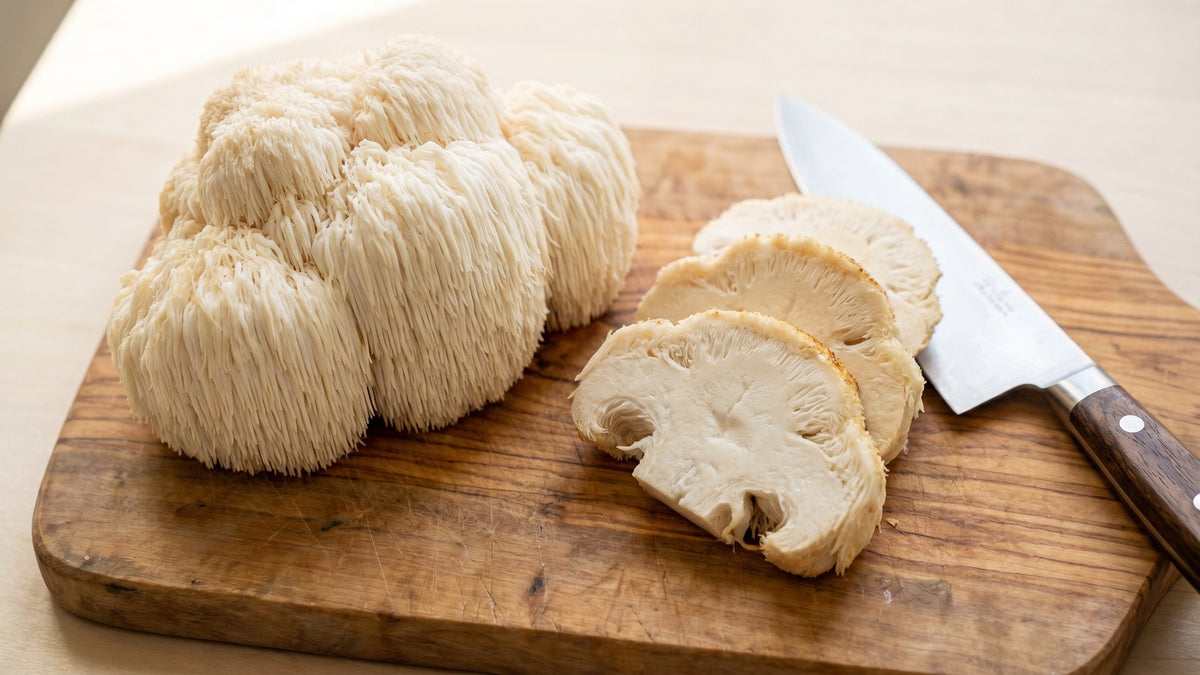
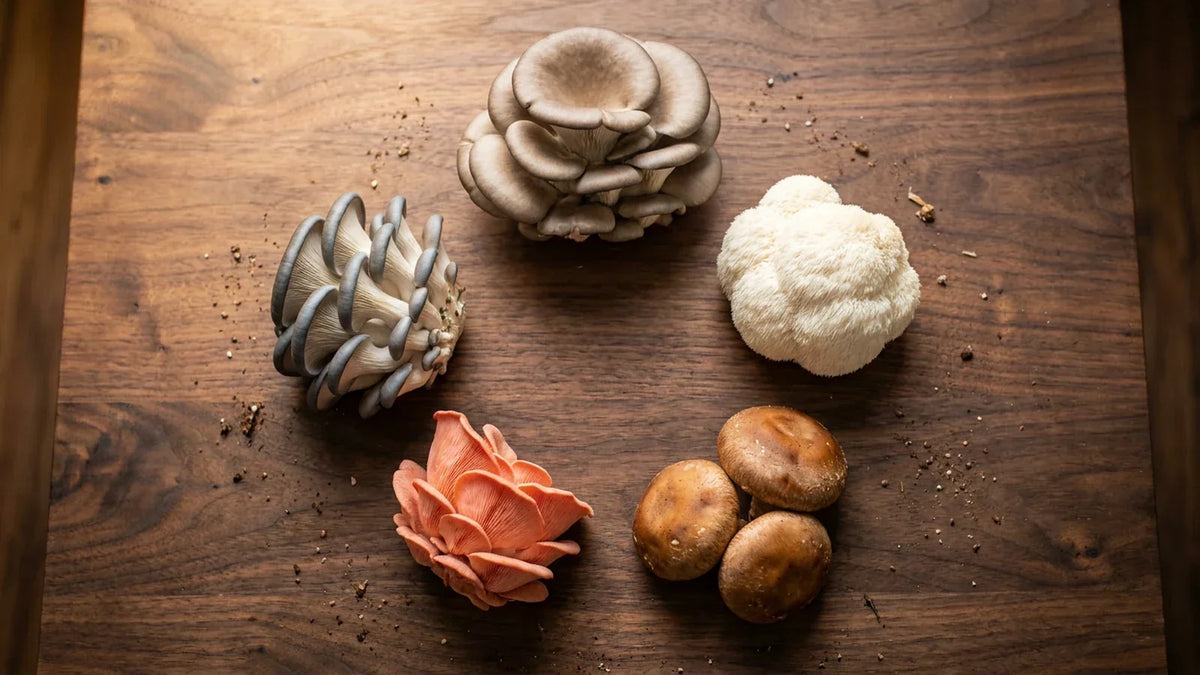
Igelstachelbart (Hericium erinaceus) ist die perfekte Brückenart. Er sieht aus wie ein weißer Pompon oder ein Wasserfall aus Eiszapfen und schmeckt mild-süßlich. Fast fleischig, mit einer Konsistenz, die manche mit Jakobsmuscheln vergleichen. Als Speisepilz schmeckt er sautiert hervorragend. Traditionell wird er zur Unterstützung der kognitiven Funktionen verwendet. Für Hobbyzüchterinnen und -züchter ist der Igelstachelbart der einfachste Erfolg, weil man ihn frisch ernten und essen kann (die meisten Reishi- und Schmetterlingstrameten werden getrocknet und ausgekocht, nicht im Ganzen gegessen). Ein Igelstachelbart-Block durchwächst das Substrat in 2–3 Wochen und fruchtet innerhalb von 7–10 Tagen nach dem Kältereiz. Wenn dir der Anbau von Heilpilzen einschüchternd erscheint, fang mit dem Igelstachelbart an.
Alle drei Arten folgen demselben Zyklus: Der Block wächst durch (das Myzel breitet sich im Substrat aus), der Block wird zum Fruchten angeregt (durch Kälte oder ein Wasserbad), die Pilze fruchten (die Primordien bilden und vergrößern sich) und der verbrauchte Block wird wiederverwertet (als hochwertige Bodenverbesserung kompostieren). Der Ablauf ist identisch. Unterschiede gibt es bei der Fruchtungsdauer, dem Ertrag pro Erntewelle und der Trocknungszeit.
Die 5 besten Heilpilz-Zuchtsets im Vergleich
Wir haben jedes Set anhand von fünf Kriterien bewertet: einfacher Aufbau, Geschwindigkeit des Durchwachsens, Erfolgsquote der ersten Erntewelle (basierend auf den Daten unserer Käufergruppe), Kosten pro Portion und Reaktionszeit des Kundendienstes. Hier sind die derzeit besten Angebote.
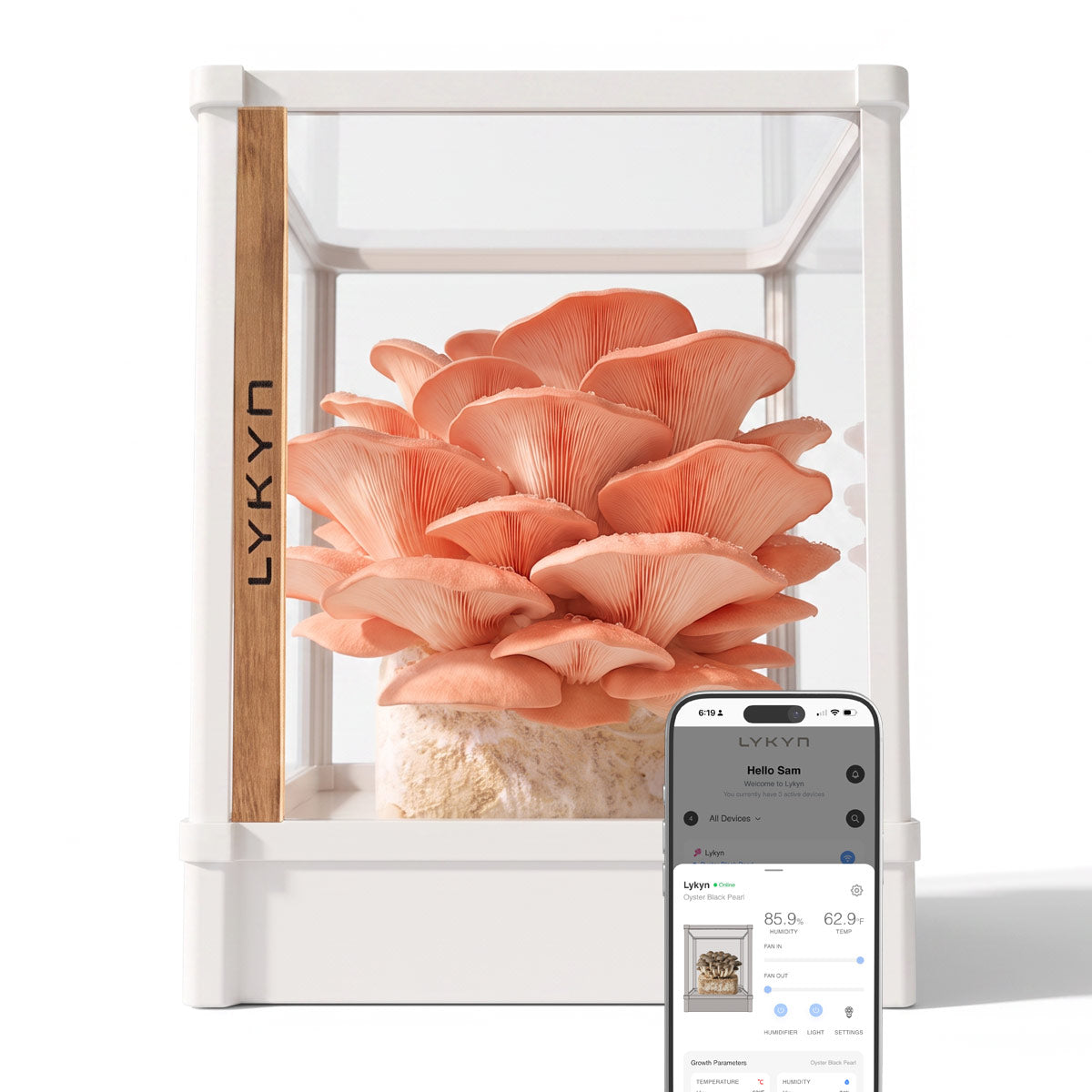
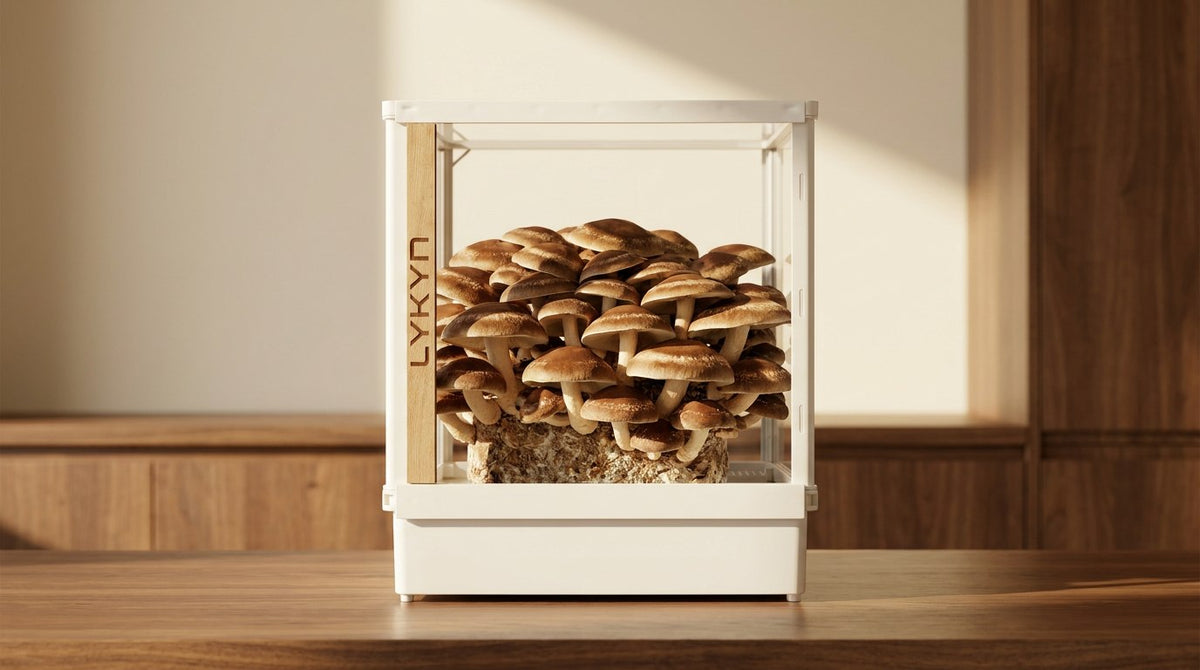
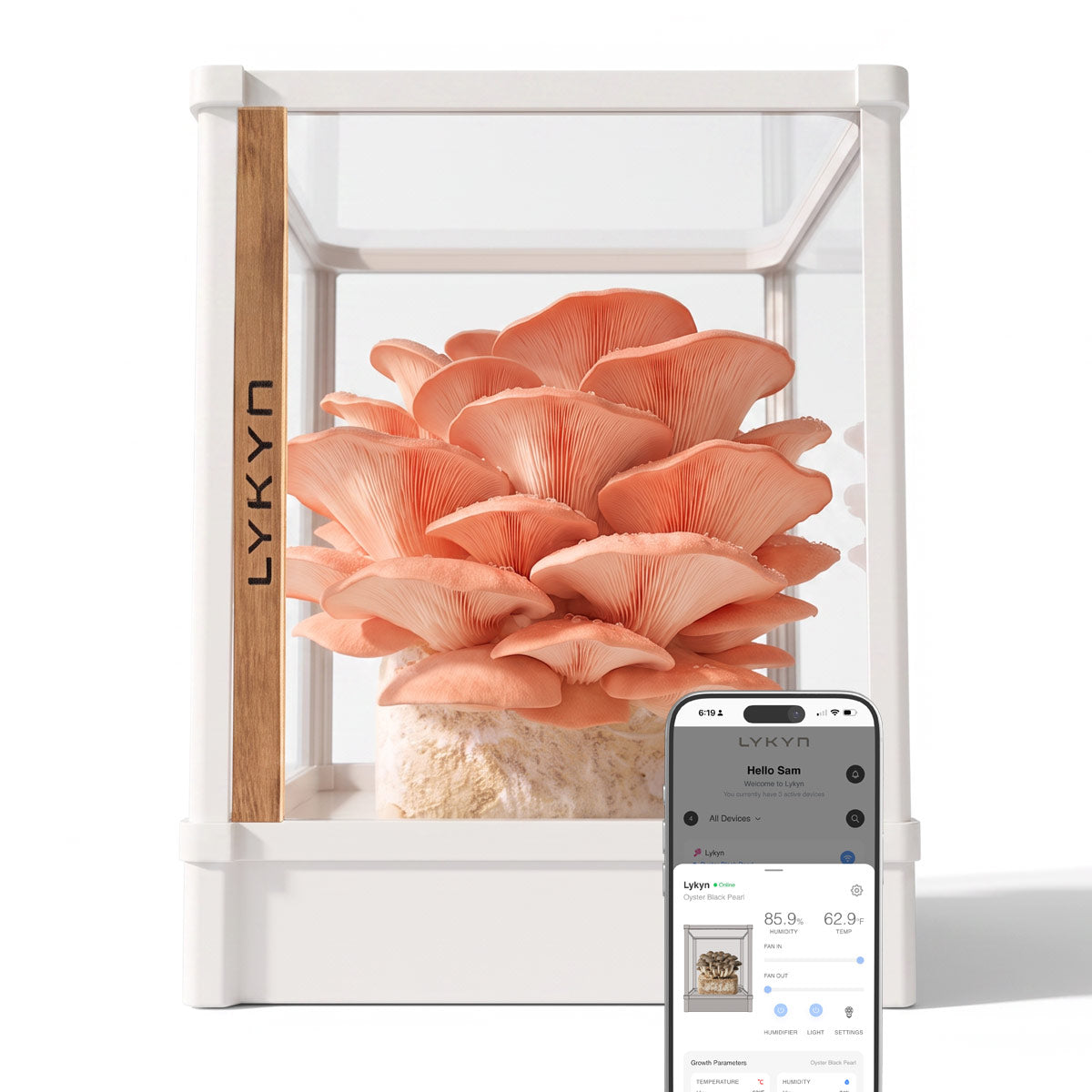
Warum Lykyn ganz oben steht: Wir haben die Lykyn-Kammer entwickelt, um die größte Hürde beim Heilpilzanbau zu beseitigen. Damit Heilpilze zuverlässig fruchten, brauchen sie eine Luftfeuchtigkeit von 65–75 %. Die Kammer hält diesen Wert mithilfe eines intelligenten Sensors und eines Ultraschall-Luftbefeuchters automatisch konstant. So musst du nur etwa 10 Minuten pro Woche selbst Hand anlegen. Reishi- und Schmetterlingstrameten-Blöcke sind auf den Temperaturverlauf in der Kammer abgestimmt, sodass sie vorhersehbar durchwachsen. Derzeit bieten wir fünf Speisepilzarten an; Heilpilze sind unsere nächste Erweiterung. Wenn du dich dem Heilpilzanbau verschrieben hast, sparst du mit ein paar Wochen Wartezeit im Laufe eines Jahres Hunderte beim Kauf von Tinkturen.
Die Stärken von North Spore: Das Unternehmen gehörte zu den ersten, die den Reishi-Anbau zu Hause kommerzialisiert haben. Die Sets enthalten ausführliche Hinweise zu den Stämmen und eignen sich für alle, die reinen Reishi anbauen möchten und nichts gegen die manuelle Regulierung der Luftfeuchtigkeit haben. Eine gute Wahl, wenn du bereits über ein feuchtes Badezimmer oder ein Growzelt verfügst.
Der Vorteil von Cascadia: Vielfalt. Mit einem einzigen Kauf kannst du alle drei Arten ausprobieren (Reishi, Schmetterlingstramete, Igelstachelbart). Die Sets sind weniger vom Klima abhängig als Lykyn und fruchten daher auch in wärmeren oder trockeneren Wohnungen.
Reishi und Schmetterlingstramete zubereiten (Grundlagen des Doppelauszugs)
Nach der Ernte müssen deine getrockneten Heilpilze extrahiert werden. Hier unterscheiden sich handelsübliche Tinkturen und selbst gezogener Pilztee. Für eine ordentliche Extraktion braucht es Hitze und Zeit, um die Zellwände des Pilzes aufzubrechen und Polysaccharide sowie andere Verbindungen in die Flüssigkeit freizusetzen.
Die Doppelauszug-Methode ist in der ostasiatischen Kräuterkunde traditionell und gilt als Goldstandard für Heilpilze. Sie ist einfach, erfordert keine spezielle Ausrüstung und ergibt ein Konzentrat, das du pur trinken oder mit Wasser verdünnen kannst.
Was du brauchst: Stücke getrockneter Heilpilze (deine Ernte, 7–14 Tage getrocknet), einen Topf, gefiltertes Wasser und optional etwas Reiswein oder Alkohol (verbessert die Extraktionseffizienz, aber auch nur mit Wasser funktioniert es).
Erster Auszug: Bringen Sie 4 Tassen Wasser zum Kochen. Geben Sie 1 Unze getrocknete Reishi- oder Schmetterlingstrametenstücke hinzu. Lassen Sie alles zugedeckt 1–2 Stunden köcheln, bis sich die Flüssigkeit auf etwa 1 Tasse reduziert hat. Das Wasser verfärbt sich bernsteinfarben oder braun. Abseihen und beiseitestellen. Die Pilzstücke noch nicht wegwerfen.
Zweiter Auszug (optional): Geben Sie die ausgekochten Pilzstücke zurück in den Topf. Fügen Sie 1,5 Tassen Reiswein, Sake oder Brandy hinzu. Zugedeckt 1–2 Stunden köcheln lassen. Abseihen und mit dem Wasserauszug vermischen. Sie haben nun 2–3 Tassen doppelt extrahierten Tee. Im Kühlschrank bis zu 2 Wochen aufbewahren oder in Eiswürfelformen einfrieren. Eine übliche Portion sind 1–2 Esslöffel, verdünnt mit heißem Wasser.
Reishi und Schmetterlingstrameten haben holzige, herb-adstringierende Aromen, die sich mit der Zeit und durch Gewürze verbessern. Manche Züchter geben eine Prise Ingwer, einige getrocknete Jujuben oder ein Stück Süßholzwurzel hinzu, um den Geschmack abzumildern. Das geschieht üblicherweise beim zweiten Auszug. Allein aufgebrühte Schmetterlingstrameten schmecken erdig und fast muffig. Reishi schmeckt für sich genommen bitterer und hat eine anhaltende holzige Note, die manche mit gereifter Eiche oder Baumrinde vergleichen. An beide muss man sich erst gewöhnen; die meisten Züchter, die dabei bleiben, berichten, dass der Geschmack nach 2–3 Wochen weniger gewöhnungsbedürftig und zunehmend erdend wirkt.
Was kommt als Nächstes: der Lykyn-Fahrplan für Heilpilze

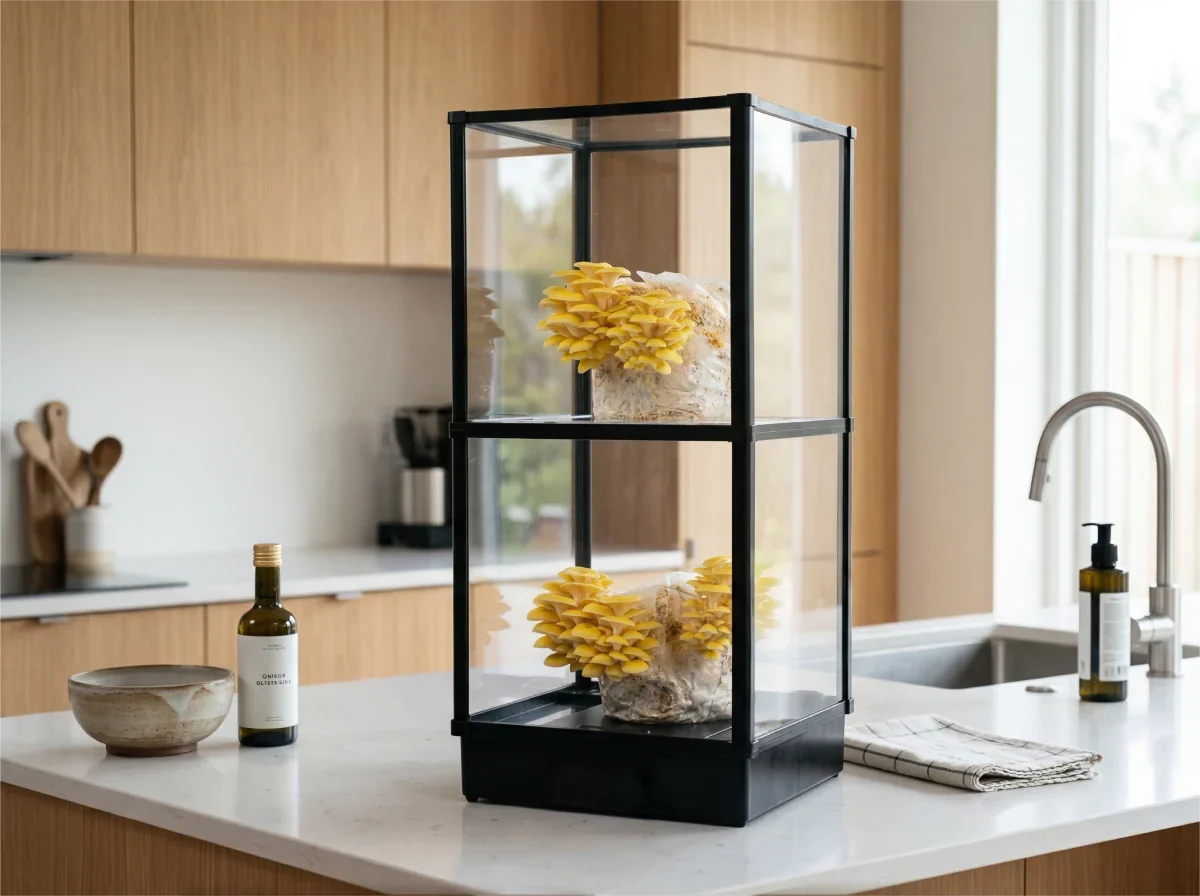
Wir entwickeln drei Heilpilzsorten: Reishi, Schmetterlingstramete und Morchel. Jede ist auf den Klimaverlauf der Lykyn-Kammer abgestimmt. Außerdem testen wir zwei Heilpilzblöcke in einer zweistöckigen Kammer mit zeitversetztem Zeitplan – erste Tests zeigen, dass das gut funktioniert. Wir untersuchen derzeit Substrate, um den Ertrag bioaktiver Inhaltsstoffe zu optimieren. Weitere Neuigkeiten folgen bis zum 4. Quartal 2026.
Häufige Fragen zu Heilpilz-Zuchtsets
Benötigt man für Heilpilze eine spezielle Kammer, oder eignet sich jedes Zuchtset? Am wichtigsten ist Beständigkeit. Heilpilzarten reagieren empfindlicher auf die Luftfeuchtigkeit als Speisepilze. Sie brauchen dauerhaft 65–75 %, nicht an einem Tag 60 % und am nächsten 80 %. Wenn Sie ein Feuchtigkeitszelt mit manuellem Besprühen verwenden, werden Sie Erntewellen bekommen – sie sind nur weniger zuverlässig. Eine klimatisierte Kammer wie die von Lykyn hält die Luftfeuchtigkeit automatisch in diesem konstanten Bereich und reduziert so spürbar die Schwankungen, die Erntewellen bei Heilpilzen ausbremsen. Besonders für alle, die zum ersten Mal Reishi züchten, macht sich die Investition in die Kammer nach 2–3 erfolgreichen Erntewellen bezahlt.
Wie viele Portionen erhält man aus einem einzelnen Heilpilzblock? Ein 5-Pfund-Block mit Reishi oder Schmetterlingstrameten bringt über 8–12 Wochen 4–6 Erntewellen hervor (bei kühlerem Raumklima auch länger). Jede Erntewelle liefert 3–8 Unzen Frischpilze, die je nach Art und Erntewelle auf 0,8–2 Unzen trocknen. Das entspricht etwa 60–120 Portionen pro Block oder 0,25–0,50 $ pro Portion nach den anfänglichen Kosten für das Set. Die meisten Züchter trinken zur Erhaltung außerdem kleinere Portionen (0,5 Esslöffel Konzentrat) statt therapeutischer Dosierungen, wodurch die Anzahl der Portionen weiter steigt.
Wie lange dauert es, bis man nach Beginn des Trinkens von selbst angebautem Heilpilztee Ergebnisse bemerkt? Das hängt davon ab, was mit „Ergebnissen“ gemeint ist. Manche berichten nach 2–3 Wochen täglichen Reishi-Tees von besserem Schlaf oder einem geringeren Stressempfinden. Andere bemerken 6–8 Wochen lang nichts. Die Forschungsliteratur legt nahe, dass adaptogene Pilze bei regelmäßiger Anwendung über Monate am besten wirken und keine dramatischen akuten Effekte haben. Wir empfehlen, 60 Tage lang täglich Tee zuzubereiten und zu trinken, bevor Sie entscheiden, ob er bei Ihnen wirkt. Wenn Sie einen sofortigen Energieschub oder einen geistigen Kick suchen, sind Heilpilze nicht das Richtige. Dafür sind Koffein oder Nootropika zuständig. Wenn Sie Ihre langfristige Widerstandsfähigkeit und Ihr Immungleichgewicht unterstützen möchten, lohnt sich ein Versuch.
Sind selbst gezüchtete Heilpilze genauso wirksam wie handelsübliche Tinkturen? Die Wirksamkeit hängt von der Extraktionsmethode und der Transparenz hinsichtlich der Herkunft ab. Ein gut zubereiteter Doppelauszug aus Ihrem eigenen Reishi ist ebenso bioverfügbar wie eine hochwertige handelsübliche Tinktur, da Sie Trocknungszeit, Lagerung und Extraktion selbst kontrollieren. Außerdem vermeiden Sie das Risiko von Verfälschungen oder falscher Kennzeichnung bei kommerziellen Produkten. Allerdings nutzen manche kommerziellen Tinkturen fortschrittliche Extraktionsverfahren (Ultraschall, überkritisches CO₂), mit denen sich möglicherweise etwas höhere Polysaccharidkonzentrationen erzielen lassen als beim Köcheln zu Hause. In der Praxis ist selbst aufgebrühter Tee aus eindeutig bestimmten Pilzarten ausgezeichnet, und der Kostenunterschied ist erheblich.
Sollte man erst Speisepilze züchten, bevor man Heilpilzsorten ausprobiert? Nein. Speise- und Heilpilze sind dieselben Pilze – sie werden lediglich unterschiedlich verwendet. Der Anbau läuft identisch ab. Wenn Sie sich für Heilpilze interessieren und diese für Sie Priorität haben, fangen Sie damit an. Igelstachelbart ist besonders anspruchslos, wenn Sie unsicher sind. Reishi wächst langsamer und erfordert mehr Geduld, ist aber nicht schwieriger – nur anders im zeitlichen Ablauf. Wählen Sie die Art, die Sie begeistert, und züchten Sie diese zuerst.
Langsam besiedeln lassen. Kühl schocken. Geduldig fruchten lassen. Immer aufbrühen.
Das ist der Rhythmus. Heilpilze zu züchten ist keine Abkürzung zum Wohlbefinden und auch nicht kompliziert. Es ist eine bewusste Praxis: ein Block zu Hause, gleichmäßige Luftfeuchtigkeit, ein Kälteschock, eine Ernte. Dann das Ritual des Aufbrühens: sanfte Hitze, Zeit, Aufmerksamkeit. Die Wirkung – ob messbar oder spürbar – zeigt sich über Wochen und Monate, nicht Tage. Für alle, die Heilpilze regelmäßig verwenden möchten, ist der Eigenanbau der transparenteste, günstigste und lohnendste Weg.
Wenn Sie loslegen möchten, führt Sie unser Reishi-Einsteigerleitfaden Schritt für Schritt durch die ersten 30 Tage. Unsere Kosten-Ertrags-ROI-Aufschlüsselung zeigt genau, wann sich Ihr erstes Set amortisiert. Und unsere Lykyn-Kammer wird mit Anleitungen für Reishi, Schmetterlingstrameten und Igelstachelbart geliefert. Heil- und Speisepilze in einem Gerät.




Aktie:
Die bestbewerteten Löwenmähnen-Zuchtsets 2026: Ehrliche Testberichte und Kaufratgeber
Lions-Mähne- oder Austernpilz-Zuchtset für Anfänger 2026