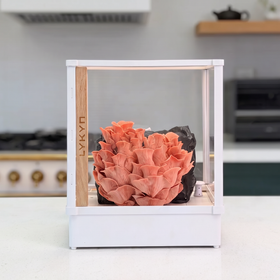



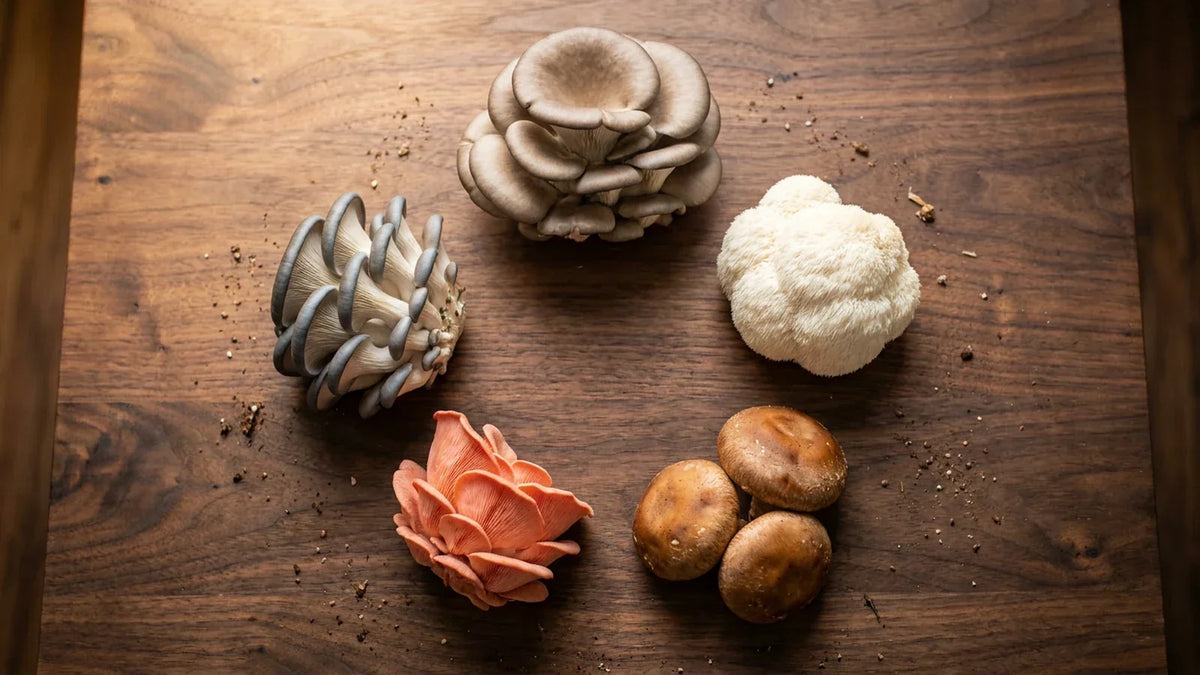
Walk into a kitchen in January 2026, and you'll find two mushroom kits side by side on the counter. One grows cream-colored tendrils that smell like baked shellfish when they're ready. The other produces shelf-like clusters in pink or grey, with the faint anise-forward scent that makes you think of the produce aisle. Lion's Mane and Oyster mushrooms look nothing alike, taste nothing alike, and demand nothing alike from a beginner grower. Picking the right one for your first kit is the difference between frustration and flow.
The Core Difference
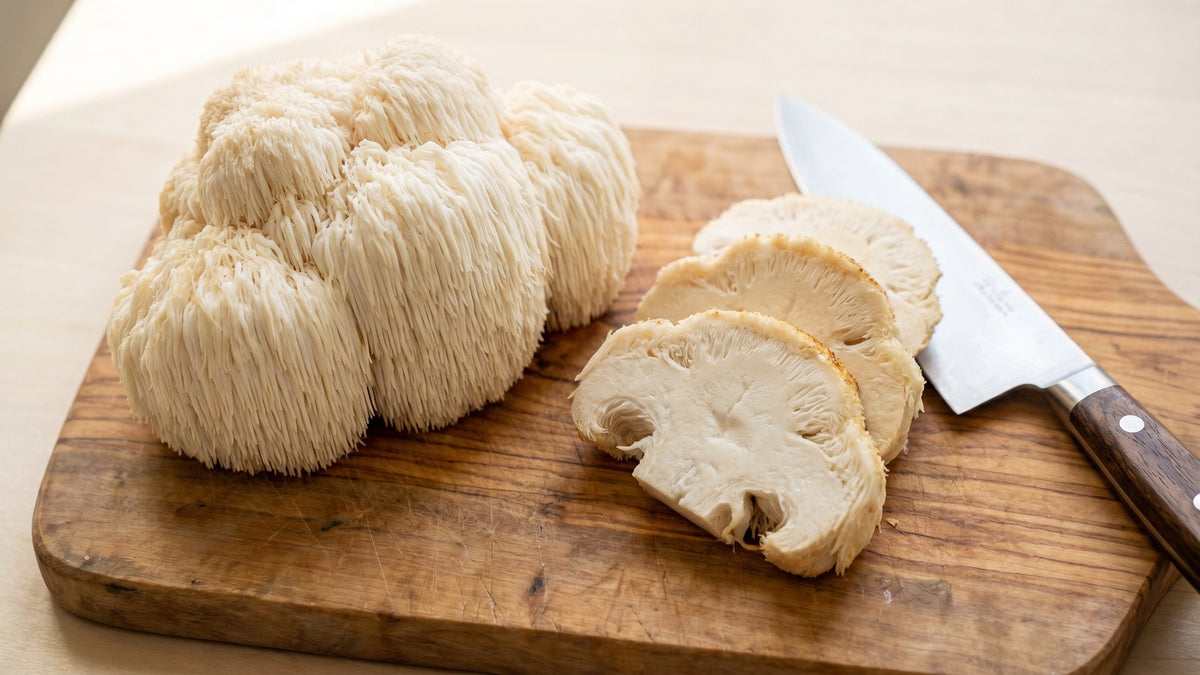
Lion's Mane (Hericium erinaceus) is a slow-growing coral-like fruiting body that extends outward in long, delicate tendrils. It takes 14 to 21 days to produce its first flush from a fresh block. The mushroom is prized in cooking for its firm, fleshy texture (some growers compare it to seafood) and in wellness circles for its potential cognitive compounds, though most of what you'll read online about cognition is speculative rather than settled. The flavor is subtle, slightly sweet, and benefits from simple preparation: pan-seared in butter, or added to broths where its umami compounds deepen the stock.
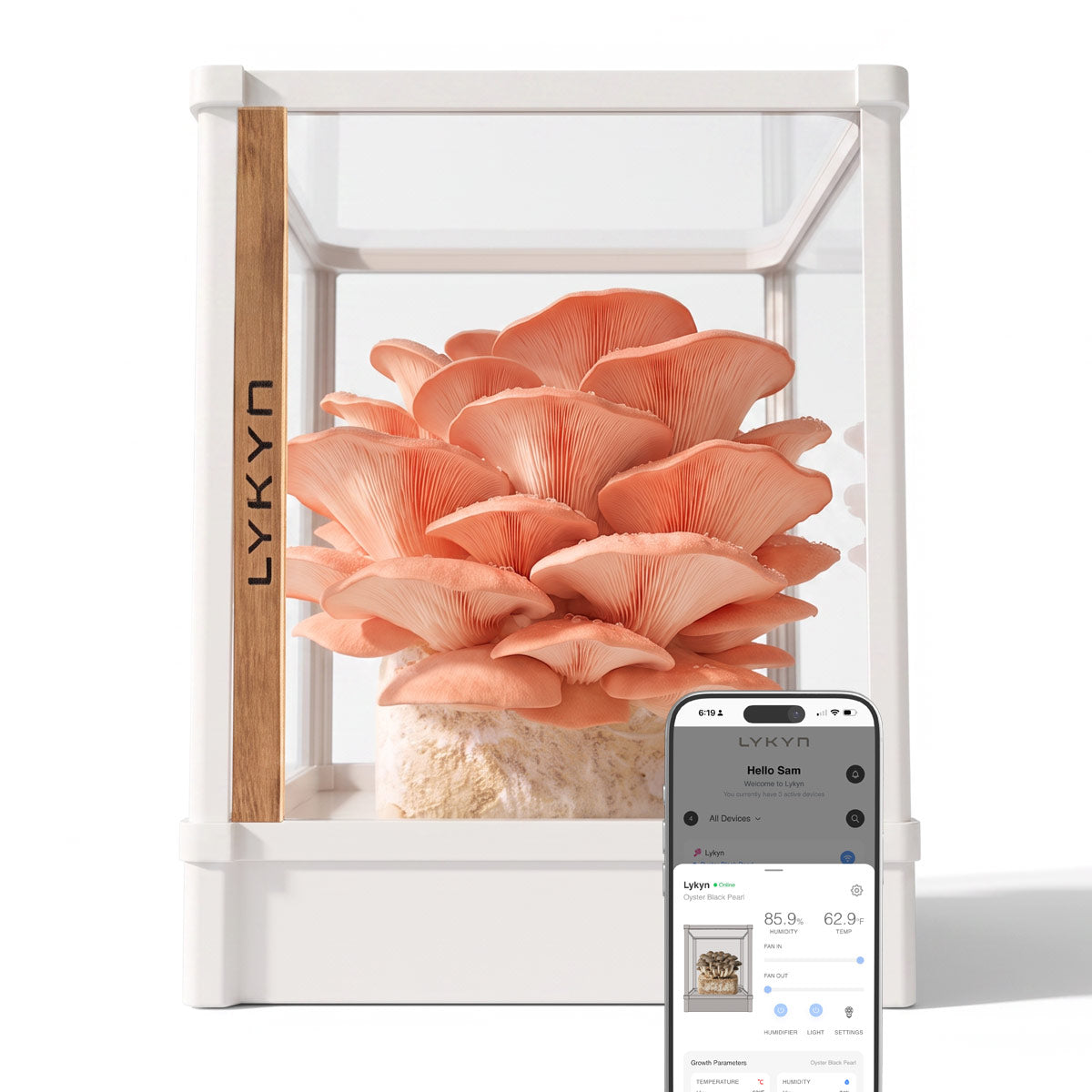
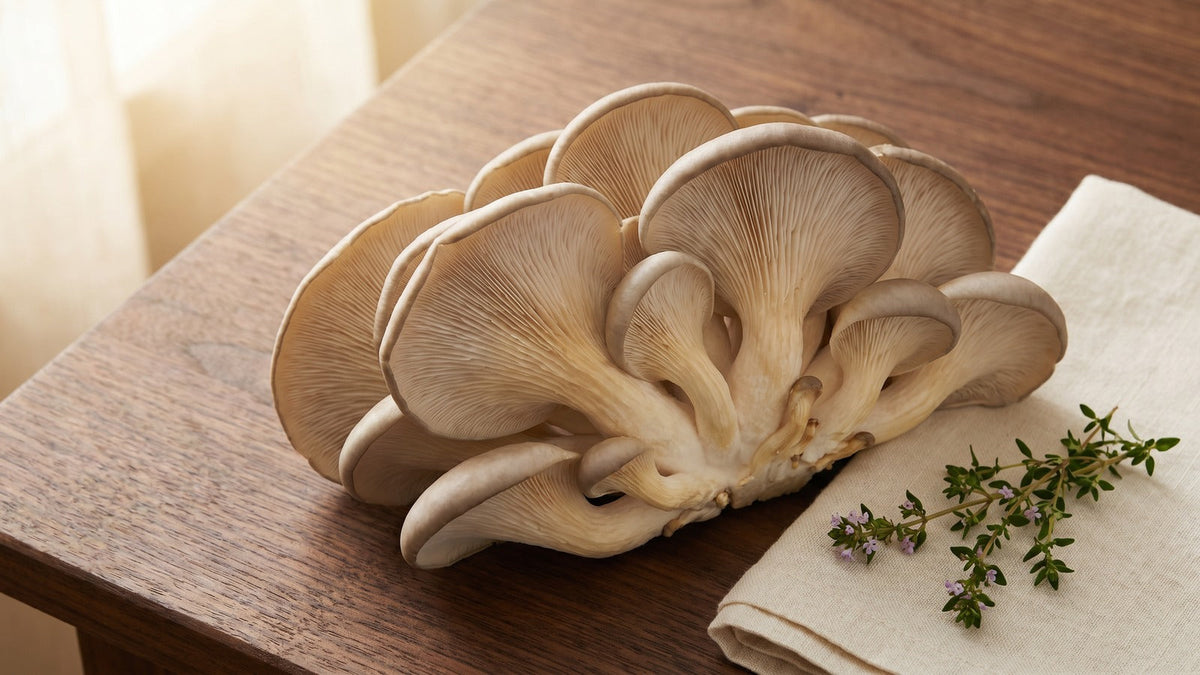
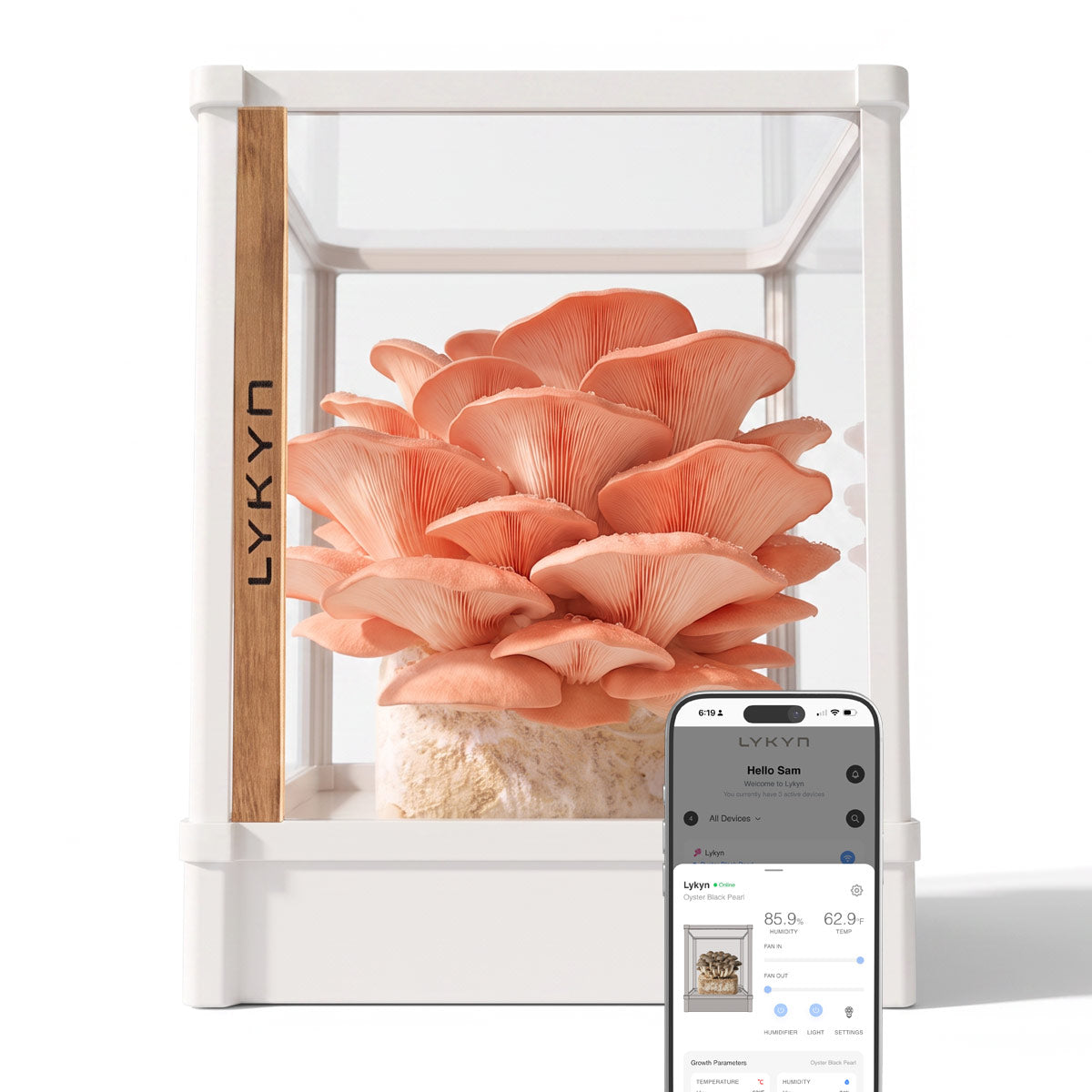
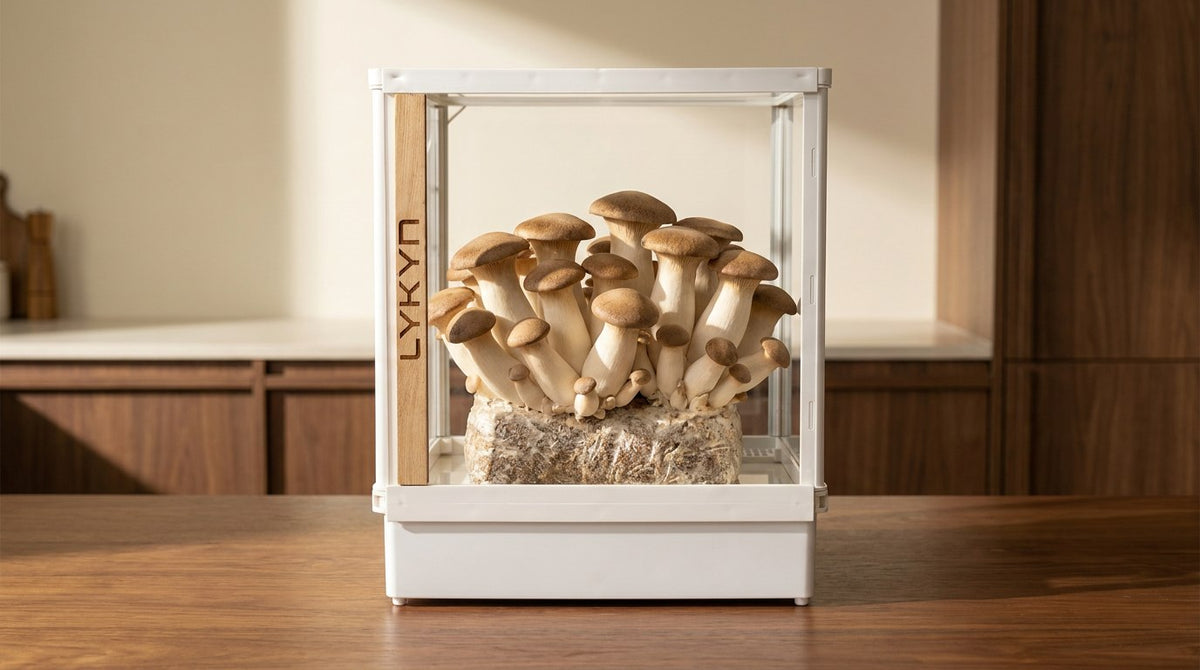
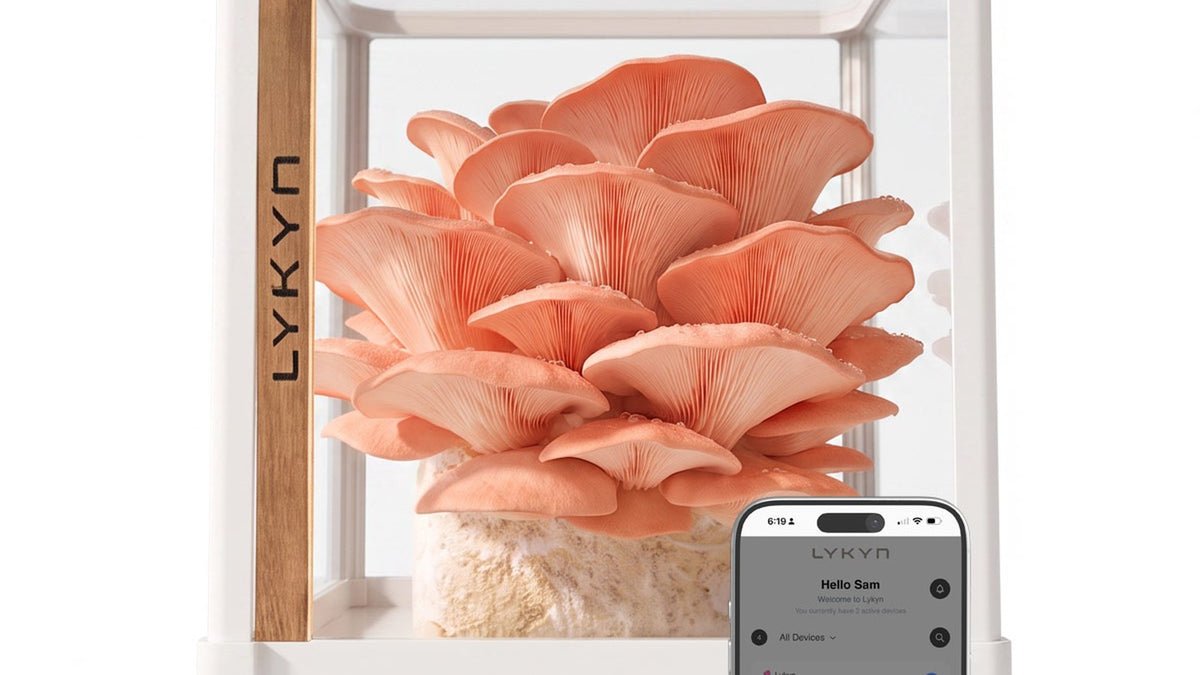
Oyster mushrooms (Pleurotus djamor, Pleurotus ostreatus, and related species) are fast fruiting. A pink oyster or grey oyster block will produce its first flush in 7 to 14 days. The mushrooms grow as shelf-like clusters cascading off the block face. They're more forgiving of humidity swings and temperature variance than Lion's Mane, which makes them the kitchen standard for restaurants and home cooks alike. The flavor is savory, earthy, and robust enough to carry in stir-fries, soups, or sautés without fading into background noise.
The real difference is learning curve and time. Lion's Mane rewards patience and consistent humidity; Oyster rewards speed and low-barrier technique. Different growers, different kitchens, different goals.
Which One Is Easier for a Beginner
The honest answer depends on what you mean by "easier." Oyster mushrooms win on speed and forgiveness. Compare them across five signals that matter for beginners:
- Time to first flush: Oyster takes 7 to 14 days. Lion's Mane takes 14 to 21 days. If you're checking your kit daily and hungry for proof that it works, Oyster delivers a visible flush in half the time.
- Humidity forgiveness: Oyster tolerates swings between 60 and 90 percent humidity. Skip a misting by a day, and the oyster block will likely survive. Lion's Mane prefers 75 to 85 percent humidity consistently. Dip below 70 percent for two days, and you risk pinning failure (the mushroom fails to form properly).
- Flush count per block: Oyster will give you 3 to 4 flushes from a single block before fatigue sets in. Lion's Mane typically yields 2 to 3 flushes before the block exhausts. More flushes per block means more value, less frequent purchasing.
- Kitchen usability: Oyster is the chef standard. Every restaurant kitchen knows what to do with oyster mushrooms. Lion's Mane has a narrower band of applications. Beginners often buy a kit and then wonder what to cook with it. Oyster has no such hesitation.
- Storage after harvest: Oyster mushrooms stay fresh for 3 to 5 days in a standard refrigerator. Lion's Mane lasts 5 to 7 days fresh. This matters less if you're using them the day of harvest, but it affects your cooking flexibility.
For pure beginner ease, Oyster wins. For growers with patience and a kitchen humidifier already in place, Lion's Mane is manageable and more novel.

Kits for Each Species in 2026
Lion's Mane Kits:
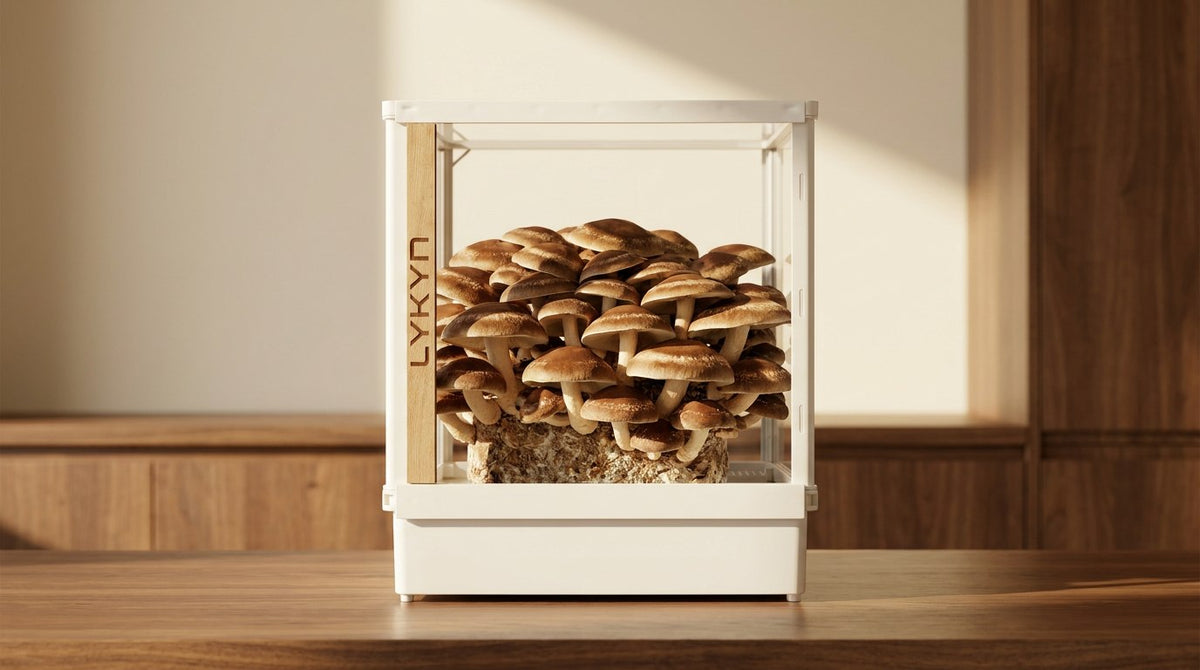
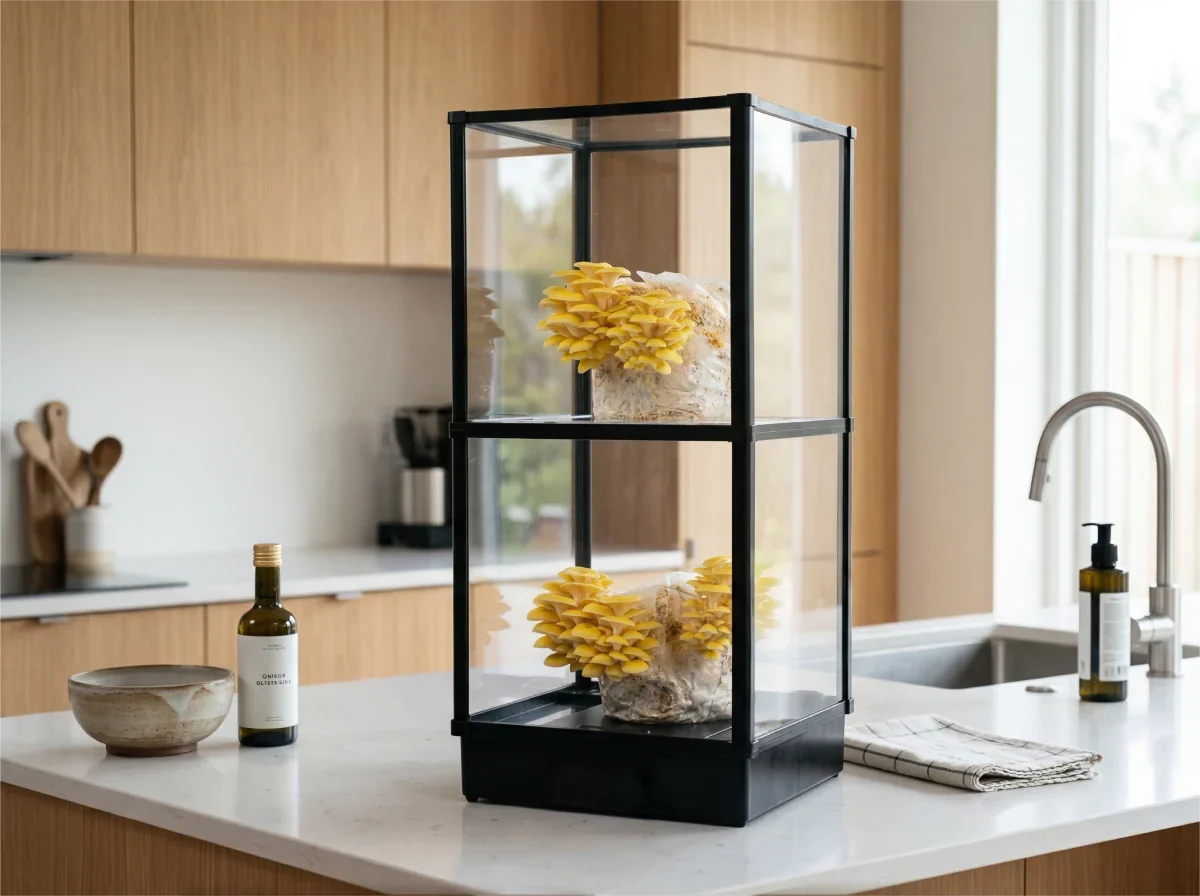
The Lykyn Lion's Mane Refill Block ($29.95) integrates with the Lykyn Smart Mushroom Grow Box app, which guides you through humidity cycles optimized for Lion's Mane's slower growth. You get real-time feedback on when to mist, when to stop, and when to expect pinning. If you're buying a kit specifically to learn the rhythm, this removes guesswork. The North Spore Lion's Mane Sawdust Fruiting Block ($20 to $25) is a bare-block DIY option: no app, no guidance, just you, a spray bottle, and your intuition. It's cheaper and teaches you more, but the margin for error is wider.
Oyster Kits:
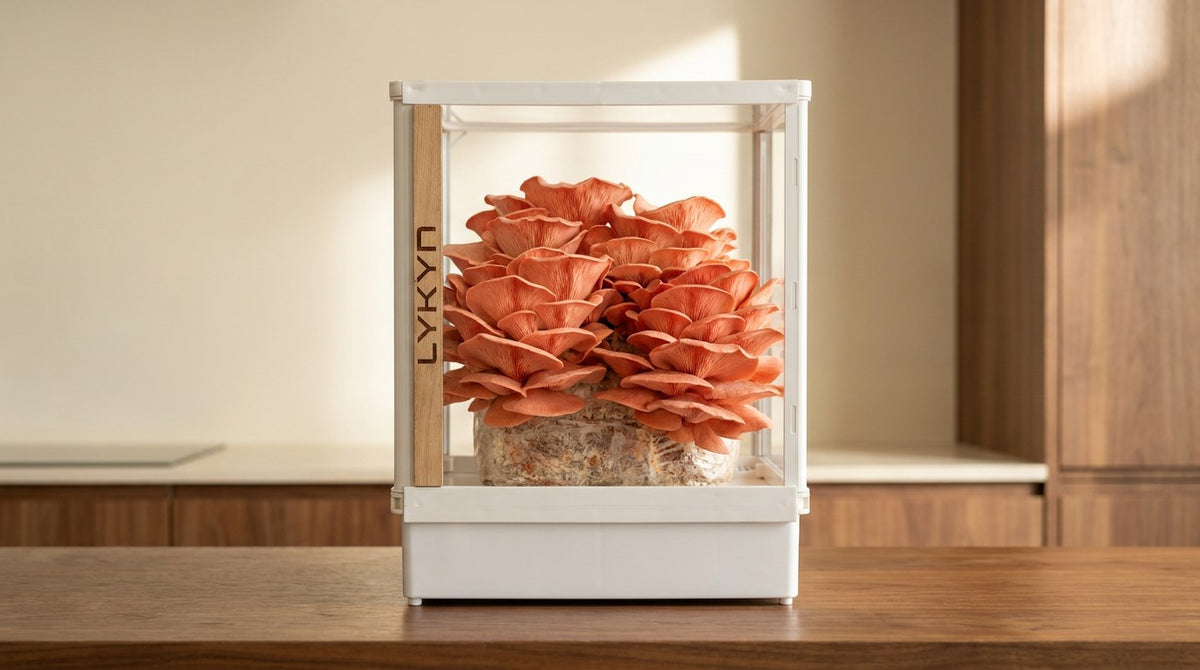
The Lykyn Pink Oyster Refill Block ($29.95) offers the same app-guided experience as the Lion's Mane refill, but calibrated for oyster's faster cycle and higher humidity tolerance. You'll get your first flush in 7 to 14 days with clear milestones. The Back to the Roots Ready-to-Fruit Oyster ($22 to $25) is a true entry-level kit: everything is pre-inoculated, and you just add water and light. It's the gentlest possible onboarding, though you lose the app guidance and sensor feedback.
How to Decide
Ask yourself four questions:
- What's your goal with mushrooms? Are you cooking with them regularly, or exploring the wellness angle? Oyster fits any kitchen. Lion's Mane is more of a specialty, so commit to using it if you grow it.
- How much time do you have to check the block daily? Oyster needs misting once or twice daily. Lion's Mane needs consistent humidity monitoring. If your life is chaotic, Oyster is more forgiving of missed days.
- Do you want fast satisfaction or a patient project? Oyster gives you a flush in two weeks. Lion's Mane is a four-week commitment before you see results. If waiting is not your strength, pick Oyster.
- Where in the kitchen will it sit? A sunny window with afternoon heat? Oyster will tolerate the temperature swings. A humid bathroom corner? Both will work, but Lion's Mane will thank you for the stability.

What a First Flush Looks Like for Each
Oyster mushroom: You'll see white pins (tiny fruiting bodies) appear on the block face around day 7 or 8. Within 48 hours, these pins explode into shelf-shaped mushrooms that cascade down the block. The caps start curved inward and flatten as they mature. When they're ready to harvest, the edges remain slightly curled, almost like the rim of a wine glass. The smell is subtle but distinctive: a mix of anise, earth, and the faint ocean-like scent of the produce aisle. The texture, when you touch the caps, is springy and firm, not fragile. The surface has a slight sheen in the right light.
Lion's Mane: The pinning phase takes longer (days 10 to 14), but when it starts, the transformation is visible. Tiny white bumps appear on the block surface, and over the next 5 to 7 days, they extend into long, delicate tendrils that curve and cascade like a sea anemone. The cluster grows outward and upward, not down like Oyster. When it's peak-ready, the tendrils curl at their tips, giving the whole cluster a soft, ornamental quality. The smell is distinctive: warm, slightly sweet, like fresh seafood seared in butter. When you brush your hand against it, the texture is slightly gelatinous but holds its shape. The color deepens from pure white to cream as it matures.
The Mistake First-Time Growers Make
The fix is simple: harvest when the cap edges are still slightly curled inward, before they flatten or invert. For Oyster, this window is 12 to 24 hours. Miss it, and you end up with a technically mature mushroom that's already begun to dehydrate. Lion's Mane is more forgiving. You can harvest it from the curled-tendril stage all the way through the full-extended stage without much quality loss, though the earlier harvest is more tender.
The second common mistake is assuming humidity means "spray it constantly." Constant misting creates standing water and bacterial competition. The right approach is 2 to 3 spray sessions daily, each light and even, drying between sessions. Oyster tolerates sloppy misting better than Lion's Mane, which will abort pins if it's too wet for too long.
Frequently Asked Questions
Which mushroom kit is best for a total beginner?
Pink Oyster wins on speed and forgiveness. You'll see a flush in 7 to 14 days, and the block tolerates missed misting days better than Lion's Mane. If you want proof that home mushroom growing works before you commit to the learning curve, buy Oyster first.
Can I grow both species in the same chamber?
Technically yes, but practically no for a beginner. Oyster prefers faster cycles and more aggressive misting. Lion's Mane prefers slower, steadier humidity. Growing both at once means compromising on both. Start with one species, master it, then add the second in the next chamber or the next growing season.
Is Lion's Mane really as good as they say for the brain?
Lion's Mane contains bioactive compounds (beta-glucans and hericenones) that have been studied in laboratory and animal models for potential cognitive effects. Human clinical research is still limited. The mushroom is worth growing for the cooking experience and the novelty; if you also believe it supports focus and memory, that's a bonus, not a guarantee.
How do I cook oyster mushrooms fresh?
Oyster mushrooms are forgiving in the kitchen. Slice them into 0.5-inch pieces (or leave small clusters whole), heat a cast-iron pan with butter or oil until it shimmers, and sauté over medium-high heat until the edges brown, about 4 to 5 minutes. They'll release moisture, then reabsorb it as they cook. Add garlic, salt, and fresh herbs in the final minute. Serve immediately. They're too delicate for long simmering, so save them for quick sautés, stir-fries, or the last few minutes of a soup.
What is the success rate for a beginner on each?
Oyster: 85 to 95 percent of home growers get at least one successful flush from their first block. Failures are usually caused by contamination (mold) or extreme neglect (zero misting). Lion's Mane: 70 to 80 percent success for beginners. The slower cycle means more opportunity for humidity fluctuations to disrupt pinning. The gap is real but not insurmountable if you follow the basics.
Can I get both species on subscription?
Yes. The Lykyn Smart Mushroom Grow Box offers refill blocks for both Lion's Mane and Pink Oyster on a monthly subscription model. Start with whichever species matches your comfort level, then rotate to the other once you've completed your first harvest cycle.

Start with the species that matches your kitchen rhythm. Oyster if you want speed and low barriers. Lion's Mane if you have humidity control in place and a willingness to wait. Both are worth growing. The difference is not which is better, but which is right for where you are now.
Shop Lykyn Smart Mushroom Grow Box kits today, and grow your first mushroom flush at home.
Also read: Top-Rated Lion's Mane Mushroom Grow Kits: 2026 Buyer's Guide and Best Pink Oyster Mushroom Grow Kit for Beginners 2026.

Aktie:
Best Medicinal Mushroom Grow Kits 2026: Reishi + Turkey Tail + Immune Support Hub
Mushroom Grow Kit Temperature & Humidity: Full Setup Guide 2026