


Der schwarze Reishi-Pilz, wissenschaftlich als Ganoderma sinense bekannt, ist eine der angesehensten Sorten in der traditionellen chinesischen Medizin. Oft als violetter Reishi oder "zǐzhī" (紫芝) bezeichnet, wird dieser bemerkenswerte Heilpilz seit über 2.000 Jahren wegen seiner einzigartigen gesundheitlichen Vorteile und seiner spirituellen Bedeutung geschätzt. Im Gegensatz zu seinem berühmteren roten Cousin (Ganoderma lucidum) bietet der schwarze Reishi besondere Eigenschaften mit einem feineren Geschmack und speziellen immununterstützenden Verbindungen, die ihn bei Kräuterkundigen und Gesundheitsenthusiasten sehr begehrt machen.
Kurze Antwort: Der schwarze Reishi-Pilz (Ganoderma sinense) ist eine Heilpilzsorte mit dunklerer Farbe, geschätzt für die Unterstützung der Lungengesundheit und die Stärkung des Immunsystems. Er wird hauptsächlich in Asien angebaut und ist in China zur Linderung von Chemotherapie-Nebenwirkungen zugelassen. Er bietet ähnliche, aber spezifische Eigenschaften wie der rote Reishi.

Schwarzer Reishi verstehen: Arten und Klassifizierung
Wissenschaftliche Identität: Ganoderma sinense
Der schwarze Reishi, korrekt als Ganoderma sinense identifiziert, gehört zur Familie der Ganodermataceae und ist einer der traditionellen "sechs heiligen Pilze", die in alten chinesischen Texten beschrieben werden. Das Chinesische unterscheidet zwischen den Ganoderma-Arten chìzhī (赤芝; „roter Pilz“) G. lingzhi und zǐzhī (紫芝; „violetter Pilz“) Ganoderma sinense.
Hauptmerkmale:
-
Wissenschaftlicher Name: Ganoderma sinense
-
Gängige Namen: Schwarzer Reishi, violetter Reishi, zǐzhī (紫芝)
-
Traditionelle Klassifizierung: Eine der mythischen "sechs zhī"-Sorten
-
Farbe: Dunkelbraun bis schwarz mit glänzender Oberfläche
-
Ähnliche genetische Zusammensetzung wie roter Reishi mit einzigartigen Verbindungen
Historische Bedeutung in der traditionellen Medizin
Im Jahr 2010 wurden Ganoderma sinense-Tabletten von der chinesischen Staatlichen Lebensmittel- und Arzneimittelbehörde zur Linderung von Chemotherapie-Nebenwirkungen zugelassen, was ihre moderne medizinische Anerkennung unterstreicht. Viele chinesische Kräuterkundige führen diese Pilze mit sich, da sie für die Unterstützung einer gesunden Lungenfunktion bekannt sind.
Traditionelle Anwendungen:
-
Lungengesundheit und Atemwegsunterstützung
-
Modulation des Immunsystems
-
Spirituelle Potenz und Langlebigkeit
-
Linderung von Chemotherapie-Nebenwirkungen
-
Stressanpassung und Vitalitätssteigerung
Schwarze Reishi-Pilze identifizieren
Visuelle Merkmale
Schwarze Reishi-Pilze zeichnen sich durch ihr dunkles und glänzendes Aussehen aus, mit einer markanten regalartigen Struktur und einer glänzenden schwarzen Oberfläche. Die Textur ist holzig und zäh, was die Widerstandsfähigkeit dieser Art widerspiegelt.
Identifikationsmerkmale:
-
Aussehen der Kappe: Dunkelbraun bis schwarz, glänzende, lackierte Oberfläche
-
Form: Nieren- oder fächerförmig, regalartiges Wachstumsmuster
-
Textur: Holzig, zäh und haltbar
-
Größe: Kann 5-40 Zentimeter im Durchmesser erreichen
-
Unterseite: Weiße bis hellbraune Porenfläche
-
Sporenabdruck: Braun bis rostbraun
Wachstumsmuster und Lebensraum
Typischerweise in Wäldern zu finden, wächst schwarzer Reishi auf verrottenden Hartholzstämmen und -stümpfen. Seine Präsenz verleiht der natürlichen Umgebung eine geheimnisvolle Atmosphäre, insbesondere in asiatischen Hartholzwäldern, wo er natürlich vorkommt.
Natürlicher Lebensraum:
-
Hartholzbäume (Ahorn, Eiche, Buche)
-
Verrottende Baumstämme und -stümpfe
-
Feuchte, gemäßigte Waldumgebungen
-
Basis lebender Bäume (manchmal)
-
Wundstellen an reifen Bäumen

Gesundheitliche Vorteile des schwarzen Reishi-Pilzes
Unterstützung des Immunsystems
In seiner genetischen Zusammensetzung dem roten Reishi ähnlich, wird der schwarze Reishi wegen seines delikateren Geschmacks und seiner immunstärkenden gesundheitlichen Vorteile geschätzt. Die in diesem Pilz enthaltenen bioaktiven Verbindungen sollen immunmodulierende, antioxidative und adaptogene Eigenschaften besitzen.
Hauptvorteile:
-
Immunmodulation: Hilft, die Immunantwort auszugleichen
-
Antioxidativer Schutz: Bekämpft oxidativen Stress
-
Adaptogene Unterstützung: Hilft bei der Stressanpassung
-
Atemwegsgesundheit: Traditionelle Unterstützung der Lungenfunktion
-
Vitalitätssteigerung: Fördert die allgemeine Energie und das Wohlbefinden
Bioaktive Verbindungen
Schwarzer Reishi enthält eine komplexe Reihe nützlicher Verbindungen, die zu seinen therapeutischen Eigenschaften beitragen:
Schlüsselkomponenten:
-
Triterpene: Einschließlich Ganodersäuren zum Leberschutz
-
Polysaccharide: Beta-Glucane zur Immununterstützung
-
Peptidoglykane: Protein-Zucker-Komplexe
-
Steroide: Einschließlich Ergosterol-Vorstufen
-
Verschiedene Mineralien: Kalium, Kalzium, Phosphor
Forschung und klinische Anwendungen
Regelmäßiger Konsum von schwarzem Reishi kann das Immunsystem unterstützen, die Vitalität steigern und zum allgemeinen Wohlbefinden beitragen. Es ist jedoch wichtig, vor der Einnahme von schwarzem Reishi einen Arzt zu konsultieren, insbesondere wenn Sie spezifische gesundheitliche Bedenken haben oder Medikamente einnehmen.
Erfahren Sie mehr über die traditionellen Reishi-Vorteile in unserem umfassenden Leitfaden zu den Vorteilen des Reishi-Pilzes.
Schwarzen Reishi zu Hause anbauen
Anbauanforderungen
Schwarze Reishi-Pilze lassen sich relativ einfach zu Hause anbauen, insbesondere mit einer hochwertigen Kultur. Egal ob Sie Hartholzsägemehl, Baumstämme oder sterilisiertes Substrat verwenden, Ganoderma sinense kann unter kontrollierten Bedingungen gedeihen und über einen längeren Zeitraum mehrere Ernten liefern.
Wachstumsbedingungen:
-
Temperatur: 24-29 °C (75-85 °F) für die Myzelentwicklung
-
Luftfeuchtigkeit: 80-95% relative Luftfeuchtigkeit
-
Substrat: Hartholzsägemehl, Baumstämme oder angereichertes Wachstumsmedium
-
pH-Wert: Optimaler Bereich 5,0-6,5
-
Luftaustausch: Mäßige Frischluftzirkulation
-
Beleuchtung: Geringe Lichtanforderungen
Substratvorbereitung
Empfohlene Anzuchtmedien:
-
Hartholzsägemehl (Eiche, Ahorn, Buche)
-
Angereicherte Sägemehl mit Weizenkleie (10-20%)
-
Sterilisierte Hartholzstämme
-
Kommerzielle Pilzzuchtblöcke
-
Angereichertes Substrat mit Sojamehl
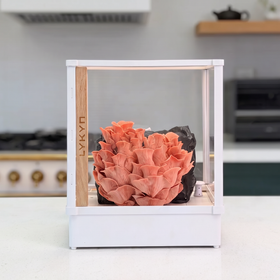
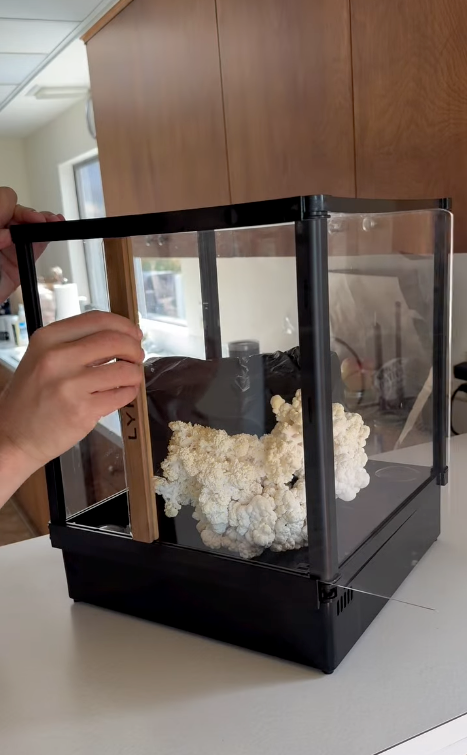
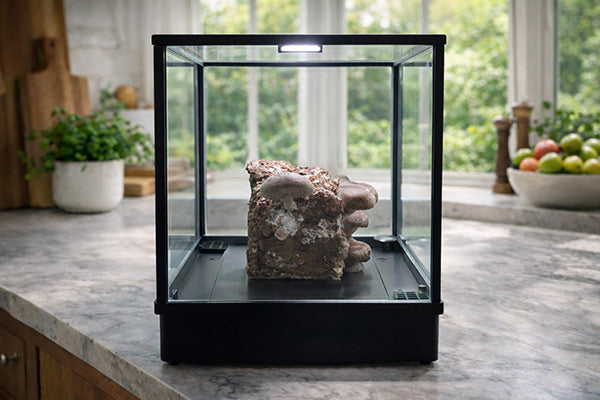
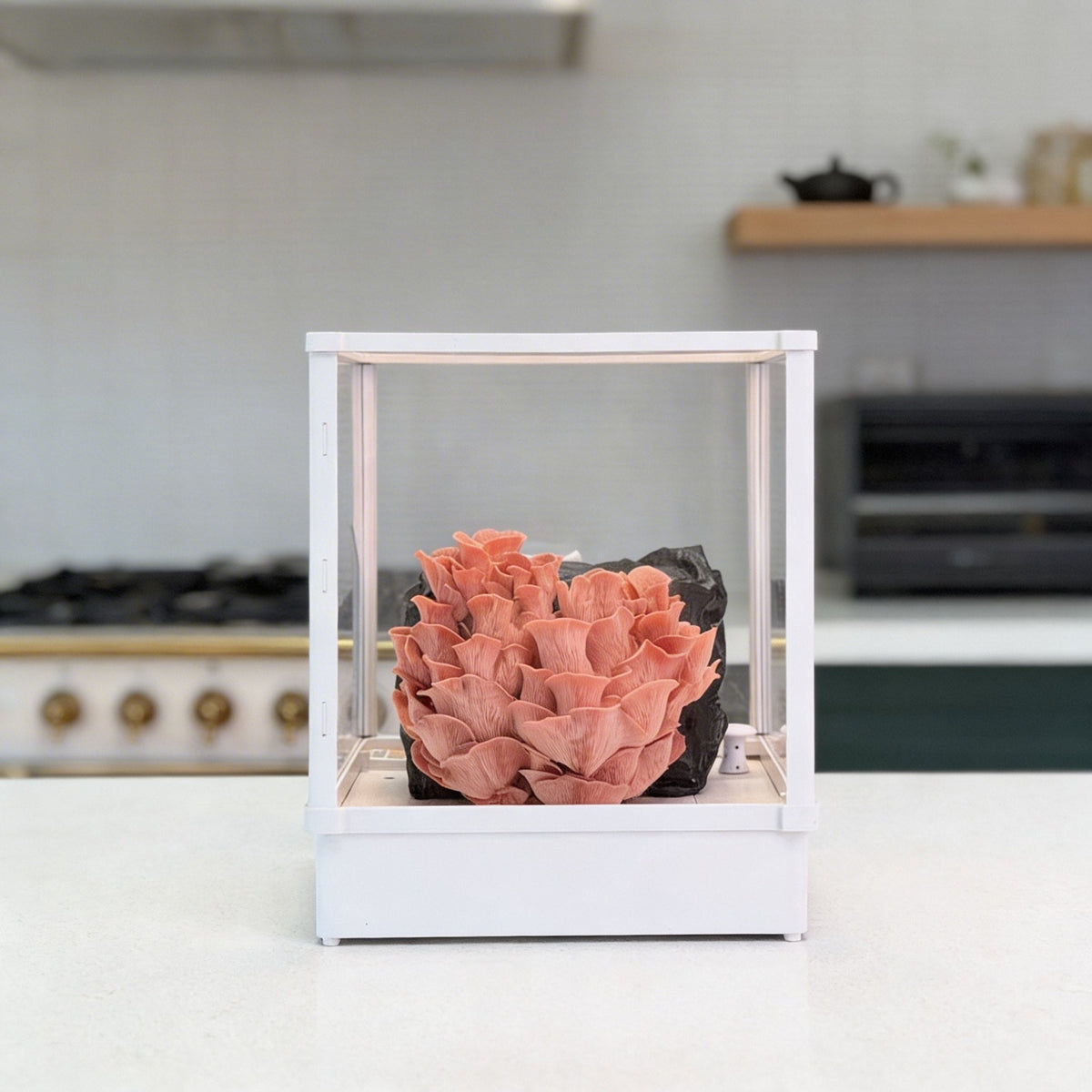
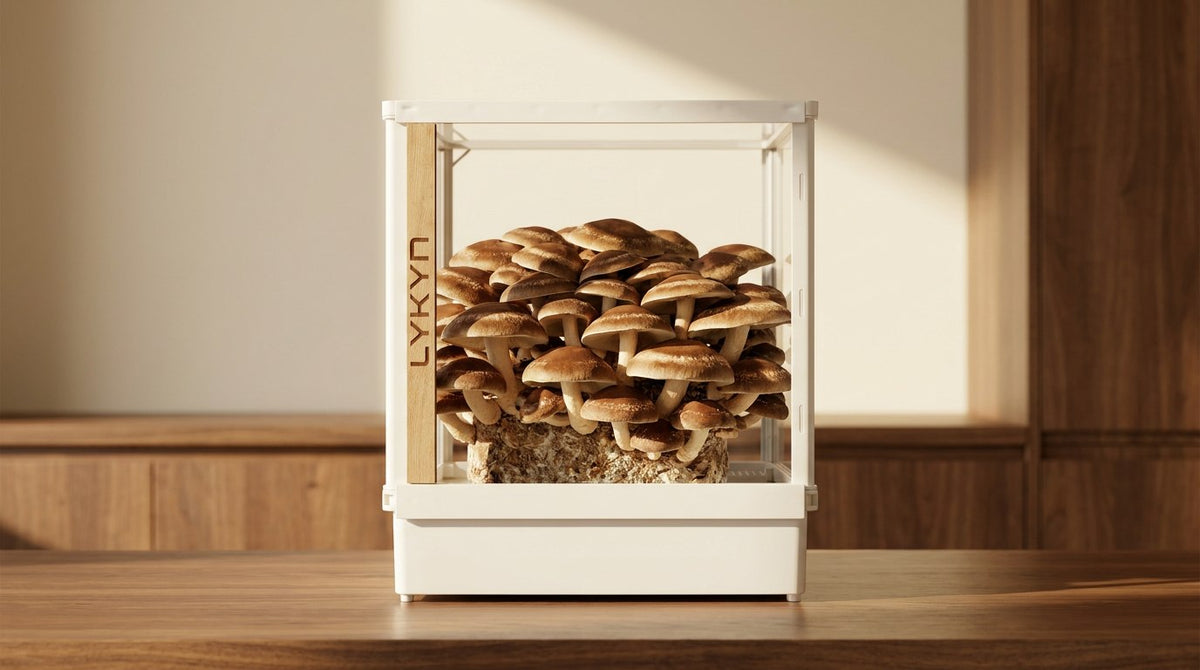
Die Lykyn Smart Mushroom Grow Chamber bietet optimale Bedingungen für den Anbau von Reishi-Sorten und hält dank intelligenter Sensoren und App-Steuerung automatisch die perfekte Luftfeuchtigkeit und den optimalen Luftstrom aufrecht.
Ernte und Verarbeitung
Erntezeitplan:
-
Myzelkolonisation: 4-8 Wochen
-
Entwicklung der Fruchtkörper: 2-4 Monate
-
Reifeindikatoren: Harte, holzige Textur mit entwickelter Sporenoberfläche
-
Mehrfache Ernten: Über 6-12 Monate möglich
Verarbeitungsmethoden:
-
Trocknen: Niedrige Temperatur (35-46°C) zur Konservierung
-
Schneiden: Für Teezubereitung und Lagerung
-
Pulverherstellung: Mahlen getrockneter Pilze
-
Extraktzubereitung: Alkohol- oder Wasserextraktionsmethoden
Schwarzer Reishi vs. Roter Reishi: Hauptunterschiede
Aussehen und physikalische Eigenschaften
Schwarzer Reishi (Ganoderma sinense):
-
Dunkelbraune bis schwarze glänzende Oberfläche
-
Feineres Geschmacksprofil
-
Spezialisierte Anwendungen für die Lungengesundheit
-
In China zur Unterstützung bei Chemotherapie zugelassen
Roter Reishi (Ganoderma lucidum/lingzhi):
-
Rotbraune glänzende Oberfläche
-
Bittererer Geschmack
-
Breiteres Spektrum an untersuchten Anwendungen
-
Meist erforschte Sorte
Traditionelle Verwendungen und Anwendungen
Spezialisierte Anwendungen:
-
Schwarzer Reishi: Lungengesundheit, Atemwegsunterstützung, Chemotherapie-Nebenwirkungen
-
Roter Reishi: Allgemeine Immununterstützung, Lebergesundheit, Langlebigkeit
-
Beide Sorten: Stressanpassung, Immunmodulation, allgemeine Vitalität
Marktverfügbarkeit
Die meisten kommerziellen Reishi-Produkte enthalten Ganoderma lingzhi und nicht den echten Ganoderma sinense. Wenn Sie echten schwarzen Reishi suchen, überprüfen Sie die Art bei seriösen Anbietern, die eine korrekte botanische Identifizierung vornehmen.
Traditionelle Zubereitungsmethoden
Teezubereitung
Schwarzer Reishi eignet sich hervorragend für einen Heiltee, der mit traditionellen Methoden zubereitet werden kann, um die therapeutischen Verbindungen zu maximieren. Detaillierte Brühmethoden finden Sie in unserem Leitfaden zur Reishi-Teezubereitung.
Grundlegende Tee-Methode:
-
Zubereitung der Scheiben: 1-2 Unzen getrockneten schwarzen Reishi in dünne Scheiben schneiden
-
Köcheln lassen: Zu 4 Tassen Wasser geben, 30-60 Minuten köcheln lassen
-
Abseihen: Pilzstücke entfernen, Flüssigkeit aufbewahren
-
Servieren: Warm trinken, bei Bedarf Honig für den Geschmack hinzufügen
Pulver- und Extraktformen
Verarbeitungsmöglichkeiten:
-
Ganze getrocknete Pilze: Maximale Erhaltung der Verbindungen
-
Pulverform: Einfache Einarbeitung in Speisen und Getränke
-
Alkoholextrakte: Konzentrierter Triterpengehalt
-
Wasserextrakte: Hohe Polysaccharidkonzentration
-
Duale Extrakte: Kombinierte Alkohol- und Wasserextraktion
Entdecken Sie hochwertige Verarbeitungsmethoden in unserem Leitfaden für getrockneten Reishi-Pilz und die Vorteile von Reishi-Pulver.
Sicherheitsüberlegungen und Vorsichtsmaßnahmen
Allgemeines Sicherheitsprofil
Während Schwarzer Reishi im Allgemeinen als sicher für den Verzehr gilt, können manche Personen leichte Verdauungsbeschwerden oder allergische Reaktionen erfahren. Es ist entscheidend, Vorsicht walten zu lassen und mit kleinen Mengen zu beginnen, um die persönliche Verträglichkeit zu testen.
Potenzielle Nebenwirkungen:
-
Leichte Verdauungsbeschwerden
-
Mögliche allergische Reaktionen bei empfindlichen Personen
-
Potenzielle Wechselwirkungen mit blutverdünnenden Medikamenten
-
Mögliche Auswirkungen auf den Blutdruck
Spezielle Bevölkerungsgruppen
Konsultation empfohlen für:
-
Schwangere oder stillende Frauen (siehe unseren Reishi- und Schwangerschaftsleitfaden)
-
Personen, die Medikamente einnehmen
-
Menschen mit Autoimmunerkrankungen
-
Personen mit Blutungsstörungen
-
Kinder unter 18 Jahren
Qualität und Authentizität
Beim Kauf von Schwarz-Reishi-Produkten überprüfen Sie die Authentizität durch:
Qualitätsindikatoren:
-
Speziesbestätigung: Bestätigter Ganoderma sinense
-
Bio-Zertifizierung: Pestizidfreier Anbau
-
Tests durch Dritte: Überprüfung auf Verunreinigungen und Wirksamkeit
-
Korrekte Identifizierung: Botanische Authentifizierung
-
Lagerbedingungen: Richtige Trocknung und Konservierung
Häufig gestellte Fragen
F: Was ist der Unterschied zwischen Schwarzem Reishi und gewöhnlichen Reishi-Pilzen? A: Schwarzer Reishi (Ganoderma sinense) hat ein dunkleres Aussehen und einen feineren Geschmack im Vergleich zu Rotem Reishi (Ganoderma lucidum). Er wird speziell für die Unterstützung der Lungengesundheit geschätzt und ist in China zur Linderung von Nebenwirkungen der Chemotherapie zugelassen, während Roter Reishi breitere allgemeine Gesundheitsanwendungen hat.
F: Kann ich Schwarze Reishi-Pilze zu Hause anbauen? A: Ja, Schwarzer Reishi kann zu Hause auf Hartholzsägemehlsubstrat, bei richtiger Luftfeuchtigkeit (80-95%) und kontrollierter Temperatur (24-29°C) angebaut werden. Es erfordert Geduld, da die Fruchtkörper 2-4 Monate zur Entwicklung benötigen, aber die Erträge können 6-12 Monate lang anhalten.
F: Wie erkenne ich authentische Schwarze Reishi-Produkte? A: Suchen Sie nach Produkten, die ausdrücklich als Ganoderma sinense gekennzeichnet sind, überprüfen Sie diese bei seriösen Anbietern mit botanischer Authentifizierung, achten Sie auf Bio-Zertifizierung und stellen Sie sicher, dass Tests durch Dritte auf Verunreinigungen und Wirksamkeit durchgeführt wurden.
F: Was sind die traditionellen Verwendungszwecke des Schwarzen Reishi-Pilzes? A: Schwarzer Reishi wird traditionell zur Unterstützung der Lungengesundheit, der Atemfunktion, der Modulation des Immunsystems und der spirituellen Potenz verwendet. In modernen Anwendungen ist er in China zur Linderung von Nebenwirkungen der Chemotherapie zugelassen.
F: Ist Schwarzer Reishi für den täglichen Verzehr sicher? A: Schwarzer Reishi gilt im Allgemeinen für die meisten Menschen als sicher, wenn er in angemessenen Mengen konsumiert wird. Beginnen Sie jedoch mit kleinen Dosen, um die Verträglichkeit zu testen, und konsultieren Sie medizinisches Fachpersonal, insbesondere wenn Sie Medikamente einnehmen oder Grunderkrankungen haben.
F: Wie lange dauert es, bis die Vorteile von Schwarzem Reishi spürbar werden? A: Wie andere adaptogene Pilze wirkt Schwarzer Reishi allmählich. Einige Personen bemerken Effekte innerhalb von Tagen bis Wochen, während die vollen Vorteile 2-3 Monate konsequenter Anwendung erfordern können. Die Effekte variieren je nach individuellem Gesundheitszustand und Dosierung.
Zusammenfassung
Der Schwarze Reishi-Pilz (Ganoderma sinense) stellt eine einzigartige Sorte medizinischer Pilze mit charakteristischer dunkler Färbung und speziellen gesundheitlichen Vorteilen dar. Geschätzt für die Unterstützung der Lungengesundheit und die Modulation des Immunsystems, hat diese traditionelle chinesische Medizin moderne Anerkennung gefunden, einschließlich der Zulassung zur Linderung von Nebenwirkungen der Chemotherapie. Obwohl der Schwarze Reishi in seiner genetischen Zusammensetzung dem Roten Reishi ähnelt, bietet er eine feinere Geschmacksnote und spezifische Anwendungen für die Atemwegsgesundheit, was ihn sowohl für traditionelle als auch für zeitgenössische Wellness-Ansätze wertvoll macht.
Beginnen Sie Ihre Schwarze Reishi-Reise
Bereit, die bemerkenswerten Vorteile des Schwarzen Reishi-Pilzes zu entdecken? Ob Sie sich für die traditionelle Teezubereitung oder den modernen Anbau interessieren, die richtige Ausrüstung und das nötige Wissen gewährleisten erfolgreiche Ergebnisse. Die Lykyn Smart Mushroom Grow Chamber bietet optimale Wachstumsbedingungen für Reishi-Sorten und hält durch intelligente Sensoren die perfekte Luftfeuchtigkeit und den Luftstrom automatisch aufrecht.
Beginnen Sie Ihre Reise zum Anbau von Medizinalpilzen mit Zuversicht, indem Sie unsere anfängerfreundlichen Anbaulösungen nutzen, und entdecken Sie, warum Schwarzer Reishi seit Jahrtausenden geschätzt wird. Verändern Sie Ihre Wellness-Routine mit diesem alten „Pilz der Unsterblichkeit“, während Sie die Freude am Heimanbau genießen. Durchsuchen Sie unsere komplette Auswahl an Anbauausrüstung und Bildungsressourcen, um das volle Potenzial des Schwarzen Reishi-Pilzes in Ihrem täglichen Gesundheitsprogramm auszuschöpfen.





Aktie:
Weißer flaumiger Pilz: Ihr umfassender Sicherheits- und Bestimmungsleitfaden
Löwenmähnen-Tinktur Rezept: Meistere die Doppelextraktionsmethode für maximale Wirksamkeit