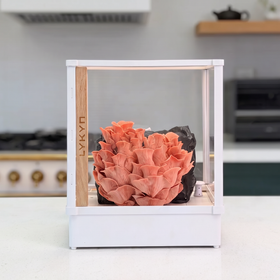



Der Schafskopf-Pilz, auch als Maitake oder Waldhühn bekannt, ist einer der beeindruckendsten Pilzschätze der Natur. Mit seinem unverwechselbaren, büschelartigen Aussehen, seinem bemerkenswerten Geschmacksprofil und seinen zahlreichen gesundheitlichen Vorteilen hat dieser Pilz sowohl bei Sammlern und Anbauern als auch bei Gesundheitsinteressierten an Beliebtheit gewonnen. Ob Sie daran interessiert sind, diesen Pilz in der freien Natur zu finden, zu Hause anzubauen oder ihn in Ihre Wellnessroutine zu integrieren – dieser umfassende Leitfaden bietet Ihnen alles Wissenswerte über den faszinierenden Grifola frondosa.

Der Schafskopf-Pilz näher betrachtet
Der Schafskopf-Pilz (Grifola frondosa) ist in verschiedenen Kulturen unter mehreren gebräuchlichen Namen bekannt, die sowohl sein Aussehen als auch seine Bedeutung widerspiegeln:
- Waldhühn: Wegen seiner Ähnlichkeit mit einer aufgeplusterten Henne, die auf einem Nest sitzt
- Schafskopf: Insbesondere in Regionen wie West-Pennsylvania und Ost-Ohio, aufgrund seiner Ähnlichkeit mit der wolligen Mähne eines Schafes
- Maitake: Der japanische Name, der „tanzender Pilz“ bedeutet, da die Finder angeblich vor Freude tanzten, wenn sie diesen geschätzten Pilz entdeckten
- Widderkopf: Ein weiterer Hinweis auf sein schafähnliches Aussehen
Dieser Röhrenpilz ist in China, Europa und Nordamerika heimisch, wo er hauptsächlich an der Basis von Eichen wächst, gelegentlich jedoch auch in der Nähe anderer Laubbäume wie Ahornbäumen zu finden ist.
Biologische Merkmale
Schafskopf-Pilze weisen mehrere charakteristische Merkmale auf, die ihre Identifizierung relativ einfach machen:
- Wuchsform: Wächst in großen, rosettenartigen Büscheln, die zwischen 3 und 30 Pfund wiegen können, wobei außergewöhnliche Exemplare über 100 Pfund erreichen
- Aussehen: Besteht aus mehreren, überlappenden löffel- oder fächerförmigen Hüten, die an einer verzweigten Basis befestigt sind
- Farbe: Typischerweise graubraun bis hellbraun, mit Farbvariationen von Dunkelbraun bis Hellcreme
- Textur: Feste, aber flexible Hüte mit weißen Poren an der Unterseite anstelle von Lamellen
- Saison: Tritt typischerweise vom Spätsommer bis in den Herbst (August–Oktober) auf
- Lebensraum: Fast ausschließlich an der Basis von Eichen zu finden, insbesondere an älteren oder geschwächten Bäumen
Ökologische Rolle
Der Schafskopf-Pilz spielt eine interessante ökologische Rolle, da er sowohl als Parasit als auch als Saprob hat. Er infiziert zunächst lebende Bäume, insbesondere ältere Eichen, und verursacht eine Weißfäule an der Basis des Baumes. Er kann noch viele Jahre am selben Ort Fruchtkörper bilden, selbst nachdem der Baum abgestorben ist, und wechselt dann vollständig zu einer saprobischen Lebensweise. Dieser einzigartige Lebenszyklus macht Schafskopf-/Maitake-Standorte für Sammler wertvoll, da ein produktiver Baum Jahr für Jahr Erträge liefern kann.
Schafskopf-Pilze in der freien Natur erkennen
Für Sammler ist die korrekte Identifizierung von Schafskopf-Pilzen von entscheidender Bedeutung. Glücklicherweise hat diese Art nur wenige gefährliche Doppelgänger, was sie zu einer guten Wahl für Anfänger macht, sobald sie die wichtigsten Erkennungsmerkmale kennen.
Wichtige Erkennungsmerkmale
Wenn Sie in der freien Natur nach Schafskopf-Pilzen suchen, achten Sie auf diese eindeutigen Merkmale:
- Standort: Fast ausschließlich an der Basis von Eichen, selten anderswo
- Struktur: Mehrere überlappende Hüte, die ein Rosettenmuster bilden
- Unterseite: Weiße Porenfläche (keine Lamellen), die bei Berührung nicht anläuft
- Stiel: Komplexe, verzweigte Struktur anstelle von einzelnen Stielen für jeden Hut
- Geruch: Angenehmer, erdiger Pilzduft
- Saison: Vom Spätsommer bis in den Herbst, tritt typischerweise nach Regenperioden auf
Doppelgänger und Unterscheidung
Obwohl Schafskopf-Pilze als eine der sichereren Wildpilze zur Identifizierung gelten, gibt es dennoch einige Doppelgänger, die man kennen sollte:
Schwarzfärbender Röhrenpilz (Meripilus sumstinei):
- Ähnliches Wachstumsmuster und Lebensraum
- Läuft bei Berührung oder Handhabung schwarz an (wichtigstes Unterscheidungsmerkmal)
- Essbar, aber festere Textur als der Schafskopf-Pilz
- Wächst ebenfalls an der Basis von Eichen
Berkeley-Röhrenpilz (Bondarzewia berkeleyi):
- Ähnliches Büschel-Aussehen, aber mit größeren, dickeren Hüten
- Wächst auf einer größeren Vielfalt von Baumarten
- Festere Textur als der Schafskopf-Pilz
Schirm-Röhrenpilz (Polyporus umbellatus):
- Wächst in einem ähnlichen Rosettenmuster
- Hat deutlich rundliche Hüte mit zentralen Stielen
- Weniger häufig als der Schafskopf-Pilz
Keiner dieser Doppelgänger ist gefährlich giftig, was den Schafskopf-Pilz zu einer relativ sicheren Wahl für Sammler-Anfänger macht. Wie jedoch bei jedem Wildpilz ist eine korrekte Identifizierung vor dem Verzehr unerlässlich.
Anbau von Schafskopf-Pilzen zu Hause
Obwohl sie traditionell in der freien Natur geerntet werden, können Schafskopf-/Maitake-Pilze mit den richtigen Techniken und der richtigen Ausrüstung erfolgreich zu Hause angebaut werden. Der Anbau bietet eine zuverlässige Quelle dieser wertvollen Pilze das ganze Jahr über, ohne die Unsicherheit des Sammelns.
Verwendung des Smart Mushroom Grow Kits
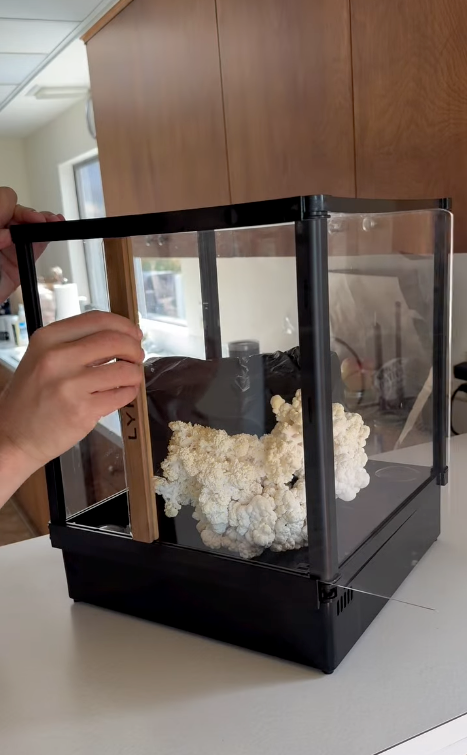
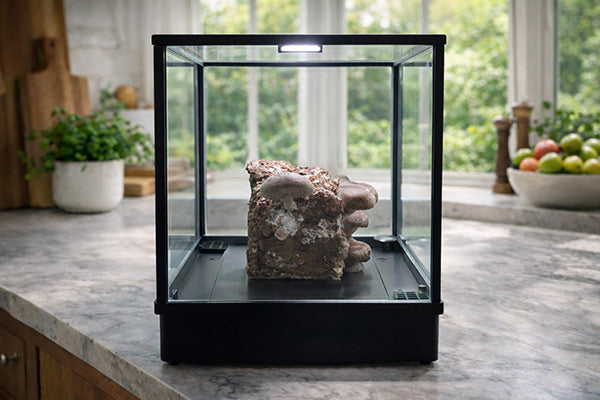
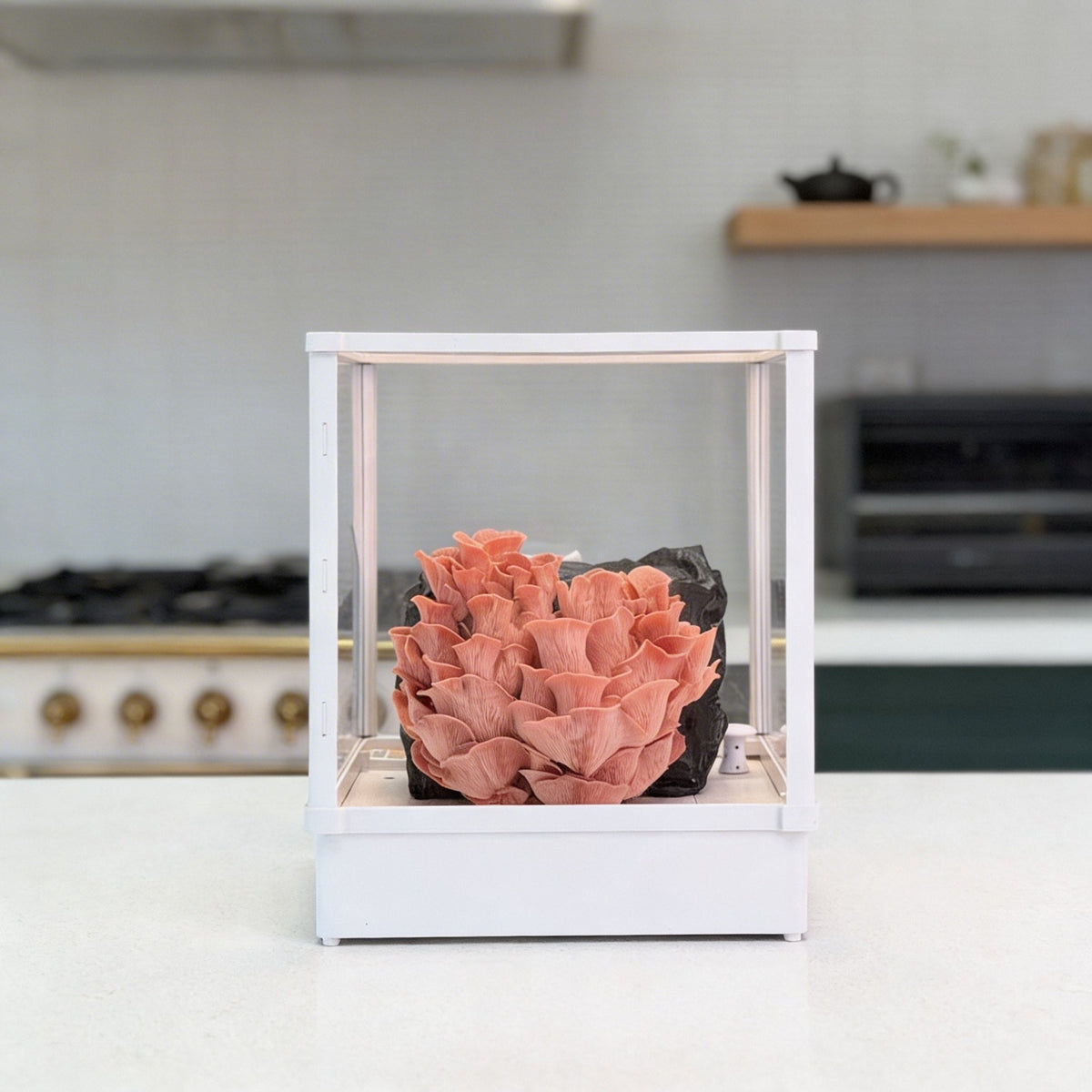
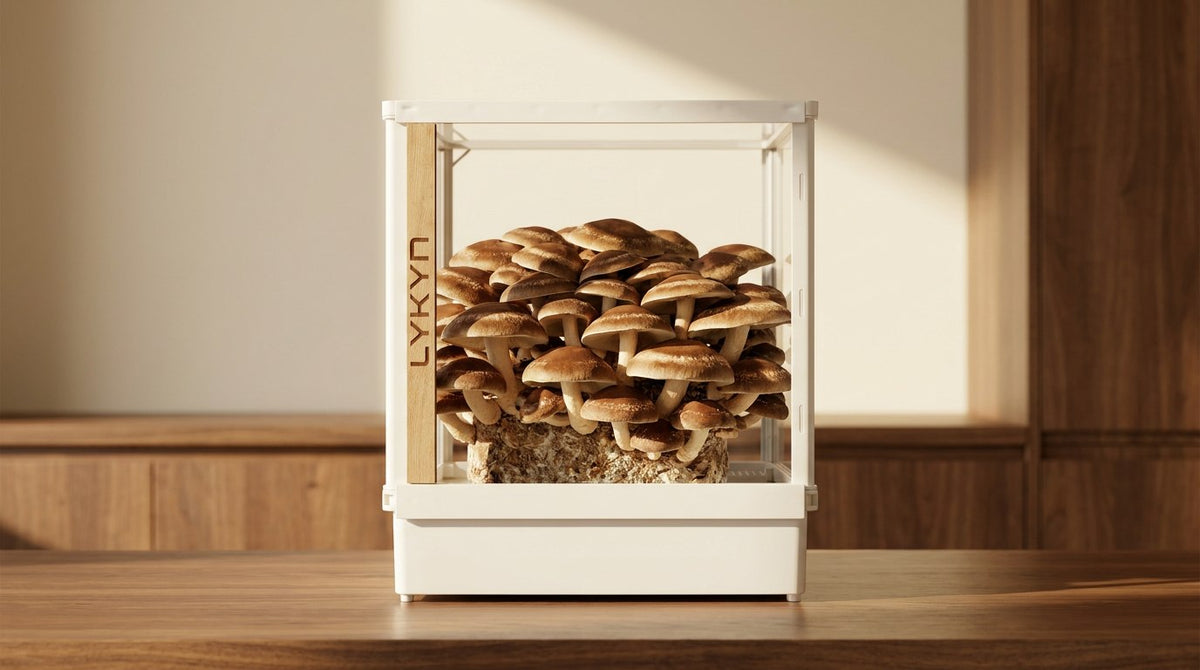
Das Smart Mushroom Grow Kit von Lykyn bietet eine ideale Umgebung für den Anbau von Schafskopf-Pilzen zu Hause. Dieses innovative System verfügt über:
- Automatisierte Kontrolle von Luftfeuchtigkeit und Luftzirkulation durch Sensoren und App-Integration
- Integrierte Filterung zur Vermeidung von Kontamination
- Leiser Betrieb, der für jede Wohnumgebung geeignet ist
- Leicht zu reinigende Oberflächen zur Aufrechterhaltung steriler Bedingungen
Wie in unserem Leitfaden zum Anbau von Maitake-Pilzen beschrieben, erfordert der Maitake-Anbau spezifische Bedingungen, die das Smart Mushroom Grow Kit mit minimalem Aufwand aufrechterhalten kann:
- Temperatur: 70–75 °F (21–24 °C) für das Myzelwachstum; 55–65 °F (12–18 °C) für die Fruchtkörperbildung
- Luftfeuchtigkeit: 85–95 % Luftfeuchtigkeit, insbesondere während der Fruchtkörperbildung
- Luftaustausch: Regelmäßige, aber sanfte Luftzirkulation
- Licht: Indirektes Licht (kein direktes Sonnenlicht)
Anbaumethoden
Es gibt mehrere Ansätze für den Anbau von Schafskopf-Pilzen zu Hause:
1. Verwendung eines vorbesiedelten Kits
Für Anfänger ist der einfachste Ansatz die Verwendung eines vorbesiedelten Substratblocks:
- Platzieren Sie den besiedelten Block in Ihrer Smart Mushroom Grow Chamber
- Füllen Sie den integrierten Luftbefeuchter mit Wasser
- Wählen Sie „Maitake“ in der Lykyn-App
- Halten Sie die richtigen Bedingungen gemäß den Anweisungen der App aufrecht
- Ernten Sie, wenn die Hüte ihre volle Größe erreicht haben (typischerweise 1–3 Zoll Durchmesser)
2. Start mit Pilzkeimling
Für fortgeschrittenere Anbauer:
- Besorgen Sie sich Maitake-Keimlinge (besiedeltes Getreide oder Sägemehl)
- Bereiten Sie ein Substrat aus Hartholz-Sägemehl zu, das mit Kleie angereichert ist (übliches Verhältnis: 80 % Sägemehl, 20 % Kleie)
- Mischen Sie den Keimling mit dem Substrat in sterilisierte Beutel
- Lassen Sie die vollständige Besiedelung zu (2–4 Wochen)
- Platzieren Sie die besiedelten Beutel in der Smart Mushroom Grow Chamber zur Fruchtkörperbildung
3. Verwendung von Flüssigkultur
Für erfahrene Anbauer bietet der Start mit Flüssigkultur die meiste Kontrolle:
- Verwenden Sie eine Flüssigkulturspritze, um sterilisiertes Getreide zu inokulieren
- Lassen Sie das Getreide vollständig besiedeln (2–3 Wochen)
- Verwenden Sie das besiedelte Getreide, um Substratbeutel zu inokulieren
- Übertragen Sie das vollständig besiedelte Substrat in die Smart Mushroom Grow Chamber zur Fruchtkörperbildung
Schafskopf-Pilze benötigen in der Regel länger zur Besiedelung und Fruchtkörperbildung als anfängerfreundlichere Arten wie Austernpilze, daher ist Geduld der Schlüssel. Der außergewöhnliche Geschmack und die medizinischen Vorteile machen die Wartezeit jedoch lohnenswert.
Gesundheitliche Vorteile und Nährwert
Schafskopf-Pilze werden in der traditionellen Medizin seit Jahrhunderten geschätzt, insbesondere in asiatischen Kulturen. Moderne Forschung hat begonnen, viele der traditionellen Anwendungen zu bestätigen und eine beeindruckende Reihe potenzieller gesundheitlicher Vorteile aufzudecken.
Nährstoffprofil
Maitake-Pilze bieten einen hervorragenden Nährwert mit:
- Wenig Kalorien (etwa 35 Kalorien pro 100-g-Portion)
- Im Vergleich zu den meisten Gemüsesorten reich an Protein
- Reich an Ballaststoffen
- Enthält essenzielle Mineralstoffe wie Kalium, Kalzium und Magnesium
- Gute Quelle für die Vitamine B und D
- Enthält verschiedene Antioxidantien und nützliche Verbindungen
Medizinische Eigenschaften
Die Forschung hat mehrere bioaktive Verbindungen in Schafskopf-Pilzen identifiziert, die zu ihren gesundheitsfördernden Wirkungen beitragen können:
- Beta-Glucane: Komplexe Polysaccharide, die die Immunfunktion unterstützen und helfen können, den Blutzucker zu regulieren
- Polysaccharid-K (PSK): Wird auf potenzielle immunmodulierende und antitumore Eigenschaften untersucht
- Antioxidantien: Helfen, freie Radikale zu neutralisieren und oxidativen Stress zu reduzieren
Zu den potenziellen gesundheitlichen Vorteilen, die untersucht werden, gehören:
- Unterstützung des Immunsystems: Kann die Immunfunktion verbessern und die Reaktion auf Krankheitserreger verbessern
- Blutzuckerregulierung: Einige Studien deuten darauf hin, dass es helfen kann, gesunde Glukosespiegel aufrechtzuerhalten
- Cholesterinmanagement: Vorläufige Forschungen deuten auf potenzielle Vorteile für Lipidprofile hin
- Adaptogene Eigenschaften: Kann dem Körper helfen, auf Stress zu reagieren und das Gleichgewicht zu erhalten
Während die Forschung diese potenziellen Vorteile weiter erforscht, bleiben Schafskopf-Pilze ein nahrhaftes Lebensmittel mit einer langen Geschichte traditioneller Verwendung.
Kulinarische Verwendung und Zubereitung
Neben ihren gesundheitlichen Vorteilen werden Schafskopf-Pilze von Köchen und Hobbyköchen wegen ihres außergewöhnlichen Geschmacks und ihrer vielseitigen kulinarischen Anwendungen geschätzt.
Geschmacksprofil
Schafskopf-Pilze bieten einen unverwechselbaren Geschmack, der oft als:
- Erdig und holzig
- Reich an Umami-Charakter
- Subtile Anklänge von Nüssen und Gewürzen
- Fleischige Textur, die beim Kochen zart wird
Zubereitungstechniken
Reinigung: Schafskopf-Pilze können zwischen ihren vielen Falten Schmutz und Rückstände sammeln:
- Brechen Sie den Büschel in kleinere Abschnitte auf
- Sichtbare Rückstände mit einer weichen Bürste oder einem feuchten Tuch entfernen
- Bei Bedarf kurz unter kaltem Wasser abspülen (nicht einweichen)
- Vor dem Kochen gründlich trocken tupfen
Zubereitungsmethoden: Dieser vielseitige Pilz eignet sich hervorragend für verschiedene Zubereitungsarten:
- Anbraten: Vielleicht die beliebteste Methode – kurz in Butter oder Öl anbraten, um ein intensives Aroma zu entwickeln
- Rösten: Bringt nussige Aromen zur Geltung und sorgt für knusprige Ränder
- Grillen: Lässt sich gut grillen und entwickelt dabei rauchige Noten
- Schmoren: Längeres Garen in Flüssigkeit macht ihn zart und ideal für Eintöpfe und Suppen
- Braten: Kann paniert und gebraten werden, um einen knusprigen Texturkontrast zu erzielen
Aufbewahrung und Konservierung
Frische Maistake-Pilze sollten idealerweise innerhalb einer Woche verbraucht werden, können aber auf verschiedene Arten konserviert werden:
- Kühlung: Ungewaschen in einem Papiersack im Kühlschrank für 5–7 Tage aufbewahren
- Einfrieren: Zuerst anbraten und anschließend für bis zu 6 Monate in luftdichten Behältern einfrieren
- Trocknen: In dünne Scheiben schneiden und in einem Dörrautomat oder im Ofen bei niedriger Temperatur trocknen, anschließend in luftdichten Behältern aufbewahren
- Vermahlen: Getrocknete Pilze können zu Pulver gemahlen werden und als Gewürz oder für Tee verwendet werden
Häufig gestellte Fragen zu Maistake-Pilzen
Wie kann ich sicher sein, dass ich einen Maistake-Pilz gefunden habe?
Die zuverlässigsten Erkennungsmerkmale sind das Wachstum am Fuß von Eichen, die rosettenartige Büschelbildung, die weiße Porenfläche (keine Lamellen) und das Ausbleiben schwarzer Verfärbungen bei Berührung. Im Zweifelsfall sollten Sie vor dem Verzehr erfahrene Wildsammler oder mycologische Gesellschaften konsultieren. Das unverwechselbare Aussehen des Maistake macht ihn zu einem der sichereren Wildpilze, die sich identifizieren lassen, insbesondere für Anfänger.
Wann ist die beste Zeit, um nach Maistake-Pilzen zu suchen?
In Nordamerika erstreckt sich die Hauptsaison von Ende August bis Oktober, wobei der genaue Zeitpunkt je nach Region und lokalen Wetterbedingungen variiert. Maistake-Pilze erscheinen häufig nach Regenperioden, auf die warme Tage folgen. Markieren Sie einen ertragreichen Baum, da Maistake-Pilze oft jahrelang am selben Ort wiederkehren.
Können Maistake-Pilze wie Shiitake-Pilze auf Holzstämmen angebaut werden?
Obwohl Maistake-Pilze theoretisch auf Holzstämmen angebaut werden können, ist diese Methode weniger zuverlässig als die Verwendung von mit Nährstoffen angereicherten Sägespänholzblöcken. Da sie natürlicherweise am Fuß von Bäumen und nicht am Stamm wachsen, ist der Anbau auf Holzstämmen anspruchsvoller. Für den Anbau zu Hause erzielen sterilisierte Sägespänholzsubstrate, die mit dem Intelligenten Pilzanbau-Set verwendet werden, in der Regel bessere Ergebnisse.
Woran erkenne ich, dass meine selbst gezüchteten Maistake-Pilze erntereif sind?
Ernten Sie Maistake-Pilze, wenn sich die Hüte vollständig gebildet haben, aber noch nicht an den Rändern austrocknen. Der ideale Zeitpunkt ist, wenn die einzelnen Hüte etwa 2,5 bis 7,5 cm breit sind und das gesamte Büschel frisch und fest aussieht. In der Smart Mushroom Grow Chamber geschieht dies in der Regel 2–4 Wochen nach Beginn der Fruchtbildung.
Gibt es Vorsichtsmaßnahmen beim Verzehr von Maistake-Pilzen zu beachten?
Wie bei allen Wildpilzen sollten Sie, wenn Sie sie noch nie gegessen haben, mit einer kleinen Menge beginnen, um individuelle Empfindlichkeiten auszuschließen. Maistake-Pilze sollten vor dem Verzehr immer gründlich gekocht werden. Bei großen Mengen kann der Chitingehalt von Pilzen bei manchen Menschen Verdauungsbeschwerden verursachen.
Zusammenfassung: Der bemerkenswerte Maistake-Pilz
Der Maistake-Pilz (Maitake/Hühnerzunge) zählt zu den beeindruckendsten essbaren Pilzen, die sowohl Wildsammlern als auch Anbauern zur Verfügung stehen. Mit seinem unverwechselbaren Aussehen, seinem außergewöhnlichen Geschmacksprofil und seinen beeindruckenden Nährwerten ist es nicht verwunderlich, dass dieser Pilz seit Jahrhunderten in verschiedenen Kulturen geschätzt wird.
Ob Sie diesen prachtvollen Pilz in der freien Natur suchen oder zu Hause mit dem Intelligenten Pilzanbau-Set anbauen möchten – Maistake-Pilze bieten Pilzliebhabern aller Erfahrungsstufen ein lohnendes Erlebnis. Ihre relativ sichere Identifizierung, ihre beachtliche Größe und die Möglichkeit zu mehreren Ernten machen sie zu einer ausgezeichneten Wahl für alle, die ihre mykologischen Abenteuer erweitern möchten.
Von der Gourmetküche bis hin zu traditionellen Anwendungen zur Gesundheitsförderung fasziniert der Maistake-Pilz weiterhin Menschen auf der ganzen Welt. Wenn Sie seine Ökologie, Identifizierung, Anbauanforderungen und Zubereitungsmethoden verstehen, können Sie diesen bemerkenswerten Pilz voll und ganz zu schätzen wissen und ihn auf sinnvolle Weise in Ihren Alltag integrieren.
Bereit, Ihre Maistake-Pilz-Reise zu beginnen?
Beginnen Sie Ihr Abenteuer beim Anbau von Maistake-Pilzen mit dem Lykyn Intelligenten Pilzanbau-Set. Dieses innovative System beseitigt das Rätselraten beim Pilzanbau, indem es automatisch optimale Wachstumsbedingungen aufrechterhält. Ob Anfänger oder erfahrener Anbauer – das Smart Mushroom Grow Kit bietet die perfekte Umgebung für den erfolgreichen Anbau von Maistake-Pilzen.
Entdecken Sie auf unserem Blog weitere Informationen zum Anbau verschiedener Pilzarten zu Hause und erfahren Sie, warum immer mehr Hobbyanbauer auf das Smart Mushroom Grow Kit setzen, um das ganze Jahr über zuverlässig Pilze von hoher Qualität zu ernten.





Aktie:
Nootropische Pilze: Der komplette Leitfaden zu Löwenmähne, Reishi und kognitiv stärkenden Pilzen
Maitake-Pilz: Der ultimative Guide zum Finden, Züchten & Kochen dieses Gourmet-Pilzes