


Want to know how to grow mushrooms in house successfully? You've come to the right place. Indoor mushroom cultivation has transformed from a niche hobby into an accessible, rewarding way to produce fresh gourmet fungi year-round. Whether you live in a small apartment or a spacious home, growing mushrooms indoors offers fresh, organic produce right from your kitchen counter, no outdoor space required.
The best part about learning how to grow mushrooms in house? Modern technology has eliminated the complexity that once frustrated beginners. Automated systems now handle the precise environmental controls mushrooms need, making indoor cultivation easier than growing most houseplants. In just 1-3 weeks, you can harvest your first crop of restaurant-quality mushrooms.
Why Learn How to Grow Mushrooms in House?
Before diving into the practical steps, let's explore why thousands of people are discovering how to grow mushrooms in house environments.
Year-Round Fresh Harvests
Unlike outdoor mushroom growing that depends on seasonal conditions, indoor cultivation produces fresh mushrooms regardless of weather. Whether it's freezing winter or scorching summer outside, your indoor mushroom farm maintains perfect growing conditions 365 days a year.
Space-Efficient Food Production
You don't need a backyard or even a balcony to grow mushrooms in house. A single square foot of counter space can produce 1-2 pounds of fresh mushrooms monthly. This makes mushroom growing perfect for apartment dwellers, urban gardeners, and anyone with limited space.
Superior Freshness and Flavor
Grocery store mushrooms often travel for days before reaching your kitchen, losing flavor and nutritional value along the way. When you grow mushrooms in house, you harvest at peak ripeness and consume within hours. The difference in taste is remarkable, homegrown mushrooms offer richer flavors and better textures than anything you'll buy.

Cost-Effective Long-Term
While initial setup requires some investment, growing mushrooms in house saves money over time. Quality grow systems produce multiple harvests from single substrate blocks, with each block yielding 1-2 pounds of mushrooms. That's equivalent to $15-30 worth of grocery store mushrooms from a $10-15 substrate block.
Educational and Engaging
Growing mushrooms in house fascinates everyone, especially kids. Watching mushrooms develop from tiny pins to full-sized caps happens quickly (sometimes doubling in size overnight), creating daily excitement and teaching valuable lessons about biology and sustainable food production.
Understanding Indoor Mushroom Growing Basics
Before you learn the practical steps of how to grow mushrooms in house, understanding fundamental requirements helps you make better decisions.
What Mushrooms Need to Grow Indoors
Mushrooms aren't plants, they're fungi with unique growing requirements. Unlike plants that need soil and sunlight, mushrooms require:
High humidity (80-95%): Mushrooms are 90% water and need constant moisture to develop properly. This represents the biggest challenge when you grow mushrooms in house, as typical indoor humidity runs 30-50%.
Proper temperature (60-75°F): Most culinary mushrooms thrive at comfortable room temperatures, making homes naturally suitable for cultivation.
Fresh air exchange: Mushrooms release CO2 as they grow. Without fresh air circulation, CO2 buildup causes poor development and increased contamination risks.
Indirect light: Unlike plants, mushrooms don't photosynthesize, but they do need some light for proper formation. 12 hours of indirect light or fluorescent lighting daily works perfectly.
Clean environment: While not requiring sterile conditions, cleaner spaces reduce contamination from competing molds and bacteria.
The challenge of maintaining these conditions simultaneously stopped most people from successfully growing mushrooms in house, until automated systems changed everything.
The Two-Phase Growing Process
Understanding how mushrooms develop helps you recognize what's happening at each stage when you grow mushrooms in house:
Phase 1 - Colonization: Hidden inside the substrate, mycelium (the mushroom's root-like network) spreads throughout the growing medium, consuming nutrients. This phase happens inside sealed bags before you even start.
Phase 2 - Fruiting: Environmental triggers (often a combination of fresh air, humidity increase, and slight temperature drop) signal the mycelium to produce mushrooms. This is where your active involvement begins.
Most beginners purchase pre-colonized substrate blocks ready for Phase 2, eliminating weeks of waiting and technical challenges.
Best Mushrooms to Grow in House
Not all mushroom varieties suit indoor cultivation equally. Choose beginner-friendly species for your first attempts at growing mushrooms in house.
Oyster Mushrooms: The Perfect Starter
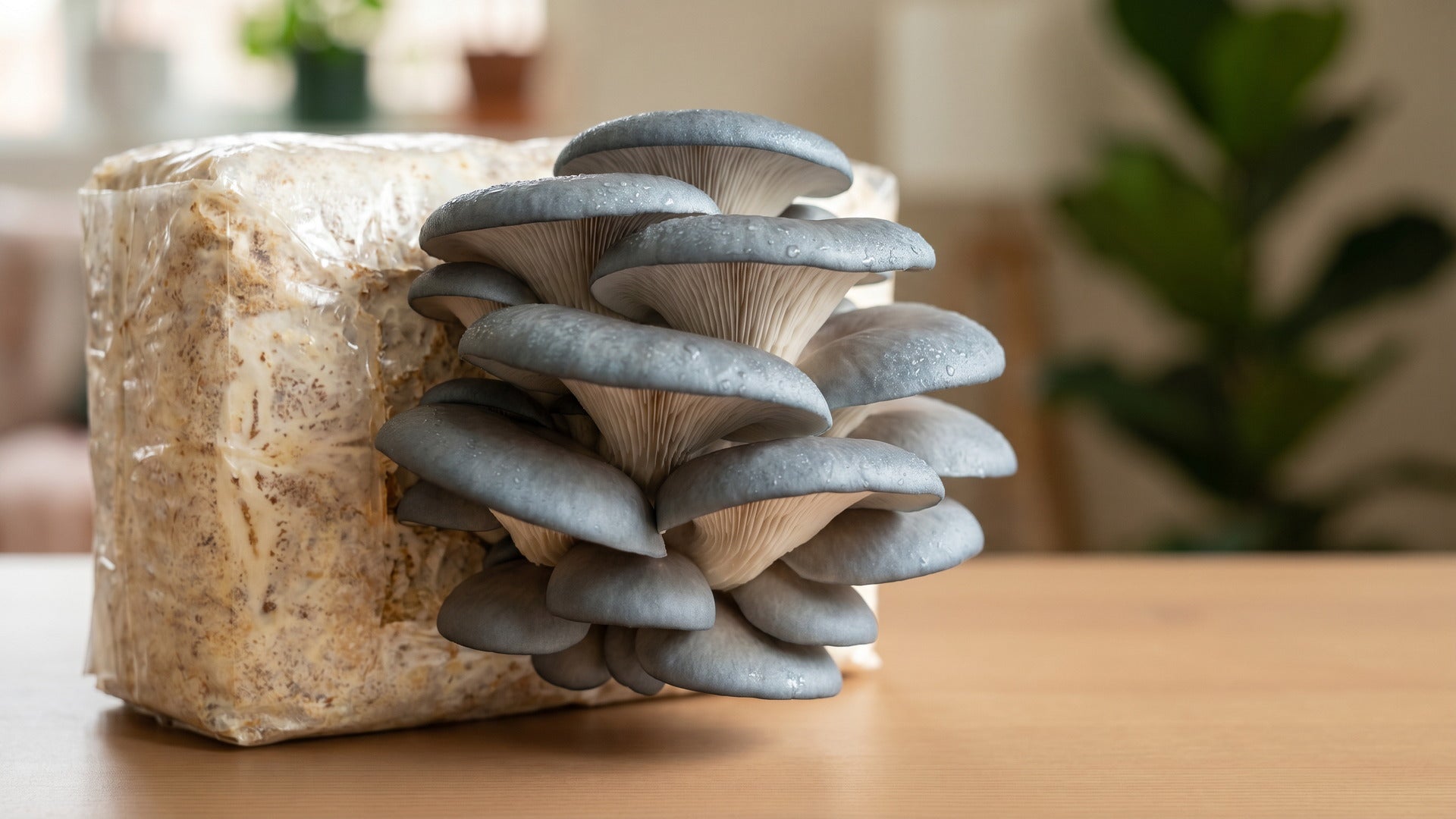
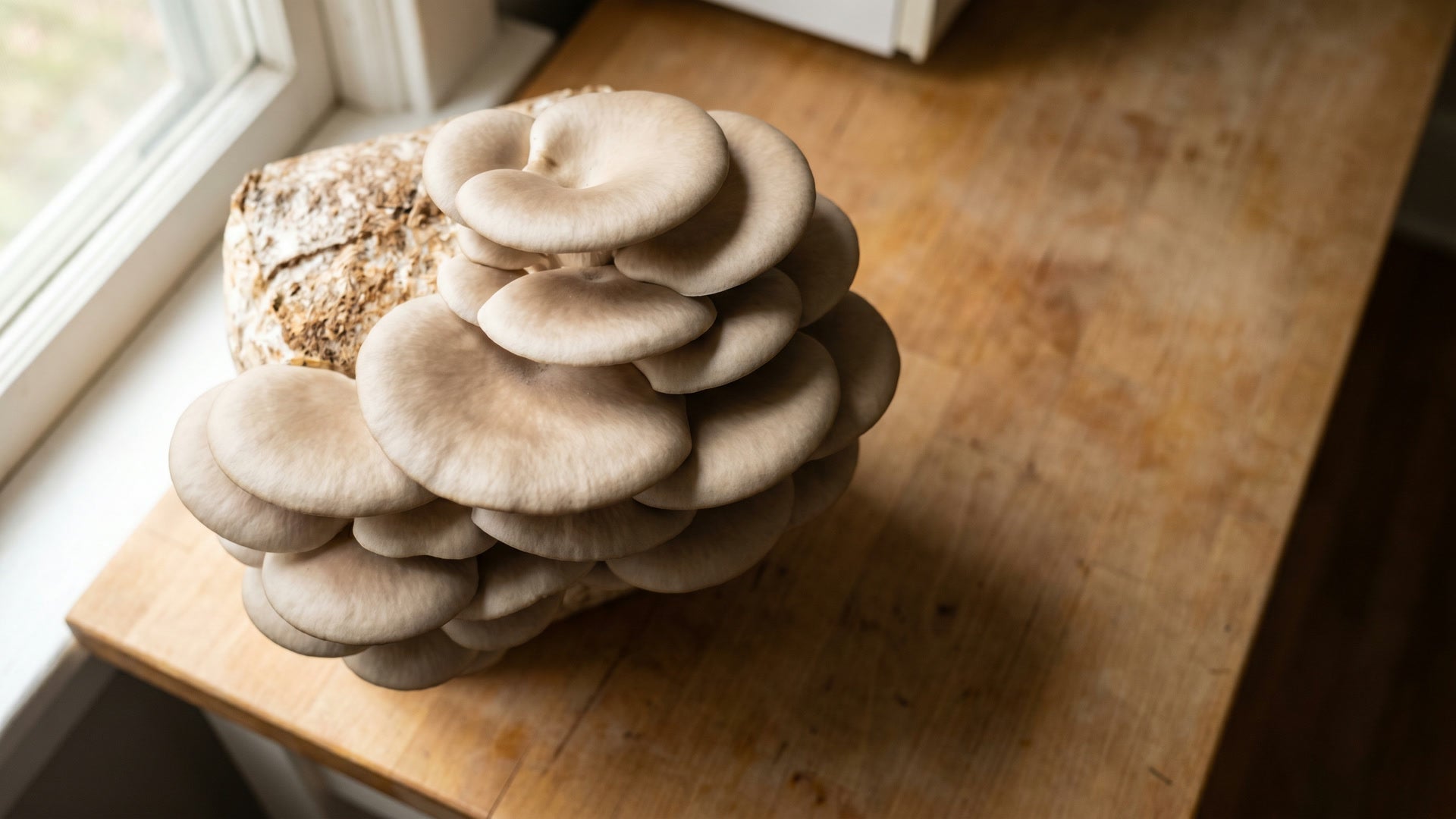
Oyster mushrooms (including pink, yellow, blue, and pearl varieties) rank as the easiest option when you learn how to grow mushrooms in house. They tolerate environmental fluctuations, grow rapidly (7-14 days from fruiting initiation to harvest), and produce impressive yields, often 1-1.5 pounds per substrate block over multiple flushes.
Their mild, slightly sweet flavor works in countless recipes, and their quick growth cycle provides fast feedback for learning. For detailed guidance, explore this complete guide to growing mushrooms for beginners.
Shiitake: Rich Flavor, Slightly More Patience
Shiitake mushrooms take longer to develop (14-21 days typically) but reward patient growers with exceptional flavor and impressive nutritional profiles. They need consistent humidity but aren't particularly difficult once you understand their requirements. Shiitake mushrooms grown indoors often surpass outdoor-grown varieties in quality.
Lion's Mane: Unique and Health-Promoting
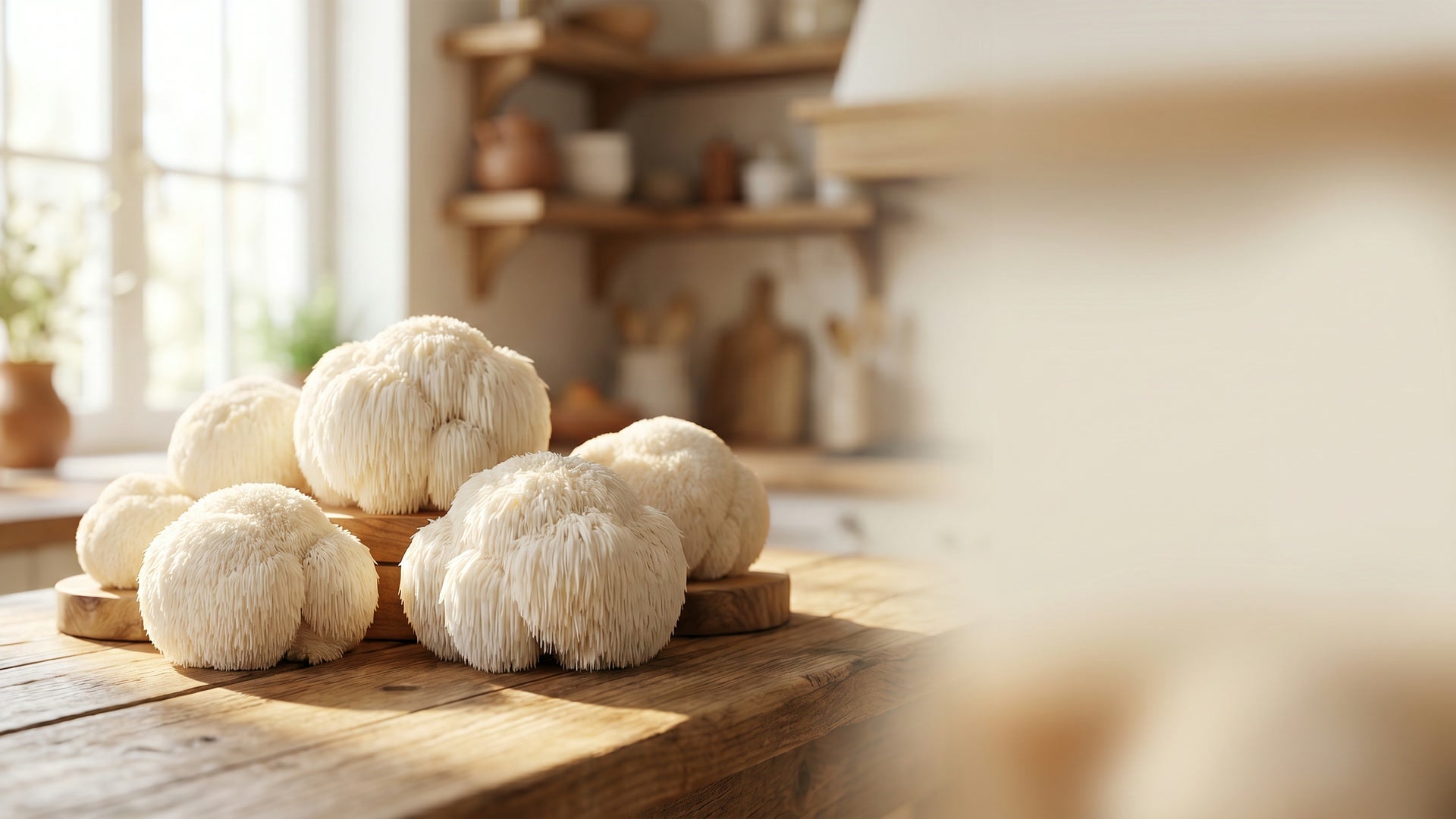
Lion's mane mushrooms have gained popularity among health-conscious growers for their potential cognitive benefits. Their unique, cascading white appearance creates stunning displays, and their seafood-like texture makes them perfect for plant-based cooking. They're slightly more sensitive to CO2 levels, making automated environmental control particularly valuable.
Varieties to Avoid as Beginners
Some mushrooms prove too challenging when first learning how to grow mushrooms in house:
- Morels (require specific soil conditions)
- Chanterelles (form mycorrhizal relationships with trees)
- Truffles (extremely complex cultivation)
- Maitake (finicky environmental requirements)
Start with oysters, master the basics, then expand to other varieties.
Essential Equipment for Growing Mushrooms in House
Your success growing mushrooms in house depends heavily on having the right equipment. Let's explore what you need at different experience levels.
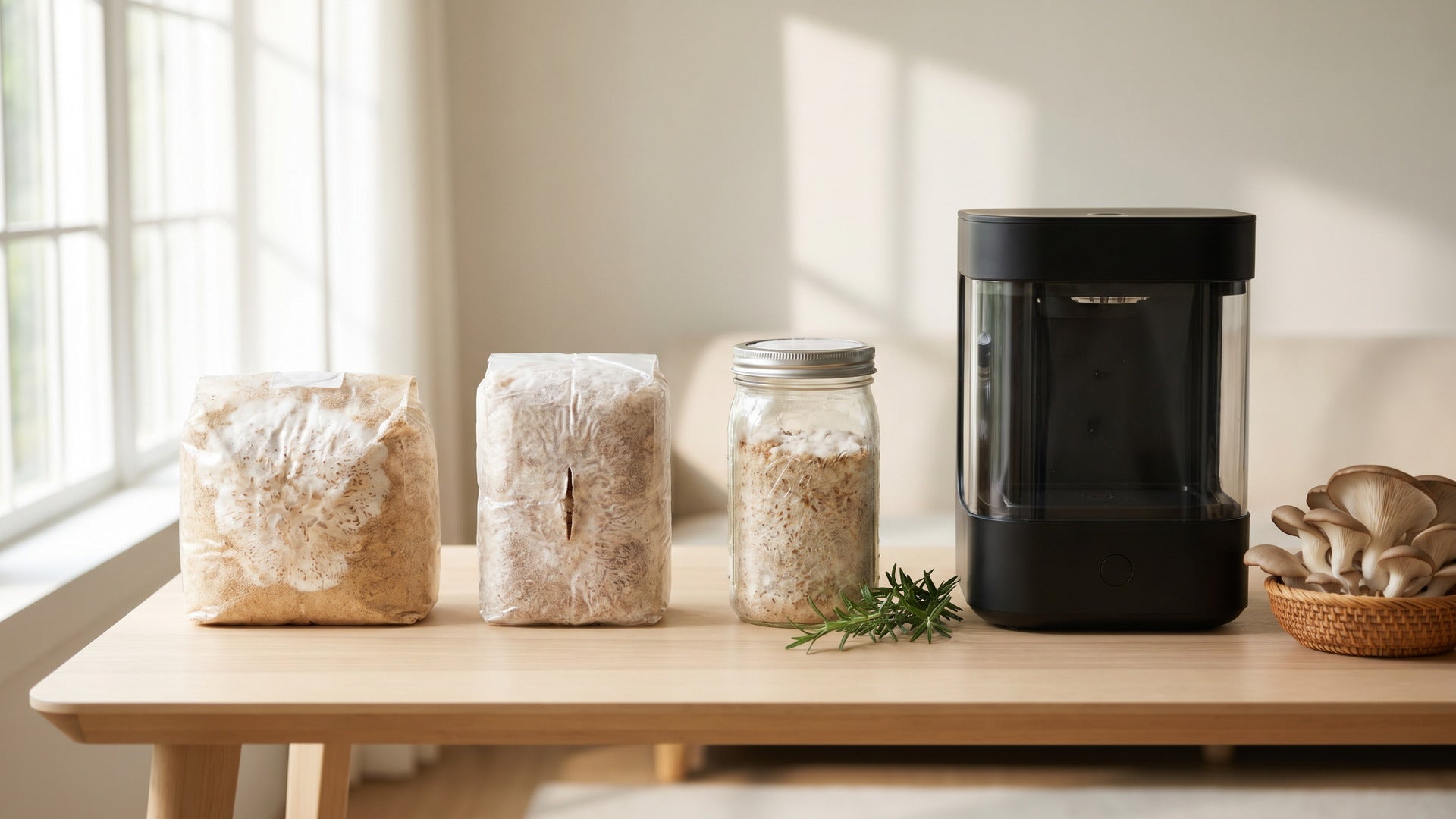
Beginner Setup: Automated Growing System
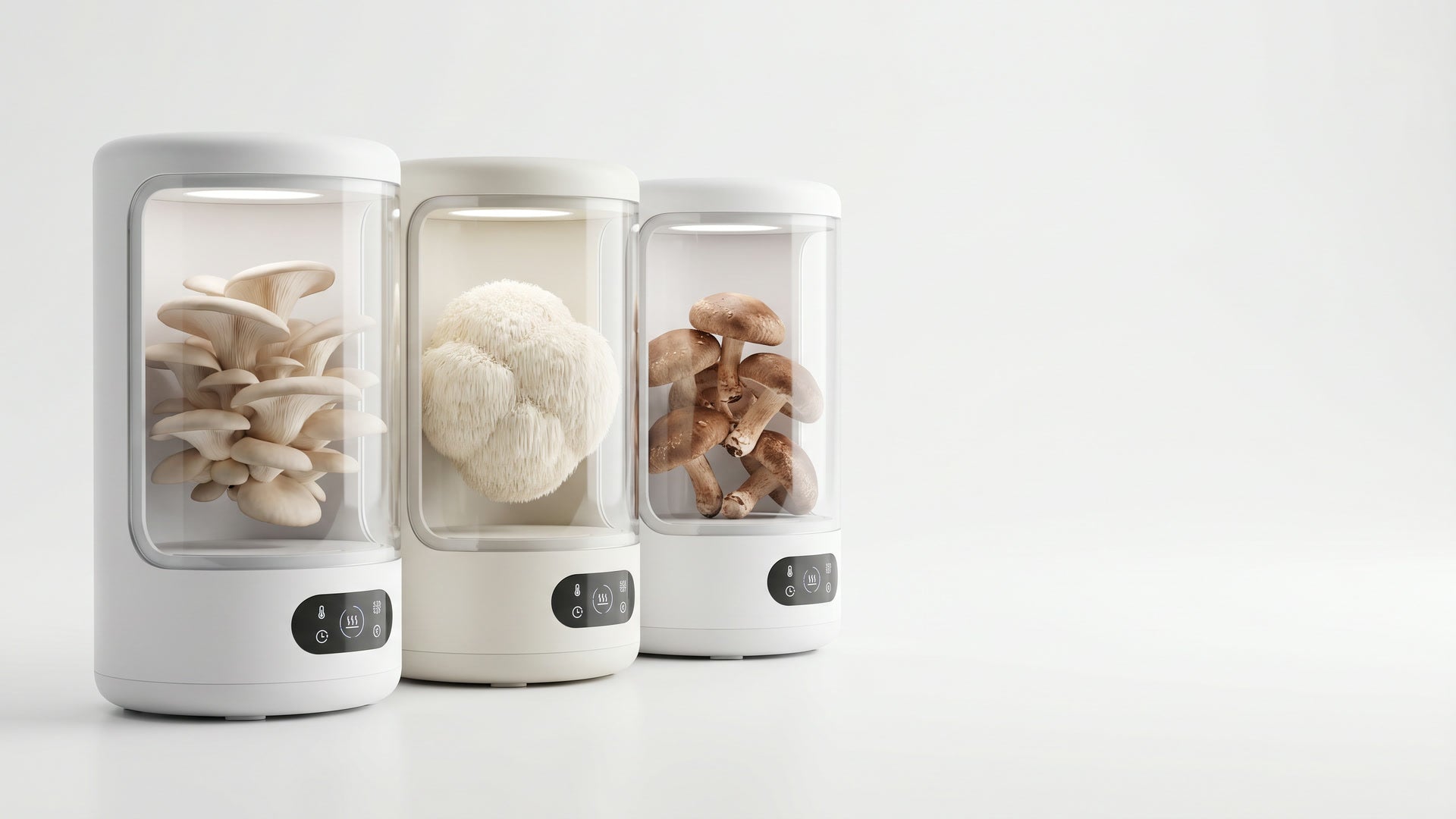
For those just starting, automated systems eliminate most common failure points. The LYKYN Smart Mushroom Grow Kit represents the gold standard for learning how to grow mushrooms in house.
This system includes:
- Automated humidity control: Ultrasonic humidifier with 2.8L water tank maintains perfect moisture levels for up to 3 weeks without refilling
- sealed and app-controlled air intake: Cleans incoming air, dramatically reducing contamination risks
- Variable-speed exhaust fans: Manages CO2 levels automatically while capturing spores
- Lab-grade sensors: Monitors temperature and humidity in real-time
- App control: Select your mushroom species and let the system optimize conditions automatically
- Compact design: Fits on kitchen counters, about the size of a coffee maker
- Ultra-quiet operation: Under 35 dB, quieter than a refrigerator
The system handles all environmental controls automatically, letting you focus on observation and harvesting rather than constant maintenance.
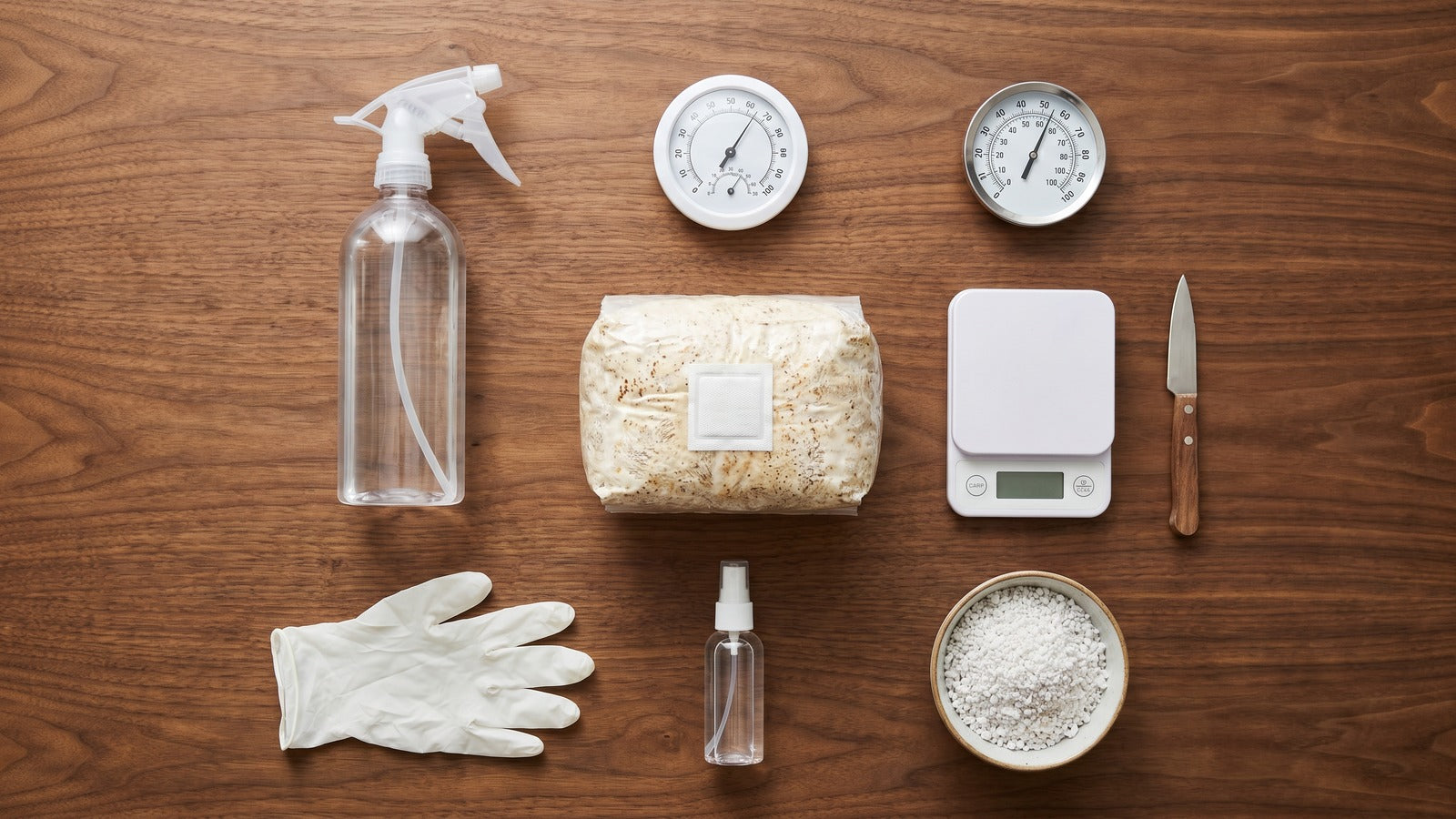
Traditional Manual Setup
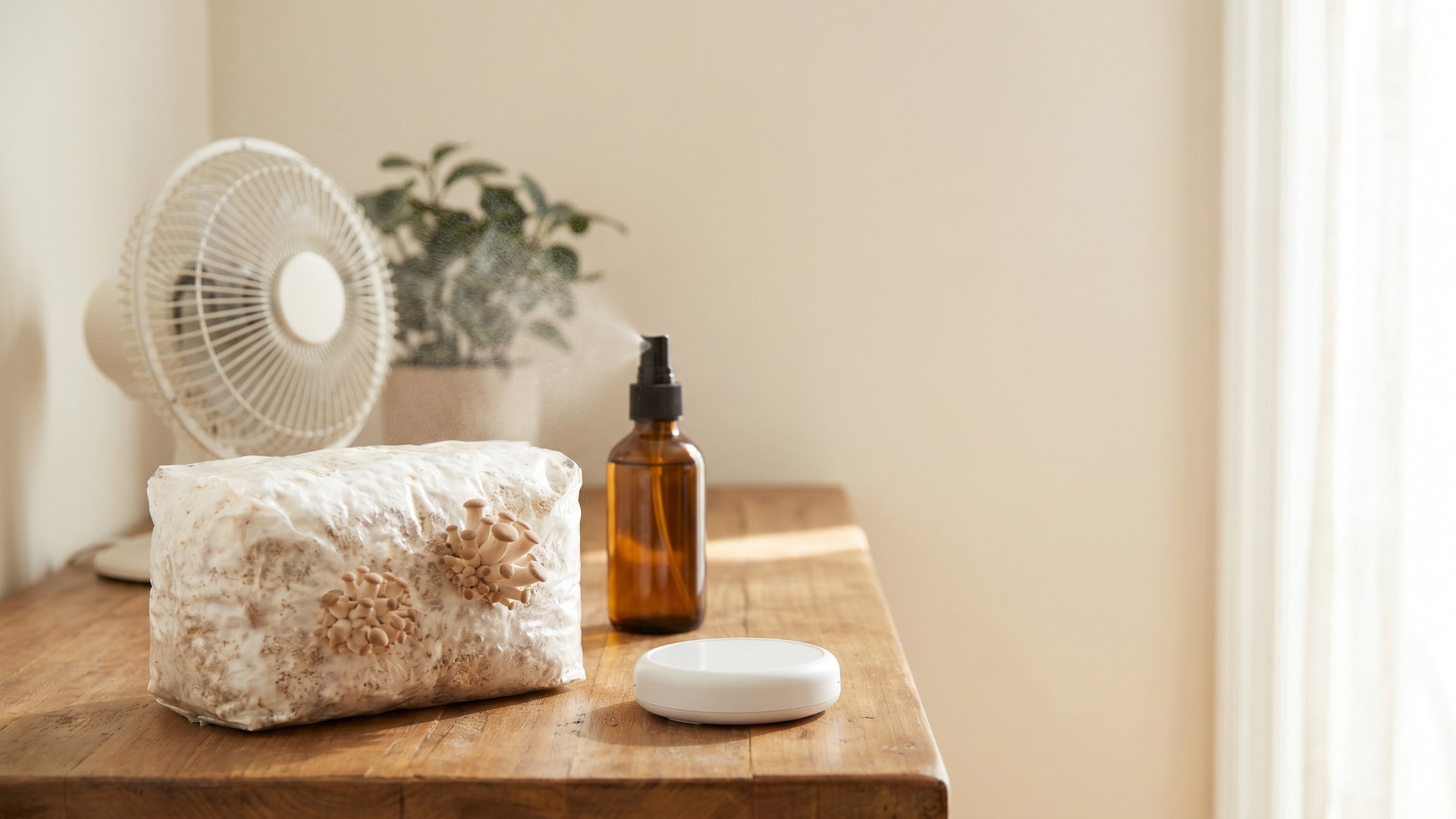
Before automation, people growing mushrooms in house used manual systems requiring constant attention:
- Humidity tent: Clear plastic container or tent to maintain moisture
- Spray bottle: For misting 2-3 times daily
- Fan: For manual air exchange (fan the tent opening several times daily)
- Hygrometer: To monitor humidity levels
- Thermometer: To track temperatures
This approach works but demands significant time commitment and produces less consistent results. Most beginners struggle with manual systems, experiencing dried-out mushrooms, contamination, or poor yields.
Substrate and Spawn
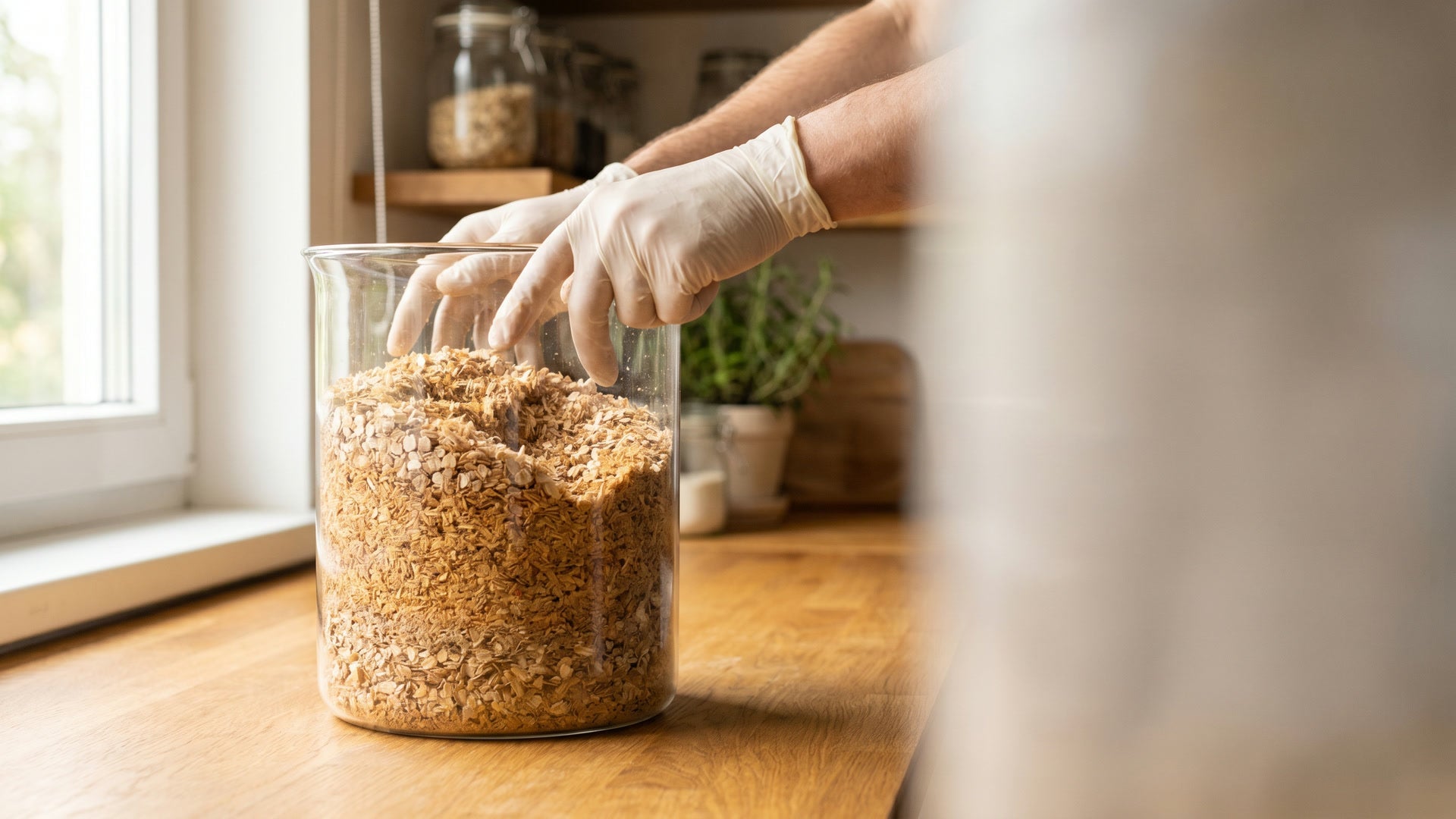
Regardless of your chosen growing system, you'll need substrate (the growing medium) and spawn or pre-colonized blocks:
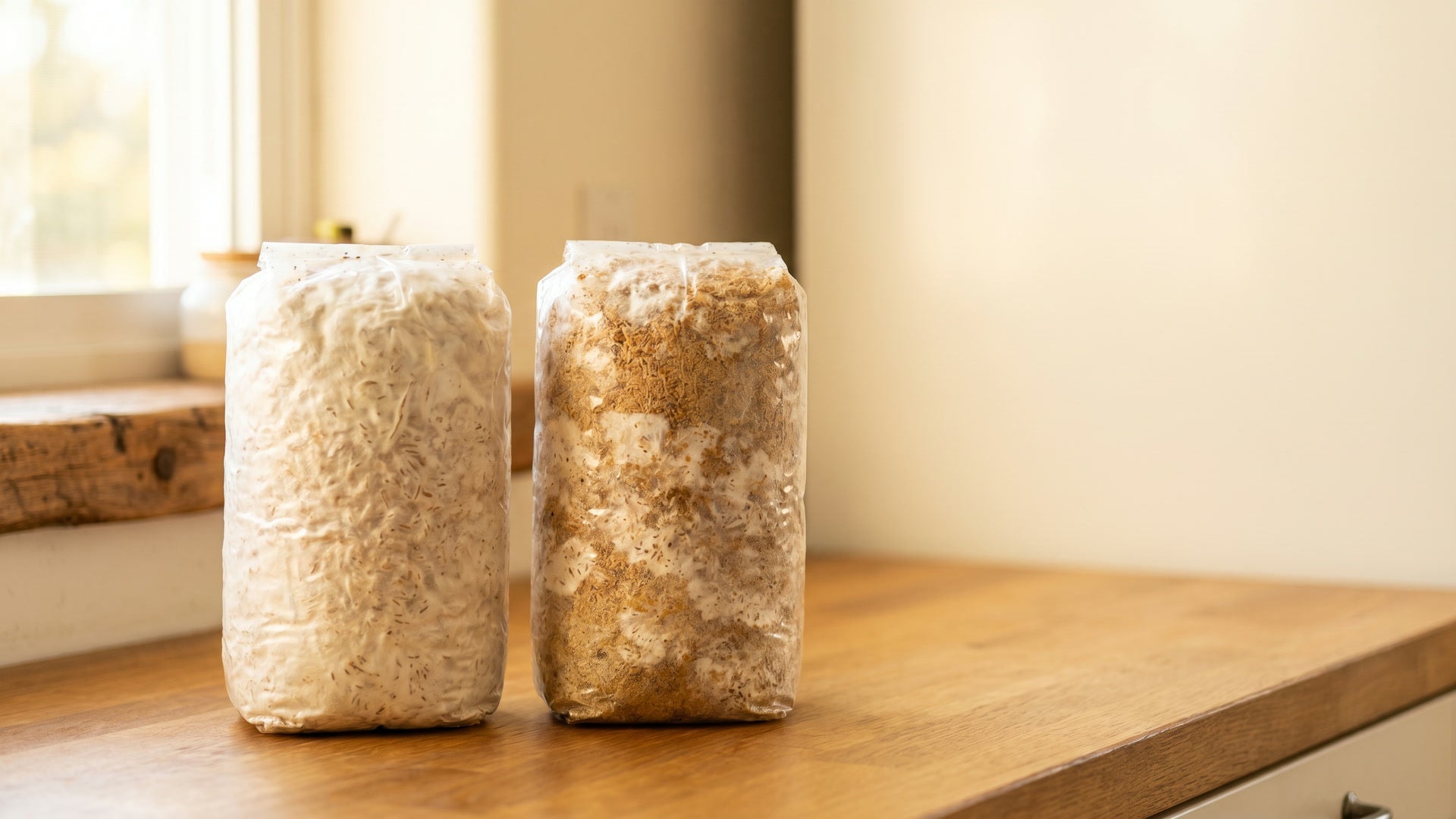
Pre-colonized substrate blocks: The easiest option for beginners. These ready-to-fruit blocks contain mycelium fully colonized throughout the substrate. Simply place in your fruiting chamber and watch mushrooms appear.
Grain spawn: For intermediate growers wanting to prepare their own substrate. Requires additional equipment and knowledge.
For those interested in advancing beyond kits, this guide on working with mushroom spores explains more advanced propagation methods.
Additional Supplies
- Isopropyl alcohol (70%): For sterilizing tools and surfaces
- Sharp knife or scissors: For clean harvesting
- Storage containers: Paper bags work best for storing fresh mushrooms
- Scale: To track yields and improvement over time
Step-by-Step: How to Grow Mushrooms in House
Let's walk through the complete process of growing mushrooms in house using the beginner-friendly approach.
Step 1: Choose Your Growing Location
Select a spot in your house that meets these criteria:
Stable temperature (60-75°F): Avoid locations near heating vents, air conditioners, or drafty windows. Consistent temperatures produce better results than perfect temperatures with fluctuations.
Indirect light: Mushrooms need some light but not direct sunlight, which raises temperatures and dries out the growing environment. North-facing windows, shelves away from windows, or areas with ambient room lighting work perfectly.
Accessible: Place your setup where you can easily check progress daily. Kitchen counters rank as the most popular location for growing mushrooms in house, convenient for monitoring and harvesting.
Clean: While not requiring sterile conditions, cleaner locations reduce contamination risks. Avoid growing near moldy materials, excessive dust, or areas with poor air quality.
Step 2: Set Up Your Growing System
For automated systems (recommended for beginners):
Unbox your LYKYN Smart Mushroom Grow Chamber and follow the simple setup instructions. Fill the water reservoir, download the app, and place the chamber in your chosen location. The entire setup takes about 10 minutes.
For manual systems:
Set up your humidity tent, place your hygrometer inside to monitor conditions, and ensure you have easy access for daily misting and fanning. Prepare your spray bottle with clean water.
Step 3: Prepare Your Substrate Block
Most beginners purchase pre-colonized blocks ready for immediate fruiting:
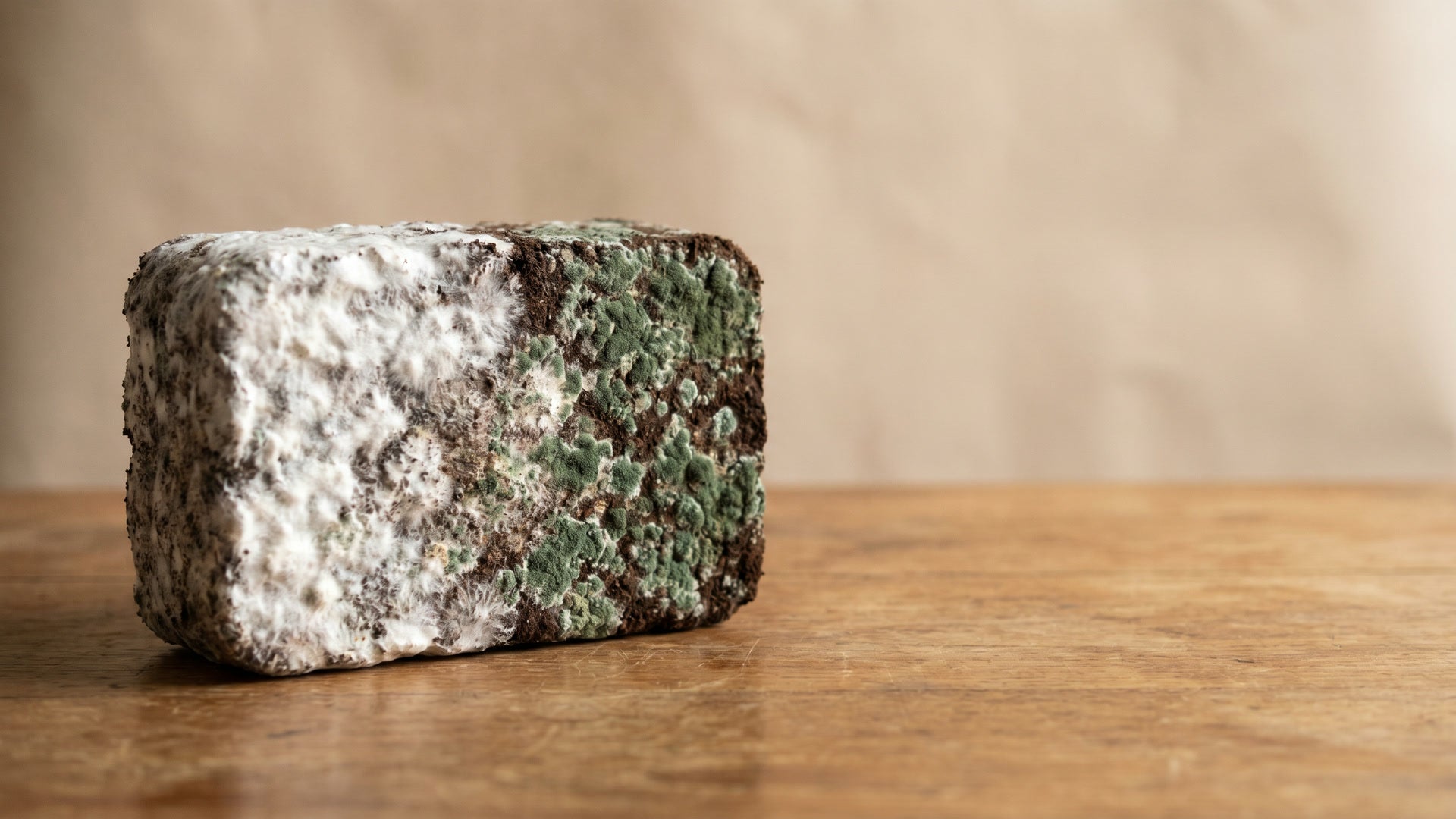
Inspect the block: Look for healthy white mycelium throughout. Avoid blocks with green, pink, or black discoloration (signs of contamination).
Remove packaging: Follow instructions provided with your block. Some require partial removal of plastic, others need complete unpacking.
Soak if needed: Some species and suppliers recommend soaking blocks in cold water for 6-24 hours before fruiting. Check your specific instructions.
Score the surface: Lightly cut X-patterns on surfaces where you want mushrooms to emerge (if using blocks in bags with cut windows).
Step 4: Initiate Fruiting Conditions
This step differs dramatically between manual and automated approaches:
Automated method:
- Place your prepared block inside the chamber
- Select your mushroom species in the app
- Tap "Start Growing"
- The system automatically maintains perfect conditions
Manual method:
- Place block in humidity tent
- Mist inside the tent (not directly on the block) 2-3 times daily
- Fan the tent opening 2-3 times daily for 30 seconds
- Monitor temperature and humidity constantly
- Adjust misting frequency based on observations
The automated approach eliminates hours of weekly maintenance while producing more consistent results.
Step 5: Watch for Pinning
Within 5-14 days (depending on species), tiny mushroom pins appear. These look like small bumps that gradually develop recognizable mushroom shapes.
Pinning indicates you've successfully initiated fruiting. This is exciting, your mushrooms are coming!
During pinning, maintain consistent conditions. Sudden humidity drops or temperature spikes can cause pins to abort (stop developing), wasting weeks of effort.
Step 6: Monitor Mushroom Development
Once pinning begins, mushrooms grow remarkably fast. Oyster mushrooms can double in size daily during peak growth.
What to look for:
- Healthy color development appropriate to your species
- Caps expanding properly without excessive stem elongation
- No unusual odors (should smell fresh and earthy)
- No colored spots indicating contamination
Elongated stems with small caps indicate insufficient fresh air exchange, a common problem with manual systems that automated chambers prevent.
For those interested in understanding the science behind mushroom development, this article on how mushrooms grow so fast explains the fascinating biology.
Step 7: Harvest at Peak Maturity
Timing your harvest correctly maximizes both quality and future yields:
Oyster mushrooms: Harvest when caps flatten but before edges curl upward significantly. Stems should still be tender.
Shiitake: Wait until caps are 80% open but before they fully flatten and begin releasing spores.
Lion's mane: Harvest when teeth (spines) are well-developed but still white. Yellowing indicates over-maturity.
Harvesting technique:
- Use clean, sharp scissors or a knife
- Cut mushrooms at the base, leaving the substrate intact
- Avoid pulling, which damages remaining pins and mycelium
- Harvest in clusters when multiple mushrooms reach maturity simultaneously
Clean cuts promote additional flushes. Proper harvesting from a single block can yield 2-4 separate harvests over 6-12 weeks.
Step 8: Encourage Additional Flushes
After harvesting, most substrate blocks produce multiple additional crops:
Rest period: Reduce humidity slightly for 7-10 days after harvesting. This gives mycelium time to recover and accumulate nutrients.
Rehydration: Soak the block in clean water for 12-24 hours to restore moisture levels depleted during the first flush.
Resume fruiting conditions: Return the block to your growing chamber and reinitiate fruiting conditions. New pins typically appear within 7-14 days.
Second and third flushes often produce smaller individual mushrooms but can still yield impressive total weights. Some blocks produce 4-5 flushes before nutrient depletion ends production.
For detailed information on expected yields, check this mushroom grow bag yield guide.
Common Problems When Growing Mushrooms in House
Even with proper equipment, occasional challenges arise. Here's how to address common issues.
Contamination
Symptoms: Green, pink, black, or other colored mold/growth; foul odors; slimy textures.
Causes: Airborne contaminants, unclean equipment, or poor environmental controls.
Solutions:
- Use built-in filtration (built into quality automated systems)
- Maintain clean workspace
- Remove contaminated blocks immediately to prevent spreading
- Wipe down growing area with 70% isopropyl alcohol between grows
For comprehensive contamination information, see this detailed guide to mycelium contamination.
Dried Out Mushrooms
Symptoms: Mushrooms stop growing, shrivel, or develop tough textures; pins abort.
Causes: Insufficient humidity (the most common problem with manual systems).
Solutions:
- Increase misting frequency with manual setups
- Check that humidity tents seal properly
- With automated systems, ensure water reservoir stays filled
- Monitor humidity levels constantly with a hygrometer
Poor Air Exchange Issues
Symptoms: Elongated, thin stems with tiny caps; mushrooms growing toward fresh air sources.
Causes: CO2 buildup from inadequate fresh air exchange.
Solutions:
- Increase fanning frequency with manual systems
- Ensure adequate room ventilation
- Automated systems like LYKYN manage this automatically with variable-speed fans
No Mushrooms Appearing
Symptoms: Pins never form despite weeks of fruiting conditions.
Causes: Wrong environmental triggers, contamination, or substrate issues.
Solutions:
- Verify temperature is appropriate for your species (often cooler triggers fruiting)
- Ensure humidity stays in 80-95% range
- Check that substrate shows healthy white mycelium (not contaminated)
- Try a slight temperature drop (5-10°F) to trigger pinning
- With automated systems, verify correct species profile is selected
Temperature Fluctuations
Symptoms: Slow growth, pins aborting, or contamination increases.
Causes: Growing location near heat sources, drafts, or direct sunlight.
Solutions:
- Move setup to more stable location
- Avoid windows, heating vents, exterior doors
- Use temperature monitoring to identify problem times
Advanced Techniques for Growing Mushrooms in House
Once you master basic techniques, expand your skills with advanced approaches.
Working from Spores
Creating your own spawn from spores dramatically reduces per-pound costs and allows unlimited production scaling. This requires:
- Sterile technique and equipment
- Pressure cooker for substrate sterilization
- Agar or grain media for propagation
- Patience (several weeks from spores to fruiting)
For complete instructions, explore this comprehensive guide on growing mushrooms from spores.
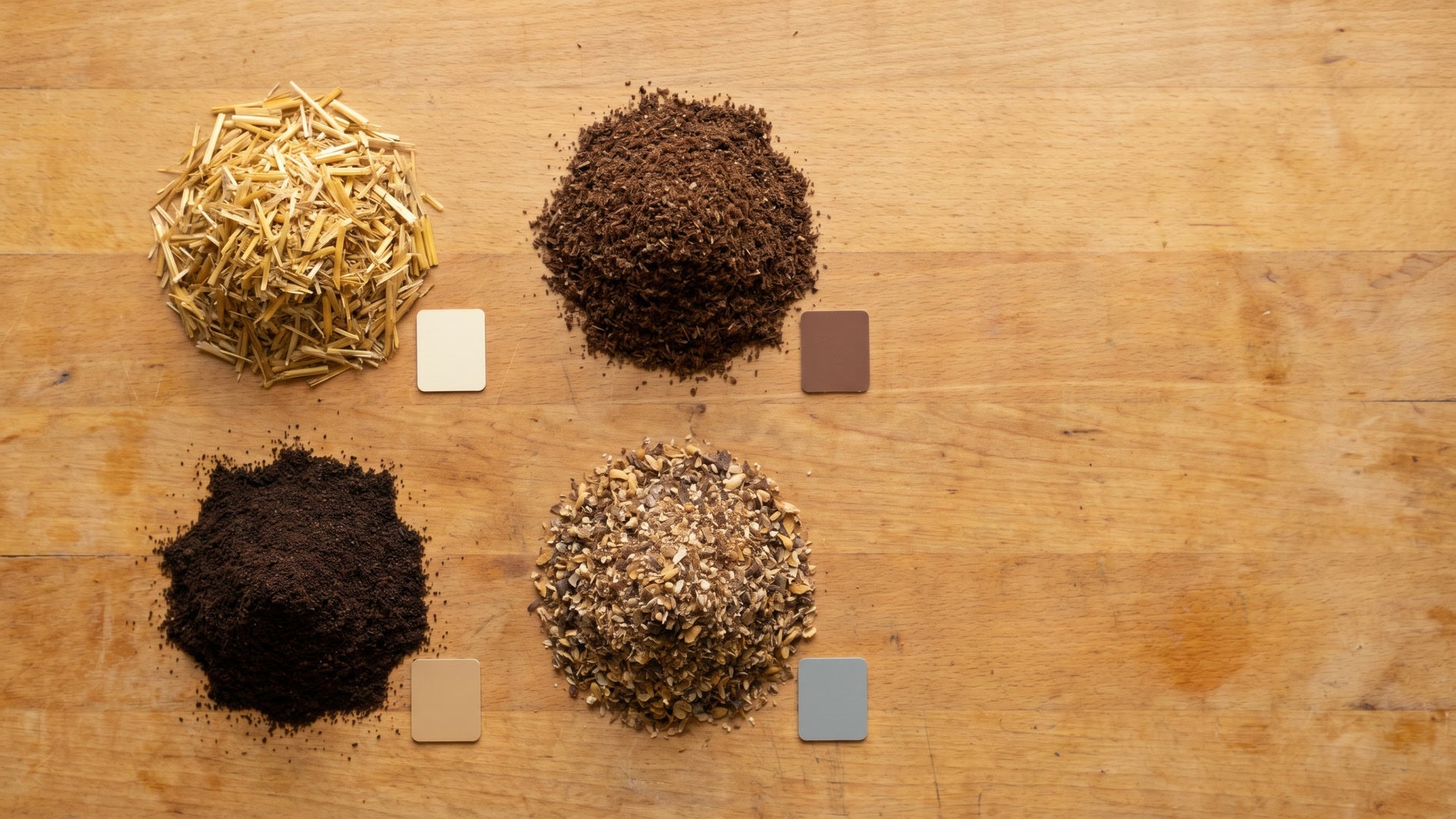
Preparing Custom Substrates
Professional cultivators often formulate custom substrates optimized for specific species:
- Hardwood sawdust with supplements for shiitake
- Straw-based substrates for oysters
- Specialized formulations for gourmet varieties
This level requires understanding sterilization techniques, moisture content, and nutritional requirements.
Scaling Indoor Production
Successful hobbyists sometimes scale up production:
- Multiple growing chambers for continuous harvests
- Dedicated growing spaces in basements or spare rooms
- Rotating substrate blocks for weekly harvests
- Consistent spawn production
Many small-scale commercial growers began by learning how to grow mushrooms in house, then gradually expanded operations.
Fuel Your Mushroom Journey
Smart Mushroom Grow Chamber
Plug-and-play smart chamber with humidity, light, and airflow dialed in for every species. Beginners harvest their first flush in days, not months.
Add to cart $299Maximizing Your Indoor Growing Success
These expert tips dramatically improve your results when growing mushrooms in house.
Start with automation if possible: Manual growing works but demands significant time and produces inconsistent results. Automated systems like LYKYN eliminate most common failure points.
Choose beginner-friendly species first: Master oyster mushrooms before attempting finicky varieties. Success builds confidence and teaches fundamentals.
Maintain detailed records: Track environmental conditions, growth timelines, yields, and problems encountered. This data helps you identify patterns and optimize future grows.
Keep your growing area clean: Wipe down surfaces with alcohol between grows. Clean environments dramatically reduce contamination risks.
Don't over-handle developing mushrooms: Check progress daily but resist constant adjusting. Consistency matters more than perfection.
Harvest promptly at maturity: Over-mature mushrooms lose flavor quality and prevent new flushes from developing.
Join online communities: Connect with other indoor growers through forums, social media groups, and local mycology clubs. Experienced cultivators love sharing knowledge.
For additional guidance on selecting equipment, review this comprehensive guide to choosing the best mushroom kit.
Storing and Using Your Homegrown Mushrooms
Fresh mushrooms don't last forever. Proper storage and preparation maximize your harvest.
Fresh Storage
Store unwashed mushrooms in paper bags (never plastic!) in the refrigerator. Paper allows mushrooms to breathe while absorbing excess moisture. Most mushrooms keep 5-7 days when properly stored.
Freezing
Sauté mushrooms first (raw mushrooms become mushy when frozen). Cool completely, then freeze in airtight containers for up to 6 months. Frozen cooked mushrooms work excellently in soups, sauces, and stir-fries.
Drying
Dehydrating preserves mushrooms for extended storage. Slice thinly and dry at 125°F (52°C) until crisp (6-10 hours). Store dried mushrooms in airtight containers for up to one year. Rehydrate in warm water before using.
Cooking Tips
Homegrown mushrooms offer superior flavor that shines with simple preparations:
- Sauté in butter or olive oil with garlic
- Roast at high heat until caramelized
- Add to pasta, risotto, or grain dishes
- Use as pizza toppings
- Blend into soups and sauces
For recipe inspiration, check out these Italian oyster mushroom recipes that work beautifully with any homegrown variety.
FAQ: Common Questions About Growing Mushrooms in House
How long does it take to grow mushrooms in house?
Most mushrooms fruit within 7-21 days after initiating fruiting conditions with ready-to-fruit blocks. Oyster mushrooms are fastest (7-14 days), while shiitake typically takes 14-21 days. Total time from receiving a kit to first harvest is usually 1-3 weeks. Multiple flushes extend production over 6-12 weeks total from a single block.
How much space do I need to grow mushrooms in house?
You can start with as little as 1 square foot of counter space. A single growing chamber about the size of a coffee maker accommodates 1-2 substrate blocks producing 1-2 pounds of mushrooms monthly. Unlike traditional gardening, mushroom cultivation is incredibly space-efficient.
Do mushrooms growing in house create odors?
Healthy mushrooms produce earthy, pleasant scents, not unpleasant odors. Your house won't smell like a mushroom farm. Foul odors indicate contamination requiring immediate attention. Properly maintained grows remain odor-neutral or pleasantly aromatic.
Can I grow mushrooms in an apartment?
Absolutely! Growing mushrooms in house works perfectly in apartments. Modern systems operate quietly (under 35 dB), require minimal space, and don't produce odors or mess. Many apartment dwellers successfully grow mushrooms on kitchen counters with excellent results. Check out this complete apartment growing guide for specific tips.
Is growing mushrooms in house safe?
Yes, when you grow known edible species from reputable suppliers using proper techniques. Cultivated mushrooms are completely safe and often cleaner than store-bought varieties. Always cook mushrooms thoroughly before consuming and start with small portions when trying new varieties.
Featured Snippet Summary
To grow mushrooms in house: use automated grow chamber or humidity tent, maintain 80-95% humidity and 60-75°F temperature, provide fresh air exchange and indirect light. Start with oyster mushrooms for easiest success. Harvest in 7-14 days. Automated systems like LYKYN eliminate manual misting for consistent results.
Start Growing Mushrooms in Your House Today
Learning how to grow mushrooms in house opens doors to fresh, organic food production, fascinating biological processes, and a rewarding hobby that produces tangible results in just weeks. Whether you're motivated by health, sustainability, flavor, or simply curiosity, indoor mushroom cultivation delivers consistent rewards.
The key to success lies in starting with quality equipment designed specifically for beginners. The LYKYN Smart Mushroom Grow Kit eliminates the trial-and-error period that frustrates manual growers, providing reliable results from your very first attempt. Its automated environmental controls handle the complex variables that once made growing mushrooms in house challenging, letting you focus on observation and harvesting.
Don't wait to begin your indoor mushroom growing adventure. Your kitchen counter could be producing fresh, gourmet mushrooms in just weeks. Visit the complete mushroom growing guide to explore equipment options and substrate choices, then take your first step toward becoming a confident indoor cultivator today. The satisfaction of harvesting your own mushrooms, knowing you grew them from start to finish, creates an experience that keeps you coming back for more.
Compare your options with our top 5 mushroom growing kits review and discover why thousands of home cooks, health enthusiasts, and urban gardeners are transforming their houses into productive mushroom farms. Your first harvest awaits!
Fuel Your Mushroom Journey

Smart Chamber. Bone White Single
- 2.8L tank, 90% humidity automatic
- App-controlled, plug-and-play
- 6 lb block ceiling, in stock

Smart Chamber. Obsidian Black Single
- Same hardware as Bone White
- Matte black premium finish
- Pairs with any kitchen palette

Share:
Wine Cap Mushrooms: Your Complete Guide to Growing Garden Giants at Home
How to Grow Mushrooms from Mushrooms: Your Complete Guide to Mushroom Cloning and Propagation