


Quick Answer: Yes, mushrooms are decomposers. Fungi break down dead organic matter such as wood, leaves, and animal remains into simpler nutrients that plants reuse. This makes them one of nature's most important recyclers, alongside bacteria. Without decomposer fungi, forests would be buried in undecayed material within decades.
If you have ever looked at a mushroom growing on a rotting log and wondered whether it was making its own food like a plant, you are not alone. Both "are mushrooms decomposers" and "is a mushroom a decomposer" are among the most commonly asked questions in biology classrooms and online searches. If you searched "is a mushroom a producer," the short answer is no, mushrooms are decomposers.

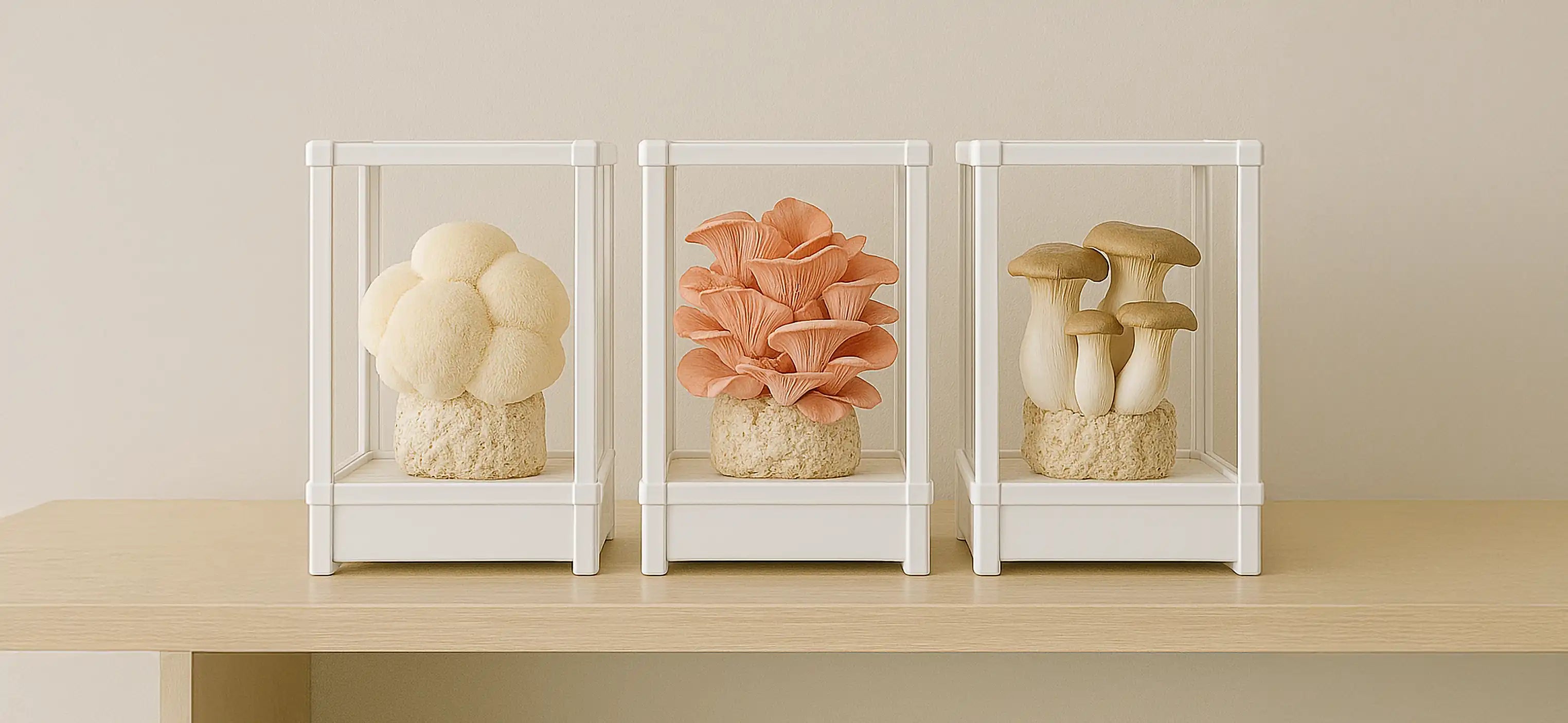
Smart Chamber. Bone White Single
- 2.8L tank, 90% humidity automatic
- App-controlled, plug-and-play
- 6 lb block ceiling, in stock

Smart Chamber. Obsidian Black Single
- Same hardware as Bone White
- Matte black premium finish
- Pairs with any kitchen palette

The short answer is yes. Mushrooms are decomposers, not producers and not predators. They belong to the kingdom Fungi and they sit in the decomposer column of every standard food-chain diagram. Understanding where fungi fit changes how you think about soil health, nutrient cycling, and even how you grow mushrooms at home.
In this guide we explain exactly how decomposer fungi work, the three fungal lifestyles (saprotrophic, mycorrhizal, parasitic), and the most common decomposer mushrooms you can identify or grow yourself.
How Decomposer Fungi Work in 3 Steps
The decomposition process behind every mushroom on a log is remarkably consistent. Whether the fungus is a turkey tail breaking down a fallen oak or an oyster mushroom decomposing straw, the same three stages happen:
- Mycelium (fungal threads) spreads through dead organic material. A spore lands on a suitable substrate such as dead wood, leaf litter, or compost, then germinates and sends out a network of thin white threads called mycelium.
- Enzymes break complex molecules (cellulose, lignin) into simpler ones. The mycelium secretes powerful enzymes including cellulase and ligninase. These chemicals dismantle the tough cell-wall polymers that hold dead plant tissue together.
- Released nutrients become available for plants and other organisms. The broken-down carbon, nitrogen, and phosphorus diffuse back into the mycelium and into the surrounding soil, where roots and other microbes can absorb them.
That third step is the reason fungi matter so much at planet scale. According to research from the National Geographic Society, decomposers are responsible for recycling roughly 90% of the nutrients in forest ecosystems, and fungi handle the largest share because they are among the few organisms that can break down lignin, the rigid polymer in wood.
The Three Fungal Lifestyles: Saprotrophic, Mycorrhizal, Parasitic
Not all fungi are decomposers in the strict textbook sense, even though every fungus is a heterotroph that cannot photosynthesize. There are three main lifestyles, and only the first is purely decomposer behavior.
Saprotrophic Fungi (Primary Decomposers)
Saprotrophs feed exclusively on dead organic matter. They are the classic mushroom decomposers you see fruiting from a fallen tree or rising from a compost heap. Most edible cultivated mushrooms fall into this category, including oyster, shiitake, lion's mane, king trumpet, and turkey tail. Saprotrophic species are the easiest decomposers to grow at home because the substrate is dead by design.
Mycorrhizal Fungi (Symbiotic Partners)
Mycorrhizal fungi form mutualistic partnerships with living plant roots. The fungus supplies water and minerals; the plant supplies sugars from photosynthesis. These species still break down some organic matter in the soil, but their primary energy source is a living plant, not a dead one. Chanterelles, porcini, and truffles are mycorrhizal, which is why they cannot be cultivated in a standard substrate kit. They need a living tree partner.
Parasitic Fungi
Parasitic fungi attack living hosts, including trees, insects, and even other fungi. They weaken or kill the host first, then continue decomposing the dead tissue. Honey fungus (Armillaria) is the most famous parasitic species. Some species, such as the lion's mane mushroom, can shift between saprotrophic and weakly parasitic behavior depending on host condition.
All three groups are heterotrophs. None of them photosynthesize, so when someone asks "are fungi decomposers," the honest answer is yes for the vast majority of species, with the two non-saprotrophic groups still depending on heterotrophic nutrition.
How Mycelium Digestion Works (Inside the Wood)
Decomposer mushrooms use a process called extracellular digestion. Animals digest food inside their stomachs. Fungi do the opposite: they secrete the enzymes outward into the food itself and then absorb the dissolved nutrients back through their mycelium walls.
Three enzymes do most of the heavy lifting:
- Cellulase breaks cellulose, the most abundant organic polymer on Earth, into simple sugars.
- Ligninase (often a laccase or peroxidase) dismantles lignin, the dark, rigid scaffold inside wood. Very few organisms can degrade lignin. White-rot fungi like turkey tail and oyster are the world's primary lignin recyclers.
- Protease breaks proteins from dead animal tissue and microbial cells into amino acids.
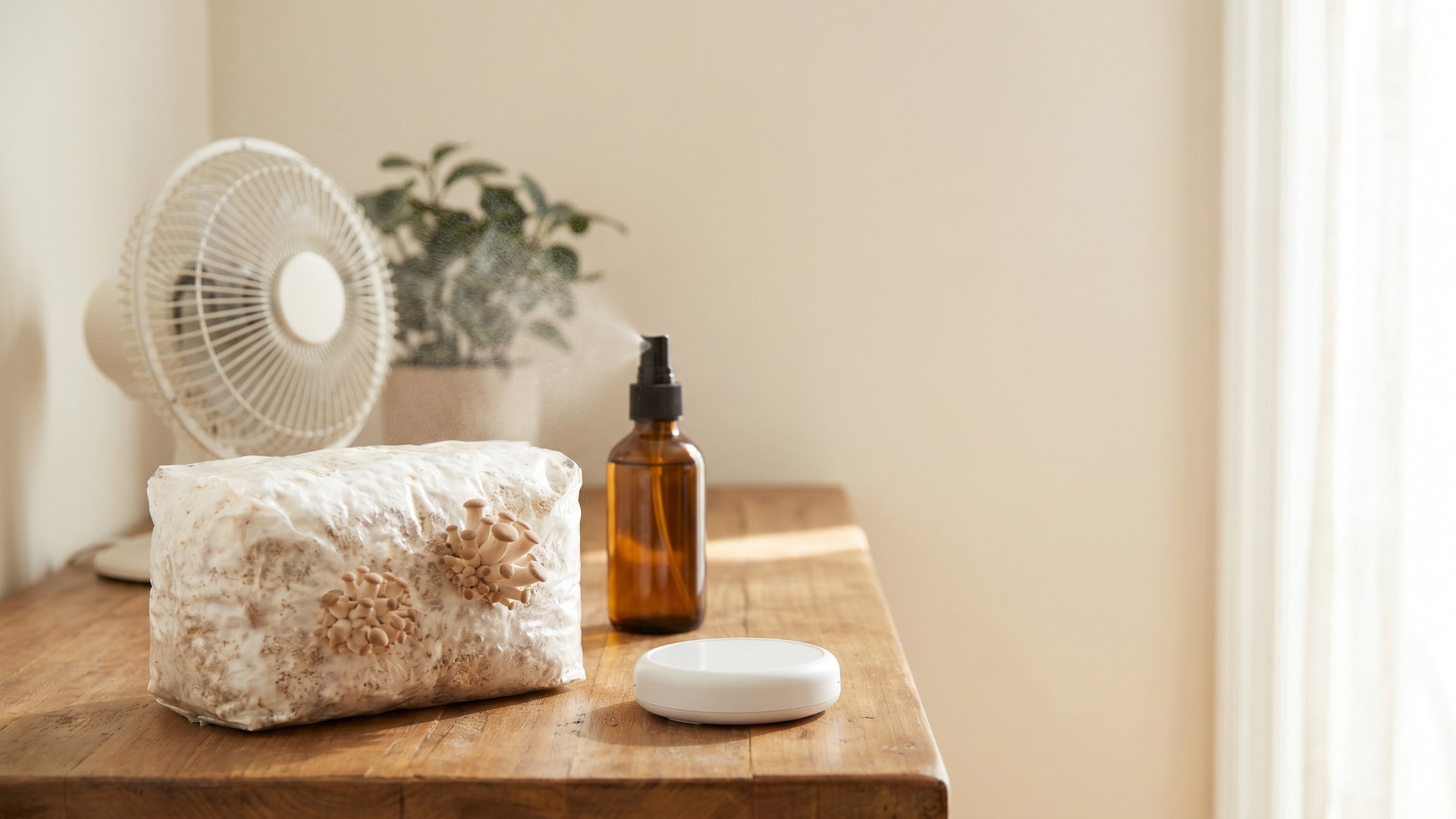
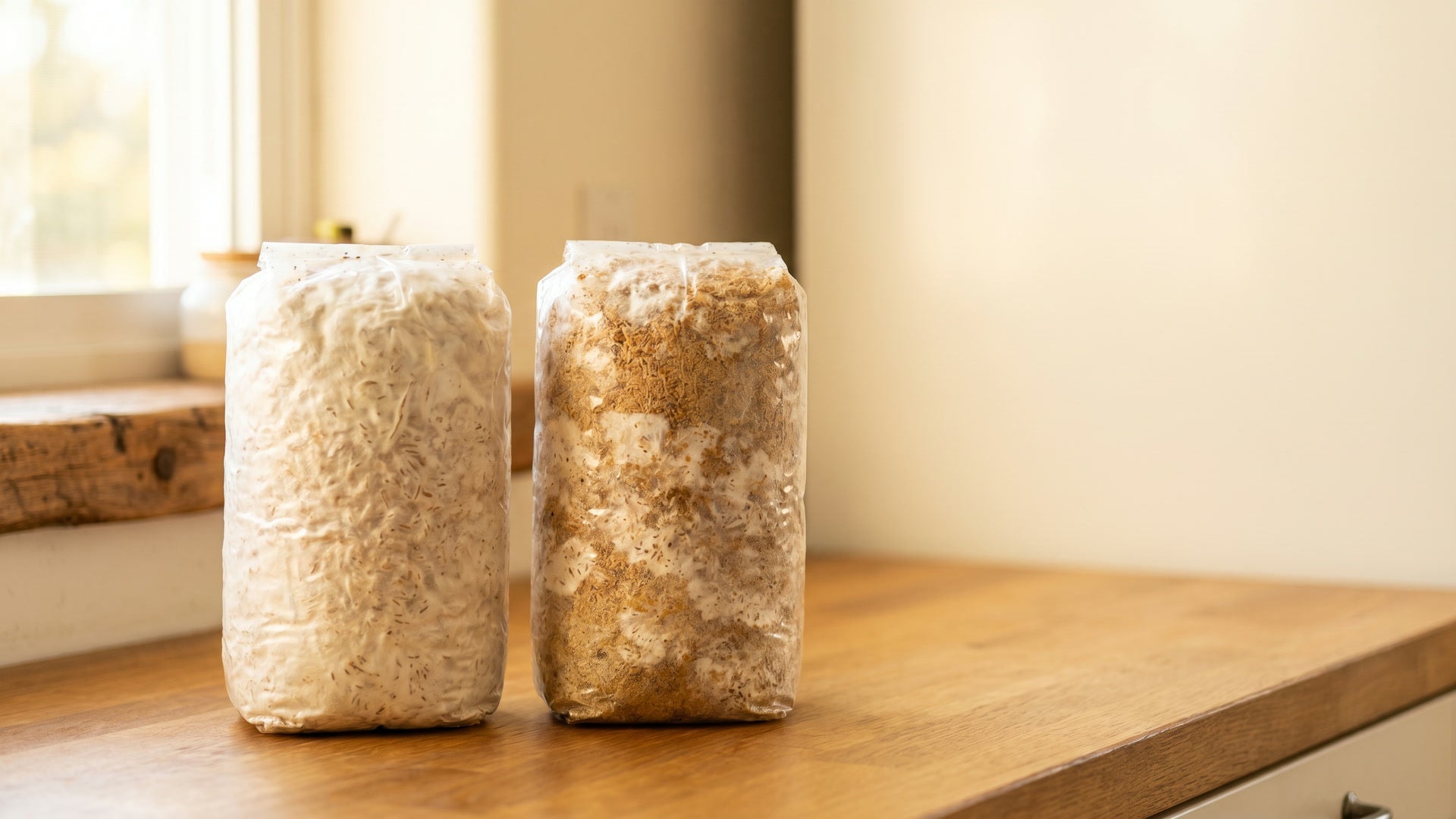
This is exactly the process you watch happen inside a substrate block when you grow mushrooms at home. The mycelium colonizes the block over a few weeks, breaks down the substrate, and then fruits into mushrooms once the food has been thoroughly decomposed.
Lignin-Digesting Fungi and the Carbon Cycle
Fungi decompose an estimated 85 gigatons of carbon from dead plant material every year, which is a significant portion of the global carbon cycle. The reason this number is so large is that fungi are nearly the only organisms on Earth that can break apart lignin at scale.
Lignin makes up roughly 20 to 30 percent of wood by weight, and it is chemically resistant to most decomposers. Bacteria can attack cellulose and sugars, but lignin is largely out of reach for them. White-rot fungi, including many bracket fungi and turkey tail, evolved enzymes specifically to dismantle lignin. Without these lignin-digesters, dead trees would essentially never rot back into soil. This is one of the reasons fungi matter for atmospheric CO2 and long-term carbon storage in forests.
Producer vs. Consumer vs. Decomposer: Where Mushrooms Fit
One of the most common related questions is whether a mushroom is a producer, a consumer, or a decomposer. The table below makes the answer obvious.
| Role | Definition | Energy Source | Examples |
|---|---|---|---|
| Producer | Makes its own food (autotroph) | Sunlight or chemical energy | Plants, algae, cyanobacteria |
| Consumer | Eats other organisms (heterotroph) | Other living organisms | Animals, insects, humans |
| Decomposer | Breaks down dead matter (heterotroph) | Dead organic material | Mushrooms, bacteria, earthworms |
Mushrooms sit firmly in the decomposer column. They are not producers because they lack chlorophyll and cannot photosynthesize. They are not consumers because they do not hunt or eat other living organisms. Instead, they specialize in breaking down material that is already dead. When asking is a mushroom a producer, the answer relates to how organisms acquire energy: producers make their own food, while mushrooms must source carbon from dead organic matter.
Examples of Decomposer Mushrooms You Can Identify
If you want to put faces to the names, here are the most common decomposer mushrooms in North American and European forests:
- Turkey tail (Trametes versicolor): A white-rot fungus growing in fan-shaped clusters on dead hardwood. One of the most efficient lignin-digesters on the planet.
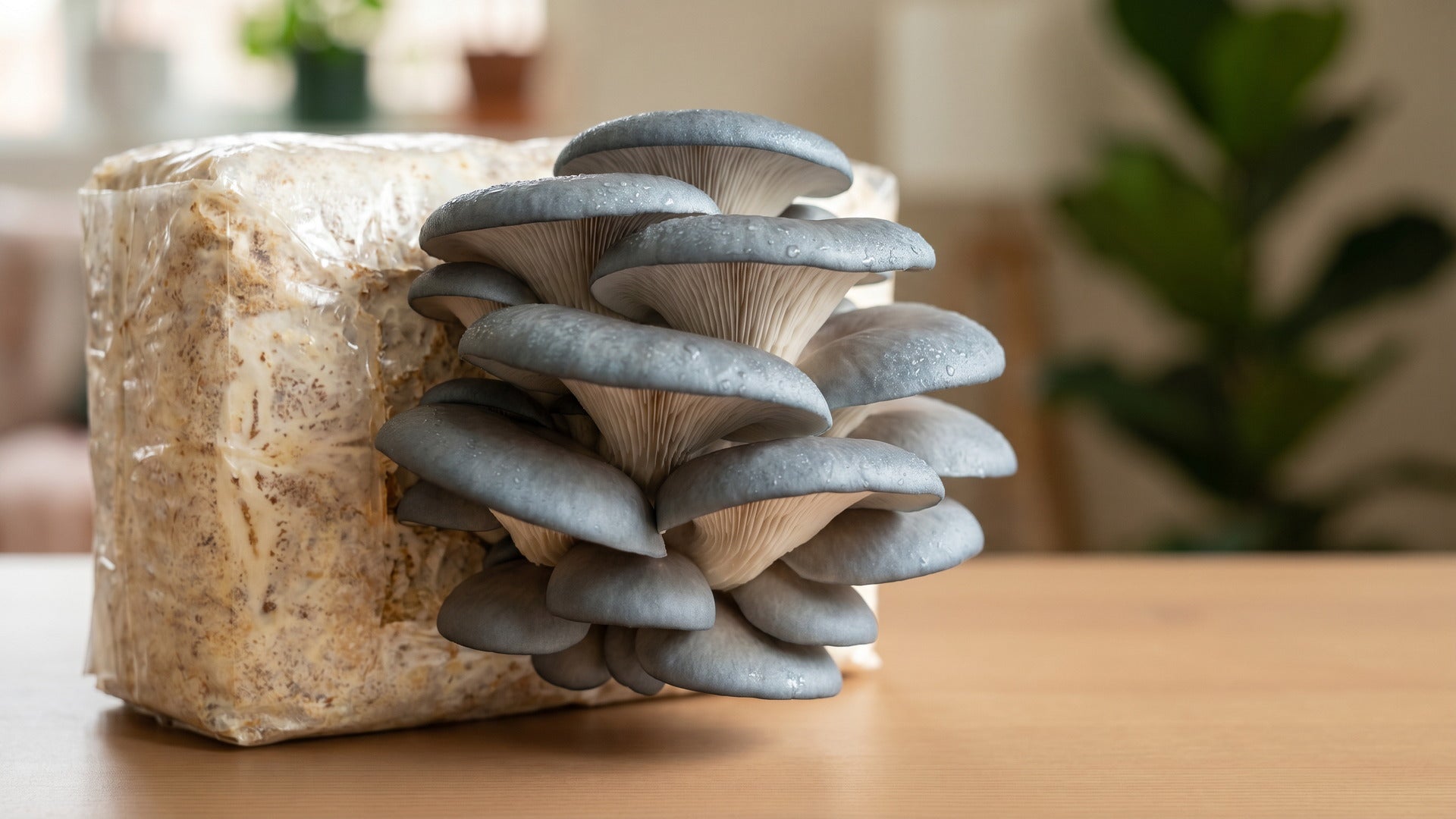
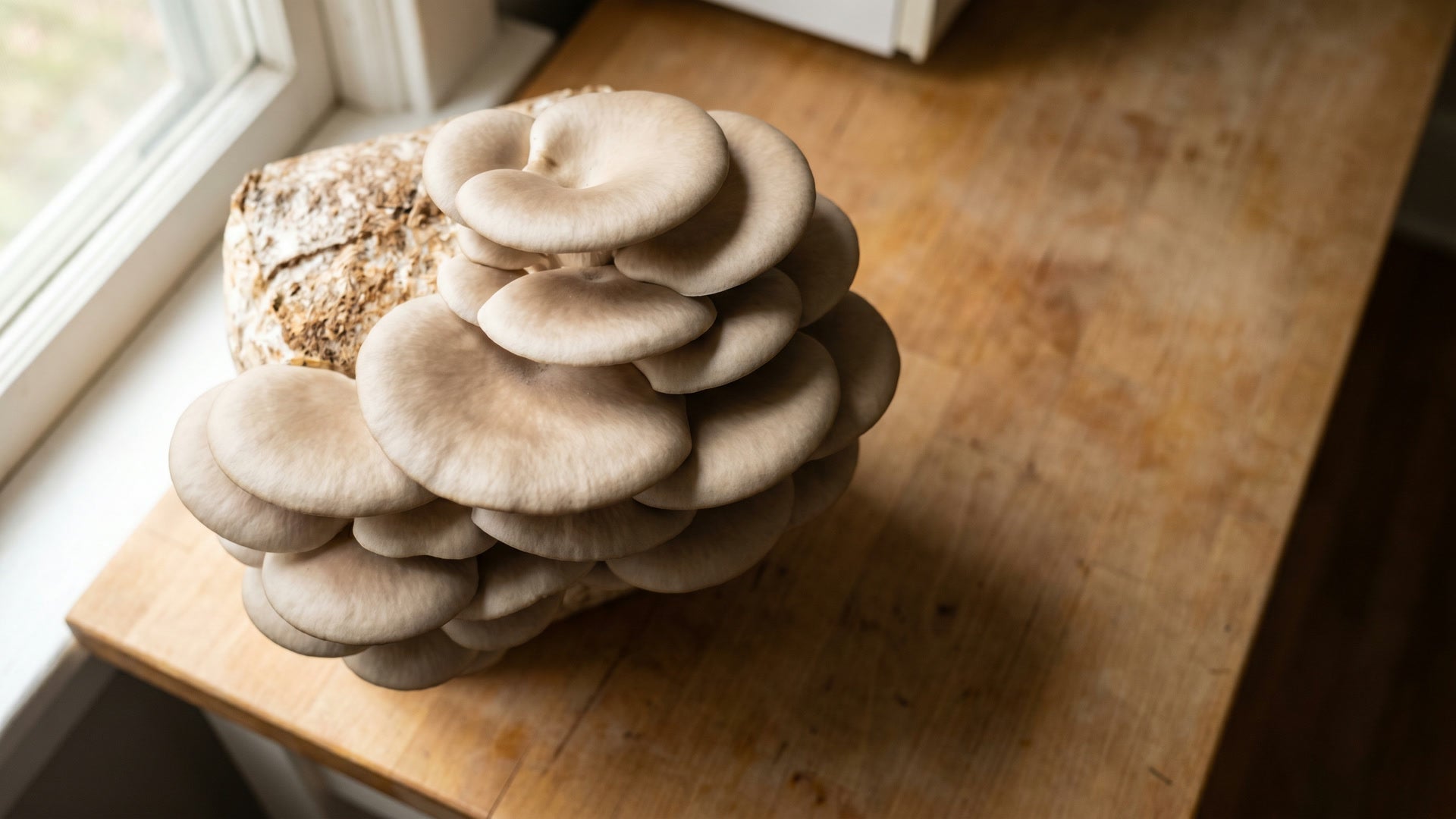
- Oyster mushroom (Pleurotus ostreatus): A saprotrophic decomposer that fruits in shelves on dead logs and is the classic wood-decomposer used in mushroom cultivation.
- Shiitake (Lentinula edodes): A wood-decay fungus traditionally grown on oak logs, capable of digesting both cellulose and lignin.
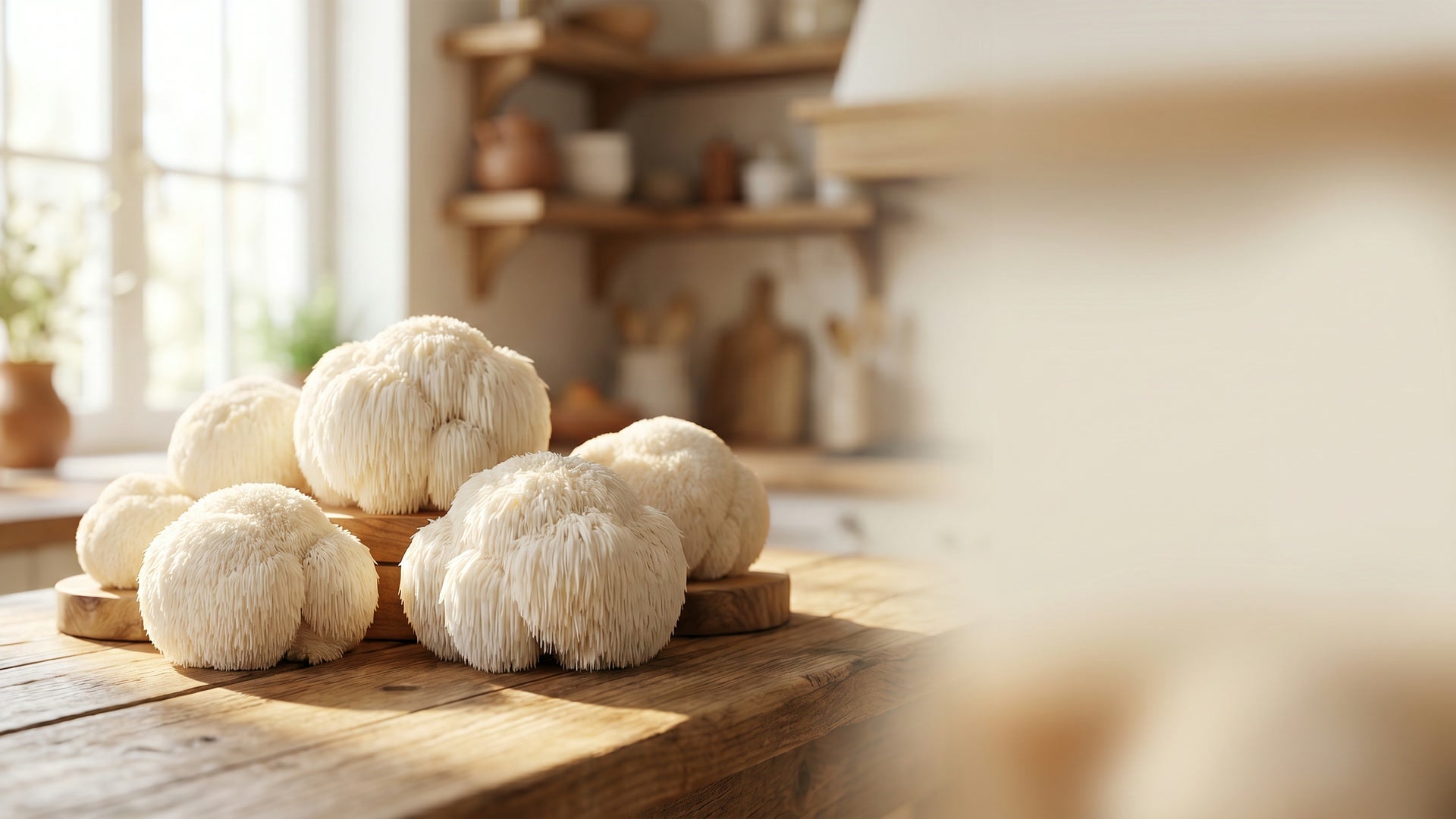
- Lion's mane (Hericium erinaceus): Decomposes hardwood and produces cascading white spines. Grows on dead or dying beech, oak, and maple.
- Inky cap (Coprinus species): A leaf-litter and compost decomposer that liquefies its own cap into black ink as it ages, releasing spores.
- Honey mushroom (Armillaria): A parasitic-saprotrophic fungus that attacks living tree roots and continues decomposing the wood after the tree dies.
The first four are all easy to grow at home, which makes them a great way to see the decomposition process in real time.
Mushrooms in Compost: A Living Decomposer System
A healthy compost pile is essentially a mushroom decomposer factory. Saprotrophic fungi colonize the pile alongside bacteria, breaking down kitchen scraps, leaves, and yard waste into rich humus. You can often see small white mushrooms or thin white threads of mycelium running through finished compost. That mycelium is the visible body of the decomposer at work.

Fuel Your Mushroom Journey
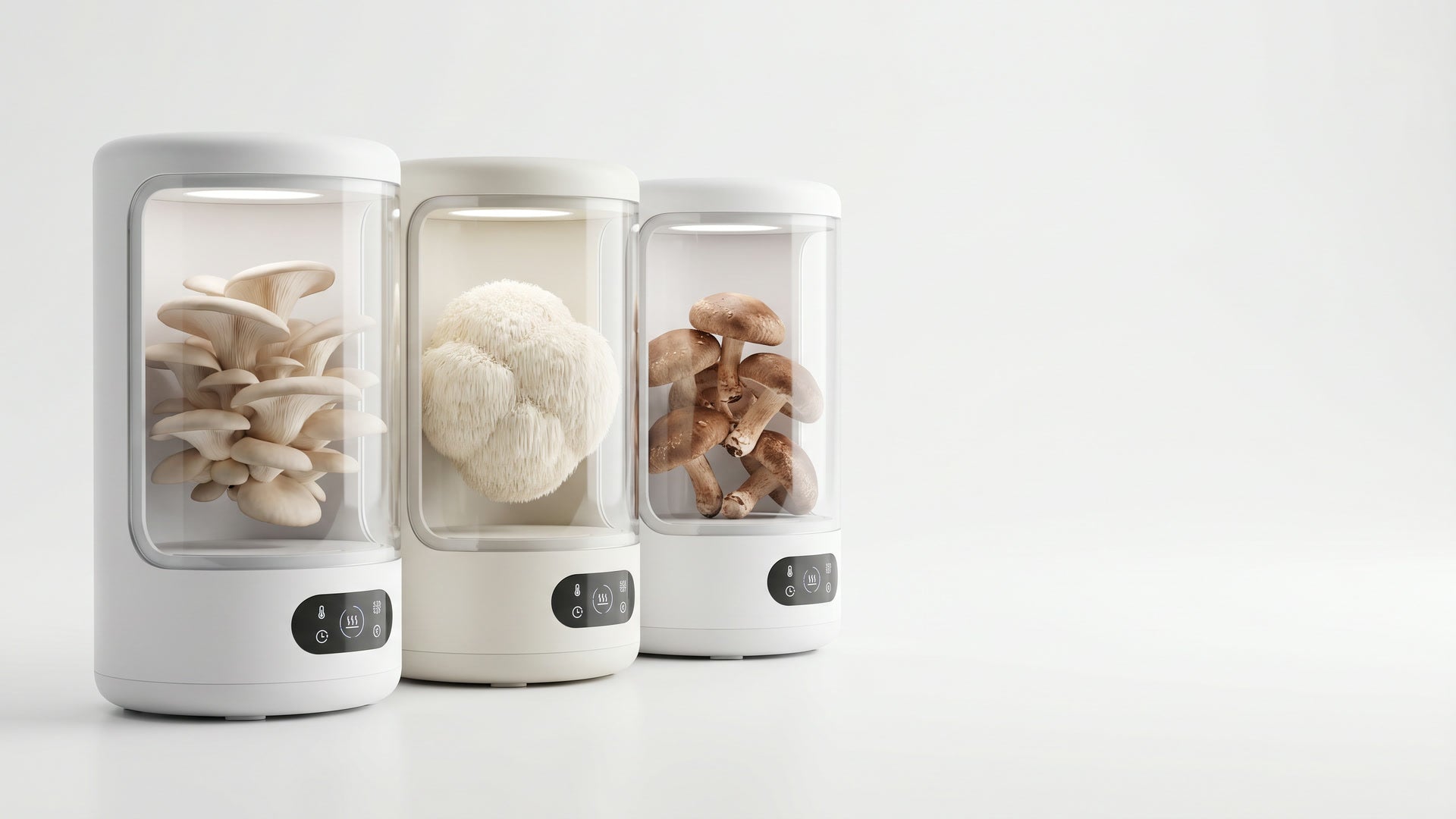
Smart Mushroom Grow Chamber
Plug-and-play smart chamber with humidity, light, and airflow dialed in for every species. Beginners harvest their first flush in days, not months.
Add to cart $299Spent mushroom substrate is even more useful for gardens. After a substrate block has finished fruiting, the mycelium has already broken down most of the cellulose. Mixing that spent block into garden soil adds pre-digested organic matter, slow-release nitrogen, and a living fungal network that continues helping plants absorb minerals.
Mushrooms After a Fire: Why Burned Forests Bloom with Fungi
One of the most striking real-world examples of fungal decomposition happens after a forest fire. Morels (Morchella species) often appear in massive flushes in the year following a burn, fruiting from charred wood and ash-rich soil. Pyrophilous (fire-loving) fungi specialize in breaking down the partially carbonized organic matter that a fire leaves behind. They are nature's first responders for nutrient recycling after destruction, returning carbon and minerals to the soil so that new plant life can take hold.
You Can Grow Decomposer Mushrooms at Home
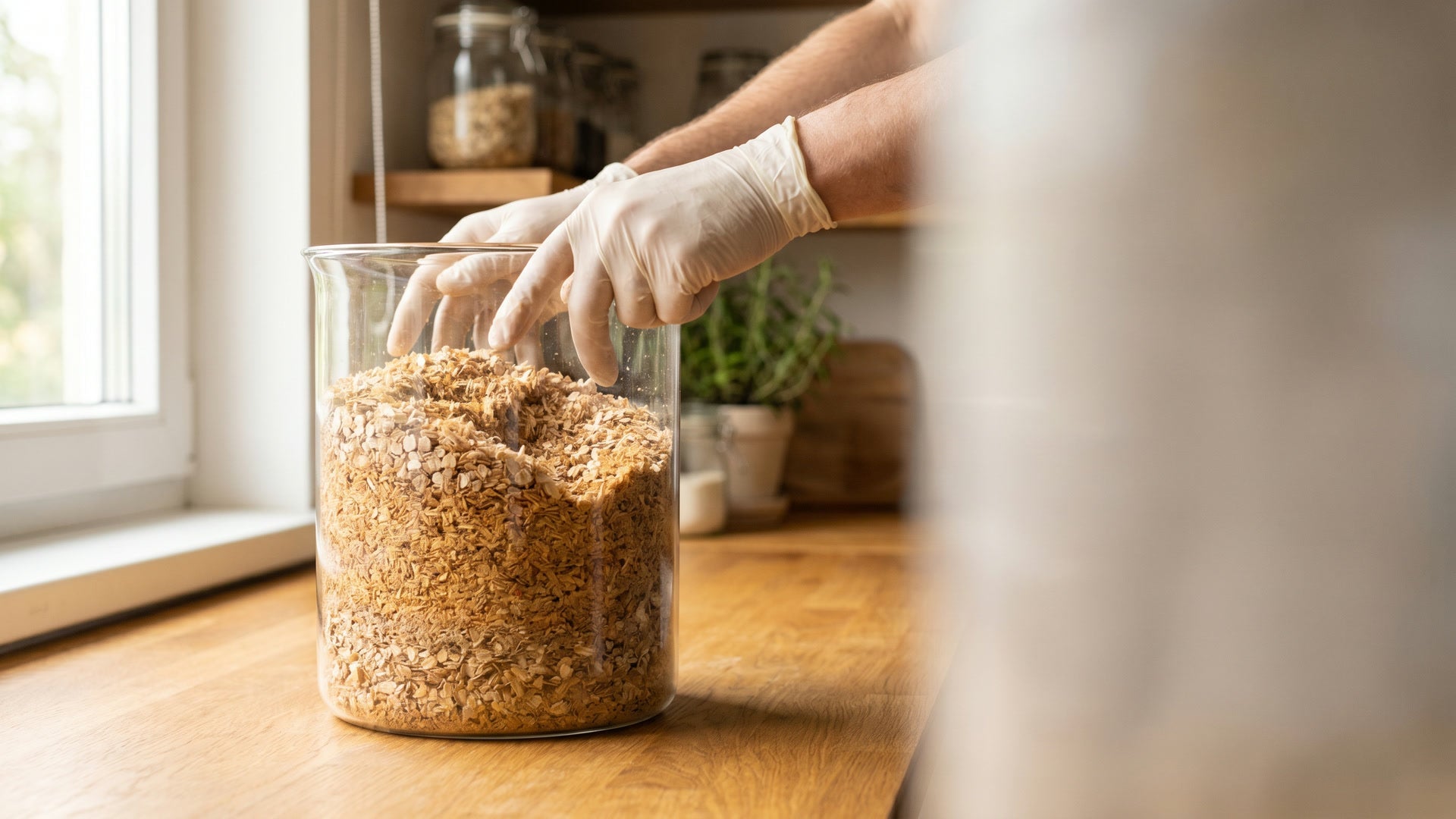
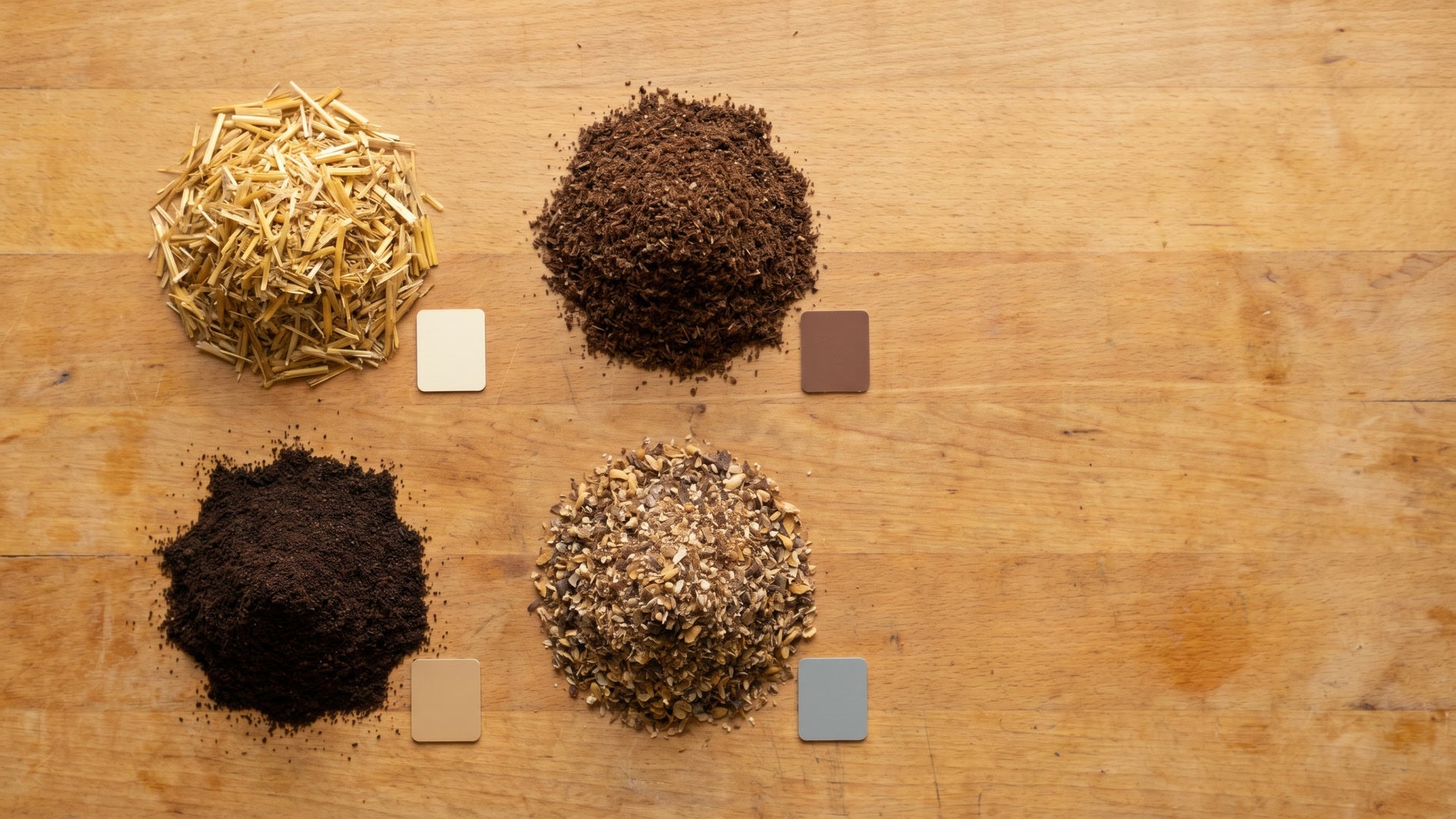
One of the easiest ways to understand how decomposer fungi work is to grow some yourself. Every cultivated mushroom you have seen at a market, including oyster, shiitake, and lion's mane, is a saprotrophic decomposer feeding on a substrate of straw, sawdust, or wood pellets. Watching the mycelium colonize a block and then fruit out into mushrooms is the same decomposition process that runs across every forest on Earth, just compressed into a few weeks on your counter.
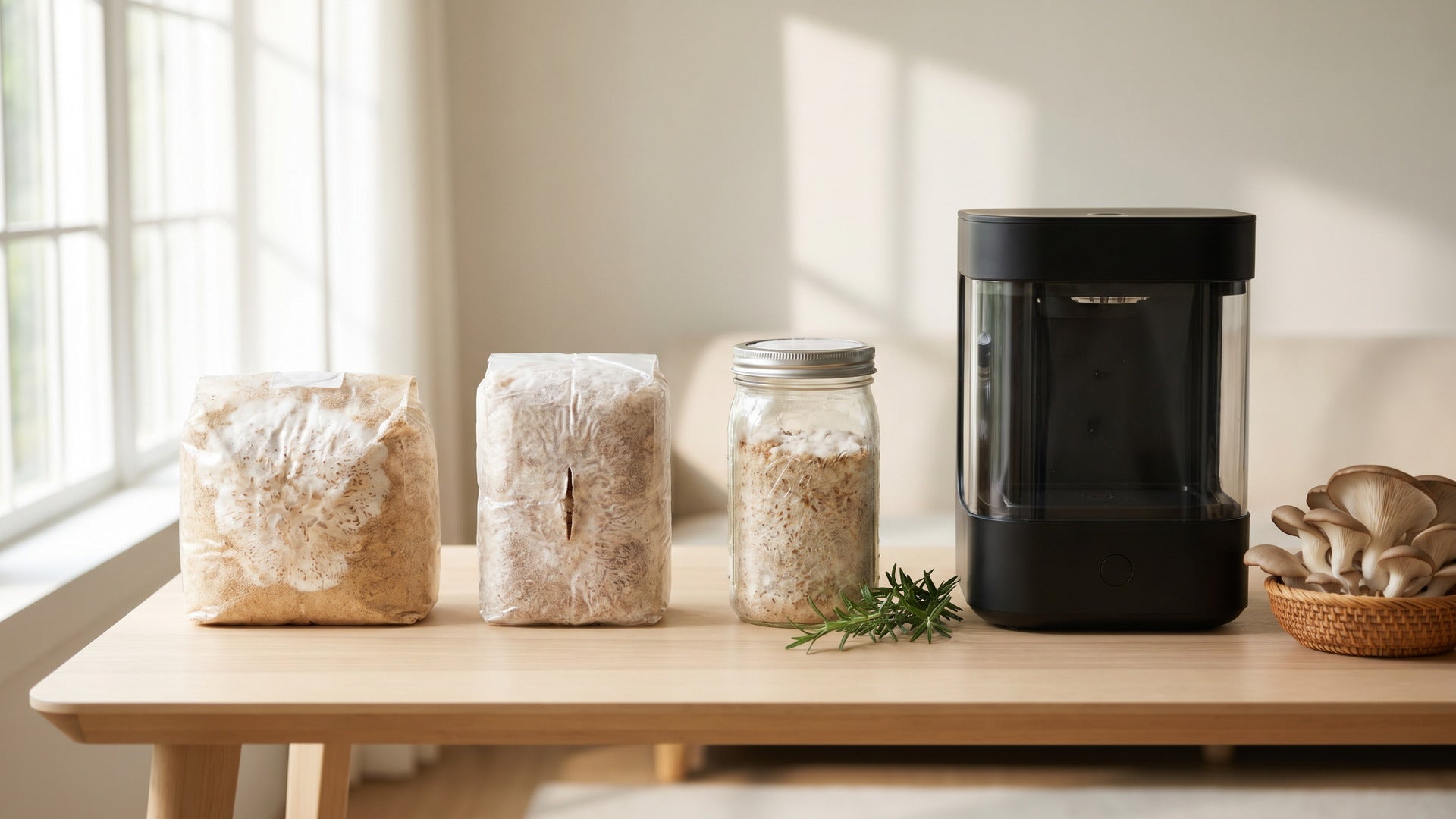
If you want to try it without the substrate guesswork, the Lykyn Smart Mushroom Grow Box is the simplest entry point. It is a fully automated fruiting chamber that handles humidity, airflow, and lighting for you, so all you have to do is drop in a pre-colonized block and watch decomposition turn into mushrooms.
The classic starter species is the oyster mushroom, which is the textbook wood-decomposer and one of the fastest fungi to fruit. For a slower, more flavor-forward decomposer, the shiitake is the next step up, traditionally cultivated on oak logs that the mycelium gradually breaks down over months. If you want a different texture and a brain-boost reputation, lion's mane is a hardwood decomposer that produces cascading white spines instead of caps.
If you are deciding which substrate to start with, our guide on fruiting blocks walks through the carbon-to-nitrogen tradeoffs each species prefers, which is essentially a primer on what each decomposer fungus likes to eat.
FAQ: Mushrooms and Decomposition
Are all mushrooms decomposers?
Most mushrooms are decomposers, specifically the saprotrophic species that feed on dead organic matter. Two minor groups break the strict decomposer label. Mycorrhizal fungi (chanterelle, porcini, truffle) form symbiotic partnerships with living plant roots. Parasitic fungi (honey fungus) attack living hosts. Both still rely on heterotrophic nutrition and cannot photosynthesize, so they are never producers, but only the saprotrophic majority fits the strict textbook definition of a decomposer.
What do decomposer mushrooms eat?
Decomposer mushrooms eat dead organic matter, including fallen wood, leaf litter, dead animal tissue, manure, straw, sawdust, and finished compost. They cannot eat living plants or animals. The mushroom secretes enzymes such as cellulase, ligninase, and protease onto the dead material, then absorbs the dissolved sugars, amino acids, and minerals back through its mycelium.
Why are fungi better decomposers than bacteria for wood?
Fungi are better decomposers than bacteria for wood because fungi can break down lignin. Lignin is a rigid polymer that forms about 20 to 30 percent of wood, and it is largely resistant to bacterial enzymes. White-rot fungi, including turkey tail and many bracket fungi, evolved specialized laccase and peroxidase enzymes that can dismantle lignin. Without fungi, fallen trees would essentially never rot, and forest soils would slowly run out of recycled carbon and nitrogen.
Are mushrooms decomposers or producers?
Mushrooms are decomposers, never producers. Producers make their own food from inorganic raw materials, using either sunlight (photosynthesis) or chemical energy (chemosynthesis). Mushrooms lack chlorophyll and cannot do either. Every mushroom species, including saprotrophic, mycorrhizal, and parasitic fungi, depends on external organic carbon, which is the textbook definition of a heterotroph, not a producer. So, is a mushroom a producer? No, fungi cannot photosynthesize and instead break down organic matter.
What is an example of a decomposer mushroom?
Turkey tail (Trametes versicolor) is the textbook example of a decomposer mushroom. It is a white-rot fungus that grows in fan-shaped shelves on dead hardwood and is one of the most efficient lignin-digesters on the planet. Oyster mushrooms (Pleurotus ostreatus) and shiitake (Lentinula edodes) are also classic decomposer species and the most commonly cultivated.
Can decomposer mushrooms grow on living plants?
Saprotrophic decomposer mushrooms cannot grow on healthy living plants because they require dead tissue to feed on. Some fungi, however, blur the line. Parasitic species such as honey fungus (Armillaria) attack and kill living trees and then continue decomposing the dead wood. A few species, including lion's mane, can shift from saprotrophic to weakly parasitic behavior on stressed or wounded trees, but the cultivated home-grown forms are strictly decomposers feeding on dead substrate.
Is a mushroom an autotroph or a heterotroph?
A mushroom is a heterotroph, never an autotroph. Autotrophs make their own food from inorganic raw materials using sunlight or chemical energy. Mushrooms cannot do either, so every mushroom species, including saprotrophic, mycorrhizal, and parasitic fungi, depends on external organic carbon. If a biology test asks whether a mushroom is an autotroph or a heterotroph, the answer is heterotroph.
Are mushrooms detritivores?
Mushrooms are not detritivores in the strict sense. A detritivore (think earthworm, millipede, woodlouse) physically swallows dead material and digests it internally. A mushroom does the opposite: it secretes enzymes onto the dead material from outside its body, then absorbs the broken-down molecules through its mycelium walls. The precise biological term for a mushroom is saprotroph or saprobic decomposer.
References and Further Reading
- USDA Forest Service: Fungi and Decomposition
- Cornell Small Farms: Mushroom Cultivation and Mycology
- National Geographic Society: Decomposers
- Floudas, D., et al. "The Paleozoic Origin of Enzymatic Lignin Decomposition Reconstructed from 31 Fungal Genomes," Science, 2012.
- Lustenhouwer, N., et al. "A trait-based understanding of wood decomposition by fungi," Mycologia, 2020.
Conclusion
Yes, mushrooms are decomposers, and that is not a lesser role. It is one of the most critical functions in any ecosystem on Earth.
Without mushroom decomposers, dead material would accumulate, nutrients would stay locked away, and the soil that feeds every plant on the planet would become barren. Fungi are the hidden engine that keeps ecosystems running, and they are remarkably easy to watch in action if you grow a few yourself.
Here are the key takeaways:
- Mushrooms lack chlorophyll, cannot photosynthesize, and are not producers.
- A decomposer mushroom breaks down dead organic matter using enzymes secreted by its mycelium, a process called extracellular digestion.
- The three fungal lifestyles are saprotrophic (pure decomposers), mycorrhizal (symbiotic with plant roots), and parasitic (attacking living hosts). All three are heterotrophs.
- White-rot fungi are the planet's primary lignin-digesters, and they recycle an estimated 85 gigatons of carbon per year.
- Most cultivated mushrooms (oyster, shiitake, lion's mane, turkey tail) are saprotrophic decomposers, which is why you can grow them on dead substrate at home.
If this topic sparked your curiosity about how fungi actually grow and develop, the easiest way to see decomposition firsthand is to try it yourself. Explore the Lykyn Smart Mushroom Grow Box and watch mycelium break down a substrate block in real time inside a fully automated chamber. It is one of the most fascinating things in nature.
Related reading
Ready to grow?
Skip the substrate guesswork. Start with the smart fruiting chamber that handles humidity, airflow, and lighting for you.
Start with the Lykyn Grow Box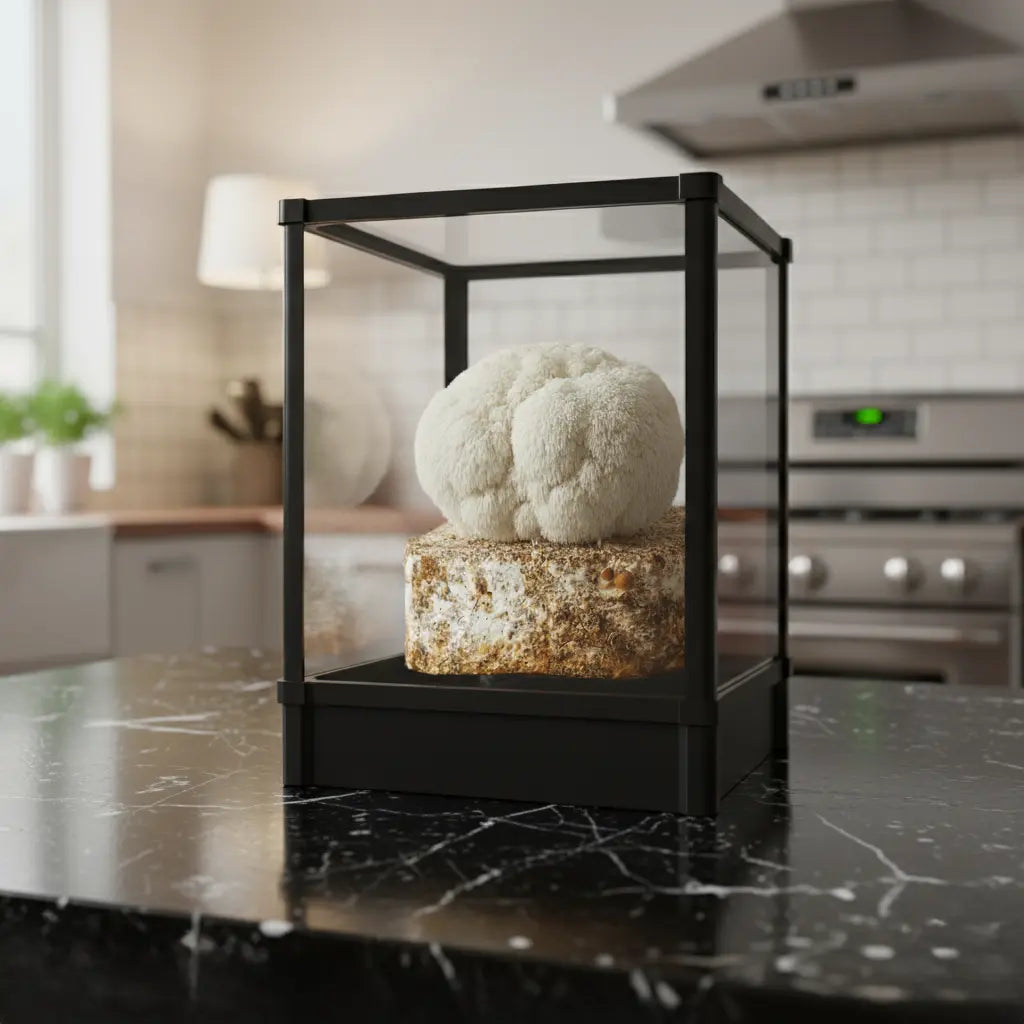
Share:
Foraging Mushrooms: Your Complete Beginner's Guide to Safe and Successful Mushroom Hunting
The Incredible Benefits of Eating Mushrooms: Your Complete Guide to Nature's Superfood