



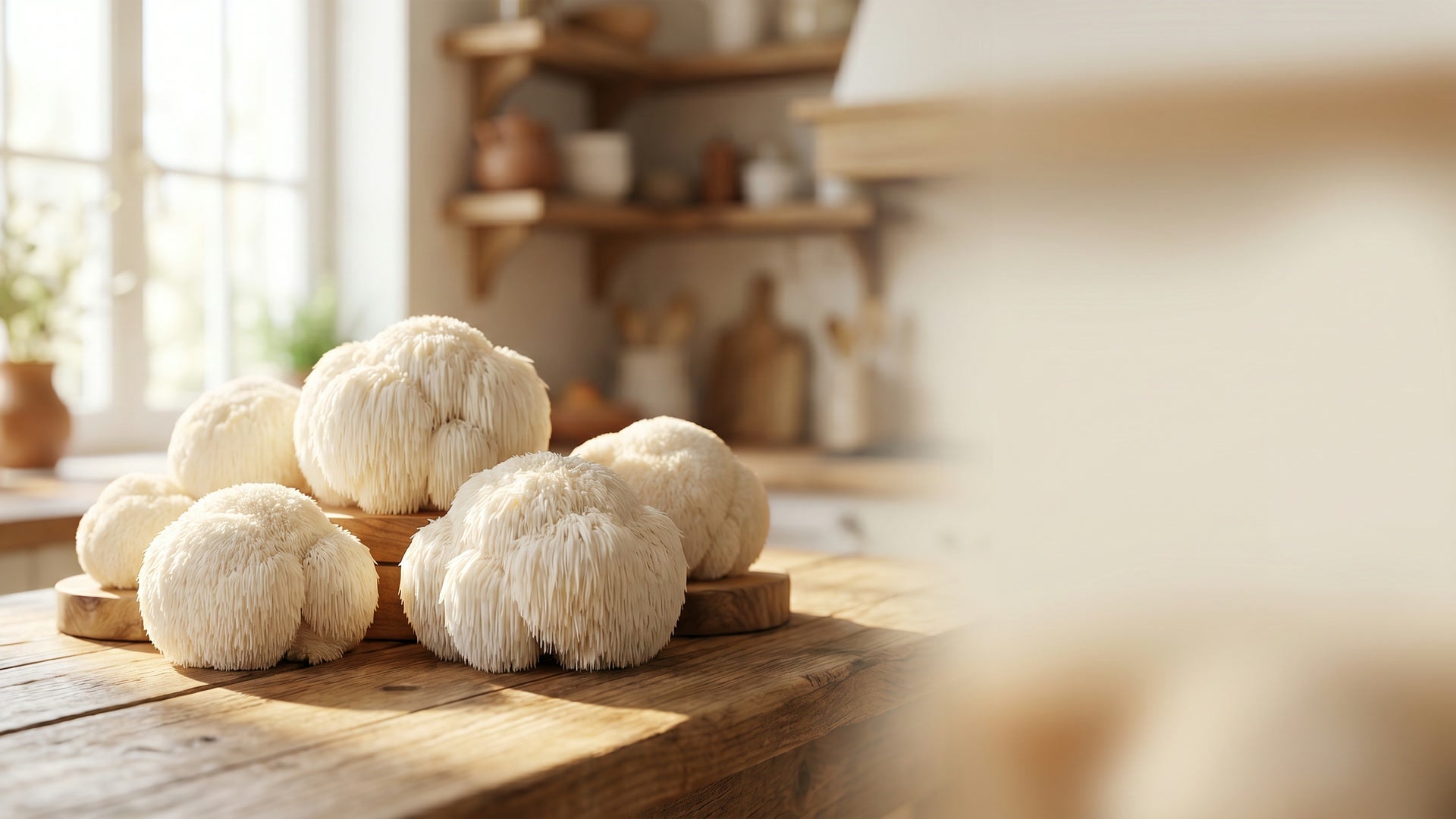
Lion's mane (Hericium erinaceus) is one of the most-requested gourmet species at home, both for its lobster-like flavor and its growing reputation as a functional mushroom. It is also one of the more humbling species to grow, because yields swing wildly based on environment. The same 5 pound supplemented block can produce a glorious 2 pound primary flush in one grower's kitchen and a frustrating 4 ounce cluster in another's, with no obvious explanation visible from the outside.
This lion's mane mushroom yield guide breaks down what realistic yields actually look like, the four environmental variables that drive them, and how to read your block's response so you can dial in better numbers on flush 2 and 3. By the end you will know whether your grow is performing normally, underperforming, or quietly setting a personal record.
What Is A Realistic Lion's Mane Yield?

The standard yield metric for cultivated mushrooms is biological efficiency, or BE%, which divides fresh mushroom weight by dry substrate weight. For lion's mane, realistic home-grower BE numbers fall in this range:
- First flush: 30 to 60% BE on supplemented hardwood sawdust
- Total across all flushes: 50 to 100% BE for a well-tended block
- Commercial benchmark: 75 to 110% BE on optimized systems
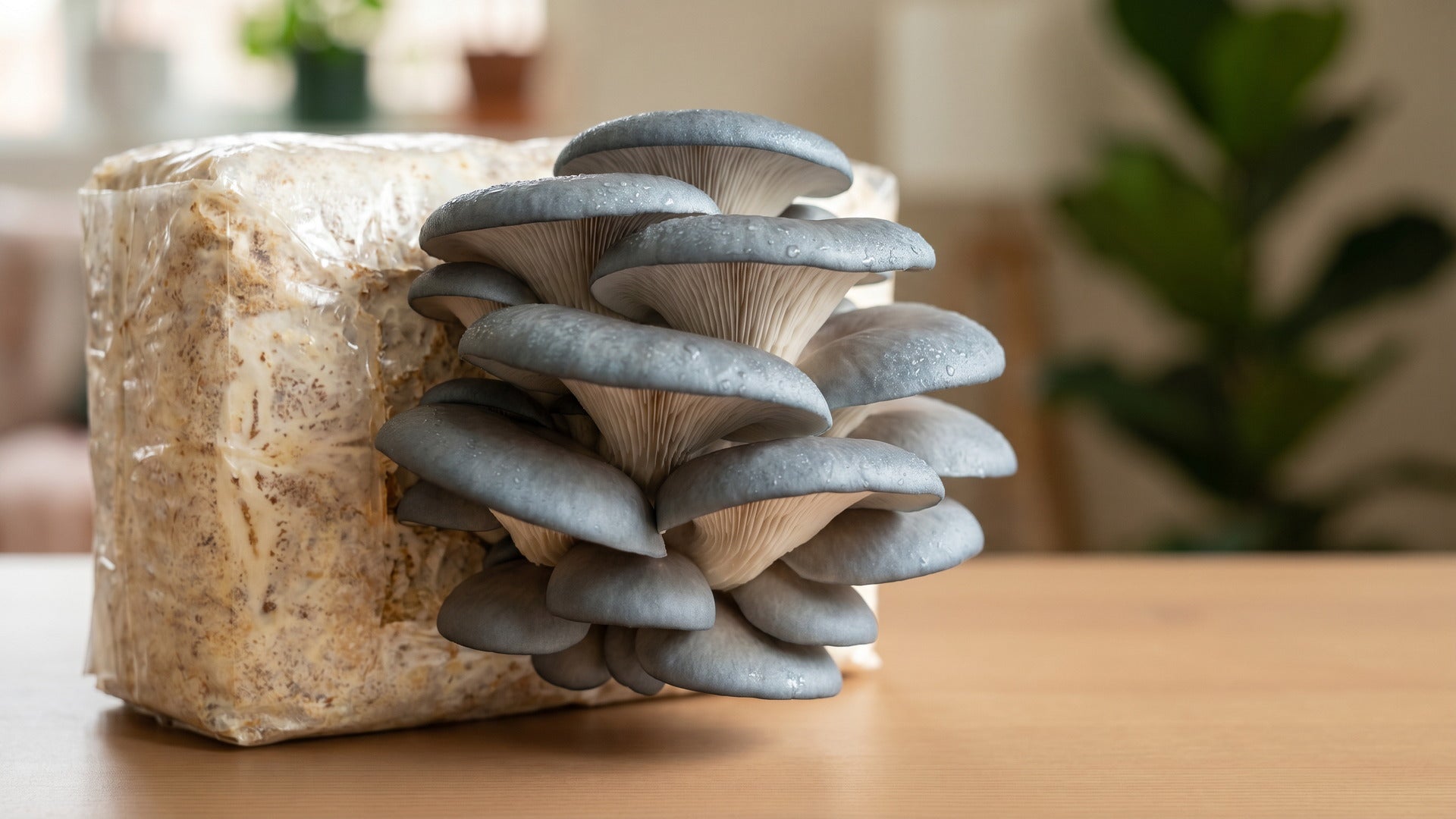
In practical terms, a 5 pound supplemented sawdust block (about 1.5 pounds dry substrate after accounting for moisture) should deliver 0.75 to 1.5 pounds of fresh lion's mane across 2 to 3 flushes. By contrast, oyster mushrooms routinely return 100 to 150% BE on the same substrate, which is why lion's mane is considered the lower-yield, higher-difficulty cousin in the gourmet lineup.
If your block produced under 4 ounces total, something in the environment is off. If it cleared 1 pound, you are growing at or above the home-grow average. Anything over 1.5 pounds is exceptional, and almost always traces back to disciplined humidity and fresh air management.
The Four Variables That Decide Your Yield

Unlike oyster mushrooms, which forgive almost any environmental sloppiness, lion's mane responds visibly to four conditions. Get all four right and you will hit the upper end of the yield range. Miss any one and the cluster will be stubby, brown-tipped, or never form at all.
1. Substrate: Supplemented Hardwood Wins
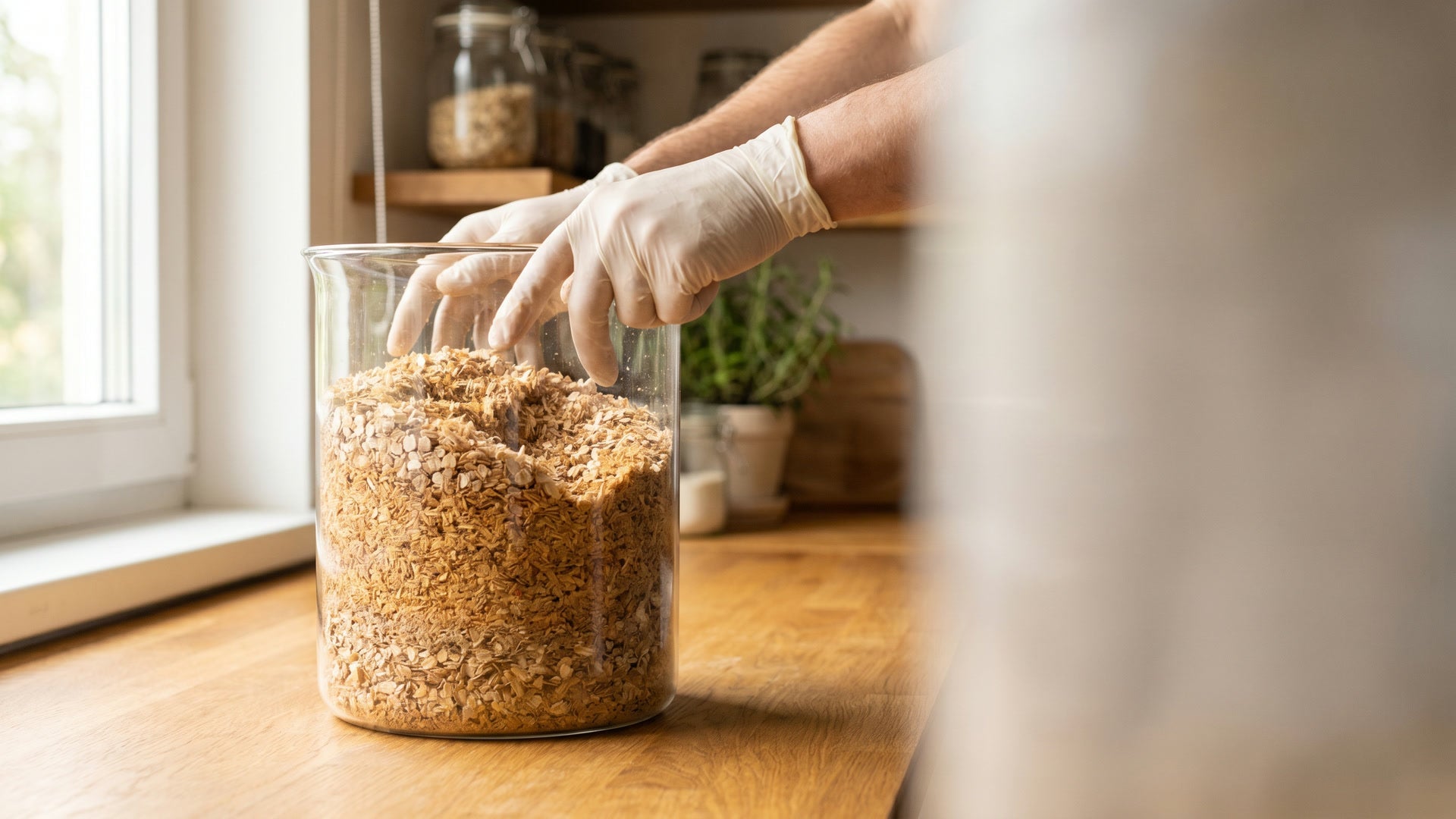
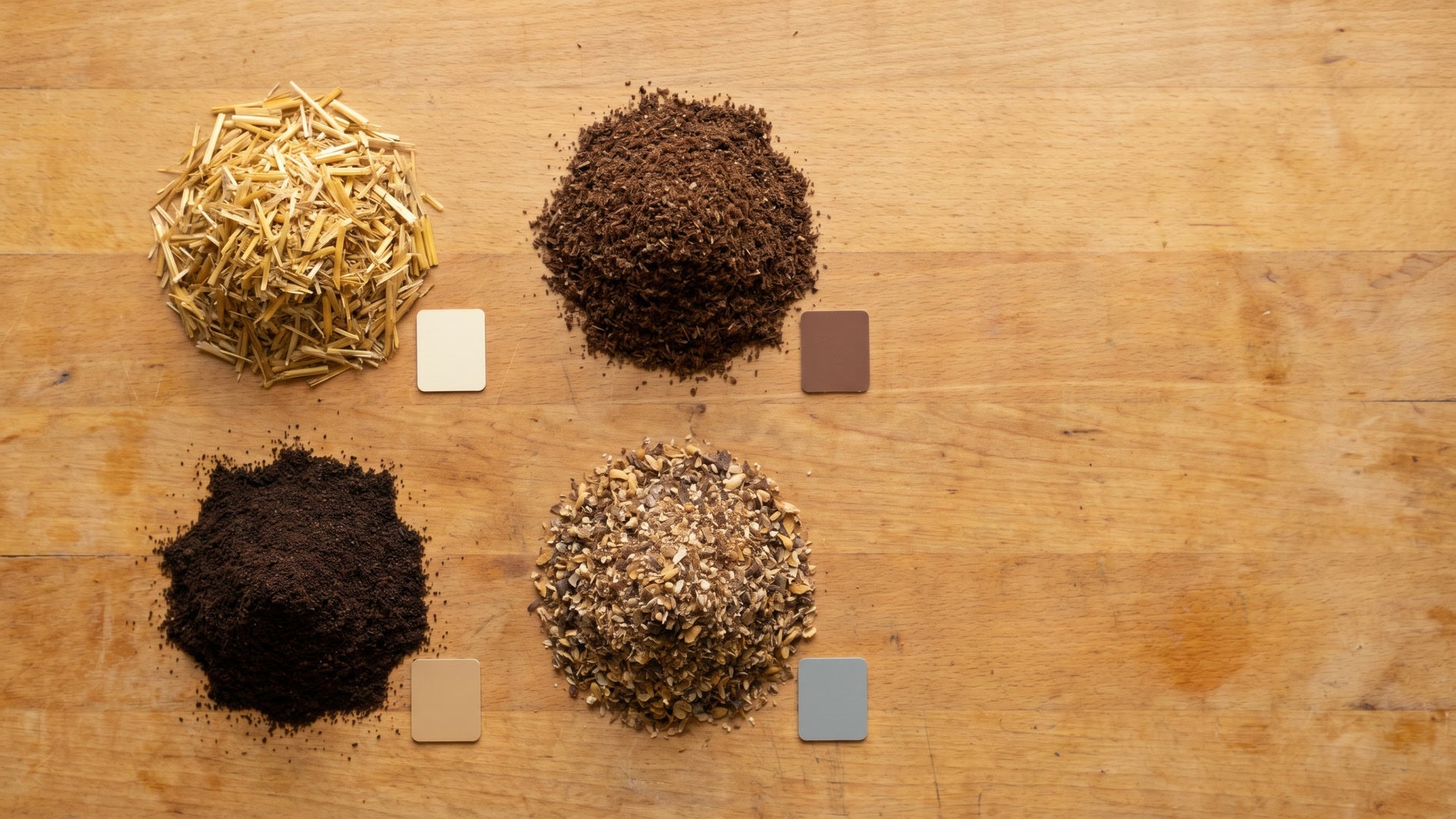
Lion's mane reaches peak yields on supplemented hardwood sawdust, typically oak or beech mixed with 10 to 20% wheat bran or soy hulls. The supplement provides the nitrogen and trace minerals that the species needs for dense cluster formation. Plain hardwood without supplementation typically returns 25 to 40% BE, while supplemented masters-mix-style blocks regularly hit 75 to 110% BE.
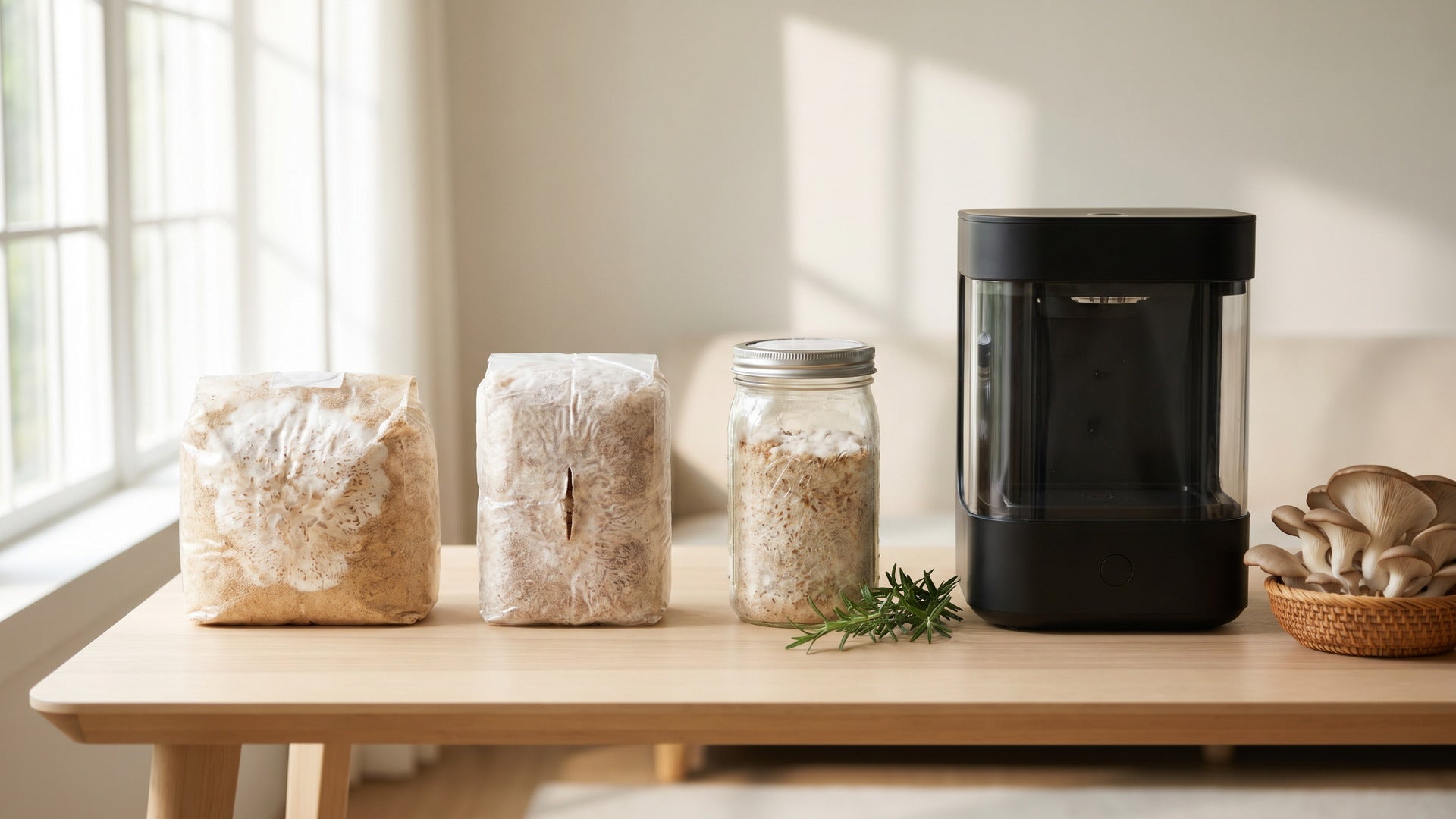
Straw works in a pinch and is the lowest-cost option, but yields drop to 30 to 50% BE and the resulting fruits tend to be smaller and stringier. If you are buying pre-made, look for a supplemented hardwood block. Our pre-inoculated fruiting blocks use a supplemented hardwood substrate sterilized and fully colonized before they ship.
2. Humidity: Very High And Stable
Lion's mane wants 90 to 95% relative humidity, which is meaningfully higher than the 80 to 90% range that satisfies oysters. Below 85% humidity, the spines on the cluster turn pink, then brown, then dry out completely. The mushroom will keep growing but the texture and flavor degrade fast.
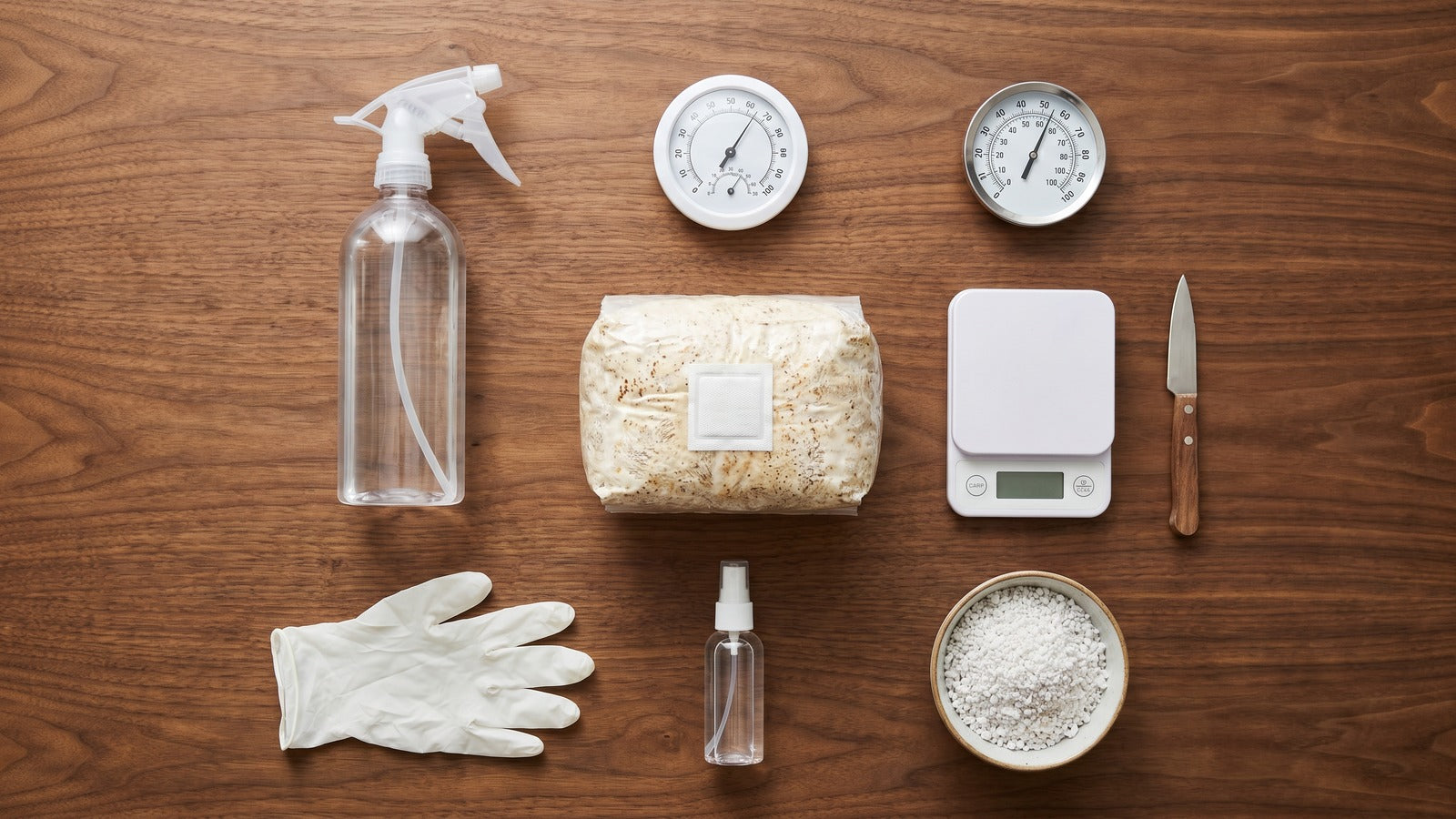
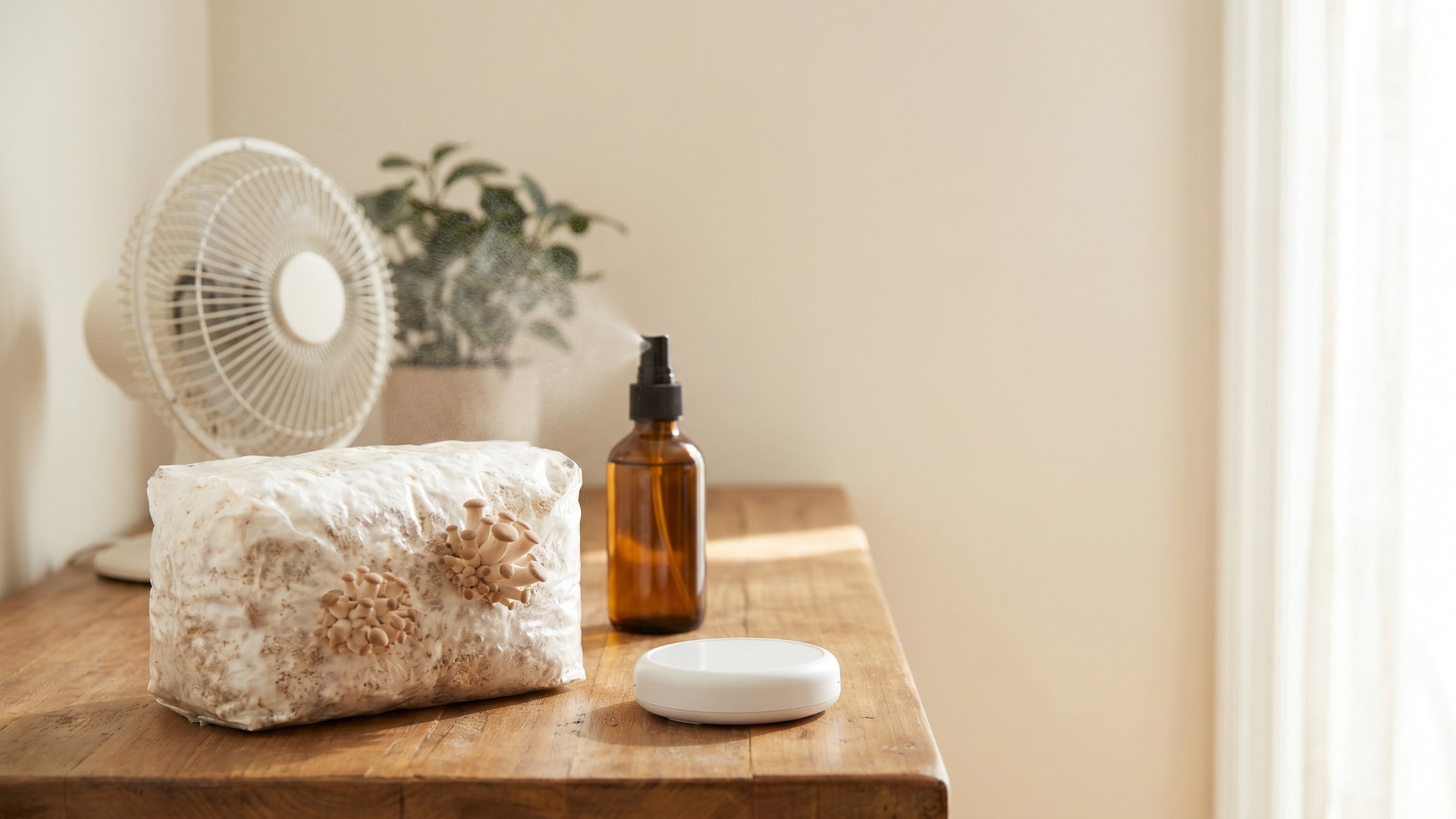
The hardest part is keeping humidity stable. Lion's mane is sensitive to drops more than to averages. A chamber that averages 90% but dips to 75% twice a day during ventilation cycles will produce a worse cluster than a chamber that holds 88% rock-steady. Manual misting almost guarantees the dips. This is the single biggest reason that automated chambers outperform manual setups for this species.
3. Fresh Air Exchange: More Than You Think
Lion's mane needs more fresh air than nearly any other home-cultivated species. Target 5 to 8 fresh air exchanges per hour, and CO2 below 800 ppm during pinning and active fruiting. CO2 in the 1,000 to 1,500 ppm range produces the characteristic stretched, antler-like deformities where the cluster grows long fingers without ever forming the proper rounded body. Above 1,500 ppm, primordia abort entirely.
This is the variable that catches most first-time growers off guard. A sealed plastic tub or passive fruiting chamber will fruit oysters beautifully and starve lion's mane of air. If you see antler-like growth, increase your fan duty cycle before changing anything else.
4. Temperature: The 60 to 75 F Sweet Spot
Lion's mane fruits across a wider temperature range than maitake or shiitake, but yield peaks in a narrow band:
- Colonization: 72 to 78 F (22 to 26 C)
- Fruiting sweet spot: 65 to 72 F (18 to 22 C)
- Acceptable fruiting range: 60 to 75 F (16 to 24 C)
Above 75 F, the fruits grow watery and the cluster softens prematurely. Below 60 F, growth slows to a crawl and contamination has more time to take hold. Most home growers in temperate climates can hit the sweet spot year-round without active cooling, which is a major reason lion's mane is more practical than maitake for indoor cultivation.
Multi-Flush Expectations

One of the appealing features of lion's mane is that a single block typically fruits 2 to 3 times before exhausting its nutrients. Each subsequent flush is smaller than the last, but properly tended blocks add up to meaningfully more mushrooms than the first flush alone.
- Flush 1: 50 to 70% of the block's total yield, usually 0.5 to 1.0 pound
- Flush 2: 25 to 35% of total yield, usually 0.2 to 0.5 pound, arrives 10 to 14 days after first harvest
- Flush 3: 5 to 15% of total yield, often only 1 to 4 ounces, arrives 14 to 21 days after second harvest
To trigger the second flush, soak the block in cold water for 12 to 24 hours after the first harvest, drain thoroughly, and return it to fruiting conditions. The cold soak rehydrates the substrate and shocks the mycelium back into pinning mode. By the time flush 3 winds down, the substrate is depleted and contamination risk climbs, so most growers compost the block rather than chase a fourth flush.

Fuel Your Mushroom Journey
Lion's Mane Grow Kit
Hardwood-sawdust block colonized with Lion's Mane mycelium. Drops straight into your Lykyn chamber and starts pinning within days.
Add to cart $29.95Home Grower Versus Commercial Yields

Commercial lion's mane farms regularly hit 75 to 110% BE because they control every variable on the list above with sensor-driven precision: fan duty cycles tuned to maintain CO2 below 800 ppm, ultrasonic humidifiers maintaining 92% RH within a 2-point band, and temperature held tight via active climate control.
Home growers typically land in the 50 to 75% BE range because manual misting introduces humidity swings and shotgun fruiting chambers undershoot on air exchange. The gap is rarely about the block itself. Two growers with identical blocks can produce yields that differ by 3x based solely on environmental control. This is also where automated chambers close the gap, since holding 92% RH and rotating air every 10 minutes is exactly what hardware is built to do well.
If you want a head-to-head walkthrough of substrate prep for this species specifically, see our shiitake growing guide for a comparable hardwood-loving species, or browse our full grow kit collection to find lion's mane and related gourmet varieties.
Ready to Grow Mushrooms at Home?
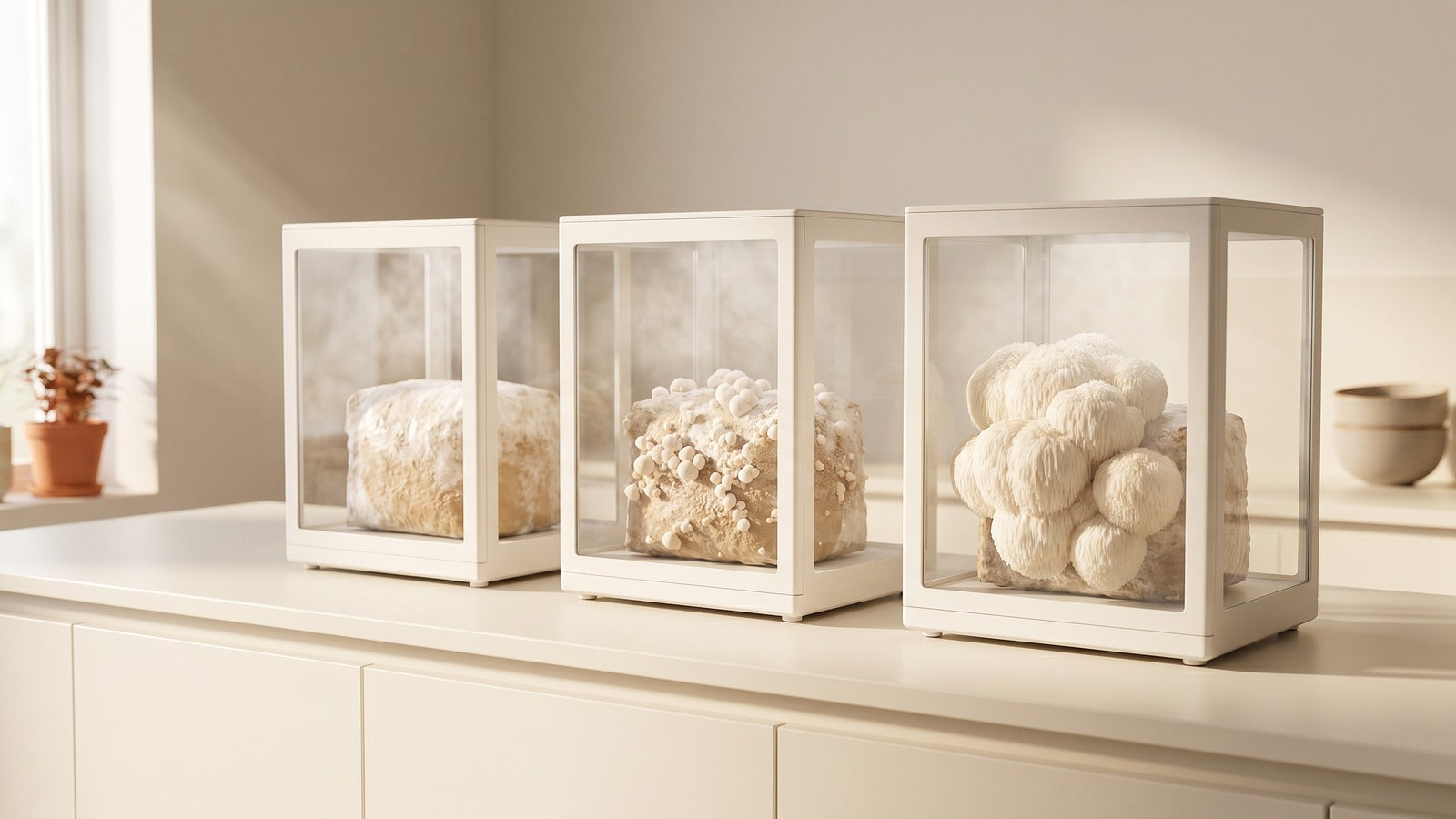
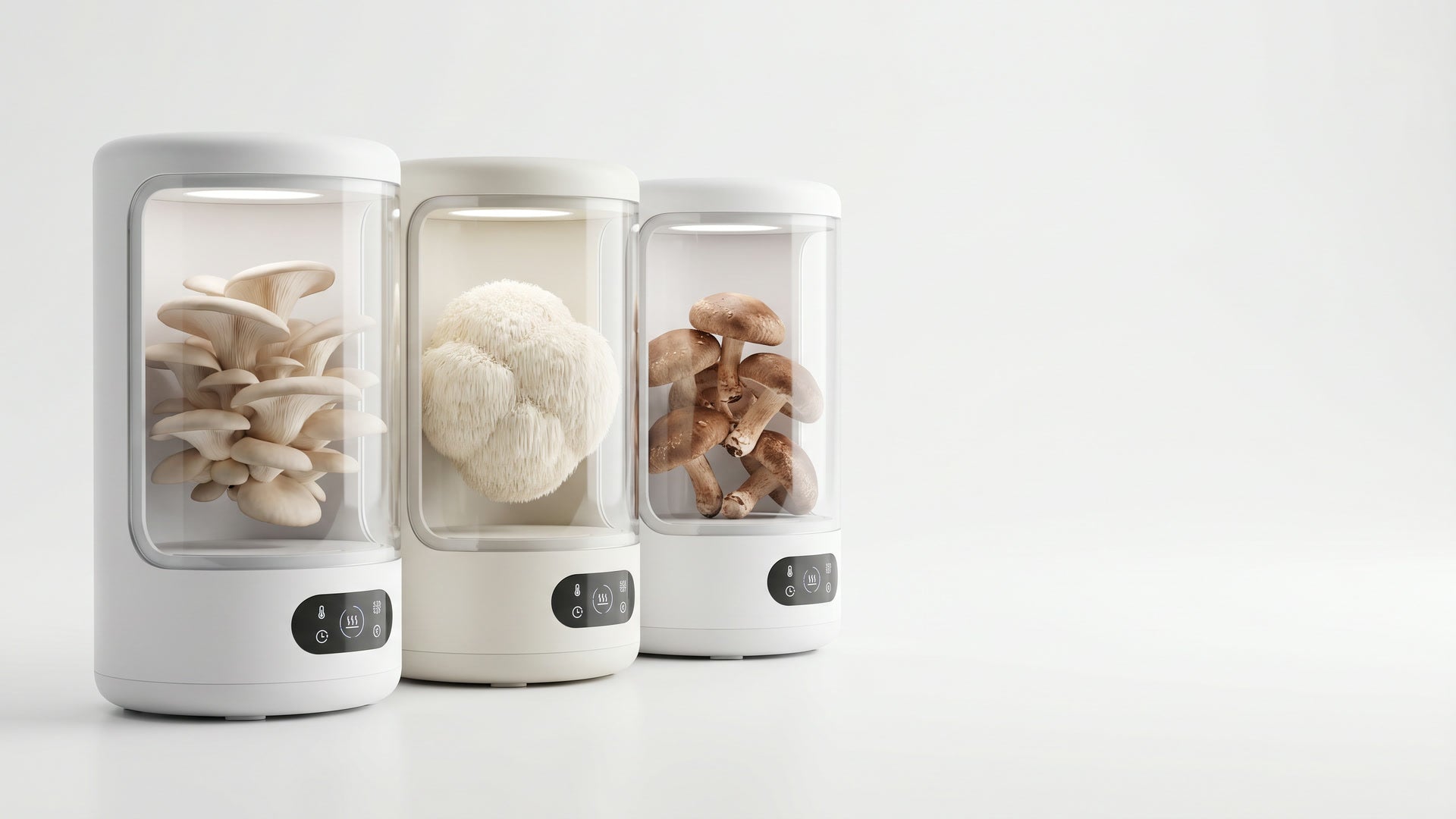
Lion's mane is the species where environmental control pays off most visibly. A block grown in a humid, well-ventilated chamber will out-yield the same block in a dry kitchen by 2 to 3x, every single time. The Lykyn Smart Mushroom Grow Box holds humidity within 2 points of your target, cycles fresh air every few minutes, and runs the lighting schedule automatically, so the four variables that decide yield are no longer your problem.
Pair the chamber with a pre-inoculated lion's mane block and you can skip substrate prep, sterilization, and inoculation in one step. Pick your species, place the block in the chamber, and expect your first cluster within 7 to 12 days from setup.
Fuel Your Mushroom Journey

Smart Chamber. Bone White Single
- 2.8L tank, 90% humidity automatic
- App-controlled, plug-and-play
- 6 lb block ceiling, in stock

Smart Chamber. Obsidian Black Single
- Same hardware as Bone White
- Matte black premium finish
- Pairs with any kitchen palette
Share:
Oyster Mushroom Substrate Comparison: Yields, Cost & Effort
Lions Mane Substrate Recipe: 3 Tested Mixes & Step-by-Step Prep