



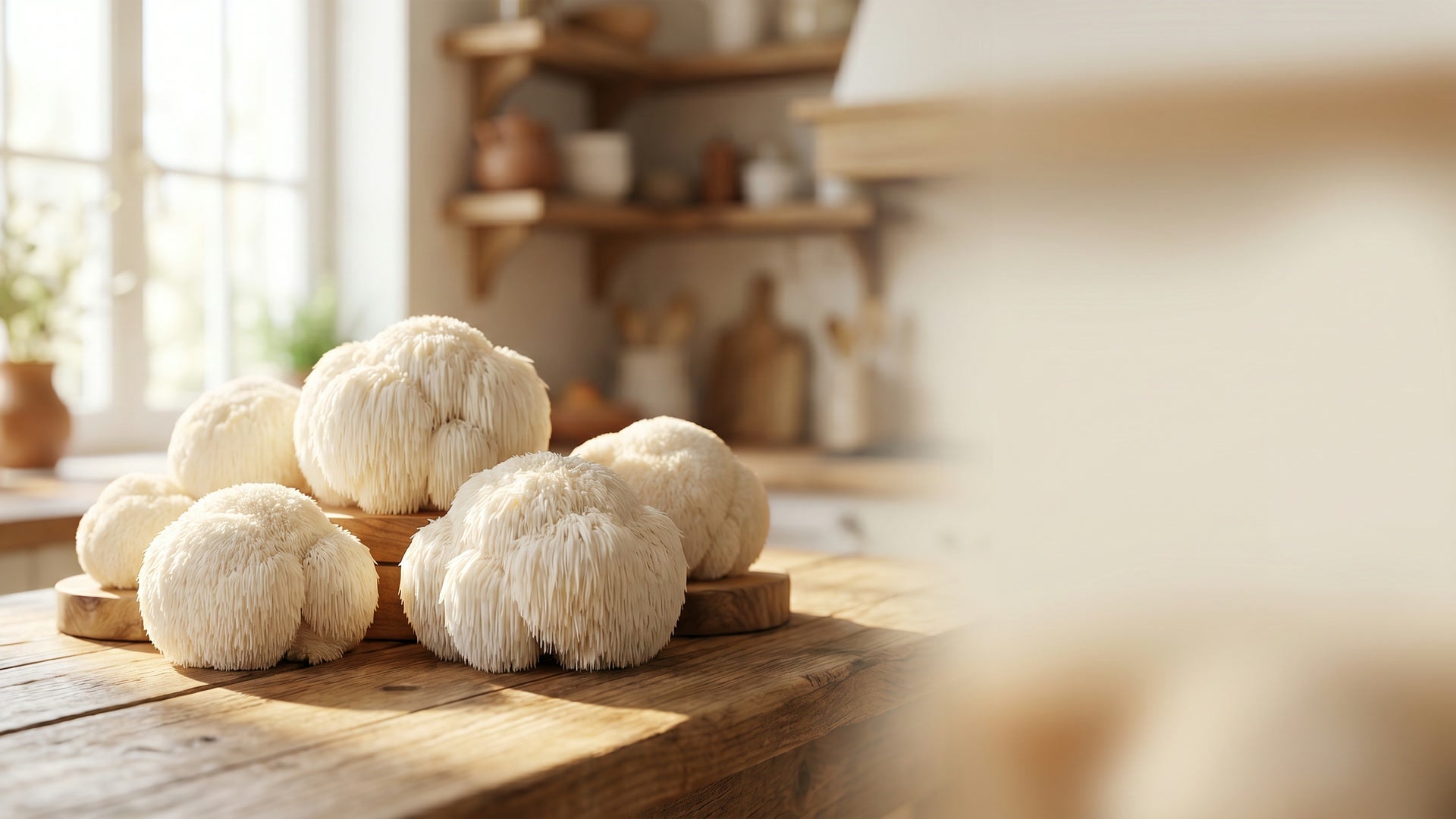
Lion's mane (Hericium erinaceus) has a reputation for being fussier than oyster mushrooms, and most of that reputation comes down to substrate. Where oyster mycelium will colonize almost any cellulose source you hand it, lion's mane wants a specific nutritional profile: hardwood as the base, a nitrogen supplement at the right ratio, the right pH, and a hydration target you cannot eyeball. Get the recipe right and yields land at 75 to 110% biological efficiency. Get the ratios wrong and the block stalls at half-colonized.
This lions mane substrate recipe guide gives you three tested recipes, the chemistry behind why each one works, and a step-by-step prep sequence that covers hydration, sterilization, cool-down, and inoculation timing. By the end you will have a recipe matched to whatever ingredients you can source, and a clear answer for why this species needs more care than oyster.
Why Lion's Mane Is Pickier Than Oyster

Three biological facts drive the difference. First, lion's mane is a wood-decay fungus that evolved on hardwood logs in temperate forests, which means its enzyme set is tuned to break down lignin and cellulose, not the soft cellulose of straw. Second, its mycelium grows roughly 30 to 40% slower than oyster mycelium, so any contaminant that gets in has a longer window to outpace it. Third, the fruiting bodies are nutrient-dense, with high protein and fat content compared to oyster, which means the substrate needs a higher nitrogen baseline to support cluster formation.
Practically, this means lion's mane wants hardwood (not straw), a nitrogen supplement (bran or hulls), pasteurization is not enough (sterilization required), and the substrate must hit a specific hydration target of 60 to 65% moisture. Oyster will fruit on a sloppy 70% hydration straw bag. Lion's mane on the same setup will refuse to pin or grow stunted clusters.
Recipe 1: The Classic Supplemented Hardwood Sawdust Master Recipe

This is the recipe behind most commercial lion's mane blocks and the highest-yielding option for home growers with a pressure cooker. The proportions below are by dry weight before hydration.
- Hardwood sawdust (oak, beech, or maple): 75%
- Wheat bran: 20%
- Gypsum (calcium sulfate): 1%
- Water added: enough to reach 60 to 65% moisture by weight
To check moisture, squeeze a handful of hydrated substrate hard in your fist. You should see 1 to 2 drops of water emerge, not a stream. A stream means too wet (above 70%) and bacterial contamination becomes very likely. No drops at all means too dry (below 55%) and colonization will stall.
For a typical 5 pound block, the math works out to roughly 1.5 pounds dry hardwood sawdust, 6 ounces wheat bran, 1 tablespoon gypsum, and 28 to 32 ounces of water. The gypsum is small but important: it stabilizes pH at 6.5 to 7.0, which is the sweet spot for lion's mane mycelium and roughly one full pH point higher than oyster prefers.
Recipe 2: The Wheat Straw Alternative

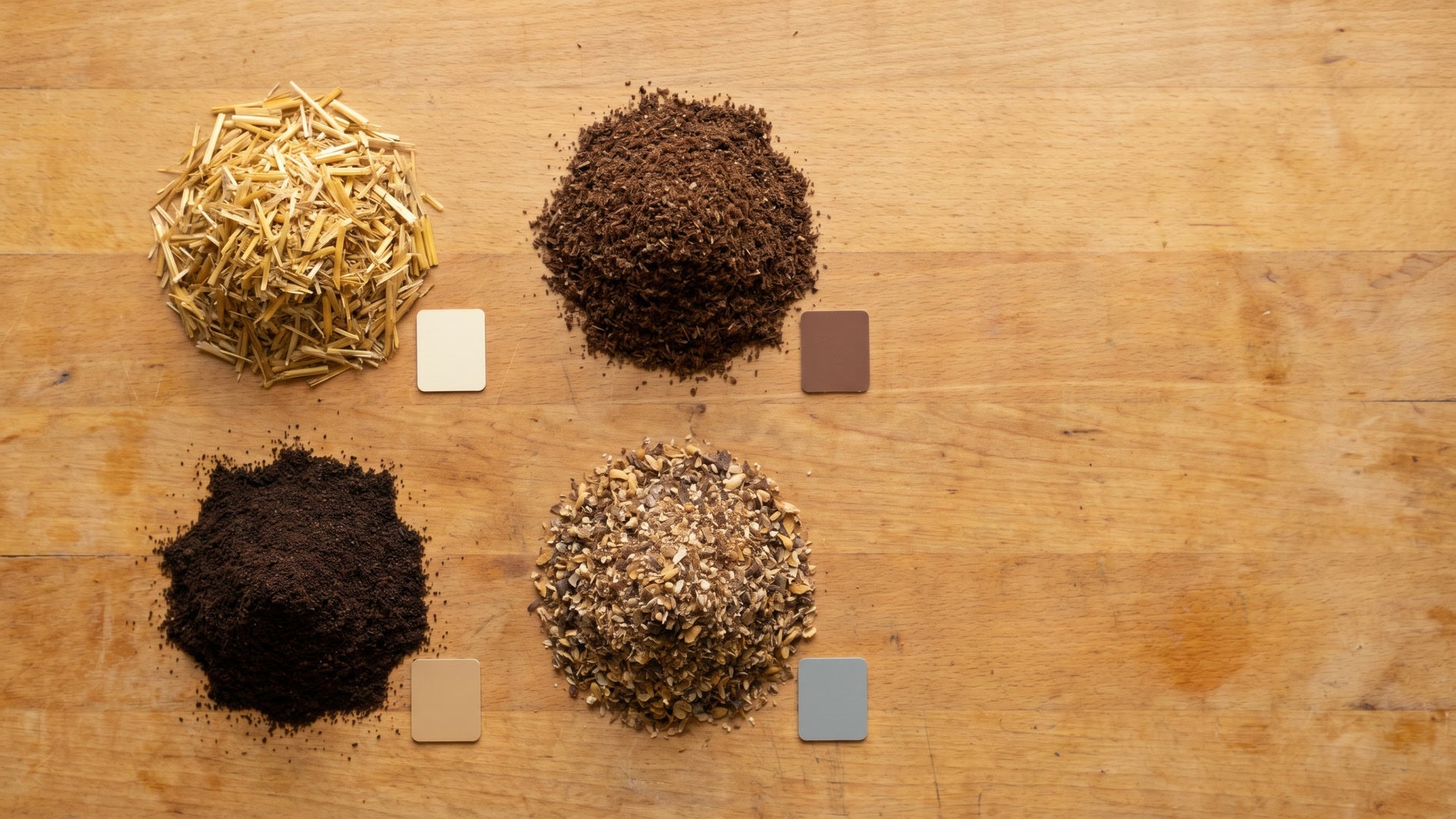
If you cannot source hardwood sawdust, supplemented wheat straw is a workable backup. Yields drop to 40 to 60% BE compared to 75 to 110% on hardwood, and the resulting fruits are smaller and slightly stringier in texture, but the recipe still works.
- Chopped wheat straw (1 to 2 inch pieces): 80%
- Wheat bran: 18%
- Gypsum: 2%
- Water added: enough to reach 65 to 70% moisture by weight
Note the higher hydration target. Straw is less water-retentive than sawdust, so you can push moisture a few points higher without inviting bacterial contamination. The straw should also be chopped fine, ideally with a paper shredder or a sturdy garden mulcher, since long straw fibers create air gaps that slow colonization.
Recipe 3: The Hardwood Pellet Recipe

Hardwood fuel pellets (the kind sold for pellet stoves) are essentially compressed hardwood sawdust with no additives, and they have become a favorite for home growers because they are pre-dried, easy to measure, and free of bark. The pellet recipe matches Recipe 1 by composition, but the prep is simpler.
- Hardwood fuel pellets: 75%
- Wheat bran or soy hulls: 20%
- Gypsum: 1%
- Boiling water: enough to reach 60 to 65% moisture by weight, typically 1 cup water per cup pellets
The trick with pellets is that they expand when hydrated. Add boiling water directly to the dry mix and stir until the pellets fully break down (usually 5 to 10 minutes), then add the bran and gypsum once the mixture has cooled enough to handle. The boiling water step also pre-pasteurizes the substrate, which makes subsequent sterilization more reliable.
Step-By-Step Preparation Sequence

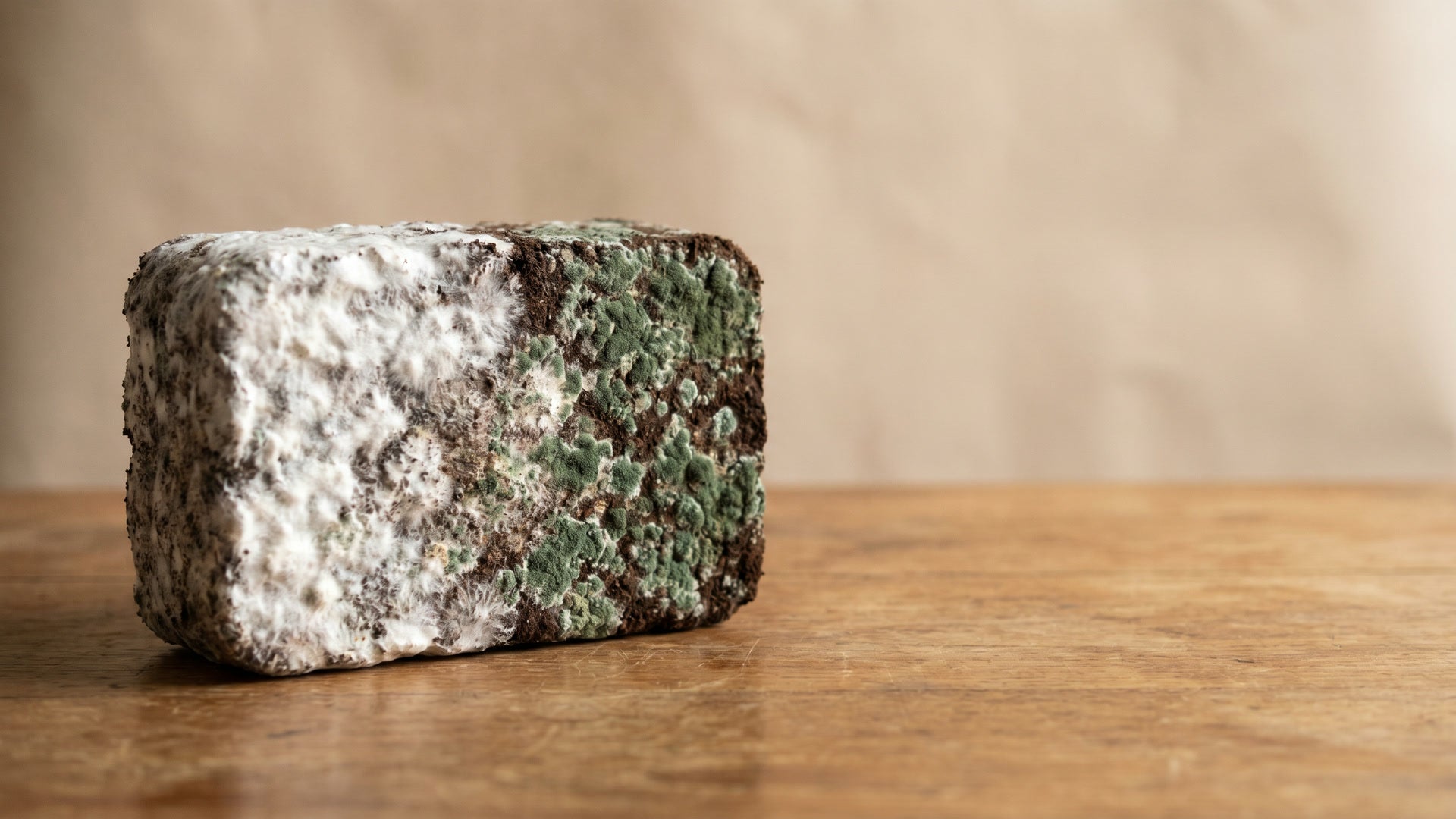
The recipe is half the work. The prep sequence determines whether your substrate fully colonizes or stalls at week 3 with green patches. Follow this order:
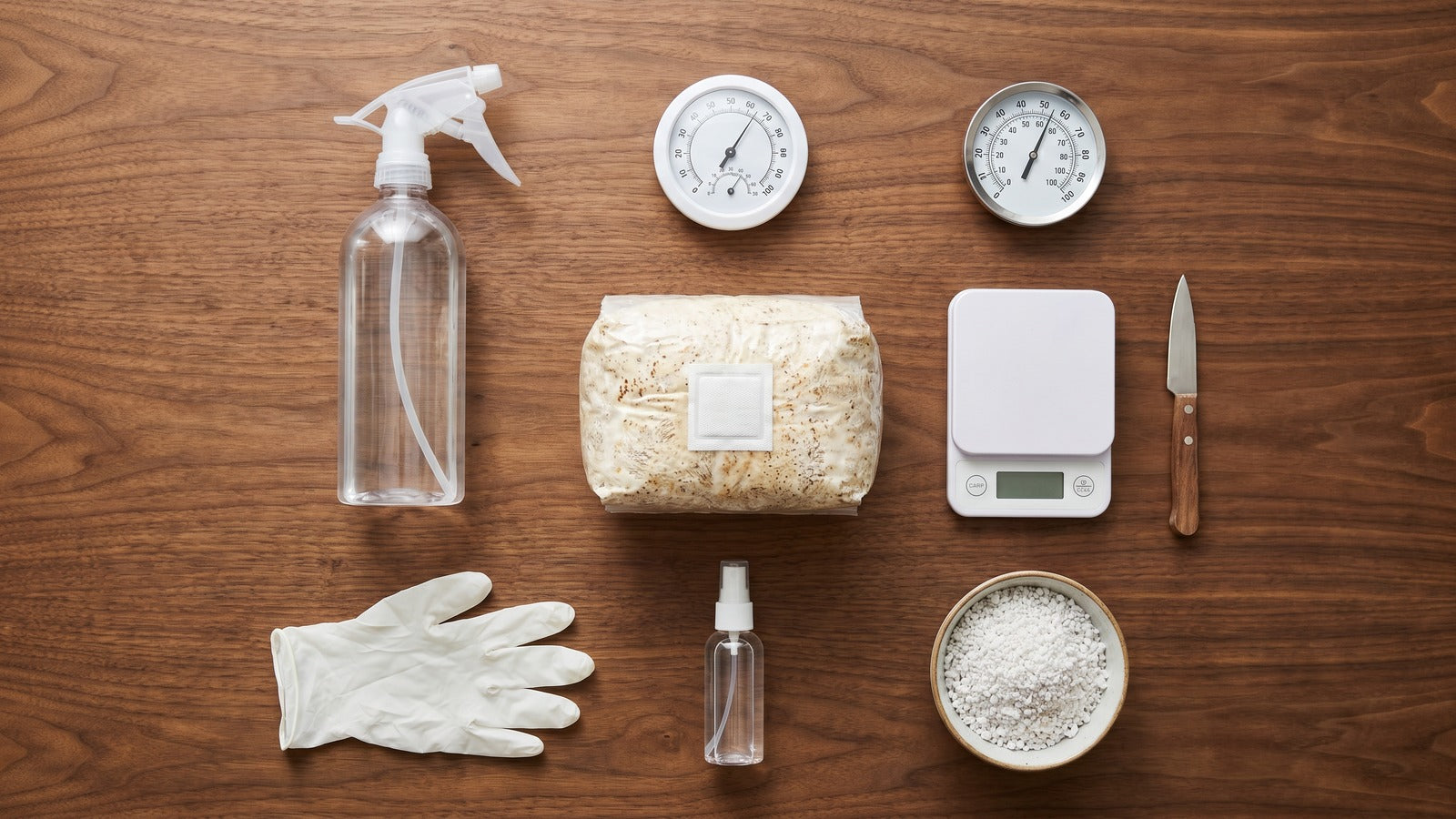
- Weigh dry ingredients into a clean mixing tub. Use a digital kitchen scale, not volume measurements. A cup of bran weighs differently than a cup of sawdust.
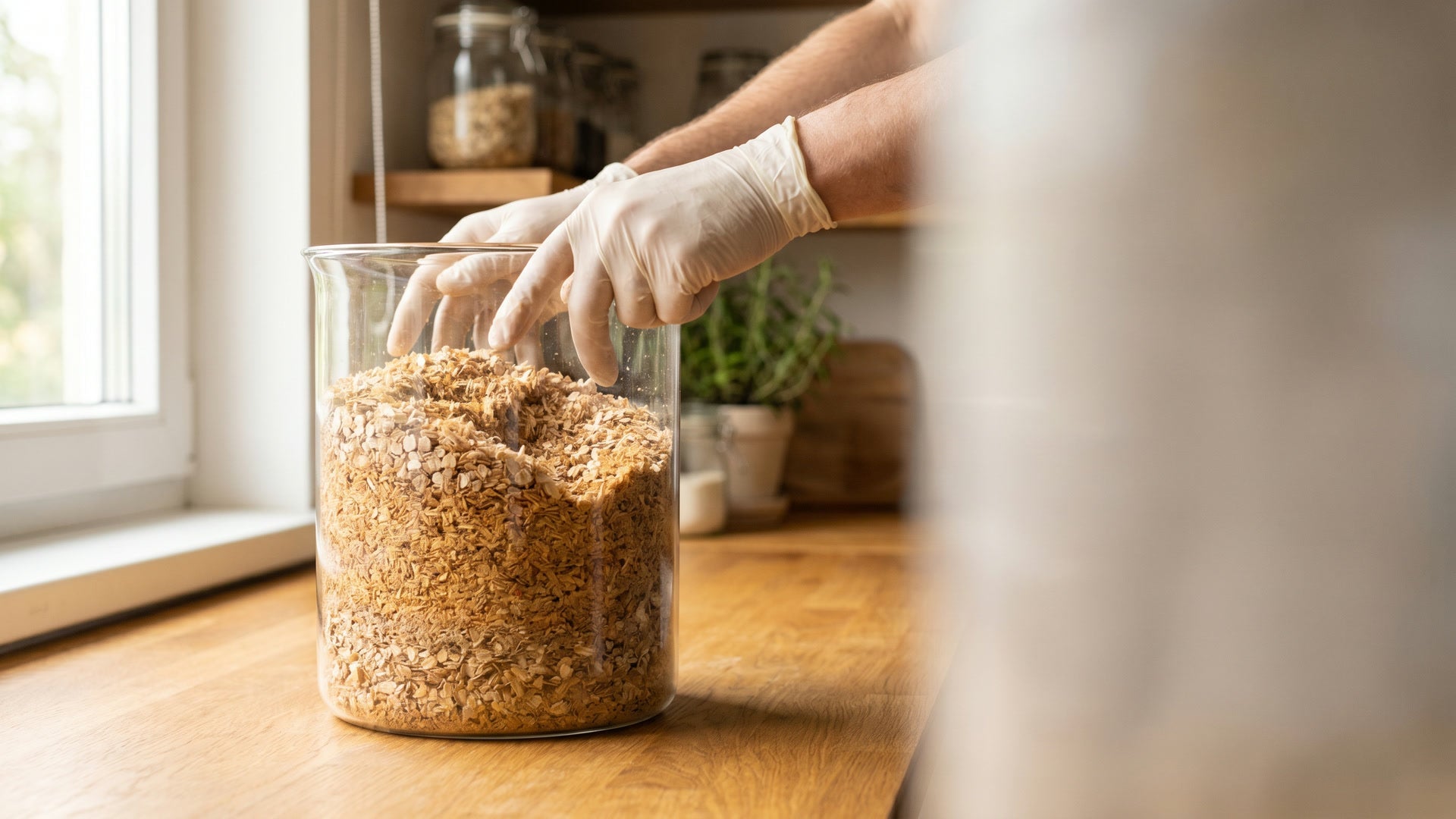
- Mix dry ingredients thoroughly before adding any water. Lumps of bran create nutrient hotspots that contamination loves.
- Add water in stages, mixing between each addition. Stop adding when the squeeze test produces 1 to 2 drops of water from a tightly clenched fist.
- Pack into filter-patch bags at around 5 pounds per bag, pressing firmly to remove air pockets. Air pockets stall colonization in those spots.
- Sterilize at 15 PSI for 2 to 2.5 hours. Lion's mane substrate must be sterilized, not pasteurized. Pasteurization at 160 F leaves too many heat-tolerant bacterial spores alive, and supplemented sawdust is too nutrient-rich for the lion's mane mycelium to outcompete them.
- Cool to room temperature in a clean space. This step is often skipped and costs more grows than any other. The substrate must drop to under 80 F before inoculation. Inoculating hot substrate kills the grain spawn on contact.
- Inoculate with 5 to 10% grain spawn by weight in front of a built-in filter or in a still-air glove box. For a 5 pound block, that is 4 to 8 ounces of fully colonized grain.
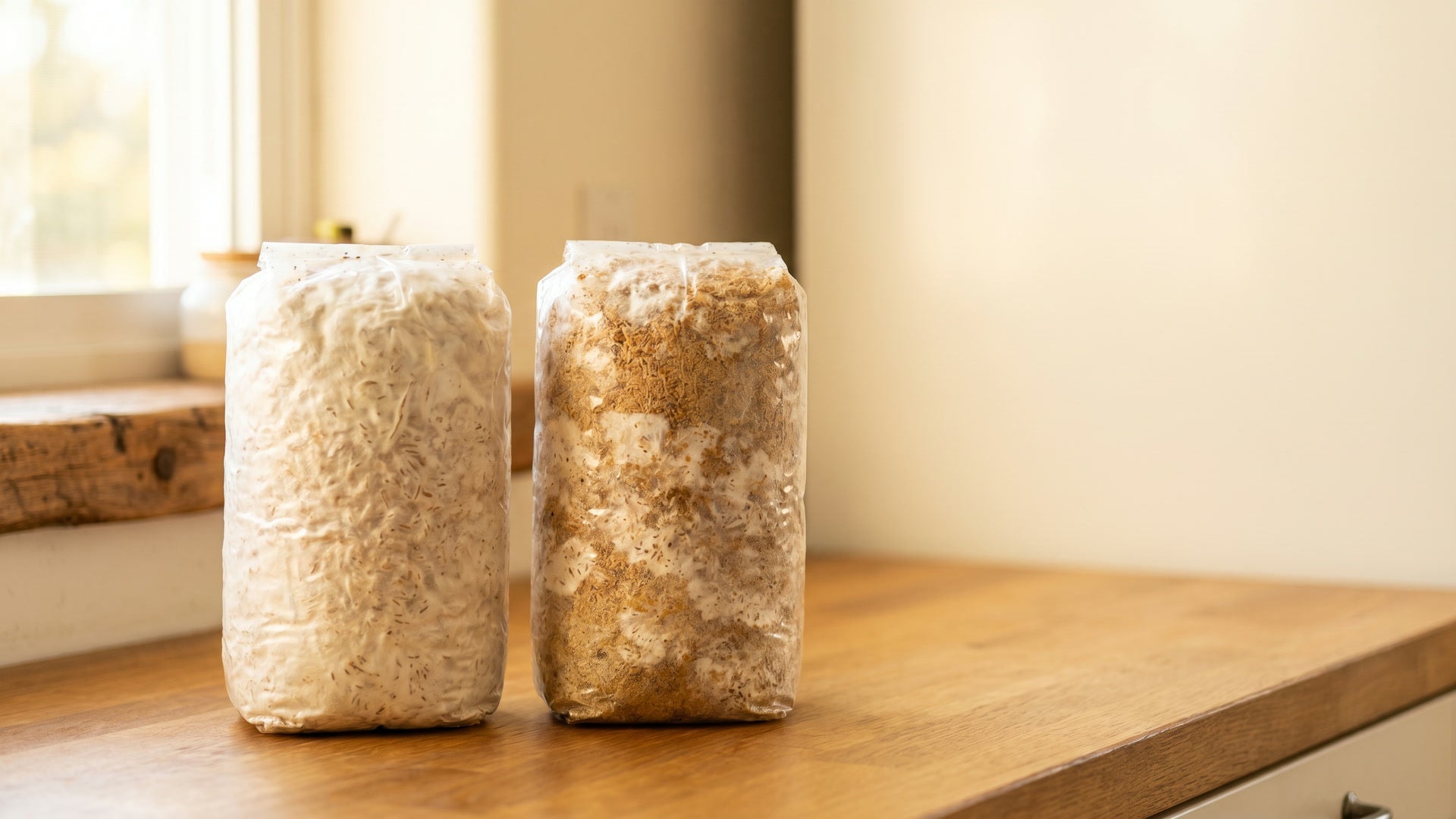
- Incubate at 72 to 78 F in a dark, clean space for 14 to 28 days until the substrate is fully white with mycelium.

Fuel Your Mushroom Journey
Lion's Mane Grow Kit
Hardwood-sawdust block colonized with Lion's Mane mycelium. Drops straight into your Lykyn chamber and starts pinning within days.
Add to cart $29.95Pasteurization Versus Sterilization: The Hard Choice

This is the single biggest difference between lion's mane substrate prep and oyster substrate prep. Oyster mushrooms tolerate pasteurization (160 F for 1 to 2 hours) because oyster mycelium grows fast enough to outcompete the bacterial spores that survive that temperature. Lion's mane does not. The supplemented hardwood substrate that lion's mane needs is rich enough that bacterial competitors will overrun a pasteurized batch before the slower lion's mane mycelium can establish.
If you do not own a pressure cooker, you have two options. One, buy a 23-quart pressure canner (around $150 new, plenty of capacity for 4 to 5 blocks per run). Two, skip the home prep and start with a pre-inoculated and pre-sterilized fruiting block. There is no reliable pasteurization-only shortcut for this species at supplemented hardwood concentrations.
Inoculation Timing And Spawn Rate

The spawn-to-substrate ratio matters more than most beginners realize. A higher spawn rate (10 to 15% by weight) speeds colonization and reduces contamination risk, because the lion's mane mycelium establishes more "starting points" and overruns competitors faster. The tradeoff is cost: grain spawn is more expensive per pound than substrate, so commercial growers tune the ratio for economics rather than speed.
For home growers, 7 to 10% by weight is a good balance. For a 5 pound block, weigh out 5 to 8 ounces of colonized grain. Inoculate within 24 hours of substrate cool-down, because longer cool-down windows expose the sterile substrate to airborne contamination through the bag's filter patch.
If you are growing lion's mane alongside other species, see our shiitake growing guide for a comparable hardwood-loving species that uses a similar substrate recipe with different timing.
Ready to Grow Mushrooms at Home?
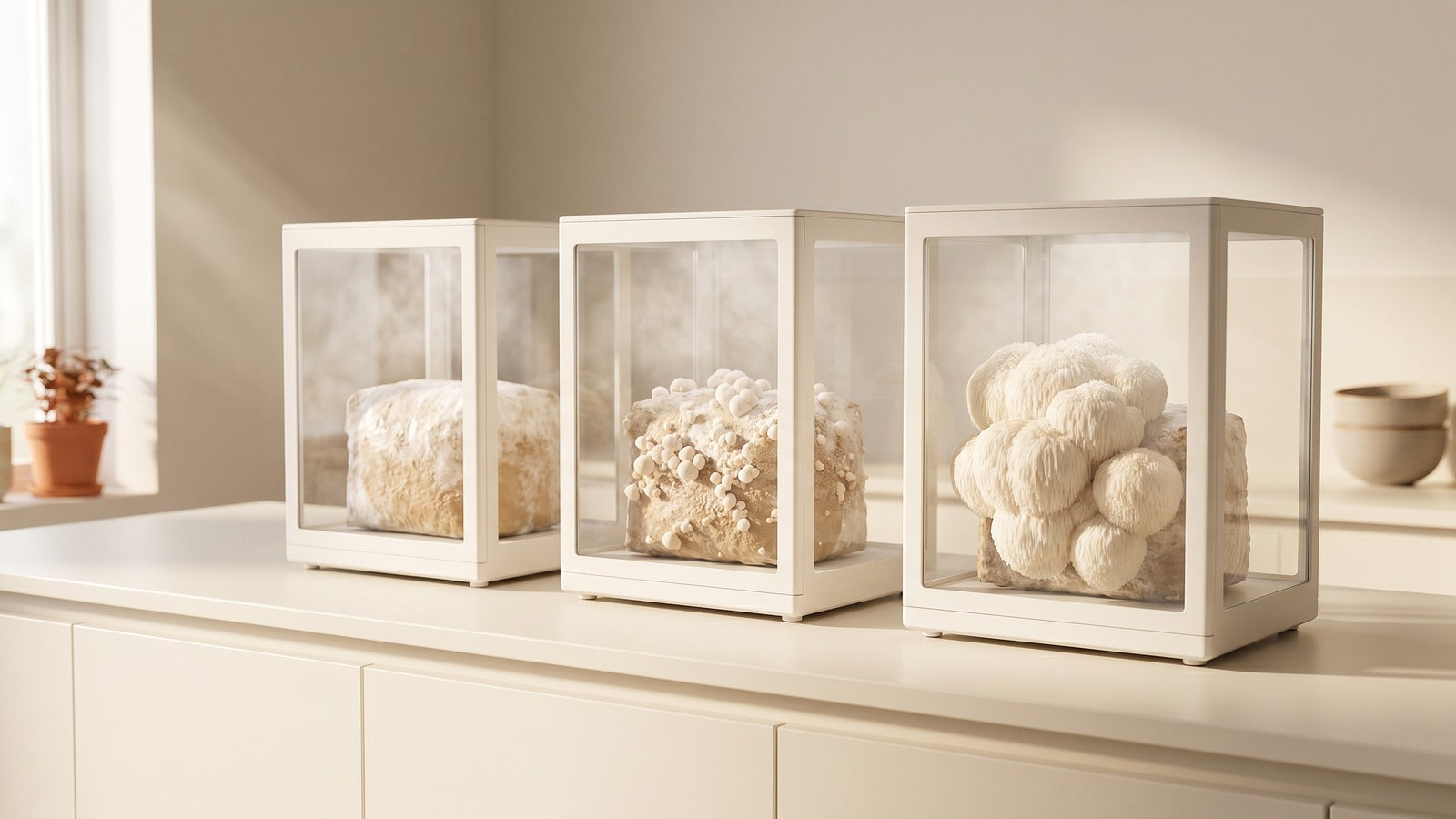
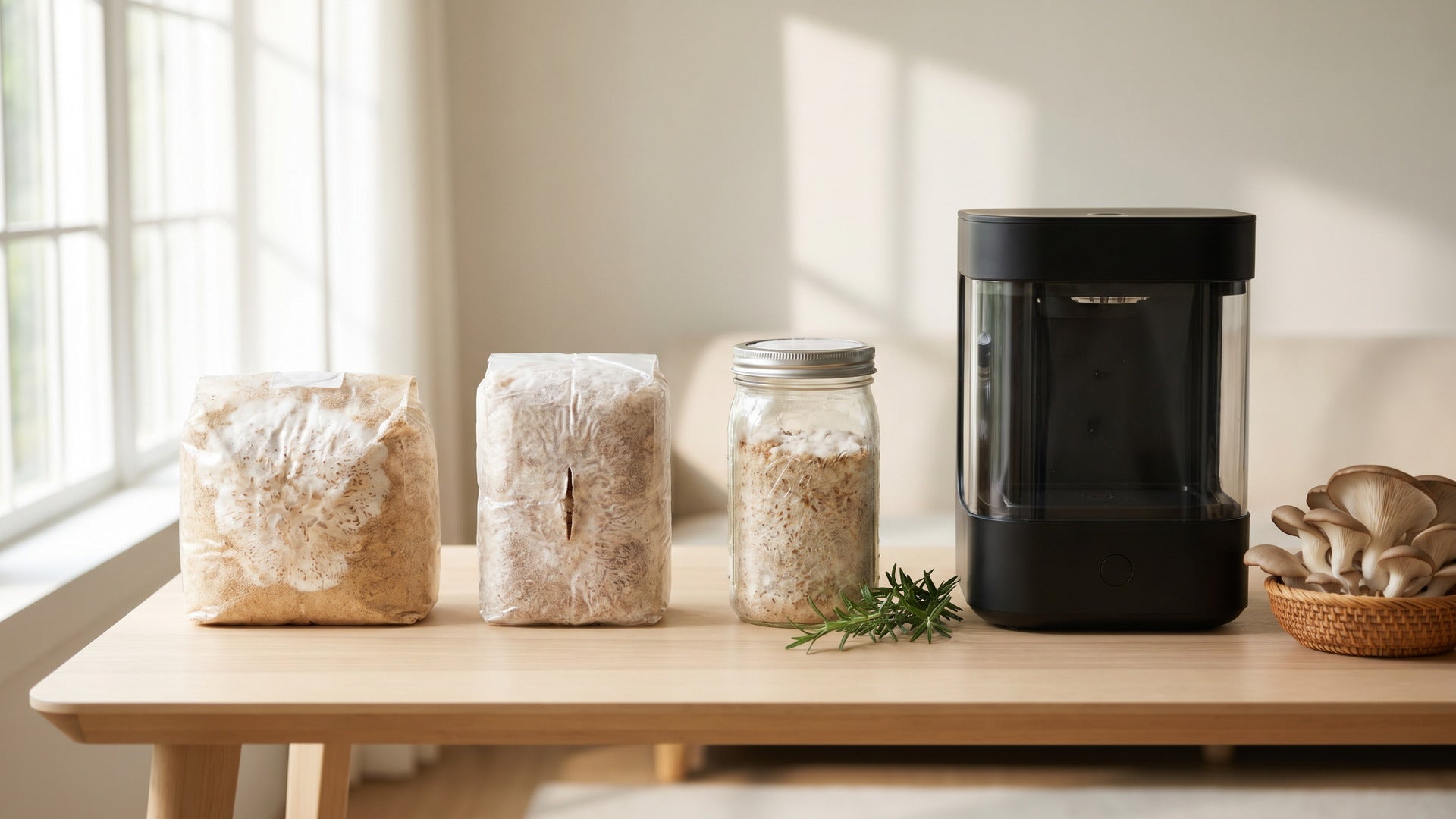
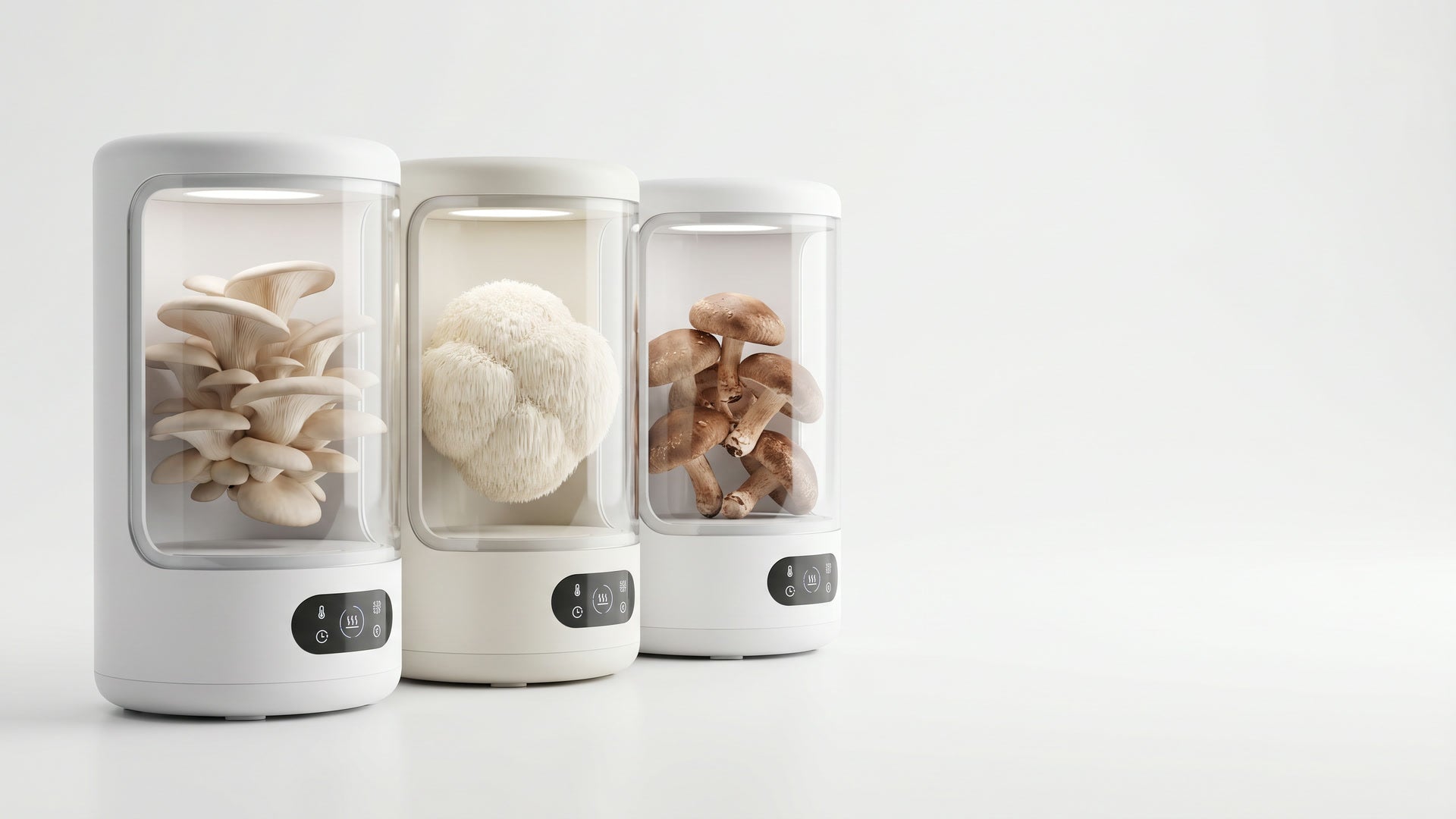
Mixing, sterilizing, cooling, and inoculating a lion's mane substrate properly takes 4 to 6 hours of active work plus a pressure cooker and a clean inoculation space. The Lykyn Smart Mushroom Grow Box pairs with pre-inoculated, pre-sterilized fruiting blocks so you can skip every step in this guide and still hit the upper end of the lion's mane yield range. Each block uses a Recipe 1 style supplemented hardwood substrate, sterilized at 15 PSI and fully colonized before it ships.
Drop the block in the chamber, set your species, and the grow box handles humidity, airflow, and lighting automatically. Browse the full Lykyn grow kit collection to start with lion's mane or any of the other 28 plus gourmet and functional species in rotation.
Fuel Your Mushroom Journey

Smart Chamber. Bone White Single
- 2.8L tank, 90% humidity automatic
- App-controlled, plug-and-play
- 6 lb block ceiling, in stock

Smart Chamber. Obsidian Black Single
- Same hardware as Bone White
- Matte black premium finish
- Pairs with any kitchen palette
Share:
Lions Mane Mushroom Yield: Realistic Numbers & How to Hit Them
Mushroom Grow Kits: 5 Types Compared (Yields and Cost)