



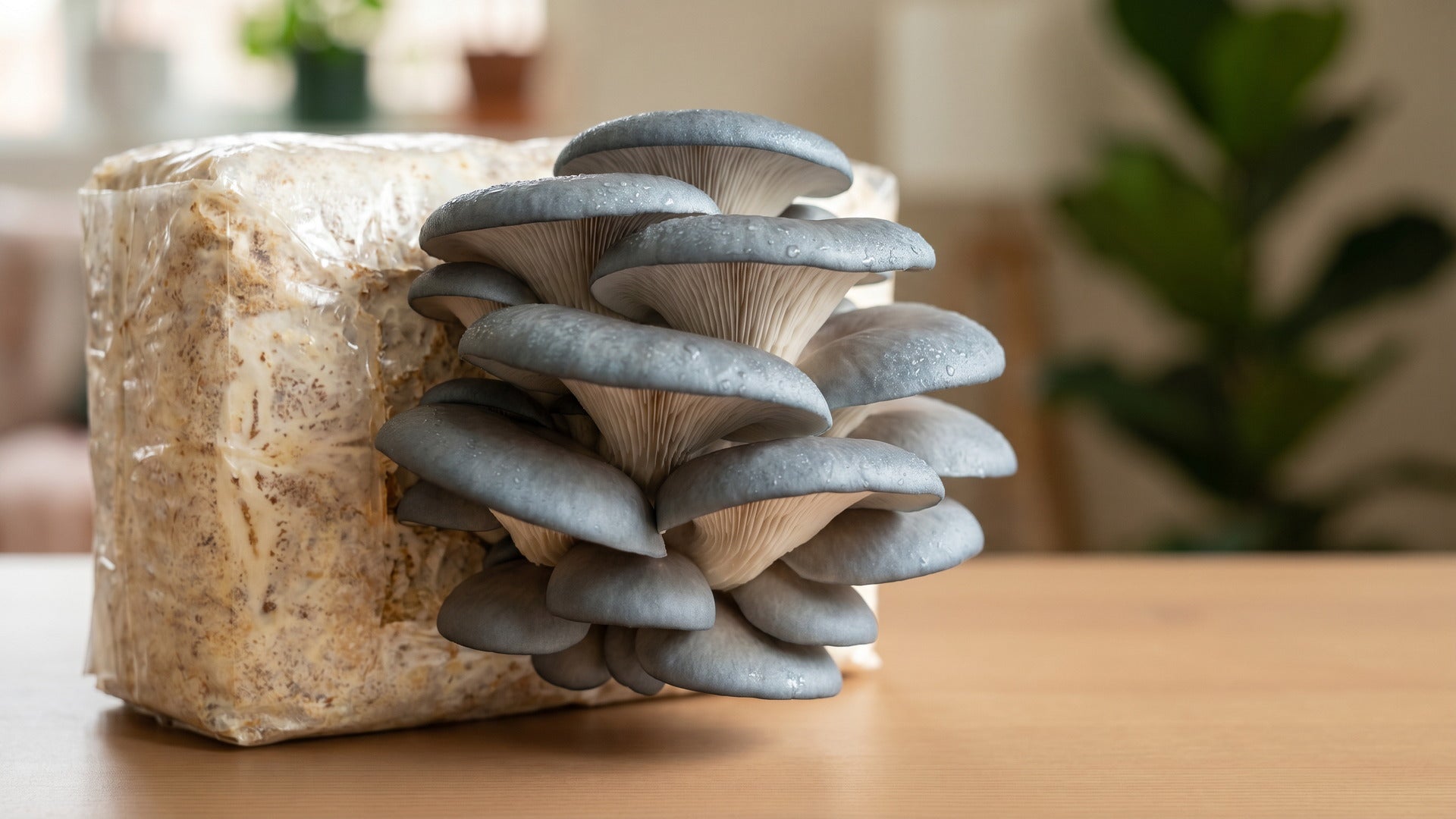
Blue oyster mushrooms (Pleurotus ostreatus var. columbinus) are the cold-fruiting variant of the common oyster mushroom, and they are the single most forgiving gourmet species a home grower can choose. Pin to harvest takes 10 to 14 days, the temperature window is wider than shiitake or lion's mane, and a 5 to 6 pound substrate block delivers 1.25 to 1.75 pounds of fresh mushrooms across multiple flushes. This blue oyster mushroom growing guide focuses on the horticulture: substrate chemistry, fruiting triggers, pin formation timing, and flush biology.
The information below is process-first, not product-first. Whether you grow on a hardwood block, a straw bag, or a mixed Master's Mix substrate, the underlying biology of P. ostreatus var. columbinus stays the same. Get the substrate right, hold the trigger conditions, and the mushrooms will form on schedule almost every time.
The Species: Pleurotus ostreatus var. columbinus in Detail

Identifying Pleurotus ostreatus var. columbinus
Blue oyster is a phenotypic variant of Pleurotus ostreatus, separated from the type by its cold-induced indigo to slate-blue pigmentation at primordia. The "columbinus" varietal designation was first applied by mycologist Pier Andrea Saccardo in 1887 to describe the dove-gray to blue color forms found in cooler European climates. Modern commercial strains derive primarily from Italian and Hungarian breeding lines.
How it differs from gray and pearl oysters
The mycelium is a primary decomposer with strong lignolytic and cellulolytic enzyme activity. It produces laccase, manganese peroxidase, and lignin peroxidase in concentrations high enough to break down hardwood, cardboard, coffee grounds, and even some agricultural waste streams. This versatility is part of why the species adapts to so many substrate formats.
Compared to other Pleurotus variants, blue oyster runs cooler. Pink oyster (P. djamor) prefers 70 to 85°F. Gold oyster (P. citrinopileatus) sits at 65 to 75°F. Blue oyster fruits at 50 to 65°F, which is what triggers the blue pigment in the first place. For a side-by-side species comparison, the oyster mushroom overview covers the entire Pleurotus family.
Substrate Recipes for Blue Oyster: Straw vs Supplemented Sawdust

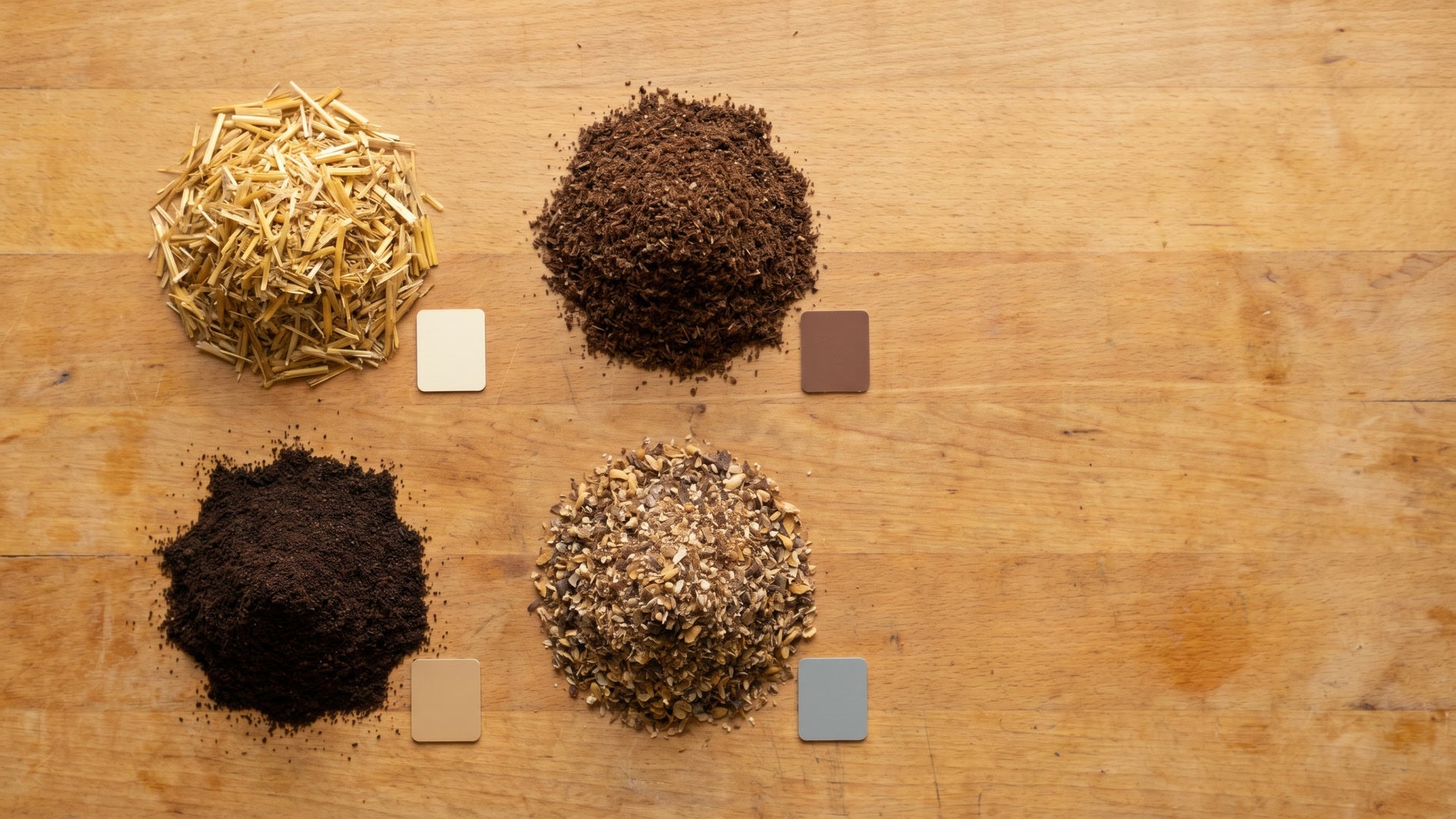
Straw substrate: cheap and fast
Blue oyster fruits on more substrates than almost any other gourmet species, but two recipes outperform the rest at home scale.
Recipe A: Pasteurized Wheat Straw (beginner-friendly)
Straw is cheap, widely available, and pasteurizes (rather than sterilizes) cleanly. Yield is moderate but the technique is forgiving.
- 5 pounds dry wheat straw, chopped to 2-inch lengths
- Hydrate in 160 to 175°F water for 90 minutes
- Drain to 65 to 70% moisture (squeeze test: a thin stream releases)
- Inoculate with 8 to 10% grain spawn by weight
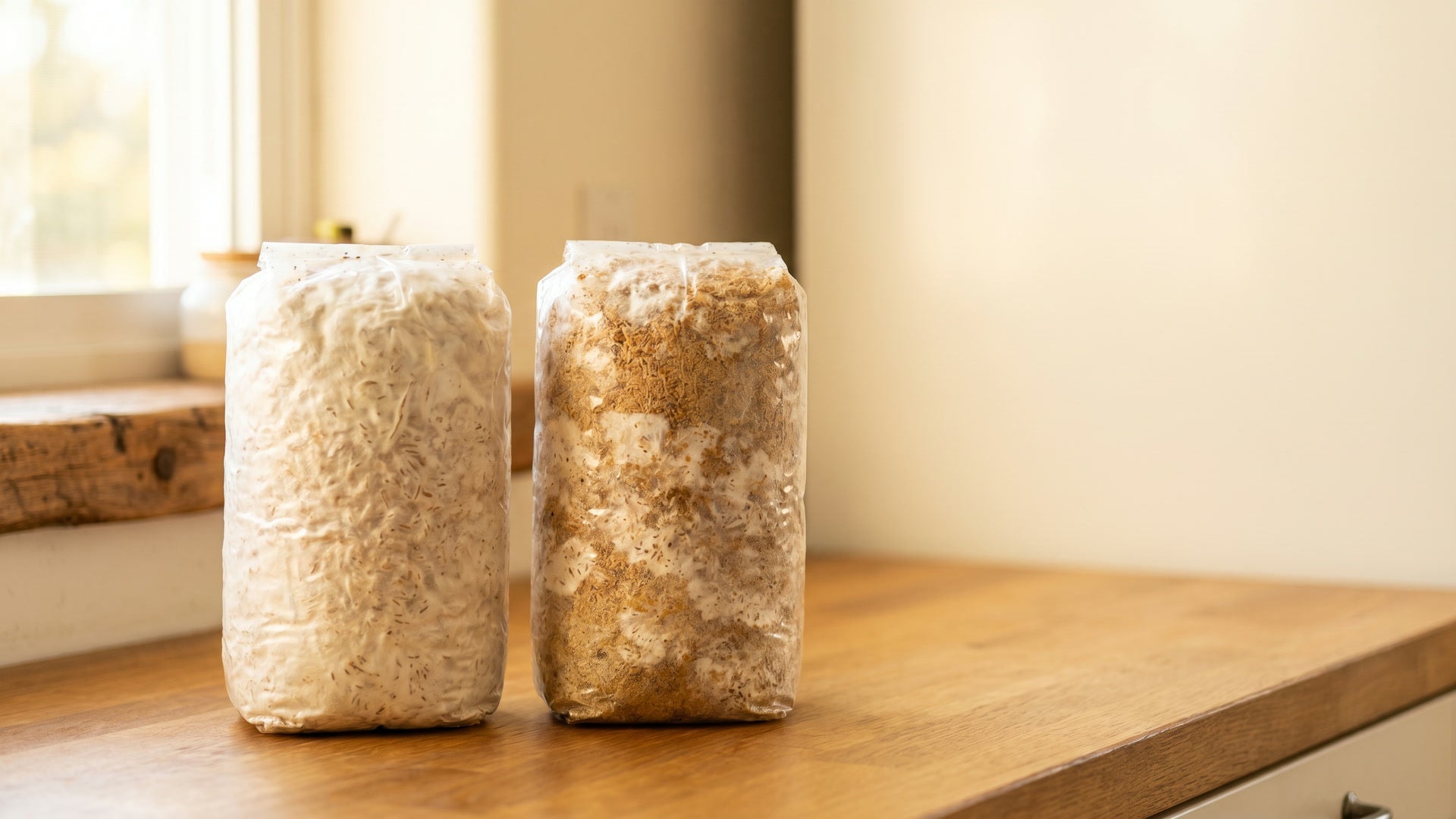
- Bag in 5-pound breathable filter-patch bags
Supplemented sawdust: highest yield
Expected yield: 0.7 to 1.0 pound of fresh mushrooms per bag across 2 flushes. Colonization time: 14 to 21 days at 70°F.
Recipe B: Supplemented Hardwood Sawdust (higher yield)
The commercial standard, also called Master's Mix. Higher nitrogen content drives larger fruits and thicker flesh.
- 50% hardwood fuel pellets (oak, beech, or maple) by dry weight
- 50% soy hulls by dry weight
- Hydrate to 60 to 65% moisture
- Sterilize at 15 PSI for 90 minutes (not pasteurize, due to soy hull nitrogen)
- Cool, inoculate with 5 to 10% grain spawn, bag in 5-pound bags
Expected yield: 1.25 to 1.75 pounds per bag across 2 to 3 flushes. Colonization time: 12 to 18 days at 70°F. Contamination risk is higher because of the nitrogen content, so sterile technique matters more than with straw.
For full substrate chemistry and how to dial moisture by feel, the mushroom cultivation basics guide walks through the universal squeeze test and moisture targets.
Ideal Fruiting Conditions: Humidity, Temperature, Light, FAE

Once the substrate is fully colonized (white mycelium covering the bag with no visible substrate), the block is ready to fruit. Move it to fruiting conditions and trigger pin formation.
Humidity: 85 to 95% RH during pin formation, 80 to 90% RH once caps expand. Pins desiccate within hours below 75%.
Temperature: 50 to 65°F for the first 72 hours after pinning to lock in blue pigment. After that, up to 70°F is fine, with the caps fading to gray-tan. Sustained temperatures above 75°F stall fruiting entirely.
Light: 12 hours of indirect daylight or a basic LED on a timer. 100 lux is enough.
Fresh air exchange: Every 15 to 30 minutes during pin formation, every 30 to 60 minutes during cap expansion. Long thin stems mean you need more FAE.
Fruiting Trigger and Pin Formation Timeline

Pin formation in blue oyster is triggered by a combination of cold shock and surface exposure. Most home growers cut a 4 to 5 inch horizontal slit on one face of the colonized bag, drop temperature to 55 to 60°F, and raise humidity to 90%. Within 5 to 10 days, primordia (the earliest visible mushroom structures) emerge from the slit.

Fuel Your Mushroom Journey
Smart Mushroom Grow Chamber
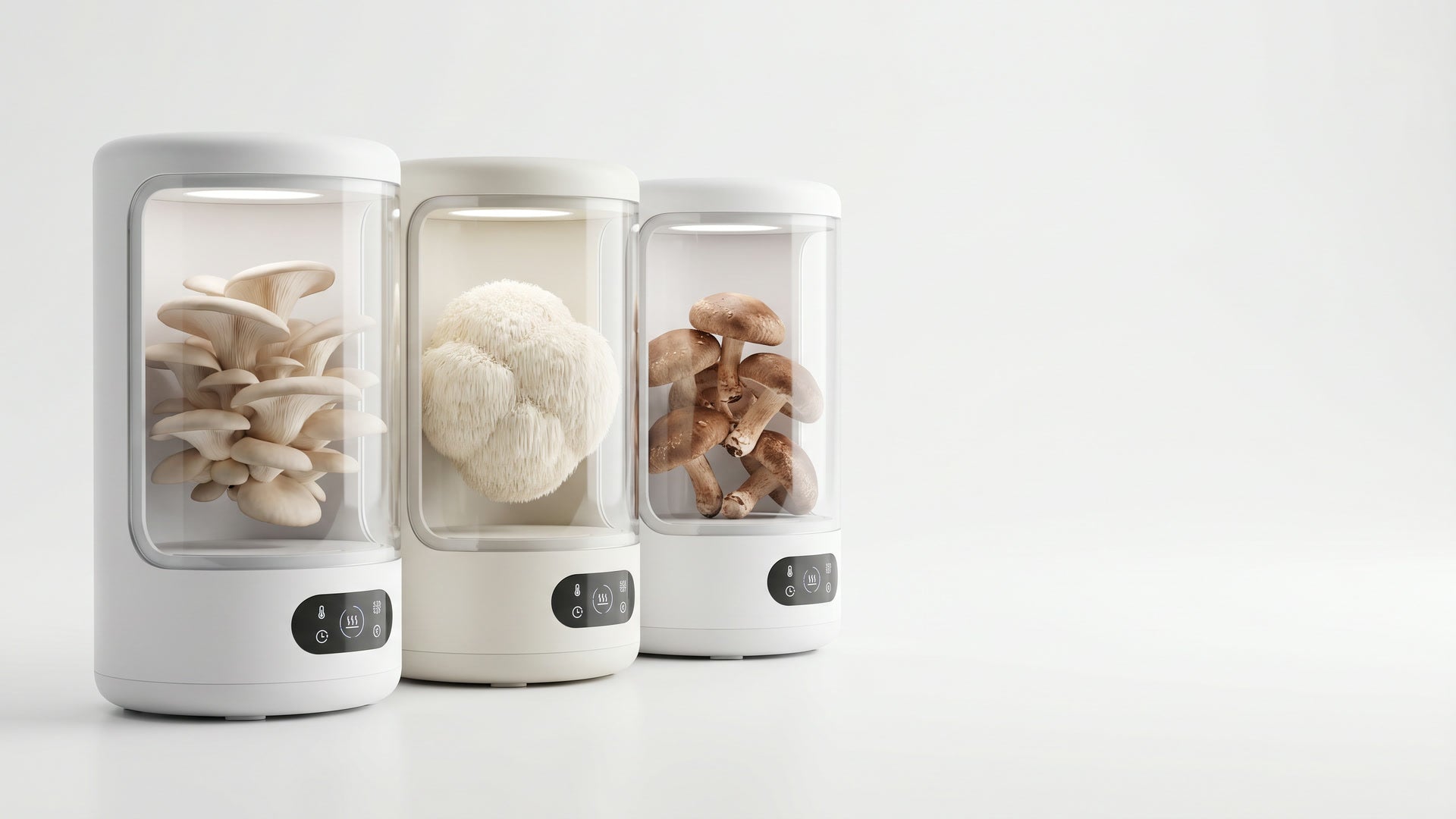
Plug-and-play smart chamber with humidity, light, and airflow dialed in for every species. Beginners harvest their first flush in days, not months.
Add to cart $299The biology of pinning is precise:
- Day 0: Slit cut, temperature drop initiated.
- Day 1 to 3: Mycelium thickens at the slit. White fuzz becomes denser, more granular.
- Day 3 to 5: Primordia form (tiny pinhead bumps, 1 to 2 mm).
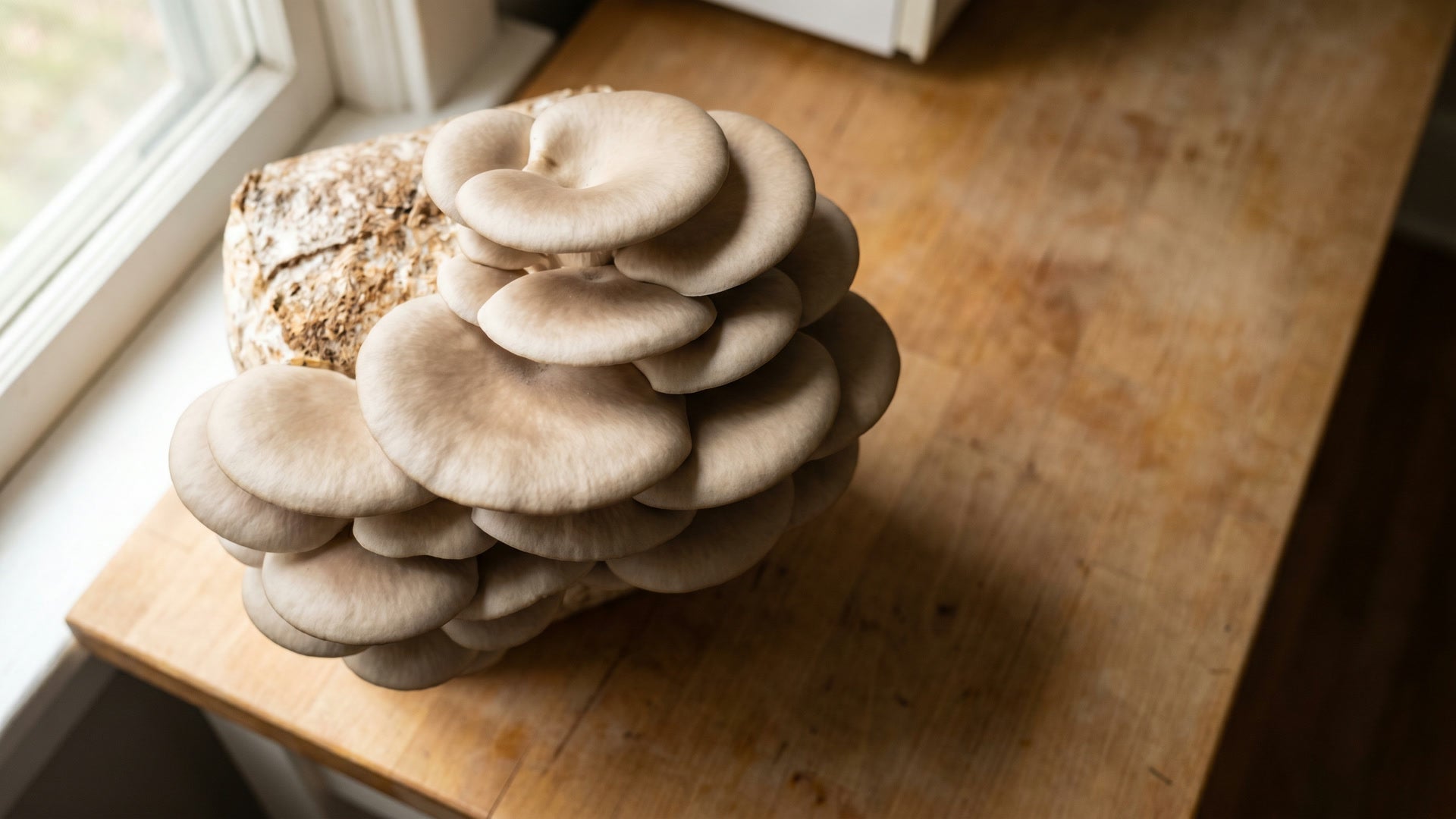
- Day 5 to 7: Primordia differentiate into stem and cap. Caps appear deep slate-blue.
- Day 7 to 10: Caps expand 5 to 10x daily, fan out into characteristic oyster shelves.
- Day 10 to 14: Cluster reaches harvest size, caps 2 to 4 inches across.
If pins do not form by day 10, the most likely cause is the slit drying out (mist it lightly) or temperature staying above 65°F (move to a cooler location). For aborted pin patterns and recovery, the aborted pins guide covers root causes in detail.
Harvest Signs and Multi-Flush Biology

Harvest blue oyster when caps are 2 to 4 inches across and the edges are still slightly downturned, not flattened. Gills should be pale cream, never tan. Sniff test: fresh blue oyster has a faint anise note. If it smells musty, harvest immediately because shelf life has already begun to drop.
To harvest, slip a clean knife under the base of the cluster and cut. Do not twist or pull, since either action damages the mycelium and delays the next flush by 3 to 5 days.
Blue oyster blocks support multiple flushes because the mycelium is not consumed by the first fruiting. Roughly 60% of the substrate's available nutrients remain after flush one. To trigger flush two:
- Cut spent stems flush to the substrate with clean scissors
- Submerge the block in cool clean water for 4 to 6 hours
- Drain for 10 minutes
- Return to fruiting conditions (55 to 65°F, 90% RH)
- Pins appear 7 to 14 days later
Expected flush distribution from one 5 to 6 pound block:
- Flush 1: 0.7 to 1.0 pound (largest, deepest blue)
- Flush 2: 0.3 to 0.5 pound
- Flush 3: 0.15 to 0.25 pound (smaller fruits, lighter color)
By flush four the substrate is depleted and contamination risk rises above 30%, so the block is ready to compost. The residual mycelium is excellent organic matter for outdoor garden beds.
Common Pests and Issues in Blue Oyster Cultivation

Fungus gnats and sciarid flies
Long thin stems with small caps. Cause: CO2 buildup. Fix: increase fresh air exchange frequency. In a tent, fan three to four times daily. In a chamber, increase FAE cycles.
Bacterial blotch and contamination
Caps trending gray, not blue. Cause: fruiting temperature above 65°F. Fix: move to a cooler location for the first 72 hours after pinning. Color is the only difference, since flavor and nutrition are identical.
Pins shrivel before they form. Cause: humidity drop below 80%. Fix: bump humidity to 92%, mist tent walls twice daily.
Green patches on the block (Trichoderma mold). Cause: contamination from non-sterile cuts or stagnant air. Fix: cut out small patches with a clean knife, increase airflow. If contamination covers more than 20% of the block, compost it.
Fungus gnats (Lycoriella spp.). Small black flies hovering near the bag. Cause: damp substrate plus organic debris. Fix: yellow sticky traps and tighter humidity control. Gnats themselves do not harm the mycelium directly but their larvae chew through pinning surfaces.
Bacterial wet rot. Yellowish slime patches with a sour smell. Cause: surface water lingering on caps. Fix: improve airflow, harvest immediately if affected mushrooms are still firm elsewhere on the cluster.
For a deeper diagnostic walkthrough, the block not fruiting guide covers blocks that colonize fully but never produce pins.
Going Beyond First Flush: Strain Selection and Year-Round Growing

If you plan to grow blue oyster repeatedly across the year, strain choice matters. "Blue Pearl" holds blue pigment up to 68°F. "Italian Blue" pushes that ceiling to 72°F. "Hungarian Slate" prefers the coolest conditions and produces the deepest indigo at 52 to 58°F. Lykyn's commercial strain is selected for cold-pigment retention with consistent flush 2 yield.
Blue oyster also tolerates outdoor cultivation on hardwood logs in temperate climates. Spring and fall flushes form naturally on inoculated oak or beech logs in shaded outdoor positions, with each log producing 1.5 to 3 pounds annually over 4 to 6 years. For pink oyster (warm-loving sister species) the pink oyster growing guide covers the contrast.
Ready to Grow Mushrooms at Home?
Mixing, sterilizing, cooling, and inoculating a blue oyster substrate properly takes 4 to 6 hours of active work plus a pressure cooker and a clean inoculation space. The Lykyn Smart Mushroom Grow Box pairs with pre-inoculated, pre-sterilized blue oyster blocks so you can skip every step in this guide and still hit the upper end of the 1.25 to 1.75 pound yield range. Each block uses a supplemented hardwood substrate, sterilized at 15 PSI and fully colonized before it ships.
Drop the block in the chamber, set the species, and the grow box handles humidity, airflow, and lighting automatically. Browse the full Lykyn grow kit collection to start with blue oyster or any of the other 28 plus gourmet and functional species in rotation.
Fuel Your Mushroom Journey

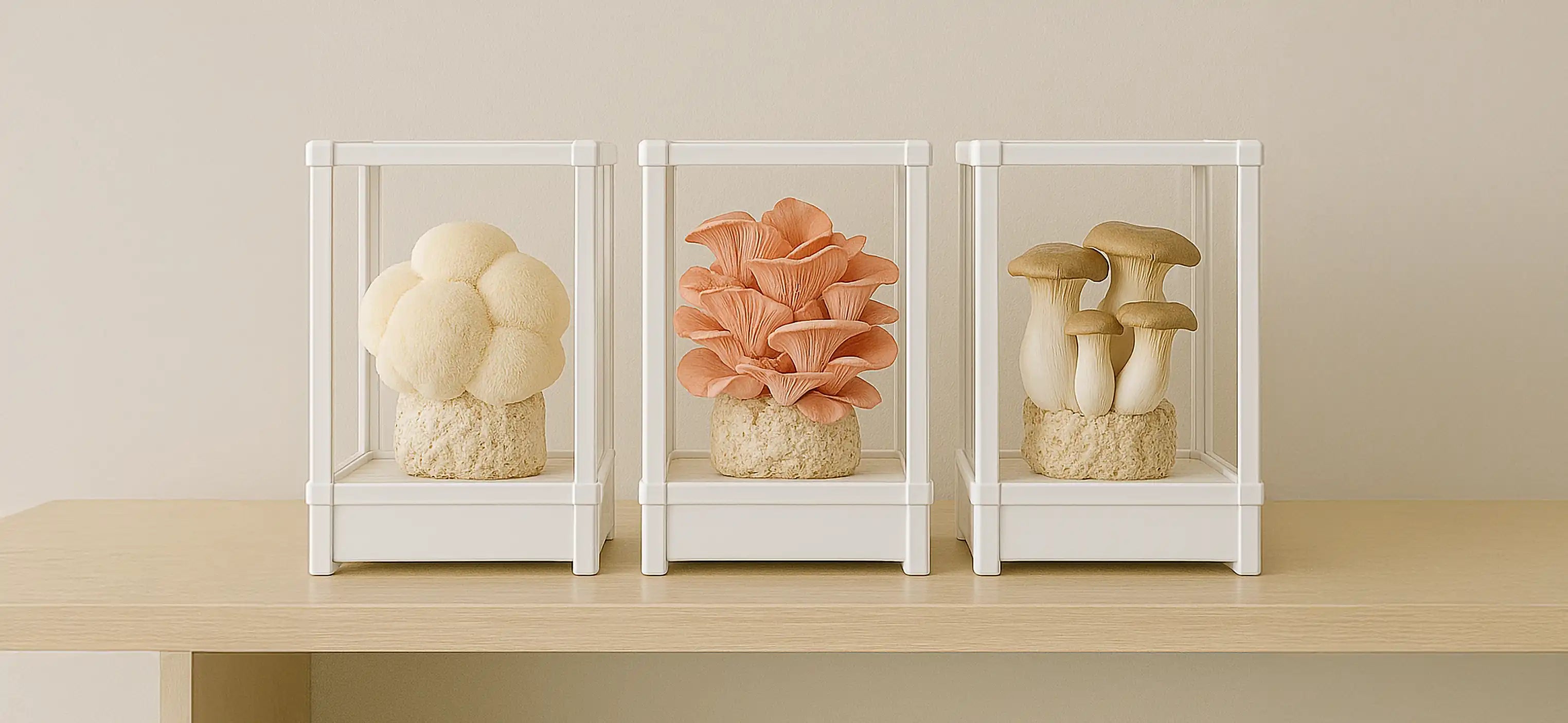
Smart Chamber. Bone White Single
- 2.8L tank, 90% humidity automatic
- App-controlled, plug-and-play
- 6 lb block ceiling, in stock

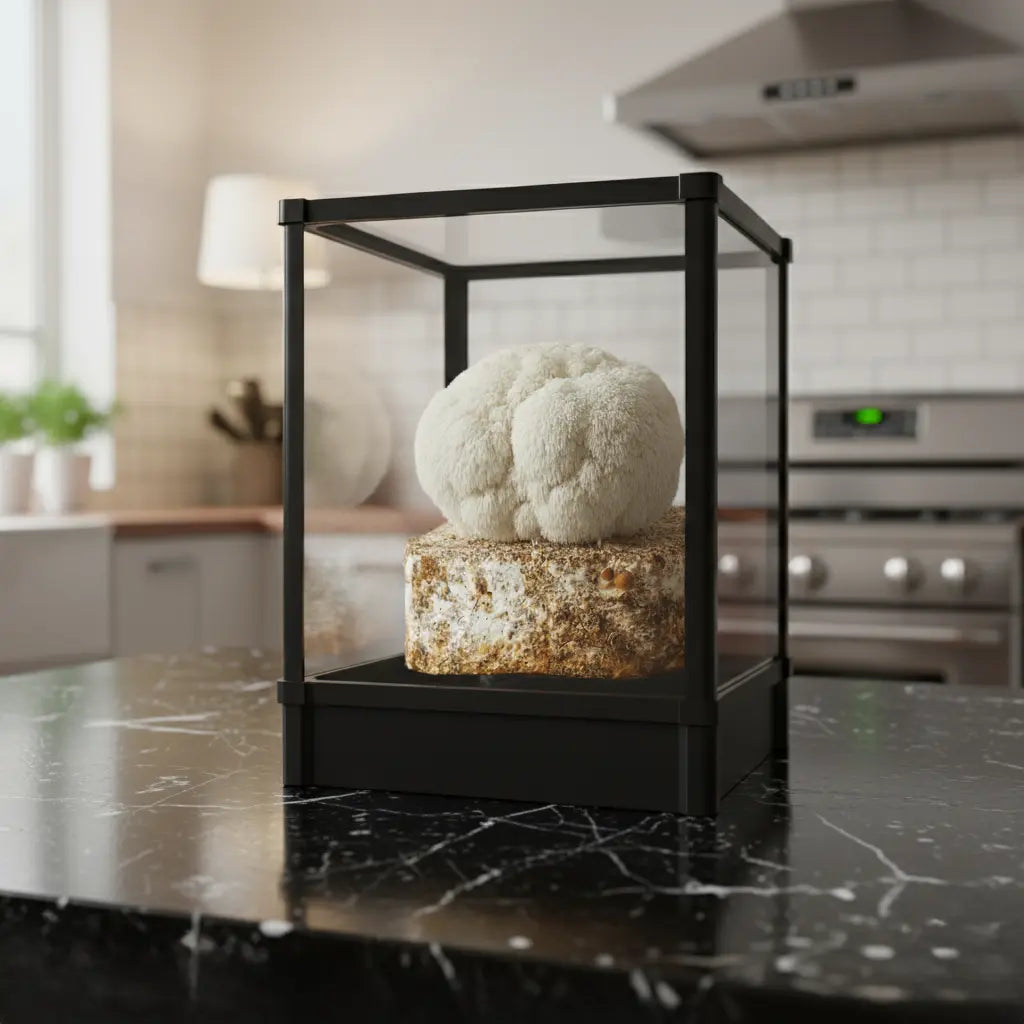
Smart Chamber. Obsidian Black Single
- Same hardware as Bone White
- Matte black premium finish
- Pairs with any kitchen palette

Black Oyster Grow Kit (5 lbs)
- Pre-colonized hardwood block
- Pairs with any Lykyn chamber
- Sister-strain to blue oyster
Share:
Mushroom Cultivation Basics: 4 Principles Every Grower Needs
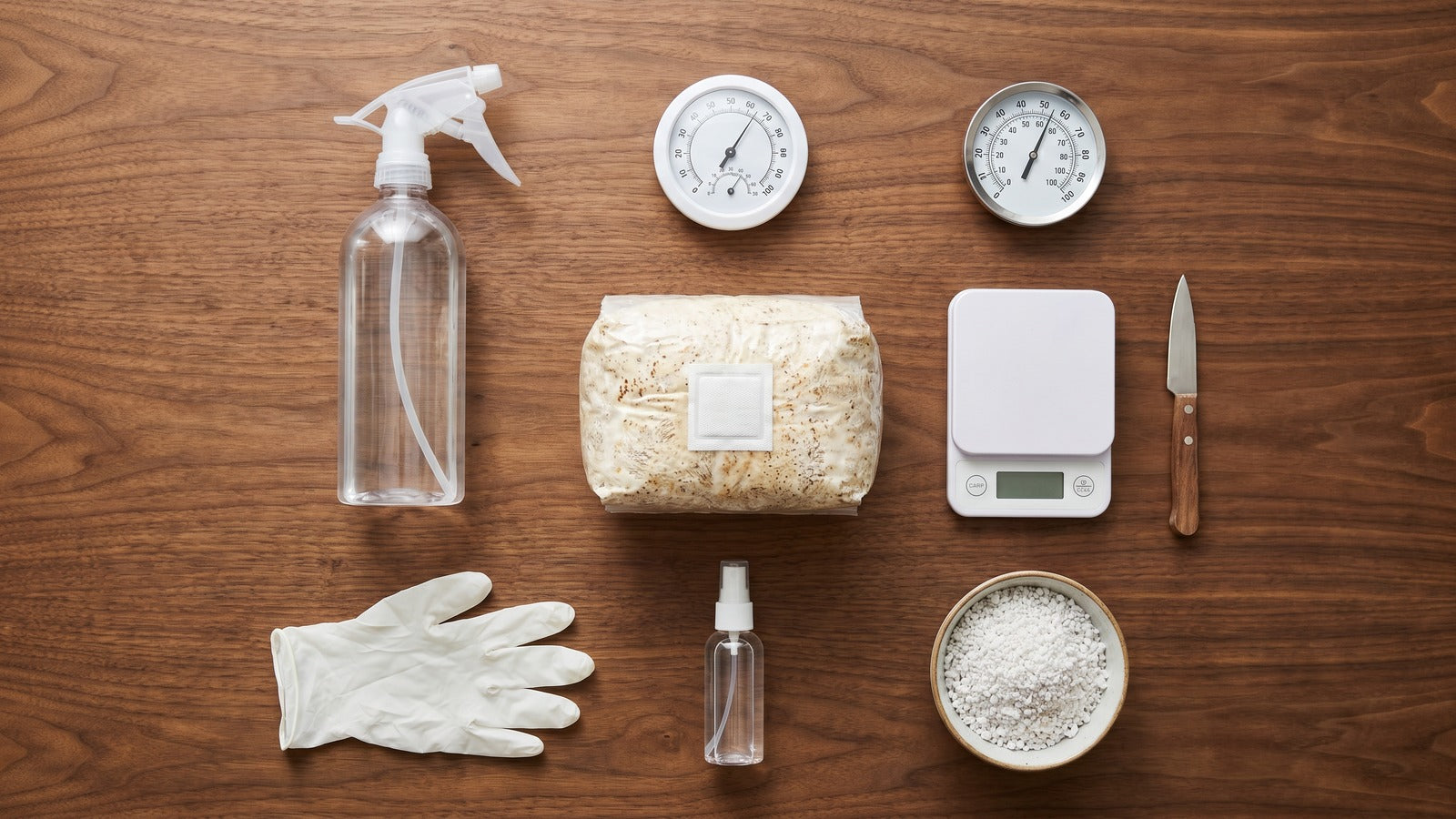
Mushroom Growing Equipment Checklist: 9 Things You Need