



Walk into any garden center or scroll through any homesteading subreddit and you will see a dozen "mushroom grow kits" that look almost nothing alike. One is a $14 cardboard box with a plastic bag inside. Another is a $499 countertop appliance with a touchscreen. Both call themselves grow kits, both sell well, and both produce mushrooms, but the experience, yield, and skill required are completely different.
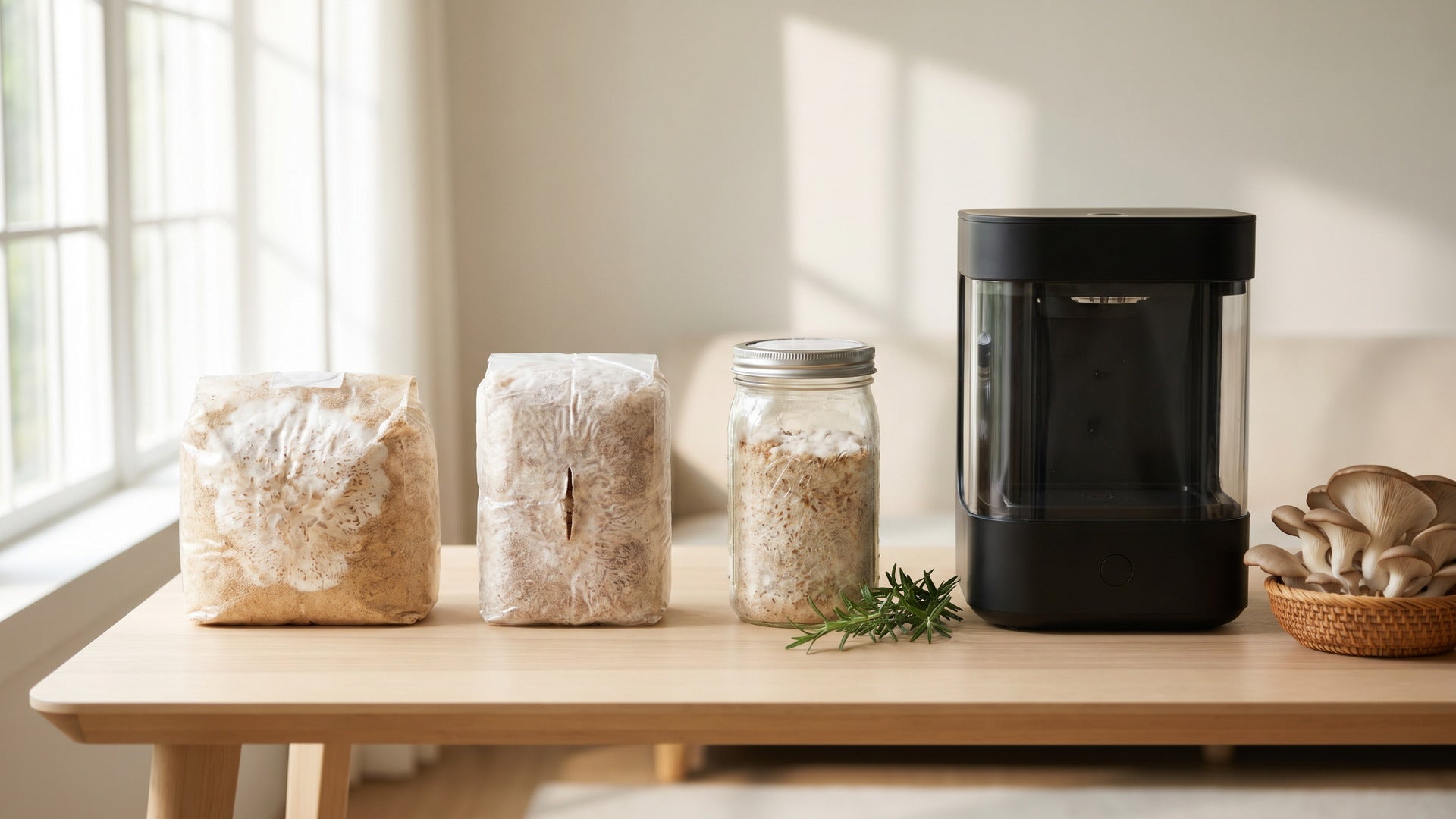
This guide compares the five main types of mushroom grow kits sold in 2026: fruiting block kits, jar and grain spawn kits, log inoculation kits, automated smart-chamber kits, and sawdust bag kits. For each format you get what it is, who it suits, typical yield, ease of use, and an honest cost range so you can match a kit to your time and budget.
What "Mushroom Grow Kit" Actually Means

The phrase covers any prepackaged product that helps a home grower produce mushrooms without doing the full lab process from spore to substrate. A real grow kit always includes a colonized substrate or a substrate plus spawn. What it leaves to you (humidity, airflow, temperature, harvest timing) is what separates one format from another.
The fastest path from box to first harvest is 5 to 10 days (fruiting block in a chamber). The slowest is 6 to 18 months (outdoor log kit). That 50-fold range is why kit choice is the most consequential decision a new grower makes. Browse the full lineup in the mushroom grow kits collection.
Type 1: Fruiting Block Kits (The Most Common Format)

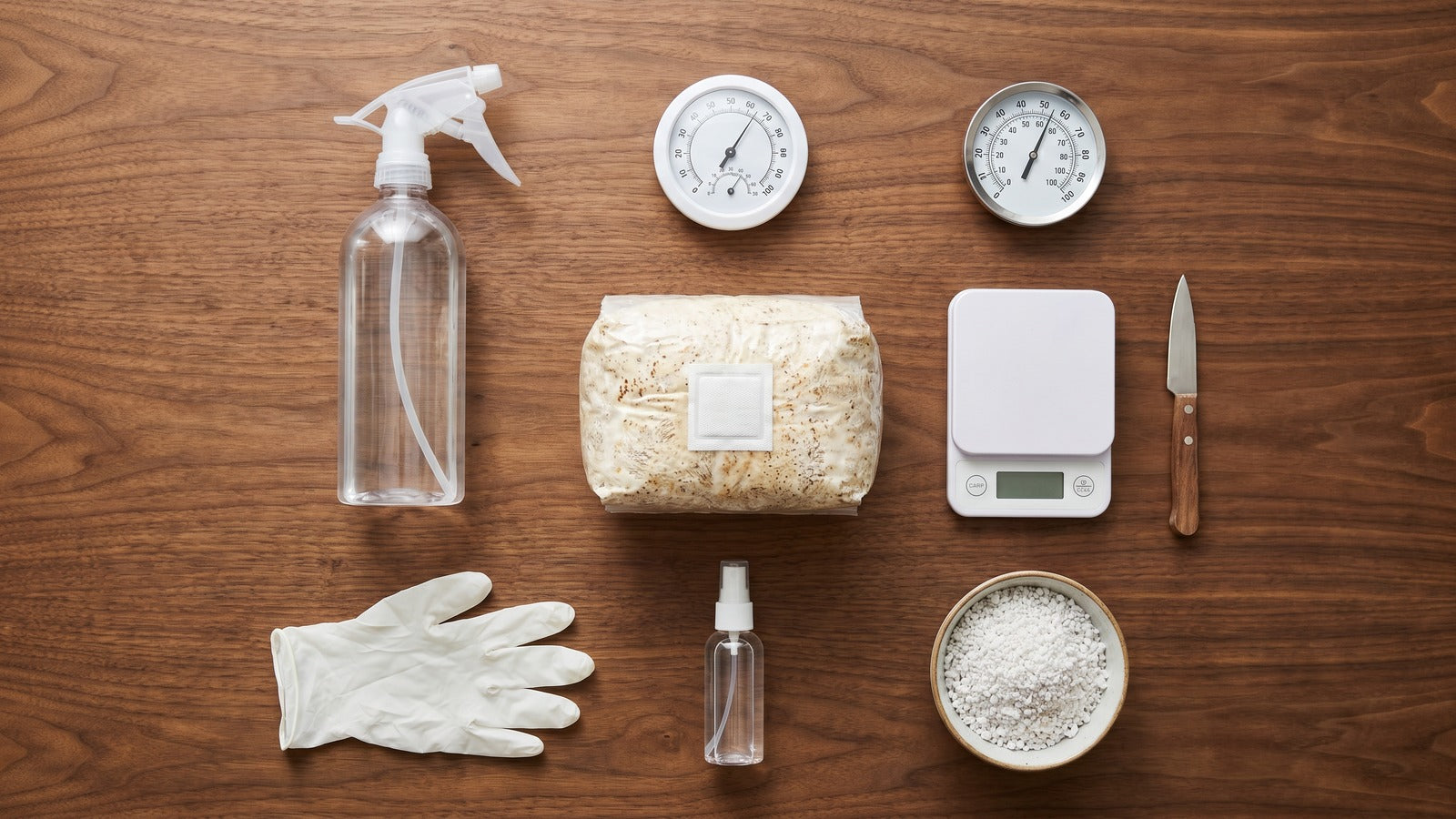
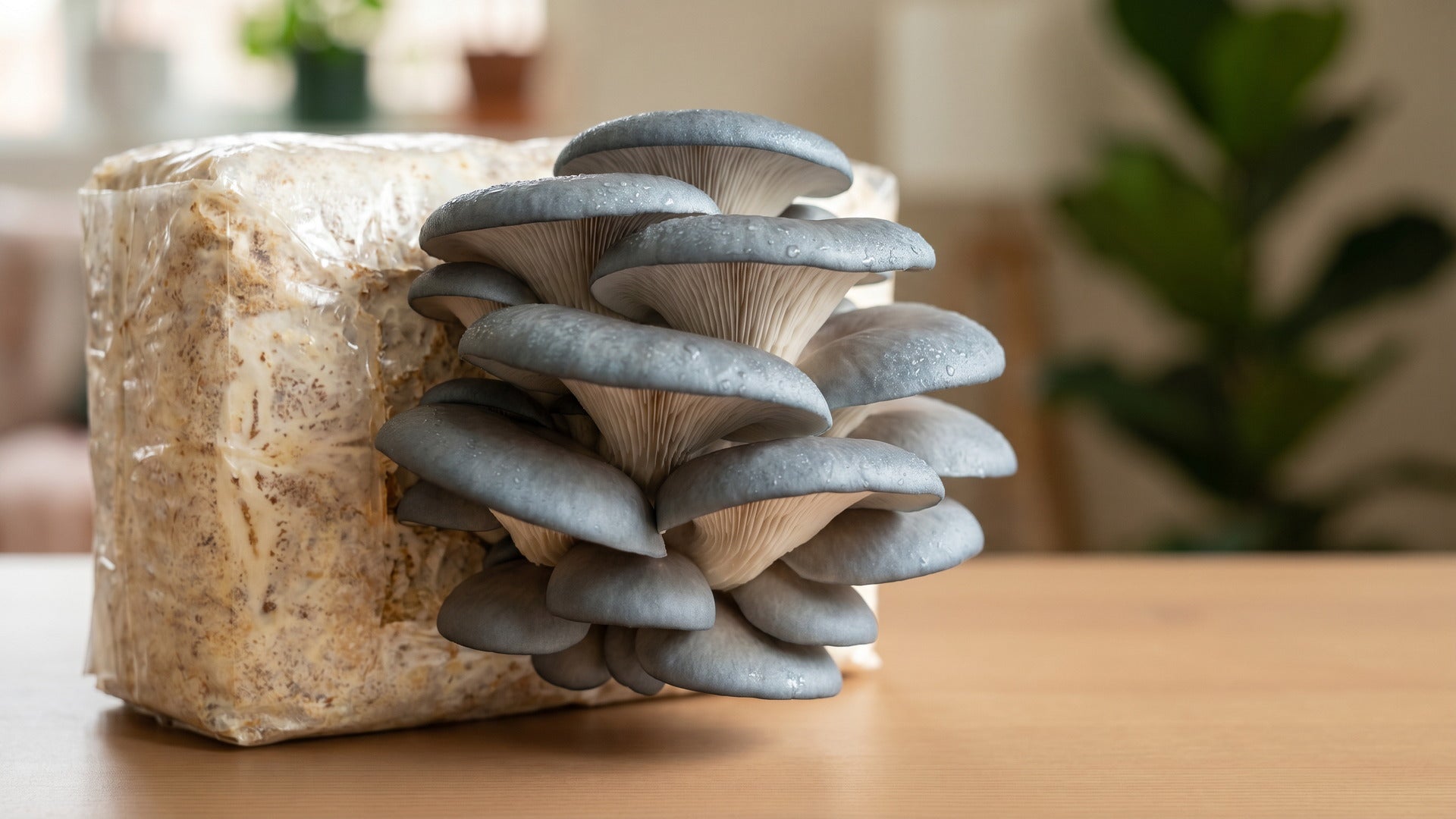
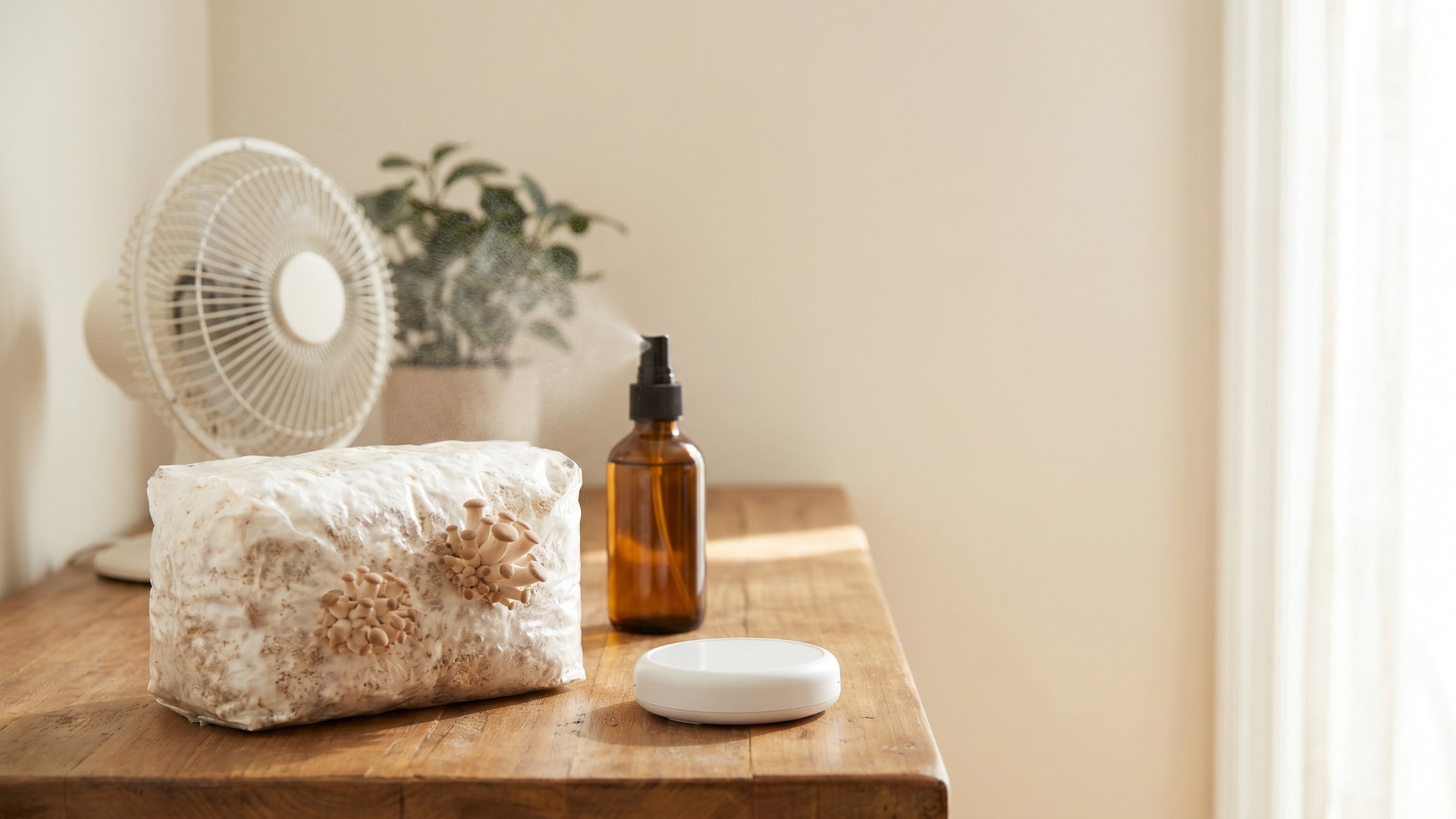
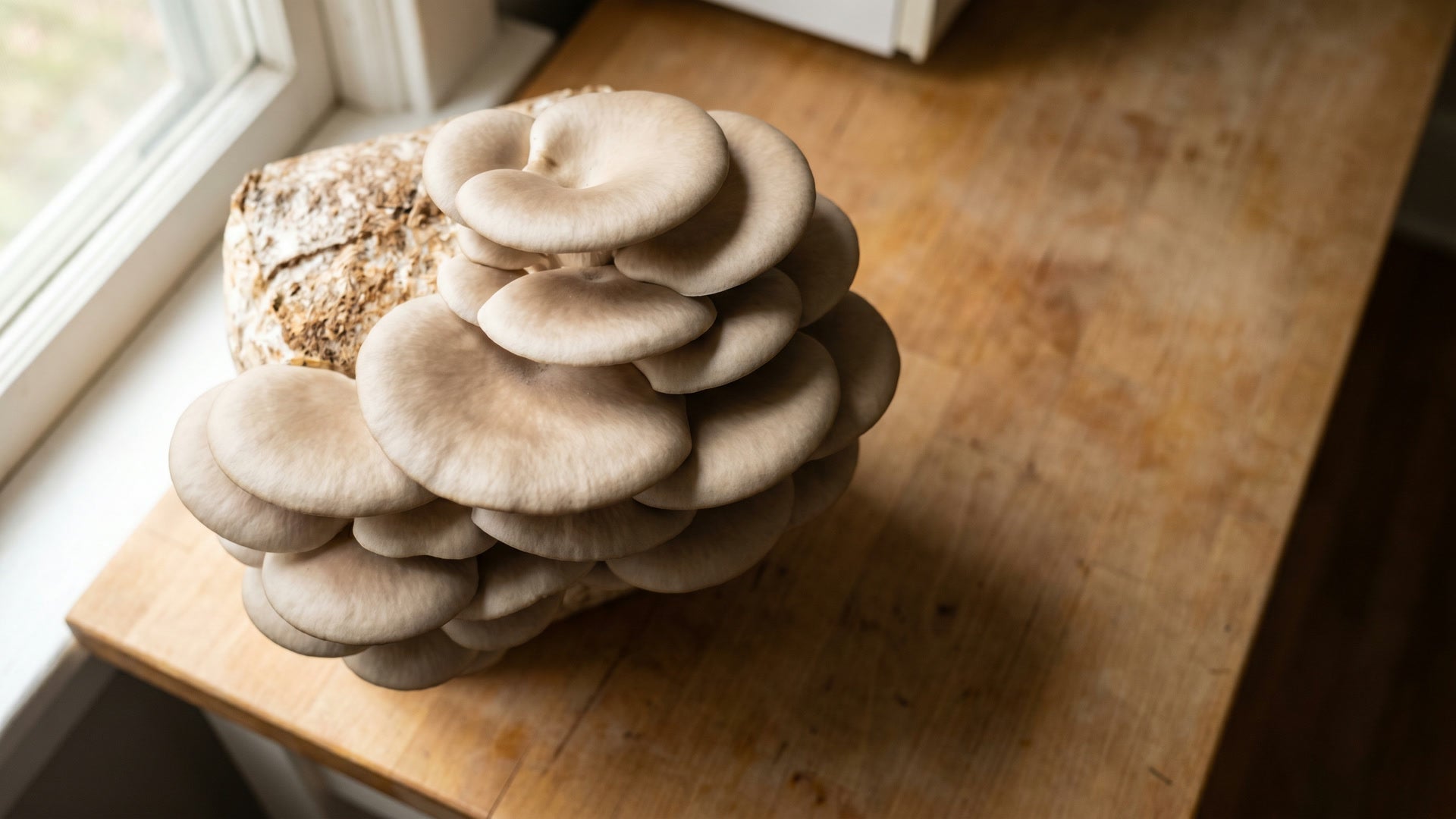
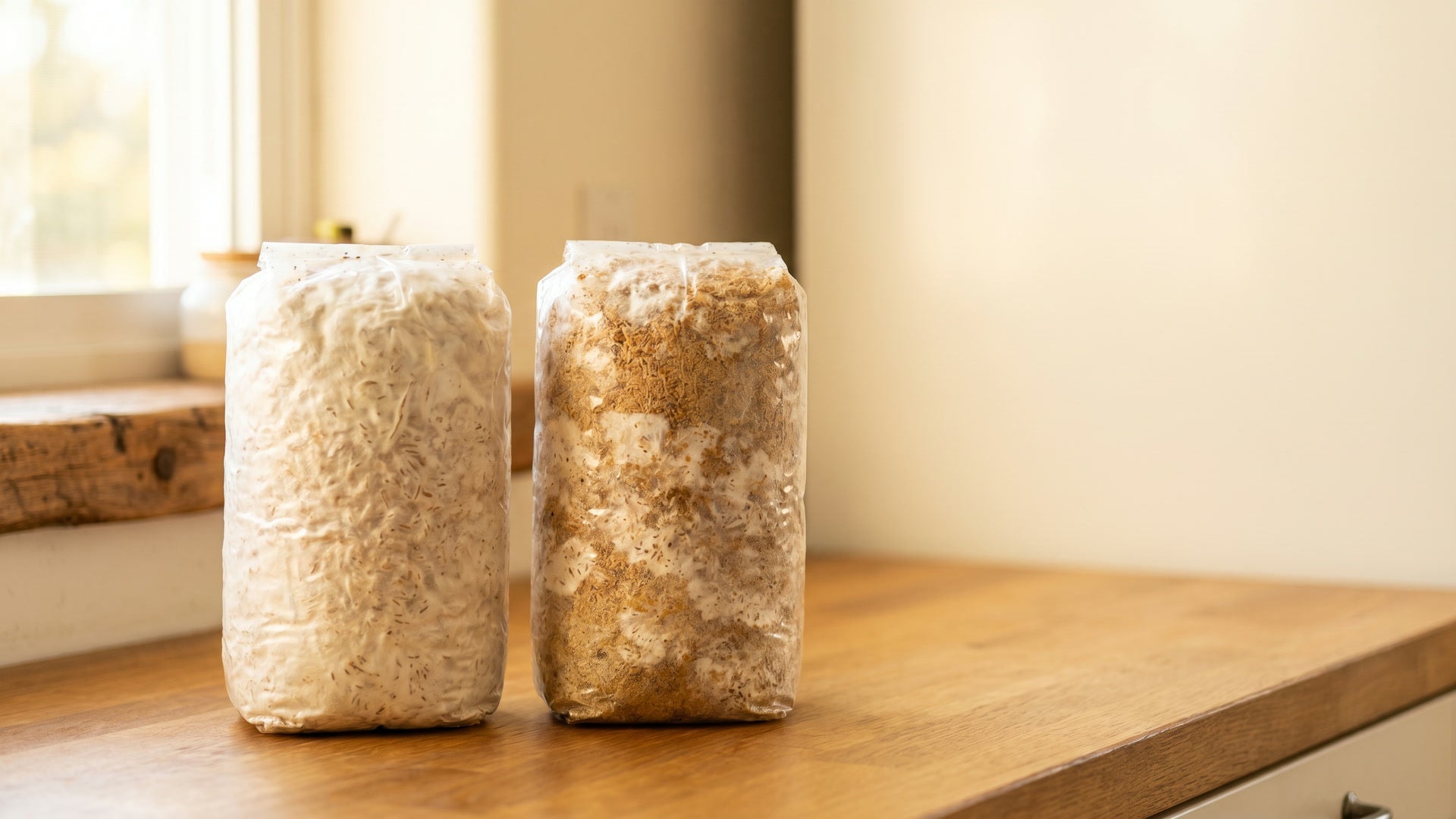
What it is. A pre-colonized brick of supplemented hardwood sawdust (usually 5 to 6 pounds) sealed in a breathable filter-patch bag. The mycelium has already eaten through the substrate before the block ships, so all that is left is to expose it to fruiting conditions: humidity above 85%, fresh air several times daily, and indirect light.
Who it suits. First-time growers, apartment dwellers, anyone who wants mushrooms within two weeks. No sterilization equipment, no pressure cooker, no clean room.
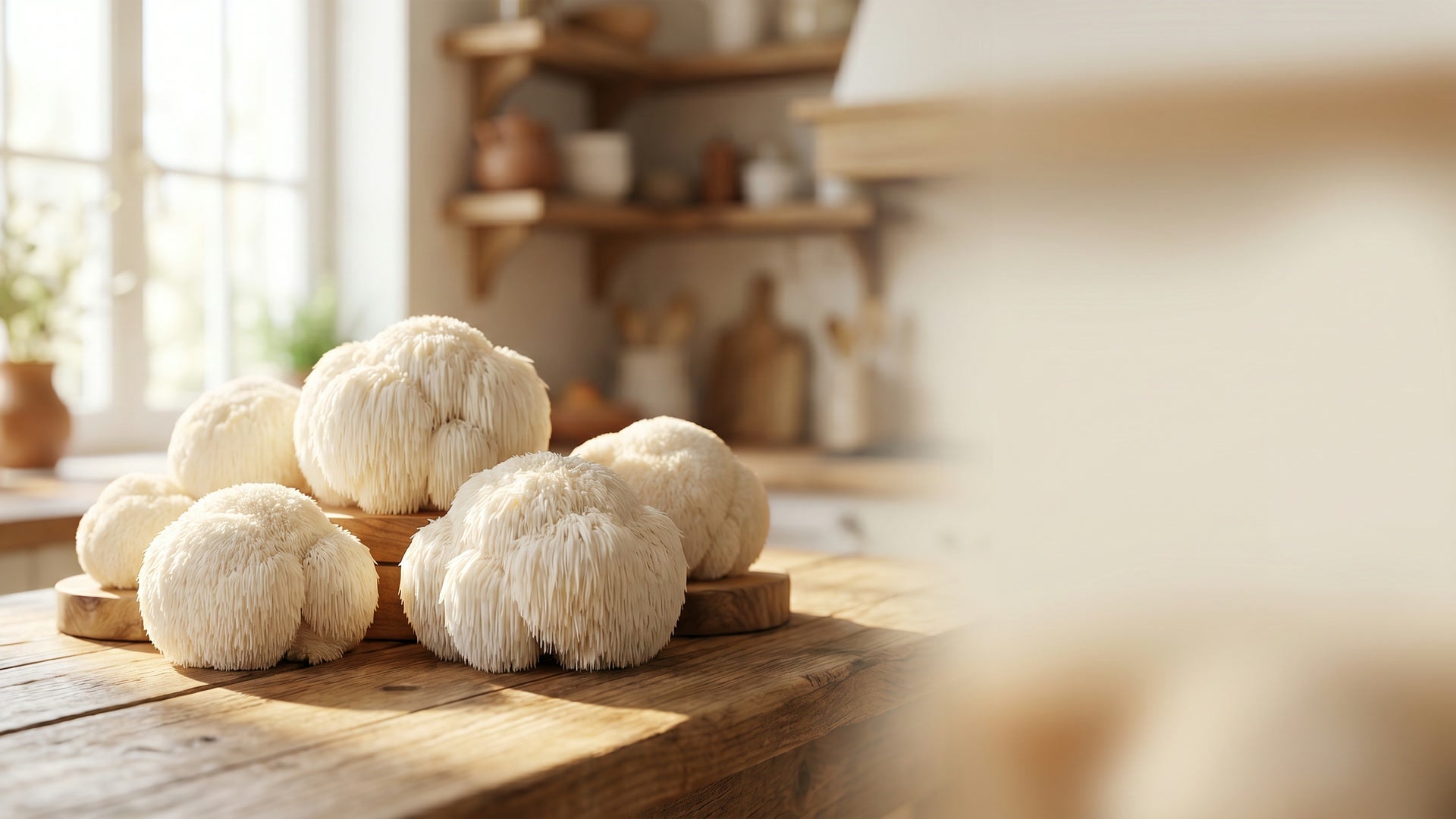
Typical yield. 1.0 to 1.75 pounds of fresh mushrooms across 2 to 3 flushes, depending on species. Lion's mane lands at the upper end. Pink oyster delivers the fastest first flush (5 to 7 days).
Ease of use. 4 of 5. Daily misting in a humidity tent is the only real chore. In an automated chamber it drops to almost zero work.
Cost range. $18 to $35 per block, sold individually or in 4-block kits. Most home growers buy 2 to 4 blocks per year. The full fruiting block collection covers 15 species from oyster to lion's mane to chestnut.
Honest trade-offs. Blocks have a 4 to 8 week shelf life from production. Buy when you are ready to grow, not as a stockpile.
Type 2: Jar and Grain Spawn Kits

What it is. A jar or bag of sterilized grain (usually rye, millet, or wild bird seed) pre-inoculated with a specific mushroom strain. The grain spawn is the starter culture you use to inoculate a larger bulk substrate.
Who it suits. Intermediate growers ready to mix their own substrate (master's mix, straw, or compost), and anyone scaling beyond 3 or 4 blocks per year. Grain spawn is the building block of every commercial mushroom farm.
Typical yield. One 3-pound bag of grain spawn inoculates roughly 30 pounds of bulk substrate, which produces 7 to 12 pounds of fresh mushrooms across multiple bags. Yield per dollar is the best of any kit format if you have the technique.
Ease of use. 2 of 5. You need a pressure cooker (or bulk-pasteurizer), a clean inoculation space, and basic sterile technique. Contamination rates on a first jar attempt run 30 to 50%. By batch five most growers are at under 10%.
Cost range. $20 to $45 per jar or bag. Pressure cooker (one-time): $90 to $200.
Honest trade-offs. Plan to lose 1 in 4 inoculations during the first season. The pressure cooker is the single most important purchase, more critical than the chamber.
Type 3: Log Inoculation Kits

What it is. A bag of spawn plugs or sawdust spawn paired with instructions for inoculating freshly cut hardwood logs (typically oak, beech, sugar maple, or birch). Each log holds 30 to 50 plugs and produces mushrooms outdoors for 4 to 6 years.
Who it suits. Homesteaders, gardeners with shade, and anyone who wants a long-term outdoor operation rather than a kitchen project. Best for shiitake, lion's mane, oyster, and chicken-of-the-woods.
Typical yield. A 4-foot oak log produces 1.5 to 3 pounds of mushrooms per year over its productive lifespan, totaling 8 to 15 pounds per log across 5 years. Slow but unbeatable on a per-dollar basis.
Ease of use. 3 of 5. The inoculation day takes 2 to 4 hours (drill, insert plug, wax). After that the logs are nearly maintenance-free: a deep soak in spring to trigger fruiting and shade during summer is all most species need.
Cost range. $30 to $70 per spawn bag (covers 5 to 10 logs). Logs themselves are free if you have access to recently fallen hardwood.
Honest trade-offs. Shiitake logs need 6 to 12 months to fully colonize. Lion's mane can stretch to 18 months. Wrong format if you want fast harvests, unbeatable for a perennial patch outside the kitchen window.
Type 4: Automated Smart-Chamber Kits

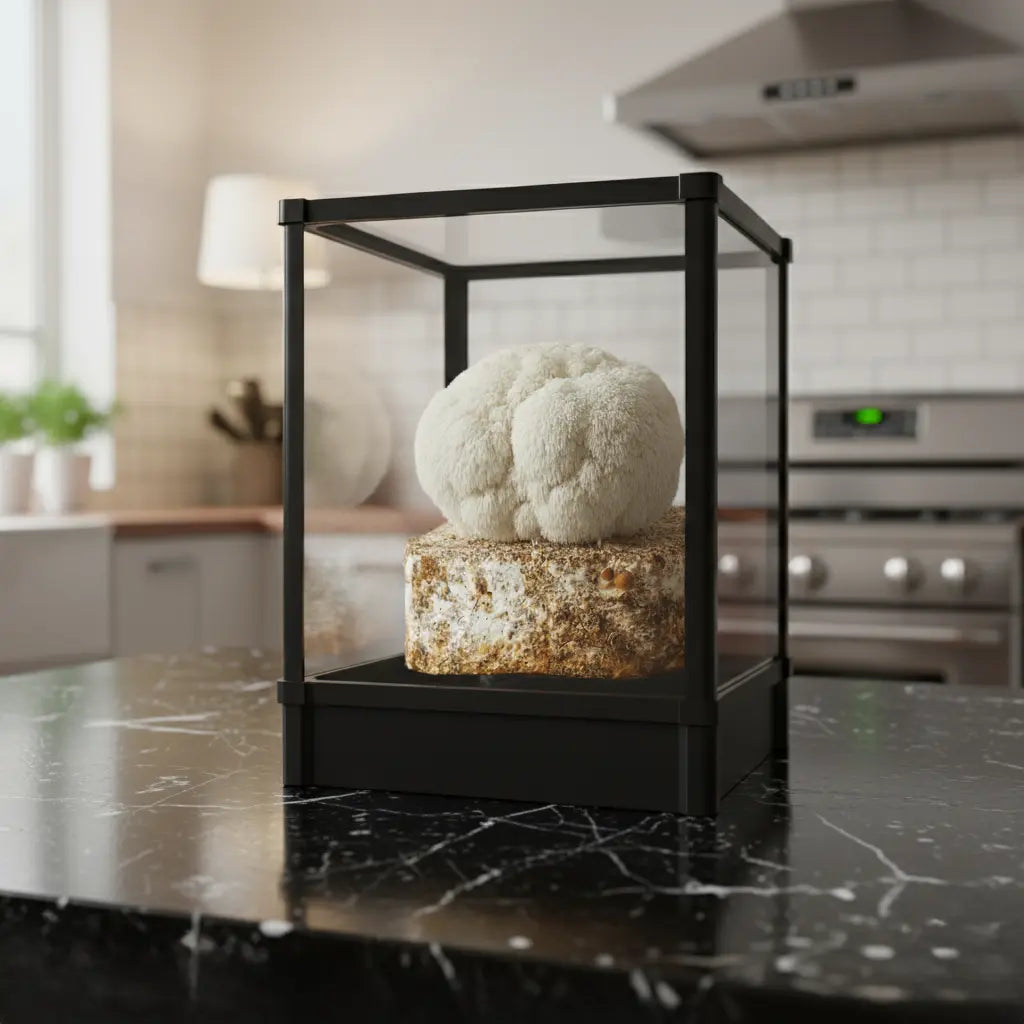
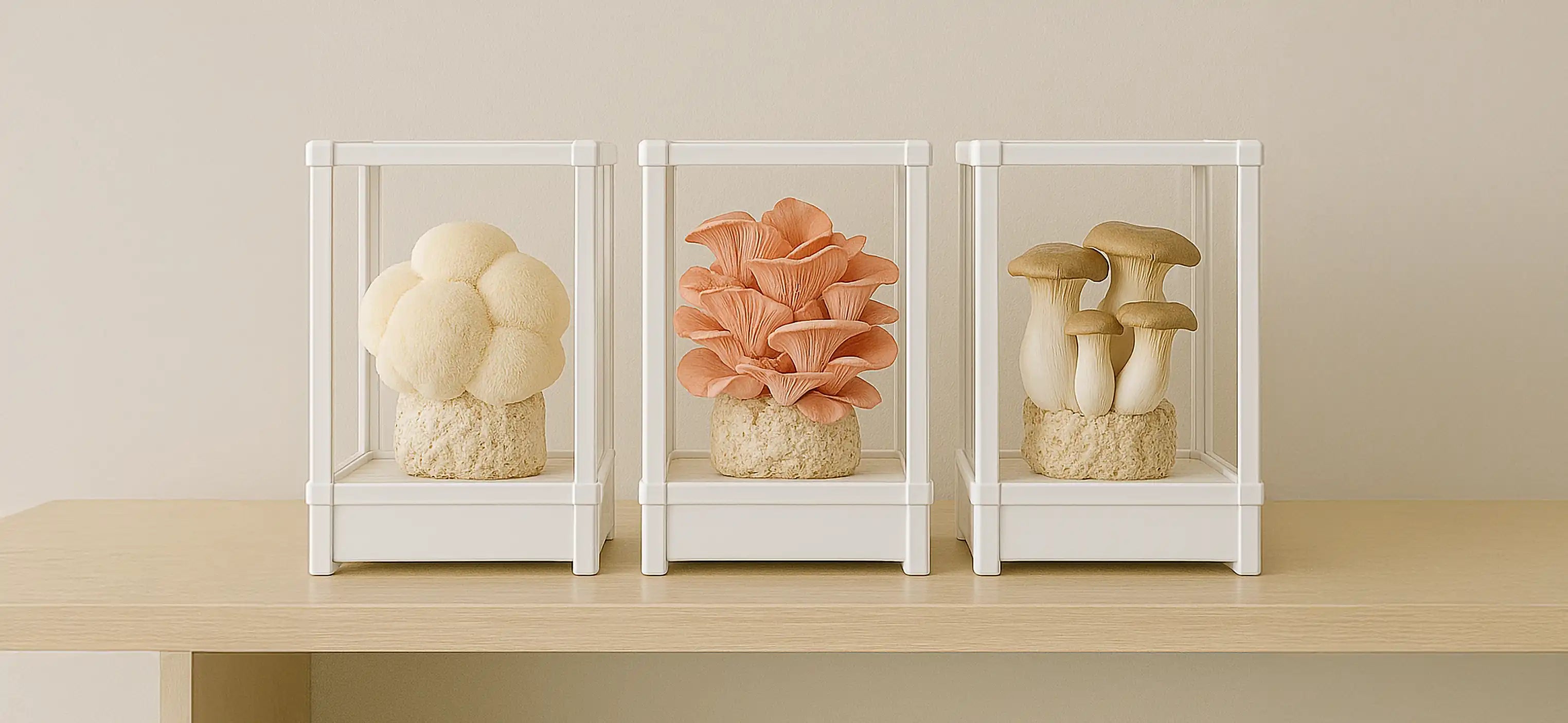
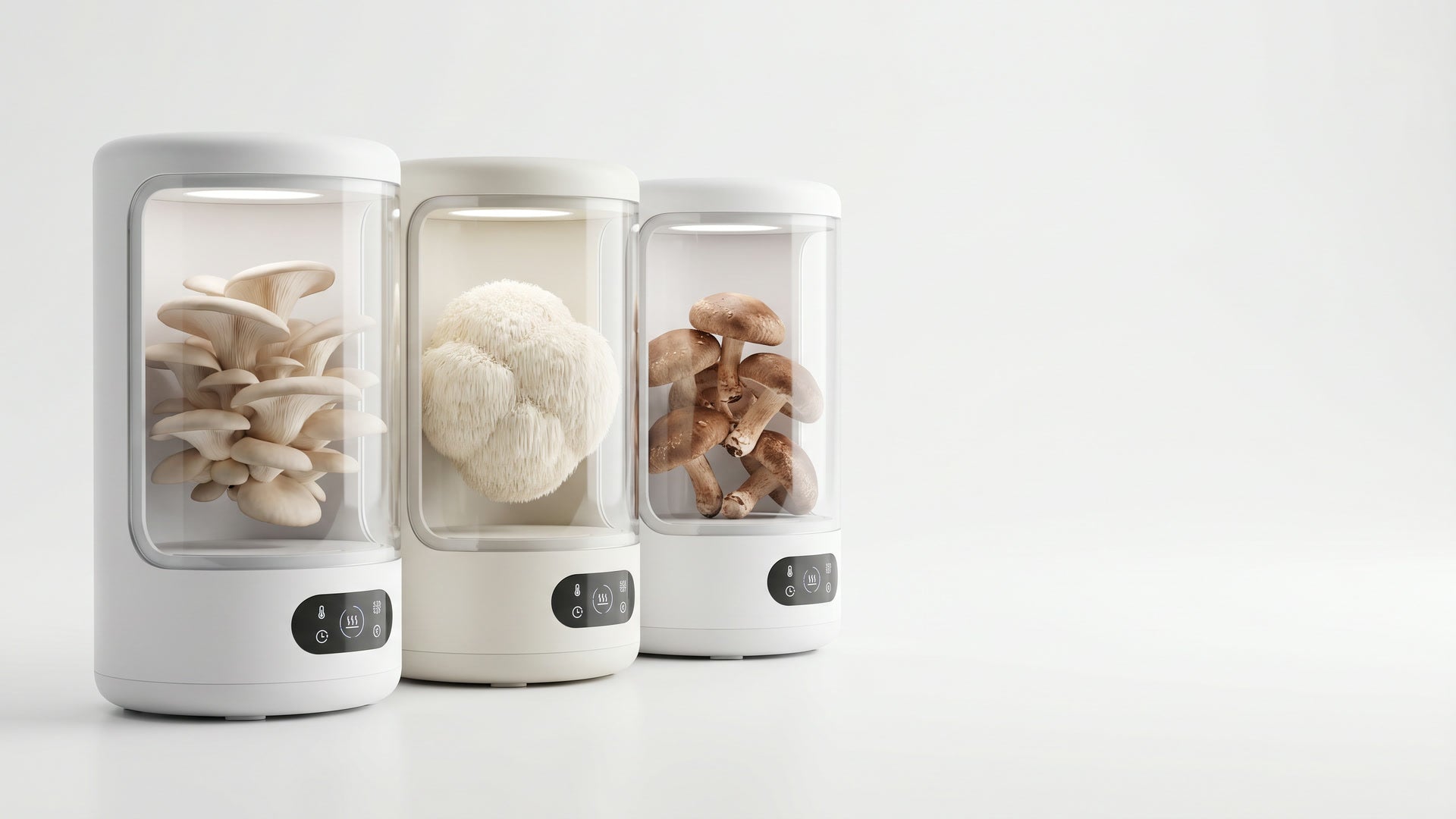
What it is. A countertop appliance that automates the three environmental variables home growers struggle with most: humidity (85 to 95%), fresh air exchange (every 15 to 30 minutes), and light cycle (12 on, 12 off). You load a pre-colonized block, set the species, and the chamber holds conditions inside a 5 to 10% tolerance band.
Who it suits. Anyone who travels, has irregular hours, or wants commercial-grade results without commercial-grade effort. Also the best fit for growers stacking multiple species across the year (oyster in summer, lion's mane in fall, shiitake in winter).
Typical yield. 1.25 to 1.75 pounds per block, the upper end of the fruiting block range, because environmental conditions stay stable instead of drifting with the room.
Ease of use. 5 of 5. Refill the water reservoir every 7 to 10 days and harvest when the app says go. No misting, no daily fanning, no contamination chasing.
Cost range. $250 to $750 for the chamber. Blocks remain $18 to $35 each.
Honest trade-offs. The math favors the chamber once you grow 6 or more blocks per year. The Lykyn Smart Mushroom Grow Box at $299 sits at the low end of the chamber price band and supports 28 plus species.

Fuel Your Mushroom Journey
Smart Mushroom Grow Chamber
Plug-and-play smart chamber with humidity, light, and airflow dialed in for every species. Beginners harvest their first flush in days, not months.
Add to cart $299Type 5: Sawdust Bag and Straw Bag Kits

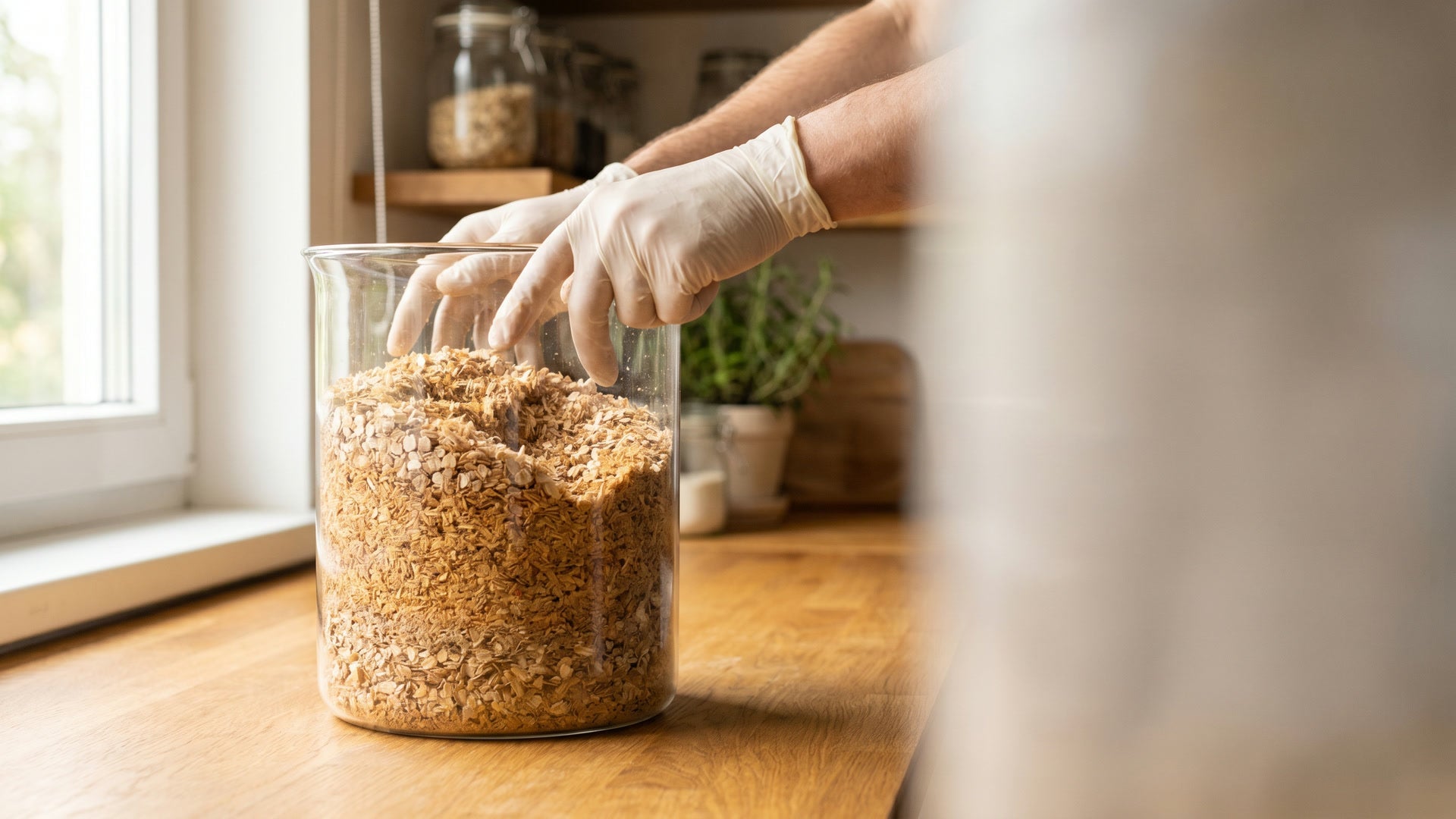
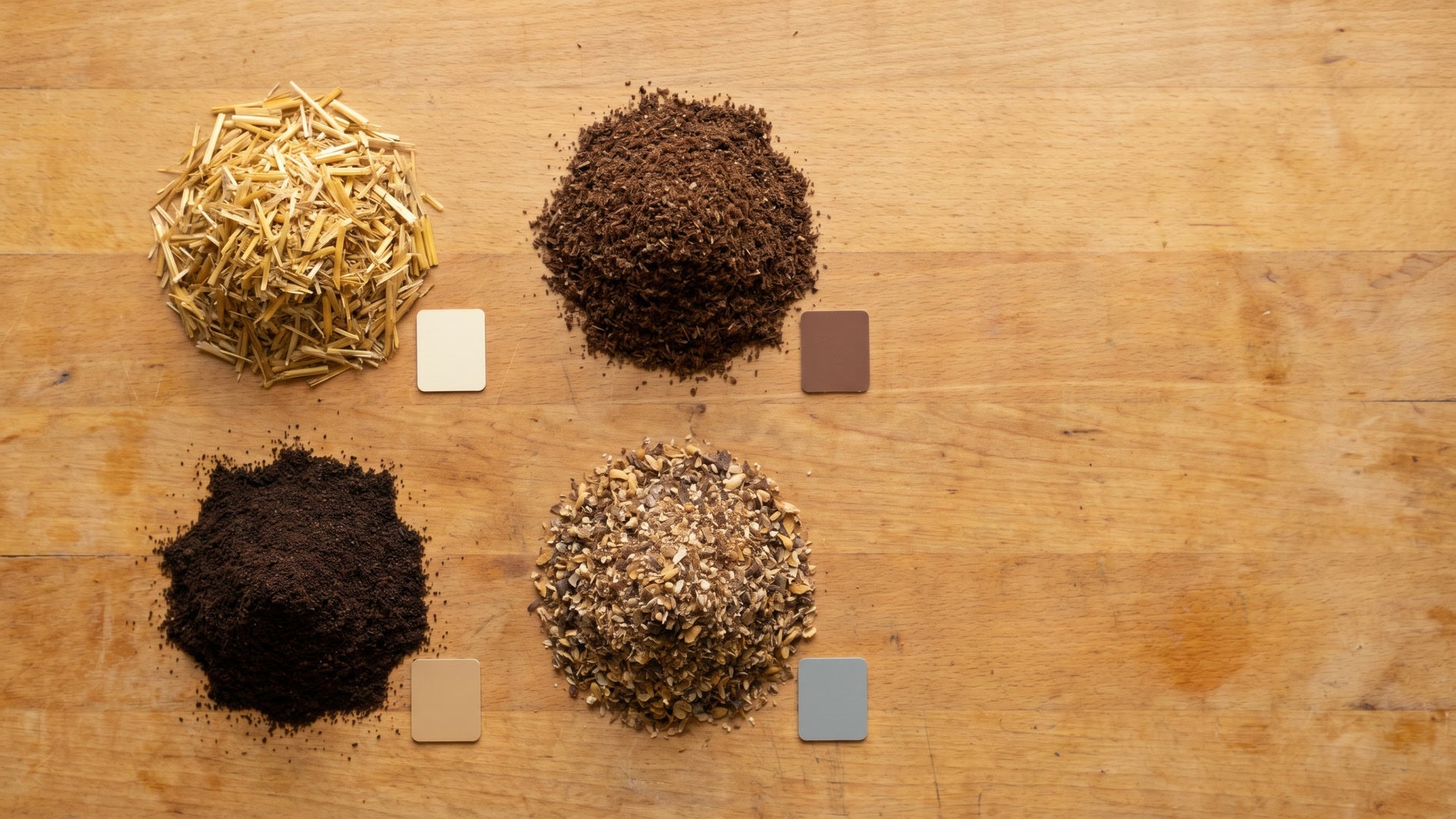
What it is. A bulk substrate bag (usually 5 to 10 pounds of pasteurized straw or sawdust) sold separately from spawn. You inoculate it yourself, let it colonize for 14 to 21 days, then fruit it like a fruiting block. The middle ground between grain spawn and a pre-colonized block.
Who it suits. Growers who want to learn substrate prep without committing to a full grain spawn workflow. Common in oyster mushroom kits because oyster colonizes straw faster than any other species.
Typical yield. 1.0 to 1.5 pounds per bag across 2 to 3 flushes, slightly below a fruiting block kit because home pasteurization is less consistent than commercial.
Ease of use. 3 of 5. The bag arrives ready but you handle inoculation. A clean kitchen is enough if you work fast and use ethanol wipes.
Cost range. $15 to $30 per bag plus $20 to $45 for spawn.
Honest trade-offs. Least common format in 2026 because pre-colonized blocks have closed the price gap. Makes sense if you want to experiment with strain swapping or substrate ratios without setting up grain spawn.
Picking the Right Kit Type and What Every Format Shares
If you want mushrooms within 14 days and have never grown before, pick a fruiting block kit. Highest-success format for first-timers, cheapest entry point. If you want fully hands-off growing and plan to run 6 or more blocks per year, pick an automated smart-chamber kit. For outdoor space and patience, a log inoculation kit produces mushrooms every spring and fall for 4 to 6 years. To scale beyond hobby, a jar or grain spawn kit unlocks bulk substrate workflows. And a sawdust bag kit is the middle ground, best paired with forgiving oyster species.
Whatever format you pick, four environmental variables decide your harvest: humidity 80 to 95%, temperature inside the species range (50 to 75°F for most gourmet species), fresh air exchange several times daily, and indirect light during fruiting. The mushroom cultivation basics guide covers those four principles in detail, and the pinning guide walks you through reading early growth signals.
Ready to Grow Mushrooms at Home?
The right kit removes friction without removing the experience of watching mushrooms form on your counter. For first-time growers and anyone scaling past a few blocks per year, the Lykyn Smart Mushroom Grow Box pairs the automated chamber format with pre-colonized blocks so you get fruiting-block convenience without the daily babysitting. Humidity, airflow, and light cycles run automatically inside a sealed countertop chamber.
Pair the chamber with a pre-inoculated fruiting block from 28 plus species in rotation, drop it in, and expect your first harvest within 7 to 14 days. Or explore the full mushroom grow kits collection to compare every format Lykyn offers side by side.
Fuel Your Mushroom Journey

Smart Chamber. Bone White Single
- 2.8L tank, 90% humidity automatic
- App-controlled, plug-and-play
- 6 lb block ceiling, in stock

Smart Chamber. Obsidian Black Single
- Same hardware as Bone White
- Matte black premium finish
- Pairs with any kitchen palette

Share:
Lions Mane Substrate Recipe: 3 Tested Mixes & Step-by-Step Prep
Mushroom Cultivation Basics: 4 Principles Every Grower Needs