



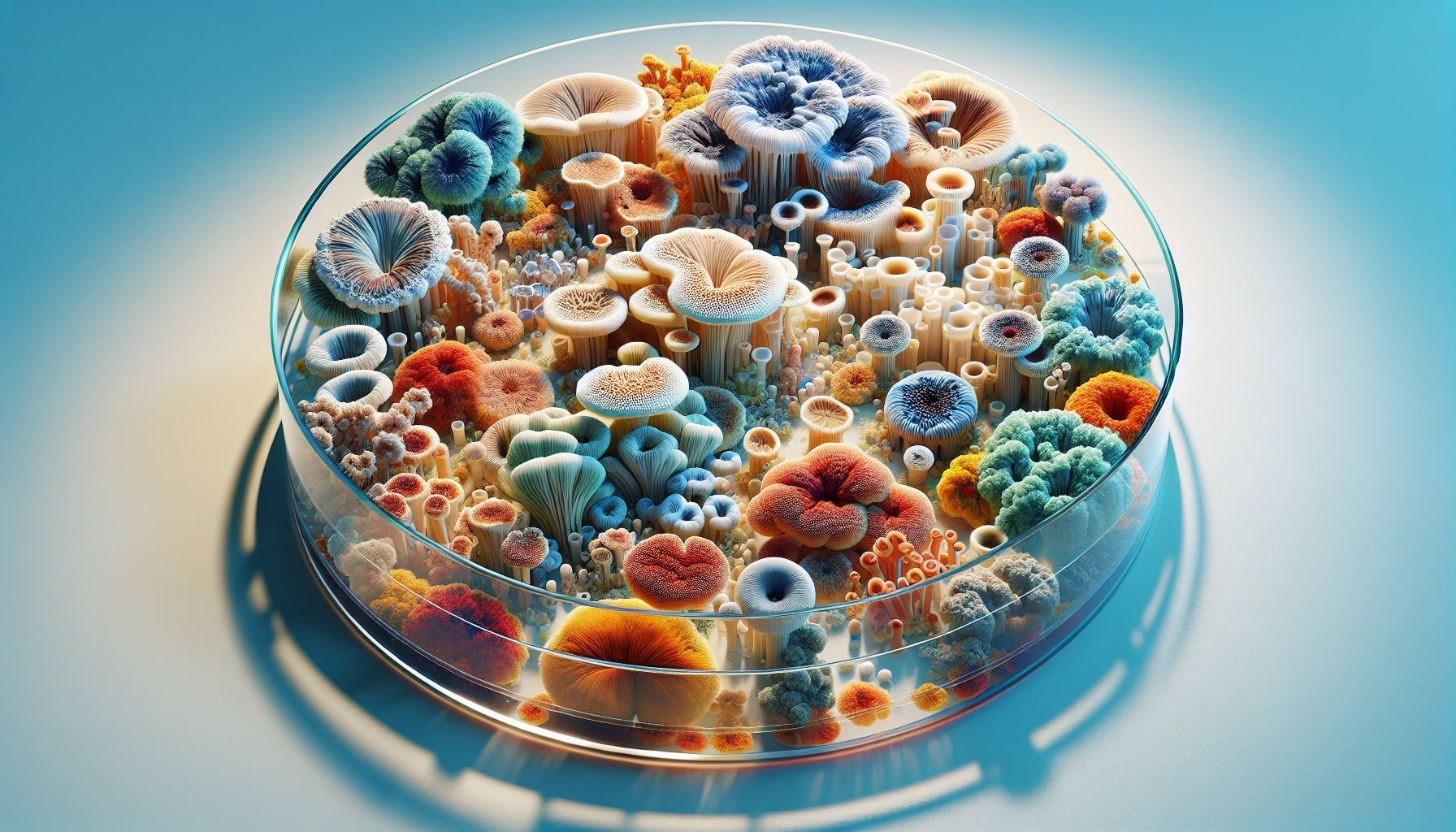
Agar plates represent the gold standard for serious mushroom cultivators, offering precise control over mushroom genetics, contamination prevention, and strain isolation. These sterile growth media provide the foundation for advanced mycology techniques that separate hobbyists from professional-level growers. Whether you're looking to isolate wild mushroom strains, maintain genetic libraries, or troubleshoot contamination issues, mastering agar plates is essential for taking your mushroom cultivation to the next level.
For those transitioning from simple mushroom grow kits to advanced cultivation techniques, agar plates open up a world of possibilities. They allow you to work with mushroom genetics at the cellular level, creating pure cultures, testing for contamination, and developing your own unique strains. This comprehensive guide will teach you everything needed to successfully incorporate agar plates into your mycology practice.

Understanding Agar Plates: The Foundation of Modern Mycology
Agar plates serve as the cornerstone of professional mushroom cultivation, providing a sterile, nutrient-rich environment for growing and studying mushroom mycelium. These petri dishes filled with agar medium create controlled conditions that allow mycologists to observe, isolate, and manipulate fungal cultures with precision.
What Are Agar Plates?
Agar plates consist of sterile petri dishes filled with agar medium—a gelatinous substance derived from seaweed that's been enriched with nutrients. The agar provides structure while added nutrients like malt extract, dextrose, and peptone feed the growing mycelium. This combination creates an ideal environment for mushroom tissue culture and genetic work.
Types of Agar Media for Mycology
Malt Extract Agar (MEA)
The most popular choice for mushroom cultivation, MEA contains malt extract, peptone, and agar. It provides excellent nutrition for most mushroom species and promotes healthy mycelial growth. MEA is particularly effective for oyster mushrooms, shiitake, and other common cultivated species.
Potato Dextrose Agar (PDA)
PDA offers a cost-effective alternative using potato extract and dextrose. It's excellent for isolating wild mushroom strains and works well with a wide variety of fungal species. Many mycologists prefer PDA for initial isolations due to its broad spectrum effectiveness.
Sabouraud Dextrose Agar (SDA)
Primarily used for contamination testing and isolation work, SDA has a lower pH that favors fungal growth while inhibiting bacterial contamination. It's invaluable for cleaning up contaminated cultures and maintaining sterile conditions.
Specialized Media
Advanced mycologists often create custom agar formulations for specific purposes, including antibiotic-enriched media for contamination control, selective media for particular species, and research-grade formulations for genetic studies.
Benefits of Using Agar Plates
Contamination Detection
Agar plates provide immediate visual confirmation of culture purity. Bacterial contamination appears as slimy, colored growth, while mold contamination shows as fuzzy, fast-growing colonies. This early detection prevents contaminated cultures from ruining larger cultivation projects.
Strain Isolation
Working with agar plates allows you to isolate specific genetic strains from wild mushrooms or separate multiple strains from commercial cultures. This capability is essential for developing unique mushroom varieties and maintaining genetic diversity.
Long-term Storage
Properly prepared agar plates can store mushroom cultures for months when refrigerated, providing a reliable backup system for valuable strains. This storage capability is crucial for maintaining genetic libraries and ensuring cultivation continuity.
Preparing and Sterilizing Agar Plates: Step-by-Step Guide
Creating sterile agar plates requires attention to detail and proper technique. The process involves preparing the agar medium, sterilizing everything, and pouring plates under sterile conditions.
Essential Equipment and Supplies
Basic Equipment
-
Pressure cooker or autoclave for sterilization
-
Laminar flow hood or still air box for sterile work
-
Petri dishes (plastic or glass)
-
Magnetic stirrer and stir bar for mixing
-
pH meter or test strips for medium adjustment
-
Measuring devices for accurate formulations
Agar Medium Ingredients
-
Agar powder (20-25 grams per liter)
-
Malt extract (20-30 grams per liter for MEA)
-
Peptone (2-5 grams per liter)
-
Dextrose (20 grams per liter for PDA)
-
Distilled water for base liquid
Preparation Process
Step 1: Medium Preparation
Mix your chosen agar formulation in distilled water, ensuring complete dissolution of all ingredients. Adjust pH to 6.0-6.5 using citric acid or sodium hydroxide. The medium should be clear and homogeneous before sterilization.
Step 2: Sterilization
Sterilize the agar medium using a pressure cooker at 15 PSI for 20-30 minutes. This process eliminates all microorganisms while maintaining the medium's nutritional properties. Allow pressure to release naturally to prevent boiling over.
Step 3: Pouring Plates
Under sterile conditions in a laminar flow hood, pour the cooled (but still liquid) agar into sterile petri dishes. Fill each plate to about 1/3 capacity, ensuring even coverage. Allow plates to cool and solidify completely before use.

Advanced Techniques: Tissue Culture and Strain Isolation
Once you've mastered basic agar plate preparation, advanced techniques allow you to work with mushroom genetics at a professional level. These methods are essential for serious mycologists and commercial cultivators.
Tissue Culture from Fresh Mushrooms
Collection and Preparation
Select healthy, young mushroom specimens for tissue culture work. Clean the mushroom exterior and break it apart to expose sterile interior tissue. Work quickly to prevent contamination from airborne microorganisms.
Sterile Transfer Technique
Using flame-sterilized tools, transfer small pieces of interior mushroom tissue to agar plates. Place tissue pieces near the center of the plate and seal immediately. Multiple plates increase success rates and provide backup cultures.
Incubation and Observation
Incubate inoculated plates at appropriate temperatures (typically 70-80°F) in a dark location. Mycelial growth should appear within 3-7 days, spreading outward from tissue pieces. Monitor for contamination and transfer clean growth to fresh plates as needed.
Strain Isolation and Purification
Sectoring Method
When mycelium shows different growth patterns on the same plate, individual sectors can be isolated by transferring them to fresh agar. This technique allows separation of different genetic strains that may be present in the original culture.
Serial Dilution
For cultures with light contamination, serial dilution transfers can clean up the culture. Each transfer to fresh agar reduces contamination while maintaining the desired mushroom strain.
Cloning Techniques
Advanced mycologists use cloning techniques to maintain specific genetic traits. This involves selecting particular mycelial growth patterns and propagating them through multiple agar transfers.
Quality Control and Testing
Contamination Identification
Learn to identify common contaminants including Trichoderma (green mold), Penicillium (blue-green mold), and bacterial infections. Each contamination type requires specific treatment approaches for successful culture cleaning.
Viability Testing
Test culture viability by transferring small amounts to fresh agar and observing growth rates. Healthy cultures should show vigorous, consistent growth patterns within expected timeframes.

Troubleshooting Common Agar Plate Issues
Even experienced mycologists encounter challenges when working with agar plates. Understanding common problems and their solutions ensures consistent success in your mycology work.
Contamination Problems
Bacterial Contamination
Bacterial contamination appears as slimy, often colored growth that spreads rapidly across agar surfaces. Common causes include inadequate sterilization, poor aseptic technique, or contaminated source materials. Prevention involves strict sterile procedures and proper equipment maintenance.
Mold Contamination
Mold contamination shows as fuzzy, fast-growing colonies in various colors. Trichoderma (green mold) is particularly aggressive and can overtake mushroom cultures quickly. Use antibiotic-enriched agar and improved sterile techniques to prevent mold issues.
Environmental Contamination
Contamination from environmental sources often results from poor workspace hygiene or inadequate air filtration. Maintain clean work areas and consider upgrading to laminar flow hoods for critical applications.
Growth-Related Issues
Slow or No Growth
Inadequate nutrition, incorrect pH, or temperature problems can prevent normal mycelial growth. Verify medium composition, check pH levels, and ensure proper incubation conditions for your specific mushroom species.
Irregular Growth Patterns
Uneven growth may indicate medium inconsistencies, temperature fluctuations, or genetic issues. Prepare fresh medium with careful attention to mixing and temperature control during preparation.
Sector Degeneration
Some mushroom strains lose vigor over multiple transfers, showing decreased growth rates or unusual morphology. Maintain master cultures and limit transfer generations to preserve strain characteristics.
Storage and Maintenance
Proper Storage Conditions
Store agar plates in refrigerated conditions (35-40°F) to extend shelf life and maintain culture viability. Seal plates properly to prevent moisture loss and contamination during storage.
Transfer Scheduling
Establish regular transfer schedules to maintain active cultures and prevent strain degeneration. Most mushroom cultures benefit from monthly transfers to fresh agar for optimal health.
Frequently Asked Questions
How long can mushroom cultures survive on agar plates?
Mushroom cultures can survive on agar plates for 2-6 months when properly stored in refrigerated conditions. However, for optimal viability and genetic stability, cultures should be transferred to fresh agar every 4-6 weeks during active use.
Can I make agar plates without specialized equipment?
While professional equipment like laminar flow hoods and autoclaves provide the best results, beginners can start with pressure cookers for sterilization and still air boxes for sterile work. Many successful mycologists began with basic home equipment before upgrading to professional setups.
What's the difference between agar plates and liquid culture?
Agar plates provide solid growth medium that allows visual observation and isolation of specific strains, while liquid culture uses liquid nutrient solutions for rapid mycelial expansion. Agar plates are better for strain work and contamination detection, while liquid culture excels at producing large quantities of clean mycelium.
How do I know if my agar plates are contaminated?
Contamination typically appears as colored growth (green, blue, black, or pink), slimy bacterial growth, or unusually fast-spreading fuzzy growth. Healthy mushroom mycelium appears as white, fluffy growth with organized patterns spreading outward from inoculation points.
Can I reuse agar plates after harvesting cultures?
Used agar plates should not be reused due to contamination risks and nutrient depletion. However, the petri dishes themselves can be thoroughly cleaned, sterilized, and reused with fresh agar medium for future cultures.
Summary
Agar plates represent an essential tool for advanced mushroom cultivation, providing precise control over culture purity, strain isolation, and genetic preservation. Mastering agar techniques allows cultivators to work with mushroom genetics professionally, troubleshoot contamination issues, and maintain valuable strain libraries. While the initial learning curve requires patience and practice, the capabilities that agar plates unlock make them indispensable for serious mycologists. Success depends on proper sterilization techniques, quality medium preparation, and consistent aseptic practices throughout the cultivation process.
Elevate Your Mushroom Cultivation with Professional Techniques
Ready to advance beyond basic growing methods and explore the fascinating world of mushroom genetics? Agar plates open up professional-level capabilities that transform casual growers into serious mycologists. From strain isolation to contamination control, these techniques provide the foundation for truly advanced mushroom cultivation.
While mastering agar plates requires dedication and practice, the journey begins with solid fundamentals. Start with our beginner-friendly mushroom grow kits to develop your growing skills before advancing to agar work. Understanding mushroom biology through hands-on cultivation provides the essential knowledge needed for successful laboratory techniques.
Explore advanced mushroom cultivation methods and discover how professional mycologists maintain genetic libraries, develop new strains, and achieve consistent results. Whether you're interested in medicinal mushroom cultivation or gourmet varieties, agar plates provide the precision control that separates hobbyists from professionals.
Browse our complete mushroom growing solutions to find the tools and knowledge needed for your mycology journey. From basic growing kits to advanced cultivation techniques, we're here to support your growth as a mushroom cultivator. Your path to professional-level mycology starts with the right foundation and grows with proper technique and dedication.


Share:
Snow Oyster Mushroom: The Ultimate Guide to Growing Nature's Cold-Weather Delicacy
Black Pearl Mushroom Recipes: Your Complete Guide to Gourmet Culinary Excellence