


Einführung
Fruchtungsblöcke sind die laufenden Kosten beim heimischen Pilzanbau. Anders als bei der einmaligen Anschaffung einer Fruchtungskammer oder eines Zuchtbeutels kaufst du je nach Anbauhäufigkeit in deinem Haushalt wöchentlich, alle zwei Wochen, monatlich oder vierteljährlich neue Blöcke. Mit der richtigen Wahl ersparst du dir monatelange erfolglose Erntewellen und unnötige Ausgaben für Substrat. Dieser Ratgeber erklärt, woran du einen hochwertigen Block erkennst, und stellt anschließend die besten Bezugsquellen für 2026 vor – bewertet nach Qualität der Besiedlung, Zuverlässigkeit der Pilzarten und dem Zeitfenster zwischen dem Versand im erntebereiten Zustand und dem Kontaminationsrisiko.
Was einen hochwertigen Fruchtungsblock ausmacht

Ein Fruchtungsblock ist ein Substrat, das bereits sterilisiert und mit Pilzmyzel besiedelt wurde. Wenn er bei dir ankommt, dauert es noch 10–14 Tage bis zur Bildung erster Fruchtkörperanlagen und 3–5 Wochen bis zur ersten vollständigen Erntewelle. Entscheidend ist die Qualität dieser Besiedlung. Auf folgende Kriterien kommt es an.
Besiedlungsgrad. Ein guter Block sollte innen zu 90–100 % weiß sein, ohne sichtbare unbesiedelte Körner oder Lücken. Wenn du ihn aufschneidest, sollte er sich fest anfühlen und seine Form behalten, statt auseinanderzufallen. Auch Blöcke mit einer Besiedlung von 80–85 % fruchten noch, bergen aber ein Kontaminationsrisiko, da unbesiedeltes Getreide Schimmel einen Nährboden bietet.
Ausgewogener Feuchtigkeitsgehalt. Bei der Ankunft sollte sich der Block feucht, aber nicht nass oder durchnässt anfühlen. Wenn sich beim Abstellen Flüssigkeit an der Oberfläche sammelt, kann überschüssiges Wasser bei einsetzender Fruchtung bakterielle Fleckenbildung begünstigen. Ein zu trockener Block war zu lange unterwegs oder eingelagert und kommt während der Anlage der Fruchtkörper ins Stocken.
Frische beim Versand. Zwischen dem Ende der Besiedlung eines Blocks und dem Zeitpunkt, ab dem er den Versand verträgt, liegen 5–14 Tage. Ab dem 14. Tag beginnt der Block auszutrocknen oder Oberflächenschimmel zu entwickeln, wenn die Temperaturen während des Transports ansteigen. Anbieter, die frische Ware versenden, planen die Besiedlung ihrer Chargen so, dass die Blöcke im optimalen Zustand und nicht erst nach längerer Lagerung ihre Räumlichkeiten verlassen.
Kontaminationskontrolle. Lieferanten, die ihre besiedelten Blöcke vor dem Verpacken stichprobenartig auf Kontaminationszeichen prüfen – etwa grünen Flaum, schleimige Stellen oder unangenehme Gerüche –, können die schlimmsten Chargen aussortieren. Viele Anbieter lassen diesen Schritt aus, um Arbeitskosten zu sparen. Du erhältst dann die aussortierten Chargen.
Artenauswahl: Welche Art fruchtet am schnellsten für Anfänger?

Nicht alle Arten haben denselben Fruchtungszeitraum oder vertragen Anfängerfehler gleich gut. Hier sind sie nach Geschwindigkeit und Fehlertoleranz geordnet.
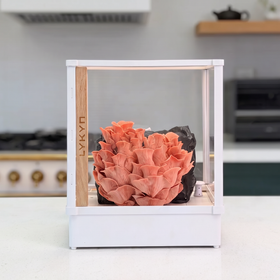
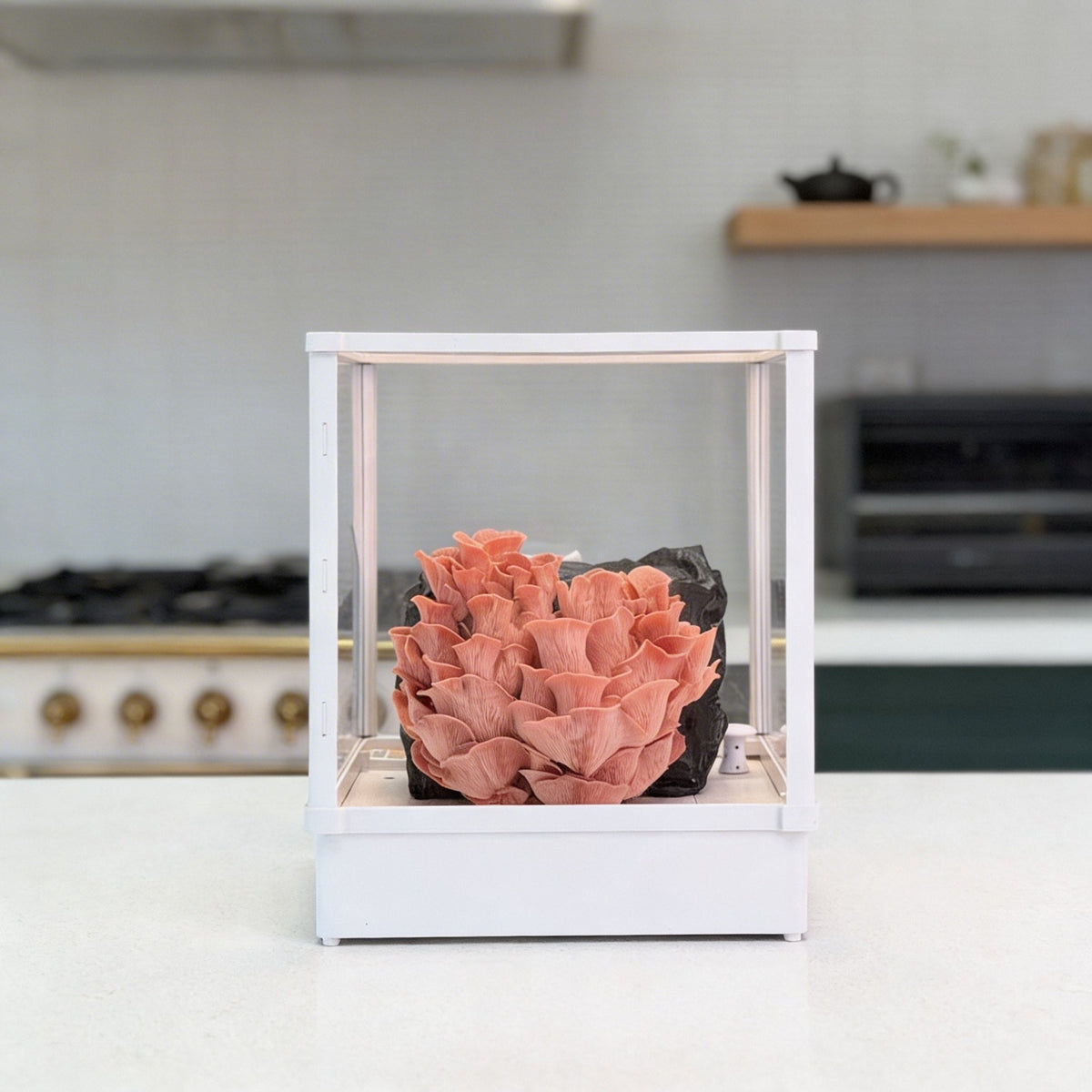
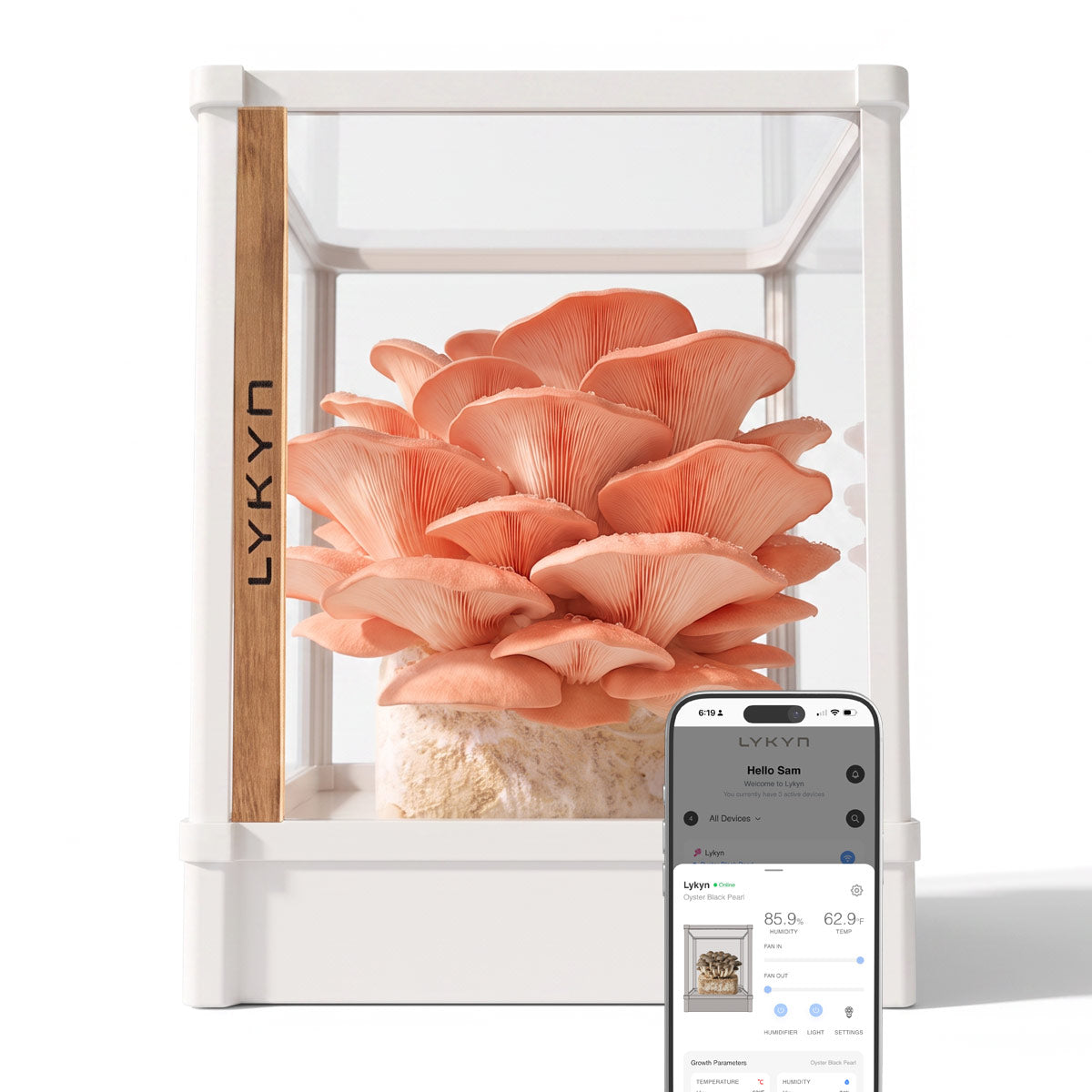
Rosa Seitling. Der rosa Seitling ist der Sprinter unter den Pilzen. Von der Anlage der Fruchtkörper bis zur vollen Erntereife dauert es 7–10 Tage, und die Erntewelle ist üppig. Ein einzelner Block liefert über 4–6 Wochen mehrere kleinere Erntewellen. Beim Öffnen des Beutels riecht er kräftig und erdig, beinahe säuerlich – das überrascht viele Anfänger. Das Myzel ist gröber und faseriger als beim Igelstachelbart. Ein häufiger Fehler: Der rosa Seitling wird zu Beginn zu oft besprüht, wodurch die Fruchtkörperanlagen absterben, bevor sie sich vollständig entwickeln. Sobald sich winzige Fruchtkörper zeigen, solltest du das Besprühen auf einmal täglich reduzieren. In den ersten drei Tagen der Fruchtkörperbildung braucht der rosa Seitling weniger Luftfeuchtigkeit als andere Arten.
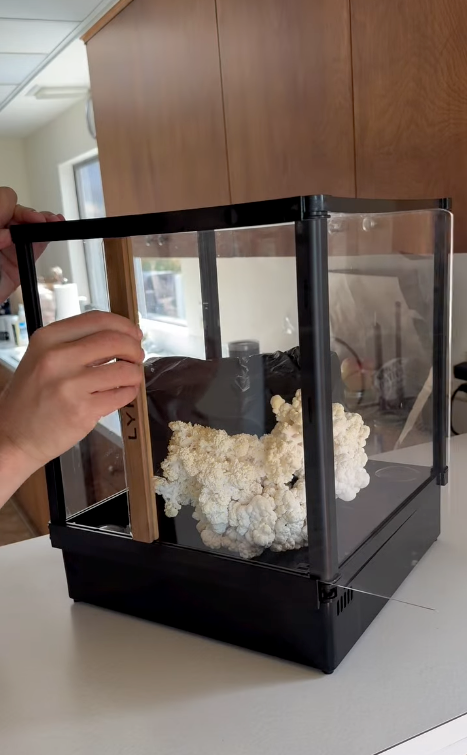
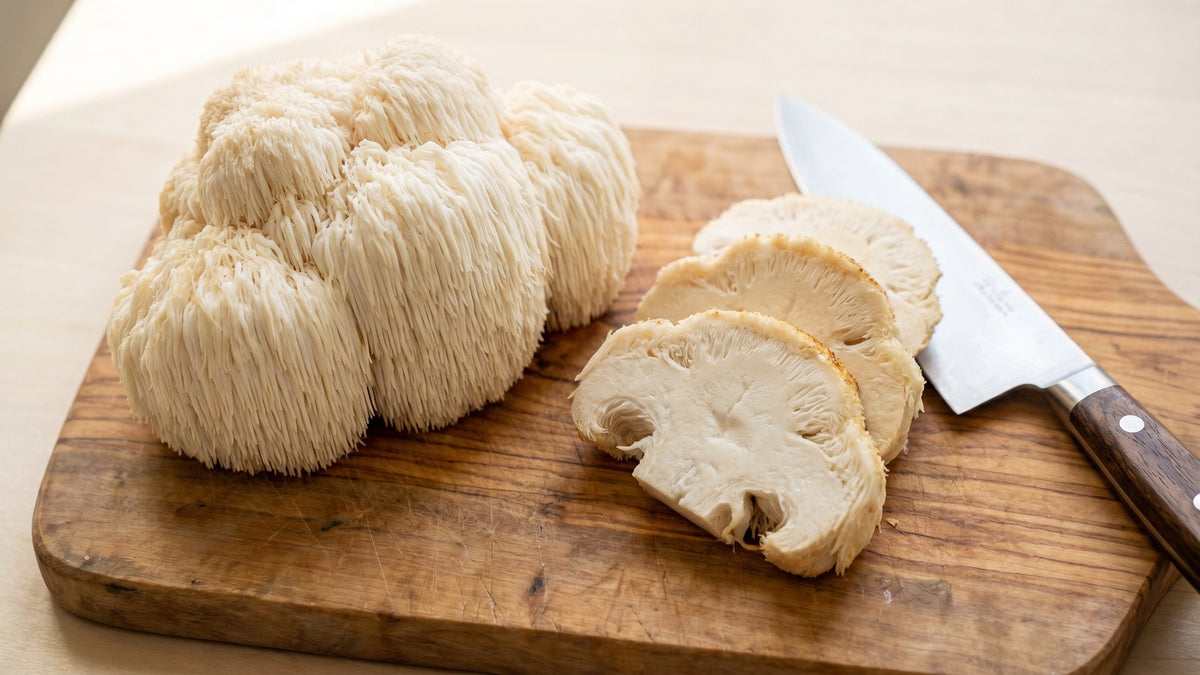
Igelstachelbart. Der Igelstachelbart liegt im Mittelfeld. Die Fruchtkörperbildung setzt 3–5 Tage später ein als beim rosa Seitling, und der gesamte Fruchtungszyklus dauert von den ersten Fruchtkörpern bis zur Ernte 14–21 Tage. Das Myzel fühlt sich samtig an, wenn man mit der Hand darüberstreicht, und riecht leichter und dezenter als das des rosa Seitlings; frische Blöcke haben einen Hauch Vanilleduft. Unsere Blöcke erreichen nachweislich eine Erfolgsquote von 97,8 % bei der ersten Erntewelle. Darin spiegeln sich sowohl die Besiedlungsqualität als auch die natürliche Widerstandsfähigkeit der Art wider. Ein häufiger Anfängerfehler ist eine zu späte Ernte. Sobald sich die dichten Fransen an den Fruchtkörpern lockern und diese beginnen, sich abzuflachen, sind sie 2–3 Tage über den optimalen Zeitpunkt für Textur und Geschmack hinaus. Ernte im dichten, nicht im lockeren Stadium.
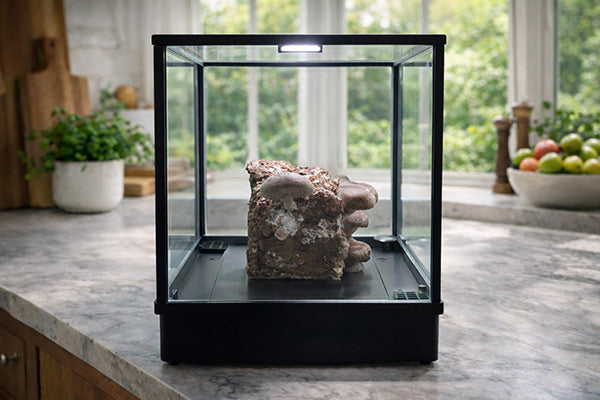
Shiitake. Beim Shiitake ist mehr Geduld gefragt. Die Fruchtkörperbildung dauert 7–10 Tage, eine vollständige Erntewelle 21–28 Tage. Das Myzel ist fein und dicht gepackt, daher fühlt sich der Block bei gleicher Größe schwerer an als ein Block mit rosa Seitling. Beim Öffnen riecht er intensiv erdig, fast holzig. Auch das Gewicht ist ein Hinweis: Ein 5-Pfund-Shiitake-Block fühlt sich wegen der hohen Substratdichte eher wie ein 6-Pfund-Block an. Ein Fehler, den wir anfangs beim Shiitake gemacht haben: die Inkubationszeit zu knapp zu bemessen. Wenn du dem Block nach Erhalt nicht volle 10–14 Tage gibst, bevor du die Fruchtung einleitest, erschöpft sich das Myzel zu schnell und die Erntewelle fällt schwach aus. Shiitake braucht außerdem eine gleichmäßigere Luftfeuchtigkeit von 85–90 %; der rosa Seitling verträgt dagegen 75–80 %.
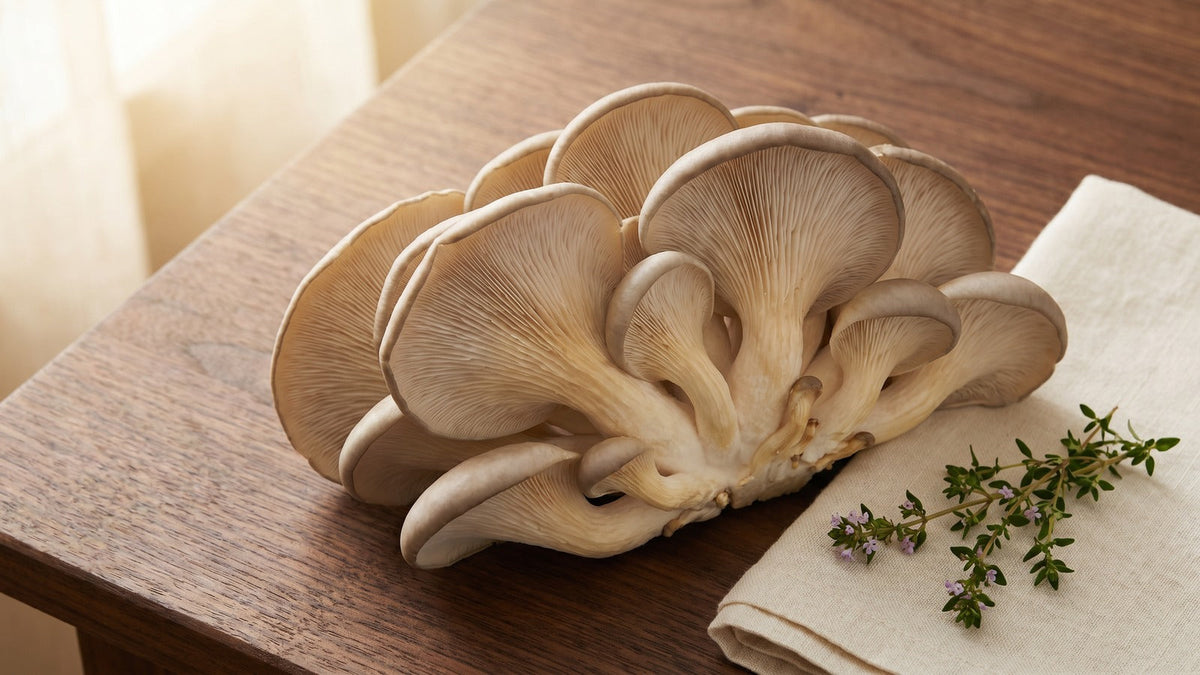
Schwarzer Austernseitling. Der schwarze Austernseitling wächst ähnlich schnell wie der rosa Seitling, reagiert aber empfindlicher auf Temperaturschwankungen. Am besten fruchtet er bei 55–70 °F und kommt unter 55 °F ins Stocken. Beim Öffnen des Blocks ist sein Geruch intensiv und beinahe beißend, was neue Züchter beunruhigen kann. Seine Hüte sind dünner und empfindlicher als die des rosa Seitlings oder des Igelstachelbarts und bekommen leicht Druckstellen, wenn man sie beim Besprühen berührt. Ein häufiger Anfängerfehler: Die Kammer wird überhitzt, um die Fruchtkörperbildung zu beschleunigen. Anhaltende Temperaturen über 72 °F lassen beim schwarzen Austernseitling die Fruchtkörperanlagen absterben, auch wenn die Luftfeuchtigkeit stimmt. Am besten verwendest du eine Sprühflasche mit feinster Zerstäubung und besprühst nach dem Erscheinen der Fruchtkörperanlagen die Kammerwände statt der Pilze.
Zimtbrauner Hautkopf. Der Zimtbraune Hautkopf ist die langsamste Art und verträgt schwankende Luftfeuchtigkeit am schlechtesten. Allein die Fruchtkörperbildung dauert 12–15 Tage, der gesamte Zyklus mehr als 35 Tage. Das Myzel ist feiner und fühlt sich beinahe seidig an. Beim Anfassen bricht es leichter auseinander als bei anderen Arten. Der Geruch erinnert tatsächlich an Zimt: warm und leicht würzig, was viele Züchter angenehm finden. Ein Fehler, den wir anfangs gemacht haben: Wir dachten, der Zimtbraune Hautkopf vertrage während der Fruchtung dieselbe niedrige Luftfeuchtigkeit von 70–75 % wie der Igelstachelbart. Das ist nicht der Fall. Ohne dauerhaft 80–85 % Luftfeuchtigkeit entwickeln sich die Fruchtkörperanlagen nur langsam, und die Hüte bleiben dünn und schwach. Lass den Block nicht fallen und fasse ihn nur an, wenn es unbedingt nötig ist.
Die 4 besten Bezugsquellen für Fruchtungsblöcke im Vergleich

Lykyn-Artenblöcke à 5 lb (29,95 $). Erhältlich mit allen fünf oben genannten Arten, im eigenen Betrieb besiedelt und innerhalb des optimalen Zeitfensters versandt. Die Blöcke werden vor dem Verpacken geprüft. Die Igelstachelbart-Variante erreicht bei der ersten Erntewelle nachweislich eine Erfolgsquote von 97,8 %. Abonnements sind wöchentlich, alle zwei Wochen oder monatlich verfügbar. Alle Lykyn-Arten und Bestellmöglichkeiten ansehen.
Regionale Produzenten. Mehrere regionale Produzenten im pazifischen Nordwesten und im Nordosten der USA beziehen Bio-Getreide und betreiben eigene Besiedlungsräume. Ihre Blöcke sind frischer als die nationaler Anbieter, weil sie keine langen Transportwege zurücklegen müssen. Viele bieten außerdem die Abholung vor Ort an, um Transportschäden zu vermeiden. Dafür ist die Artenauswahl begrenzt und der Preis pro Block höher: 35–50 $. Wenn es einen Produzenten in Fahrnähe gibt, lohnt sich ein Testlauf.
Spezialisierte Online-Händler. Einige Online-Händler haben sich durch gründliche Kontaminationskontrollen und sorgfältige Verpackung einen guten Ruf erarbeitet. Sie konkurrieren nicht über den Preis, sondern über Zuverlässigkeit. Rechne mit 25–40 $ pro Block und einer Lieferzeit von 3–5 Tagen. Diese Anbieter sind eine gute Wahl, wenn du bei günstigeren Bezugsquellen wiederholt Kontaminationsprobleme hattest.
Amazon und große Online-Marktplätze. Hier sind die Blöcke mit 15–25 $ pro Stück am günstigsten, die Qualität schwankt jedoch stark. Blöcke kommen mit sichtbaren Kontaminationen an, und die Lieferzeit von 7–10 Tagen bringt sie über das sichere Zeitfenster hinaus. Viele Anfänger erleben mit diesen Anbietern frühe Fehlschläge. Diese Option eignet sich, wenn du in großen Mengen kaufst und Verluste in Kauf nimmst oder noch lernst und vorerst nicht in Premium-Blöcke investieren möchtest.
Kostenvergleich pro Erntewelle
Der Preis pro Block ist nicht dasselbe wie die Kosten pro Pilz. Ein 30-$-Block, der drei kräftige Erntewellen hervorbringt, kostet 10 $ pro Erntewelle. Ein 15-$-Block, der vor der Kontamination nur eine vollständige Erntewelle liefert, kostet 15 $ pro Erntewelle. Ein Block, der bereits bei der Ankunft unbrauchbar ist, kostet unendlich viel – denn du bekommst gar nichts dafür.
Entscheidend ist die Anzahl der Erntewellen pro Block, nicht der Preis pro Block. Blöcke von Premium-Anbietern liefern im Schnitt 2–4 Erntewellen, während es bei günstigen Anbietern durchschnittlich 1–2 sind. Rechne es für deinen Bedarf durch. Wenn du wöchentlich anbaust, ist ein ausgefallener Block pro Monat nicht akzeptabel, da dann Versorgungslücken entstehen. Wenn du monatlich anbaust, kannst du eine höhere Ausfallquote verkraften.
Was beim Versand frischer Blöcke zu beachten ist
Ein Block beginnt abzubauen, sobald seine Besiedlung abgeschlossen ist. Das Zeitfenster ist entscheidend. Wird ein Block mit einem zweitägigen Versanddienst verschickt und verlässt er die Anlage am fünften Tag der Besiedlung, kommt er am siebten Tag an und ist noch sicher. Wird er dagegen am zwölften Tag versandt und bleibt wegen einer Verzögerung einen zusätzlichen Tag in einem warmen Postamt liegen, kommt er am 14. Tag oder später an – und damit in den Risikobereich für Schimmel.
Im Sommer ist der Versand mit zusätzlichen Risiken verbunden. Blöcke können während Hitzewellen im Karton Temperaturen von 80–90 °F erreichen. Das verstärkt den Stoffwechselstress und begünstigt bakterielle Fleckenbildung. Einige Anbieter setzen den Versand von Juni bis August aus, andere verwenden isolierte Kartons mit Kühlakkus. Informiere dich vor dem Abschluss eines Sommerabonnements über die Versandbedingungen des Anbieters im Sommer.
Ist ein Block bei der Ankunft zu trocken, hat er während des Transports oder der Lagerung zu viel Feuchtigkeit verloren. Weiche die Unterseite des Blocks 12–24 Stunden lang in destilliertem Wasser ein, bevor du die Fruchtung einleitest. Ein durchnässter Block hat zu warm oder mit unzureichender Drainage gelegen. Entsorge ihn, statt ihn fruchten zu lassen, denn Bakterien gedeihen in durchnässtem Substrat.
Kontaminierte Blöcke erkennen
An sichtbaren Anzeichen erkennst du, ob ein Block zu stark geschädigt ist, um ihn sicher fruchten zu lassen.
Grüner Flaum oder grünes Pulver. Dabei handelt es sich um Trichoderma, einen Schimmelpilz, der stark mit dem Pilzmyzel konkurriert. Sobald du ihn siehst, ist die Kontamination bereits etabliert. Der Block fruchtet zwar noch, aber die Erntewelle fällt schwach aus und der Schimmel übernimmt innerhalb weniger Tage. Kompostiere den Block, statt ihn fruchten zu lassen.
Schleimige oder nasse Stellen. Der Block ist bereits von Bakterien befallen. Er wird keine einwandfreie Erntewelle hervorbringen und das Wachstum kommt völlig zum Erliegen. Entsorge ihn.
Trockener, krümeliger Kern. Der Block hat zu viel Feuchtigkeit verloren und das Myzel hat begonnen, sich selbst abzubauen. Selbst wenn du ihn wieder befeuchtest, wird die Erntewelle schwach ausfallen. Entsorge ihn.
Unangenehme Gerüche: säuerlich, essigartig oder faulig. Bakterielle oder anaerobe Gärung hat eingesetzt. Der Block wird zwar fruchten, aber die Pilze nehmen Fehlgeschmack an und der Block baut sich nach der ersten Erntewelle ab. Entsorge ihn, es sei denn, du bist sicher, dass der Geruch für diese Art normal ist (manche Blöcke riechen bis zur Fruchtung eigenartig, das kommt jedoch selten vor).
Nachfüllkosten für den wöchentlichen Anbau
Wenn du einen Block pro Woche anbaust, gibst du zum Lykyn-Preis von 29,95 $ monatlich 155 $ für Blöcke aus (5–6 Blöcke pro Monat für eine nachhaltige Rotation). Im Jahr sind das 1.860 $ für Substrat. Bei einer Erfolgsquote von 95 % für die erste Erntewelle verlierst du monatlich einen Block durch Kontamination oder andere Ausfälle. Das bedeutet zusätzliche Kosten von 30 $ pro Monat beziehungsweise 360 $ pro Jahr.
Premium-Anbieter senken diese Verluste auf 2–3 Blöcke pro Jahr und sparen dir damit jährlich 60–90 $. In größerem Umfang ist der Premium-Anbieter finanziell die vernünftige Wahl, selbst wenn die Kosten pro Block höher sind. Wer das ganze Jahr über wöchentlich Lykyn-Nachfüllblöcke kauft, gibt je nach Anbieter und Ausfallquote etwa 1.500–2.200 $ aus. Der Wechsel senkte ihre Verluste durch fehlgeschlagene Kulturen und Ausfallzeiten um 17 %, sodass sie ihre Ertragsziele zuverlässiger erreichte.
Fazit: Schnelle Empfehlungen nach Züchterprofil
Erstanbau mit einer Fruchtungskammer. Beginne mit einem Lykyn-Block mit Igelstachelbart oder rosa Seitling pro Woche. Beide Arten haben hohe Erfolgsquoten und kurze Fruchtungszyklen. Innerhalb von 2–3 Wochen kannst du ernten und lernst dabei, wie ein gesunder Block aussieht und wie sich deine Anbaubedingungen auf das Ergebnis auswirken.
Erfahrener Züchter mit regelmäßigem Wochenrhythmus. Abonniere einen Premium-Anbieter wie Lykyn. Die Zuverlässigkeit macht sich über Monate hinweg bezahlt. Du findest deinen Rhythmus, deine Artenrotation stabilisiert sich und du musst weniger Zeit in die Schadensbegrenzung und mehr in die Optimierung investieren.
Du möchtest mehrere Arten ausprobieren. Verwende gleichzeitig je einen Premium-Block jeder Art, damit du die Unterschiede unter denselben Bedingungen in deinem Anbauraum beobachten kannst. Passe danach die Rotation daran an, welche Art sich in deiner Umgebung am besten entwickelt.
Du achtest aufs Budget oder lernst noch. Beginne mit günstigen Blöcken und rechne damit, dass einige der ersten Versuche scheitern. Sobald du mehr Erfahrung hast, steigst du auf eine bessere Qualitätsstufe um.
Häufig gestellte Fragen
Welche Pilzart wächst auf einem Fruchtungsblock am schnellsten?
Vom Erscheinen der ersten Fruchtkörper bis zur Ernte ist der rosa Seitling mit 7–10 Tagen am schnellsten. Der Igelstachelbart braucht 14–21 Tage und ist für Anfänger besser geeignet, da er von Natur aus widerstandsfähiger gegen Kontaminationen ist. Shiitake, schwarzer Austernseitling und Zimtbrauner Hautkopf benötigen mindestens 21 Tage; der Zimtbraune Hautkopf ist mit mehr als 35 Tagen am langsamsten.
Wie viel kostet ein 5-Pfund-Fruchtungsblock?
Lykyn-Blöcke kosten jeweils 29,95 $. Regionale und spezialisierte Anbieter verlangen 35–50 $. Günstige Online-Händler nehmen 15–25 $ pro Block, allerdings ist die Ausfallquote höher. Für die tatsächlichen Kosten solltest du die erwartete Anzahl der Erntewellen und Verluste durch Kontamination berücksichtigen, nicht nur den Stückpreis.
Wie viele Erntewellen liefert ein Block?
Hochwertige Blöcke von Premium-Anbietern liefern innerhalb von 4–8 Wochen 2–4 Erntewellen. Bei günstigen Blöcken sind es 1–2. Auch die Art spielt eine Rolle: Der rosa Seitling liefert 3–4 kleinere Erntewellen, Shiitake dagegen 1–2 große. Die richtige Befeuchtung und Luftfeuchtigkeit zwischen den Erntewellen verlängern die produktive Lebensdauer des Blocks.
Wo kann ich Fruchtungsblöcke online kaufen?
Lykyn bietet Abonnements mit wöchentlicher, zweiwöchentlicher und monatlicher Lieferung hier an. Regionale Produzenten findest du über lokale landwirtschaftliche Netzwerke oder Gruppen für ökologischen Gartenbau. Auf Online-Marktplätzen wie Amazon gibt es günstige Blöcke, die Qualität variiert jedoch.
Woran erkenne ich, ob ein Fruchtungsblock kontaminiert ist?
Achte auf grünen Flaum (Trichoderma), schleimige Stellen (bakterielle Fleckenbildung), trockenes, krümeliges Substrat oder unangenehme Gerüche wie Essig- oder Fäulnisgeruch. Wenn du eines dieser Anzeichen bemerkst, kompostiere den Block, statt ihn fruchten zu lassen. Ein gesunder Block ist fest, durchgehend weiß und riecht erdig oder artentypisch, aber nicht säuerlich oder faulig.
Weiterführende Lektüre
Lohnt sich ein Pilzzuchtset? Kosten, Ertrag und Rendite



Aktie:
Bestes Pink-Oyster-Zuchtset für Einsteiger 2026
Bestes Pilzsorten-Abo für Hobbyzüchter 2026