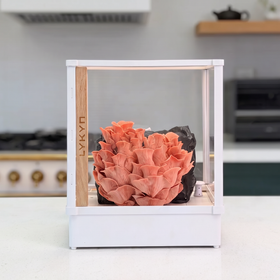



Löwenmähne (Hericium erinaceus) ist ein kühle Temperaturen liebender Stachelpilz, der statt eines Hutes als struppiger weißer Pompon fruchtet. Die Kultivierung zu Hause dauert vom Einweichen des Blocks bis zur Ernte 14–21 Tage, sofern die Luftfeuchtigkeit bei 90–95 % und die Temperatur bei 60–72 °F bleibt. Die Lykyn Smart Mushroom Grow Box automatisiert beides und erzielt bei Löwenmähnen-Blöcken in unserer verifizierten Testreihe eine Erfolgsquote von 97,8 % bei der ersten Erntewelle.
Inhalt dieser Seite
- Was die Löwenmähne eigentlich ist
- Warum sich die Löwenmähne vom Austernpilz unterscheidet
- Was Sie vor dem ersten Tag brauchen
- Schritt 1: Den Block in kaltem Wasser einweichen
- Schritt 2: Die Blockoberfläche einschneiden
- Schritt 3: Die Kammer bestücken und das Profil einstellen
- Schritt 4: Nach den ersten Fruchtkörperansätzen Ausschau halten
- Schritt 5: Das Wachstum der Stacheln fördern
- Schritt 6: Den richtigen Erntezeitpunkt erkennen
- Schritt 7: An der Basis ernten
- Schritt 8: Ruhen lassen und die zweite Erntewelle auslösen
- Die fünf häufigsten Probleme beheben
- Löwenmähne zubereiten: Krabbenküchlein, Schnitzel, Tee
- Häufig gestellte Fragen
Was die Löwenmähne eigentlich ist

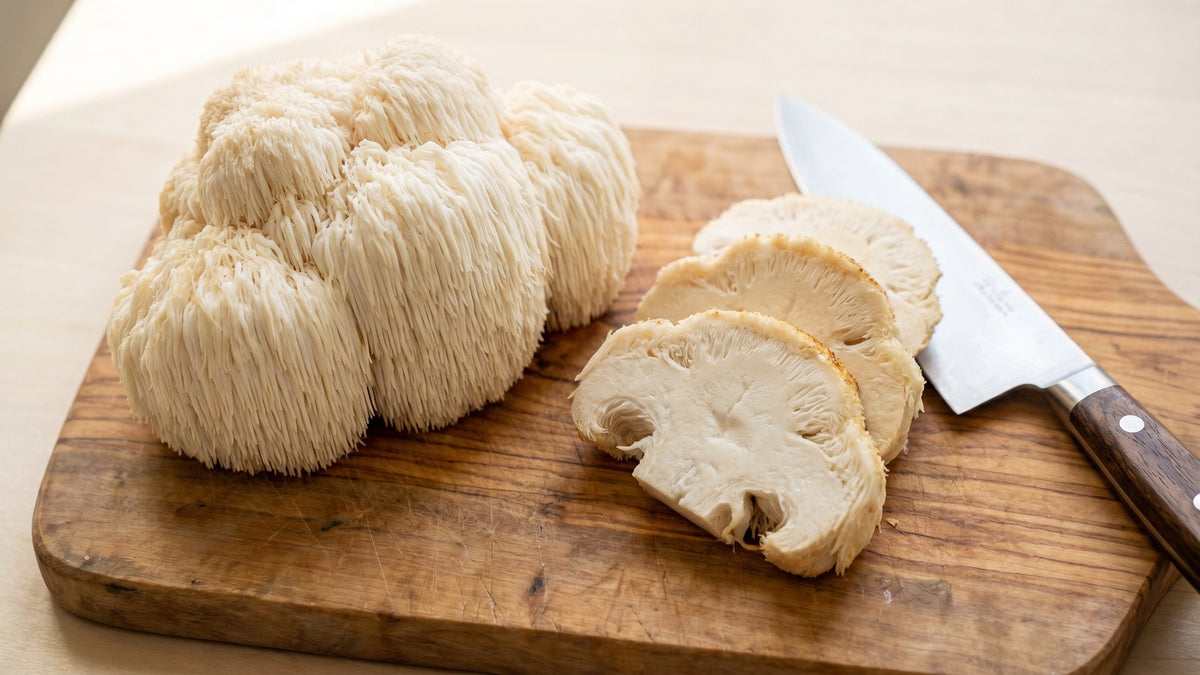
Vergessen Sie die Form mit Hut und Stiel, die den meisten beim Wort Pilz in den Sinn kommt. Die Löwenmähne wächst als eine einzige dichte, weiße Masse mit Hunderten weicher, nach unten hängender Stacheln, auf denen sich die Sporen bilden. Ihr Aussehen hat ihr die heute gebräuchlichen Namen eingebracht: Löwenmähne, Pomponpilz, Affenkopfpilz und in Japan Yamabushitake. Botanisch gehört sie zur Familie der Hericiaceae.
Sie erscheint im Spätsommer und Herbst, wenn die Nächte auf 50 bis 60 °F abkühlen.
Warum sich die Löwenmähne vom Austernpilz unterscheidet
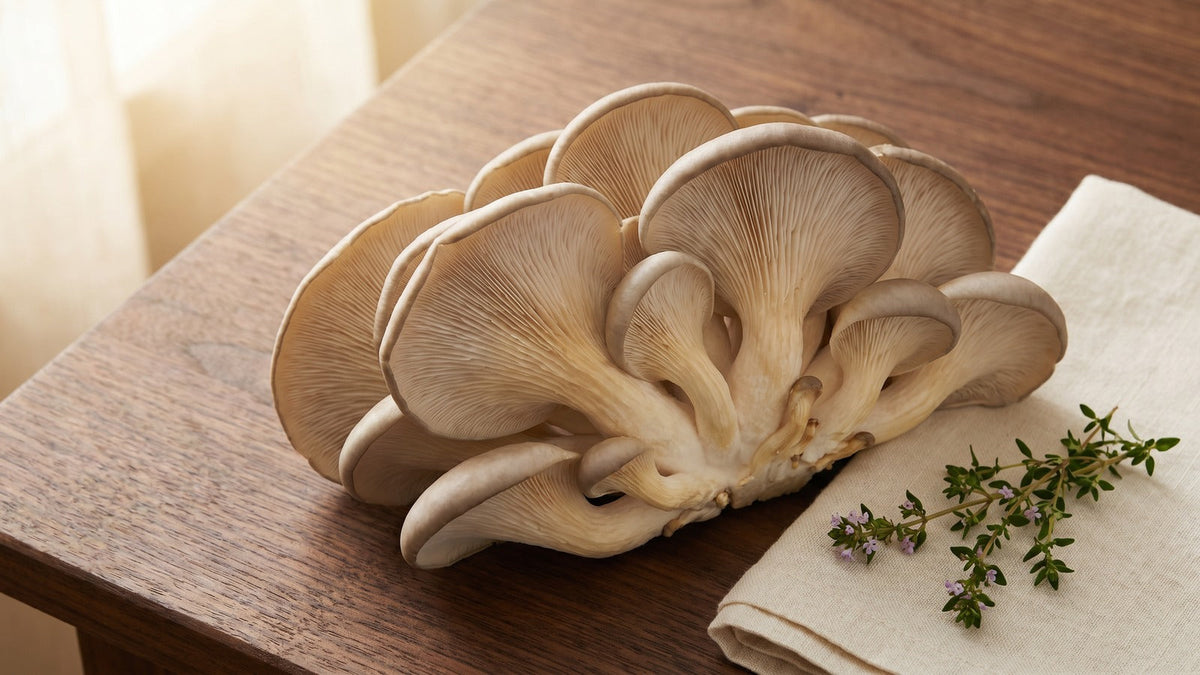
Die meisten, die den Pilzanbau ausprobieren, beginnen mit dem Austernpilz, denn dieser verzeiht einiges. Die Löwenmähne ist kein Austernpilz. Sie gedeiht bei ganz bestimmten Bedingungen und reagiert empfindlich auf Abweichungen. Die drei praktischen Unterschiede, die auf Ihrer Küchentheke eine Rolle spielen:
- Kühlere Temperatur. Die Löwenmähne fruchtet am besten bei 60–72 °F (16–22 °C). Austernpilze vertragen 65–78 °F. Liegt die Temperatur in Ihrer Küche im Sommer bei 75 °F, stagniert die Bildung von Fruchtkörperansätzen und diese bleiben grau.
- Höhere Luftfeuchtigkeit. Während der Bildung der Fruchtkörperansätze und der Fruchtung sind 90–95 % relative Luftfeuchtigkeit erforderlich. Austernpilze gedeihen bei 85–90 %. Unter 88 % bleiben die Stacheln der Löwenmähne kurz und stämmig und bekommen rissige Spitzen.
- Eine einzelne Öffnung für die Fruchtung. Während Austernpilze mehrere Schlitze oder einen offenen Beutel bevorzugen, bildet die Löwenmähne den schönsten Fruchtkörper durch eine einzige kontrollierte Öffnung. Zu viele Schlitze führen zu fünf unterentwickelten Fruchtkörpern statt zu einem großen.
Diese Erkenntnisse sind vorläufig und keine von der FDA zugelassenen gesundheitsbezogenen Aussagen. Sie erklären jedoch, warum die Nachfrage nach Löwenmähne in den USA in den vergangenen drei Jahren schneller gestiegen ist als nach jeder anderen Spezialpilzsorte.
Was Sie vor dem ersten Tag brauchen

Fünf Dinge. Das ist die vollständige Liste für den ersten Tag:
- Ein Fruchtungsblock mit Löwenmähne. Ein 3–5 lb schwerer, sterilisierter Hartholz-Sägemehlblock, der mit Hericium erinaceus durchwachsen ist. Jeder seriöse Anbieter ist geeignet. Die Blöcke kommen vakuumversiegelt an und sollten sichtbar weiß und dicht mit Myzel durchwachsen sein.
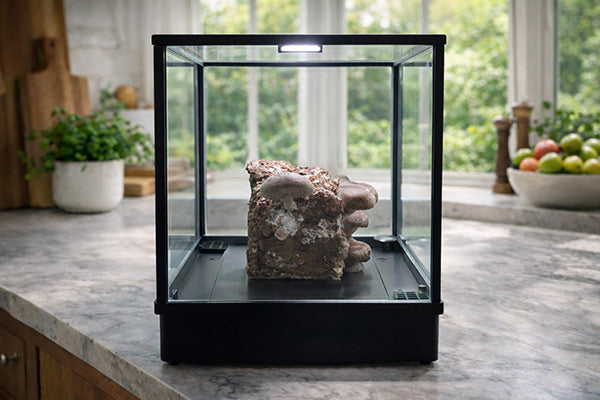
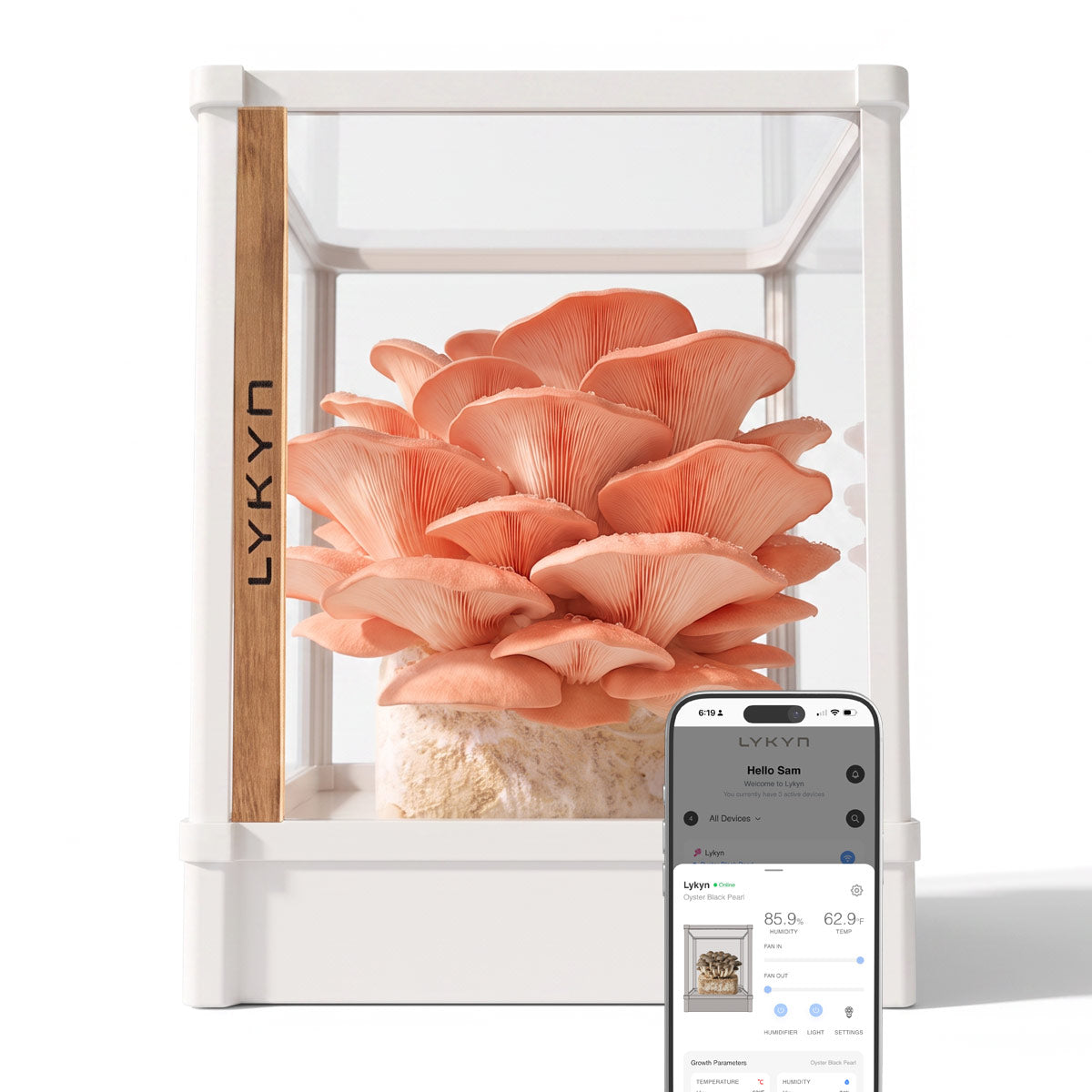
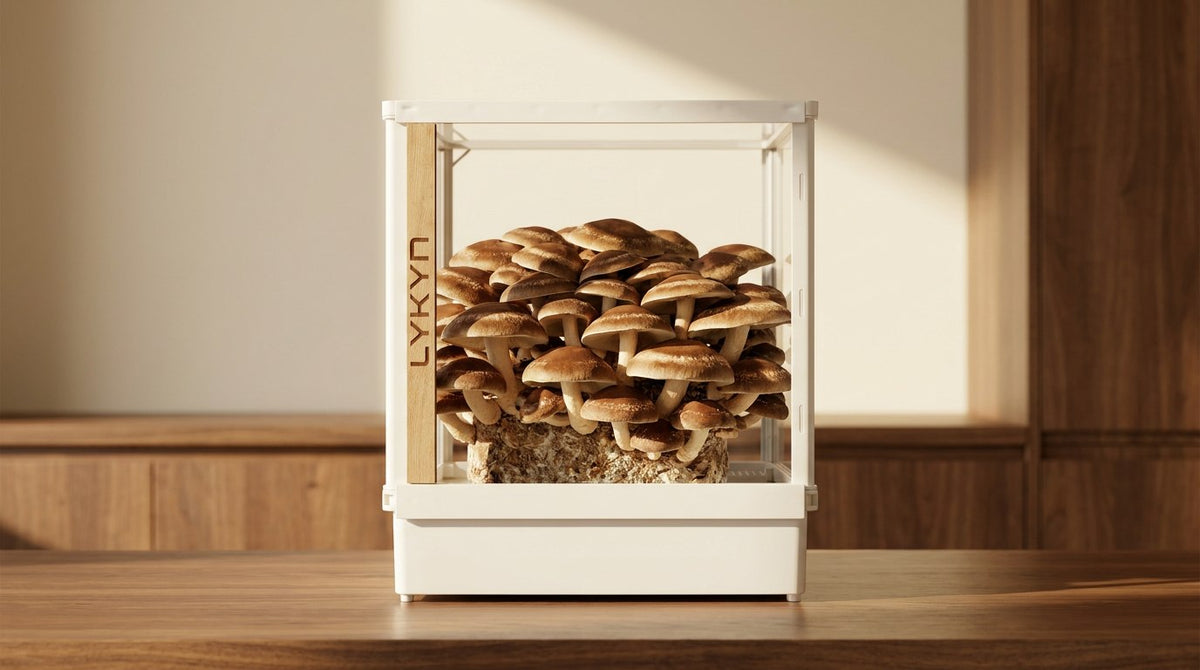
- Eine kontrollierte Fruchtungsumgebung. Die Lykyn Smart Mushroom Grow Box wurde genau dafür entwickelt. Sie kostet 299 $, hält automatisch 60–72 °F und 90–95 % Luftfeuchtigkeit und führt Sie Schritt für Schritt per Smartphone durch den Prozess. Alternativ eignet sich ein Kunststoffzelt mit Hygrometer und Sprühflasche. Dann müssen Sie allerdings täglich 4–6 Mal von Hand sprühen und mit einer deutlich höheren Fehlerquote rechnen.
- Gefiltertes oder Umkehrosmosewasser. Chloriertes Leitungswasser kann das Myzel an der Blockoberfläche hemmen. Wenn Sie nur Leitungswasser haben, lassen Sie es vor dem Gebrauch 24 Stunden offen stehen.
- Ein scharfes Messer. Ein Brotmesser mit Wellenschliff oder ein Pilzmesser. Eine Küchenschere quetscht den Fruchtkörper.
- 70-prozentiger Isopropylalkohol. Zum Abwischen des Kammerinneren, des Blockbeutels und Ihrer Hände vor dem Einschneiden.
Was Sie nicht brauchen: HEPA-Filter, eine Laminar-Flow-Werkbank, eine Aquarienpumpe, eine Stillluftbox oder ein eigenes Grow-Zelt. Ein durchwachsener Block und eine stabile, feuchte Umgebung sind das ganze Rezept. Alles andere gehört entweder zur sterilen Arbeit mit Getreidebrut oder ist übertriebener Aufwand für Hobbygärtner.
Schritt 1: Den Block in kaltem Wasser einweichen
Fruchtungsblöcke mit Löwenmähne verlieren beim Transport Wasser. Gerade die Löwenmähne bildet Fruchtkörper, die zu etwa 90 % aus Wasser bestehen. Wenn Sie auf das Einweichen verzichten, erhalten Sie kleine, stämmige Gruppen oder gar keine. Füllen Sie ein sauberes Spülbecken oder eine große Kunststoffwanne mit kaltem gefiltertem Wasser. Tauchen Sie den vollständig verschlossenen Beutel unter, beschweren Sie ihn mit einem Teller und lassen Sie ihn 12 Stunden einweichen. Öffnen Sie den Beutel vorher nicht. Verwenden Sie kein warmes Wasser: Wärme aktiviert Verunreinigungen schneller als das Myzel.
Nach 12 Stunden sollte sich der Block deutlich schwerer anfühlen und die Oberfläche unter dem Kunststoff etwas heller aussehen. Lassen Sie das Wasser ablaufen und den Beutel vor dem Einschneiden eine Stunde bei Raumtemperatur ruhen. Allein dieser Schritt erklärt in unseren internen Versuchen mit Löwenmähne einen Ertragsunterschied von 28–34 %.
Schritt 2: Die Blockoberfläche einschneiden
Wischen Sie die Außenseite des Beutels mit einem Tuch mit 70-prozentigem Isopropylalkohol ab. Waschen und trocknen Sie Ihre Hände. Schneiden Sie mit einer sauberen, scharfen Klinge einen einzigen waagerechten, etwa 5 cm langen Schlitz in den Kunststoff, ungefähr ein Drittel unterhalb der Oberkante des Blocks. Bei einem großen 5-lb-Block fügen Sie 7,5 cm unterhalb des ersten Schlitzes einen zweiten parallelen hinzu. Schneiden Sie nicht kreuzweise. Klappen Sie die Kunststofflasche nicht hoch. Der Schnitt dient als kontrollierte Öffnung für den Fruchtkörper; der umgebende Kunststoff hält die Feuchtigkeit im restlichen Block.
Hier unterscheidet sich die Löwenmähne am deutlichsten vom Austernpilz. Austernpilzzüchter schneiden X-Muster über die gesamte Beutelfläche. Die Löwenmähne braucht eine begrenzte Austrittsöffnung, damit das Myzel seine Energie auf eine einzige dichte Gruppe konzentrieren kann, statt an jeder Öffnung kleine Fruchtkörper hervorzubringen. Wenn Sie schon einmal Austernpilze gezüchtet haben, widerstehen Sie dem gewohnten Handgriff.
Schritt 3: Die Lykyn-Kammer bestücken und das Profil einstellen

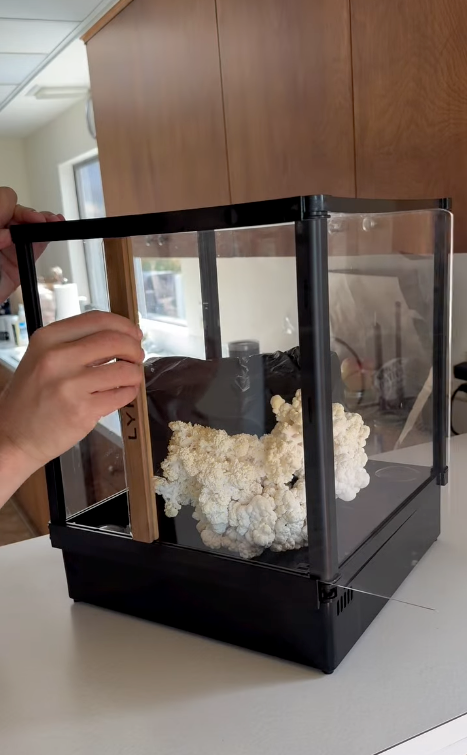
Stellen Sie den eingeschnittenen Block auf das gelochte Tablett in der Lykyn-Kammer. Die eingeschnittene Seite sollte nach vorne zeigen, damit Sie die Entwicklung der Fruchtkörperansätze durch das Glas beobachten können. Schließen Sie die Schiebetür, bis Sie die leise magnetische Versiegelung hören. Öffnen Sie die Lykyn-App auf Ihrem Smartphone, wählen Sie im Artenmenü das Profil „Löwenmähne“ und tippen Sie auf „Start“. Die Kammer senkt die Temperatur standardmäßig auf 68 °F, erhöht die Luftfeuchtigkeit auf 92 % und führt alle 90 Minuten bei niedrigem CO₂-Sollwert einen Frischluftaustausch durch. Bei jedem Zyklus hören Sie den Ventilator etwa 40 Sekunden lang laufen. Das ist schon die ganze Einrichtung.
Wenn Sie keine Lykyn-Kammer verwenden, orientieren Sie sich an denselben Werten: 68 °F Raumtemperatur, 90–95 % relative Luftfeuchtigkeit, 3–5 Luftwechsel und in den ersten fünf Tagen kein direktes Licht auf der Blockoberfläche. Normales Raumlicht ist in Ordnung, direkte Sonne nicht.
Schritt 4: Nach den ersten Fruchtkörperansätzen Ausschau halten

Innerhalb von 72–144 Stunden erscheinen am Schnitt kleine weiße Knötchen. Das sind die ersten Fruchtkörperansätze. Gesunde Ansätze der Löwenmähne sehen aus wie winzige Blumenkohlröschen: strahlend weiß und fest. Bleiben sie nach dem siebten Tag flach, grau oder flaumig, ist die Luftfeuchtigkeit zu niedrig oder der Block wurde beim Einweichen nicht ausreichend gewässert. Erhöhen Sie die Luftfeuchtigkeit auf 94 % und überprüfen Sie das Blockgewicht. Ein korrekt eingeweichter 5-lb-Block sollte in diesem Stadium noch mindestens 4,5 lb wiegen.
Öffnen Sie die Kammer nicht. Jedes Öffnen der Tür senkt die Luftfeuchtigkeit um 8–15 %, sodass das System erst wieder aufholen muss. Wenn Sie unbedingt nachsehen müssen, tun Sie das höchstens einmal am Tag und nicht länger als 20 Sekunden. Die Bildung erster Fruchtkörperansätze ist bei der Löwenmähne die feuchtigkeitsempfindlichste Phase aller für Anfänger geeigneten Pilzarten.
Schritt 5: Das Wachstum der Stacheln fördern
Am sechsten Tag verbinden sich die Ansätze zu einer einzigen weichen Masse und beginnen sich zu strecken. Etwa am siebten oder achten Tag wachsen an der Unterseite des Fruchtkörpers Stacheln nach unten. Jetzt beginnt der Pilz, wie eine Löwenmähne auszusehen. Berühren Sie ihn nicht. Besprühen Sie ihn nicht. Ändern Sie das Profil nicht. Die Kammer erledigt die Arbeit.
Unter idealen Bedingungen wachsen die Stacheln etwa 1/8 Zoll pro Tag. Am zehnten Tag sollte die Gruppe wie eine weiche, weiße Masse aus Eiszapfen aussehen, die 3–5 Zoll breit ist. Sind die Stacheln kurz und stämmig (nach sieben Tagen weniger als 1/4 Zoll), ist die Luftfeuchtigkeit zu niedrig oder der CO₂-Gehalt zu hoch. Erhöhen Sie in einer Lykyn-Kammer die Häufigkeit des Frischluftzyklus über die App. Öffnen Sie in einem passiven Zelt zweimal täglich kurz den Reißverschluss, um für Querlüftung zu sorgen.
Schritt 6: Den richtigen Erntezeitpunkt erkennen
Das Erntefenster ist bei der Löwenmähne kürzer als bei jeder anderen Pilzart, die für Anfänger geeignet ist. Ernten Sie zu früh, bleibt der Fruchtkörper klein und fest, der Ertrag aber gering. Ernten Sie zu spät, geben die Stacheln cremefarbene Sporen ab, die Textur wird wattig und die milde Meeresfrüchtenote weicht einem bitteren Nachgeschmack, den auch noch so viel Butter nicht überdecken kann.
Das verlässliche Zeichen: Die Stacheln sind 3/4 Zoll lang, noch strahlend weiß und ohne gelblichen Schimmer, und der Fruchtkörper hat sein Wachstum seit 24 Stunden eingestellt. Wenn Sie gegen das Kammmerglas klopfen und eine staubige weiße Wolke um den Fruchtkörper sehen, hat die Sporenabgabe bereits begonnen und der Erntezeitpunkt liegt schon 12 Stunden zurück. Schneiden Sie sofort ab.
Auch der Geruch gibt Aufschluss. Eine erntereife Löwenmähne riecht leicht nach Schalentierfond. Eine Löwenmähne, die bereits Sporen abgibt, riecht muffig. Vertrauen Sie Ihrer Nase.
Schritt 7: An der Basis ernten
Öffnen Sie die Kammer. Schneiden Sie die Gruppe mit einem sauberen Messer in einem Zug bündig an der Blockoberfläche ab. Drehen oder reißen Sie nicht daran. Die Dreh-und-Zieh-Methode, auf die Austernpilzzüchter setzen, beschädigt die Ansätze der Löwenmähne und halbiert ungefähr den Ertrag der zweiten Erntewelle. Ein sauberer Schnitt lässt die Blockoberfläche intakt und bereit für den nächsten Durchgang.
Wiegen Sie Ihre Ernte. Der Ertrag der ersten Welle hängt vom verwendeten Block ab. Gewicht, Herkunft, Stamm und Anbaubedingungen beeinflussen ihn. Ermitteln Sie Ihren eigenen Ausgangswert bei der ersten Erntewelle und passen Sie den Anbau daran an. Bei weniger als 0,7 lb war entweder das Einweichen nicht ausreichend oder die Luftfeuchtigkeit lag zwischen dem vierten und achten Tag zeitweise unter 88 %.
Schritt 8: Ruhen lassen und die zweite Erntewelle auslösen
Entfernen Sie mit einem Tuch alle Fruchtkörperreste von der Schnittfläche. Schließen Sie die Kammer und stellen Sie das Profil auf Ruhemodus (oder senken Sie die Luftfeuchtigkeit eine Woche lang auf 85 % und halten Sie die Temperatur bei 64 °F). Der Block braucht ein Ruhesignal, bevor er erneut Fruchtkörperansätze bildet.
Weichen Sie den Block nach 7–10 Tagen acht Stunden lang in kaltem Wasser ein (kürzer als beim ersten Mal, weil der Block noch Feuchtigkeit enthält). Schneiden Sie neben der ursprünglichen Stelle einen neuen, 1 Zoll langen Schlitz und starten Sie das Profil für die Löwenmähne erneut. Die Ansätze der zweiten Erntewelle erscheinen schneller (nach 48–96 Stunden), der Ertrag beträgt jedoch nur 50–70 % der ersten Welle. Bei einem gut durchfeuchteten Block ist eine dritte Erntewelle möglich, aber den zusätzlichen Zeitaufwand selten wert. Kompostieren Sie den verbrauchten Block dann im Garten und beginnen Sie mit einem frischen.
Die fünf häufigsten Probleme beheben

Kurze, stämmige Stacheln. Zwischen dem fünften und zehnten Tag ist die Luftfeuchtigkeit zeitweise unter 88 % gefallen. Prüfen Sie, ob die Tür geöffnet wurde, die Dichtungen der Kammer nicht richtig schließen oder das Hygrometer fälschlich zu hohe Werte angezeigt hat. Erhöhen Sie den Sollwert auf 94 % und verringern Sie die Häufigkeit des Frischluftaustauschs.
Gelbe oder rosafarbene Verfärbungen am Fruchtkörper. Stress, keine Krankheit. Zu viel CO2, zu niedrige Luftfeuchtigkeit oder eine Umgebungstemperatur über 74 °F. Ist die blassgelbe Farbe gleichmäßig und riecht der Pilz normal, ist er noch essbar, hat seinen optimalen Reifezeitpunkt aber überschritten. Ist die Verfärbung fleckig und riecht der Pilz säuerlich, ist der Block bakteriell kontaminiert. Kompostieren und neu anfangen.
Nach 10 Tagen noch keine Primordien. Entweder ist der Block noch nicht vollständig durchwachsen (durch das Plastik sind fleckiges oder graues Wachstum zu sehen) oder die Kammer war an den Tagen 1–5 zu warm. Senke die Solltemperatur auf 66 °F und warte weitere 5 Tage, bevor du den Block aufgibst.
Mehrere kleine Fruchtkörper statt eines Clusters. Zu viele Einschnitte. Igelstachelbart braucht eine kontrollierte Öffnung. Widerstehe beim nächsten Block dem Drang, kreuzförmige Schnitte anzubringen.
Grüner oder schwarzer Schimmel auf der Blockoberfläche. Kontamination mit Trichoderma oder Aspergillus. Das kommt selbst bei renommierten Lieferanten bei 2–3 % der Blöcke vor. Iss keine Fruchtkörper, die bereits mit der kontaminierten Stelle in Berührung gekommen sind. Verpacke den Block, kompostiere ihn draußen (nicht im Kompostbehälter im Haus) und wische das Innere der Kammer vor dem nächsten Durchgang mit 70-prozentigem Isopropylalkohol aus.
Igelstachelbart zubereiten: Krabbenküchlein, Schnitzel, Tee

Zerreiße den Pilzcluster in etwa daumengroße Stücke. Brate sie in Butter scharf an, bis sie tief goldbraun sind. Probier ein Stück. Das Innere ähnelt zartem, süßlichem Krabbenfleisch und ist nicht so schwammig wie ein Portobello. Kein anderer Zuchtpilz kann das. Drei Zubereitungsarten, auf die Hobbyköche immer wieder zurückkommen:
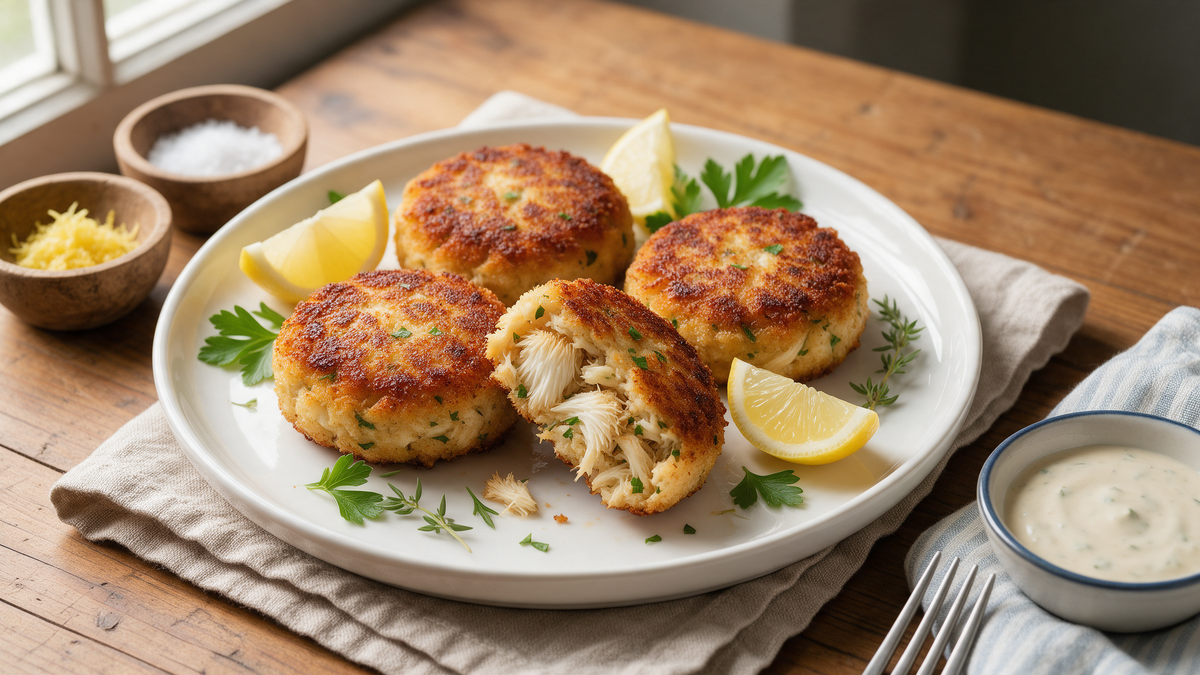
- Krabbenküchlein aus Igelstachelbart. Zerreiße 8 oz frischen Igelstachelbart in etwa daumengroße Stücke. Salze sie und presse sie 20 Minuten zwischen Küchenpapier, damit Wasser austritt. Brate sie in Butter auf beiden Seiten tief goldbraun an. Hebe sie unter eine klassische Krabbenküchlein-Mischung (Old Bay, Panko, Ei, Dijon-Senf, Schnittlauch) und brate die Masse als Küchlein in der Pfanne aus. Die Textur kommt echtem Krabbenfleisch näher als jeder pflanzliche Ersatz.
- Schnitzel aus Igelstachelbart. Schneide den ganzen Cluster waagerecht in 3/4 Zoll dicke Scheiben. Presse sie bei mittlerer Hitze pro Seite 6 Minuten zwischen zwei gusseisernen Pfannen, damit Wasser austritt und sich eine Kruste bildet. Bestreiche sie in der letzten Minute mit einer Glasur aus Sojasauce und Butter. Serviere sie auf Reis oder zwischen zwei Scheiben Milchbrot mit Kewpie-Mayonnaise.
- Tee aus Igelstachelbart. Trockne übrige Stücke bei 110 °F, bis sie spröde sind. Lasse 1 EL getrockneten Fruchtkörper mit einer Scheibe Ingwer 20 Minuten in 2 Tassen Wasser köcheln. Der Tee ist mild und leicht süßlich und wird traditionell in der ostasiatischen Kräuterheilkunde verwendet.
Igelstachelbart lässt sich roh schlecht einfrieren. Wenn du mehr hast, als du in fünf Tagen essen kannst, gare ihn zuerst (brate oder röste ihn an) und friere ihn dann ein. Getrockneter Igelstachelbart hält sich in einem luftdichten Glas 12 Monate.
Häufig gestellte Fragen
Wie lange dauert es, Igelstachelbart zu Hause zu züchten?
In einer kontrollierten Kammer dauert es vom Einweichen des Blocks bis zur Ernte 14 bis 21 Tage. Vor der zweiten Erntewelle kommen 7–10 Tage Ruhezeit hinzu.
Welche Temperatur braucht Igelstachelbart?
60–72 °F (16–22 °C). Ein Pilz für kühles Wetter. Bei Temperaturen über 75 °F stockt die Primordienbildung und es bilden sich nur spärliche Stacheln.
Welche Luftfeuchtigkeit braucht Igelstachelbart?
90–95 % relative Luftfeuchtigkeit während der Primordienbildung und Fruchtung. Von allen Pilzarten, an die sich Hobbyzüchter heranwagen, stellt diese die höchsten Ansprüche an die Luftfeuchtigkeit. Deshalb liefern kontrollierte Kammern bei dieser Art bessere Ergebnisse als passive Zuchtsets.
Schmeckt selbst gezüchteter Igelstachelbart wirklich wie Krabbe?
Bei der Ernte zum optimalen Reifezeitpunkt kommt er zartem Krabbenfleisch nahe. Die Stacheln sollten 3/4 Zoll lang und noch weiß sein; brate den Pilz in der Pfanne in Butter an. Überreife Exemplare werden bitter und verlieren die Meeresfrüchtenote.
Was sagen die Forschungsergebnisse zu Igelstachelbart und Kognition?
Die Forschung befindet sich noch in einem frühen Stadium; es handelt sich nicht um von der FDA zugelassene gesundheitsbezogene Aussagen. Den Pilz selbst zu züchten ist legal und sicher. Wenn du ihn als Nahrungsergänzungsmittel verwenden möchtest, solltest du dies mit einem Arzt besprechen.
Wie viel Igelstachelbart liefert ein Block?
Der Ertrag eines 5-Pfund-Blocks hängt vom jeweiligen Block, der Sorte und den Anbaubedingungen ab. Ermittle deinen eigenen Ausgangswert bei der ersten Erntewelle und passe die Bedingungen danach an. Passive Beutelsets liefern aufgrund schwankender Luftfeuchtigkeit geringere Erträge.
Kann ich Igelstachelbart statt in einer Kammer auch in einem Kunststoffzelt züchten?
Das ist möglich, aber Igelstachelbart reagiert empfindlicher auf Schwankungen der Luftfeuchtigkeit als jede andere Anfängerart. Vier- bis sechsmal tägliches Besprühen von Hand und stagnierende Primordien sind keine Seltenheit. Versuche es zunächst mit einem passiven Zelt, wenn du den Unterschied selbst erleben möchtest, bevor du in eine Automatisierung investierst.
Warum sind die Stacheln meines Igelstachelbarts kurz und stumpf?
Die Luftfeuchtigkeit ist irgendwann unter 88 % gefallen oder der Block ist ausgetrocknet. Erhöhe die Luftfeuchtigkeit, lass die Tür länger geschlossen und prüfe, ob der Block durch Wasserverlust an Gewicht verloren hat.
Warum ist mein Igelstachelbart rosa oder gelb geworden?
Stress, keine Krankheit. Zu niedrige Luftfeuchtigkeit, zu viel CO2 oder eine Umgebungstemperatur über 74 °F lösen die Verfärbung aus. Gelbe Verfärbungen in Verbindung mit säuerlichem Geruch deuten auf eine bakterielle Kontamination hin; der Block sollte kompostiert werden.
Wie lagere ich frischen Igelstachelbart nach der Ernte?
Bis zu 5 Tage locker in Papier, nicht in Plastik, bei 34–38 °F aufbewahren. Für eine längere Lagerung in Stücke reißen, zuerst garen und anschließend einfrieren. Getrockneter Igelstachelbart hält sich in einem luftdichten Glas 12 Monate.
Kann ich Igelstachelbart und Austernpilze in derselben Kammer züchten?
Im Lykyn-Doppelstockmodell ja, auf getrennten Ablagen mit separaten Profilen. In Einkammermodellen sollte pro Durchgang nur eine Art gezüchtet werden, da sich die bevorzugten Temperaturen um 4–8 °F unterscheiden.
Wie unterscheidet sich der Anbau von Igelstachelbart vom Anbau von Austernpilzen?
Niedrigere Temperatur (60–72 °F statt 65–78 °F), höhere Luftfeuchtigkeit (90–95 % statt 85–90 %), längerer Zyklus (14–21 Tage statt 10–14) und eine einzelne, begrenzte Fruchtungsöffnung statt großer Beutelöffnungen. Von einer kontrollierten Kammer profitiert jeder Arbeitsschritt. Bei dieser Pilzart ist der Unterschied zwischen Automatisierung und manuellen Methoden am größten.
Weiterführende Artikel bei Lykyn
- Igelstachelbart perfekt zubereiten
- Zuchtset für Igelstachelbart: Das ist im Lieferumfang enthalten
- Lykyn Smart Mushroom Grow Box. Produktseite
Bereit, diesen Monat Igelstachelbart zu züchten? Die Lykyn Smart Mushroom Grow Box hält automatisch die für Igelstachelbart erforderlichen 60–72 °F und 90–95 % Luftfeuchtigkeit – direkt auf deiner Küchenarbeitsplatte. Serienproduktion läuft; in den USA in Santa Rosa, Kalifornien, montiert. In unserer Testgruppe lag die nachgewiesene Erfolgsquote bei der ersten Erntewelle bei 97,8 %. Entdecke die Kammer.



Aktie:
Wie man goldene Austernpilze zu Hause züchtet: Der umfassende Leitfaden für 2026
Löwenmähnenpilz-Zucht-Kit: Einfache Ernte für zu Hause