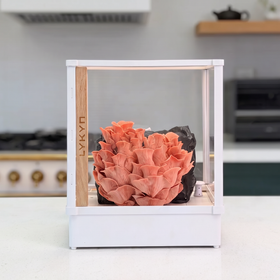



- Was der Blaue Austernpilz ist und warum Züchter ihn wählen
- Was du vor dem ersten Tag brauchst
- Schritt 1: Den Block einem Kälteschock aussetzen
- Schritt 2: Das Fruchtungsfenster öffnen
- Schritt 3: Die Kammer bestücken
- Schritt 4: Auf die Primordienbildung warten
- Schritt 5: Die Entwicklung des Blaus beobachten
- Schritt 6: Das Wachstum der Hüte unterstützen
- Schritt 7: Ernten, sobald sich die Hüte abflachen
- Schritt 8: Ruhen lassen und erneut fruchten lassen
- Probleme beim Anbau des Blauen Austernpilzes beheben
- Zubereitung, Lagerung und Verwendung
- Häufig gestellte Fragen
- Weiterführende Informationen

Was der Blaue Austernpilz ist und warum Züchter ihn wählen

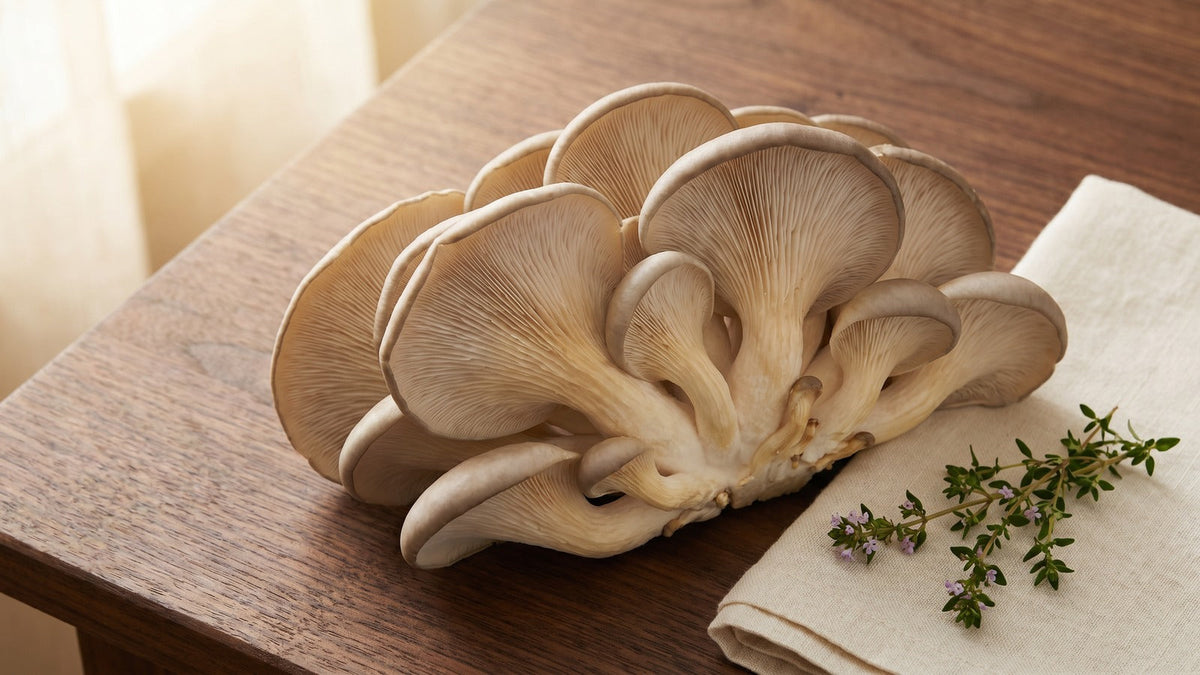
Der Blaue Austernpilz ist Pleurotus ostreatus var. columbinus, eine kältetolerante Variante des gewöhnlichen Austernpilzes. Bei Raumtemperaturen unter 58 °F (ca. 14 °C) sind die Hüte zunächst tief blaugrau. Während der Pilz innerhalb von 3 bis 4 Tagen reift, hellen sie zu Silbergrau und schließlich Beige auf. Schneidet man einen jungen Hut auf, ist das Fleisch reinweiß; bei einem reifen Hut ist es genauso weiß, aber fester und dichter als bei jedem anderen Austernpilz aus dem Supermarkt.
Drei Eigenschaften machen den Blauen Austernpilz bei den meisten Indoor-Züchtern so beliebt. Erstens fruchtet er in einem beheizten Zuhause fast das ganze Jahr über bei Zimmertemperatur – rosa und goldene Austernpilze vertragen das bei ihren benötigten 70 bis 80 °F (ca. 21 bis 27 °C) schlicht nicht. Zweitens liefert er pro Pfund Substrat den höchsten Ertrag aller Austernpilze, die drinnen bei unter 65 °F (ca. 18 °C) gezüchtet werden. Drittens bräunt und röstet er in einer heißen Pfanne wie ein kleiner Portobello. Damit eignet er sich unter den Austernpilzen am besten als echter Fleischersatz statt nur als Ergänzung.
Zur Einordnung für Züchter: Pleurotus ostreatus zählt zu den effizientesten Bio-Konvertern von Lignozellulose unter den Zuchtpilzen. Das bedeutet, dass das Myzel einen größeren Anteil des Kohlenstoffs im Block in Fruchtkörper umwandelt als die meisten anderen Arten. In der Praxis heißt das: mehr Pilze pro Pfund holzbasiertem Substrat.
Vergleich des Blauen Austernpilzes mit anderen Austernpilzsorten
| Sorte | Fruchtungstemperatur | Tage bis zur ersten Ernte | Hutfarbe bei der Ernte | Konsistenz nach dem Garen |
|---|---|---|---|---|
| Blauer Austernpilz | 55 bis 64 °F (ca. 13 bis 18 °C) | 14 bis 18 | Blaugrau bis silbern | Fleischig, fest |
| Austernseitling | 60 bis 75 °F (ca. 16 bis 24 °C) | 10 bis 14 | Weiß bis beige | Zart, fein |
| Rosa Austernpilz | 70 bis 80 °F (ca. 21 bis 27 °C) | 7 bis 10 | Korallenrosa | Kaubar, speckartig |
| Goldener Austernpilz | 65 bis 75 °F (ca. 18 bis 24 °C) | 10 bis 14 | Leuchtend gelb | Nussig, zart |
Was du vor dem ersten Tag brauchst

Alles, was du für den ersten Anbau brauchst, passt auf eine Küchenarbeitsplatte. Die eigentliche Arbeit übernimmt das Substrat; deine Aufgabe ist es, zwei Wochen lang für stabile Bedingungen zu sorgen. Hier ist die vollständige Liste – getestet mit 42 Blöcken in der Lykyn-Forschungsküche während der Wintersaison 2025/2026.
- Ein Fruchtungsblock mit einem Gewicht von 5 bis 6 Pfund aus Pleurotus ostreatus var. columbinus. Kaufe ihn bei einem Mykologieanbieter in den USA, der die Bezeichnung „columbinus“ auf dem Etikett aufführt. Mit einer Lykyn-Kammer funktioniert jede Marke.
- Gefiltertes oder entchlortes Wasser für das Kaltwasserbad. Leitungswasser mit Chlor eignet sich zum Besprühen, kann aber die Vitalität des Myzels beeinträchtigen, wenn es länger damit in Kontakt bleibt.
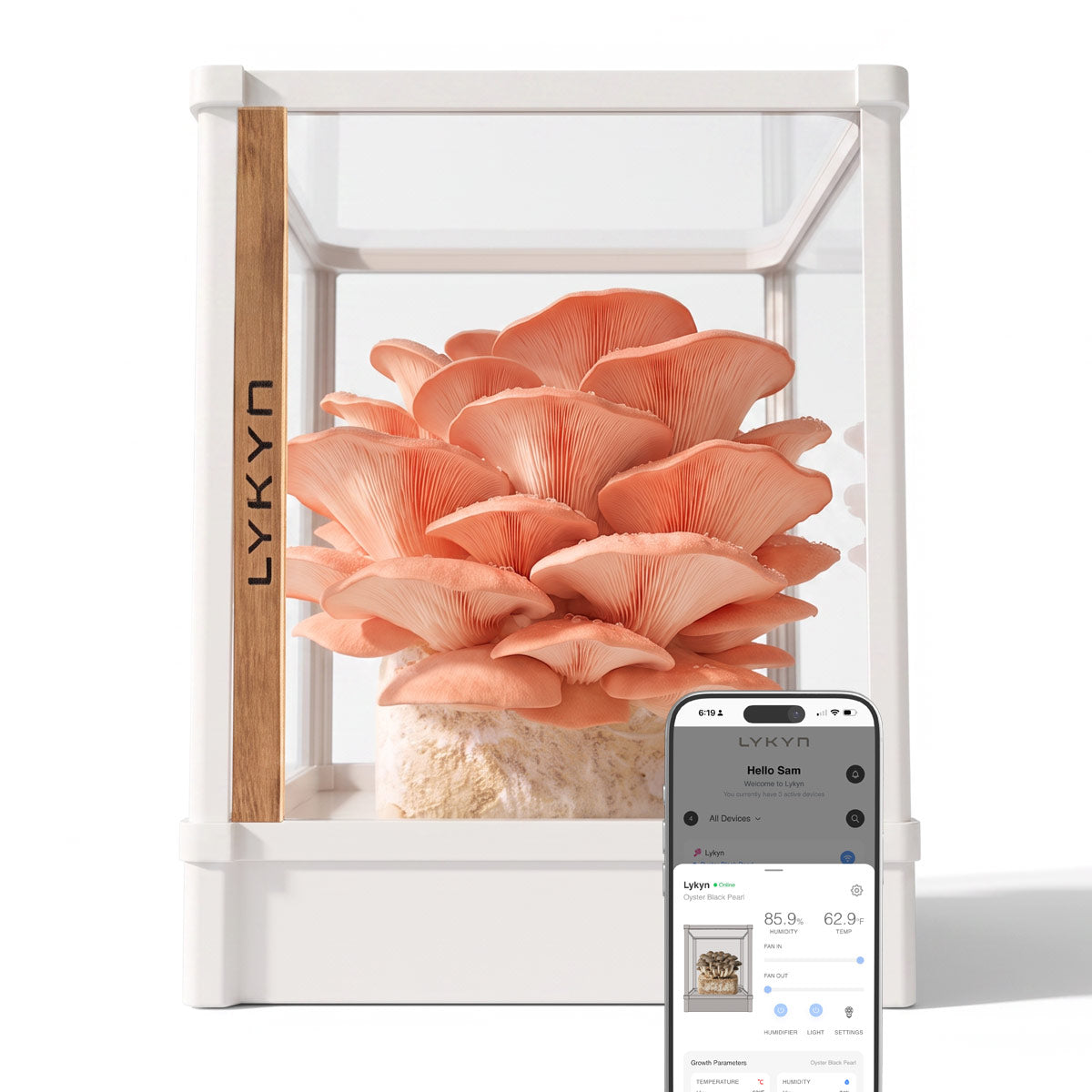
- Eine saubere Fruchtungsumgebung. Nach Zuverlässigkeit sortierte Möglichkeiten: eine sensorgesteuerte Kammer wie die intelligente Lykyn-Pilzzuchtbox, ein Feuchtigkeitszelt über einer Kunststoffbox, eine Shotgun-Fruiting-Chamber oder ein offener Block in einem kühlen Badezimmer mit 4 bis 6 Besprühungen täglich.
- Eine Sprühflasche mit sauberem Wasser für die manuelle Pflege. Bei Verwendung einer Zuchtkammer nicht nötig.
- Ein scharfes Schälmesser oder eine saubere Schere für die Ernte. Nicht drehen und ziehen – dadurch beschädigst du den Block und begünstigst Verunreinigungen beim nächsten Fruchtungsschub.
- Ein digitales Thermometer für den Anbau bei Zimmertemperatur. Günstige Wandthermometer weichen um 3 bis 5 °F (ca. 2 bis 3 °C) ab. Für die Blaufärbung des Austernpilzes muss die Temperatur genau gemessen werden.
Die Anschaffungskosten für den ersten Anbau ohne Kammer: etwa 24 $ für den Block, dazu ein paar Dollar für die Sprühflasche und das Messer, die du wahrscheinlich schon hast. Wenn du Blauen Austernpilz bisher für 16 $ pro Pfund in einem Feinkostladen gekauft hast, macht sich eine Kammer etwa ab dem sechsten Block bezahlt.
Die Methode in 8 Schritten

Den Block einem Kälteschock aussetzen
Fülle ein sauberes Spülbecken oder einen 5-Gallonen-Eimer mit gefiltertem Wasser von 50 bis 60 °F (ca. 10 bis 16 °C). Tauche den gesamten Fruchtungsblock samt Plastikbeutel unter und beschwere ihn mit einem Teller, damit er vollständig unter Wasser bleibt. Der Kälteschock regt bei columbinus die Bildung von Primordien an. Überspringst du diesen Schritt, bilden sich trotzdem Primordien, aber erst 3 bis 5 Tage später und verteilt statt in einem dichten Büschel.
Das Fruchtungsfenster öffnen
Nimm den Block aus dem Wasser, tupfe ihn trocken und schneide mit einer Schere ein einzelnes 3 Zoll großes X oben in den Kunststoff. Die eine Öffnung ist Absicht; mehrere Schlitze verteilen die Primordienbildung und ergeben viele kleine Büschel statt eines großen. Richte das X nach oben aus, wenn der Anbieter den Block bereits positioniert hat (das Myzel ist auf der Seite dichter, die während der Besiedlung nach oben zeigte).
Die Kammer bestücken
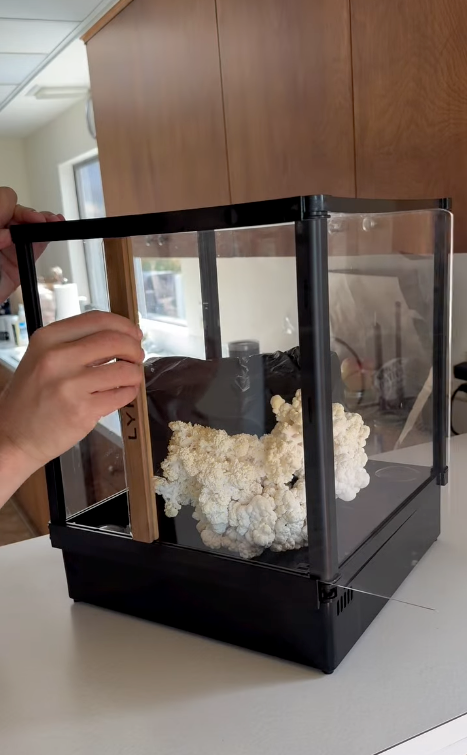
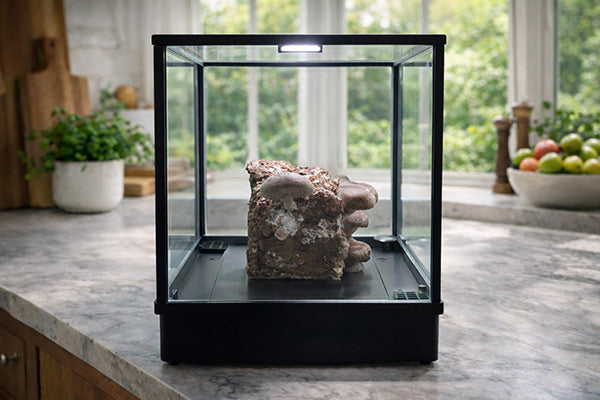
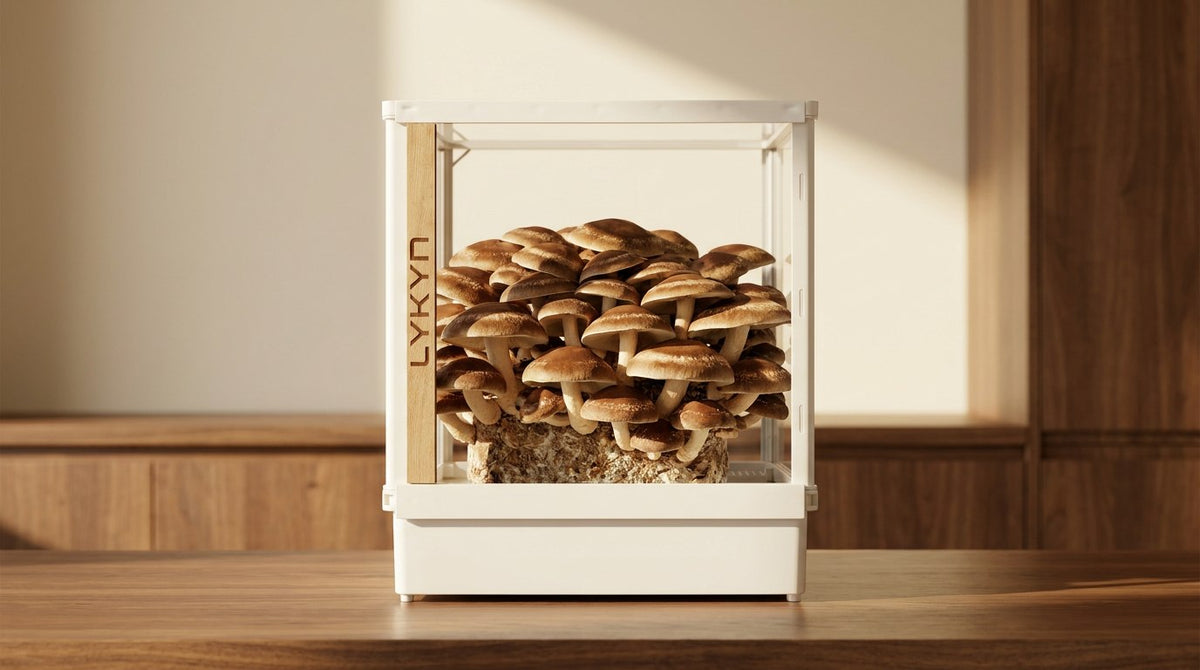
Stelle den Block mit dem X-Schnitt nach oben in die intelligente Lykyn-Pilzzuchtbox (oder in die von dir gewählte Fruchtungsumgebung). Tippe in der Lykyn-iPhone-App auf die Artenauswahl und wähle Blauer Austernpilz. Während des gesamten 18-tägigen Programms hält die Kammer eine Temperatur von 55 bis 64 °F (ca. 13 bis 18 °C), eine relative Luftfeuchtigkeit von 85 bis 95 Prozent und einen stündlichen Frischluftaustausch. Bei manueller Pflege stellst du den Block in einen kühlen Raum und besprühst die offene Schnittstelle 4 bis 6 Mal am Tag.
Auf die Primordienbildung warten
In den ersten vier Tagen sieht es so aus, als würde nichts passieren. Öffne die Kammer nicht und befeuchte den Schnitt nicht. Unter dem Kunststoff bildet sich auf der Myzelmatte eine weiße, körnige Schicht, während sich Primordien entwickeln. Sie sind das empfindlichste Stadium des gesamten Anbaus: Wenn du sie berührst, austrocknen lässt oder die Temperatur plötzlich stark steigt, kann der ganze Büschel absterben. Sensorgesteuerte Kammern schützen dieses Entwicklungsfenster automatisch.
Die Entwicklung des Blaus beobachten
Zwischen Tag 5 und 10 färben sich die Primordien allmählich von Grau zu echtem Blaugrau. Die Farbintensität hängt fast linear von der Temperatur ab: Bei 52 bis 55 °F (ca. 11 bis 13 °C) entstehen die tiefsten indigoblauen Hüte, bei 56 bis 58 °F (ca. 13 bis 14 °C) das klassische Blaugrau, das die meisten als Blau des Austernpilzes kennen, und bei über 60 °F (ca. 16 °C) verblasst die Farbe zu Silber. Das Pigment ist lichtunabhängig; eine besondere Beleuchtung verändert das Ergebnis nicht. Wenn du für einen Markt oder ein Foto ein möglichst kräftiges Blau möchtest, senke die Kammer während dieses fünftägigen Zeitraums auf 55 °F (ca. 13 °C) und erhöhe die Temperatur zur Erweiterung der Hüte wieder auf 60 °F (ca. 16 °C).
Das Wachstum der Hüte unterstützen
Ab Tag elf sieht das Büschel aus wie eine kleine Stadt; bis Tag vierzehn verdoppeln die Hüte täglich ihre Größe. Jetzt ist eine gute Luftzufuhr besonders wichtig. Wenn nicht genug Frischluft hineingelangt, steigt die CO₂-Konzentration in der Kammer. Ist sie während dieses Zeitraums zu hoch, wachsen die Stiele in die Länge, während die Hüte klein bleiben – der typische „Trompeten“-Fehler. Bei manueller Pflege fächelst du viermal am Tag ein Stück Karton durch das Zelt. In einer Lykyn-Kammer übernimmt der Luftaustausch diese Aufgabe automatisch.
Ernten, sobald sich die Hüte abflachen
Der Blaue Austernpilz ist erntereif, wenn sich die Hutkanten aus ihrer nach unten gerollten Form abflachen und gerade anfangen, sich nach oben zu heben. Dieses Zeitfenster dauert 24 Stunden. Wartest du länger, werden die Hüte konkav, Sporen fallen auf das Substrat und die Pilze bekommen beim Braten eine zähe Konsistenz. Schneide das gesamte Büschel mit einem sauberen Messer direkt an der Basis ab. Nicht mit den Fingern ziehen. Durch den sauberen Schnitt bleibt das restliche Stielgewebe im Block und erholt sich schneller für den nächsten Fruchtungsschub.
Der Ertrag variiert je nach Block, Stamm und Anbaubedingungen. Bei einem kräftigen ersten Fruchtungsschub ist das Büschel dicht genug, um eine große Rührschüssel zu füllen.
Ruhen lassen und erneut fruchten lassen
Stelle den abgeernteten Block zurück in die Kammer und lasse ihn 5 bis 7 Tage ruhen. Halte die Luftfeuchtigkeit bei 80 Prozent und die Temperatur bei 58 bis 62 °F (ca. 14 bis 17 °C). Wiederhole an Tag 7 den Kälteschock aus Schritt 1. Der zweite Fruchtungsschub liefert 70 bis 80 Prozent des Gewichts des ersten, der dritte 50 bis 60 Prozent. Nach dem dritten Schub kompostieren die meisten Hobbyzüchter den Block. Gewerbliche Züchter erzielen manchmal noch einen vierten Schub mit 30 bis 40 Prozent Ertrag, doch die Pilze bleiben kleiner und weniger blau.
Probleme beim Anbau des Blauen Austernpilzes beheben

Meine Primordien sind abgestorben (sie wurden gelb oder braun und schrumpelten)
Das häufigste Problem beim Anbau des Blauen Austernpilzes. Meist liegt eine von drei Ursachen zugrunde: Die Temperatur stieg länger als vier Stunden in Folge über 68 °F (ca. 20 °C), die Luftfeuchtigkeit lag einen ganzen Tag lang unter 75 Prozent oder der Block trocknete aus, weil bei manueller Pflege 24 Stunden lang nicht gesprüht wurde. So erholst du den Block: Ernte alle noch lebenden Primordien, setze ihn erneut einem Kälteschock aus und korrigiere den fehlerhaften Faktor. Das Myzel ist nicht abgestorben – nur die Primordien.
Die Hüte sind blassgrau oder beige statt blau geworden
Während der Primordienbildung war es zu warm. Der Pilz ist trotzdem vollkommen essbar und schmeckt genauso. Halte die Kammer beim nächsten Fruchtungsschub während des Primordienfensters (Tag 5 bis 10) auf 55 bis 58 °F (ca. 13 bis 14 °C), dann kehrt die Farbe zurück.
Lange Stiele, winzige Hüte, das Büschel sieht aus wie eine Trompete
Der Frischluftaustausch ist ausgefallen und CO₂ hat sich angesammelt. Bei manueller Pflege öffnest du das Zelt an den Tagen 11 bis 14 zweimal täglich für fünf Minuten. Prüfe bei einer Lykyn-Kammer, ob die App den stündlichen Luftaustausch anzeigt. Wenn nicht, liegt ein Hardwarefehler vor; wende dich an den Support.
Weißer Flaum auf dem Substrat, der nicht zum Pilz gehört
Es handelt sich entweder um Spinnweben-Schimmel (Hypomyces) oder Trichoderma. Spinnweben-Schimmel sieht aus wie ein schnell wachsendes Spinnennetz und lässt sich stellenweise mit einem verdünnten dreiprozentigen Wasserstoffperoxid-Spray behandeln. Trichoderma tritt in Form leuchtend waldgrüner Flecken auf und bedeutet, dass der Block befallen ist. Ernte, was du kannst, und entsorge den Block, um eine Verunreinigung der nächsten Charge zu vermeiden.
Der zweite Fruchtungsschub blieb aus
Entweder hat der Block während der Ruhewoche zu viel Feuchtigkeit verloren (mit einem 30-minütigen kalten Wasserbad wieder befeuchten), oder das Myzel hat die verfügbaren Nährstoffe aufgebraucht (manche Blöcke liefern nur eine kräftige Erntewelle; bei günstigeren Substraten ist das normal). Eine Prise Gips im Wasserbad während der Ruhewoche kann einen stagnierenden Block manchmal wiederbeleben.
Zubereitung, Lagerung und Verwendung

Der Austernseitling fällt in der Pfanne zusammen. Der blaue Austernseitling hält dagegen: Er behält seine Form, bräunt in Fett kräftig an und bietet eine Umami-Tiefe, die Steinpilzen nahekommt – zu einem Bruchteil des Preises. Diesen Austernseitling brät man, wenn man Wert auf Biss legt.
Die Zubereitung, die Sie zuerst ausprobieren sollten: trocken anbraten und anschließend fertig garen
Eine schwere Pfanne bei mittlerer bis hoher Hitze ohne Fett erhitzen. Den Büschel von Hand in einzelne Hüte zerteilen (ein Messer zerdrückt die Fasern; beim Zerteilen von Hand bleibt die Textur erhalten). Die Hüte in die trockene Pfanne legen und mit einem Pfannenwender leicht andrücken. Das Wasser austreten und wieder aufnehmen lassen. Das dauert etwa 4 Minuten. Sobald die Pfanne wieder trocken ist, einen Esslöffel Butter und eine zerdrückte Knoblauchzehe hinzufügen und die Hüte auf jeder Seite 90 Sekunden fertig garen, bis sie tief goldbraun sind. Erst am Ende salzen. Bei dieser Methode konzentriert sich das Aroma, und die Hüte erhalten ihre charakteristisch knusprigen Ränder bei zartem Kern.
Weitere Verwendungsmöglichkeiten
- In Sahnepasta: Kann in Tagliatelle oder Pappardelle direkt Cremini ersetzen. Die feste Textur hält langem Köcheln stand.
- Als ganzer Büschel gegrillt: Den unzerteilten Büschel mit Olivenöl bestreichen und bei mittlerer Glut auf jeder Seite 4 Minuten grillen. Wie ein kleines Steak servieren.
- Als Ramen-Topping: Roh in dünne Scheiben schneiden und 30 Sekunden vor dem Servieren in die heiße Brühe geben.
- Duxelles für Füllungen: Der höhere Ertrag und der geringere Wassergehalt machen blaue Austernseitlinge ideal für fein gehackte Pilzfüllungen.
Lagerung
Frisch in einer Papiertüte im Gemüsefach des Kühlschranks: bis zu 7 Tage, länger als alle anderen Austernseitlinge, da sie weniger Wasser enthalten. Niemals in einer verschlossenen Plastiktüte aufbewahren. Die Hüte schwitzen und werden innerhalb von 48 Stunden schleimig. Bei 130 °F (ca. 54 °C) getrocknet, bis sie knackig trocken sind (etwa 6 Stunden in einem Dörrautomaten): 6 bis 12 Monate in einem luftdichten Glas mit einem Silikagel-Päckchen. Vor Gebrauch 20 Minuten in warmem Wasser einweichen; die Einweichflüssigkeit als Pilzfond aufbewahren.
Nährwertprofil
Pro 100 g roh: etwa 33 kcal, 3,3 g Eiweiß, 3,4 g Ballaststoffe, 0,4 g Fett sowie nennenswerte Mengen an B-Vitaminen (Niacin, Riboflavin) und dem Antioxidans Ergothionein. Kurzes Trocknen in der Sonne vor dem Garen erhöht den Vitamin-D2-Gehalt erheblich – eine gut dokumentierte Eigenschaft von Pleurotus-Arten.
Häufig gestellte Fragen
14 bis 18 Tage in einer kontrollierten Kammer. 18 bis 24 Tage mit einem passiven Anzuchtset für die Arbeitsplatte. Eine zweite und dritte Erntewelle dauern jeweils weitere 12 bis 16 Tage.
55 bis 64 °F (ca. 13 bis 18 °C). Sie vertragen Temperaturen bis hinunter zu 45 °F (ca. 7 °C). Die dunkelsten blauen Hüte entstehen, wenn die Raumtemperatur unter 58 °F (ca. 14 °C) bleibt. Bei über 68 °F (ca. 20 °C) verkümmern die Primordien oder wachsen blass-beige heran.
Während der Primordienbildung war es zu warm. Die Pigmentbildung bei Pleurotus ostreatus var. columbinus wird durch Wärme beeinflusst; Hüte, deren Primordien sich bei über 60 °F (ca. 16 °C) gebildet haben, wachsen blassgrau bis beige heran und verblassen mit zunehmender Reife noch weiter. Sie sind unbedenklich essbar und gehören zur selben Art – lediglich die typische Färbung fehlt.
Das hängt vom Block, der Sorte und davon ab, wie genau Sie Luftfeuchtigkeit und Luftstrom regulieren. Ermitteln Sie Ihren Ausgangswert bei der ersten Erntewelle und richten Sie sich danach.
Bei kühlen Bedingungen in Innenräumen: ja. Blaue Austernseitlinge liefern pro Block mehr als rosa und goldene, da sie bei Raumtemperatur ganzjährig fruchten und eine größere Bandbreite an Luftfeuchtigkeit vertragen, bevor die Hüte aufreißen.
Nur in getrennten Kammern. Blaue Austernseitlinge benötigen 55 bis 64 °F (ca. 13 bis 18 °C), während rosa Austernseitlinge bei 70 bis 80 °F (ca. 21 bis 27 °C) fruchten. Verwenden Sie für jede Sorte eine eigene Box oder bauen Sie die Arten zu unterschiedlichen Jahreszeiten an.
Ja. Sie sind fester, fleischiger und haben von Anfang an mehr Umami. Austernseitlinge sind milder und zarter. Blaue Austernseitlinge eignen sich besser zum scharfen Anbraten und Grillen.
Die Hutkanten flachen ab und beginnen, sich nach oben zu wölben. Dann haben Sie ein Zeitfenster von 24 Stunden. Warten Sie, bis sich die Ränder zurückrollen und Sporen auf den Block fallen; dann wird die Textur zäh und die Haltbarkeit halbiert sich.
7 Tage in einer Papiertüte im Gemüsefach. Bei 130 °F (ca. 54 °C) getrocknet, bis sie knackig trocken sind, behalten sie in einem luftdichten Glas 6 bis 12 Monate lang ihr Aroma.
Ja, allerdings fällt der Ertrag geringer aus und die Farbe blasser. Für eine Erntewelle reicht ein Feuchtigkeitszelt über einer Kunststoffbox. Für gleichmäßige Erntewellen und eine intensivere Pigmentierung nimmt Ihnen eine sensorgesteuerte Kammer das tägliche Besprühen ab und hält das kühle Zeitfenster für die Primordienbildung ein, in dem sich echtblaue Hüte entwickeln.
Garen Sie sie. Rohe Austernseitlinge aller Pleurotus-Varianten enthalten geringe Mengen Hämolysine, die durch Hitze abgebaut werden. Kurzes Anbraten in der Pfanne genügt.
Kein wesentlicher. Pleurotus ostreatus var. columbinus ist der anerkannte botanische Name; Anbieter verkaufen dieselbe Sorte unter Namen wie Blue Dolphin, Blue-Roof, Blue Boy und weiteren. Achten Sie auf die Bezeichnung columbinus auf dem Etikett des Blocks.
Die Kammer wird ohne Block geliefert, damit Sie Ihre bevorzugte Sorte vor Ort beziehen können. Jeder 5 bis 6 Pfund schwere Block mit Pleurotus ostreatus var. columbinus von einem seriösen US-Anbieter passt hinein.
97 Prozent Erfolgsquote bei der ersten Erntewelle, ermittelt anhand von 42 getesteten Blöcken mit blauen Austernseitlingen in der Lykyn-Forschungsküche während der Wintersaison 2025 bis 2026. Derselbe Richtwert, den wir für die Kammer insgesamt veröffentlichen.
Weiterführende Artikel auf lykyn.com
- So züchten Sie rosa Austernseitlinge zu Hause
- So züchten Sie goldene Austernseitlinge zu Hause
- So züchten Sie Igelstachelbart zu Hause
- Zeitlicher Verlauf des Myzelwachstums auf verschiedenen Substraten
- Kontamination: Was lässt sich retten und was sollte entsorgt werden?
- Haltbarkeit von Pilzen bei verschiedenen Lagerungsmethoden
- Lykyn Smart Mushroom Grow Box. Produktseite



Aktie:
So züchten Sie rosa Austernpilze zu Hause: Der vollständige Leitfaden für 2026
Wie man goldene Austernpilze zu Hause züchtet: Der umfassende Leitfaden für 2026