


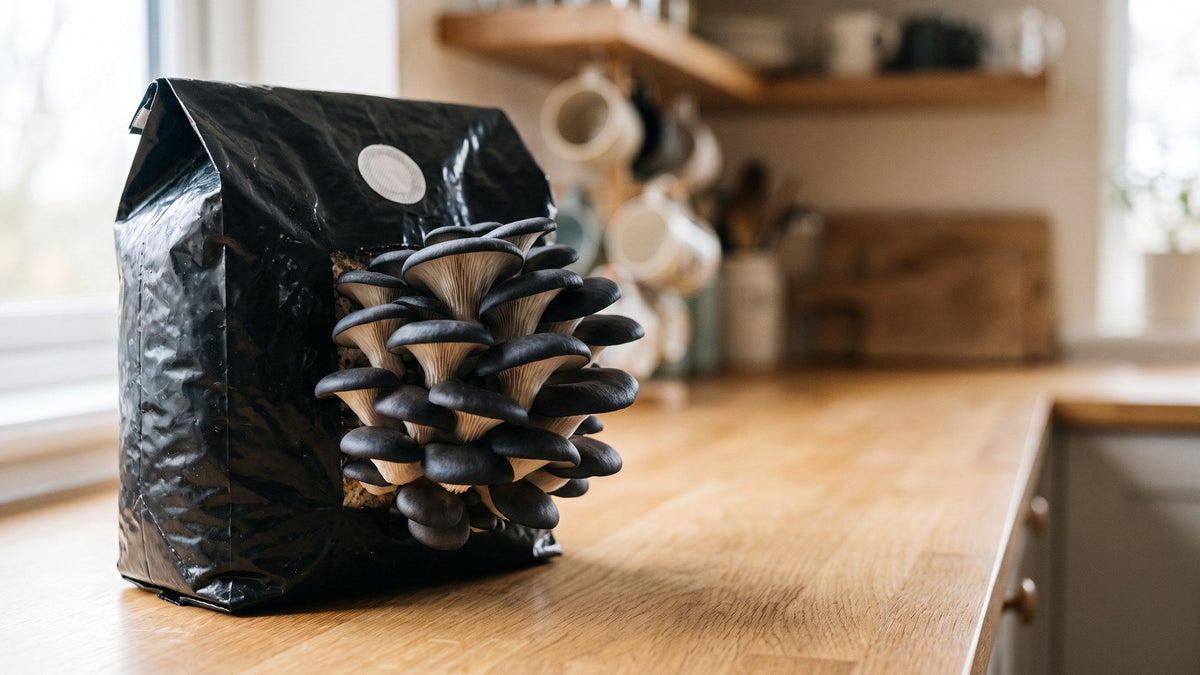
A black oyster mushroom is a dark-capped strain of the classic oyster mushroom, Pleurotus ostreatus, with charcoal-to-slate caps, thick white stems and a deep, savory flavor. It fruits best at 59 to 70°F (15 to 21°C) with 85 to 92% relative humidity. A 5 lb fruiting block gives 2 to 3 harvests of about 1 lb each, and each flush takes 7 to 14 days.
That temperature range is where a typical heated home sits in winter, which makes black oyster one of the easiest cold-season grows for a kitchen counter. This guide follows it from pin to plate and clears up where the "black pearl" name fits in.

What is a black oyster mushroom?
Biologically, it's the same species as the grey oysters in the grocery store. Oyster mushrooms are among the most widely cultivated mushrooms in the world, and growers have selected Pleurotus ostreatus strains for traits from cold tolerance to cap color. Black oyster strains sit at the dark end of that range.
Like every true oyster, it grows in overlapping, shelf-like clusters from a shared base. The caps are fan-shaped and the gills run down onto a short, thick stem. What sets it apart is the color, which shifts as the cluster matures:
- Pins: tight bunches of dark grey to near-black nubs at the cut, each about the size of a match head.
- Young caps: deep charcoal buttons with their edges rolled under, sitting on short white stems.
- Mature caps: slate grey to grey-brown and usually 2 to 4 inches across, with cream-white gills underneath.
Temperature changes the shade. A block fruiting near 60°F tends to give the darkest caps, while one near 70°F comes up lighter and greyer. Both are normal.
"Black" is a little generous, to be fair. Under kitchen light most clusters read as very dark grey, and they cook down to a deep brown.
Is a black pearl oyster mushroom the same thing?
Sometimes, but not always. Mushroom trade names aren't regulated, so the same label can cover different strains depending on who grew them. Here's how the three dark names tend to break down:
- Black oyster generally means a dark strain of Pleurotus ostreatus. That's exactly how our block is listed: Pleurotus ostreatus, dark variety.
- Black pearl is a market name often used for a hybrid of pearl oyster (P. ostreatus) and king oyster (P. eryngii). Those mushrooms tend to carry thicker, meatier stems than a classic oyster, closer to a king in texture.
- Black king turns up on menus and market signs for dark-capped, king-style mushrooms. Our black king mushrooms guide covers that side of the family.
The reliable tiebreaker is the Latin name on the label or listing. Pleurotus ostreatus means shelf-like clusters with tender caps. Eryngii, on its own or in a hybrid, means a meaty stem and a smaller cap.
In the kitchen they're close cousins, so the searing and roasting ideas in our black pearl mushroom recipes work with black oysters too. Tear the clusters into strips instead of cutting thick coins, since oyster stems are slimmer than a king's.
How to grow black oyster mushrooms from a 5 lb block
A pre-colonized block skips the slow, fiddly part. The mycelium has already worked through the supplemented hardwood sawdust inside the bag, so your job starts at fruiting.
- Check the block when it arrives. It should be firm and white all the way through, with a fresh, woody smell. A few dark pins already forming inside the bag are a good sign. The block is ready and a little impatient.
- Cut an X about 2 inches across in the side of the bag. Oysters push out through openings and grow sideways, so a side cut gives the cluster room to spread.
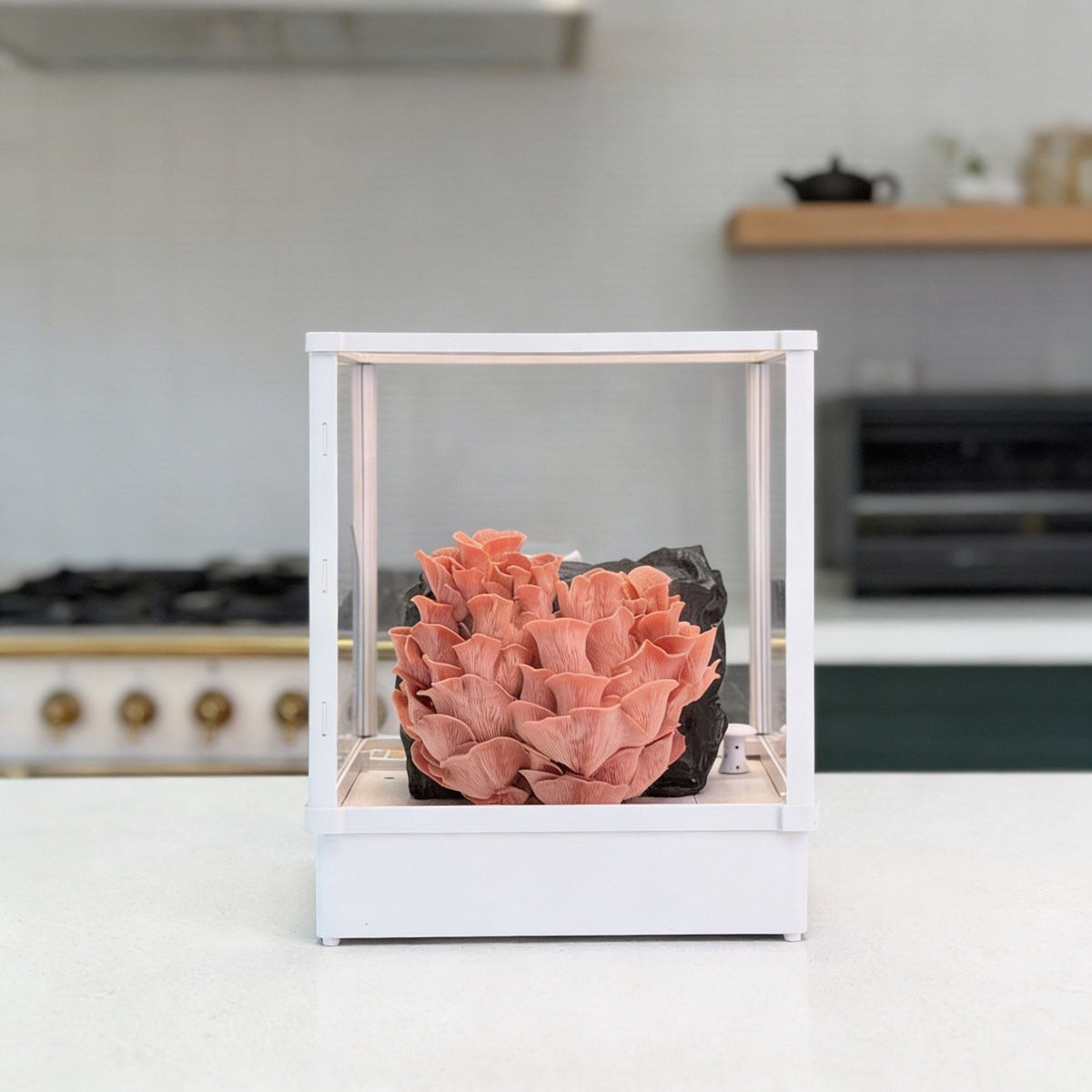
- Set the block in the chamber and scan its QR code with the Lykyn app. The chamber pulls the black oyster profile and takes over humidity and fresh air from there. You top up the 2.8 L water tank when the app asks.
- Look for pins in 3 to 7 days. They show up as dark grey dots at the cut and fill out fast once they start.
- Harvest 7 to 14 days after cutting, using the cues in the harvest section below.
The conditions black oysters want
| Factor | Target | What happens outside it |
|---|---|---|
| Temperature | 59-70°F (15-21°C) | Above 70°F the caps come up paler and the cluster matures faster. Below 59°F growth slows right down. |
| Humidity | 85-92% RH | Too dry gives cracked caps with curled, crispy edges. Too wet leaves water beading on the caps and can bring yellow-brown spots. |
| Fresh air | Frequent exchange, low CO2 | Stale air grows long stems, tiny caps and fuzzy white bases. |
| Light | Indirect light, about 12 hours a day | In the dark, oysters grow pale and stretch toward whatever light they can find. |
| Timing | Pins in 3-7 days, harvest in 7-14 days per flush | Slower than this usually points to a cold room or a dry cut. |
About that first row: the Lykyn chamber handles humidity and airflow but runs at room temperature, and black oyster's 59 to 70°F window is right where a thermostat set to 68°F lands. If your kitchen climbs past 75°F in summer, a pink oyster block is the happier choice for that season.
No chamber? The targets stay the same. Keep the cut out of direct sun and mist the air around the block 2 to 3 times a day instead of soaking the block itself. If day 10 passes without pins, our mushroom pinning guide walks through the usual causes, from a dry cut to a chilly room.

Fuel Your Mushroom Journey
Black Oyster Grow Kit
A 5 lb block of dark Pleurotus ostreatus that fruits at 59 to 70°F and gives 2 to 3 harvests of about 1 lb each. Scan its QR code and the charcoal pins follow in 3 to 7 days.
Add to cart $29.95When to harvest black oyster mushrooms

Oysters move fast at the end. A cluster can go from perfect to past it in a day or two, so check morning and evening once the biggest caps are wider than a quarter.
Harvest when most of these line up:
- Cap edges are still slightly rolled under or just flattening out. Edges that flip up and turn wavy mean you're a day late.
- The color is still charcoal to slate. When the whole cluster fades toward ash grey, it's maturing quickly.
- Growth has stalled. Most caps sit at 2 to 4 inches, and the largest haven't grown since yesterday.
- There's no spore dust yet. A fine white-to-lilac powder on the block or the chamber floor means the cluster has started dropping spores, so harvest right away.
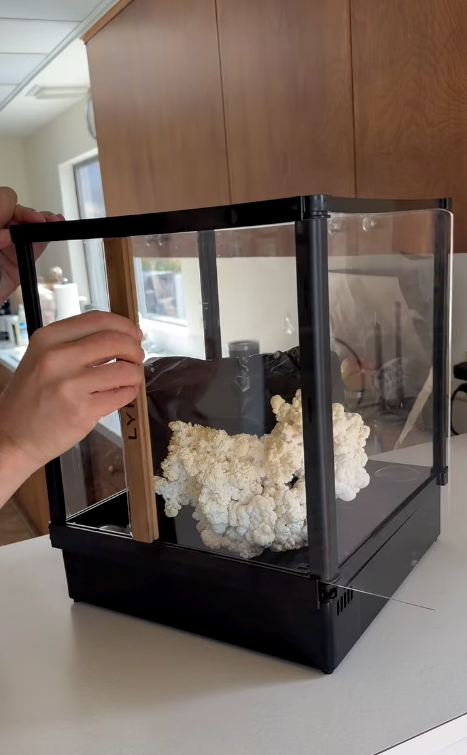
Take the whole cluster at once. Slide the chamber door open, hold the cluster at its base and cut flat across where it meets the bag, or give it a gentle twist. The small caps share that base and rarely keep growing once the big ones are gone, so they come off too. Expect about 1 lb per harvest. For the same cues across every oyster type, see our guide on when to harvest oyster mushrooms.
Getting a second and third flush
Your block has 2 to 3 flushes in it, and the mycelium needs rest and water to build each new one.
- Tidy the cut. Pick off stubs or broken caps left at the opening, since leftover bits can rot.
- Let the block rest for about a week in the chamber.
- Rehydrate it if it feels light. A block that's noticeably lighter than when it arrived has spent its water on the first flush. Submerge it in cold water for 6 to 12 hours, weighted so it stays under, then drain it well.
- Watch for new pins at the same cut. If nothing shows after 2 weeks, cut a fresh X on the opposite side.
Our oyster mushroom yield guide explains the math behind that 1 lb figure and why block weight matters. Once a block stops pinning, it can go straight into the compost pile.
How black oysters taste and how to cook them
Raw, a black oyster smells mild and woody. Cooked, it turns savory and deep, and the thick stems stay meaty instead of going limp. The caps crisp at the edges while the color settles into a dark brown.
Four methods that suit it:
- Dry sear. Tear the cluster into strips and lay them in a hot, dry pan. Press them flat with a second pan for 3 to 4 minutes, until the water cooks off and the edges brown, then add butter and salt.
- Roast. Toss with oil, spread in a single layer and roast at 425°F for 15 to 20 minutes, turning once.
- Stir-fry. High heat with garlic and soy. The stems hold their bite better than softer oysters do.
- Soups and ramen. Sear the pieces first, then add them for the last few minutes so they stay springy.
Cook them through rather than serving them raw. Our cooking oyster mushrooms guide has more technique. Like other oysters, black oysters are low in calories and bring fiber and B vitamins to the plate.
How to store black oyster mushrooms
Fresh black oysters keep 5 to 7 days in the fridge if they can breathe.
- Store the cluster unwashed in a paper bag in the crisper drawer.
- Skip sealed plastic. Trapped moisture turns the caps slick within a few days.
- Brush off any substrate right before cooking instead of rinsing.
- For longer storage, sauté them and freeze in portions. Our guide to freezing mushrooms covers the method.
Frequently asked questions
Are black oyster mushrooms the same as regular oyster mushrooms?
They're the same species, Pleurotus ostreatus, grown from a strain with darker caps. They grow in the same shelf-like clusters and cook the same way. The differences you'll notice are the charcoal color and a thicker, meatier stem.
Do black oyster mushrooms stay black when cooked?
No. The caps cook down to a deep brown while the gills stay pale. For the darkest, crispiest result, dry sear them in a hot pan and press them flat.
How long does a black oyster grow kit keep producing?
A 5 lb block gives 2 to 3 harvests of about 1 lb each. Each flush takes 7 to 14 days with about a week of rest in between, so a block that gives three flushes keeps producing for roughly 5 to 8 weeks.
What temperature do black oyster mushrooms need?
59 to 70°F (15 to 21°C), with 85 to 92% humidity. The cooler end of that range gives the darkest caps. The Lykyn chamber runs at room temperature, so pick a room that stays inside that window.
Why are my black oyster caps turning light grey?
Usually it's maturity or warmth. Caps fade from charcoal to slate as they open, and a block fruiting near 70°F comes up paler from the start. If the edges are flipping up or you see white dust on the block, the cluster is ready, so harvest it today.
Fuel Your Mushroom Journey

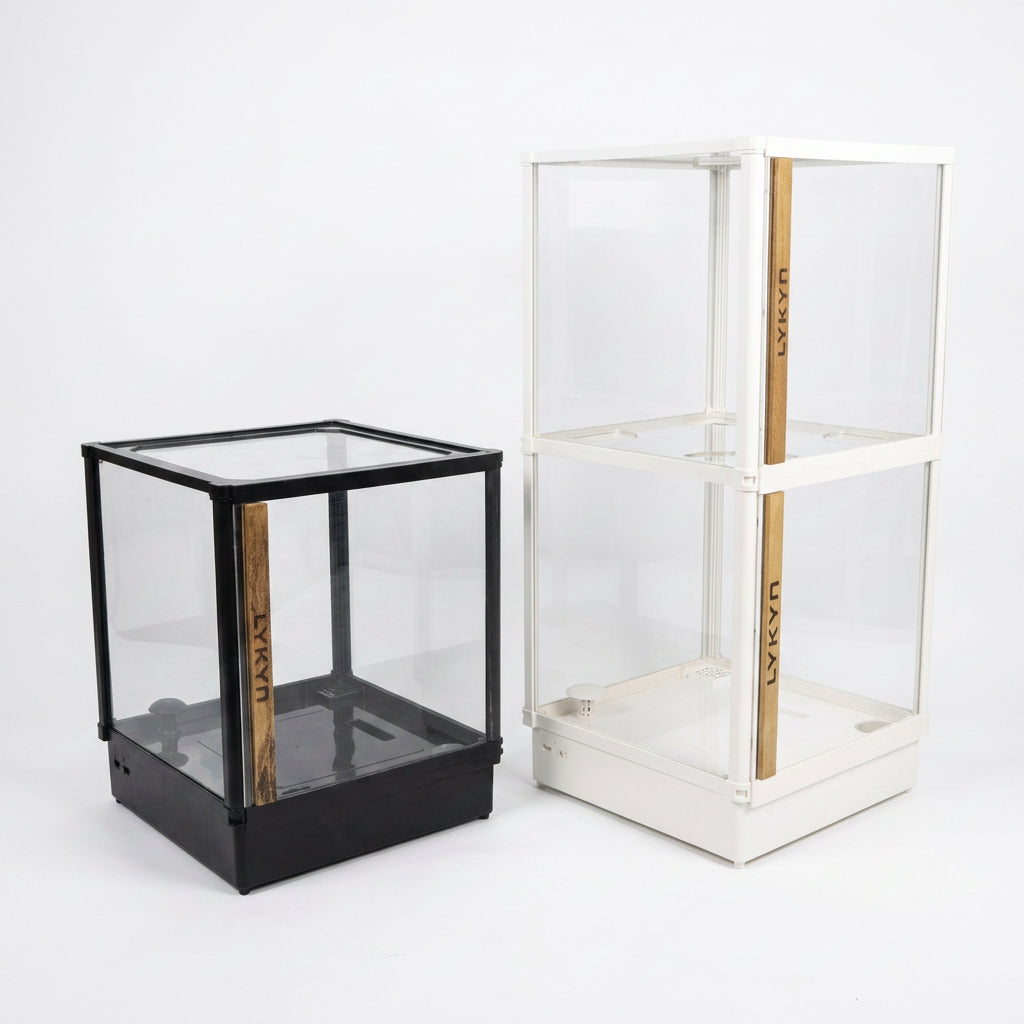
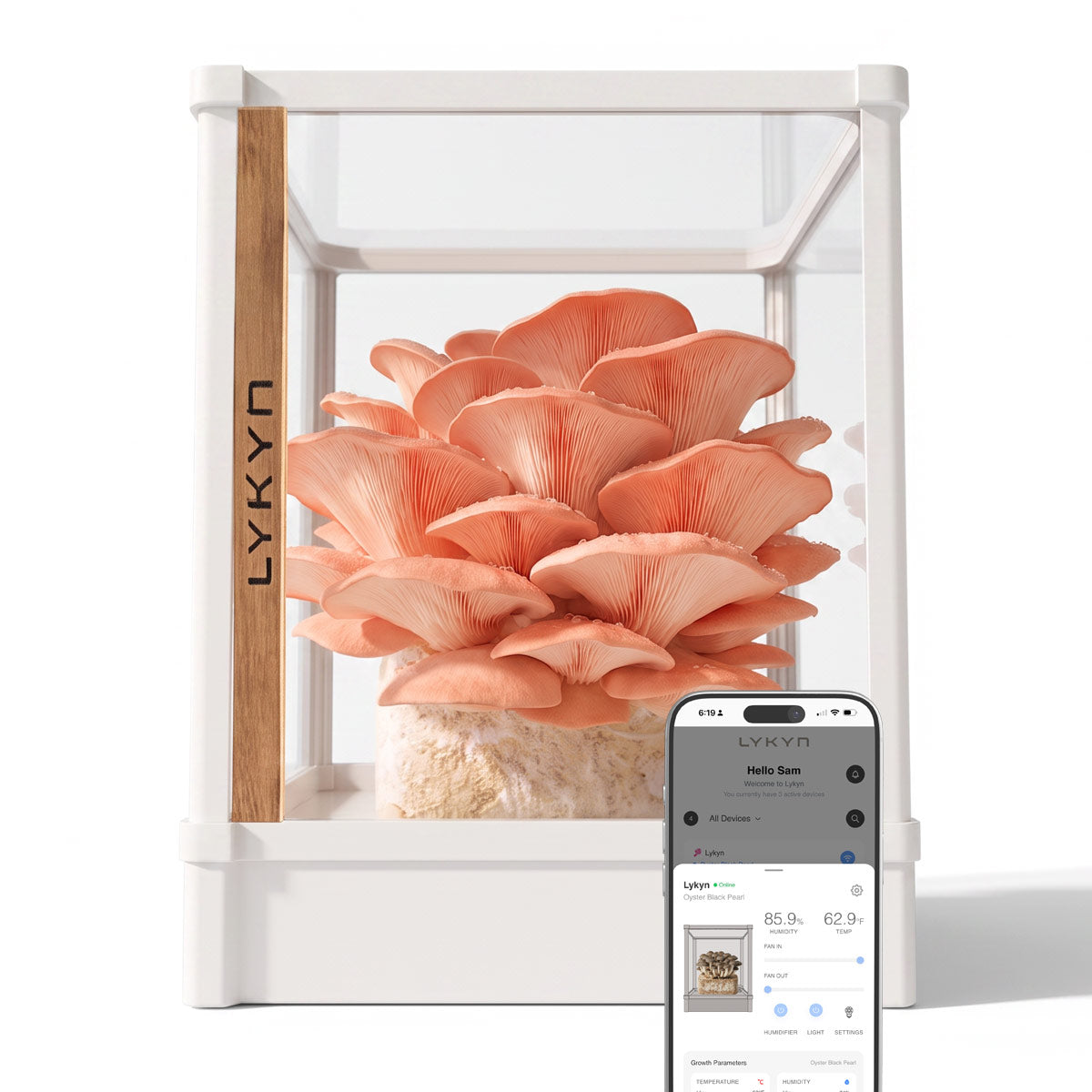
Smart Chamber. Bone White Single Layer
- 2.8L tank, 90% humidity automatic
- App-controlled, plug-and-play
- 6 lb block ceiling, in stock

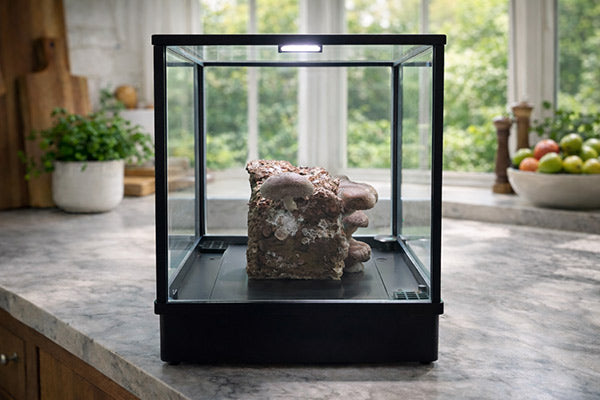
Smart Chamber. Obsidian Black Single Layer
- Same hardware as Bone White
- Matte black premium finish
- Pairs with any kitchen palette



Aktie:
Housewarming Gifts for First Apartment 2026 | Lykyn