



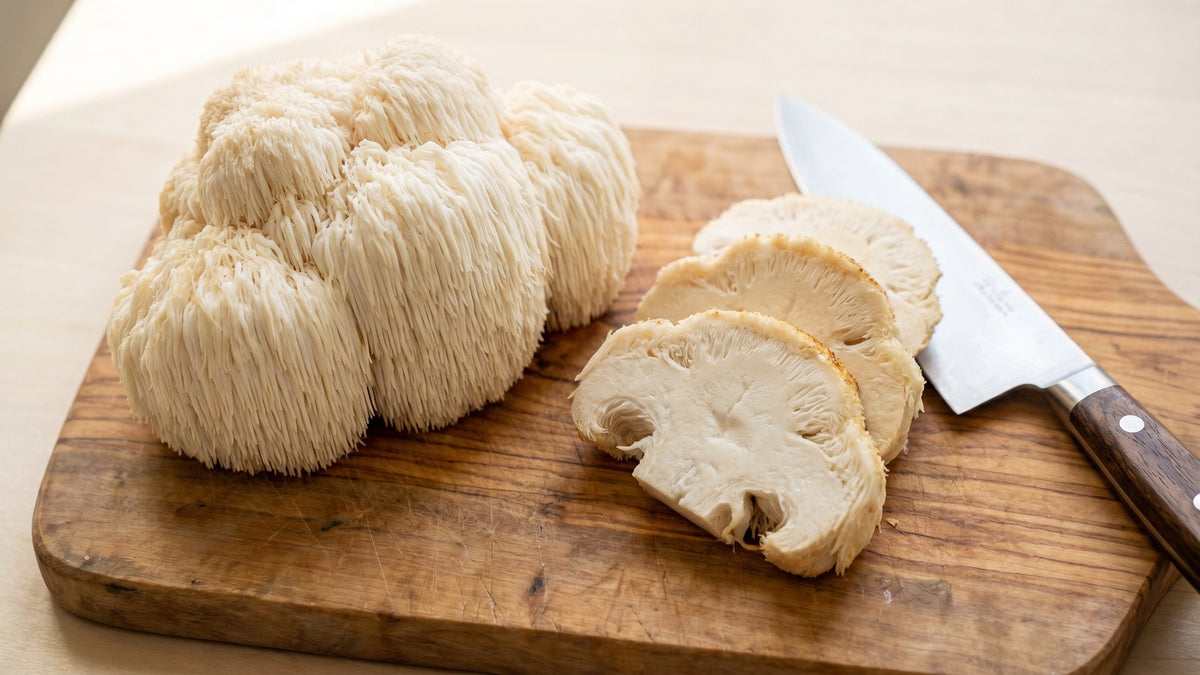
Ein Pompon-Pilz.
Igelstachelbart von Grund auf selbst zu züchten, kann sich lohnen, ist aber nicht mühelos. Wenn dir der DIY-Weg zu aufwendig erscheint, liefert dir unser sofort fruchtendes Igelstachelbart-Zuchtset, das sofort fruchtet dieselbe frische Ernte – ohne Getreide zu sterilisieren oder Substrat anzumischen.
Zwei Verbindungen, die dein Nervensystem wahrnimmt.
Vom Block auf den Teller in zwölf Tagen.
Was Igelstachelbart eigentlich ist

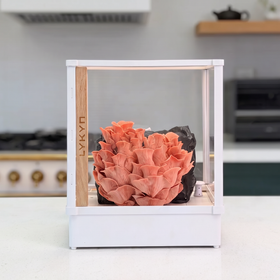
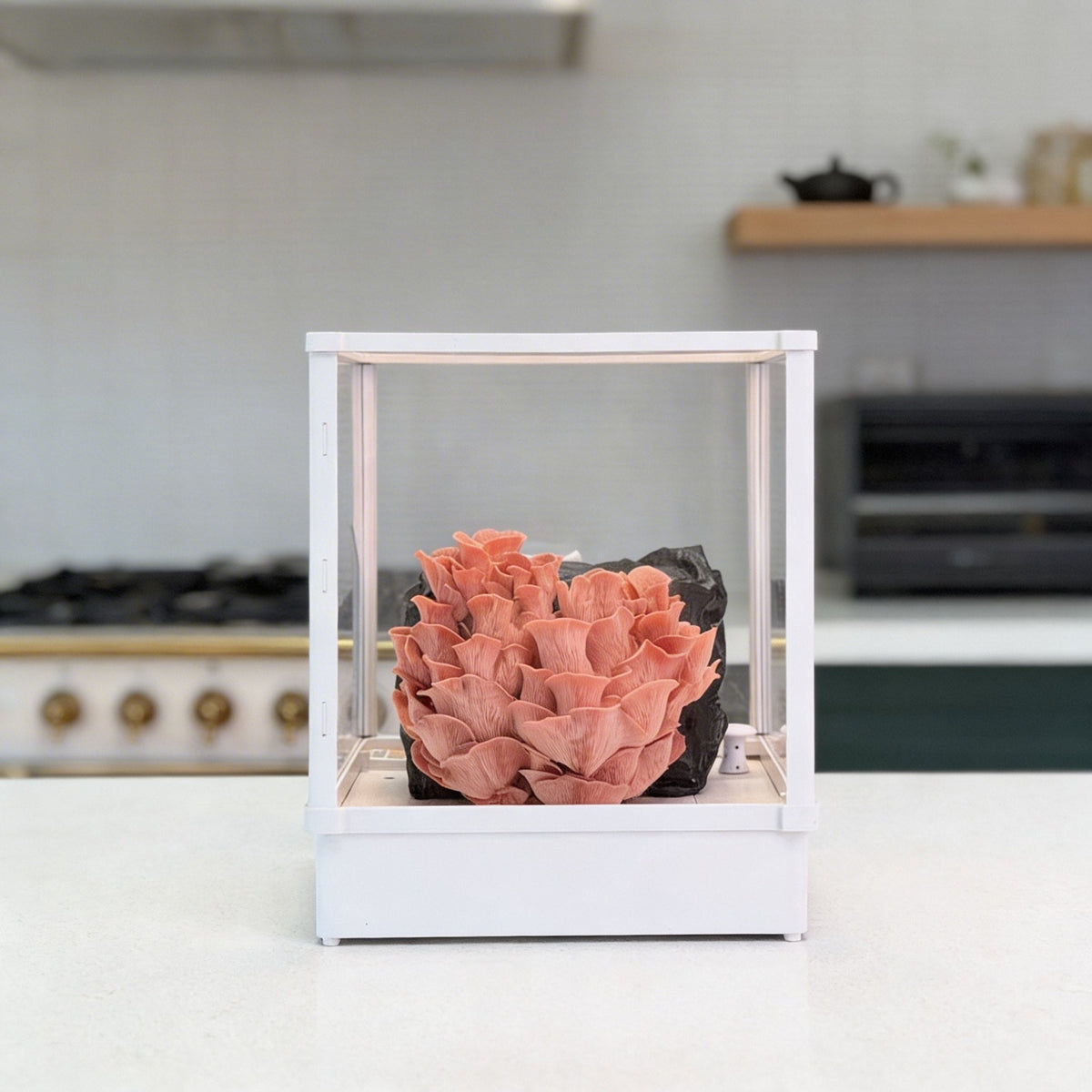
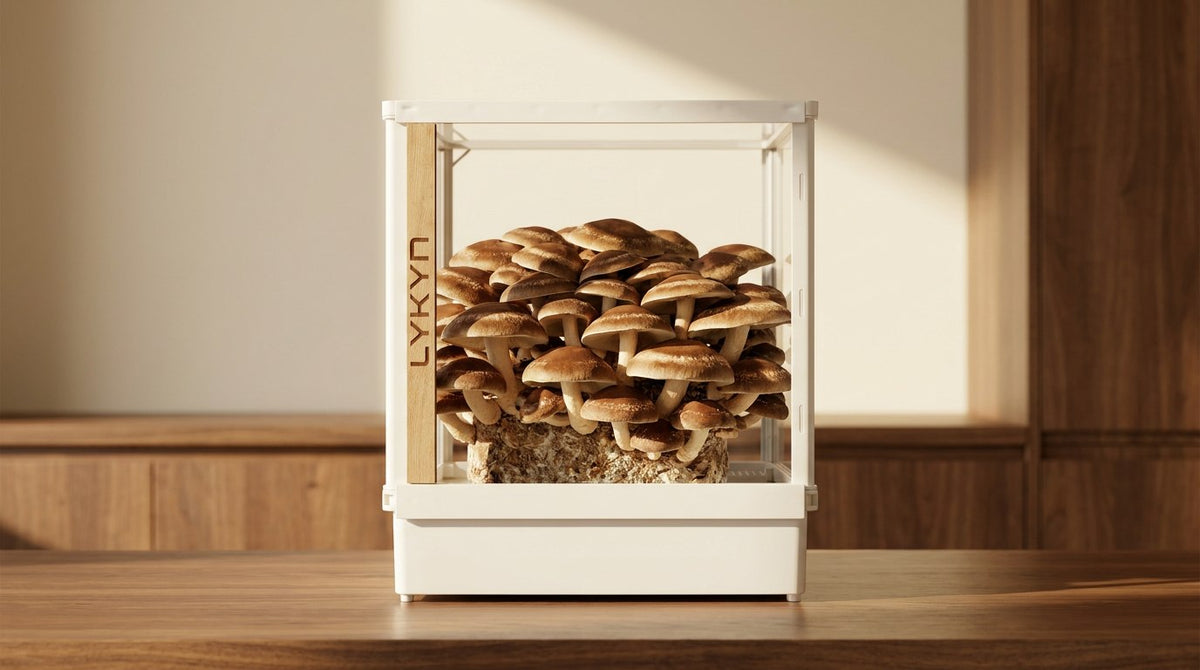
Smarte Kammer. Knochenweiß, einstöckig
- 2,8-L-Tank, automatische Luftfeuchtigkeit von 90 %
- App-gesteuert, sofort einsatzbereit
- Für Blöcke bis 6 lb, auf Lager

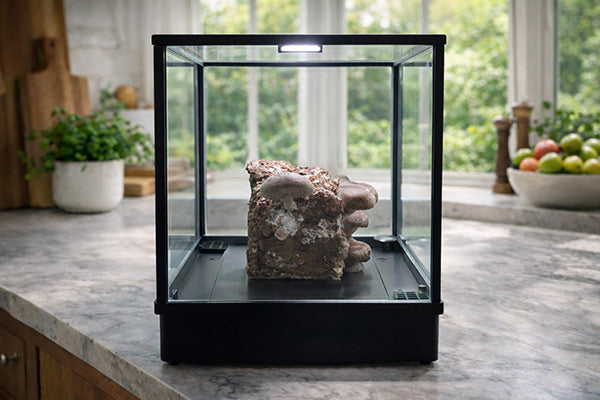
Smarte Kammer. Obsidianschwarz, einstöckig
- Gleiche Ausstattung wie die Variante in Knochenweiß
- Hochwertige matte schwarze Oberfläche
- Passt zu jeder Kücheneinrichtung

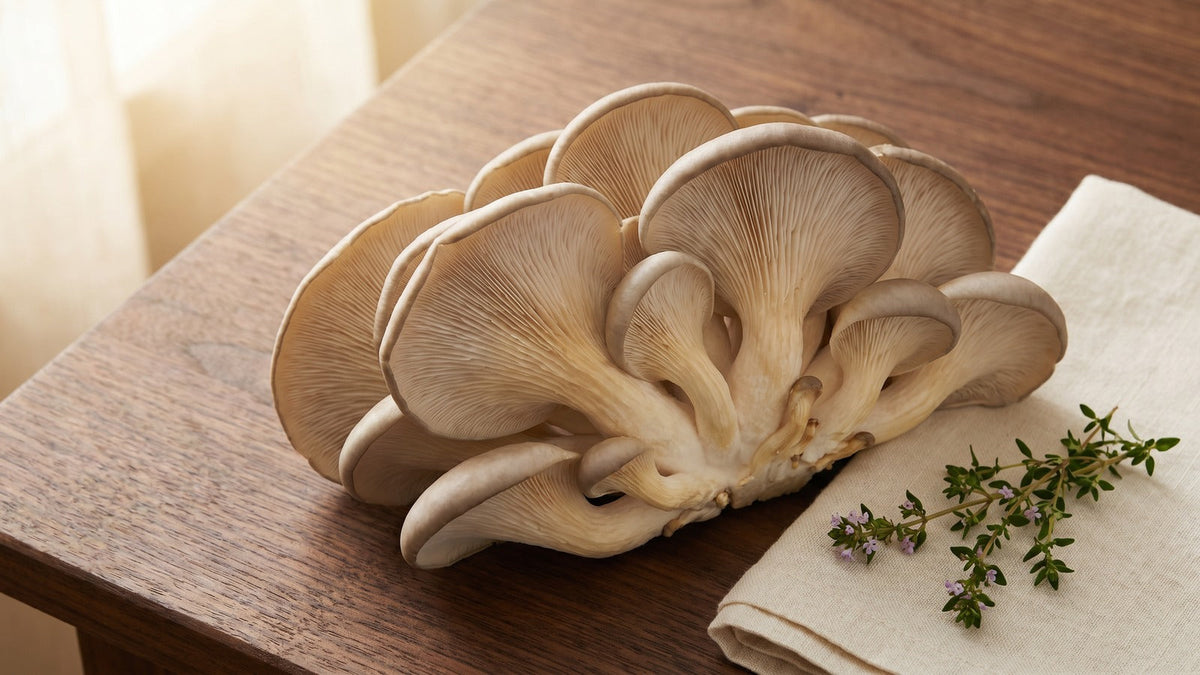
Zuchtset für schwarze Austernpilze
- Auf Lager
- Erste Ansätze nach 3–5 Tagen
- Ersetzt einen Zuchtzyklus in der Kammer
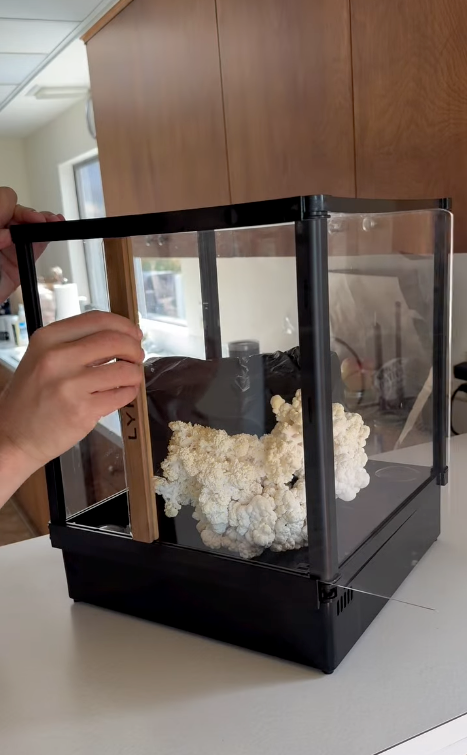
Der Igelstachelbart (Hericium erinaceus, in Japan „Yamabushitake“, in China „Hou Tou Gu“) ist ein Stachelbartpilz und kein typischer Lamellenpilz. Sein Fruchtkörper ist eine weiche, weiße Kugel, bedeckt mit herabhängenden, eiszapfenartigen Stacheln, und erreicht im ausgewachsenen Zustand einen Durchmesser von 7,5 bis 20 Zentimetern. Gegart erinnert seine Konsistenz an ausgelöstes Krebs- oder Hummerfleisch. Deshalb ist er als pflanzliche Delikatesse beliebt – von Tokioter Izakayas bis zu Pop-up-Restaurants in Brooklyn.
Was ihn von anderen Gourmetpilzen unterscheidet, ist seine Chemie. Igelstachelbart ist die einzige bekannte Nahrungsquelle für zwei Verbindungsklassen, die nachweislich in Labor- und Humanstudien mit der Signalübertragung von Nervenzellen interagieren: Hericenone im Fruchtkörper und Erinacine im Myzel. Beide wurden im Hinblick auf ihre Wirkung auf die Expression des Nervenwachstumsfaktors (NGF) untersucht. Weiter unten erklären wir, was das tatsächlich bedeutet.
Igelstachelbart ist die einzige bekannte Nahrungsquelle für zwei Verbindungsklassen, die nachweislich mit der Expression des Nervenwachstumsfaktors interagieren: Hericenone im Fruchtkörper und Erinacine im Myzel.
So bereitest du Igelstachelbart zu
Seine aktiven Verbindungen entfaltet Igelstachelbart am besten als frische, vollständig durchgegarte Speise. Hericenone sind hitzestabil. Beta-Glucane brauchen 20 bis 30 Minuten Hitze, um vollständig freigesetzt zu werden. Weiche ihn vor dem Garen nicht in Wasser ein, da dadurch wasserlösliche Verbindungen ausgeschwemmt werden.
- Zupfen statt hacken. Teile den Büschel mit der Hand in etwa 2,5 Zentimeter große Stücke. Die gerissenen Oberflächen bräunen besser als glatte Schnittflächen.
- Zuerst trocken anbraten. Erhitze eine Pfanne stark und gib fünf Minuten lang kein Öl hinzu. Der Pilz gibt sein eigenes Wasser ab. Sobald dieses verdampft ist, kannst du Butter oder Olivenöl hinzufügen.
- Kräftig anbräunen. Brate ihn weitere sechs bis acht Minuten bei mittlerer bis hoher Hitze, bis die Ränder knusprig und goldbraun sind. Dabei entwickelt sich das hummerähnliche Aroma.
- Mit Salz, Pfeffer und etwas Säure abschmecken. Zitronensaft, Weißwein oder Sherryessig am Ende gleichen die natürliche Süße aus.
- Passende Zutaten dazugeben. Knoblauch, Thymian, Butter, Miso, Nussbutter, Sojasoße oder Sauerteigtoast.
Zwei bis drei Portionen pro Woche (150 bis 200 Gramm gegart pro Portion) entsprechen ungefähr der Dosierung, die in den Studien zur kognitiven Funktion verwendet wurde, wenn man von getrockneten Tabletten auf das Frischgewicht umrechnet.
Schritt-für-Schritt-Anleitung für die Igelstachelbart-Zucht
Den Block akklimatisieren lassen (24 bis 48 Stunden)
Wenn der Igelstachelbart-Fruchtungsblock ankommt, lass ihn 24 bis 48 Stunden ungeöffnet auf der Küchenarbeitsplatte stehen. In dieser Zeit erholt sich das Myzel vom Versandstress. Igelstachelbart reagiert empfindlicher auf Temperaturschwankungen als Austernpilze; dieser Schritt ist daher unbedingt erforderlich.
Einen einzigen kleinen Schlitz schneiden
Igelstachelbart fruchtet am besten aus einem kleinen Schnitt, nicht aus mehreren. Schneide mit einem sauberen Messer einen 5 Zentimeter langen waagerechten Schlitz in die Oberseite des Blocks. Schneide die Folie auf und ritze das Substrat nur leicht an. Mehrere Schnitte führen dazu, dass der Block viele kleine Büschel statt eines großen Pompons bildet.
Die Luftfeuchtigkeit auf 90 Prozent einstellen
Igelstachelbart benötigt eine höhere Luftfeuchtigkeit als Austernpilze. 90 Prozent sind ideal. Wähle in der Lykyn-Kammer in der App „Igelstachelbart“ aus: Die Kammer regelt dann automatisch die Luftfeuchtigkeit, sorgt stündlich für Frischluftzufuhr und stellt die LED-Beleuchtung auf zwölf Stunden ein.
Auf die ersten Ansätze warten (5 bis 10 Tage)
Innerhalb von fünf bis zehn Tagen zeigt sich an der Schnittfläche ein kleiner weißer Knubbel. Daraus entsteht ein einzelner Fruchtkörper. Widerstehe dem Drang, weitere Schnitte zu setzen, um „mehr Pilze anzuregen“. Igelstachelbart entwickelt sich am besten, wenn er sich voll und ganz auf einen Büschel konzentriert.
Beobachten, wie sich der Pompon bildet (4 bis 7 Tage)
Aus dem ersten Ansatz wächst eine weiche, weiße Kugel. Ungefähr am 10. bis 14. Tag bilden sich an der Oberfläche kurze weiße Stacheln, die von Tag zu Tag länger werden. In den letzten 48 Stunden verdoppelt sich die Größe des Büschels.
Ernten, bevor sich die Stacheln krümmen
Ernte den Pilz, sobald die Stacheln 1,3 bis 2,5 Zentimeter lang sind und noch gerade nach unten zeigen. Beginnen sich die Spitzen nach oben zu krümmen, hat der Büschel seinen Höhepunkt überschritten und gibt Sporen ab. Dreh den ganzen Pompon mit einer einzigen Bewegung vom Block ab.
Für den zweiten Ernteschub kalt wässern
Tauche den Block nach der Ernte für acht bis zwölf Stunden in kaltes, gefiltertes Wasser. Lass ihn vollständig abtropfen und setze ihn zurück in die Kammer. Ein zweiter Ernteschub folgt 14 bis 21 Tage später und bringt typischerweise 50 Prozent des Ertrags der ersten Ernte. Ein dritter Ernteschub ist möglich, fällt aber kleiner aus.
In der 16-wöchigen Studie von Mori et al. kehrten die kognitiven Werte innerhalb von vier Wochen nach Absetzen des Präparats zum Ausgangsniveau zurück. Igelstachelbart scheint ein wirksames Nahrungsmittel zu sein, aber keine krankheitsverändernde Behandlung.
Realistischer Zeitplan für die Igelstachelbart-Zucht
| Tag | Was passiert | Was du tust |
|---|---|---|
| Tag 0 | Der Block kommt an | 24 bis 48 Stunden ungeöffnet auf der Küchenarbeitsplatte akklimatisieren lassen |
| Tag 2 | Akklimatisierung abgeschlossen | Einen einzelnen Schlitz schneiden, in die Lykyn-Kammer stellen und „Igelstachelbart“ auswählen |
| Tag 5 bis 10 | Der erste weiße Ansatz erscheint | Nichts. Die Kammer regelt Luftfeuchtigkeit und Luftaustausch |
| Tag 10 bis 12 | Der Pompon bildet sich | Beobachten, wie die Stacheln länger werden |
| Tag 12 bis 14 | Der erste Ernteschub ist erntereif | Ernten und innerhalb von 5 bis 7 Tagen frisch zubereiten |
| Tag 14 bis 24 | Der Block ruht | Den Block kalt wässern und zurück in die Kammer stellen |
| Tag 24 bis 35 | Zweiter Ernteschub | Kleinerer Büschel, gleiche Erntemethode |
| Tag 35 bis 50 | Dritter Ernteschub (optional) | Den Block nach der Ernte kompostieren |
Schätze deine Igelstachelbart-Ernte im ersten Jahr
Gib deinen Plan ein. Mit einer Lykyn-Kammer und einem frischen Fruchtungsblock kannst du bereits nach zwölf Tagen den ersten Ernteschub einfahren.
Häufige Probleme beim Igelstachelbart und ihre Lösungen
„Mein Pompon ist flauschig, hat aber keine Stacheln“
Die Luftfeuchtigkeit ist zu niedrig. Damit die Stacheln länger werden, benötigt Igelstachelbart 88 bis 92 Prozent Luftfeuchtigkeit. Prüfe bei einer Lykyn-Kammer, ob das Pilzprogramm auf „Igelstachelbart“ und nicht auf „Austernpilz“ eingestellt ist. Letzteres zielt auf 80 Prozent ab.
„Der Büschel wird gelb“
Meistens liegt es an verbrauchter Luft. Lüfte die Kammer alle zwölf Stunden eine Minute lang. Bei einer Lykyn-Kammer übernimmt der automatische Frischluftaustausch diese Aufgabe. Auch nach dem optimalen Erntezeitpunkt wird der Büschel gelb, wenn er Sporen abgibt.
„Es sind schon 20 Tage vergangen, aber es gibt noch keinen Ansatz“
Entweder wurde der Block beim Transport beansprucht (Kälte oder Hitze während des Versands), oder der Schnitt war zu tief. Versuche es mit einem weiteren kleinen Schnitt auf einer anderen Seite, erhöhe die Luftfeuchtigkeit auf 92 Prozent und warte noch eine Woche. Wenn sich dann immer noch nichts tut, liegt das Problem am Block. Etablierte Anbieter ersetzen fehlerhafte Blöcke im Rahmen ihrer 30-Tage-Garantie.
„Es bildet sich ein Ansatz, aber kleine Büschel breiten sich seitlich aus“
Das ist durch mehrere Schnitte passiert. Igelstachelbart fruchtet am besten an einer einzigen Stelle. Schneide beim nächsten Block nur einmal ein.

Entdecke die Welt der Pilzzucht
Smarte Pilzzuchtkammer
Plug-and-play-Zuchtkammer mit optimal eingestellter Luftfeuchtigkeit, Beleuchtung und Luftzirkulation für jede Art. Anfänger ernten ihre erste Pilzwelle in wenigen Tagen statt erst nach Monaten.
In den Warenkorb – 299 $„Mein Substratblock hat grünen oder schwarzen Schimmel“
Grüner Schimmel (Trichoderma) oder schwarzer Schimmel (Aspergillus) deutet in der Regel darauf hin, dass der Block bereits vor dem Versand kontaminiert war oder die Kammeroberflächen zwischen den Zyklen nicht gereinigt wurden. Kompostiere den Block. Wische die Innenflächen mit 5-prozentigem Wasserstoffperoxid ab und lasse sie 30 Minuten an der Luft trocknen, bevor du den nächsten Block einsetzt.
Substrat-Kit oder smarte Kammer für Igelstachelbart?
Igelstachelbart reagiert empfindlicher auf Luftfeuchtigkeit als Austernpilze – hier haben automatische Kammern gegenüber manuellen Kits die Nase vorn.
Zwei Gramm pro Portion.
Sechzehn Wochen kognitive Funktionsstudien.
Eine kleine Kammer auf deiner Arbeitsplatte.
Häufig gestellte Fragen
Ist Igelstachelbart dasselbe wie ein Nootropikum?
Igelstachelbart-Präparate enthalten üblicherweise getrocknete Fruchtkörper oder Myzel-Extrakt, manchmal auch beides. Die aktiven Verbindungen (Hericenone, Erinacine, Beta-Glucane) kommen sowohl in frischer als auch in getrockneter Form vor. Die oben zitierten klinischen Studien verwendeten getrocknete Tabletten. Frischer Igelstachelbart liefert dieselben Verbindungsklassen sowie das vollständige Nährstoffprofil (Protein, Ballaststoffe, Ergothionein, B-Vitamine). Durch das Kochen werden die aktiven Verbindungen nicht zerstört.
Wie viel muss ich essen, um kognitive Vorteile zu erzielen?
In der Studie von Mori et al. wurden täglich 3 Gramm getrocknete Igelstachelbart-Tabletten verwendet. Das Verhältnis von getrocknet zu frisch beträgt nach Gewicht ungefähr 1 zu 10. Eine entsprechende Menge frischer Pilze liegt daher bei etwa 30 Gramm pro Tag oder 200 Gramm zwei- bis dreimal pro Woche. Das entspricht ungefähr einer gekochten Portion jeden zweiten Tag. Sprich immer mit einer medizinischen Fachkraft, bevor du Igelstachelbart als Teil einer Behandlung einnimmst.
Kann ich Igelstachelbart ohne Kammer züchten?
Ja, aber Ertrag und Qualität nehmen deutlich ab. Die Fruchtkörperbildung in einem Plastikbeutel funktioniert bei 70 bis 80 Prozent Luftfeuchtigkeit, bringt aber flauschige Büschel mit kurzen Stacheln hervor. Eine Still-Air-Box oder ein Growzelt eignet sich besser. Eine Lykyn-Kammer hält die Luftfeuchtigkeit automatisch bei 90 Prozent – dort bilden sich die fotogenen Büschel mit langen Stacheln.
Wie lange hält sich frischer Igelstachelbart im Kühlschrank?
In einer Papiertüte im Gemüsefach des Kühlschranks hält er sich 5 bis 7 Tage. Vermeide Plastiktüten, da sich darin Feuchtigkeit staut und der Pilz schneller verdirbt. Für eine längere Lagerung bei 43 °C 6 bis 8 Stunden trocknen und anschließend getrocknet in einem luftdichten Glas bis zu 6 Monate aufbewahren.
Kann ich Igelstachelbart trocknen und mein eigenes Präparat herstellen?
Du kannst ihn für die Verwendung in der Küche trocknen und zu Pulver für Brühen und Würzmischungen verarbeiten. Wenn du ihn wie ein Nahrungsergänzungsmittel in gleichbleibender Dosierung einnehmen möchtest, befolge das oben beschriebene Trocknungsverfahren und wiege die Portionen ab. Beachte, dass das Trocknen zu Hause den standardisierten Hericenon-Gehalt pharmazeutischer Extrakte, wie sie in klinischen Studien verwendet werden, nicht erreichen kann.
Gibt es Menschen, die Igelstachelbart meiden sollten?
Wer gerinnungshemmende Medikamente einnimmt, sollte eine medizinische Fachkraft konsultieren, da Igelstachelbart möglicherweise eine gerinnungshemmende Wirkung auf die Blutplättchen hat. Auch Menschen mit Autoimmunerkrankungen sowie Schwangere und Stillende sollten ärztlichen Rat einholen. Allergische Reaktionen sind selten, aber möglich.
Die Wissenschaft: Ein kurzer Blick auf die Forschung
Igelstachelbart ist ein seltener Gourmetpilz, zu dessen gesundheitlichen Wirkungen begutachtete Studien am Menschen vorliegen. Hier ist die Forschungsgrundlage, geordnet nach Evidenzstärke.
Unterstützung der kognitiven Funktion. Eine 16-wöchige, doppelblinde randomisierte kontrollierte Studie mit Erwachsenen mit leichter kognitiver Beeinträchtigung zeigte bei 3 g täglich verbesserte kognitive Werte. Mori et al. 2009
Stimmungsaufhellung und Verringerung von Angstzuständen. Eine vierwöchige randomisierte kontrollierte Studie mit 30 Frauen im menopausalen Alter zeigte im Vergleich zu einem Placebo niedrigere Depressions- und Angstwerte. Nagano et al. 2010
Anregung des NGF. Hericenone und Erinacine regen in Zell- und Tiermodellen die Synthese des Nervenwachstumsfaktors an. Lai et al. 2013
Schlaf und Stimmung bei Stoffwechselerkrankungen. Eine achtwöchige Studie mit 77 übergewichtigen Erwachsenen zeigte Verbesserungen bei Schlaf und Stimmung. Vigna et al. 2019
Unterstützung von Verdauung und Magen. Seit Jahrhunderten in der Traditionellen Chinesischen Medizin verwendet; präklinische Modelle zeigen einen Schutz der Magenschleimhaut. Studien am Menschen sind begrenzt. Wang et al. 2017
Nächste Schritte nach deiner ersten Igelstachelbart-Ernte
Mit derselben Ausstattung lassen sich auch Zyklen mit Austernpilzen (Perl-, Blau-, Rosa- und Gelbausternseitling), Shiitake, Kräuterseitling und 25 weiteren Arten züchten. Sobald dein erster Igelstachelbart-Büschel auf dem Schneidebrett liegt, hängt der nächste Schritt davon ab, worauf du als Nächstes Lust hast.
- Für mehr Gourmet-Vielfalt: Steig auf einen Kräuterseitling- oder Shiitake-Block um. Dieselbe Kammer, eine andere Artvoreinstellung in der App.
- Für mehr Igelstachelbart: Bestelle rechtzeitig zwei Blöcke, damit du die Erntewellen zeitlich versetzen kannst. Dein zweiter Block durchwächst, während der erste seine erste Welle beendet.
- Für vertiefende Informationen: Lies unseren Austernpilz-Ratgeber und das bald erscheinende Porträt des Shiitake.





Aktie:
Pilzzucht-Sets für zu Hause: Der komplette Kaufratgeber
Beste Fruchtungsblöcke für die Lykyn Kammer