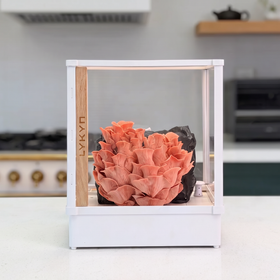



Am zweiten Dienstag steht eine Gruppe Pink Oyster auf deiner Arbeitsplatte. Das ist das ganze Versprechen dieses Wochenendes. Du nimmst dir einen Samstagvormittag Zeit, überlässt dem Kit die langsame Arbeit und beobachtest am Montagabend, wie sich die ersten Pins zeigen.

Samstag, 10 Uhr. Die Box kommt auf deiner Arbeitsplatte an.
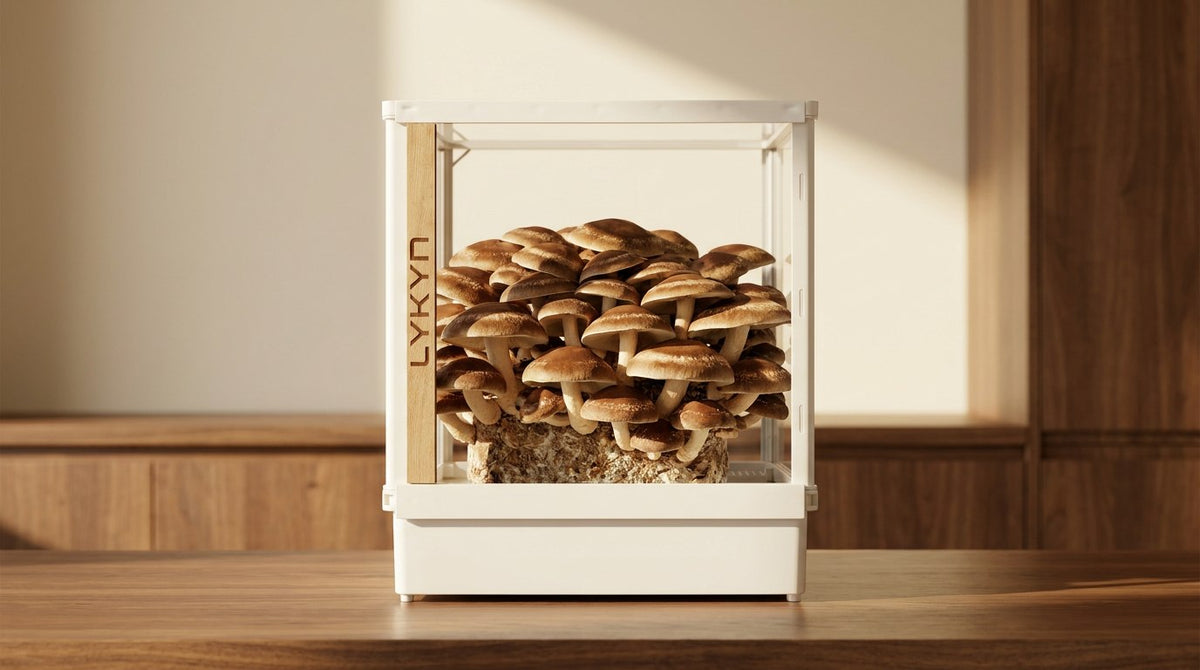
Du hast ein Kit auf der Arbeitsplatte und ein ganzes Wochenende. Mehr Planung braucht es nicht. Die Lykyn Smart Mushroom Grow Box wird in einem Karton geliefert, mit der Kammer, einem bereits vollständig durchwachsenen 5-lb-Fruchtungsblock in einem versiegelten Beutel, einem kleinen Netzteil etwa in der Größe eines HDMI-Adapters und einer einseitigen Kurzanleitung. Kein Werkzeug. Keine sterilen Handschuhe. Kein HEPA-Filter, der irgendwo im Schrank liegt.
Nimm alles langsam heraus. Die Kammer ist schwerer, als sie aussieht, denn die Glastür besteht aus echtem Glas, nicht aus Acryl, und sitzt in einem Stahlgehäuse. Stell sie auf eine stabile Fläche auf Augenhöhe: eine Kücheninsel, ein Bücherregal oder eine Schreibtischecke am Fenster, auf die nachmittags keine direkte Sonne fällt. Der Lüfter ist im Leerlauf leiser als ein moderner Kühlschrank. Innerhalb einer Stunde hörst du ihn nicht mehr.
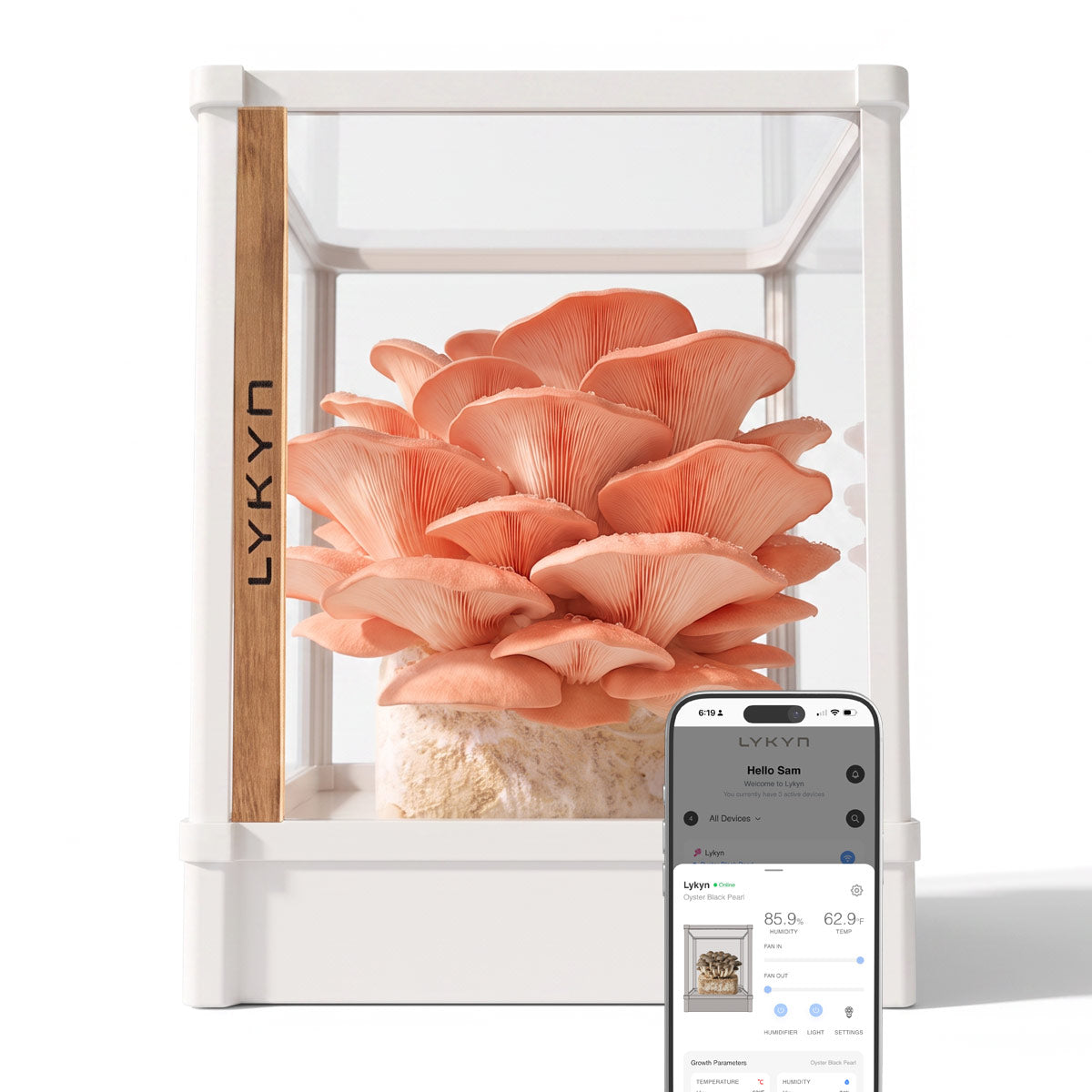
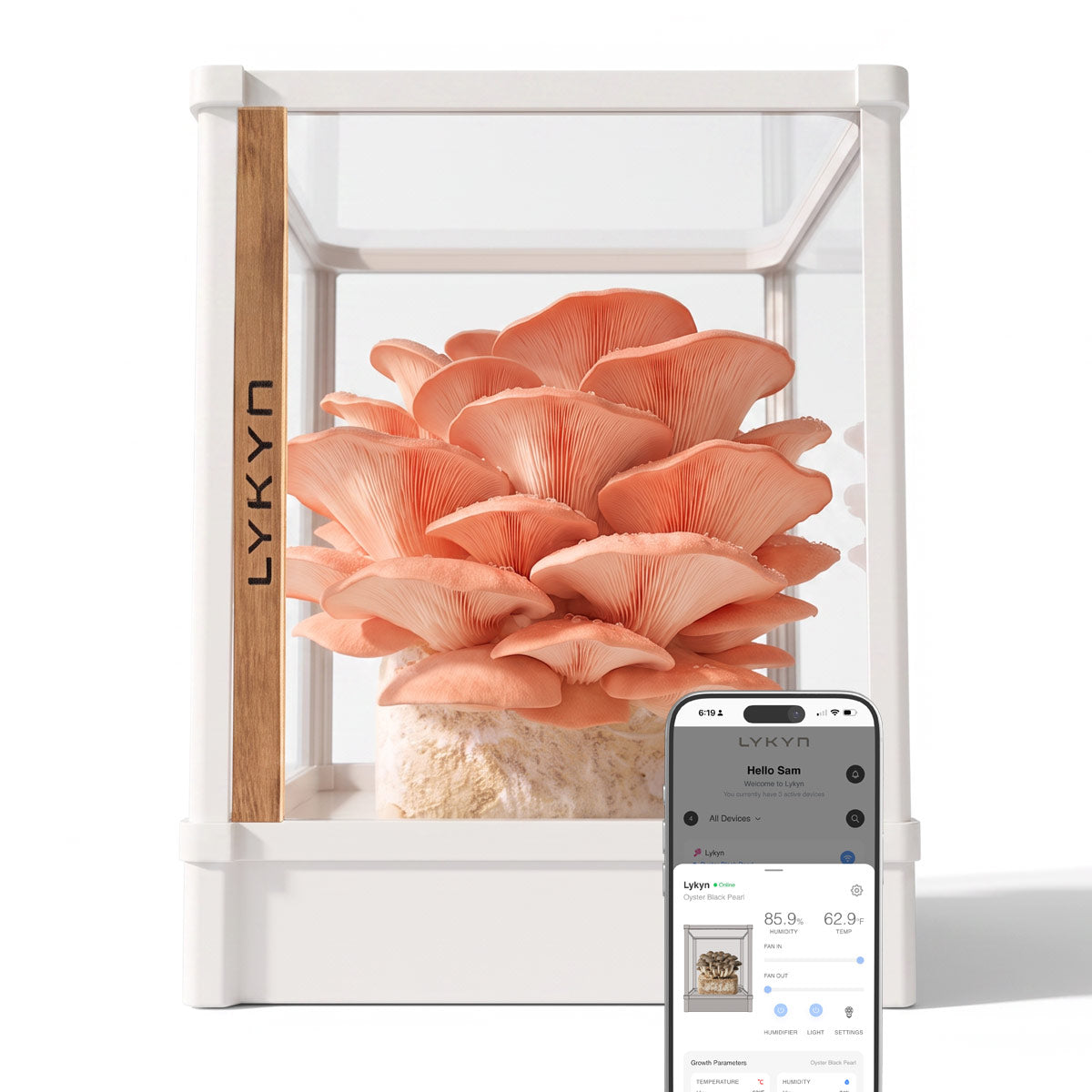
Zieh die Schutzfolie vom Glas ab. Wisch die Innenseite mit einem trockenen Papiertuch ab. Steck den Stecker ein. Die Kammer führt einen dreißigsekündigen Selbsttest durch, prüft kurz die Sensoren und geht dann in den Standby-Modus. Kopple sie in der App über WLAN: Scanne den QR-Code auf der Rückseite, gib der Kammer einen Namen, den du in sechs Wochen nicht bereust, und wähle dein Artprofil aus dem Dropdown-Menü. Pink Oyster, Löwenmähne, Shiitake, Blauer Austernpilz, Kastanienseitling. Die Kammer liest das Profil ein und lädt die passende maximale Luftfeuchtigkeit, den richtigen Rhythmus für den Frischluftaustausch und den passenden Auslöser für die Pinbildung.
Samstag, 14 Uhr. Block wässern und einsetzen.
Nach vier Stunden hat sich die Kammer auf die Grundtemperatur deiner Küche eingependelt. Jetzt kommt die Biologie ins Spiel. Nimm den versiegelten Fruchtungsblock aus seinem Beutel. Pink-Oyster-Blöcke wiegen genau fünf Pfund und fühlen sich fest an, wie ein dichtes Brot, das in eine dünne Plastikhaut eingewickelt ist. Wo das Myzel das Sägemehl durchwachsen hat, ist die Oberfläche gleichmäßig cremeweiß. Heb den Block kurz an die Nase. Der Geruch ist dezent: süßes Hartholz, eine Spur frisches Brot, nichts Saures, nichts Beißendes. Wenn er sauer riecht, hör auf und ruf uns an. Das wird nicht passieren.
Schneide mit einem sauberen Küchenmesser ein flaches Kreuz in die Oberseite des Blocks. Zwei Schnitte, einen Zoll tief und etwa drei Zoll lang. Dort bilden sich die Fruchtungsöffnungen: die beiden Stellen, durch die die Pilze zuerst hervordrängen. Zieh die Plastikfolie entlang der Schnitte zurück, damit das Myzel dort Luft bekommt. Weiche den ganzen Block zwölf Minuten in kühlem Leitungswasser ein, mit den Schnitten nach unten und einem Teller beschwert, damit er nicht aufschwimmt. Zwölf Minuten. Nicht zwei Stunden. Der Block saugt Wasser auf wie ein Küchenschwamm, und nur der erste Zentimeter soll nass werden.
Lass ihn abtropfen. Tupfe die Plastikfolie trocken. Schieb den Block auf die untere Ebene der Kammer, die Schnitte nach außen zum Glas gerichtet. Schließ die Tür. Tippe in der App auf „Start Grow“ und wähle die passende Pilzart aus. Ab jetzt übernimmt die Kammer.
Samstag, 18 Uhr. Deckel zu. Der erste Frischluftaustausch läuft an.
Am frühen Abend hat die Kammer den Fruchtungsbereich erreicht. Pink Oyster mögen es feucht und warm: 80 bis 90 Prozent relative Luftfeuchtigkeit und 70 bis 75 Grad Fahrenheit. Der Ultraschallbefeuchter stößt alle paar Minuten kurze Sprühstöße aus. Du siehst, wie sich ein zarter Nebel auf der Innenseite des Glases absetzt und dann lichtet, während der Lüfter seinen FAE-Zyklus durchläuft. Der Frischluftaustausch ist der Schlüssel zu sauberen Fruchtkörpern zu Hause: Der Lüfter saugt abgestandenes CO2 ab und führt Raumluft durch den Kohlefilter zu. So wachsen die Pilze mit kurzen, kräftigen Stielen und breiten Hüten, statt sich auf der Suche nach Sauerstoff lang und dünn zu strecken.
Du musst nichts tun. Die Kammer läuft nach Zeitplan. In der App kannst du drei aktuelle Werte verfolgen: Luftfeuchtigkeit, Temperatur und CO2. Die Luftfeuchtigkeit sollte nachts zwischen 82 und 88 Prozent liegen. Die Temperatur sollte innerhalb einer Spanne von zwei Grad bleiben. Der CO2-Wert steigt zyklisch an und fällt mit jedem Frischluftstoß wieder ab. Weicht ein Wert länger als neunzig Minuten von seinem Bereich ab, sendet die App eine Push-Benachrichtigung. Der Alarm ist bewusst zurückhaltend. Im August 2026 protokollierten wir einen Durchgang, bei dem ein Pink-Oyster-Block einen Tag früher Pins bildete, weil die Küche nach dem Backen am späten Nachmittag wärmer blieb als von der Kammer erwartet. Die einzige Benachrichtigung, die wir bekamen, war ein einzelner Hinweis um 21 Uhr.
Iss zu Abend. Schau dir etwas an. Die Kammer arbeitet die ganze Nacht weiter.
Sonntagmorgen. Den Nebel beobachten.
Du wachst auf und die Kammer sieht aus wie ein stilles Aquarium. Das Glas ist innen beschlagen. Der Block sitzt dunkel und glänzend dort, wo das Wasser eingezogen ist. Auf der Oberseite, direkt entlang der beiden Schnitte von gestern, ist das Myzel wieder gewachsen. Es sieht aus wie eine dünne Schicht frischen Schnees auf einer schlafenden Katze: Dieser watteartige, leicht glänzende Flaum ist das erste sichtbare Zeichen dafür, dass die Fruchtung bald beginnt.
Öffne die App. Scrolle zur Zeitleiste. Dort siehst du die ersten achtzehn Stunden aufgezeichnet: Die Luftfeuchtigkeitskurve bleibt stabil, die Temperaturkurve verläuft nahezu flach, und die CO2-Kurve sägt mit jedem Frischluftstoß auf und ab. So sieht ein gesundes Wochenende aus. Nichts Dramatisches. Das ganze Projekt läuft ganz ruhig ab.
Öffne die Kammertür für zehn Sekunden, nicht länger, und halte deinen Handrücken an die Innenseite des Glases. Die Luft ist warm und feucht wie in einem Gewächshaus im April. Schließ die Tür. Wenn du der Versuchung widerstehst, mehr als zweimal täglich hineinzuschauen, kommen die Pins schneller.
Montagabend. Die ersten Pins.
Zweiundfünfzig Stunden, nachdem du die Kammer zum ersten Mal eingesteckt hast, wirst du sie sehen. Die Schnitte im Block haben sich geöffnet. Kleine korallenrosa Knubbel schieben sich in Gruppen von vier bis zwölf aus dem Sägemehl. Um 18 Uhr sind sie so groß wie Radiergummis an Bleistiften, um 22 Uhr so groß wie Murmeln. Pink Oyster wächst aus gutem Grund schneller als jede andere Art, die wir verkaufen: In einer stabilen Kammer kann sich die Art über Nacht verdoppeln.
Tu nichts. Widerstehe jedem Impuls, von Hand zu besprühen, die Tür zu öffnen oder etwas umzustellen. Die Pins brauchen eine stabile Kammer. Bis Dienstagabend sind daraus kleine Trompeten geworden. Am Mittwoch sehen sie wie Austernschalen aus. Am Donnerstagmorgen haben sich die Hüte abgeflacht und die Ränder beginnen sich nach oben zu rollen: Das ist das Zeichen für die Ernte. Mit einer sauberen Hand drehst du eine Gruppe an der Basis ab. Die erste volle Ernte eines 5-lb-Pink-Oyster-Blocks passt in eine flache Rührschüssel.
Wiege die Ernte aus Neugier, nicht für die Buchhaltung. Beim Anbau zu Hause geht es nicht um Gramm pro Euro. Es geht darum, dass der Pilz in deiner Pfanne am Donnerstagabend am Samstagmorgen noch eine Spore in einem Beutel war – und du die ruhige Infrastruktur dazwischen warst.
Was du an deinem ersten Wochenende anbauen solltest
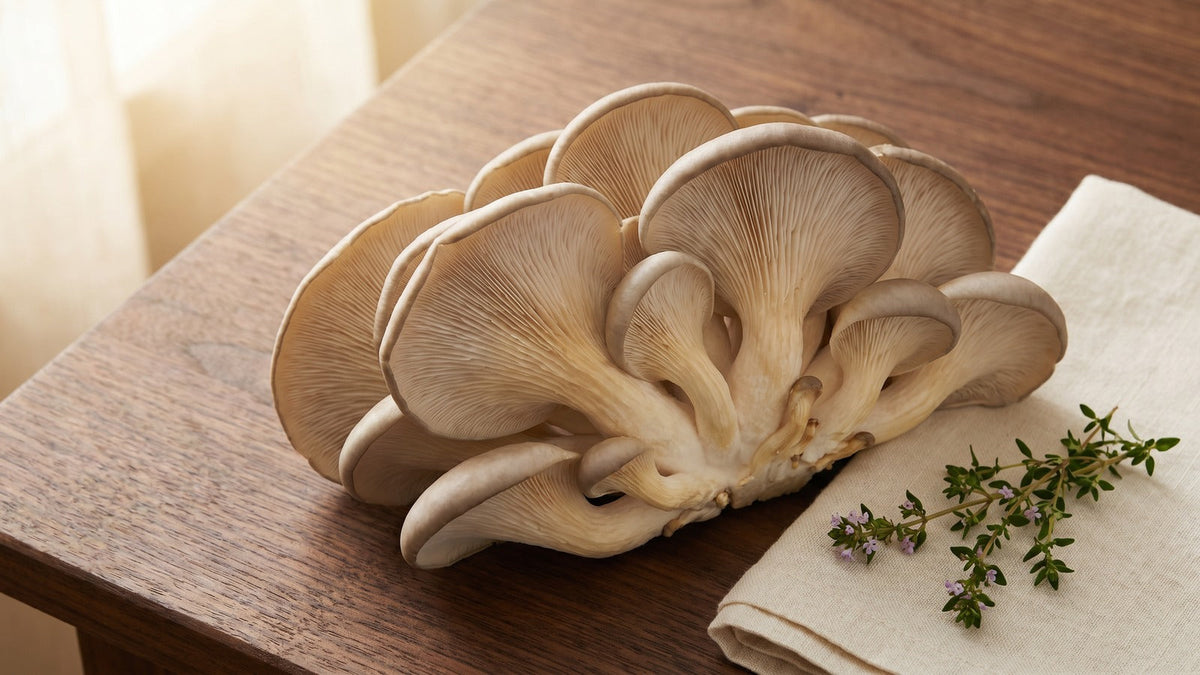
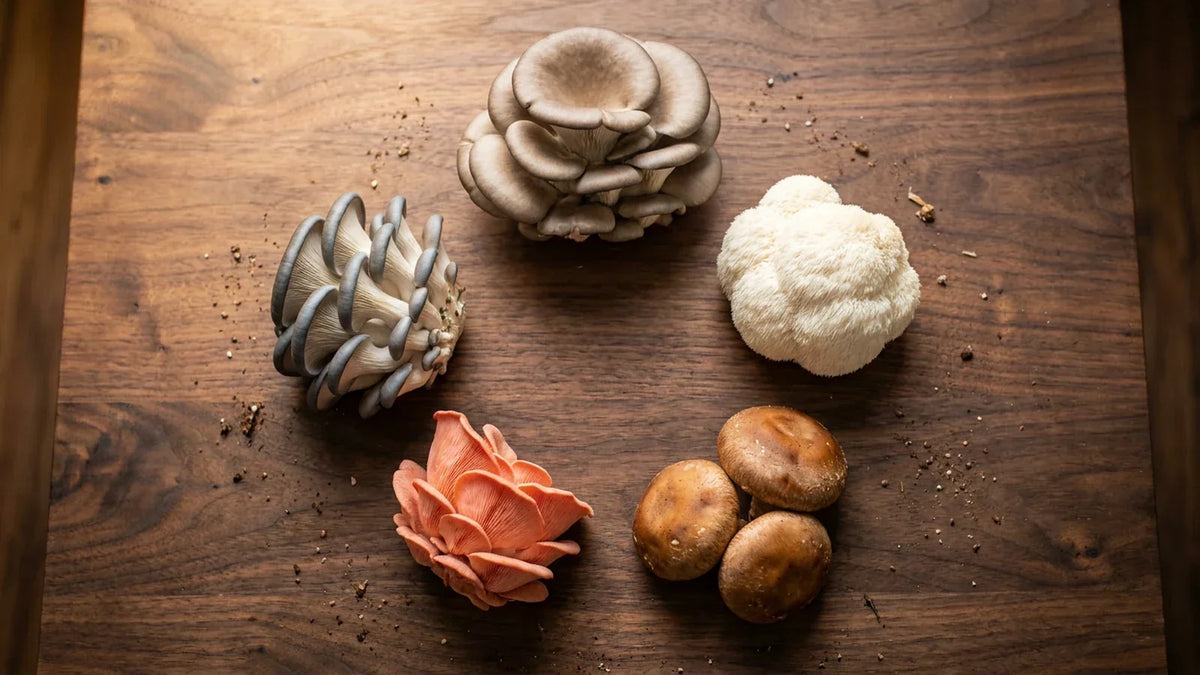
Wähle eine Pilzart, die es im Supermarkt nicht gibt. Das ist der wahre Grund, zu Hause anzubauen. In Supermärkten gibt es weiße Champignons, braune Champignons und eine einsame Packung Shiitake, bei denen die Stiele abgeschnitten sind. Pink Oyster, Löwenmähne und Kastanienseitling fallen aus diesem Sortiment heraus. Sie schmecken ganz anders als die Champignons, mit denen du aufgewachsen bist, und auf dem Bauernmarkt kosten sie doppelt so viel – wenn du sie überhaupt findest.
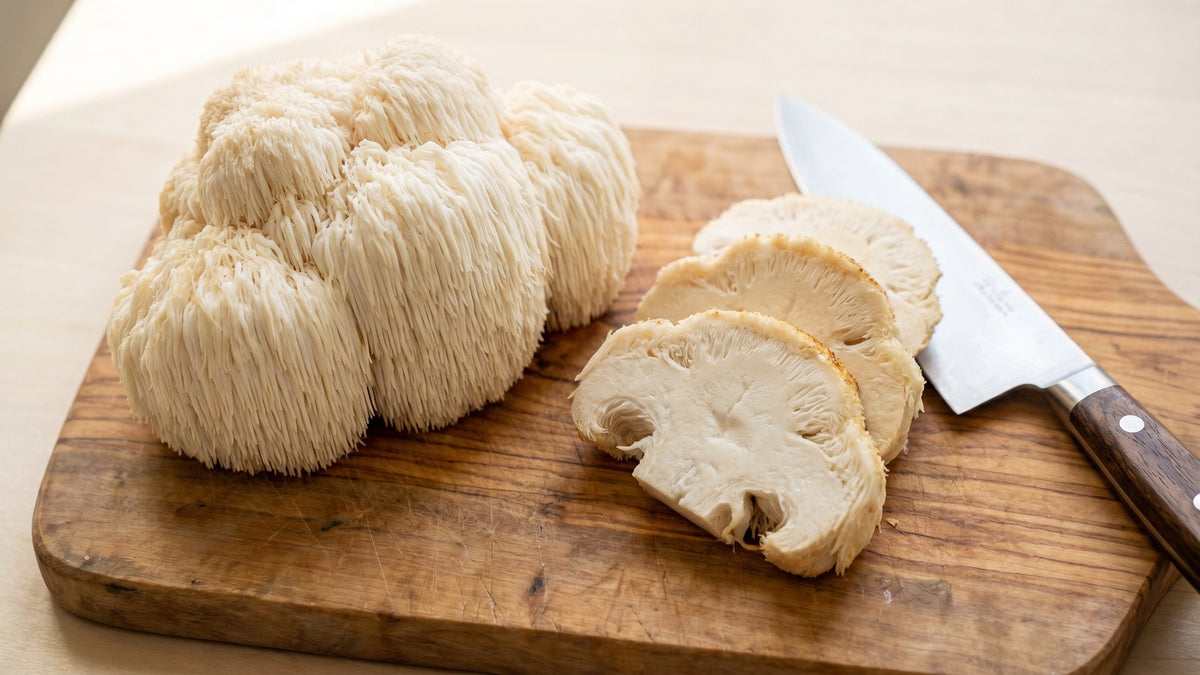
Anfängern empfehlen wir fürs erste Wochenende Pink Oyster oder Löwenmähne. Beide Arten fruchten bei derselben Temperatur- und Luftfeuchtigkeitskurve, mit der die Kammer geliefert wird. Beide überstehen einen ausgelassenen Frischluftstoß, ohne dass der Durchgang abbricht, und beide verzeihen kleine Timingfehler. Pink Oyster wächst schneller und ist spektakulärer: korallenfarbene Gruppen, die wie ein Riff im Aquarium aussehen. Löwenmähne ist langsamer und ungewöhnlicher: weiße Pompons, die beim Anbraten in Butter nach Krabbe riechen.


Was wir beim ersten Mal falsch gemacht haben
Bei unserem ersten Wochenendversuch mit einem Pink-Oyster-Block lief es nicht nach Plan, weil wir den Block statt zwölf ganze vierzig Minuten gewässert hatten. Der untere Teil des Substrats wurde völlig durchnässt, der erste Durchgang fiel spärlich aus und eine Ecke des Blocks begann am sechsten Tag sauer zu riechen. Wir warfen den Block weg und setzten einen zweiten mit einem Küchentimer an. Zwölf Minuten. Der zweite Block fruchtete planmäßig und brachte eine volle Schüssel korallenfarbener Pilze, die wir längs aufgeschnitten und mit Zitronenschale und schwarzem Pfeffer in brauner Butter angebraten haben. Stell dir einen Timer. Die Kammer kann dich nicht vor einem dreißigminütigen Bad retten.
Häufig gestellte Fragen
Muss ich etwas sterilisieren oder Handschuhe tragen?
Mit sauberen Händen und einem sauberen Küchenmesser kommst du durchs ganze Wochenende. Der Fruchtungsblock kommt versiegelt und bereits durchwachsen an. Das Myzel ist also den üblichen Verunreinigungen, um die sich Heimanbauer sorgen würden, schon zuvorgekommen. Wasch dir die Hände, wisch die Klinge mit Alkohol ab, wenn du welchen hast, und arbeite auf einer sauberen Arbeitsfläche.
Was passiert, wenn ich das Einweichen am Samstagnachmittag verpasse?
Nichts Schlimmes. Blöcke behalten ihr Fruchtungspotenzial in dem versiegelten Beutel bei Raumtemperatur bis zu drei Wochen. Wenn die Woche dir einen Strich durch die Rechnung macht, weiche den Block am Sonntagmorgen ein und verschiebe alle weiteren Etappen um einen Tag. Pink Oyster bildet weiterhin am zweiten Tag der Kammerzeit Pins, Löwenmähne am dritten.
Kann die Kammer in einem Schlafzimmer oder einem Einzimmerapartment laufen?
Ja, mit einer Einschränkung. Im Leerlauf ist der Lüfter leise; während eines Frischluftstoßes ist er hörbar, aber nicht störend – ungefähr so laut wie ein Laptoplüfter bei geringer Auslastung. Wenn du leicht aufwachst, stell die Kammer einen Meter vom Bett entfernt auf. Der Ultraschallbefeuchter ist für Menschen unhörbar.
Wie viel Strom verbraucht die Box während eines ganzen Wochenendlaufs?
Der durchschnittliche Verbrauch liegt über einen 24-Stunden-Zyklus bei etwa 25 Watt, mit kurzen Spitzen, wenn Befeuchter und Heizung gleichzeitig laufen. Ein voller erster Durchgang vom Aufstellen bis zur Ernte kostet ungefähr so viel Strom, wie wenn ein Laptop fünf Tage lang eingeschaltet bleibt. Dein Kühlschrank verbraucht mehr.
Was ist, wenn der erste Durchgang spärlich oder mit langen Stielen wächst?
Lange Stiele und kleine Hüte deuten meist auf eines von zwei Problemen hin: zu wenig Frischluft oder eine Kammer, die zu nah an einem kalten Fenster steht. Öffne die App, scrolle zum FAE-Protokoll und prüfe die CO2-Kurve. Wenn die Zackenlinie flach verläuft, statt in Impulsen auf und ab zu gehen, erhöhe die FAE-Frequenz für den zweiten Durchgang um eine Stufe. Lies das Fenster weniger als 65 Grad Fahrenheit ab, stell die Kammer etwa 45 Zentimeter vom Glas weg.
Bekomme ich aus demselben Block einen zweiten Durchgang?
Die meisten Pink-Oyster- und Löwenmähne-Blöcke bringen zwei Durchgänge hervor; ein gesunder Block schafft auch drei. Weiche den Block nach der ersten Ernte zehn Minuten lang erneut ein, lass ihn abtropfen und stell ihn zurück in die Kammer. Der zweite Durchgang kommt fünf bis sieben Tage später und erreicht etwa 60 Prozent des Volumens des ersten.
Kann ich am selben Wochenende zwei Arten in derselben Kammer anbauen?
Ja, sofern sie in einem engen Temperaturbereich liegen. Pink Oyster und Löwenmähne haben ein so ähnliches Fruchtungsprofil, dass beide in derselben Kammer fruchten, wenn du den Pink-Oyster-Zeitplan verwendest. Shiitake brauchen einen kühleren Zyklus und sollten separat angebaut werden. Die App weist dich vor dem Start auf inkompatible Artprofile hin.




Aktie:
Züchtbare Pilze: Der Komplette Leitfaden zu Sorten für den Heimanbau
Die besten Pilzzucht-Sets 2026: 6 Sets im Vergleich für den Anbau zu Hause