


Mushroom liquid culture, or LC, is living mycelium growing in a sterile, lightly sweetened broth, usually sold in a 10 ml syringe. You shake it and inject it through a self-healing port into sterilized grain or a sterile substrate block. The mycelium does the rest: pink oyster culture typically colonizes grain in 7-10 days at 70-80°F, and lion's mane takes 10-14 days.
Below: what's in the syringe, how to check it before you trust it, how to inject grain or a block cleanly, and the honest case for skipping liquid culture on your very first grow.

What mushroom liquid culture is
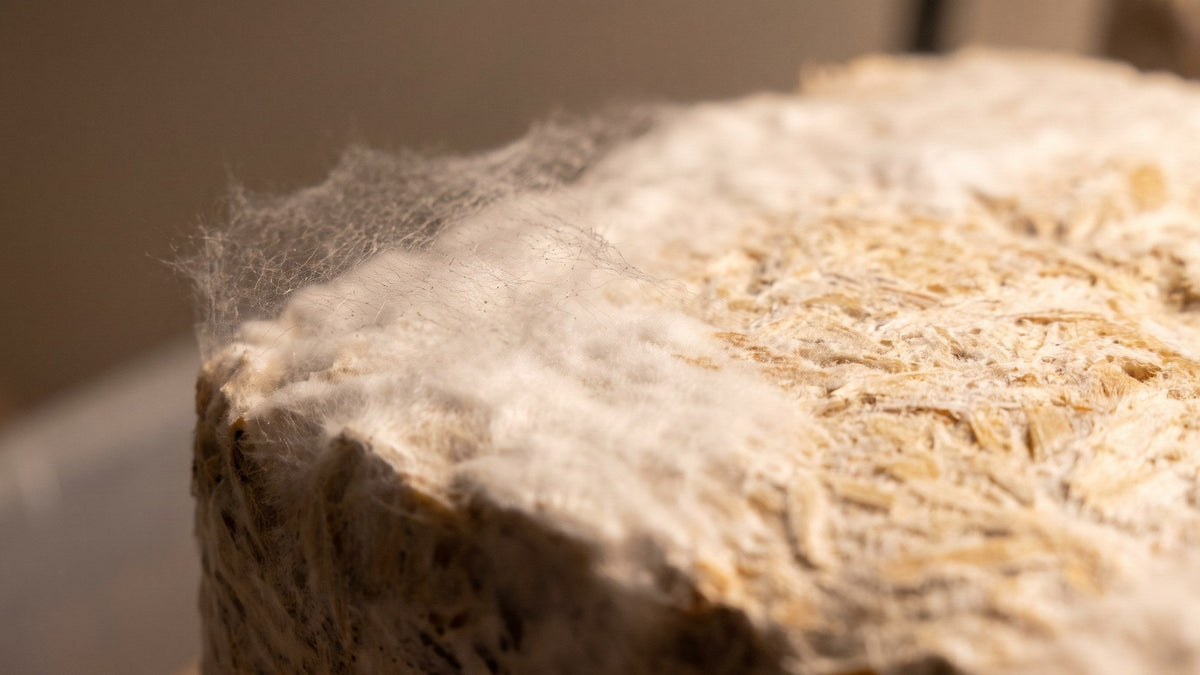
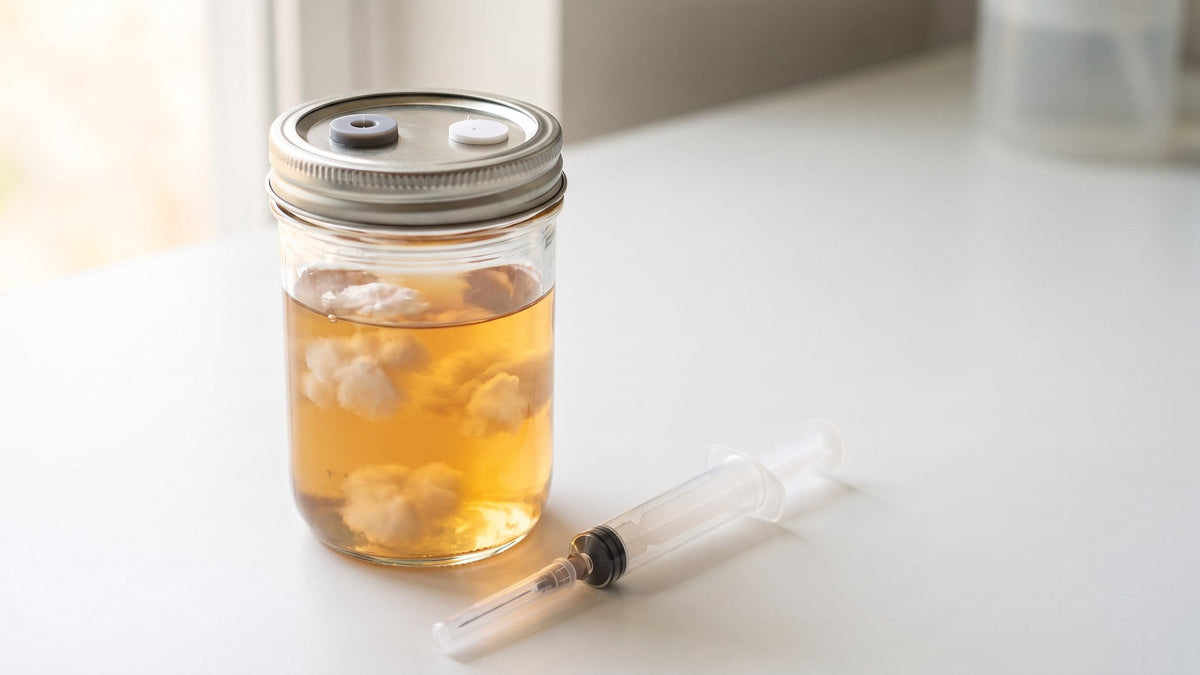
Start with a jar of sterilized sugar water. A lab adds a small piece of clean, actively growing mycelium and seals the jar. Over the next week or two the mycelium feeds on the sugar and grows into soft white clumps that drift in the broth. Shake it, and those clumps shatter into a cloud of tiny living fragments, each one ready to grow the moment it lands on food.
That's the whole trick. A syringe of liquid culture is a dose of mycelium that's already awake, so nothing has to germinate first. Inject it into sterilized grain and you'll usually see the first white growth within 3-5 days.
Growers like it for speed and consistency. It skips the germination stage that spores need, and a good culture starts from one clean strain, so every jar you inject behaves the same way. It also goes a long way: at 1-3 ml per quart jar, one 10 ml syringe inoculates anywhere from three to ten jars of grain.
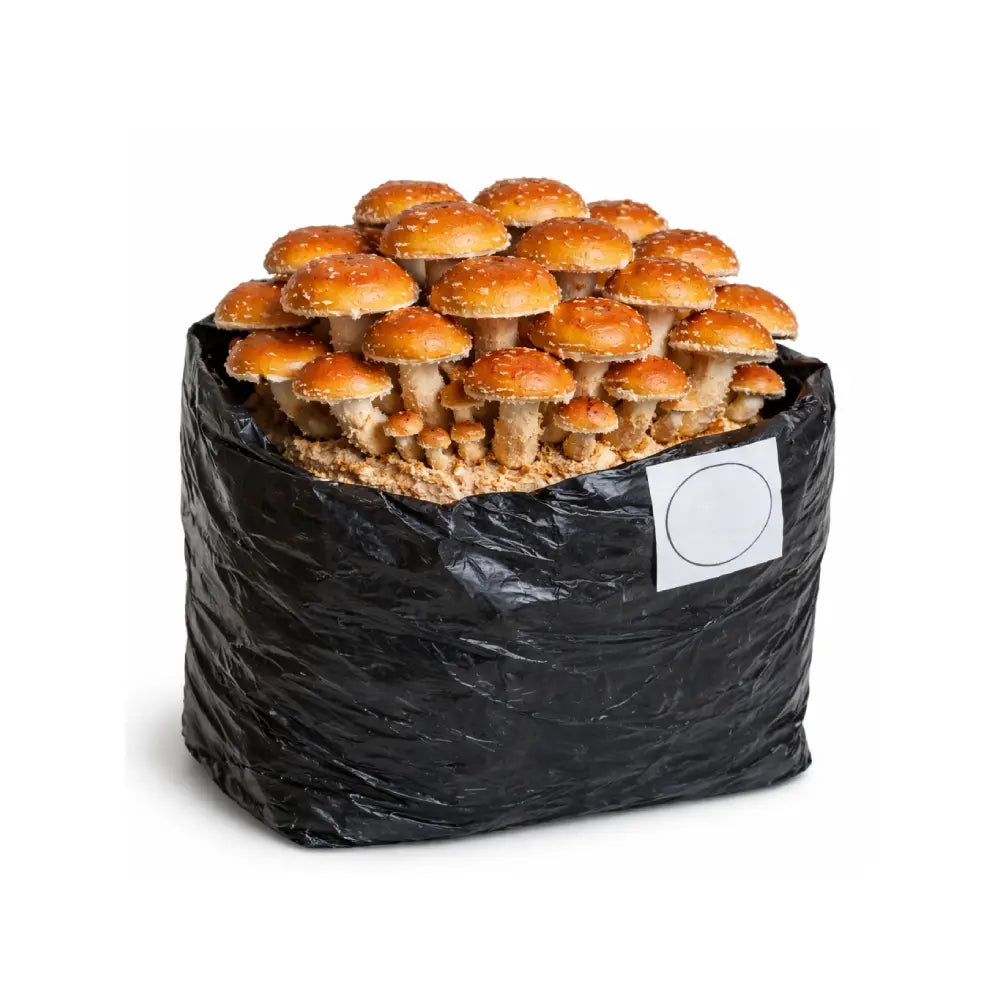
If you're picking a liquid culture mushroom for your first try, choose a fast, forgiving species. Our pink oyster liquid culture and lion's mane liquid culture each hold about 10 ml of live mycelium, sealed in a sterile sleeve with a 16-gauge needle and an alcohol wipe.
The broth itself is just water and a little sugar, sterilized in a pressure cooker. Recipes and sterilization times are a topic of their own, and our lion's mane liquid culture guide walks through them. Because the culture is alive, it lives in the fridge until you use it. For how long it keeps, see how long mushroom liquid culture lasts.
Healthy and contaminated liquid culture: how to tell
Check the culture before it goes anywhere near your grain. Anything growing in that broth gets injected into every jar you touch, so a two-minute inspection protects the whole batch.
Let the syringe or jar rest undisturbed for a couple of hours first. Freshly shaken culture always looks hazy, because the fragments are still suspended. Once they settle, hold it up to a window or a flashlight and compare what you see with this table.
| Check | Healthy culture | Likely contaminated |
|---|---|---|
| Broth after settling | Clear, or the pale gold to amber tint it started with | A milky, murky haze that never settles out |
| Mycelium | White to cream clouds, wisps or cotton-ball clumps | Specks or fuzz in green, blue-green, black, pink or orange |
| Surface | Clean, or a white mat of mycelium | A slimy film, skin or ring at the waterline |
| Texture when swirled | Fragments break apart and drift | Stringy, mucus-like strands that hang together |
| Gas | None | Steady bubbles or a domed lid |
| Smell, if a jar is already open | Mild and mushroomy | Sour, fermented or rotten |
Two false alarms catch new growers. Lion's mane culture can tint the broth slightly yellow as it matures, which is normal as long as the mycelium itself stays white. And recently shaken culture looks cloudy no matter how healthy it is, so judge clarity only after it settles.
The surest test is a small one. If you have an agar plate, place a single drop on it and watch for 3-5 days. Clean white growth means you're good. No agar? Inject one grain jar first, recap the needle, refrigerate the syringe and wait about five days before you commit the rest.
When culture fails the check, don't try to rescue it. Seal it in a bag and throw it out. Then wipe down everything it touched. Our guide to the 10 most common mushroom contaminants shows what each one looks like once it reaches grain or a block.
How to use a liquid culture syringe, step by step
The technique is the same for grain and for blocks. What changes is the dose. Lay everything out before you start, because the goal is simple: the needle and the injection port should meet room air for as few seconds as possible.
What you need:
- The liquid culture syringe and its sterile needle
- Sterilized grain jars or bags, or a sterilized substrate block, each with a self-healing injection port. Let them cool to room temperature first, since hot grain kills mycelium.
- 70% isopropyl alcohol, paper towels and a few alcohol pads
- Nitrile gloves
- A clean, still workspace. A still air box is the simplest setup for home growers.
- Prep the space. Wipe down the inside of the box and your gloves with 70% alcohol, then do the outside of every jar or bag. Give it a minute to evaporate, and keep flames out of the box, since alcohol vapor is flammable.
- Shake the syringe hard. A good 20-30 seconds breaks the mycelium into fragments, so every milliliter carries a similar dose. The wide 16-gauge needle lets small clumps through. If one jams, shake again.
- Attach the needle without touching the shaft. Pull the cap straight off. If the needle brushes anything, wipe it with a fresh alcohol pad before you go on.
- Wipe the port. One firm swipe of alcohol over the self-healing port, then a few seconds to dry.
- Inject. Push the needle through the port and press out the dose from the table below. Two or three small squirts at different angles spread the culture better than one big one.
- Withdraw and wipe. Pull the needle out, wipe the port again, and wipe the needle with a fresh alcohol pad before the next jar.
- Label everything. Write the species and the date on each jar, plus which syringe you used. If a jar goes bad later, you'll know where to look.
| What you're inoculating | Liquid culture to use | First visible growth |
|---|---|---|
| Quart jar of grain, about 1 lb | 1-3 ml | 3-5 days |
| 2.5 lb grain bag | 3-5 ml | 3-5 days |
| 5 lb grain bag | 5-10 ml | 3-5 days |
| 5 lb sterilized sawdust block | 10-20 ml | 5-7 days |
Grain jars and bags
Grain is the standard target. Every kernel is a small, nutrient-dense island, and the mycelium jumps from one to the next quickly. Once a jar or bag is fully white, it's grain spawn, ready to mix into a bulk substrate like straw or sawdust. Our guide to what mushroom spawn is picks up from there.
Sterilized substrate blocks
Injecting straight into a sterilized sawdust block skips the grain stage, which means one less container that can go wrong. The price is volume and patience. Sawdust is dense, and the culture only grows outward from where it lands, so a 5 lb block wants 10-20 ml, injected at a few different angles instead of in one spot. That's one to two full syringes for a single block, and colonization still runs slower than on grain.
The block has to be fully sterilized, not pasteurized. Pasteurizing leaves some microbes alive, and a few milliliters of culture can't outrun them on rich, supplemented sawdust.

Fuel Your Mushroom Journey
Pink Oyster Grow Kit
Want mushrooms without the syringe work? This 5 lb block arrives fully colonized. Cut an X in the bag and coral-pink pins show up in 3 to 5 days.
Add to cart $29.95After the injection: what healthy colonization looks like

Park inoculated jars somewhere dark and steady, like a closet shelf away from heat vents. Then mostly leave them alone. Here's the usual sequence on grain:
- Days 3-5: small white starbursts appear where the culture landed.
- About 30% colonized: shake the jar or massage the bag to scatter the colonized kernels among the bare ones. Every scattered kernel becomes a new starting point.
- Full colonization: every kernel is wrapped in white, and the grain holds together when you tip the jar. Pink oyster usually gets here in 7-10 days at 70-80°F, lion's mane in 10-14 days.
Slow is fine. Wrong isn't. These are the signs worth acting on:
- Wet, slimy kernels or a sour smell: bacteria. The jar is done.
- Green, blue-green or black patches: mold. Toss the jar sealed, without opening it indoors.
- No growth at all after 10 days: weak culture, grain that was still hot at injection, or a room that runs too cold.
For species-by-species timelines and what to do when growth stalls halfway, see our guide to how long mycelium takes to colonize a bag.
Liquid culture, spores and spawn: where each one fits
All four of these starting points can grow the same species. They just sit at different spots on one path, and the further along you start, the fewer sterile steps are left for you.
| Starting point | What's inside | Steps still ahead of you | Pink oyster timing |
|---|---|---|---|
| Spore syringe | Spores in sterile water | Germination, grain, bulk substrate, fruiting | Slowest. Germination comes before the grain even starts |
| Liquid culture | Live mycelium in sugar broth | Grain, bulk substrate, fruiting | The grain stage alone takes 7-10 days |
| Grain spawn | Grain fully colonized by mycelium | Bulk substrate, fruiting | First flush 5-10 days after the substrate colonizes |
| Colonized fruiting block | A whole bag of substrate, fully colonized | Fruiting only | Pins in 3-5 days |
Spores are the genetic wild card. Each one carries a different shuffle of its parents' genes, and spores have to pair up before they can make fruiting mycelium, so two spore-started jars can grow quite differently. Liquid culture from a clean isolate gives you one known strain. If the spore route interests you, our guides to the spore syringe and to growing mushrooms from spores start from the very beginning.
When to skip liquid culture and start from a block
Now the honest part. Liquid culture is a great tool, and it's also the opening move of a multi-week lab project. Between the syringe and your first harvest sit sterilized grain, a clean workspace, a bulk substrate and weeks of colonization, with a chance of contamination at every transfer.
Skip it for now if any of these sound like you:
- You've never grown mushrooms and want to see a harvest before learning lab technique.
- You don't own a pressure cooker or a still air box yet.
- You want fresh mushrooms on a schedule you can plan meals around.
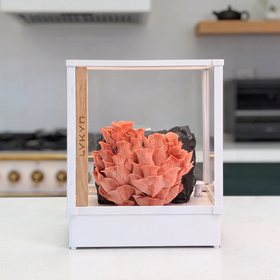
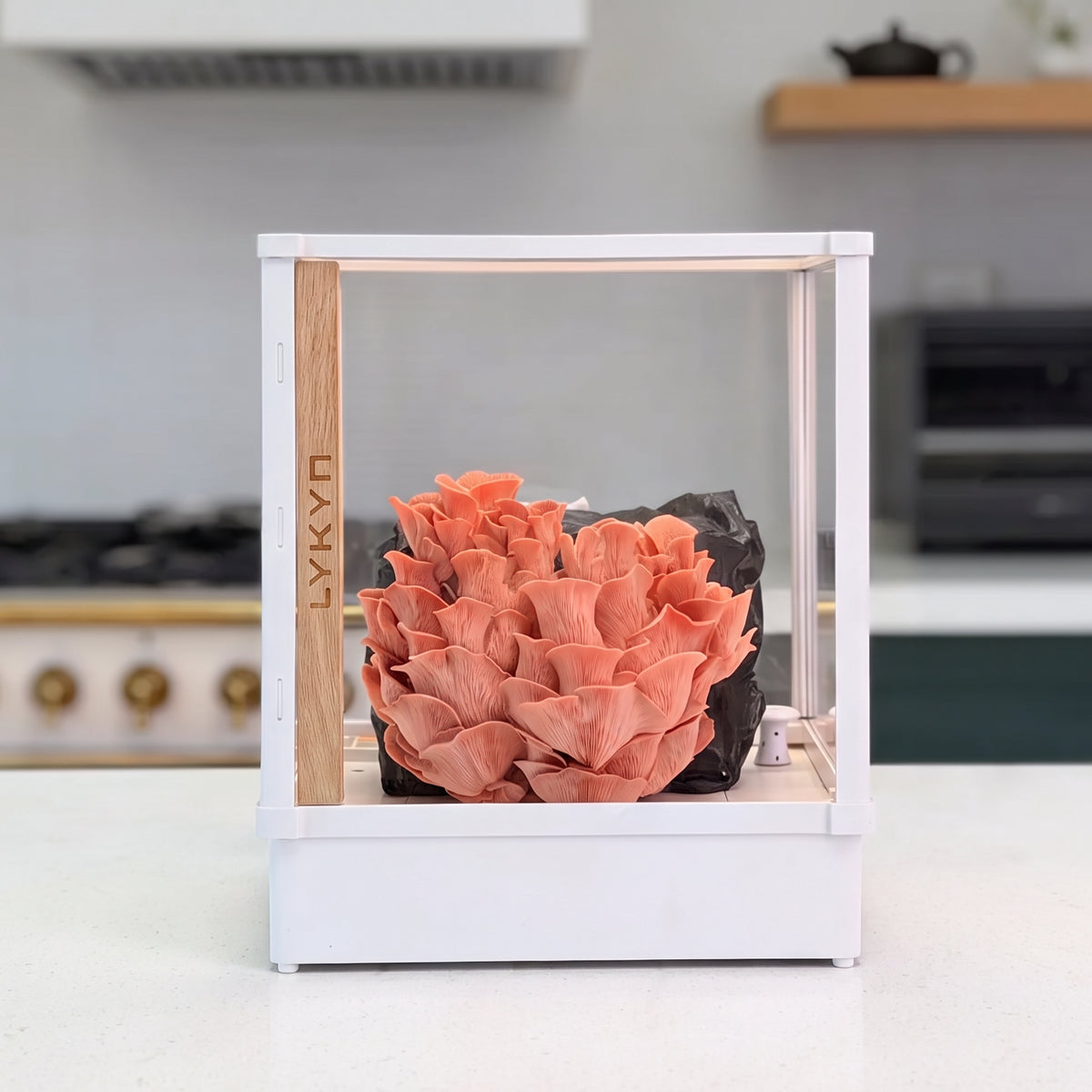
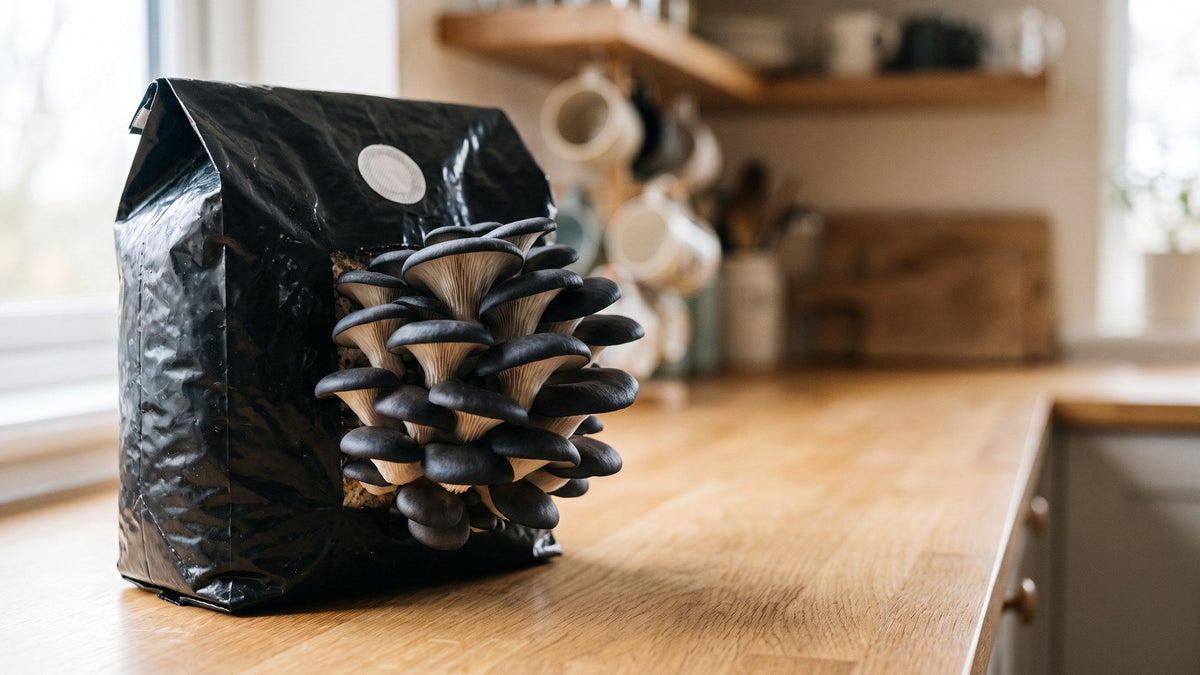
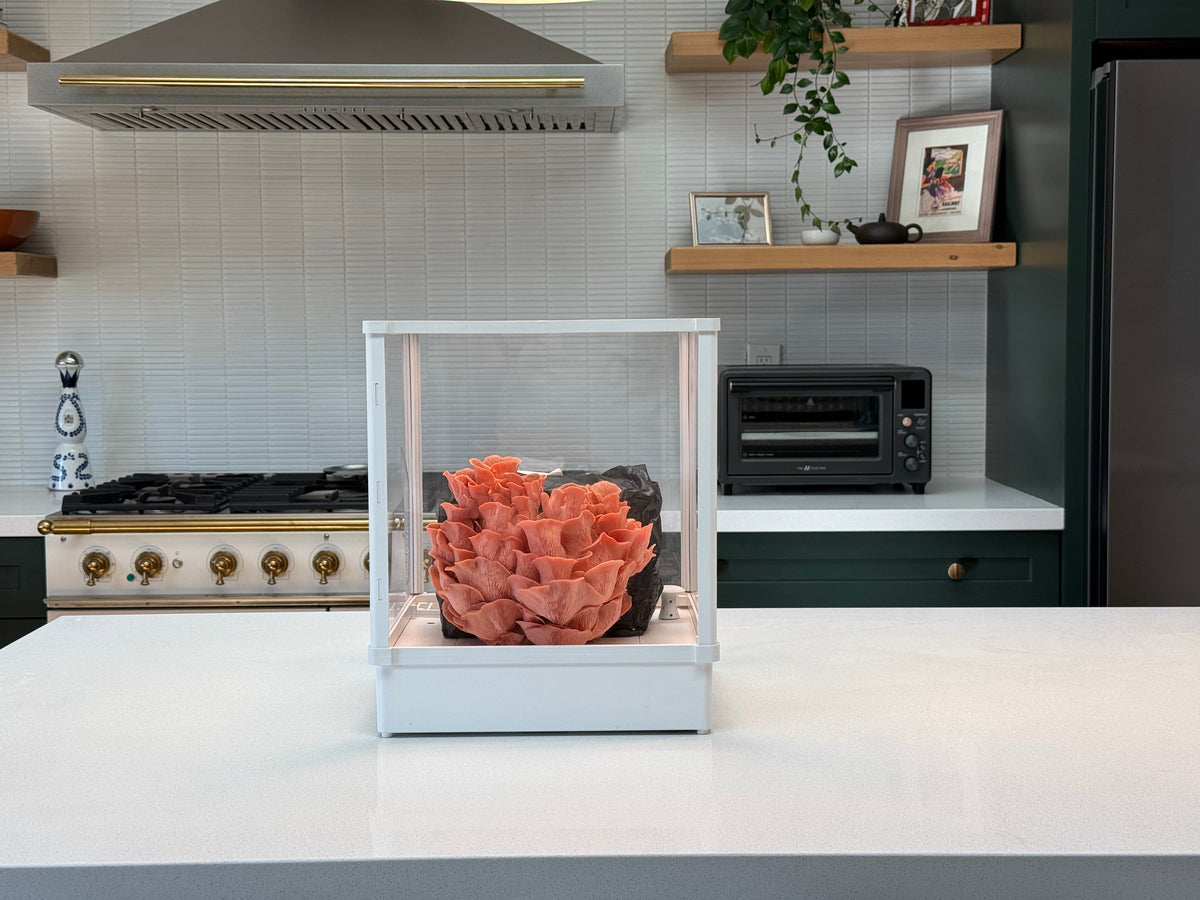
A colonized block starts you at the finish line of everything above. The Lykyn Pink Oyster grow kit is a 5 lb block of supplemented hardwood sawdust, fully colonized by Pleurotus djamor. Cut an X in the bag, and the first pins show in 3 to 5 days. It gives two to three flushes at about a pound each, so up to 3 lb from one block. Our pink oyster grow kit guide covers what to expect from that first flush.
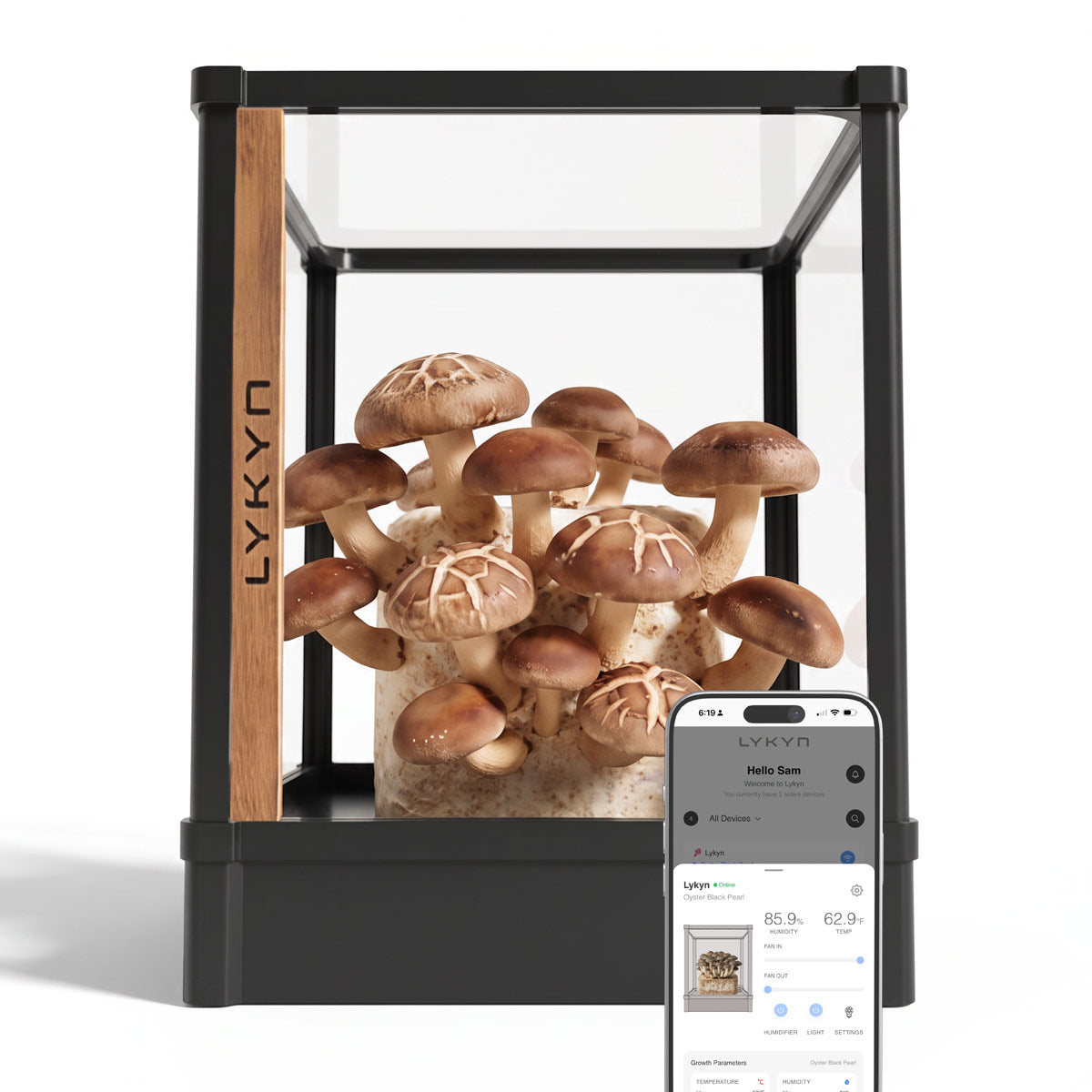
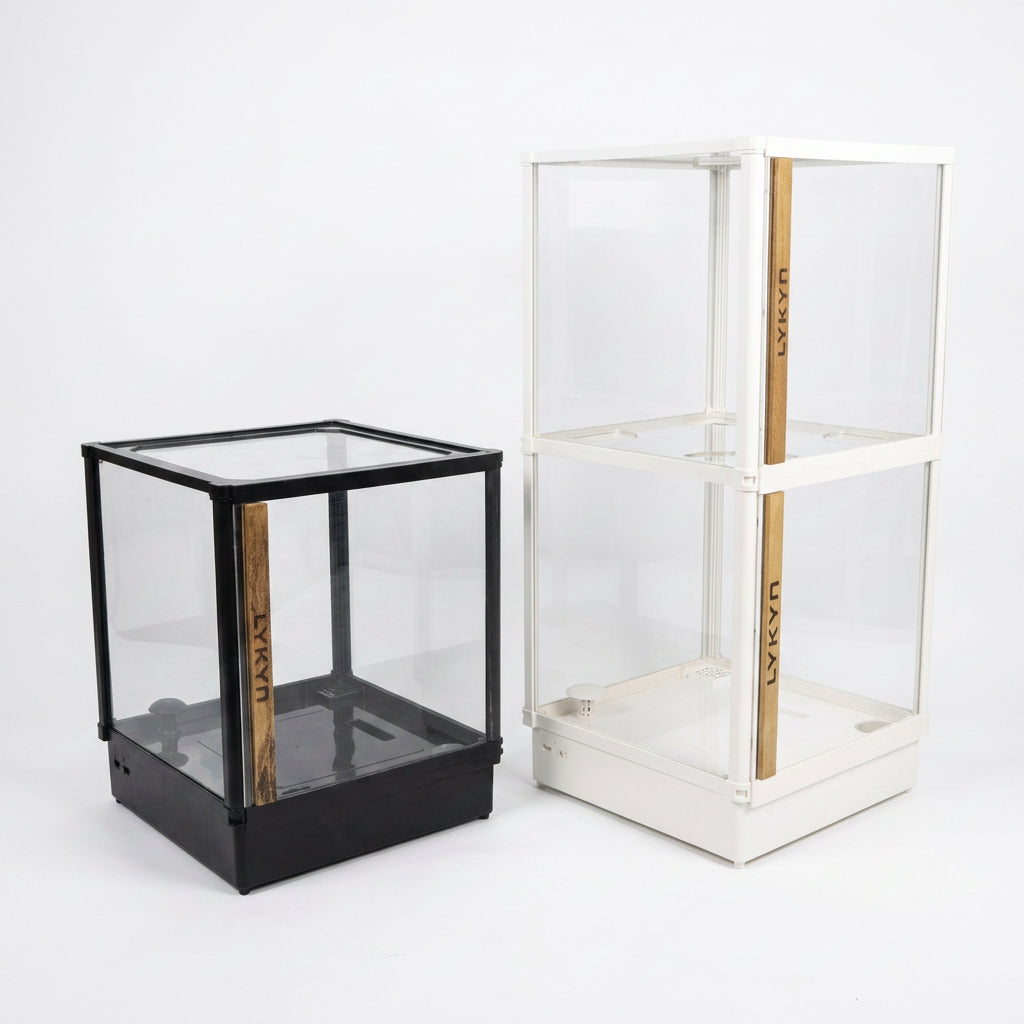
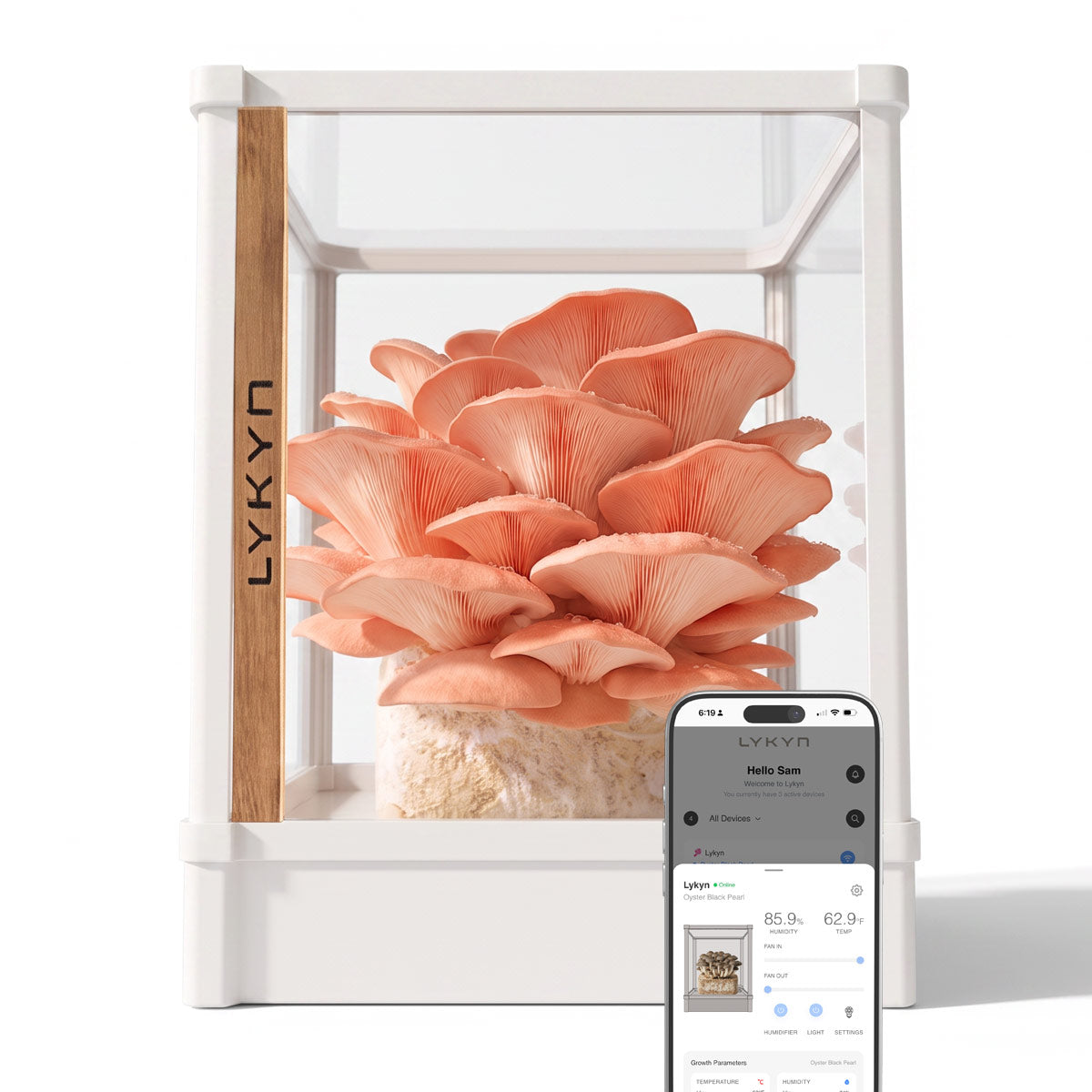
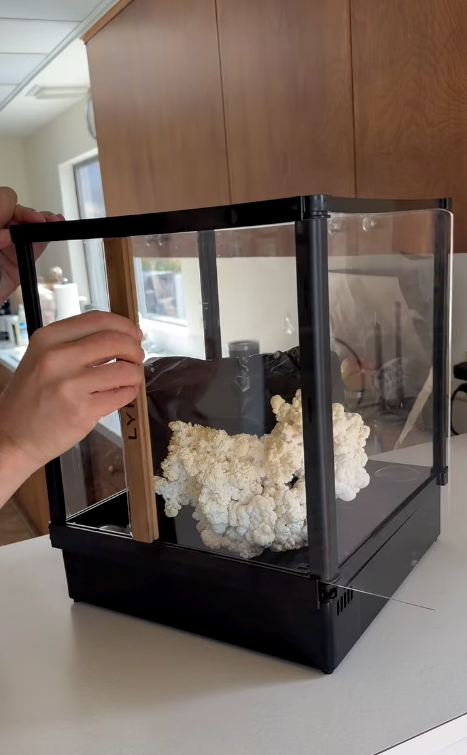
Pair the block with the Lykyn Smart Mushroom Grow Box and fruiting runs on autopilot. Its ultrasonic humidifier runs from a 2.8 liter tank and holds humidity in the 85-92% range pink oyster wants. Fans exchange fresh air on a species schedule, and LEDs time the light. One limit to know: the chamber is built for fruiting, not colonization, so it only takes blocks that are already fully colonized. It also runs at room temperature. Pink oyster fruits best at 75-86°F, so in a cooler home a seedling heat mat helps.
Grow a block first, and pick up the syringe once you've watched a flush come in.
Frequently asked questions
How long does liquid culture take to colonize grain?
Pink oyster culture typically colonizes grain in 7-10 days at 70-80°F, and lion's mane in 10-14 days. The first white growth usually shows 3-5 days after injection. Shaking the jar once it's about 30% colonized spreads the mycelium and shortens the wait.
How much liquid culture should I use?
Use 1-3 ml per quart jar of grain, 3-5 ml for a 2.5 lb grain bag and 5-10 ml for a 5 lb grain bag. A 5 lb sterilized sawdust block needs 10-20 ml. One 10 ml syringe covers three to ten quart jars.
Can I use liquid culture in the Lykyn chamber?
Not directly. The chamber fruits blocks that are already colonized. Liquid culture first has to colonize sterilized grain or a sterile substrate block in a clean, dark spot. Once a block is fully colonized and weighs 6 lb or less, it can go into the chamber to fruit.
Is liquid culture the same as a spore syringe?
No. A spore syringe holds spores in sterile water, and those spores still have to germinate and pair up before they become usable mycelium. Liquid culture holds mycelium that's already growing, so it colonizes faster and every jar shares the same genetics.
What if my liquid culture looks cloudy?
Let it rest for a couple of hours first. If the broth clears above the settled mycelium, the haze was just suspended fragments. If it stays milky or grows a film, treat it as bacterial contamination and don't use it.
All four syringes above are in the mushroom liquid culture collection, each lab-verified before it ships.
Fuel Your Mushroom Journey

Smart Chamber. Bone White Single Layer
- 2.8L tank, 90% humidity automatic
- App-controlled, plug-and-play
- 6 lb block ceiling, in stock

Smart Chamber. Obsidian Black Single Layer
- Same hardware as Bone White
- Matte black premium finish
- Pairs with any kitchen palette

Partager:
Gift for men who have everything: 8 picks that surprise
Types of Oyster Mushrooms: 8 Varieties You Can Grow at Home