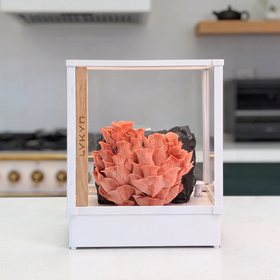



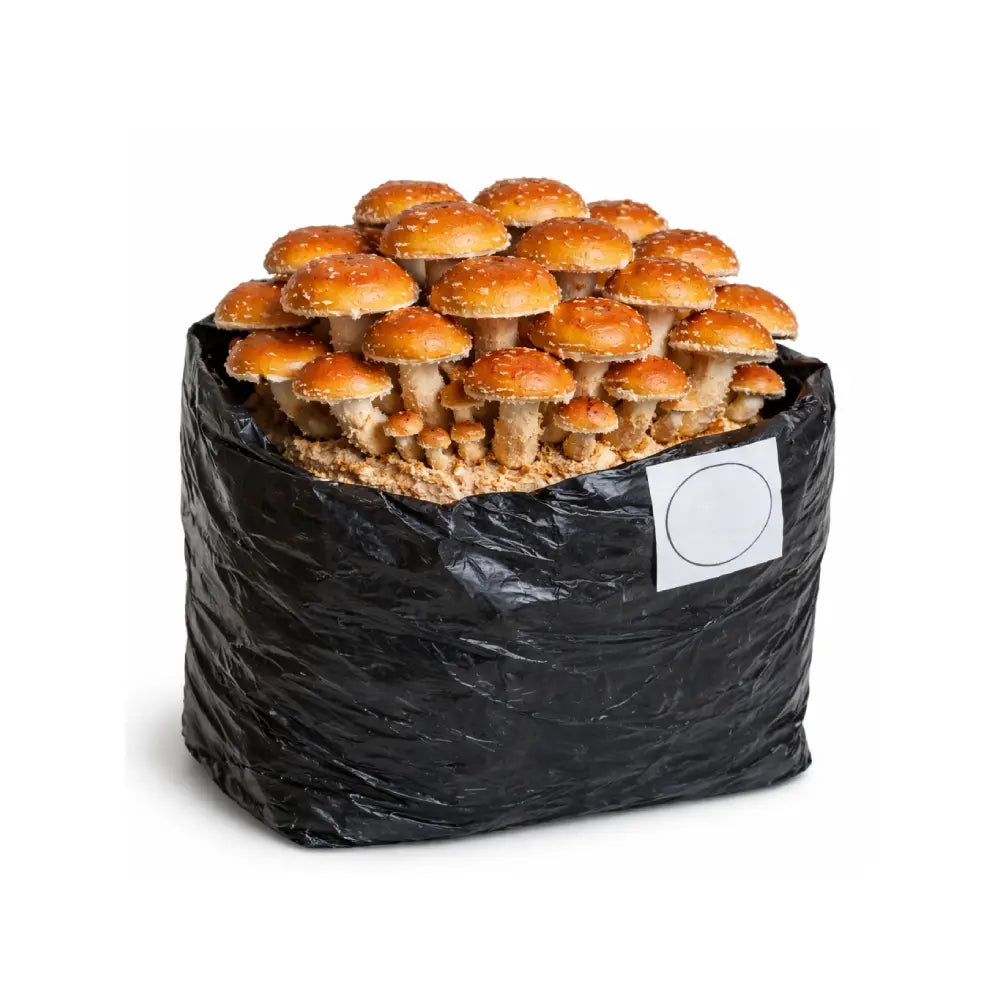
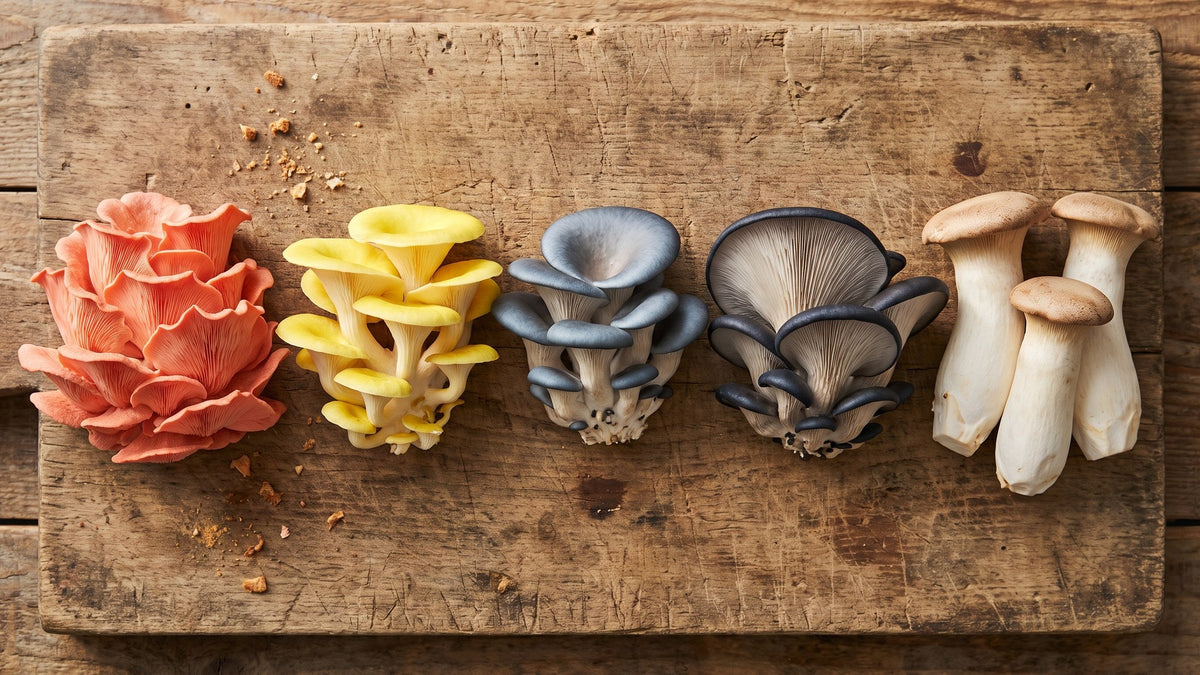
The main types of oyster mushrooms you can grow at home are pink, golden, phoenix, pearl, blue, black, king and elm oyster. Seven of them are Pleurotus species or strains, and elm oyster is a lookalike from another genus. Temperature is what separates them in practice: pink and golden fruit at 68 to 86°F; pearl, blue and black prefer 50 to 70°F; and king oyster wants a steady 59 to 64°F.
So pick by your room first and your recipe second. Lykyn sells two of these as 5 lb grow kits, pink and black, and this guide is written from the grower's side of the counter.

Types of oyster mushrooms at a glance
Oyster mushrooms are some of the most commonly cultivated edible mushrooms in the world, and the Pleurotus genus alone holds more than 30 described species. These eight are the ones you're most likely to find as blocks or cultures for home growing.
| Type | Color | Flavor and texture | Fruiting temp | Home difficulty | Best use |
|---|---|---|---|---|---|
| Pink oyster (Pleurotus djamor) | Coral to bright pink | Smoky, almost bacon-like when seared; chewy | 75-86°F | Easiest in a warm room | Crispy strips, tacos |
| Golden oyster (P. citrinopileatus) | Lemon yellow | Nutty, close to cashew; delicate | 68-82°F | Easy in a warm room | Quick sautés, soups |
| Phoenix oyster (P. pulmonarius) | Pale grey-brown to cream | Mild, classic oyster flavor | 64-80°F | Easy | All-purpose cooking |
| Pearl oyster (P. ostreatus) | Grey to tan | Mild and savory; tender caps | 55-70°F | Easy | Pasta, soups, sautés |
| Blue oyster (P. ostreatus, cold strain) | Blue-grey, fading to slate | Earthy, a little briny; meaty | 50-64°F | Easy in a cool room | Stir-fries, roasting |
| Black oyster (P. ostreatus, dark variety) | Charcoal to slate | Deep umami; thick, meaty stems | 59-70°F | Easy | Searing, roasting |
| King oyster (P. eryngii) | Tan cap on a thick white stem | Mild and dense; scallop-like when seared | 59-64°F | Moderate | Seared coins, grilling |
| Elm oyster (Hypsizygus ulmarius) | White to cream | Mild, slightly nutty; firm | 55-70°F | Moderate | Roasting, thick slices |
All eight like high humidity, roughly 85 to 92%, while they fruit, so that side of the setup barely changes from one type to the next. Temperature is where they split up.
Start with your room temperature
Oysters forgive a lot, but temperature isn't one of those things. A cool-weather strain in a warm kitchen comes up pale, flimsy and fast. A warm-weather strain in a cold room can sit for weeks without pinning.
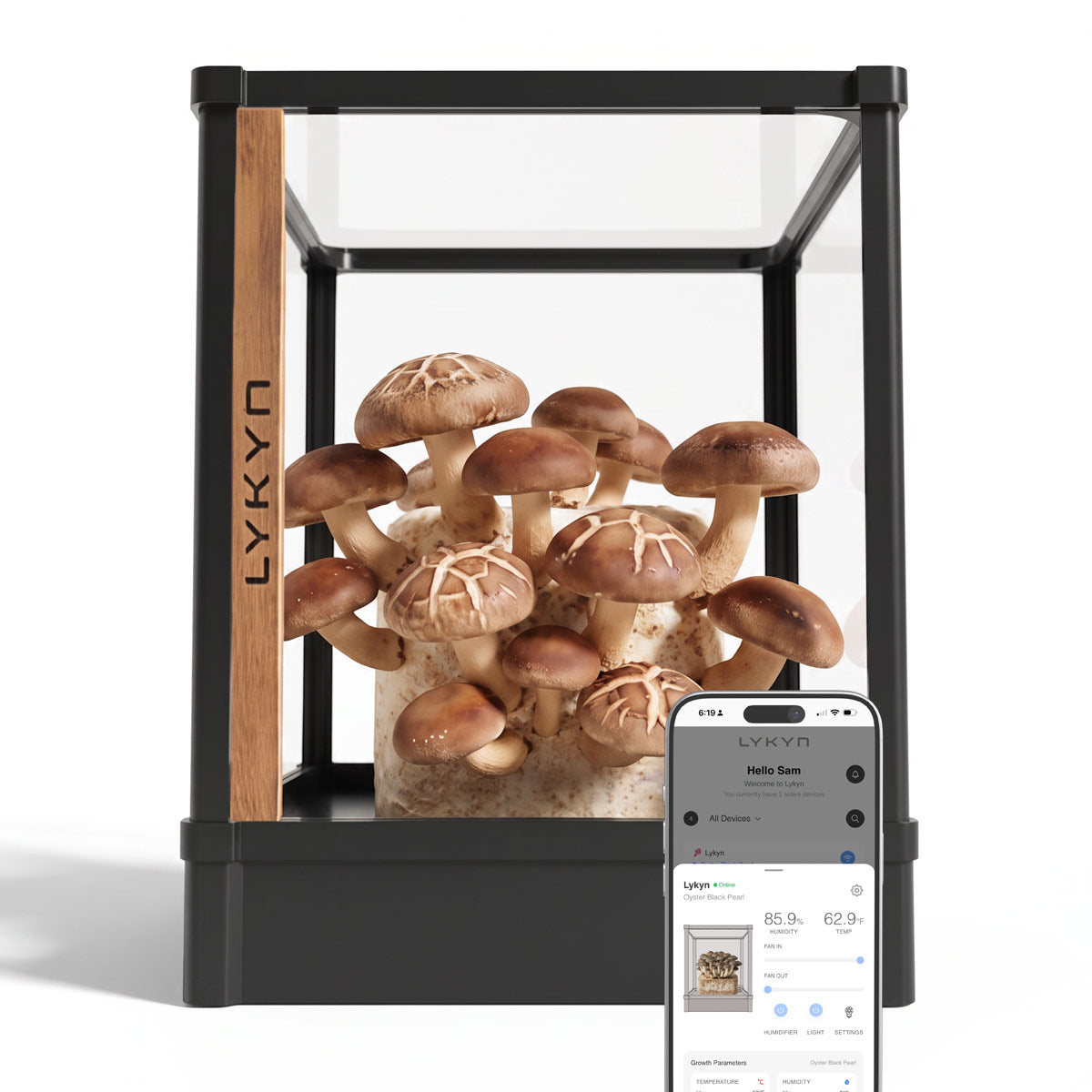
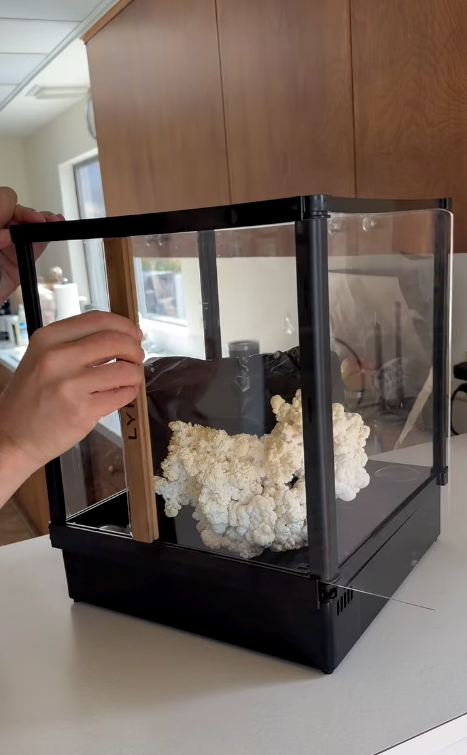
The Lykyn chamber has pre-loaded profiles for pink, blue, black and golden oyster, and it handles humidity and fresh air for each. It runs at room temperature, though, so matching the oyster to the room is your call:
- Warm room, 75°F and up: pink, golden or phoenix.
- In between, 70 to 75°F: golden or phoenix.
- Heated home, 64 to 70°F: black, pearl or phoenix. That's where a thermostat set to 68°F lands.
- Cool room, about 55 to 64°F: blue, king, pearl or elm. Think basements and spare rooms in winter.
Want pink oysters in a cool house? A seedling heat mat under the chamber can lift the block a few degrees. Our temperature and humidity setup guide shows how to read your room before you order a block.
Cool and mild-weather oysters: pearl, blue and black
Pearl oyster (Pleurotus ostreatus)
This is the oyster in the grocery store: grey to tan-brown caps with white gills running down a short stem. The flavor is mild and savory. It fruits at about 55 to 70°F in big, forgiving clusters, and if you've only had store-bought oysters, the firmer bite of a same-day harvest is the first thing you'll notice.
Blue oyster (Pleurotus ostreatus, cold-weather strain)
Blue oyster is sold as a cold-weather strain of Pleurotus ostreatus, sometimes labeled var. columbinus. Its pins come up deep blue-grey, nearly navy, then fade to slate as the caps open. It likes it cool, 50 to 64°F, and a chilly room actually helps it start pinning. The clusters are big and heavy, with an earthy, slightly briny flavor. Our blue oyster mushroom guide covers it in depth.
Black oyster (Pleurotus ostreatus, dark variety)
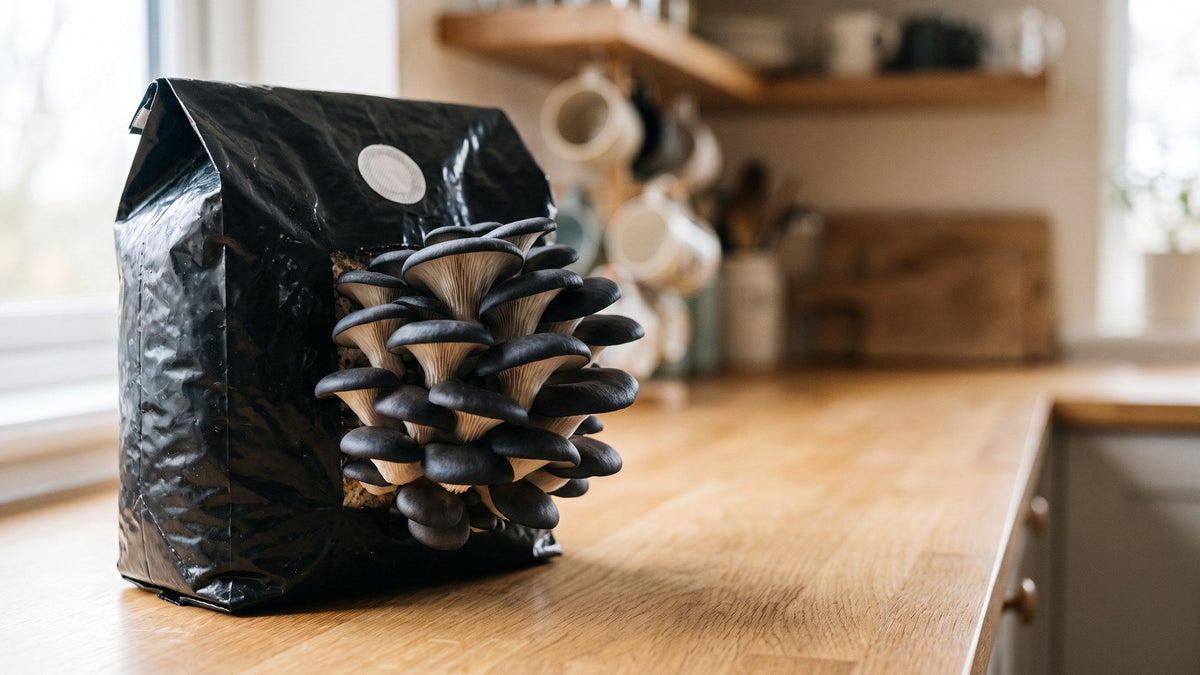
Black oyster has charcoal-to-slate caps and thick, meaty stems, with a deep, savory flavor. It fruits at 59 to 70°F with 85 to 92% humidity, which makes it our pick for a heated home in winter. Our 5 lb Black Oyster Grow Kit gives 2 to 3 harvests of about 1 lb each, at 7 to 14 days per flush.
You'll also see "black pearl" at markets. It's a name often used for a hybrid of pearl and king oyster with a thicker stem, and the black pearl mushroom recipes we've collected work with any dark oyster.
Warm-weather oysters: pink, golden and phoenix
Pink oyster (Pleurotus djamor)
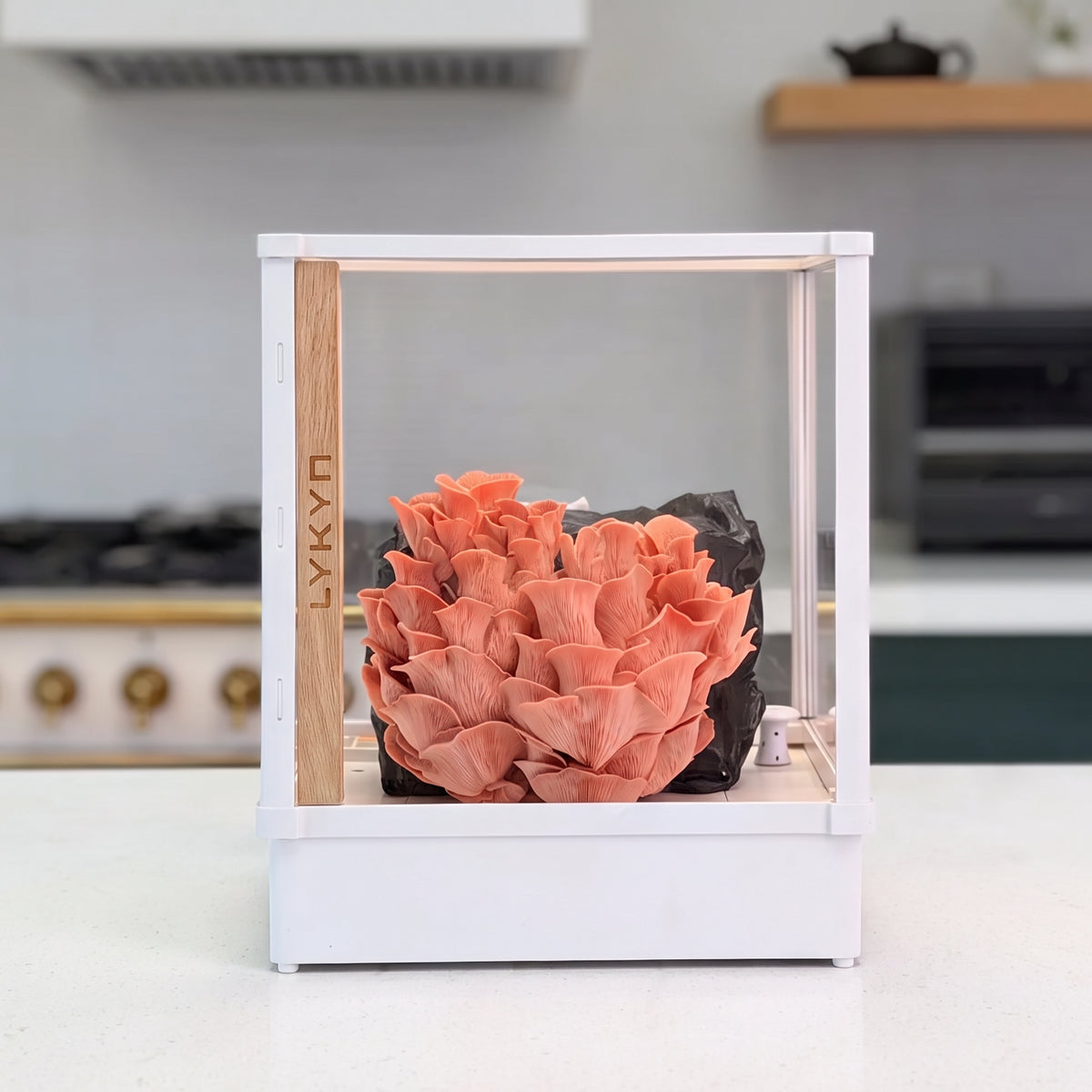
Pink is the fastest oyster you can grow at home and the most forgiving of humidity swings. On our 5 lb block, first pins arrive in 3 to 5 days and the first harvest follows in 5 to 10 days at 75 to 86°F, with 2 to 3 flushes of about 1 lb each. The clusters run from coral to bubblegum pink and fade to a warm tan in the pan.
Texture is the surprise. Pink oysters are chewier than the others, and seared hard they turn smoky and almost bacon-like. The catch is cold: pink is a tropical species, so it slows down in a room under 75°F, and it keeps only 2 to 3 days after harvest. Our guide on when to harvest pink oyster mushrooms covers its short window, and the pink oyster mushroom guide goes deeper on flavor.

Fuel Your Mushroom Journey
Pink Oyster Grow Kit
The fastest oyster on this list, in a 5 lb block that fruits at 75 to 86°F and gives 2 to 3 flushes of about 1 lb each. Fruiting guaranteed, or we replace the block free.
Add to cart $29.95Golden oyster (Pleurotus citrinopileatus)

Golden oyster looks like someone painted it: lemon-yellow caps in tight bouquets on slender white stems. It fruits at about 68 to 82°F, and the flavor is nutty, close to cashew, with caps so thin they cook in a couple of minutes. The color fades quickly after harvest, so plan to cook them within 2 days.
A note for responsible growers: golden oyster has escaped cultivation and spread into forests in parts of the eastern and midwestern United States, where researchers report it displacing native fungi. If you grow it, bag the spent block for the trash or a hot compost instead of tossing it outside. Our golden oyster mushroom guide has the details.
Phoenix oyster (Pleurotus pulmonarius)
Also sold as Italian or Indian oyster, phoenix looks like a paler, smaller pearl oyster with a bit more stem. It handles summer heat, roughly 64 to 80°F, which makes it the pick for classic oyster flavor in a warm kitchen.
King oyster and elm oyster: the odd ones out
King oyster (Pleurotus eryngii)
King oyster doesn't look like an oyster at all. Instead of shelf-like clusters, it grows a few thick white stems topped with small tan caps, and the stem is the part you want. Dense and mild, it slices into coins that sear like scallops, and it keeps up to 10 days in the fridge.
It's also the trickiest Pleurotus to grow at home. King oyster wants a steady 59 to 64°F and more CO2 than other oysters while the stems form, which runs against the fresh-air-heavy setup the rest of the family likes. Our king trumpet mushroom guide covers growing and cooking it.
Elm oyster (Hypsizygus ulmarius)
Elm oyster isn't a true oyster. It belongs to the genus Hypsizygus, and the gills give it away: on Pleurotus they run deep down the stem, while elm oyster gills stop at the stem or barely touch it. In the wild it fruits high on wounds in elm, box elder and beech trunks.
The caps are large and firm, white to cream, with a mild, slightly nutty flavor, and they hold their shape through roasting and thick slicing. It's usually slower to fruit than the Pleurotus types, at roughly 55 to 70°F. More in our elm oyster mushroom guide.
What every oyster type has in common
Once you've grown one oyster, the rest feel familiar. These habits work across the whole group:
- Start from a colonized block. Cut an X in the side of the bag, since oysters fruit sideways and need room to spread.
- Keep humidity high at 85 to 92%, without letting water pool on the caps.
- Give them plenty of fresh air. Stale air means long stems and tiny caps, with king oyster as the one exception.
- Harvest the whole cluster when the cap edges are flattening but still slightly rolled under, before they flip up and drop spores.
- Store them unwashed in a paper bag in the fridge: 2 to 3 days for pink and golden, 5 to 7 for pearl, blue and black, and up to 10 for king.
- Cook them. Raw oysters are chewy and bland, and a hot pan is where the flavor shows up.
Our step-by-step guide to growing oyster mushrooms at home walks through a full first grow, and the oyster harvest timing guide shows the cap-edge cues in detail.
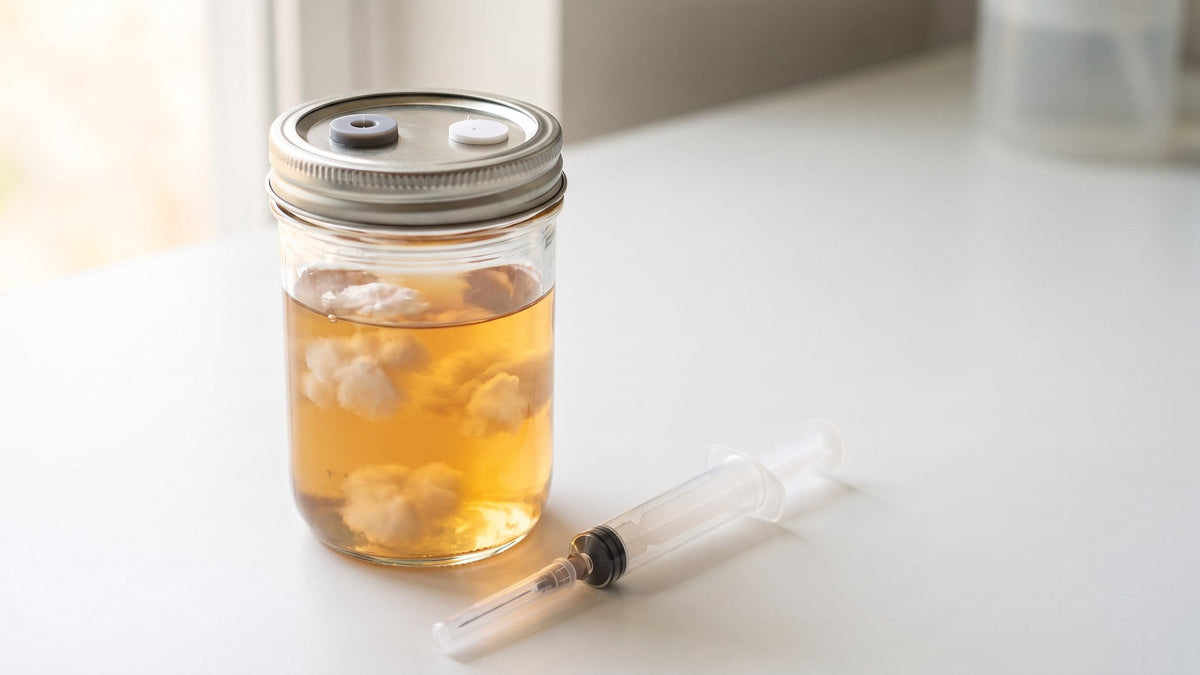
Lykyn's blue and golden oyster products are 10 ml liquid cultures, not ready blocks. The blue oyster liquid culture and golden oyster liquid culture are for growers comfortable inoculating their own sterilized grain. If this is your first oyster, start with a pink block in a warm room or a black block in a cooler one.
Frequently asked questions
How many types of oyster mushrooms are there?
The Pleurotus genus has more than 30 described species, and growers have bred strains within the popular ones for color and temperature. For home growing, 8 types cover almost everything you'll find as blocks or cultures: pink, golden, phoenix, pearl, blue, black, king and elm.
Which oyster mushroom is easiest to grow at home?
Pink oyster, if your room sits at 75°F or warmer: pins in 3 to 5 days and a harvest in 5 to 10. In a cooler home around 59 to 70°F, black or pearl oyster is just as easy.
Do different oyster mushroom types taste different?
Yes, more than most people expect. Pink turns smoky and chewy when seared, golden is nutty and delicate, black and blue are savory and meaty, and king oyster is dense and mild, closer to a scallop.
Can you grow pink and black oyster mushrooms at the same time?
Not well in the same room. Pink wants 75 to 86°F and black wants 59 to 70°F, so one of them will always be unhappy. Grow them in different seasons, or in two rooms that each sit in the right range.
Is elm oyster a real oyster mushroom?
Not in the scientific sense. Elm oyster is Hypsizygus ulmarius, a different genus from Pleurotus. It looks and cooks like a firm oyster, which is how it got the name, but its gills stop at the stem instead of running down it.
Are all types of oyster mushrooms edible?
All of the cultivated types in this guide are edible and taste best cooked. Foraging is a different skill, because wild oysters have lookalikes, so get an expert ID before eating anything you pick outdoors.
Three of these oysters ship as ready-to-fruit 5 lb blocks in the mushroom grow kits collection.
Fuel Your Mushroom Journey

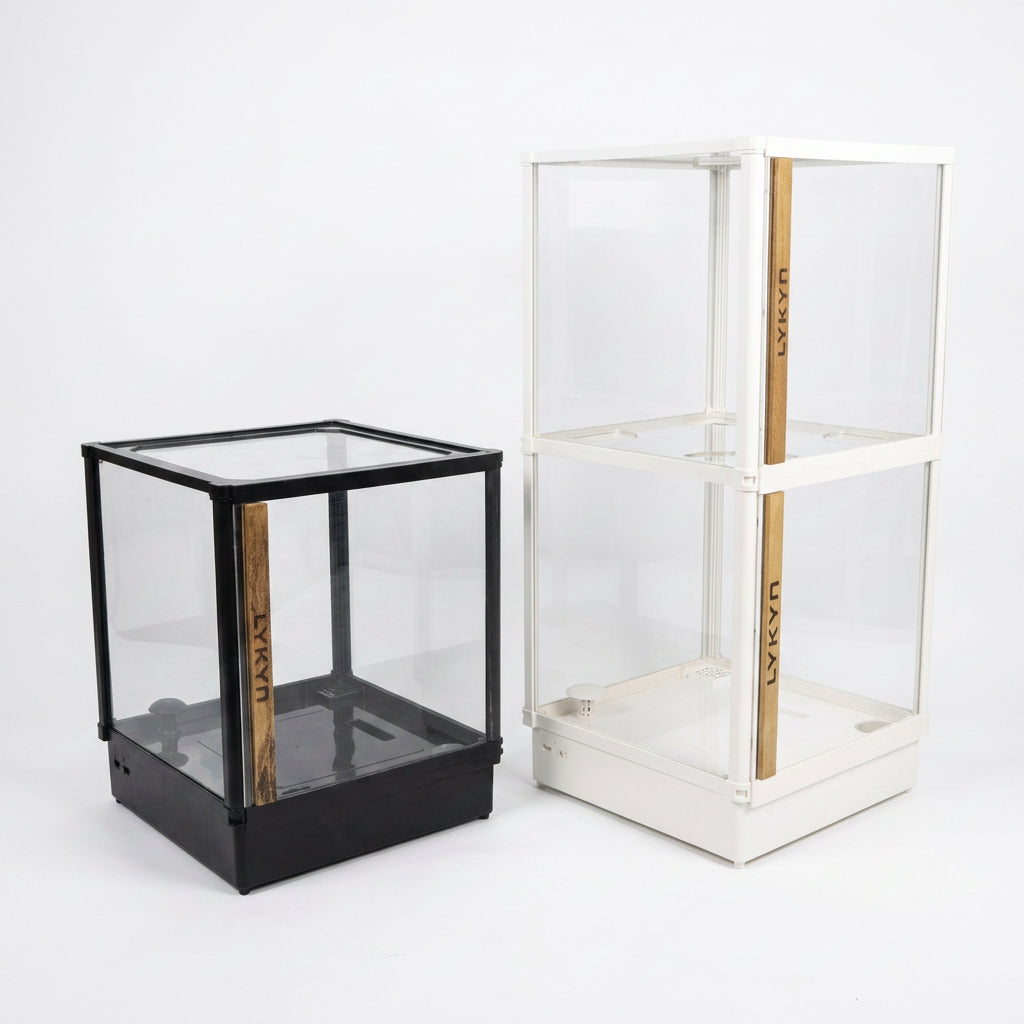
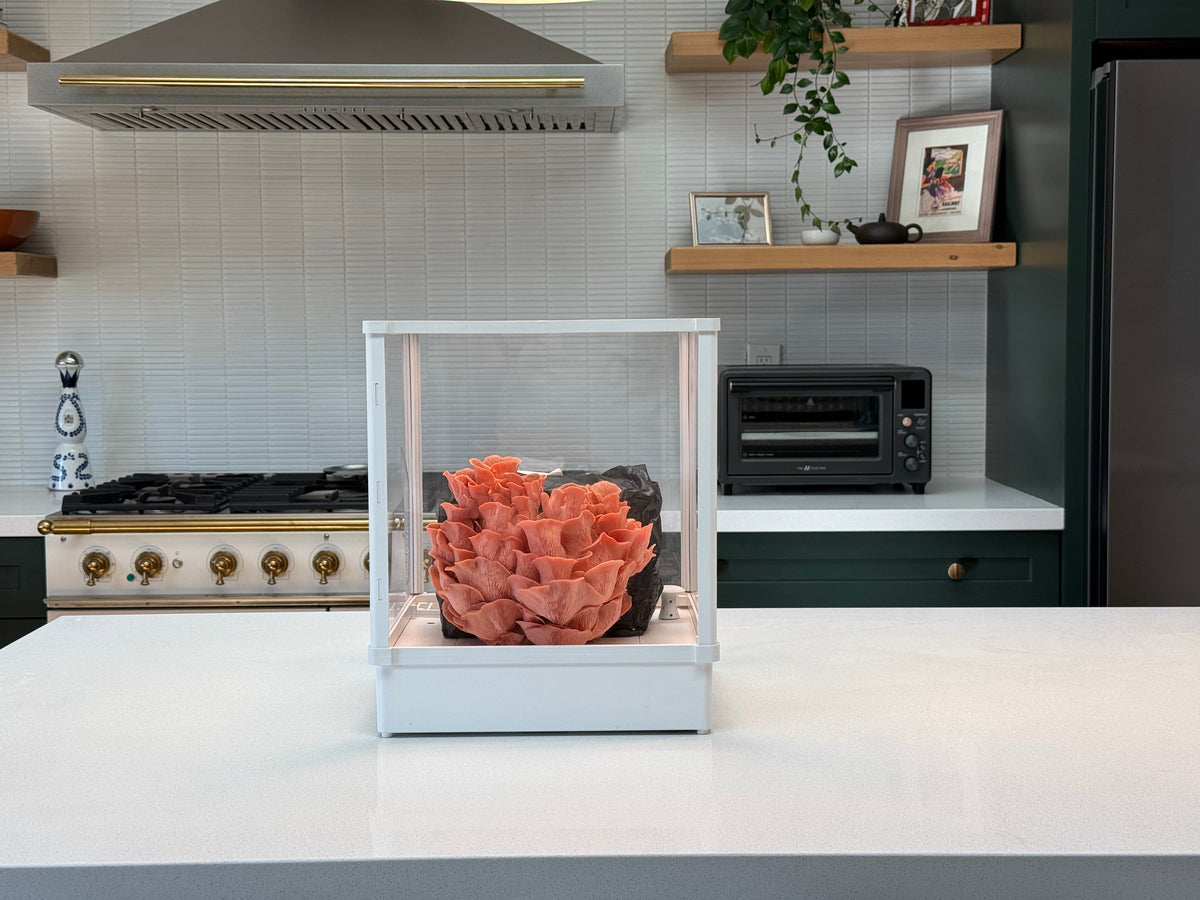
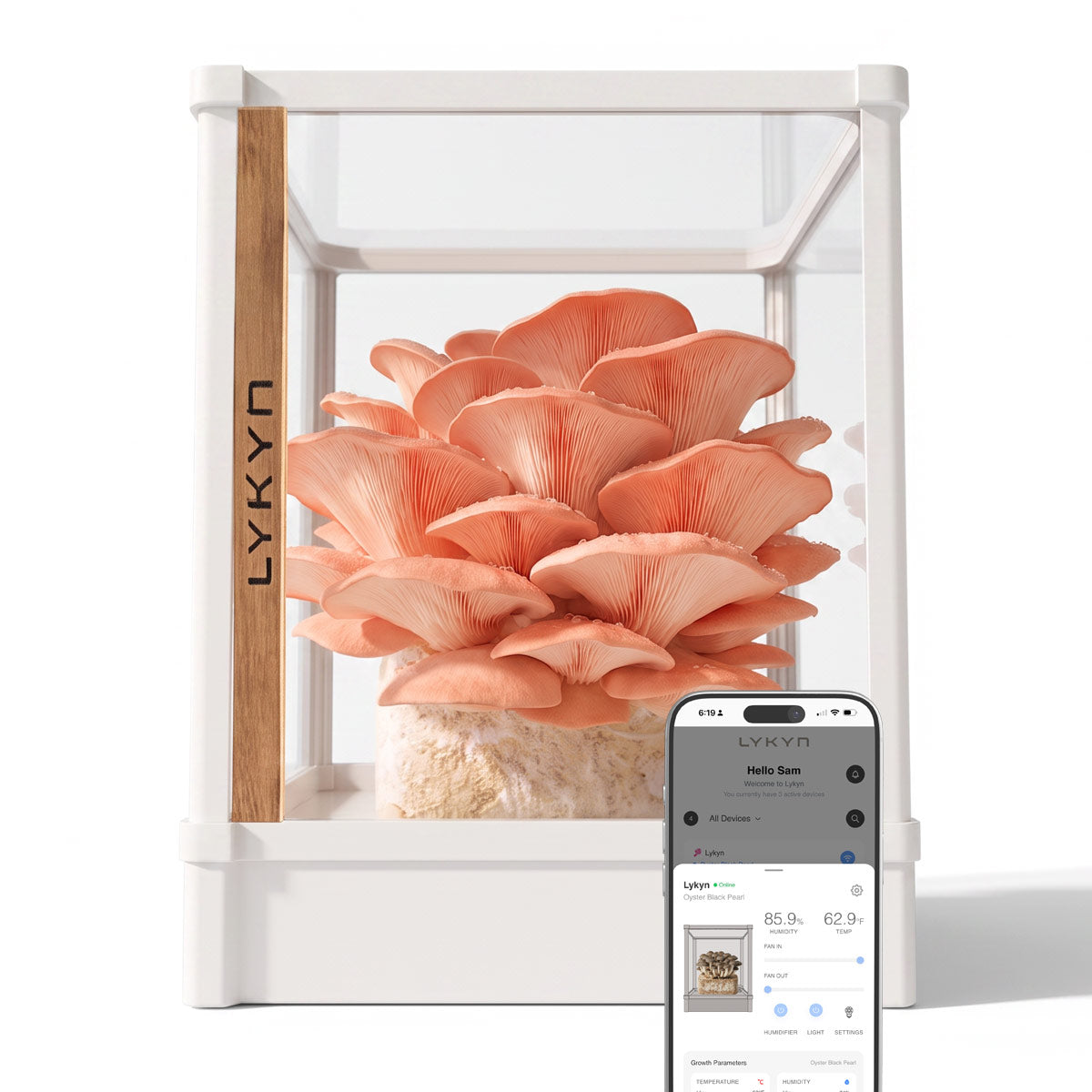
Smart Chamber. Bone White Single Layer
- 2.8L tank, 90% humidity automatic
- App-controlled, plug-and-play
- 6 lb block ceiling, in stock

Smart Chamber. Obsidian Black Single Layer
- Same hardware as Bone White
- Matte black premium finish
- Pairs with any kitchen palette


Partager:
Mushroom Liquid Culture: What It Is and How to Use a Syringe
Cobweb Mold on Mushrooms: How to Spot It and What to Do About It