



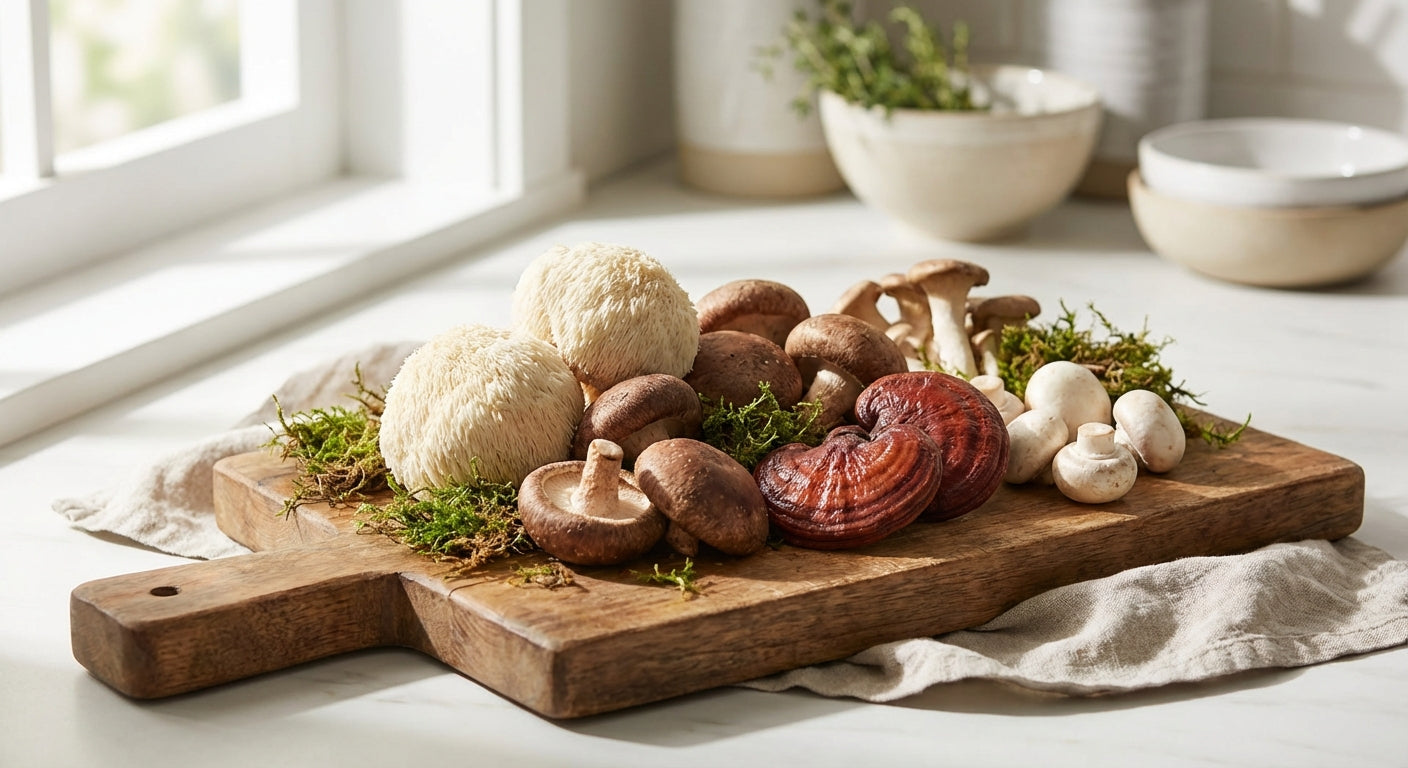
Do mushrooms expire? Yes, all mushrooms expire. Fresh mushrooms last 7-10 days when refrigerated properly in paper bags. Dried mushrooms stay good for 1-3 years in airtight containers. Signs of expiration include sliminess, dark spots, wrinkles, and a sour smell. Proper storage significantly extends mushroom freshness.
Look, I get it. You're staring at that container of mushrooms you bought... was it last week? Two weeks ago? And you're wondering if they're still good or if you're about to make a terrible mistake.
Here's the straight answer: yes, mushrooms absolutely expire. But here's the thing—how quickly they go bad depends entirely on the type of mushroom and how you store them.
I've been growing and working with mushrooms for years, and I can tell you that understanding mushroom freshness isn't complicated once you know what to look for. Fresh mushrooms from the grocery store typically last 7-10 days in your fridge. Dried mushrooms? Those can hang around for years if stored right.
In this guide, I'll walk you through everything: how long different mushrooms last, the unmistakable signs they've gone bad (trust me, you'll know), and my tried-and-true storage methods that keep mushrooms fresh way longer than the average person's. Plus, I'll share when it's worth switching to dried or powdered mushrooms that basically last forever.
Let's dig in.
How Long Do Mushrooms Actually Last?
The shelf life of mushrooms varies dramatically based on their form and storage conditions. Here's what you need to know in 2026.
Fresh Mushroom Shelf Life
Fresh mushrooms are living organisms that continue to respire after harvest. This biological activity means they have a limited window of peak freshness.
Typical shelf life for common varieties:
| Mushroom Type | Refrigerated (35-38°F) | Room Temperature |
|---|---|---|
| Button/White | 7-10 days | 1-2 days |
| Cremini | 7-10 days | 1-2 days |
| Portobello | 5-7 days | 1 day |
| Shiitake | 10-14 days | 2-3 days |
| Oyster | 5-7 days | 1 day |
| Lion's Mane | 5-7 days | 1-2 days |
| Reishi (fresh) | 7-10 days | 2-3 days |
If you're exploring functional mushrooms for their wellness benefits, consider trying Lykyn's Lion's Mane Tincture — it offers the cognitive benefits of lion's mane without any freshness concerns.
Dried and Processed Mushrooms
Here's where things get interesting. Dried mushrooms are basically the preppers of the mushroom world—they last forever (well, almost).
- Dried mushrooms: 1-3 years in airtight containers
- Mushroom powders: 1-2 years when sealed properly
- Mushroom tinctures: 2-4 years (alcohol-based preserves potency)
- Mushroom capsules: 2-3 years in cool, dark storage
This is exactly why I recommend Lykyn's Mushroom Powder Blends to anyone who wants consistent daily use without worrying about spoilage. Zero waste, maximum convenience.

5 Clear Signs Your Mushrooms Have Expired
Knowing when mushrooms have gone bad isn't rocket science. Your senses will tell you everything you need to know.
Visual Warning Signs
Sliminess is the number one indicator of spoiled mushrooms. Fresh mushrooms have a dry, slightly velvety surface. The moment they feel slippery or wet, they're producing bacterial byproducts. Toss them.
Dark spots and discoloration develop as mushrooms break down. A few small brown spots on button mushrooms are usually fine—just cut them off. But widespread darkening or black areas mean the mushroom is decomposing.
Wrinkled or shriveled texture indicates severe moisture loss. While technically safe to eat if no other spoilage signs exist, these mushrooms have lost nutritional value and won't taste good.
Smell and Touch Tests
Fresh mushrooms smell earthy, mild, and slightly sweet. If your mushrooms smell:
- Sour or acidic
- Ammonia-like
- Fishy or "off"
They've definitely expired. That smell is bacterial activity, and no amount of cooking makes them safe.
The touch test: Gently press the mushroom cap. Fresh mushrooms bounce back slightly. Expired mushrooms feel soft, mushy, or leave an indentation. If liquid comes out when you press them, they're way past their prime.
For a deeper dive into mushroom quality and what makes them beneficial, check out our article on Understanding Functional Mushroom Benefits.
How to Store Mushrooms for Maximum Freshness
Proper storage can double or triple your mushrooms' lifespan. I've tested every method, and here's what actually works.
The Paper Bag Method (Best for Fresh Mushrooms)
This is the gold standard for storing fresh mushrooms. Here's the step-by-step:
- Remove mushrooms from plastic packaging immediately — plastic traps moisture and accelerates spoilage
- Place mushrooms in a paper bag — brown lunch bags work perfectly
- Fold the top loosely — allows air circulation while preventing drying
- Store in the main refrigerator compartment — not the crisper drawer (too humid)
- Check every 2-3 days — remove any that show early spoilage signs
Paper absorbs excess moisture while maintaining the humidity balance mushrooms need. It's simple, cheap, and genuinely effective.
Alternative Storage Methods
Damp paper towel method: Wrap mushrooms in a slightly damp paper towel, place in an open container. Works well for 5-7 days.
Original packaging with ventilation: If you must keep the plastic container, poke several holes in the film to allow airflow.
Freezing fresh mushrooms: Sauté first, then freeze. Raw frozen mushrooms become mushy upon thawing due to cell wall breakdown. Cooked mushrooms freeze well for 6-12 months.
Long-Term Storage Solutions
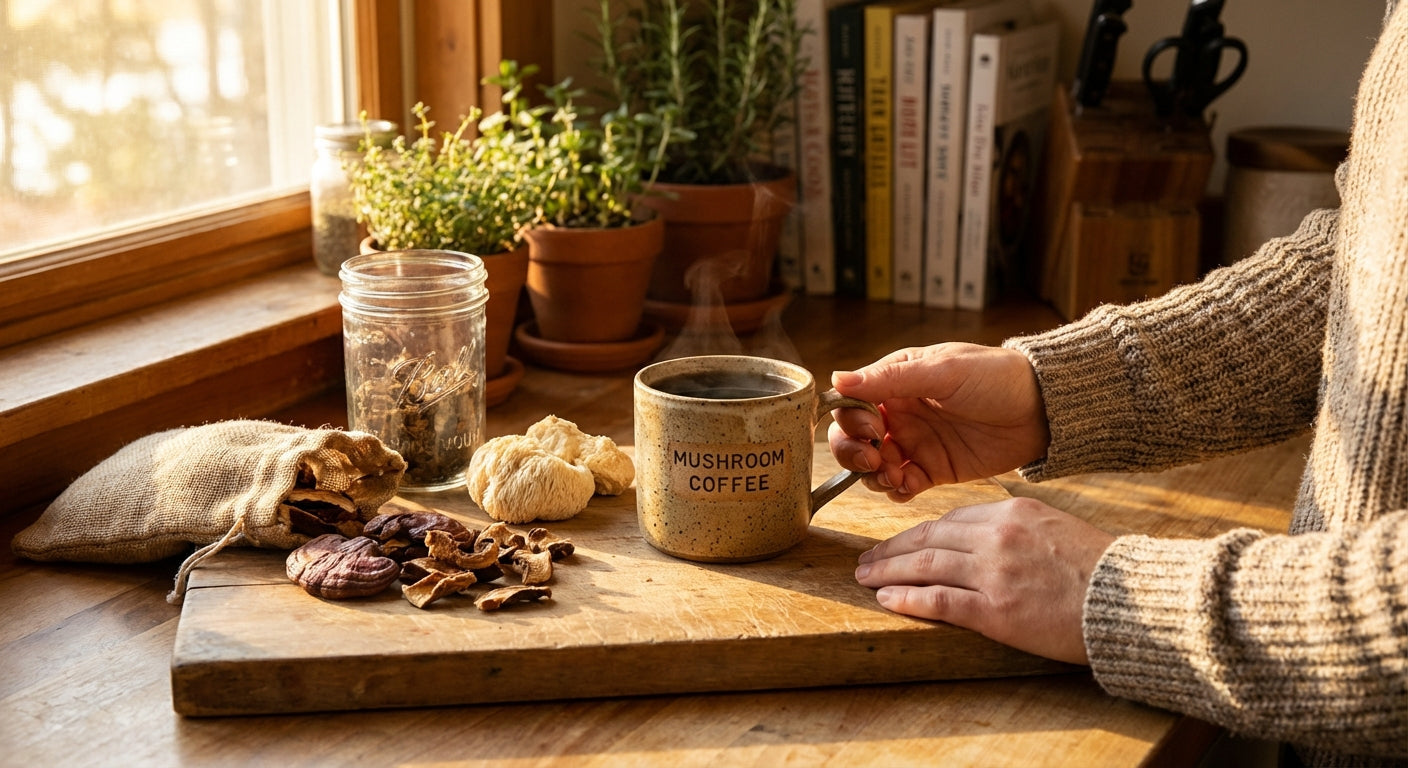
For mushrooms you want to keep indefinitely, drying is your best friend. Dried mushrooms retain 90%+ of their nutritional compounds and bioactive benefits.
This is why functional mushroom products like tinctures and powders make so much sense for daily supplementation. Lykyn's Reishi Tincture delivers consistent potency without any storage headaches—just keep it in a cool cabinet and you're good for years.
Our guide on How to Incorporate Mushrooms Into Your Daily Routine covers more ways to enjoy mushroom benefits without fresh storage concerns.

Fresh vs. Dried vs. Extract: Which Lasts Longest?
Understanding your options helps you choose what works for your lifestyle.
Shelf Life Comparison
| Format | Shelf Life | Best For | Considerations |
|---|---|---|---|
| Fresh | 5-14 days | Cooking, immediate use | Requires refrigeration, regular shopping |
| Dried | 1-3 years | Long-term storage, cooking | Needs rehydration, texture changes |
| Powder | 1-2 years | Smoothies, daily use | Easy to use, consistent dosing |
| Tincture | 2-4 years | Supplementation | Longest potency retention, fast absorption |
| Capsules | 2-3 years | Convenience, travel | Pre-measured, no taste |
Why Processed Forms Often Make More Sense
Here's an honest take: unless you're cooking with mushrooms regularly, fresh just isn't practical for daily supplementation.
Functional mushrooms like lion's mane, reishi, and chaga require consistent, long-term use to experience their cognitive and immune benefits. A 2024 study published in the Journal of Medicinal Food found that daily lion's mane supplementation for 12+ weeks showed significant cognitive improvements—but consistency was key.
Buying fresh lion's mane weekly is expensive and time-consuming. A quality tincture or powder lets you maintain that daily routine without waste or effort.
Frequently Asked Questions About Mushroom Expiration
Can you eat mushrooms after the expiration date?
The "best by" date on packaged mushrooms is a quality guideline, not a safety cutoff. If mushrooms look firm, smell earthy, and show no sliminess or dark spots, they're generally safe to eat a few days past the date. Always trust your senses over printed dates.
Do dried mushrooms expire?
Dried mushrooms can last 1-3 years when stored properly in airtight containers away from light and moisture. They may lose some flavor intensity over time but remain safe to consume. Check for any musty smells or visible mold before using old dried mushrooms.
How can you tell if mushrooms have gone bad?
The clearest signs are sliminess, sour or ammonia-like odor, dark brown or black spots, and a soft mushy texture. Fresh mushrooms feel dry and firm with a mild earthy smell. If any of these spoilage indicators are present, discard the mushrooms immediately.
Can bad mushrooms make you sick?
Yes, spoiled mushrooms can cause food poisoning with symptoms including nausea, vomiting, diarrhea, and stomach cramps. Bacterial growth on expired mushrooms produces toxins that cooking may not eliminate. When in doubt, throw them out—it's not worth the risk.
Do mushroom supplements expire?
Mushroom tinctures, powders, and capsules do have expiration dates, typically 2-4 years from manufacture. While they may remain safe beyond this date, potency and effectiveness of bioactive compounds like beta-glucans gradually decrease. Check packaging for specific dates and store in cool, dark conditions.
What's the best way to store mushrooms long-term?
For fresh mushrooms, the paper bag method in your refrigerator extends life to 10-14 days. For truly long-term storage, drying mushrooms preserves them for 1-3 years. For maximum convenience and guaranteed potency, mushroom tinctures and powders offer shelf lives of 2-4 years with zero preparation needed.
Why do mushrooms get slimy in the fridge?
Sliminess occurs when excess moisture gets trapped around mushrooms, creating ideal conditions for bacterial growth. Plastic packaging is the main culprit—it prevents moisture evaporation. Switching to paper bag storage and keeping mushrooms in the main fridge compartment (not the humid crisper) prevents this issue.
The Bottom Line on Mushroom Expiration
Let's wrap this up with what actually matters.
Key takeaways:
- Fresh mushrooms expire in 7-10 days when refrigerated properly—faster at room temperature
- Your senses are reliable — sliminess, bad smell, dark spots, and mushiness all mean it's time to toss them
- Paper bag storage works best for fresh mushrooms by balancing moisture and airflow
- Dried and processed forms last years — making them ideal for consistent supplementation
- When in doubt, throw it out — food poisoning isn't worth saving a few dollars
For daily functional mushroom use, I genuinely recommend skipping the fresh storage hassle entirely. Products like Lykyn's mushroom tinctures give you consistent potency, zero waste, and shelf lives measured in years, not days.
Ready to Stop Worrying About Mushroom Freshness?
If you're incorporating functional mushrooms into your wellness routine, make it sustainable.
→ Shop Lykyn's Premium Mushroom Tinctures — Crafted for potency, designed to last, and ready whenever you are. No refrigeration required, no expiration anxiety, just consistent daily benefits.




Share:
How to Make Perfect Mushroom Risotto Every Single Time
How to Make Amazing Food with Mushroom Recipes (That Actually Taste Good)