



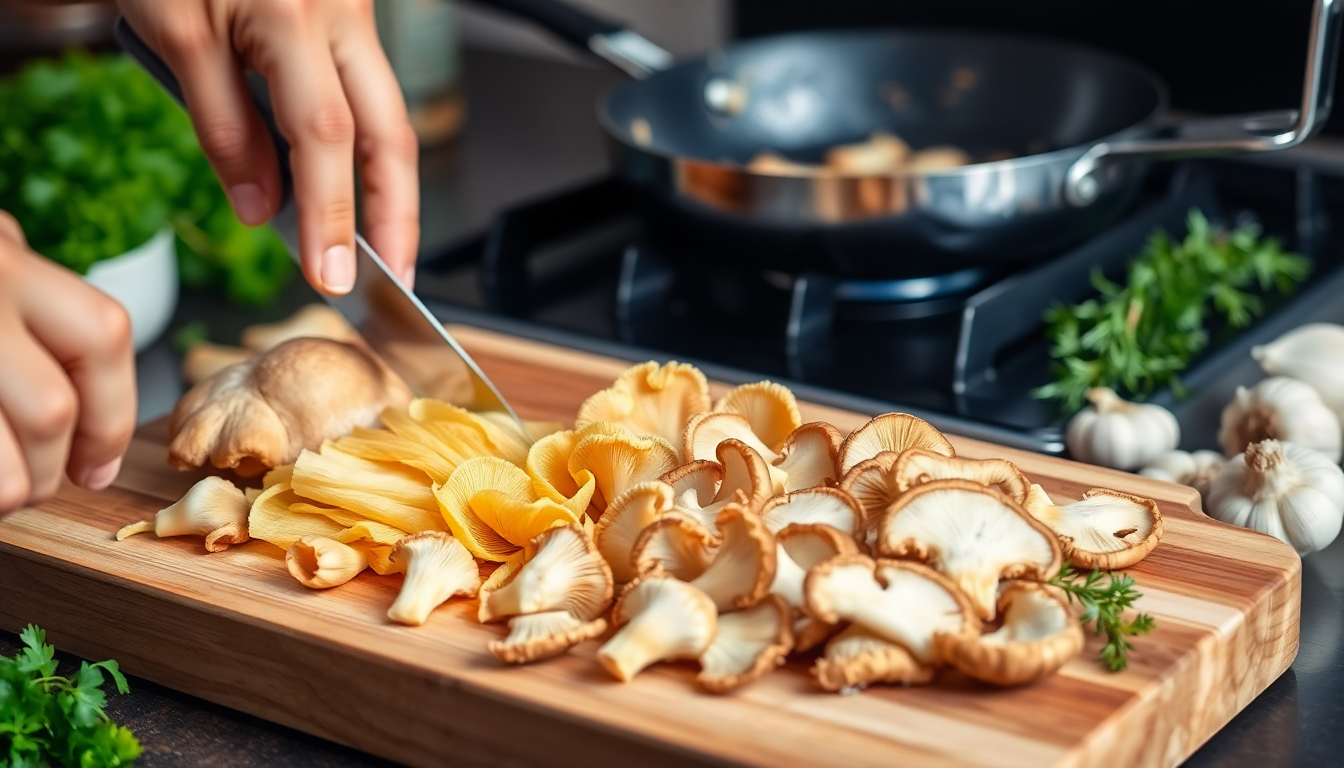
Introduction to Maitake Mushrooms
Maitake mushrooms (Grifola frondosa), also known as "hen of the woods" or "dancing mushrooms" in Japanese, are a culinary treasure that has gained popularity worldwide for their rich, earthy flavor and impressive nutritional profile. These distinctive fungi grow in feathery clusters at the base of oak, maple, and elm trees, resembling the fluffed-up feathers of a hen—hence one of their common names.
With their delicate, frilly caps and robust, woodsy flavor, maitake mushrooms have moved from being a traditional ingredient in Asian cuisine to a sought-after delicacy in kitchens around the globe. Whether you've found these mushrooms at your local farmers' market, specialty grocery store, or have been fortunate enough to forage them in the wild, knowing how to properly prepare them is essential to fully enjoy their unique characteristics.
This comprehensive guide will walk you through everything you need to know about preparing maitake mushrooms—from selection and cleaning to cooking techniques and storage methods. Whether you're a mushroom enthusiast or a curious home cook looking to expand your culinary horizons, this article will help you master the art of preparing these magnificent fungi.

Selecting Fresh Maitake Mushrooms
Before diving into preparation techniques, it's important to start with quality mushrooms. Here's what to look for when selecting fresh maitake mushrooms:
Visual Indicators of Freshness
-
Color: Fresh maitake mushrooms should display a range of gray to light brown coloration. Avoid any with dark or black discoloration, which may indicate aging or damage.
-
Structure: Look for clusters with firm, crisp fronds that are intact rather than broken or fragmented. The caps should appear plump and vibrant.
-
Texture: When gently touched, the mushroom should feel springy and resilient, not slimy or mushy.
-
Moisture Level: The mushrooms should appear relatively dry to slightly moist, but never wet or slimy.
Aroma
Fresh maitake mushrooms have a pleasant, earthy aroma. Avoid any that smell sour, fishy, or ammonia-like, as these are signs of spoilage.
Size Considerations
While larger clusters can be impressive, smaller to medium-sized clusters (about 4-8 inches in diameter) often have more tender texture and milder flavor, making them ideal for most cooking applications.
Wild vs. Cultivated
-
Wild maitake mushrooms tend to have a more intense flavor but may require more thorough cleaning due to their growth environment.
-
Cultivated maitake mushrooms are more consistent in quality and cleanliness but may have a somewhat milder flavor profile.
If purchasing from a market, ask whether the mushrooms are wild or cultivated to help inform your cleaning and cooking approach.
Cleaning Maitake Mushrooms
Proper cleaning is crucial for maitake mushrooms, especially wild-foraged specimens which can harbor dirt, debris, and occasionally small insects in their many crevices. Here's a step-by-step guide to cleaning maitake mushrooms:
For Cultivated Maitake Mushrooms
Most commercially available maitake mushrooms are already relatively clean and require minimal preparation:
-
Examine the cluster: Look for any visibly dirty spots or damaged areas.
-
Brush gently: Use a soft mushroom brush or a clean, dry cloth to remove any visible debris.
-
Trim if necessary: Cut away any discolored or damaged parts with a sharp knife.
-
Separation: Gently tear the cluster into smaller pieces by hand rather than cutting. This preserves their natural texture and allows the frilly edges to crisp up nicely when cooked.
For Wild Maitake Mushrooms
Wild maitake mushrooms require more thorough cleaning:
-
Initial inspection: Remove any obvious debris like leaves, twigs, or acorns caught in the cluster.
-
Trim the base: Use a sharp knife to cut away the tough, woody base and any heavily soiled portions.
-
Segment the cluster: Cut or break the mushroom into smaller, more manageable sections for easier cleaning.
-
Detailed cleaning: Inspect each piece carefully for dirt, insects, or damaged areas:
- Use a small, soft brush to remove dirt from crevices
- A small knife can help dislodge embedded debris
- For persistent dirt, use a barely damp paper towel to wipe the surface
-
Final inspection: Check each piece one last time before cooking.
The Water Question
There's ongoing debate about whether mushrooms should be washed with water. Here's the consensus for maitake mushrooms:
-
Minimal water exposure is best: Maitake mushrooms act like sponges and can absorb water quickly, which may result in soggy, less flavorful mushrooms when cooked.
-
If water is necessary: For particularly dirty specimens, you can quickly rinse under cold running water, but do so immediately before cooking and dry thoroughly with paper towels afterward.
-
Never soak: Soaking maitake mushrooms will waterlog them and dilute their flavor.
Some dark liquid may appear when handling maitake mushrooms—this is a natural polyphenol compound and is completely safe to consume. In fact, these compounds contribute to the mushroom's nutritional benefits.

Basic Preparation Techniques
Once cleaned, maitake mushrooms require some basic preparation before cooking:
Breaking Down the Cluster
-
Handle with care: Maitake mushrooms are relatively delicate, so handle them gently to maintain their unique structure.
-
Separate by hand: Rather than chopping with a knife, tear maitake clusters apart with your fingers. This preserves their natural shape and creates more surface area for browning.
-
Size consideration: Break the mushrooms into pieces based on your cooking method:
- For roasting or grilling: 2-3 inch pieces work well
- For sautéing: Smaller, 1-2 inch pieces are ideal
- For soups or stews: Consider both small pieces and some larger sections for textural variety
Core Management
The dense central core of maitake mushrooms can be:
- Used in stocks and broths
- Finely chopped for use in stuffings, dumplings, or veggie burgers
- Dried and ground into powder for seasoning
Don't discard this flavorful part of the mushroom!
Cooking Methods for Maitake Mushrooms
Maitake mushrooms are incredibly versatile and can be prepared using various cooking methods. Here are five excellent techniques to showcase their unique flavor and texture:
1. Sautéing Maitake Mushrooms
Sautéing is perhaps the most popular method for cooking maitake, as it highlights their natural flavors while creating beautiful textural contrast.
Basic Sautéed Maitake Recipe:
Ingredients:
- 8 oz maitake mushrooms, separated into pieces
- 2 tablespoons olive oil or butter
- 2 cloves garlic, minced
- 1 teaspoon fresh thyme leaves
- Salt and freshly ground pepper to taste
- Optional: 2 tablespoons white wine or broth for deglazing
- Fresh parsley for garnish
Method:
- Heat a large skillet over medium-high heat.
- Add oil or butter and allow to heat until shimmering.
- Add mushroom pieces in a single layer (work in batches if necessary to avoid overcrowding).
- Let mushrooms cook undisturbed for 2-3 minutes until golden brown on one side.
- Flip and cook for another 1-2 minutes.
- Add garlic and thyme, stir for 30 seconds until fragrant.
- Optional: Deglaze with wine or broth, scraping up any browned bits.
- Season with salt and pepper, garnish with parsley.
Pro Tip: For maximum browning and minimal moisture, avoid stirring too frequently and use a pan large enough that the mushrooms aren't crowded.
2. Roasting Maitake Mushrooms
Roasting intensifies the mushroom's nutty, umami flavors and creates crispy edges with tender interiors.
Simple Roasted Maitake Recipe:
Ingredients:
- 8 oz maitake mushrooms, separated into 2-inch pieces
- 2-3 tablespoons olive oil
- 3-4 sprigs fresh thyme
- 2-3 cloves garlic, smashed
- Salt and pepper to taste
Method:
- Preheat oven to 425°F (220°C).
- Line a baking sheet with parchment paper.
- Arrange mushroom pieces in a single layer, keeping some space between pieces.
- Drizzle with olive oil and sprinkle with salt and pepper.
- Scatter thyme sprigs and smashed garlic cloves among the mushrooms.
- Roast for 15 minutes, flip the pieces, then roast for another 10-15 minutes until edges are crispy and golden brown.
Pro Tip: For extra flavor, try adding a splash of soy sauce or balsamic vinegar in the last few minutes of roasting.
3. Grilling Maitake Mushrooms
Grilling imparts a wonderful smoky flavor that complements maitake's natural earthiness.
Grilled Maitake Recipe:
Ingredients:
- 8 oz maitake mushrooms, kept in larger clusters
- 2 tablespoons olive oil
- 1 teaspoon minced garlic
- 1 teaspoon dried herbs (rosemary, thyme, or oregano)
- Salt and pepper to taste
- Lemon wedges for serving
Method:
- Preheat grill to medium-high heat (about 400°F/200°C).
- Mix olive oil with garlic and herbs.
- Brush mushroom clusters on both sides with the oil mixture.
- Season with salt and pepper.
- Place mushrooms on the grill, starting with the cut side down.
- Grill for 3-4 minutes per side until nicely charred and tender.
- Serve with a squeeze of fresh lemon juice.
Pro Tip: For easier handling, consider skewering smaller pieces together or using a grill basket.
4. Deep-Frying Maitake Mushrooms
Deep-frying creates incredibly crispy maitake fritters that make excellent appetizers or sides.
Crispy Fried Maitake Recipe:
Ingredients:
- 8 oz maitake mushrooms, separated into small pieces
- 1 cup all-purpose flour
- 1 teaspoon garlic powder
- 1 teaspoon salt
- 1/2 teaspoon paprika
- 1/4 teaspoon black pepper
- 1 cup cold seltzer water or beer
- Oil for frying (vegetable or peanut)
- Dipping sauce of choice
Method:
- Heat oil in a deep pot to 350°F (175°C).
- Combine flour, garlic powder, salt, paprika, and pepper in a bowl.
- Whisk in cold seltzer or beer to create a light batter.
- Dip mushroom pieces in batter, allowing excess to drip off.
- Carefully drop into hot oil and fry until golden brown (about 2-3 minutes).
- Drain on paper towels and serve immediately with dipping sauce.
Pro Tip: For extra crispiness, try a tempura-style batter using rice flour or cornstarch.
5. Braising Maitake Mushrooms
Braising creates tender, flavor-infused mushrooms perfect for soups, stews, and sauces.
Braised Maitake Recipe:
Ingredients:
- 8 oz maitake mushrooms, separated into medium pieces
- 1 tablespoon olive oil
- 1 small onion, diced
- 2 cloves garlic, minced
- 1/2 cup vegetable or chicken broth
- 1/4 cup white wine (optional)
- 1 teaspoon soy sauce or tamari
- Fresh herbs (thyme, rosemary, or sage)
- Salt and pepper to taste
Method:
- Heat olive oil in a deep skillet or Dutch oven over medium heat.
- Add onion and sauté until translucent (about 3-4 minutes).
- Add garlic and cook for 30 seconds until fragrant.
- Add mushroom pieces and sauté for 2-3 minutes.
- Pour in broth, wine (if using), and soy sauce.
- Add herbs, reduce heat to low, and cover.
- Simmer gently for 15-20 minutes until mushrooms are tender and liquid is reduced.
- Season with salt and pepper to taste.
Pro Tip: This method works beautifully when combined with other vegetables or proteins for a complete one-pot meal.
Creative Serving Ideas
Maitake mushrooms can elevate numerous dishes with their unique flavor and texture. Here are some serving suggestions:
As a Side Dish
- Serve sautéed or roasted maitake alongside grilled steak or roasted chicken
- Pair with roasted vegetables for a plant-based side
In Main Courses
- Toss with pasta and a light cream or olive oil sauce
- Add to risotto for earthy depth of flavor
- Incorporate into grain bowls with quinoa or farro
- Use as a meat substitute in tacos or sandwiches
- Add to stir-fries with complementary vegetables
In Soups and Broths
- Add to miso soup for an umami boost
- Use in ramen or other Asian noodle soups
- Incorporate into creamy mushroom soup for texture contrast
As an Appetizer
- Serve crispy fried maitake with dipping sauce
- Include on a mushroom-focused charcuterie board
- Top crostini with sautéed maitake and goat cheese
Storing Maitake Mushrooms
Proper storage is essential to maintain the freshness and flavor of maitake mushrooms:
Fresh Storage
-
Paper bag method (recommended):
- Place unwashed mushrooms in a paper bag
- Fold the top to close
- Store in the refrigerator's vegetable crisper drawer
- Mushrooms will stay fresh for 5-7 days
-
Paper towel method:
- Wrap unwashed mushrooms loosely in a paper towel
- Place in a partially open plastic bag or container
- Store in the refrigerator
- Change the paper towel if it becomes damp
-
What to avoid:
- Never store in airtight plastic containers or sealed plastic bags
- Avoid washing before storage
- Keep away from strong-smelling foods as mushrooms absorb odors
Freezing Maitake Mushrooms
While fresh is best, freezing is an option for longer-term storage:
-
Pre-cooking method (recommended):
- Clean and separate mushrooms
- Sauté briefly in a little oil until just cooked (about 3-4 minutes)
- Cool completely
- Pack in airtight freezer containers or vacuum-sealed bags
- Label with date and freeze up to 6 months
-
Raw freezing method:
- Clean and separate mushrooms
- Arrange in a single layer on a baking sheet
- Freeze until solid (about 2 hours)
- Transfer to freezer bags, removing as much air as possible
- Use within 3 months
-
Best uses for frozen maitake:
- Add directly to soups and stews without thawing
- Incorporate into sauces and gravies
- Use in cooked dishes rather than as a standalone side
Drying Maitake Mushrooms
Drying is an excellent preservation method that concentrates flavor:
-
Oven-drying method:
- Clean and separate mushrooms into thin pieces
- Arrange in a single layer on a baking sheet
- Dry in oven at lowest setting (usually 170°F/77°C) with door slightly ajar
- Check regularly until completely dry and crisp (4-6 hours)
-
Dehydrator method:
- Clean and separate mushrooms
- Arrange on dehydrator trays without overlapping
- Dry at 110-120°F (43-49°C) until completely crisp (6-8 hours)
-
Storing dried maitake:
- Cool completely before storage
- Store in airtight containers or vacuum-sealed bags
- Keep in a cool, dark place for up to 6 months
- For longer storage, keep in the freezer (up to 1 year)
-
Using dried maitake:
- Rehydrate in warm water or broth for 20-30 minutes
- Grind into powder for seasoning soups, stews, and sauces
- Add directly to slow-cooked dishes

Flavor Pairings for Maitake Mushrooms
Maitake mushrooms pair beautifully with certain ingredients. Here are some excellent flavor companions:
Herbs & Spices
- Thyme
- Rosemary
- Sage
- Garlic
- Black pepper
- Smoked paprika
Fats
- Butter
- Olive oil
- Sesame oil
- Duck fat
Alcoholic Additions
- White wine
- Dry sherry
- Sake
- Brandy or cognac
Umami Boosters
- Soy sauce
- Miso
- Parmesan cheese
- Worcestershire sauce
Complementary Vegetables
- Onions and shallots
- Leeks
- Spinach
- Asparagus
- Sweet corn
Troubleshooting Common Issues
Even experienced cooks can encounter challenges when preparing maitake mushrooms. Here are solutions to common problems:
Waterlogged Mushrooms
- Problem: Mushrooms release too much liquid when cooking, preventing browning
- Solution: Cook in smaller batches, use a larger pan, and avoid washing right before cooking
Tough Texture After Cooking
- Problem: Mushrooms remain chewy or tough after cooking
- Solution: Ensure longer cooking time for larger pieces, or consider braising for more tender results
Burnt Edges Before Interior Is Cooked
- Problem: Outside burns while inside remains raw
- Solution: Lower cooking temperature and increase cooking time; tear mushrooms into more uniform pieces
Bitter Taste
- Problem: Finished dish has unexpected bitterness
- Solution: Ensure you've removed any discolored or damaged parts before cooking; balance with a touch of acid (lemon juice, wine) or honey
Health Considerations and Nutritional Benefits
While primarily valued for their culinary attributes, maitake mushrooms also offer impressive health benefits:
Nutritional Highlights
- Low in calories
- High in fiber
- Good source of protein
- Rich in B vitamins, especially niacin
- Contains minerals like copper, potassium, and zinc
- Exceptional source of vitamin D (especially wild varieties)
Potential Health Benefits
- Supports immune function
- May help maintain healthy blood sugar levels
- Contains antioxidants that combat oxidative stress
- Supports heart health through beneficial beta-glucans
Special Considerations
- Medical Interactions: Maitake may interact with certain medications, including blood thinners and diabetes medications. Consult a healthcare provider if you're on medication.
- Allergies: While rare, some individuals may be allergic to maitake mushrooms. Start with small amounts if trying for the first time.
- Wild Harvesting: Never consume wild mushrooms unless positively identified by an expert. While maitake has few toxic look-alikes, proper identification is essential.
Conclusion: Mastering Maitake Preparation
Maitake mushrooms offer a world of culinary possibilities with their unique texture and deep, earthy flavor. From simple sautés to complex braises, these versatile fungi can transform everyday dishes into gourmet experiences.
By following the guidelines in this comprehensive guide—selecting quality specimens, cleaning them properly, choosing appropriate cooking methods, and storing them correctly—you'll be well-equipped to make the most of maitake mushrooms in your cooking.
Whether you're a seasoned mushroom enthusiast or just beginning to explore beyond button mushrooms, maitake offers an accessible yet sophisticated ingredient that rewards a little care and attention with exceptional flavor. Happy cooking!


Share:
How to Cook Maitake Mushrooms: A Delicious and Easy Guide
Maitake Mushroom Nutrition Facts Unveiled