




Quick Answer: No, a mushroom is not a producer. Mushrooms are decomposers, organisms that break down dead organic matter and return essential nutrients to the soil. Unlike plants, mushrooms cannot photosynthesize because they lack chlorophyll. They belong to the kingdom Fungi and play one of the most critical roles in every ecosystem on Earth.
If you have ever looked at a mushroom growing on a rotting log and wondered whether it was making its own food like a plant, you are not alone. "Is a mushroom a producer?" is one of the most commonly asked questions in biology classrooms and online searches alike.
The short answer is no. Mushrooms are not producers. They are decomposers, and that distinction matters more than most people realize. Understanding where fungi sit in the food chain changes how you think about soil health, nutrient cycling, and even how you grow mushrooms at home.
In this guide, we will break down exactly what producers, consumers, and decomposers are, why mushrooms fall firmly into the decomposer category, and why that role makes them arguably the most important organisms in any ecosystem.
What Is a Producer in an Ecosystem?
A producer is any organism that makes its own food from inorganic substances. In nearly every ecosystem on Earth, producers form the base of the food chain.
The most common producers are green plants. They use a process called photosynthesis to convert sunlight, water, and carbon dioxide into glucose (sugar) and oxygen. This is possible because plants contain chlorophyll, the green pigment that captures light energy.
Other producers include:
- Algae: photosynthetic organisms found in aquatic environments
- Cyanobacteria: microscopic organisms sometimes called blue-green algae
- Certain chemosynthetic bacteria: organisms near deep-sea vents that convert chemical energy into food
The key characteristic of every producer is autotrophy, the ability to generate energy without consuming other organisms. Producers are also called autotrophs for this reason.
Why Mushrooms Are Not Producers
Mushrooms fail the single most important test for being a producer: they cannot make their own food.
Here is why:
- No chlorophyll. Mushrooms do not contain chlorophyll. Without it, photosynthesis is impossible.
- No photosynthesis. Since they cannot capture sunlight, mushrooms have zero ability to convert light energy into chemical energy.
- Heterotrophic nutrition. Mushrooms obtain all their nutrients by absorbing organic compounds from their environment, specifically from dead or decaying material.
Think of it this way. A plant stands in sunlight and builds sugar from scratch. A mushroom sits on a dead tree and breaks that tree down to extract the sugars and nutrients already locked inside. These are fundamentally different survival strategies.
This is exactly why mushrooms often appear in dark, damp environments. They do not need light to grow because they are not using light for energy. If you have ever grown mushrooms using a mushroom grow kit, you already know this firsthand, mushrooms thrive in low-light conditions that would kill most plants.
Mushrooms Are Decomposers: Here Is How They Work
So if mushrooms are not producers, what are they? They are decomposers, organisms that break down dead organic matter into simpler substances.
Here is the step-by-step process:
- Spore germination. A mushroom spore lands on a suitable substrate (dead wood, leaf litter, compost).
- Mycelium growth. The spore germinates and sends out a network of thread-like structures called mycelium.
- Enzyme secretion. The mycelium releases powerful enzymes, including cellulase and ligninase, that break down cellulose and lignin in plant cell walls.
- Nutrient absorption. The broken-down molecules (carbon, nitrogen, phosphorus) are absorbed directly through the mycelium walls.
- Fruiting. When conditions are right, the mycelium produces a fruiting body, the mushroom you see above ground.
This decomposition process is not just a survival mechanism for fungi. It is the engine that drives nutrient cycling across the entire planet. Without decomposers like mushrooms, dead trees, fallen leaves, and animal remains would pile up indefinitely. Nutrients would remain locked in dead tissue and never return to the soil.
According to research published by the National Geographic Society, decomposers are responsible for recycling roughly 90% of the nutrients in forest ecosystems. Fungi are the primary decomposers in most terrestrial environments because they are among the few organisms capable of breaking down lignin, the tough structural polymer in wood.
Producer vs. Consumer vs. Decomposer: Where Mushrooms Fit
One of the most common related questions is: is a mushroom a producer, consumer, or decomposer? Let us compare all three roles clearly.
| Role | Definition | Energy Source | Examples |
|---|---|---|---|
| Producer | Makes its own food (autotroph) | Sunlight or chemical energy | Plants, algae, cyanobacteria |
| Consumer | Eats other organisms (heterotroph) | Other living organisms | Animals, insects, humans |
| Decomposer | Breaks down dead matter (heterotroph) | Dead organic material | Mushrooms, bacteria, earthworms |
Mushrooms sit in the decomposer column. They do not produce food like plants. They also do not hunt or eat other living organisms like consumers do. Instead, they specialize in breaking down what is already dead.
Some fungi blur the lines slightly. Mycorrhizal fungi form symbiotic relationships with living plant roots, exchanging nutrients for sugars. Parasitic fungi attack living hosts. But the vast majority of mushroom species, and all the common ones you encounter in forests and gardens, function as saprotrophic decomposers.
The Ecological Importance of Mushroom Decomposers
Nutrient Recycling
Every atom of carbon, nitrogen, and phosphorus in a dead tree must be returned to the soil for new plants to use it. Mushrooms are the primary agents of this recycling in forest ecosystems. Without them, soil would become nutrient-depleted within years.
Soil Formation
As mushrooms break down organic matter, they create humus, the dark, nutrient-rich component of healthy soil. Humus improves soil structure, water retention, and microbial diversity. Healthy soil starts with healthy fungal activity.
Carbon Cycling
Fungi decompose an estimated 85 gigatons of carbon from dead plant material annually. This carbon cycling is a fundamental part of the global carbon cycle and directly influences atmospheric CO2 levels.
Supporting the Food Web
Decomposers like mushrooms do not sit at one level of the food chain. They connect to every level. They break down dead producers (plants), dead primary consumers (herbivores), dead secondary consumers (predators), and waste products from all organisms. They are the universal recyclers.
If you are interested in seeing this decomposition process up close, growing your own mushrooms is one of the best ways to understand it. Our Little Mushroom Growing Guide walks you through the entire process from tiny pins to harvest-ready fungi.
Can Mushrooms Produce Their Own Food?
No. This is the fundamental biological reason mushrooms are not producers. Let us be precise about why:
- Producers use photosynthesis (or chemosynthesis) to build organic molecules from inorganic raw materials.
- Mushrooms use extracellular digestion, they secrete enzymes outside their body to break down existing organic molecules, then absorb the results.
This is a completely different metabolic strategy. Mushrooms are obligate heterotrophs. They physically cannot survive without an external source of organic carbon. Place a mushroom in a sealed container with only sunlight, water, and CO2, and it will die. Place a plant in the same container, and it will thrive.
This also explains why mushroom cultivation always requires a substrate, a carbon-rich material like straw, sawdust, or grain for the mycelium to feed on. The LYKYN Automated Mushroom Fruiting Chamber is designed around this principle, providing the perfect environment for mushrooms to decompose their substrate efficiently while maintaining ideal humidity and airflow.
Types of Mushroom Decomposers
Saprotrophic Fungi (Primary Decomposers)
These are the classic decomposers. They feed exclusively on dead organic matter such as fallen trees, leaf litter, and dead animals. Most edible mushrooms (oyster, shiitake, button) are saprotrophic.
Mycorrhizal Fungi (Symbiotic)
These form partnerships with living plant roots. The fungus provides minerals and water to the plant; the plant provides sugars to the fungus. While not strictly decomposers, they still break down organic material in the soil. Examples include chanterelles and truffles.
Parasitic Fungi
These attack living hosts such as trees, insects, or other fungi. They weaken or kill the host and then decompose it. Honey fungus (Armillaria) is a well-known parasitic species.
All three types are heterotrophs. None of them are producers. For a deeper look at how different mushroom types affect your health, check out our guide on mushroom coffee side effects, another area where understanding fungi biology makes a real difference.
Common Questions About Mushrooms in the Food Chain
The producer-versus-decomposer question is the most common one, but readers often want clearer answers to a handful of specific food-chain questions. Here are the direct answers, each with the biology behind it.
Are Mushrooms Decomposers? Yes, and Here Is Why
Mushrooms are decomposers because they obtain energy by breaking down dead organic material rather than by photosynthesis or by eating live organisms. Mushrooms are decomposers in every standard ecological model used in middle school and high school biology, and the same answer holds in college mycology textbooks. The reason is simple: a mushroom secretes digestive enzymes outside its body, breaks down dead matter, and absorbs the resulting nutrients. That is the textbook definition of a decomposer.
Are Fungi Decomposers? Almost Every Species
Most fungi are decomposers, including the mushrooms you see in forests, on logs, and in your kitchen. Saprotrophic fungi feed on dead organic matter and form the largest group within the fungus kingdom. Mycorrhizal fungi form symbiotic relationships with living plants, and parasitic fungi attack living hosts, but both groups still rely on heterotrophic nutrition. So when someone asks 'are fungi decomposers,' the honest answer is yes for the vast majority of species, with two minor exceptions that still cannot photosynthesize.
Why Are Mushrooms Decomposers?
Mushrooms are decomposers because they lack chlorophyll, cannot photosynthesize, and cannot hunt or graze on living organisms. Without those metabolic options the only way left to obtain energy is to break down material that is already dead. This is why mushrooms thrive on rotting logs, leaf litter, and compost piles: those substrates are full of carbon, nitrogen, and phosphorus locked inside dead tissue, waiting for a decomposer like a mushroom to release them.
Mushroom: Autotroph or Heterotroph?
A mushroom is a heterotroph, never an autotroph. Autotrophs make their own food from inorganic raw materials using either sunlight (photosynthesis) or chemical energy (chemosynthesis). Mushrooms cannot do either. Every mushroom species, including saprotrophic, mycorrhizal, and parasitic fungi, depends on external organic carbon, which is the textbook definition of a heterotroph. If a biology test asks whether a mushroom is an autotroph or heterotroph, the answer is heterotroph.
Are Mushrooms Detritivores?
Mushrooms are not detritivores in the strict sense. A detritivore (think earthworms, millipedes, woodlice) physically ingests dead material and digests it internally. A mushroom does the opposite: it secretes enzymes onto the dead material and absorbs the broken-down molecules through its mycelium walls. Because both groups eat dead matter, casual writing sometimes calls mushrooms detritivores, but the precise biological term for mushrooms is saprotroph or saprobic decomposer.
How Do Mushrooms Obtain Energy Without Sunlight?
Mushrooms obtain energy through extracellular digestion. The mycelium, which is the underground or in-substrate body of the fungus, releases enzymes that break complex polymers like cellulose and lignin into simple sugars and amino acids. Those small molecules diffuse back into the mycelium where the cells use them for growth and to fuel the production of fruiting bodies. This is exactly the process that an indoor mushroom grower watches happen inside a substrate block: the mycelium colonizes the block, breaks the substrate down, and a few weeks later mushrooms appear. If you want to see a decomposer in action, the easiest way is to grow a few mushrooms yourself with a sealed environment like the Lykyn Smart Mushroom Grow Box, where the mycelium decomposes the block in front of you across two to three weeks.
Frequently Asked Questions
Is a mushroom a producer, consumer, or decomposer?
A mushroom is a decomposer. It breaks down dead organic matter using enzymes secreted by its mycelium network. Mushrooms are not producers because they lack chlorophyll and cannot photosynthesize. They are not consumers because they do not eat other living organisms.
Why is a mushroom not considered a producer?
Mushrooms lack chlorophyll, the pigment necessary for photosynthesis. Without photosynthesis, they cannot convert sunlight into food. Instead, mushrooms obtain energy by breaking down dead organic material, making them decomposers, not producers.
Is a mushroom a decomposer or a producer?
A mushroom is always a decomposer. Producers create their own food from inorganic substances using sunlight or chemical energy. Mushrooms cannot do this. They survive entirely by absorbing nutrients from decaying matter.
What role do mushrooms play in the food chain?
Mushrooms serve as decomposers in the food chain. They break down dead organisms at every trophic level, from dead plants to dead animals, and return nutrients like carbon, nitrogen, and phosphorus to the soil. This nutrient recycling is essential for new plant growth and keeps the entire food web functioning.
Are all fungi decomposers?
Most fungi are decomposers, but not all. Saprotrophic fungi (the largest group) feed exclusively on dead organic matter. Parasitic fungi feed on living hosts, and mycorrhizal fungi form mutualistic relationships with plant roots. However, every member of the fungus kingdom is a heterotroph, so none of them are producers and none of them photosynthesize. When biology textbooks discuss fungi as a decomposer category, they are talking about that saprotrophic majority.
Can mushrooms survive without dead organic matter?
No. Mushrooms are obligate heterotrophs, meaning they require an external source of organic carbon to survive. Without a substrate of dead or decaying material to feed on, mushroom mycelium cannot grow or produce fruiting bodies.
How do mushrooms get their energy if they are not producers?
Mushrooms get energy through extracellular digestion. Their mycelium secretes enzymes (cellulase, ligninase, protease) that break down complex organic molecules outside the fungal body. The resulting simple sugars, amino acids, and minerals are then absorbed directly through the cell walls.
Conclusion
So, is a mushroom a producer? Absolutely not. Mushrooms are decomposers, and that is not a lesser role. It is one of the most critical functions in any ecosystem.
Without mushroom decomposers, dead material would accumulate, nutrients would stay locked away, and the soil that feeds every plant on the planet would become barren. Fungi are the hidden engine that keeps ecosystems running.
Here are the key takeaways:
- Mushrooms lack chlorophyll and cannot photosynthesize, they are not producers
- A decomposer mushroom breaks down dead organic matter using enzymes secreted by its mycelium
- This process recycles carbon, nitrogen, and phosphorus back into the soil
- Decomposers connect to every level of the food chain, not just one
- Saprotrophic, mycorrhizal, and parasitic fungi are all heterotrophs
If this topic sparked your curiosity about how fungi actually grow and develop, why not experience the decomposition process yourself? Explore the Lykyn Smart Mushroom Grow Box and watch mycelium break down substrate in real time inside a fully automated chamber. It is one of the most fascinating things in nature.
Related reading
Ready to grow?
Skip the substrate guesswork. Start with the smart fruiting chamber that handles humidity, airflow, and lighting for you.
Start with the Lykyn Grow Box →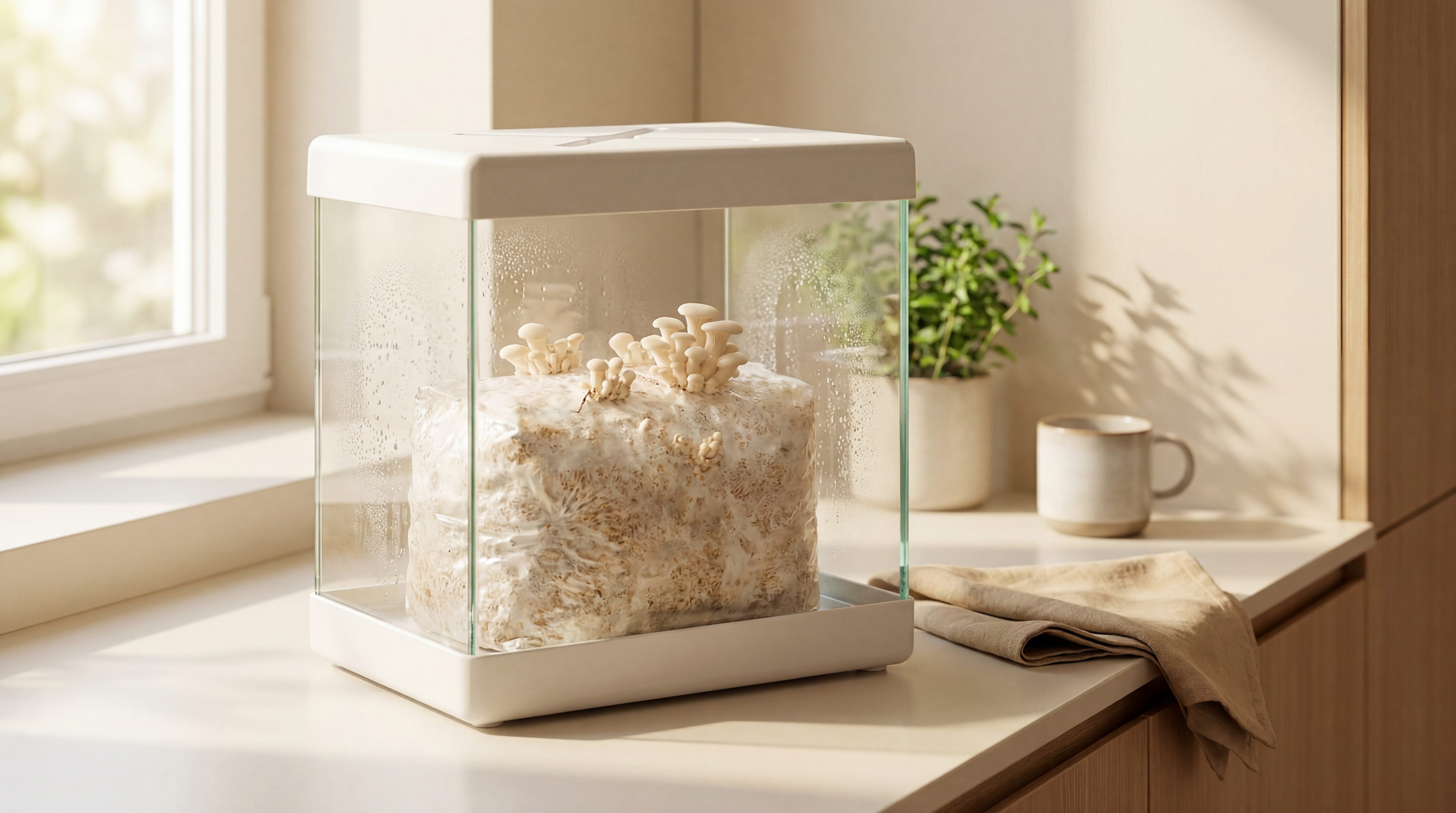


Share:
Foraging Mushrooms: Your Complete Beginner's Guide to Safe and Successful Mushroom Hunting
The Incredible Benefits of Eating Mushrooms: Your Complete Guide to Nature's Superfood