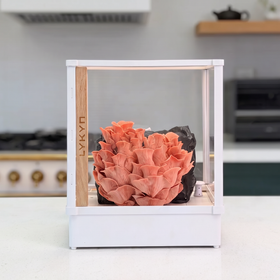



The parts of a mushroom most people can name (cap, stem, gills) cover only a fraction of what's actually happening when a mushroom grows. A mushroom is the fruiting body of a fungus, the way an apple is the fruiting body of an apple tree, and like fruit, it's the visible structure that handles reproduction. The rest of the organism lives underground or inside its substrate as a network of threads called mycelium.
This guide walks through every part you can see on a mature mushroom, plus the underground parts that produce it, with the proper mycological terms and what each part actually does.
The cap (pileus)

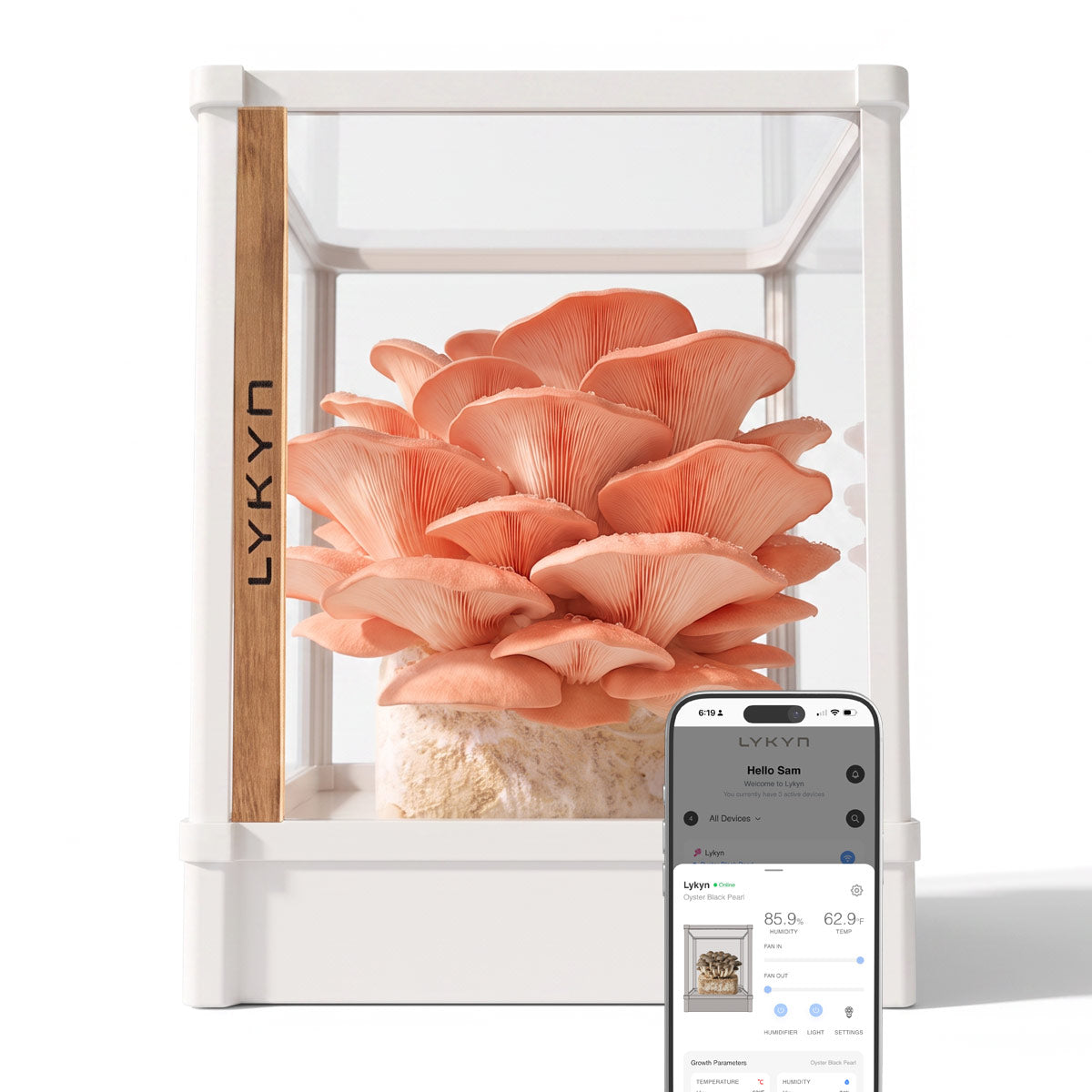
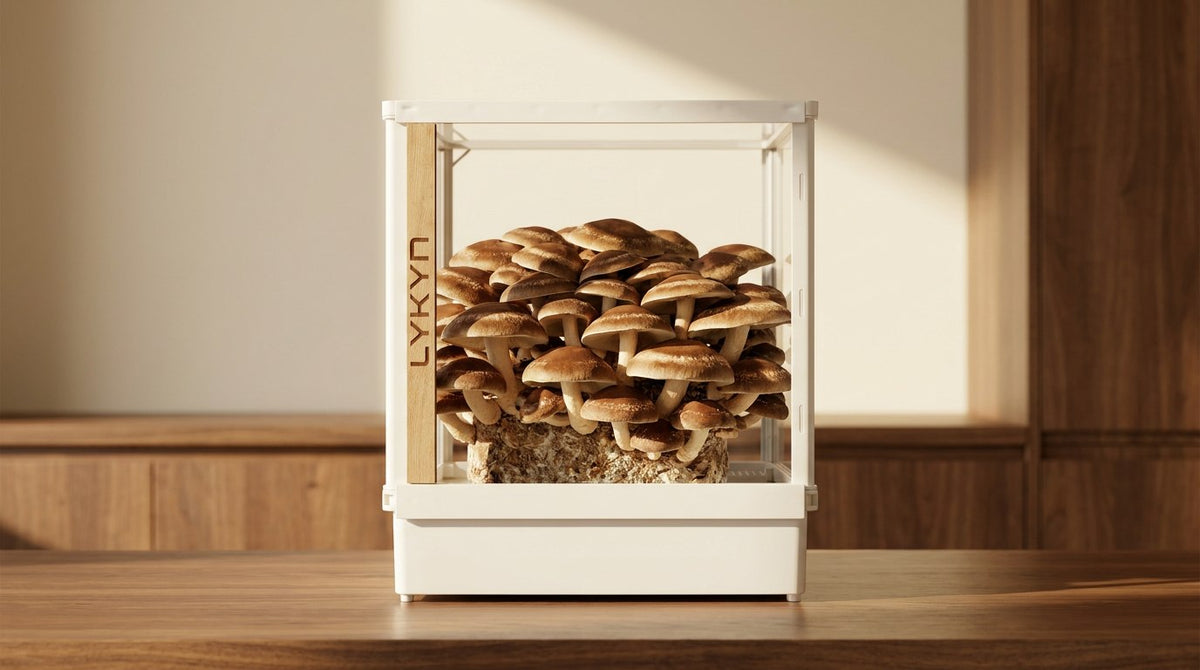
Smart Chamber. Bone White Single
- 2.8L tank, 90% humidity automatic
- App-controlled, plug-and-play
- 6 lb block ceiling, in stock

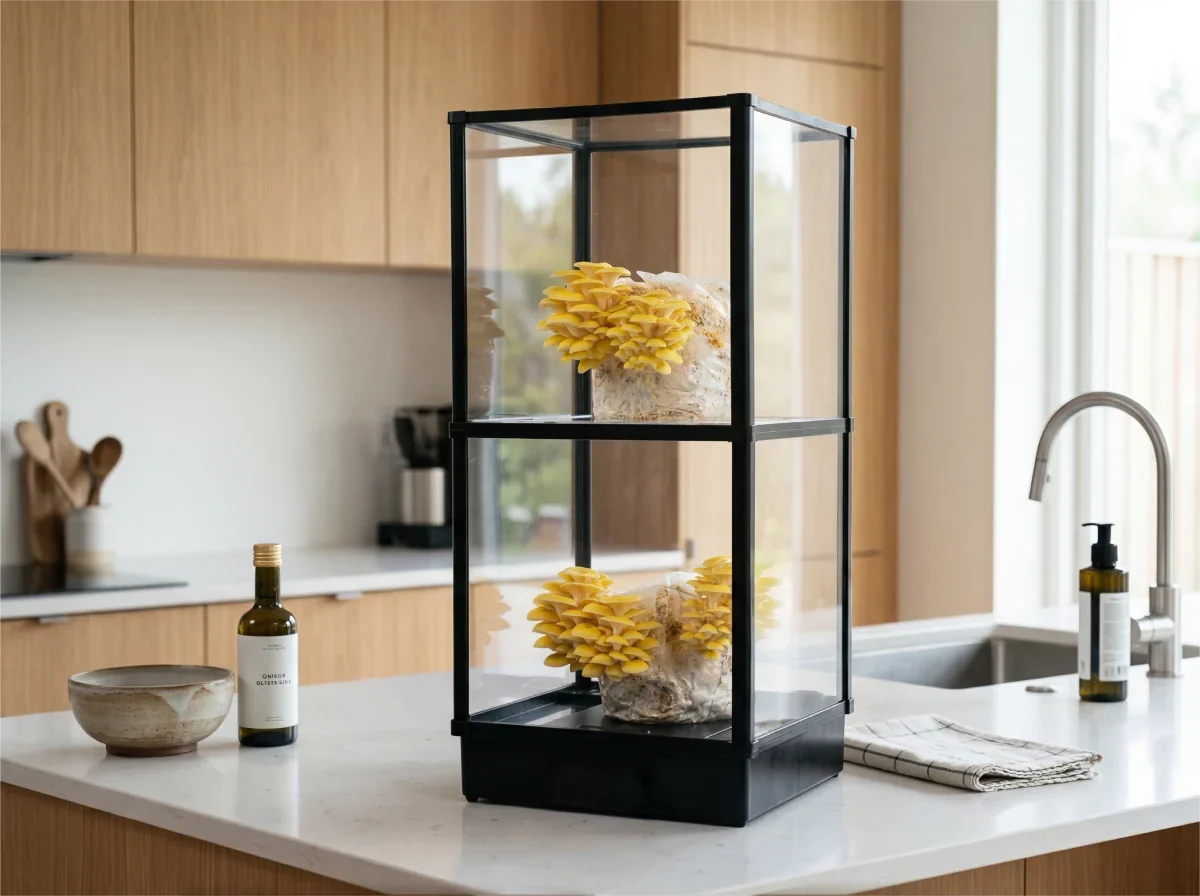
Smart Chamber. Obsidian Black Single
- Same hardware as Bone White
- Matte black premium finish
- Pairs with any kitchen palette

The umbrella-shaped top of the mushroom. The cap's job is to protect the spore-bearing surface underneath from rain, sun, and predators while keeping the reproductive structures positioned for optimal spore dispersal.
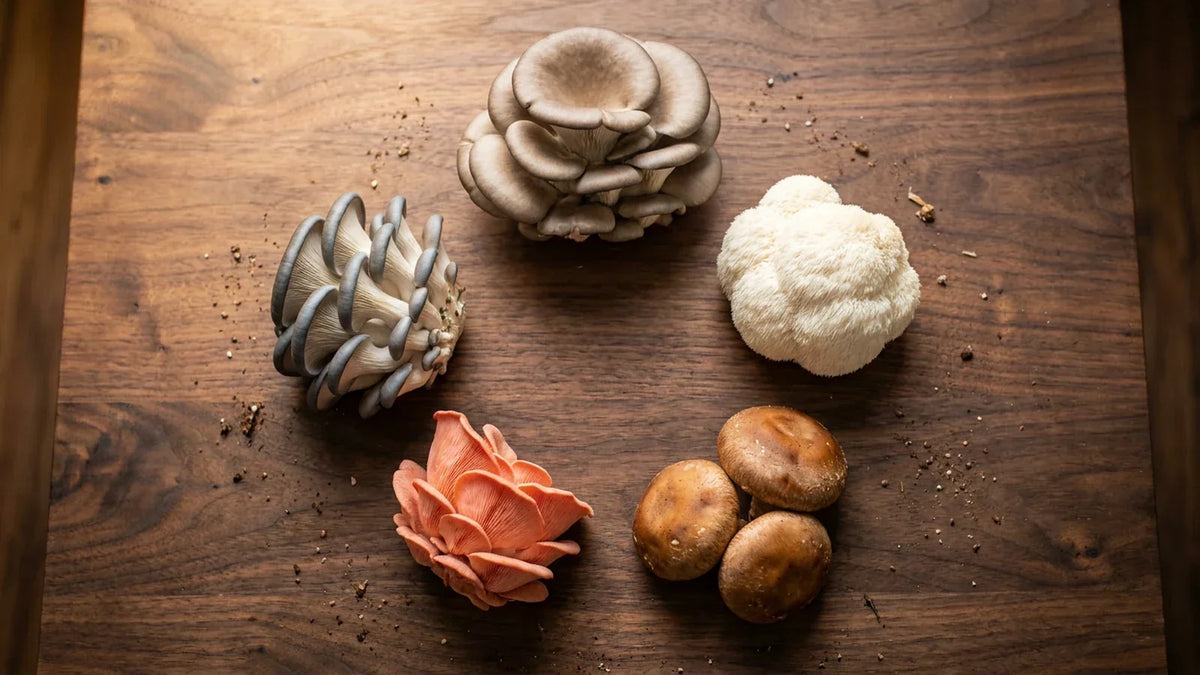
Cap shape varies enormously between species. Buttons start out as small spheres and flatten as they mature. Oyster mushrooms have fluted, fan-shaped caps. Morels have honeycomb-pitted caps. Cup fungi (Peziza) inverse the cap into a literal cup. Each shape is an evolutionary solution to releasing spores efficiently.
The surface of the cap can be smooth, scaly (squamulose), warty, fibrous, or sticky (viscid). Cap color and texture are key identification features for foragers.
The gills (lamellae) or alternative spore-bearing surfaces
Most familiar mushrooms (like the button, cremini, portobello, and shiitake) have gills, the thin plates that run from the stem out to the edge of the cap underneath. Spores form on the surface of the gills and drop down into the air for dispersal. Gill color changes as spores mature, which is why a young gill might be pink or pale and an old one is dark brown or black.
Not all mushrooms have gills. Boletes have a spongy layer of pores. Polypores have tougher tubes. Hedgehog mushrooms have tiny spines. Puffballs hold their spores inside a sealed structure that releases them in a cloud when disturbed. Cup fungi line their inner surface with the spore-bearing layer. Each variation is a different solution to the same problem (release spores into the wind), and the type of spore surface is one of the first things mycologists examine for identification.
The stem (stipe)
The stem (also called the stipe) lifts the cap up off the ground so spores have a clear path to the wind. Not all mushrooms have a prominent stem. Oyster mushrooms have very short stems, and shelf fungi (bracket fungi) have no stem at all. Truffles, which fruit underground, have no stem because they're not trying to disperse spores into the air at all (animals dig them up and disperse the spores instead).
The stem may be hollow or solid, smooth or fibrous, ringed or smooth, scaly or bare. Some stems have a ring (the annulus) around the upper part, which is the remnant of a tissue that connected the edge of the young cap to the stem and broke as the cap expanded.
The annulus (ring)
The ring around the stem comes from the partial veil, a sheet of tissue that protected the developing gills while the mushroom was young. As the cap expands, the partial veil tears away from the edge of the cap and often leaves a ring on the stem.
Some species have prominent rings (Amanita, certain Agaricus species). Others have rings that disappear as the mushroom ages. Some species never have a partial veil at all (oyster mushrooms, chanterelles).
The volva (cup at the base)
Some species, particularly Amanita and certain other genera, grow inside a universal veil, a kind of eggshell-like membrane that ruptures as the mushroom emerges. The remnant of this veil at the base of the stem is called the volva, and it often looks like a small cup or a torn sac surrounding the lower stem.

Fuel Your Mushroom Journey
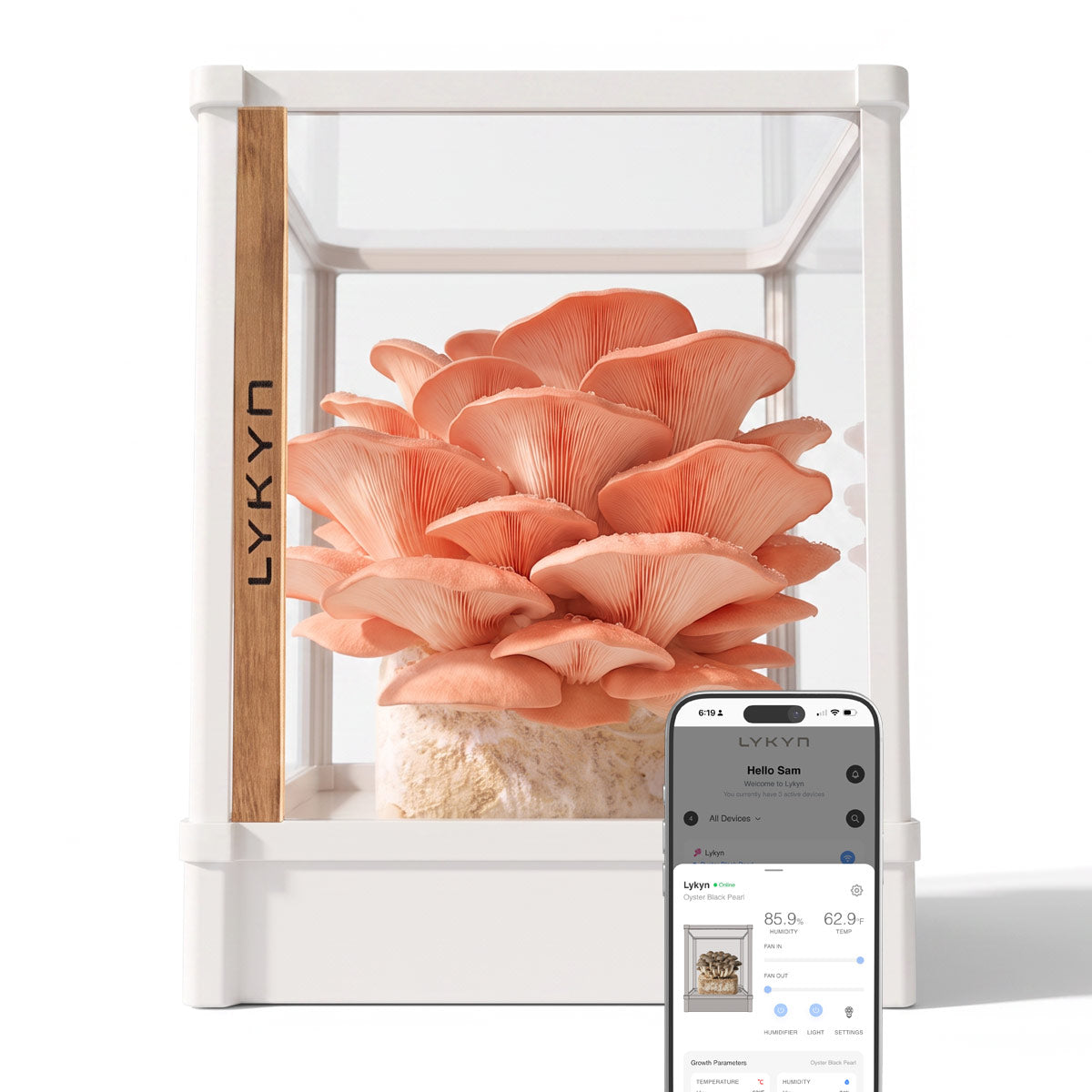
Smart Mushroom Grow Chamber
Plug-and-play smart chamber with humidity, light, and airflow dialed in for every species. Beginners harvest their first flush in days, not months.
Add to cart $299The volva is a critical identification feature. The deadly Amanita phalloides (death cap) and Amanita virosa (destroying angel) both have prominent volvas. Failing to look for one and instead misidentifying a deadly mushroom as a safe Agaricus is the cause of most fatal mushroom poisonings. Always dig up the base of the stem on any wild mushroom you're trying to identify.
The hymenium
This is the technical name for the spore-producing surface, whether it's gills, pores, spines, or smooth. Spores form on specialized cells called basidia (for basidiomycetes like most edible mushrooms) or asci (for ascomycetes like morels and truffles). The hymenium is the engine room of reproduction.
The spores
Spores are the reproductive units, equivalent to seeds in flowering plants. They're released by the millions or billions from a single fruiting body. Each spore is microscopic, light enough to drift on air currents, and capable of germinating into new mycelium if it lands on suitable substrate.
Spore color is a key identification trait. To see it, place a mushroom cap gill-side down on a piece of white paper, cover with a glass, and wait six to twelve hours. The spores fall onto the paper in a print that reveals their color (white, pink, brown, black, or other shades depending on the species). Spore prints have been a forager's diagnostic tool for over a century.
The mycelium (underground network)
This is the part of the fungus most people forget. The mushroom you pick is essentially the apple. The tree is the mycelium, a vast network of fine white threads (hyphae) that spread through soil, wood, or substrate. Mycelium is the actual organism that's been alive sometimes for years, decades, or in extreme cases centuries before it produces a fruiting body.
Mycelium breaks down organic material, absorbs nutrients, exchanges signals with plant roots in symbiotic relationships, and forms vast underground communities that can stretch across acres. The "humongous fungus" in Oregon's Malheur National Forest is a single Armillaria mycelium covering nearly 2,400 acres, estimated at over 2,400 years old.
The primordium and pinning
Before a mushroom is recognizable, it starts as a tiny knot of mycelium called a primordium. As it grows, it forms a pin (an early upright stage that looks like a small white spike). The pin develops into the recognizable cap-and-stem structure as cells differentiate.
If you've ever grown mushrooms at home, you've watched pinning happen in real time. With a mushroom grow kit, the first signs of fruiting are small pin-heads emerging from the substrate, usually within 7 to 14 days of starting the kit. The mushroom doubles in size every 24 hours during peak growth, and you can watch the entire anatomy form (cap, stem, gills) over the course of a week.
Why anatomy matters
Knowing the parts of a mushroom isn't just trivia. It's the foundation of identification, which matters for foragers, growers, chefs, and anyone who wants to understand what they're eating. Two mushrooms can look similar from the top but differ entirely in spore color, volva presence, or gill attachment. That difference can be the line between a great risotto and a hospital visit.
For growers, anatomy reveals where each species likes to be cultivated (cap-down, sideways, in a fruiting chamber, on logs), which informs the home growing setup. Mushrooms aren't decorative objects; they're an organism with structure, biology, and very specific requirements for thriving.




Share:
Mushroom Tart: 45-Minute Recipe With a Crisp, Reliable Crust
Mushroom Tart: 45-Minute Recipe With a Crisp, Reliable Crust