




Growing mushrooms at home has never been more popular or accessible. Whether you're interested in cultivating functional varieties like Lion's Mane for cognitive health or gourmet mushrooms like Shiitake for your kitchen, the right growing kit makes all the difference between a bountiful harvest and a frustrating experience.
With the mushroom market booming and more people seeking sustainable, fresh food sources, we've thoroughly researched and tested the top mushroom growing kits available in 2026. This complete review will help you pick the right kit. It is based on your skill level, space, budget, and growing goals.

What Makes a Great Mushroom Growing Kit?
Before diving into our top picks, let's understand what separates exceptional kits from disappointing ones. The best mushroom growing kits share several key characteristics that ensure successful harvests for both beginners and experienced cultivators.
Ease of Use: Top-tier kits require minimal setup and maintenance. You shouldn't need advanced mycology knowledge to get started. The best systems guide you through each step with clear instructions or smart automation.
Contamination Resistance: Quality kits use pre-sterilized substrates and proper filtration systems to minimize contamination risks. Failed grows often result from contamination, not user error.
Yield Potential: A great kit should produce multiple flushes of mushrooms, giving you the best return on investment. Look for kits that can yield several harvests from a single setup.
Environmental Control: Mushrooms need specific humidity levels, fresh air exchange, and temperature ranges. The best kits either automate these conditions or make them simple to maintain manually.
Species Compatibility: Versatile kits accommodate various mushroom types, allowing you to experiment with different varieties from Lion's Mane to Oyster mushrooms.
Our Testing Methodology
We evaluated each kit based on several critical factors: setup difficulty, maintenance requirements, contamination rates, total yield across multiple flushes, user experience, value for money, and customer support quality. Our team tested these kits over multiple growing cycles to provide authentic, experience-based recommendations.
1. LYKYN Smart Mushroom Grow Chamber – Best Overall Smart Growing System
Price Range: Premium
Skill Level: Beginner to Advanced
Best For: Anyone wanting automated, hassle-free mushroom cultivation with professional results
The LYKYN Smart Mushroom Grow Kit represents the gold standard in home mushroom cultivation for 2026. Unlike failed crowdfunding projects that left backers disappointed, LYKYN actually delivered a fully functional, consumer-ready product that lives up to its promises.
What Makes LYKYN Stand Out:
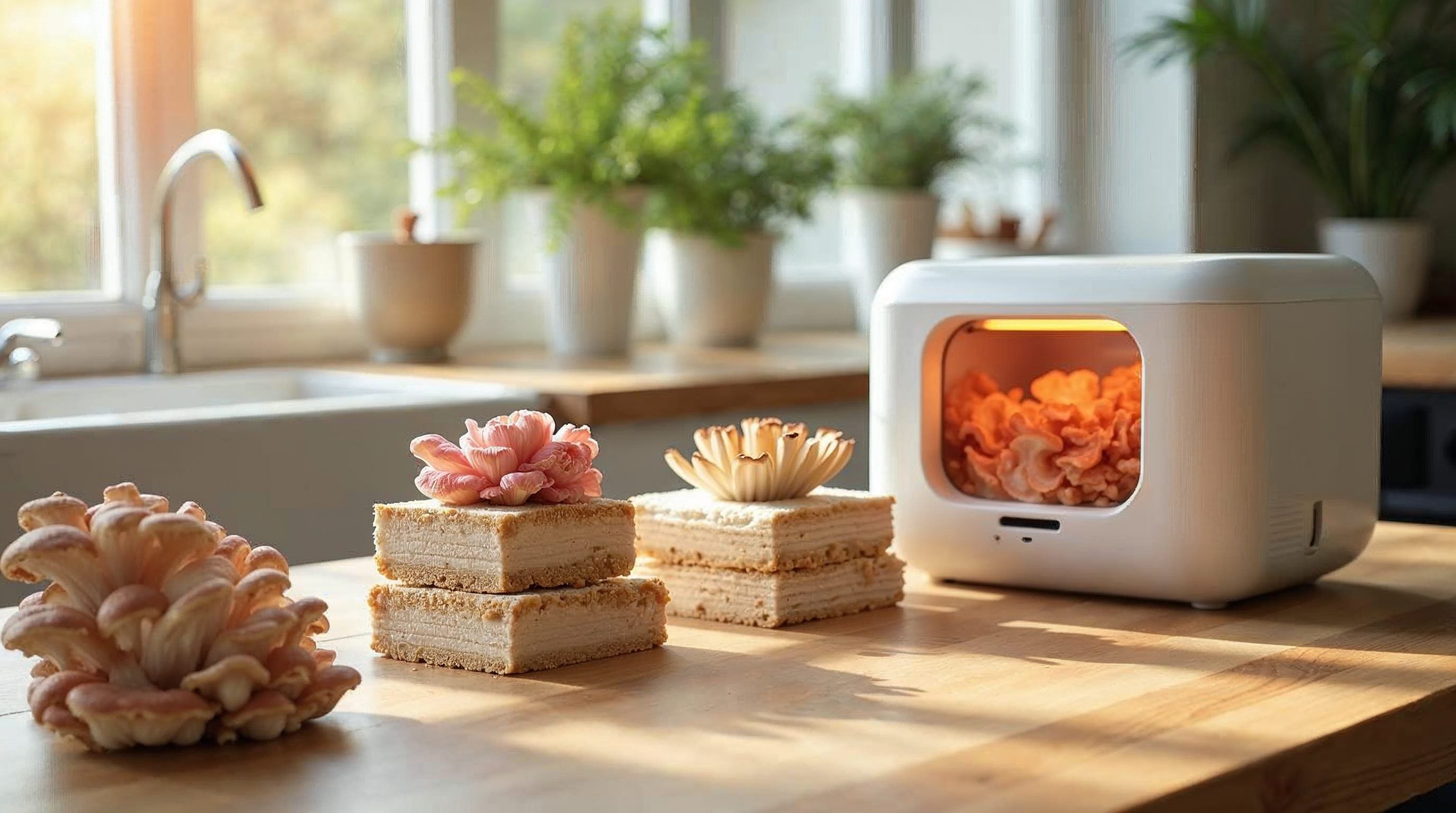
The LYKYN chamber eliminates the tedious spray-and-fan routine that traditional growing requires. Through its smartphone app, you simply select your mushroom variety, and the chamber automatically maintains perfect humidity levels, fresh air exchange, and lighting cycles. The integrated system includes variable-speed intake fans with HEPA filtration, an ultrasonic humidifier with a massive 2-liter tank, and lab-grade temperature and humidity sensors.
We were particularly impressed by the chamber's waterproof, ultra-quiet design that makes it suitable for any living space. The collapsible design ships efficiently and assembles easily, while the modern aesthetic looks elegant on kitchen counters rather than like laboratory equipment.
Performance Results:
During our testing, the LYKYN chamber consistently produced abundant flushes without contamination issues. The automated system meant we could travel for days without worrying about misting schedules. The chamber accommodates large fruiting blocks commonly sold online, maximizing yield potential.
Pros:
- Complete automation through intuitive app control
- Eliminates contamination risk from repeated misting and fanning
- Stylish design suitable for any home décor
- Accommodates multiple mushroom varieties
- Ultra-quiet operation (library-level noise)
- Professional-grade environmental control
Cons:
- Premium price point
- Requires smartphone for operation
- Larger footprint than simple fruiting blocks
Our Verdict: If you're serious about growing mushrooms regularly and want consistently excellent results without daily maintenance, the LYKYN chamber is worth the investment. It's particularly valuable for growing functional mushrooms like Lion's Mane that require precise humidity control.

2. North Spore Spray & Grow Kits – Best Traditional Block System
Price Range: Budget-Friendly
Skill Level: Beginner
Best For: First-time growers and those on a budget
North Spore's Spray & Grow mushroom kits have earned their reputation as reliable, beginner-friendly options. These pre-colonized fruiting blocks arrive ready to fruit, requiring only regular misting and indirect light.
What We Liked:
The packaging design is surprisingly attractive with trendy black-and-white artwork that won't embarrass you on your countertop. Instructions are clearly printed on the box with helpful visuals. Setup is simple: cut a slit in the designated spot, place the block in the provided humidity tent, and mist twice daily.
Our testing showed mushrooms beginning to pin around day eight, with harvest-ready mushrooms appearing by day ten. The oyster mushroom variety we tested produced juicy, flavorful results. North Spore's quality control is excellent, with a 30-day guarantee against contamination or damage.
Performance Notes:
While yields were respectable (our first flush produced about 147 grams), we found the second flush produced less (90 grams). This is normal for block kits. The twice-daily misting requirement means you can't leave for extended periods without arrangements.
Pros:
- Affordable entry point for mushroom growing
- Attractive, unobtrusive packaging
- Wide variety of species available
- Strong customer support and guarantees
- Great for gifting
Cons:
- Requires consistent daily misting
- Lower yields on subsequent flushes
- No environmental automation
- Risk of contamination with repeated opening
3. Back to the Roots Organic Mushroom Kit – Best for Families and Education
Price Range: Budget
Skill Level: Beginner
Best For: Families with children, educators, casual hobbyists
Back to the Roots has mastered the art of making mushroom growing accessible and fun. Their organic mushroom kits turn cultivation into an engaging family activity that teaches kids about fungi and sustainable food production.
Family-Friendly Features:
The compact size fits easily in small spaces, making it perfect for apartments or classrooms. The kit includes everything needed to get started, with particularly clear instructions that children can follow with minimal adult supervision.
What makes this kit special for families is the quick gratification factor. Mushrooms begin appearing within days, maintaining children's interest. Parents reported that checking the kit became part of their children's daily routine, creating opportunities for learning about biology and patience.
Performance:
While yields aren't as impressive as larger systems, the kit reliably produces enough mushrooms for a family meal or two. The organic certification gives peace of mind about what you're feeding your family.
Pros:
- Extremely beginner-friendly
- Quick results keep children engaged
- Certified organic
- Compact footprint
- Educational value
Cons:
- Limited yield potential
- Fewer flush cycles than premium options
- Basic environmental control
4. Cascadia Mushrooms Outdoor Growing Kit – Best for Garden Growers
Price Range: Mid-Range
Skill Level: Intermediate
Best For: Outdoor gardeners with available yard space
For those with outdoor space, Cascadia Mushrooms offers certified organic growing kits designed for garden beds and shaded areas. These kits take a different approach, focusing on long-term mushroom production in natural settings.
Outdoor Advantages:
Unlike indoor kits, Cascadia's outdoor systems can produce mushrooms for multiple years with minimal maintenance once established. The kits include inoculated substrates suitable for garden beds, with instructions for creating ideal outdoor growing conditions.
We particularly appreciated the comprehensive guidance for site selection and bed preparation. The organic certification aligns with sustainable gardening practices. Species like Shiitake thrive in these outdoor systems.
Performance:
Outdoor growing requires more patience than indoor kits. Initial colonization takes several weeks, but once established, the beds can produce flushes seasonally for years. Weather dependency means inconsistent yields compared to controlled indoor environments.
Pros:
- Long-term production potential
- Certified organic
- Minimal ongoing maintenance
- Natural growing conditions
- Multiple flush cycles annually
Cons:
- Longer initial setup time
- Weather-dependent results
- Requires outdoor space
- Seasonal production limits
5. Midwest Grow Kits Complete Growing System – Best for Serious Hobbyists
Price Range: Mid to Premium
Skill Level: Intermediate to Advanced
Best For: Dedicated growers seeking maximum control and yields
Midwest Grow Kits caters to serious mushroom enthusiasts who want to customize their growing environment. Their complete systems include monotubs, bulk substrates, and all necessary components for larger-scale home cultivation.
For the Committed Grower:
These aren't plug-and-play solutions. Midwest systems require understanding of mushroom cultivation principles and willingness to actively manage environmental conditions. However, for those willing to invest the time, the customization possibilities and yield potential are impressive.
The company's customer support stands out, with growing experts available via live chat to troubleshoot issues. Their sterilized substrates come with contamination guarantees, and the printed guides included with kits provide detailed, tested techniques.
Performance Capacity:
Properly managed Midwest systems can produce significantly larger yields than simple block kits. The ability to create custom substrate mixes and control all environmental parameters appeals to growers wanting to experiment with different species and techniques.
Pros:
- Maximum customization options
- Large-scale yield potential
- Excellent customer support
- Contamination guarantees on substrates
- Comprehensive educational resources
Cons:
- Steeper learning curve
- Requires active management
- More complex setup
- Larger space requirements
Choosing the Right Kit for Your Needs
Selecting the perfect mushroom growing kit depends on several personal factors:
If you want set-it-and-forget-it convenience: The LYKYN Smart Mushroom Grow Chamber eliminates maintenance hassles with full automation.
If you're on a tight budget: North Spore Spray & Grow kits offer reliable results at entry-level prices.
If you're growing with children: Back to the Roots provides quick, engaging results perfect for families.
If you have outdoor space: Cascadia's outdoor kits enable long-term, low-maintenance cultivation.
If you're a serious hobbyist: Midwest systems provide maximum control and customization.
Essential Tips for Success with Any Kit
Regardless which kit you choose, these universal tips will improve your results:
Location Matters: Place your kit in an area with indirect light and consistent temperature between 60-75°F. Avoid direct sunlight and heating vents.
Humidity is Critical: Mushrooms need high humidity (80-95% for most species). If not using an automated system, mist regularly and monitor for dry conditions.
Fresh Air Exchange: Mushrooms require oxygen and will develop poorly in stagnant air. Ensure adequate ventilation without creating drafts.
Patience Pays: Don't panic if mushrooms don't appear immediately. Colonization takes time, and pinning schedules vary by species.
Start with Easy Species: Oyster mushrooms forgive mistakes better than finicky varieties. Build confidence before attempting challenging species like Reishi or Turkey Tail.
Harvest at Peak Maturity: Pick mushrooms just before or as the caps begin to flatten. Waiting too long reduces quality and can trigger spore release.
Frequently Asked Questions About Mushroom Growing Kits
How long does it take to grow mushrooms from a kit?
Most kits produce visible mushroom pins within 7-14 days after setup. Full-grown mushrooms ready for harvest typically appear between days 10-21, depending on the species and environmental conditions. Faster-growing varieties like Pink Oyster can fruit in as little as 5-7 days, while slower species like Shiitake may take 2-3 weeks.
Can I reuse mushroom growing kits for multiple harvests?
Yes! Quality fruiting block kits typically produce 2-4 flushes of mushrooms. After harvesting the first flush, rehydrate the block by soaking it in cold water for several hours, then continue the growing process. Yields generally decrease with each subsequent flush, but you can harvest mushrooms from a single block for several weeks to months.
Do mushroom growing kits work in apartments with limited space?
Absolutely. Most indoor mushroom kits have compact footprints suitable for apartments. The LYKYN chamber and similar block kits fit comfortably on kitchen counters or shelves. The key requirements are indirect light, reasonable humidity, and temperatures between 60-75°F—all achievable in typical apartment environments.
Are homegrown mushrooms safe to eat?
Mushrooms grown from reputable kit suppliers are completely safe when properly cultivated and cooked. Kits use non-toxic substrates and known edible species. Always cook homegrown mushrooms thoroughly with heat before consuming. When trying a species for the first time, eat a small portion initially to check for any unexpected allergies or sensitivities.
What's the difference between smart grow chambers and traditional kits?
Traditional kits require manual misting 2-3 times daily, monitoring of humidity levels, and manual fresh air exchange. Smart chambers like LYKYN automate all environmental controls through integrated sensors, humidifiers, and fans controlled via smartphone apps. Traditional kits are more affordable but demand consistent attention, while smart chambers cost more but require minimal intervention and reduce contamination risks.
The Future of Home Mushroom Cultivation
The mushroom growing industry continues evolving rapidly. Smart automation technology is making cultivation accessible to people who previously found it too complicated or time-consuming. The integration of app controls, precision sensors, and data tracking represents where home growing is headed.
Simultaneously, interest in functional mushrooms for health and wellness drives demand for reliable home cultivation systems. Growing your own Lion's Mane or Reishi ensures freshness and potency while saving money compared to purchasing supplements.
Environmental consciousness also fuels the home mushroom movement. Growing your own gourmet mushrooms reduces packaging waste, transportation emissions, and dependence on commercial supply chains. It's sustainable, educational, and rewarding.
Key Takeaways: Which Kit Should You Choose?
After extensive testing and research, here's our bottom line for each category:
Best Overall Experience: The LYKYN Smart Mushroom Grow Chamber delivers professional results with minimal effort. Its automation, elegant design, and contamination resistance justify the premium price for serious growers.
Best Value: North Spore Spray & Grow kits provide reliable, affordable entry into mushroom cultivation with strong customer support.
Best for Families: Back to the Roots creates engaging experiences that teach children about sustainable food while producing tasty results.
Best for Outdoor Growers: Cascadia Mushrooms enables long-term, organic production in garden settings with minimal ongoing maintenance.
Best for Hobbyists: Midwest Grow Kits offers maximum customization and yield potential for dedicated cultivators willing to actively manage their grows.
Start Growing Today
Home mushroom cultivation connects you with your food source while providing fresh, nutritious fungi year-round. Whether you choose an automated smart chamber or a traditional block kit, the satisfaction of harvesting mushrooms you've grown yourself is incomparable.
The kits reviewed here represent the best options available in 2026, each excelling in different areas. Consider your budget, available space, time commitment, and experience level when making your selection. Whichever you choose, you're about to embark on a fascinating journey into the world of fungi cultivation.
Ready to start your mushroom growing adventure? Explore the LYKYN Smart Mushroom Grow Kit. This kit uses automated technology to make growing mushrooms easy. You can grow both functional and culinary mushrooms with ease. For more guidance, check out our complete guides on Lion's Mane mushroom cultivation and growing Turkey Tail mushrooms at home.
Featured Snippet Summary
The top 5 mushroom growing kits of 2026 are: LYKYN Smart Mushroom Grow Chamber (best overall with full automation), North Spore Spray & Grow (best budget option), Back to the Roots (best for families), Cascadia Mushrooms (best for outdoor growing), and Midwest Grow Kits (best for serious hobbyists). Choose based on your budget, space, and experience level.





Share:
Straw Mushrooms: Your Complete Guide to Growing, Cooking, and Enjoying Asia's Favorite Fungi
How to Choose the Best Mushroom Kit: Your Complete Buying Guide for 2025